
Reviewed · IMPERIAL PALACE TOURS
Imperial Palace to Tokyo Station Historical Walking Tour
That first red-brick finish hits hard. This guided walk links the Imperial Palace grounds to Tokyo Station, so you get both careful Edo-era details and a clear view of modern central Tokyo in about 2.5 hours. I like how the route stays walkable and compact, with a small group that keeps the pace human. I also love that it’s built around specific, named sites like Ōte-mon Gate ruins and the Fujimi-yagura watchtower. One thing to plan for: you won’t get into the Inner Palace, so your highlights are the East Gardens and the area around the palace outer views.
The best part is how the tour turns a map into something you can read on foot. You’ll move from commemorative landmarks to samurai-era structures, then into landscaped gardens, and finally into the Marunouchi district before ending at Tokyo Station’s restored façade. Guides (I’ve seen names like Naoki, Futami, Masa-san, and Mitsuko Shirai) are a big part of the value because they help you connect what you’re seeing to what it once was.
In This Review
- Key takeaways before you go
- Starting at Wadakura Fountain Park, where the story begins quietly
- Ōte-mon Gate and the East Gardens: seeing power at the edge
- Hyakunin Bansho Guardhouse: order, security, and why it’s still visible
- Ninomaru Garden, Suwa-no-chaya, and Plum Tree Hill: the calm part does real work
- Edo Castle keep takehashi foundations and Fujimi-yagura: watching for the big picture
- The Tenshukaku restoration model and Honmaru: turning ruins into a mental picture
- Kokyo Gaien National Garden and Nijubashi views: the photo moment that pays off
- Marunouchi to Tokyo Station: finishing with red-brick history in the middle of commerce
- Price and timing: is $39.09 good value for this walk?
- Who should book this Imperial Palace to Tokyo Station walk?
- Should you book this tour?
- FAQ
- What is included in the Imperial Palace to Tokyo Station Historical Walking Tour?
- How long is the tour?
- Where do I meet the guide?
- Where does the tour end?
- Can I access the Inner Palace?
- Is lunch provided?
Key takeaways before you go
- Imperial Palace East Gardens stops are packed into a short walk, not a long day.
- Edo Castle leftovers (gate ruins, guardhouse, watchtower, stone foundations) make the story feel real.
- Seasonal garden moments like Plum Tree Hill can add extra payoff depending on timing.
- Tokyo Station’s red-brick finale gives you a satisfying end point with food and trains close by.
- Small groups up to 12 make it easier to ask questions and keep moving.
Starting at Wadakura Fountain Park, where the story begins quietly
Most Tokyo tours start with a shortcut. This one starts with a moment of calm. You’ll meet at Starbucks Coffee – Kokyo Gaien Wadakura Fountain Park, right near the Imperial Palace area. It’s a smart meeting point because you’re already in the right neighborhood and you can orient yourself before you walk.
The first stop is Wadakura Fountain Park, a small green space near the palace. It was established in 1961 to commemorate the marriage of Emperor Akihito. That matters more than you’d think. It’s not just a pretty start. It’s a reminder that the palace area isn’t frozen in time; it’s tied to modern imperial milestones too.
From there, you’re not marching into a museum. You’re walking into an outdoor historical layer cake.
More walks around the Imperial grounds
- Tokyo: Imperial Palace and Shogun Historical Walking Tour
★ 5.0 · 2,251 reviews - Tokyo: Imperial Palace Japanese History Walking Tour
★ 4.9 · 987 reviews - Tokyo: Imperial Palace and Shogun Walking Tour
★ 4.9 · 935 reviews - Imperial Palace East Garden and Edo Castle Walking Tour in Tokyo
★ 5.0 · 510 reviews
Ōte-mon Gate and the East Gardens: seeing power at the edge
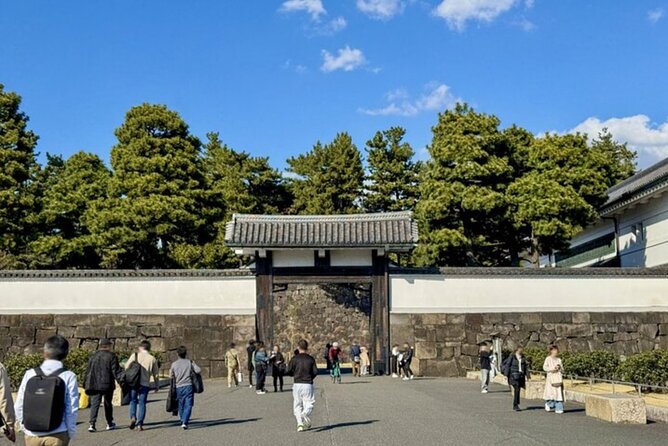
At the next stop, you’ll head to the Kokyo Otemon Gate (Ōte-mon Gate), the main entrance to the Imperial Palace East Gardens. This is where the tour shifts from scenery to structure. The gate once served as a primary access point to Edo Castle, so you can look at it and think about movement, security, and formality—not just architecture.
You’ll also see nearby remnants at the Ote-San’no Gate Ruins. These ruins are short in time, but they’re punchy. The stones and layouts hint at defensive thinking. It’s the kind of stop that makes you start noticing details you’d miss alone, like how the castle was designed to control entry and protect key areas.
Hyakunin Bansho Guardhouse: order, security, and why it’s still visible
One of the most memorable segments for me is when you reach the Hyakunin Bansho Guardhouse. The name tells you the idea: a guardhouse historically manned by a hundred samurai responsible for securing the castle’s innermost sections.
Even if you don’t know feudal history, you’ll get the point fast. This isn’t a decorative building. It’s a piece of the system that kept the whole compound functioning. Standing there, you can feel why locations inside the palace grounds were treated like high-stakes zones.
It’s also a great place to ask questions if your guide is active about dialogue. In past departures, guides named Naoki and Masa-san were praised for being patient and responsive, which is exactly what you want when the details get technical.
Ninomaru Garden, Suwa-no-chaya, and Plum Tree Hill: the calm part does real work
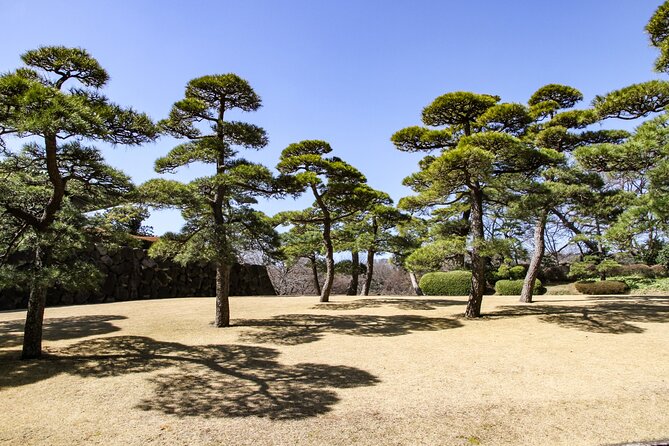
After the more fortress-minded stops, you’ll shift into garden mode. At Ninomaru Garden, you’ll walk through a landscaped Japanese garden with seasonal flora, winding paths, and water features. This stop is worth it even if you’re not a garden person. Why? Because it shows how the ruling compound balanced defense and politics with beauty and controlled leisure.
A short pause follows at Suwa-no-chaya, a historic teahouse location inside the gardens. The teahouse itself isn’t operational, but the site adds texture. Tea culture is part of how status and social interaction played out, and the presence of a teahouse signals that the grounds weren’t only about guarding power.
Then you climb Bairinzaka (Plum Tree Hill). This is the kind of stop that can change the whole feel of your day. In plum season, you get views plus the fragrance that comes with the blooms. Even outside peak bloom, the hill gives you a better sense of elevation in the gardens, which makes the space feel larger and more intentional.
Edo Castle keep takehashi foundations and Fujimi-yagura: watching for the big picture
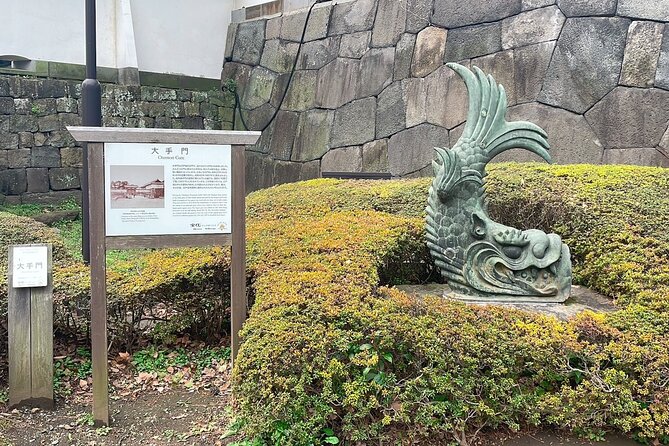
Next up are two of the clearest “Edo Castle, not just palace” moments.
First, you’ll visit the Edo Castle Takehashi Gomon Ruins, the site of the former Edo Castle’s main keep. The original structure is gone, but the remaining stone foundations and walls show scale. That’s the key. Without standing on those remnants, it’s hard to picture how enormous the keep’s presence was.
Then you’ll go to Fujimi-yagura, one of the few remaining watchtowers of Edo Castle. Watchtowers aren’t romantic on a brochure. Up close, though, they make sense. You can think about surveillance, spotting movement, and defense from a raised position.
This pair of stops is ideal for history buffs, but it also works for casual visitors because it’s visual. You’re learning through shape and placement.
Readers also shortlisted these Tokyo bookings:
- Tokyo Tsukiji Fish Market Food and Culture Walking Tour★ 5.0 · 3,184 reviews
- Tokyo: Shinjuku Local Bar and Izakaya Guided Walking Tour★ 4.9 · 1,794 reviews
- Tokyo: Tsukiji Fish Market Food and Walking tour★ 5.0 · 1,724 reviews
- Tokyo: Asakusa Walking Tour with Sensoji Temple Visit★ 4.8 · 1,583 reviews
- Tokyo: Tsukiji Fish Market Guided Walking Tour★ 4.9 · 1,397 reviews
The Tenshukaku restoration model and Honmaru: turning ruins into a mental picture
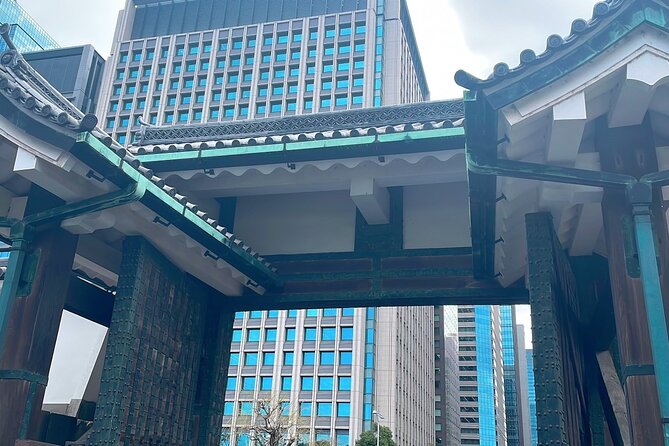
At Edo Castle keep restoration model, you’ll find a detailed scale model of the original main keep, the Tenshukaku, reconstructed using historical records and drawings. This is where the tour helps your brain. Ruins are easy to admire and hard to fully understand. The model bridges that gap, so you can connect the stones you saw earlier with the structure that once stood there.
After that, the tour brings you to Honmaru (Main Hall), part of the Imperial Palace East Gardens. Honmaru was once the central compound of Edo Castle, serving as the main residence and political headquarters of the Tokugawa shogunate. Again, you might not be able to “see” the old building itself, but you can understand the role it played. It’s a strong stop because it’s not only about what something looked like. It’s about what decisions happened there.
If you enjoy architecture and how buildings reflect power, this is one of the most valuable blocks of time on the route.
Kokyo Gaien National Garden and Nijubashi views: the photo moment that pays off
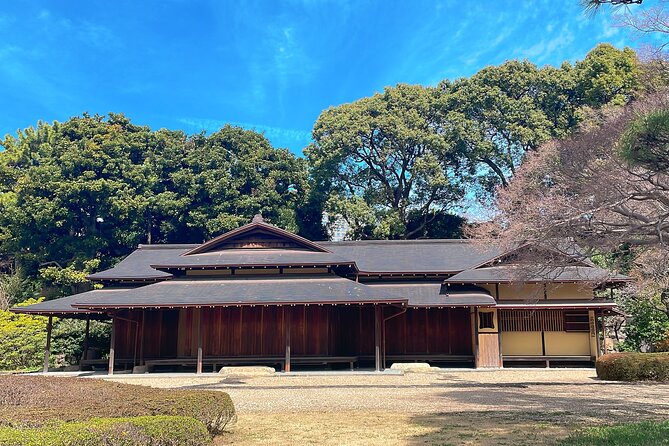
Now you move outward from the East Gardens into Kokyo Gaien National Garden, a large public space. You’ll get unobstructed views of the palace’s outer structures and the iconic Nijubashi Bridge. This is one of the easiest photography wins on the walk because the open area helps you frame the palace without fences or clutter.
This stop is also practical. When you’ve been looking at gates, ruins, and garden paths for a while, open space is a nice reset. You can catch your breath, take pictures, and regroup before the final urban stretch.
Marunouchi to Tokyo Station: finishing with red-brick history in the middle of commerce
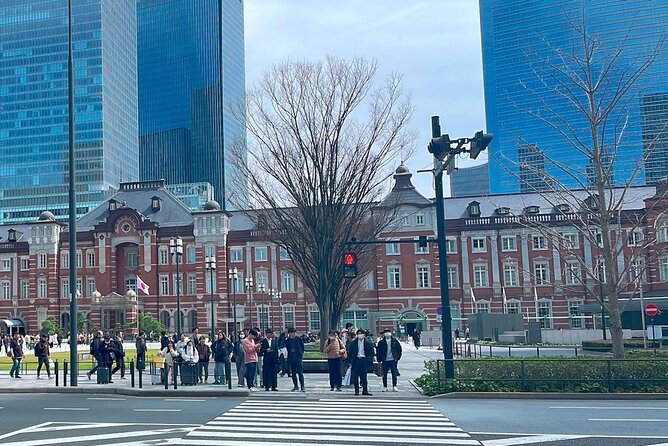
After the palace grounds, you’ll continue through Marunouchi, Tokyo’s prestigious business district. You’ll notice the blend fast: modern skyscrapers next to older buildings, with upscale shops, restaurants, and art installations in the mix.
This section works because it changes your perspective. You start the day in a controlled, historic compound. You end the day in a busy commercial core. The shift makes the walk feel like it has chapters instead of being one long museum stroll.
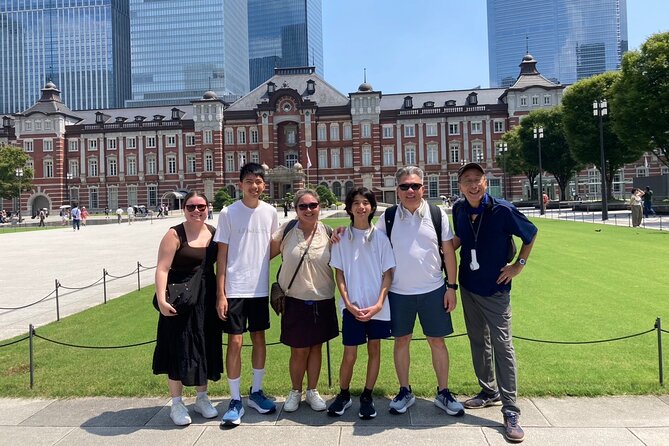
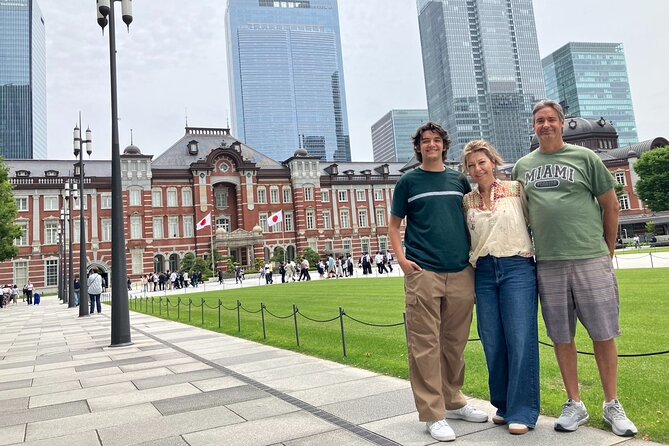
Your final stop is Tokyo Station, where you’ll conclude at the red-brick façade that was restored to its 1914 glory. That exterior is a standout for a reason: it’s one of the most recognizable “old-meets-new” landmarks in central Tokyo. Inside, the station is a hub for shops and places to eat, so it’s a convenient landing spot if you want to keep exploring right after.
Tip for your timing: plan to treat the last 20 minutes as both an arrival and a launchpad. You’ll be close to trains, plus dining options, so it’s a smooth way to continue your day.
Price and timing: is $39.09 good value for this walk?
At $39.09 per person, this is one of the more sensible guided walks I’ve seen for central Tokyo. Here’s why it’s good value: you’re paying for a local guide to connect many small, specific sites into one coherent story. Also, the stops you’ll hit have free admission listed across the route, which means you’re not stacking entry fees on top of the tour cost.
Duration is about 2 hours 30 minutes, which is long enough to feel substantial but short enough that you can pair it with other sights. The tour also runs with mobile tickets and a small maximum group size of 12 travelers, so you’re less likely to get stuck waiting behind large crowds.
A practical note: since lunch isn’t included, you’ll want to plan a snack break strategy. I’d treat this as a morning-or-afternoon walk and save a proper meal for Tokyo Station or nearby Marunouchi.
Booking timing also matters. The average booking window is about 23 days in advance, so I’d reserve sooner if your dates are firm, especially in busier travel seasons.
Who should book this Imperial Palace to Tokyo Station walk?
Book this if you want a route that’s both easy to follow and heavy on “named places,” like Ōte-mon Gate, Hyakunin Bansho, and Nijubashi Bridge. It’s especially good for:
- History and architecture fans who like Edo-era details.
- People who want a garden-and-ruins mix without committing to a full-day tour.
- Families who want a guided pace that’s not too long on foot.
It’s also a good fit if you like clear finishing logistics. Tokyo Station is a strong endpoint because it’s a transit and food hub all in one.
The main reason to think twice is the Inner Palace access. Your focus is the East Gardens and surrounding views, not interior palace areas.
Should you book this tour?
Yes, if you want the highest payoff per hour in central Tokyo. The cost makes sense for a guided walk that strings together Edo Castle remnants, palace-garden calm, and a real, memorable finale at Tokyo Station. If you’re comfortable with a mix of ruins and views (and you don’t need to enter the Inner Palace), this is an efficient way to see a side of Tokyo that’s hard to assemble on your own.
FAQ
What is included in the Imperial Palace to Tokyo Station Historical Walking Tour?
You get a local tour guide. Admission tickets for the listed stops are free, and the tour uses a mobile ticket. Lunch and food/drinks are not included.
How long is the tour?
It runs for about 2 hours 30 minutes.
Where do I meet the guide?
Meet at Starbucks Coffee – Kokyo Gaien Wadakura Fountain Park, 3-1 Kōkyogaien, Chiyoda City, Tokyo 100-0002, Japan.
Where does the tour end?
The tour ends at Tokyo Station, 1 Chome-9 Marunouchi, Chiyoda City, Tokyo 100-0005, Japan.
Can I access the Inner Palace?
No. Access to the Inner Palace is not open to the public, so this tour focuses on areas that are accessible.
Is lunch provided?
No. Lunch is not included, and you’ll need to purchase food and drinks separately.
More Tours in Tokyo
- Mt Fuji and Hakone 1-Day Bus Tour Return by Bullet Train
★ 5.0 · 26,383 reviews - 1-Day Tokyo Bus Tour
★ 5.0 · 14,250 reviews - Tokyo: Shinjuku Food Tour (13 Dishes at 4 Local Eateries)
★ 5.0 · 6,603 reviews - Tokyo Mt Fuji 5th St & Hakone Cruise Bus Tour w/Bullet Train
★ 4.4 · 5,024 reviews - Flagship 2-Hours Official Street Go-Kart Tour – Tokyo Bay Shop
★ 5.0 · 4,974 reviews
More Tour Reviews in Tokyo
- Mt Fuji and Hakone 1-Day Bus Tour Return by Bullet Train
★ 5.0 · 26,383 reviews - 1-Day Tokyo Bus Tour
★ 5.0 · 14,250 reviews - Tokyo: teamLab Planets TOKYO Digital Art Museum Entry Ticket
★ 4.6 · 9,779 reviews - Mt Fuji & Hakone Cruise, Drum Show Bullet Train 1 Day from Tokyo
★ 4.0 · 7,413 reviews - Tokyo: Shinjuku Food Tour (13 Dishes at 4 Local Eateries)
★ 5.0 · 6,603 reviews
More Imperial Palace Walks
- Tokyo: Imperial Palace and Shogun Historical Walking Tour
★ 5.0 · 2,251 reviews - Tokyo: Imperial Palace Japanese History Walking Tour
★ 4.9 · 987 reviews - Tokyo: Imperial Palace and Shogun Walking Tour
★ 4.9 · 935 reviews - Imperial Palace East Garden and Edo Castle Walking Tour in Tokyo
★ 5.0 · 510 reviews - Tokyo: Imperial Palace East Gardens Walking Tour
★ 4.8 · 353 reviews
Latest Tokyo reviews off our desk






Imperial Palace Tours, compared.
 ★ 5.0Imperial Palace and Shogun Historical Walking TourFrom $222,251 reviews
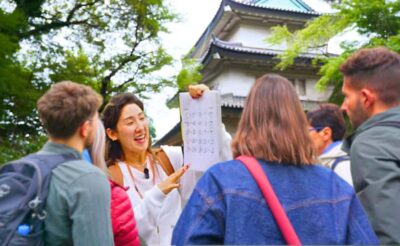 ★ 4.9Imperial Palace Japanese History Walking TourFrom $32987 reviews
 ★ 4.9Imperial Palace and Shogun Walking TourFrom $16935 reviews
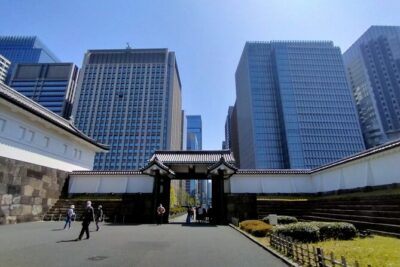 ★ 5.0Imperial Palace East Garden and Edo Castle Walking Tour in TokyoFrom $25510 reviews
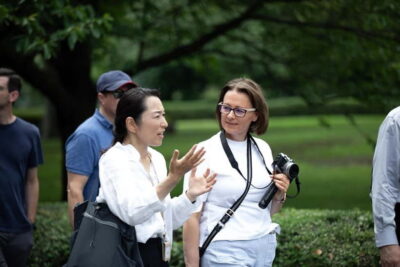 ★ 4.8Imperial Palace East Gardens Walking TourFrom $19353 reviews
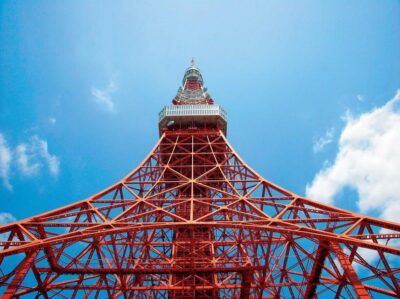 ★ 4.5Imperial Palace, Sensō-ji Temple, & Tokyo Tower TourFrom $40339 reviews
 ★ 5.0Tokyo Castle, Imperial Palace, Shogun & Garden Walking TourFrom $31211 reviews
 ★ 4.7Edo Castle & East Garden of the Imperial Palace TourFrom $42112 reviews
Browse the lists this tour appears in