
Reviewed · SAKE TASTING
Japanese Sake Tasting and Masu Crafting Experience in Tokyo
Sake plus manga? This works. You get a guided sake tasting of 5–6 different varieties (including hot sake/kanzake) with light snack pairings, then you decorate a traditional masu cup to take home. I love the balance here: the host explains what you’re drinking in plain English, and the tasting keeps moving so you never feel stuck with one boring bottle. The one drawback to consider is that this is still a tasting built around alcohol and food pairings, and the experience does not offer vegetarian or vegan options.
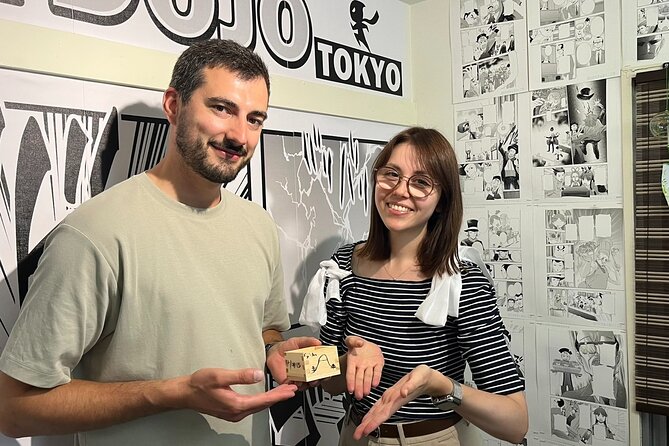
This session is held in English at Manga Dojo Tokyo, a cozy creative space just a few minutes from Ikebukuro Station. The room setting also ties into manga culture, and the host Aki-san (who runs manga workshop activities) makes it easy to ask questions and talk with the small group (max 8).
You start at 6:00 pm and you’ll be done in about 1 hour 30 minutes, looping back to the meeting point at the end. You’ll use a mobile ticket, and it’s a nice option when you want something more personal than a standard bar hop.
In This Review
- Key highlights
- Manga Dojo Tokyo: the Ikebukuro setting that makes the tasting feel personal
- The 6:00 pm flow: what happens in your 1 hour 30 minutes
- Sake basics in plain English: how to taste without overthinking
- Tasting 5–6 sakes, including kanzake: snacks that actually teach you something
- Decorating your masu cup: a take-home craft that feels very Japan
- Price and value: is $60 worth it for this Tokyo evening?
- FAQ
- What’s included in the sake tasting and masu experience?
- How long does the experience last?
- Is the experience offered in English?
- Where do I meet, and when does it start?
- Is there a limit on group size?
- Do they offer vegetarian or vegan options?
- Should you book this Tokyo sake tasting and masu crafting?
Key highlights
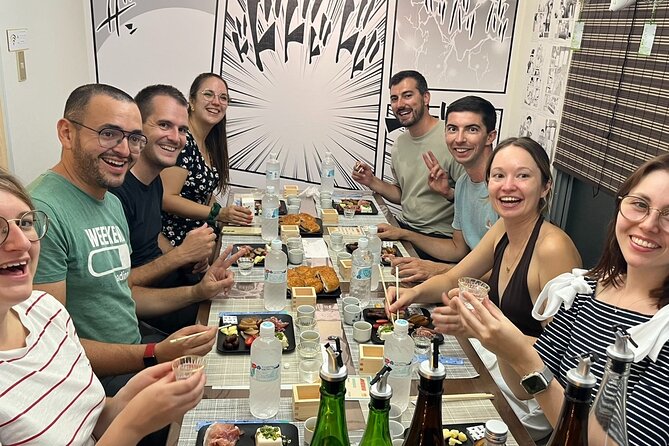
- 5–6 sake pours with temperature changes so you can taste how flavor shifts, including warm kanzake
- English-guided instruction on how sake is made and how to taste it
- Snack pairings designed to go with each sake (yes, even surprising matches)
- Make-and-take wooden masu cup decorated using Japanese brush pens
- Small group size (max 8) for better conversation in a cozy room
Manga Dojo Tokyo: the Ikebukuro setting that makes the tasting feel personal
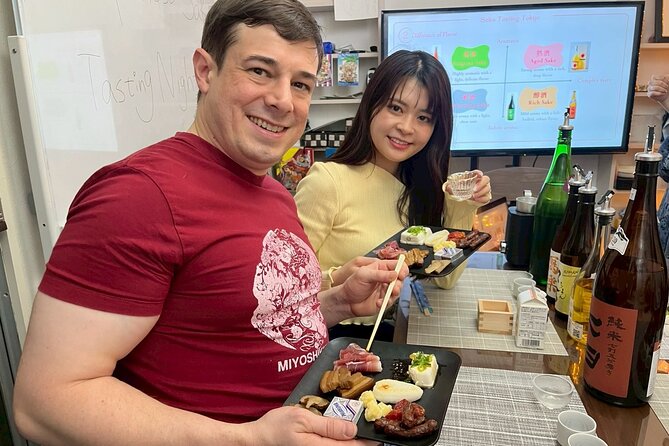
First, the vibe. Manga Dojo Tokyo isn’t a big formal tasting hall. It feels like a small room in an apartment-style setting in Ikebukuro, and it mixes Japanese sake culture with a manga atmosphere. In practice, that means you’re not just sitting in silence while someone pours you a flight. You’re in a creative, low-pressure space where learning feels like hanging out.
That matters, because sake tasting can go two ways. Either it turns into a long lecture, or it turns into a random lineup of drinks. Here, the format keeps both parts moving. You’re taught the basics, then you immediately apply them while you taste multiple varieties. The manga corner and exhibit energy also help break the ice fast, especially if you’re traveling solo.
There’s also a practical comfort factor. The venue is close to public transportation near Ikebukuro Station, so you’re not planning an extra transit mission just to enjoy one evening activity. And because the group is capped at 8, you don’t get that awkward jam-packed “wait your turn” feeling.
Readers also shortlisted these Tokyo bookings:
- Tokyo: Shinjuku Food Tour (13 Dishes at 4 Local Eateries)
★ 5.0 · 6,603 reviews - Tokyo Tsukiji Fish Market Food and Culture Walking Tour
★ 5.0 · 3,184 reviews - Tokyo: Shinjuku Food Tour (15 Dishes and 4 Eateries)
★ 4.9 · 2,033 reviews - Best of Shinjuku: Izakaya Food Tour (4 Stops, 14+ Tastings)
★ 5.0 · 1,863 reviews
The 6:00 pm flow: what happens in your 1 hour 30 minutes
At 6:00 pm, you meet at Manga Dojo Tokyo at the address listed on your booking (Toshima City, Higashiikebukuro, in the 三昌ビル building). The session runs about 1 hour 30 minutes total, and it finishes back at the same spot. That simple loop is helpful in Tokyo, where evenings can turn into a logistics puzzle.
The timing is built around three phases:
1) Welcome + sake fundamentals
Your host starts with the basics of how sake is made and how to taste it. You’re not expected to already know terms or styles. The goal is to help you taste with a little structure, so the different bottles make sense as you move through them.
2) Tasting sequence with hot and snack pairings
You then sample 5–6 sake varieties. The list includes both standard pours and hot sake (kanzake), so you can feel how temperature changes aroma and flavor. Along the way, you’ll also get light snacks that are meant to pair with what you’re tasting.
3) Masu crafting with Japanese brush pens
Last, you decorate your own wooden masu cup using Japanese brush pens. This is the hands-on cultural piece that turns the experience from a one-time tasting into something you’ll actually remember on your shelf at home.
The pacing is compact, which is a plus if you’re juggling Tokyo nights. It’s also a reason this works well after a day of sightseeing: you don’t need to build in half your evening just for one activity.
Sake basics in plain English: how to taste without overthinking
One of the best things about this experience is that it doesn’t assume you already speak sake. The host explains how sake is made, then gives you guidance on how to taste it so you can notice differences between varieties instead of just saying, That one was sweeter, or That one was stronger.
In a normal restaurant setting, sake can be confusing. Labels and style names can feel like a code. Here, the teaching is used as a tool. As each sake is served, you can apply what you just heard: what to pay attention to in aroma, flavor impression, and the way a drink changes with temperature.
That’s especially important for the hot sake (kanzake) part. Warm sake isn’t just a convenience. Temperature can bring out different notes and make the flavor feel rounder or more complex. The experience specifically includes hot sake so you can compare in the same session, which is the easiest way to learn without needing a separate visit.
If you like structured learning but not school vibes, this format hits a sweet spot. You get enough explanation to make the tasting meaningful, then you do the fun part—drinking and comparing.
Tasting 5–6 sakes, including kanzake: snacks that actually teach you something
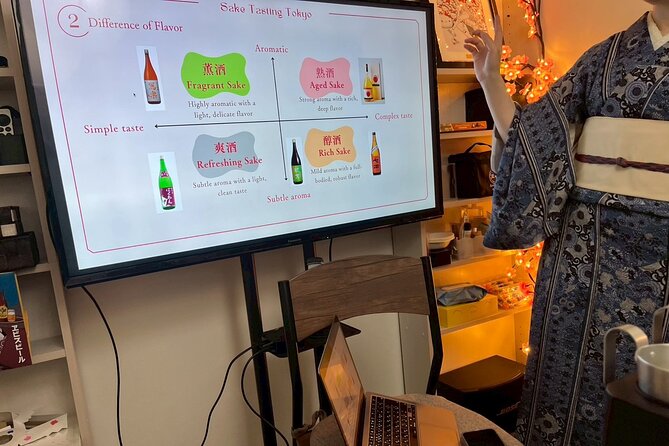
The heart of this experience is the flight: 5–6 different sake varieties in one guided sitting. The point isn’t to drink quickly. It’s to notice how each variety behaves on your palate, especially when served warm versus at cooler temperatures.
And yes, the snack pairings matter. The small food bites are there to help you understand how taste changes when you eat something alongside the sake. In other words, you’re learning two things at once: the drink and the food relationship.
One pairing detail you should keep in mind: curry bread has shown up as a pairing, and it’s a good reminder that sake food pairing isn’t limited to the usual stereotypes. The host’s approach is practical—if the flavors work together, you’ll taste it.
A few more reasons this tasting format is worth your time:
- You compare in one room and one session.
Flavor memory fades fast. By sampling multiple varieties close together, you can actually keep track of what’s different.
- You get both “warm” and “regular” experiences.
Including kanzake helps you learn that temperature isn’t just heat. It changes how you experience aroma and mouthfeel.
- You’re not stuck with only one style.
You’ll cover a range of bottles, so you can find what you personally enjoy rather than leaving with a single “starter” flavor.
A consideration: this is a tasting built around alcohol. If you’re trying to avoid drinking, or if you prefer non-alcoholic experiences, this may not be the right fit. Also, the session does not offer vegetarian or vegan options, though allergy-friendly options are available if you inform them in advance.
Decorating your masu cup: a take-home craft that feels very Japan
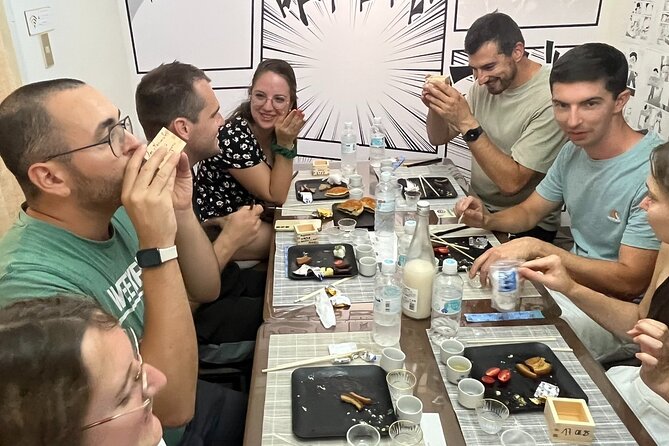
The take-home part is not an afterthought. You decorate a traditional wooden masu cup with Japanese brush pens, and that becomes your souvenir. For me, that’s what turns the evening from a nice night out into a memory you can display.
The craft also gives your brain a break from tasting. After comparing multiple sakes, it’s a relief to shift into hands-on creativity. Brush pens are forgiving enough that you don’t need artistic skills to end up with something you’ll be happy to keep.
Practically, this section matters because it adds value beyond the drink. You’re not just paying for consumables; you’re paying for instruction plus a physical object you carry home. In Tokyo, that kind of take-home item is often what makes an evening feel “worth it” long after the last sip.
One more note: the experience venue has that manga workshop spirit, so the making-and-tasting portion feels like part of a themed night rather than a rushed add-on. It’s a good match if you want cultural learning that includes both food and art.
Readers also shortlisted these Tokyo bookings:
- Best of Shinjuku: Izakaya Food Tour (4 Stops, 14+ Tastings)★ 5.0 · 1,863 reviews
- Tokyo: Shinjuku Local Bar and Izakaya Guided Walking Tour★ 4.9 · 1,794 reviews
- Tokyo: Shinjuku Local Bar & Izakaya Crawl Tour★ 5.0 · 890 reviews
- Shibuya: Local Bar & Izakaya Crawl★ 4.9 · 354 reviews
- Ramen and Sushi Cooking Class with Sake Pairing Set in Tokyo★ 5.0 · 291 reviews
Price and value: is $60 worth it for this Tokyo evening?
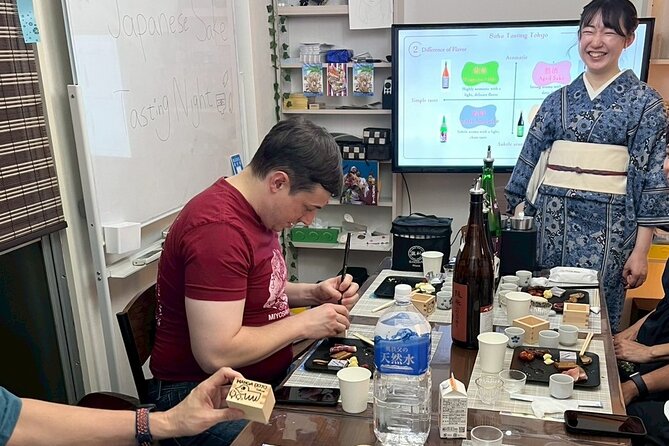
$60 per person for about 1 hour 30 minutes includes several clear components: a guided tasting of 5–6 sake varieties, light snack pairings, English instruction, and the masu-cup craft with Japanese brush pens (plus you take the cup home).
When you do the math, the value comes from the combination. Tastings alone can be expensive in Tokyo, and DIY souvenirs can cost just as much on their own. Here, you get both in one sitting with a host who explains what you’re tasting. That’s the real bargain: understanding the drink while you’re experiencing it.
This is also a smart choice if you’re the kind of traveler who likes small-group evenings. With a maximum of 8 people, you’re more likely to get questions answered and to participate instead of watching from the edge of the room.
Who it fits well:
- Sake beginners who want guidance without feeling judged
- Food pair fans who enjoy learning why flavors work
- People who like small-group cultural activities with a creative twist
- Anyone who wants a take-home souvenir that isn’t just a generic bottle shop purchase
Who might want to think twice:
- If you need vegetarian or vegan food options (not offered)
- If you’re avoiding alcohol entirely
- If you prefer very formal tasting rooms over a casual, creative apartment-style setting
And if you have allergies, there are allergy-friendly options available if you tell them in advance. It’s worth planning ahead so the pairings can work for you.
FAQ
What’s included in the sake tasting and masu experience?
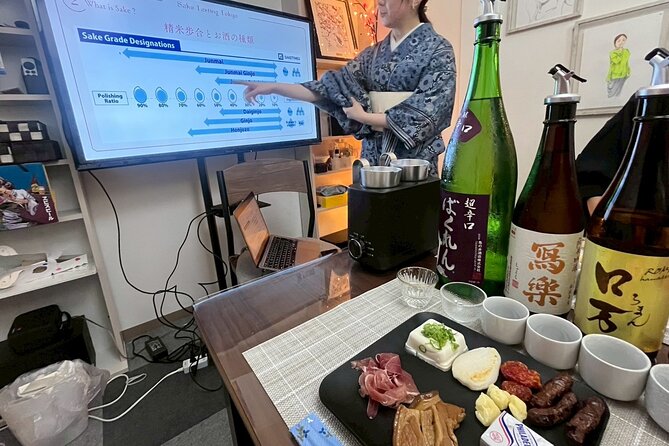
You’ll sample 5–6 sake varieties, including hot sake, and enjoy light snack pairings. You’ll also decorate your own traditional wooden masu cup with Japanese brush pens, which you keep as a souvenir.
How long does the experience last?
It runs about 1 hour 30 minutes.
Is the experience offered in English?
Yes. The session is conducted in English.
Where do I meet, and when does it start?
You meet at Manga Dojo Tokyo in Higashiikebukuro, Toshima City (the address is provided in your booking details). The start time is 6:00 pm, and the activity ends back at the meeting point.
Is there a limit on group size?
Yes. The maximum group size is 8 travelers.
Do they offer vegetarian or vegan options?
No vegetarian or vegan options are offered, but allergy-friendly options are available if you inform them in advance.
Should you book this Tokyo sake tasting and masu crafting?
If you want one Tokyo night that blends guided sake tasting, practical explanation, snack pairings, and a take-home craft, I’d book it. The small group size and English-led format make it friendly for first-timers, and the masu cup is the kind of souvenir you’ll actually use.
I’d skip it (or at least double-check your needs) if you require vegetarian or vegan options or if you’re not comfortable with an alcohol-centered experience. But if you’re open to tasting different styles and you like hands-on cultural activities, this $60 evening is a strong value and a memorable way to spend time in Ikebukuro.
More Drinking Tours in Tokyo
- Tokyo Bar Hopping Tour in Shinjuku (All-You-Can-Drink + Dinner)
★ 5.0 · 3,587 reviews - Best of Shinjuku: Izakaya Food Tour (4 Stops, 14+ Tastings)
★ 5.0 · 1,863 reviews - Tokyo: Shinjuku Local Bar and Izakaya Guided Walking Tour
★ 4.9 · 1,794 reviews - Shibuya Meltdown Nightlife Tour: All-You-Can-Drink Bar Hopping
★ 5.0 · 1,058 reviews - Tokyo: Pub Crawl and Bar Tour
★ 4.5 · 951 reviews
More Food & Drink in Tokyo
- Tokyo: Shinjuku Food Tour (13 Dishes at 4 Local Eateries)
★ 5.0 · 6,603 reviews - Tokyo Tsukiji Fish Market Food and Culture Walking Tour
★ 5.0 · 3,184 reviews - Tokyo: Shinjuku Food Tour (15 Dishes and 4 Eateries)
★ 4.9 · 2,033 reviews - Best of Shinjuku: Izakaya Food Tour (4 Stops, 14+ Tastings)
★ 5.0 · 1,863 reviews - Tokyo: Tsukiji Fish Market Food and Walking tour
★ 5.0 · 1,724 reviews
More Tour Reviews in Tokyo
- Mt Fuji and Hakone 1-Day Bus Tour Return by Bullet Train
★ 5.0 · 26,383 reviews - 1-Day Tokyo Bus Tour
★ 5.0 · 14,250 reviews - Tokyo: teamLab Planets TOKYO Digital Art Museum Entry Ticket
★ 4.6 · 9,779 reviews - Mt Fuji & Hakone Cruise, Drum Show Bullet Train 1 Day from Tokyo
★ 4.0 · 7,413 reviews - Tokyo: Shinjuku Food Tour (13 Dishes at 4 Local Eateries)
★ 5.0 · 6,603 reviews
Latest Tokyo reviews off our desk






Sake Tasting, compared.
 ★ 5.0Ramen and Sushi Cooking Class with Sake Pairing Set in TokyoFrom $79291 reviews
 ★ 5.0Sake Tasting Masterclass in Shinjuku (8+ Varieties with a Pro)From $72271 reviews
 ★ 5.0Sake Omakase in Tokyo: Guided Tasting by Certified SommeliersFrom $79239 reviews
 ★ 5.0Tasting All Types of Sake with SommelierFrom $62151 reviews
 ★ 5.0Wagyu & Sake Pairing in Shinjuku – Steak, Shabu-Shabu & MoreFrom $148112 reviews
 ★ 5.0Tokyo Wagyu & Sake Pairing Tasting Experience with Local FlavorsFrom $151108 reviews
 ★ 4.9Tsukiji: Outer Market Walking Tour & Sake Tasting ExperienceFrom $7081 reviews
 ★ 5.0Sushi and Ramen Cooking Class with Sake Pairing SetFrom $12981 reviews
Browse the lists this tour appears in