
Reviewed · SHOPPING TOURS
Kappabashi Knife Shopping Tour with Government-Licensed Guide
Tokyo has a special way of making everyday tools feel important.
This tour ties high-quality knife shopping to iconic food-and-temple Tokyo, with a licensed English guide guiding you through the right streets and what to look for. I like that it starts in Tsukiji Outer Market and then shifts into the purpose-built kitchen-tool world of Kappabashi.
The other big plus is the balance of shopping with classic sightseeing in Asakusa, so you do not spend all 4 hours in retail mode. As you walk, you also get the practical context for Japanese cooking and the kinds of knives used for different tasks, not just brand names and prices.
One consideration: this is a walking tour, and you should be ready for a brisk pace (plus time spent inside busy market streets). If you get tired easily, pack water and plan for some uneven crowds and surfaces.
In This Review
- Quick Hits: What Makes This Knife Tour Worth Your Time
- Tsukiji Outer Market: Where the Food Supply Feels Real
- What you should pay attention to
- Possible drawback to know early
- Kappabashi Dougu Street: Knife Shopping With Context (Not Chaos)
- What makes Kappabashi shopping feel different
- A fun detour: plastic display food
- What to consider before you buy a knife
- Asakusa Stop: Keeping the Day Grounded in Tokyo
- Why this stop pairs well with a knife tour
- Practical note
- Walking, Pickup on Foot, and Getting Your Time Right
- What this means for your day schedule
- Included vs not included, in human terms
- Price and Value: Is $107.50 Fair for 4 Hours of Shopping?
- Where the price might not feel worth it
- End Near Tokyo Skytree: Stretch the Afternoon Your Way
- Tips to Get the Most Out of Knife Shopping in This Part of Tokyo
- Bring a simple decision checklist
- Pack smart if you plan to buy
- Use the plastic food displays as a trip tool
- Should You Book This Kappabashi Knife Shopping Tour?
- FAQ
- How long is the Kappabashi Knife Shopping Tour?
- What is included in the price?
- Does the tour include pickup?
- Are any entrance fees included?
- Is transportation included?
- Is there food included in the tour?
- What is the cancellation policy?
Quick Hits: What Makes This Knife Tour Worth Your Time
- Licensed local English guide who explains what you are seeing and what knives are actually for
- Tsukiji Outer Market walk where you get a feel for how the food supply works
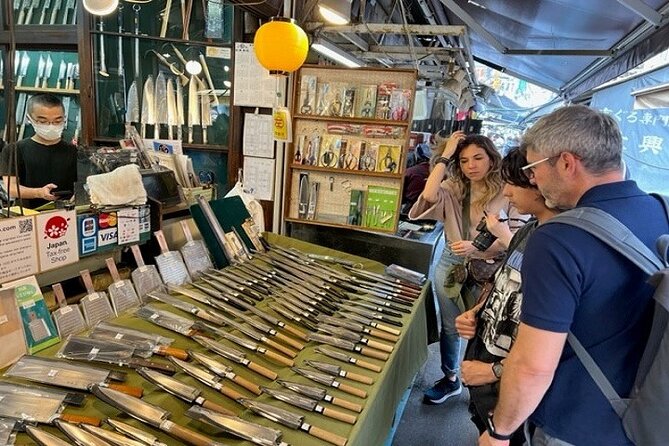
- Kappabashi Dougu Street: kitchenware and knives geared to the food-and-beverage industry
- Plastic display food shops that show the kind of dishes you see in Japanese restaurants
- Asakusa time to balance shopping with old-school Tokyo streets
- Flexible ending near Tokyo Skytree so you can stretch the day your way
Tsukiji Outer Market: Where the Food Supply Feels Real
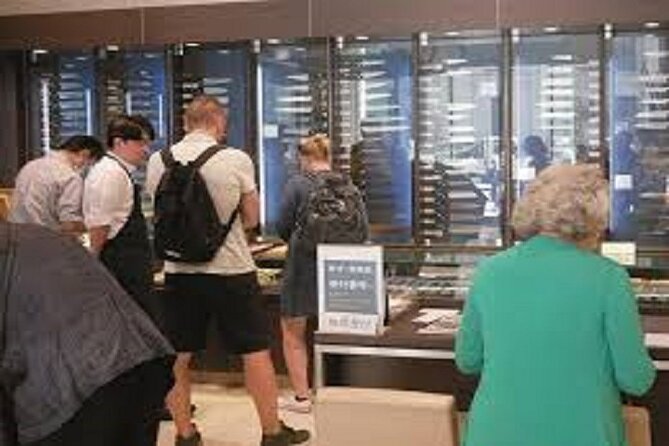
I love starting here because Tsukiji Outer Market is not a museum. It is a working wholesale area packed with small shops and stalls that mainly serve retailers, restaurants, and other buyers. That changes how the whole experience feels: you are walking through the same kind of environment that daily professionals depend on.
You will spend about an hour here, and the pace is part of the point. Think tight lanes, lots of storefront faces, and the sense that people come early and often. It is described as about 400 shops crammed into a compact area, which is exactly what makes it fun and also what makes it a little intense.
Readers also shortlisted these Tokyo bookings:
- Tokyo 6hr Private Tour with Government-Licensed Guide
★ 5.0 · 3,902 reviews - Tokyo: Shinjuku Local Bar and Izakaya Guided Walking Tour
★ 4.9 · 1,794 reviews - Tokyo: Private City Highlights Tour with Local Guide
★ 4.8 · 1,433 reviews - Tokyo: Tsukiji Fish Market Guided Walking Tour
★ 4.9 · 1,397 reviews
What you should pay attention to
Even if you are not buying anything in Tsukiji, you will get more out of the visit if you watch for practical details:
- How stalls are arranged for busy buying
- What kinds of ingredients and tools are being emphasized
- How people browse quickly and confidently
Also, admission is free for this stop, which helps you keep the tour’s cost focused on the guide and the time, not on extra fees.
Possible drawback to know early
If you hate crowds, Tsukiji may feel like a sensory workout. I would treat this as the tour’s busiest-feeling segment, and I would not plan on slow sightseeing or long photo stops.
Kappabashi Dougu Street: Knife Shopping With Context (Not Chaos)
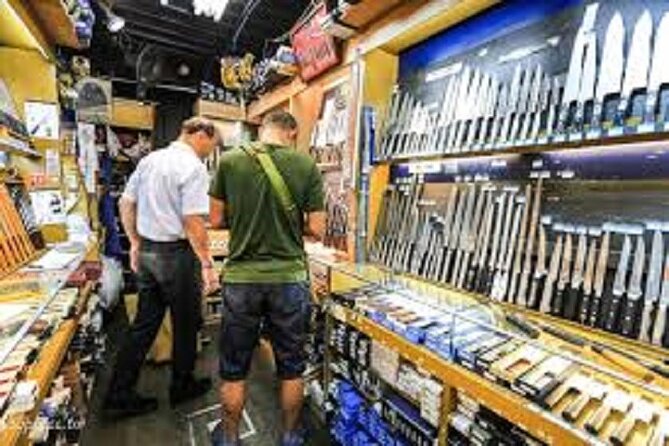
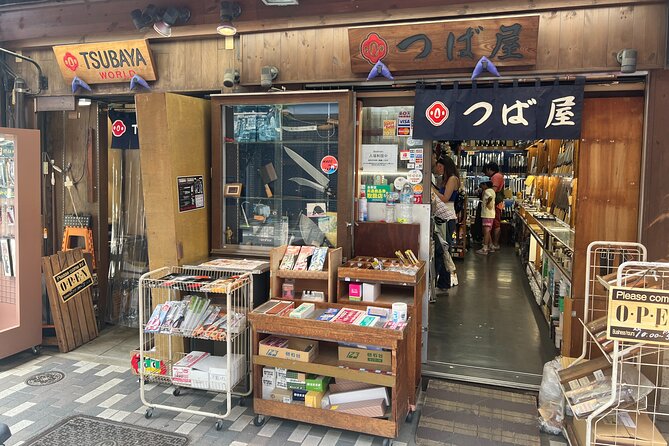
After Tsukiji, the tour shifts into the reason many people book in the first place: Kappabashi Dougu Street. This area has long been a supplier to the food and beverage industry, which is a fancy way of saying you are not just wandering through souvenir shops. You are in a place where kitchens and professionals source tools.
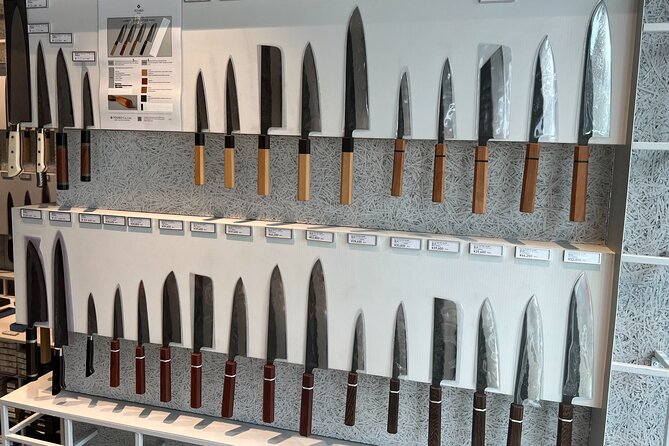
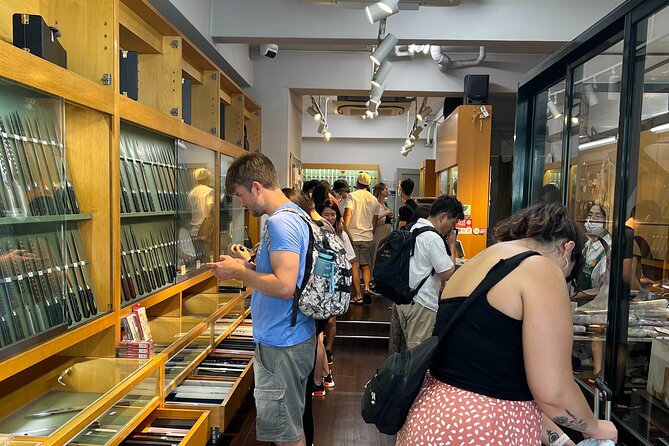
You get about an hour on this street, which is short enough to keep it focused but long enough to compare options. And the tour is not only about buying. The guide explains different types of knives used in Japanese cooking, so you can make more sense of what each blade is meant to do.
What makes Kappabashi shopping feel different
Here is what I like about this segment: the street is built for tools. You will find Japanese kitchen ware and knives at prices that are described as reasonable for the quality. That is important because knife shopping in Japan can swing from street-level affordable to very high-end. A good guide helps you avoid the extremes and aim for something that fits your cooking.
Readers also shortlisted these Tokyo bookings:
- Tsukiji Fish Market Guided Tour and Sushi Making with Pro Chef★ 5.0 · 775 reviews
- Tokyo: Tsukiji Fish Market Food and Culture Walking Tour★ 4.7 · 757 reviews
- Tsukiji Fish Market: Street Food & Culture Walking Tour★ 5.0 · 669 reviews
- Tsukiji Fish Market Small-Group Food Walking Tour★ 5.0 · 621 reviews
- Tokyo: Tsukiji Fish Market Sushi Making Class with Pro Chef★ 4.9 · 506 reviews
A fun detour: plastic display food
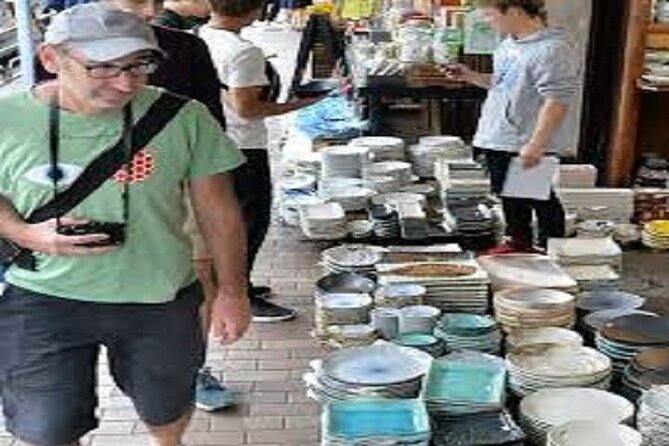
Kappabashi is also famous for plastic display food shops. Even if you do not plan to buy anything from them, this is a smart way to get oriented in Japanese dining culture fast. Those displays match what you see in restaurant front windows across Japan, so it gives you a visual language for the rest of your trip.
What to consider before you buy a knife
The tour does not promise a specific type of purchase, so you should go in with your own plan:
- Are you looking for a first Japanese knife, or a specific replacement blade?
- Will you use it often enough to justify the weight and packing effort?
- Do you want a general-purpose knife or something more specialized?
With the guide’s explanations, you can ask better questions and avoid buying based on looks alone.
Asakusa Stop: Keeping the Day Grounded in Tokyo
Then you swing into Asakusa for another hour of strolling. This is a nice counterbalance to the shopping intensity. Asakusa is built around Nakamise-dori, the shopping street that runs from Kaminarimon Gate toward Senso-ji Temple, plus lots of nearby smaller retro lanes.
The area is described as densely populated with both small and large shopping streets. In plain terms: it is lively, scenic, and full of everyday Tokyo energy. It is a good way to reset your brain after knife-focused browsing and to see Tokyo beyond the commercial counter.
Why this stop pairs well with a knife tour
Japanese kitchen culture is not just about utensils. It is also about how people shop, eat, and gather. Asakusa gives you that wider context, and it makes the day feel like Tokyo, not just a shopping errand.
Practical note
This is another hour where you are walking around areas that can be crowded, so keep your expectations realistic. You are not going to finish Asakusa like a checklist. It is more like wandering with purpose.
Walking, Pickup on Foot, and Getting Your Time Right
This is a walking tour, and that matters. The tour summary notes pickup is offered, but the additional details also say the meet-up is on foot within a designated area in Tokyo and to be aware that pickup is on foot. Translation: you will still be walking even if you have help getting started.
The duration is about 4 hours. That includes three main stops (Tsukiji Outer Market, Kappabashi Dougu Street, and Asakusa). A good plan here is to treat the tour as the backbone of your day and keep other commitments light.
What this means for your day schedule
If you try to stack Skytree tickets, a long lunch plan, and a separate attraction right after, you may feel rushed. Instead, save the rest of your afternoon for something flexible—especially since the tour can finish near Tokyo Skytree.
Included vs not included, in human terms
You do get a licensed local English speaking guide, and you will meet on foot in the designated area. What you do not get is transportation fees, lunch, and personal expenses. So budget for:
- Getting to your hotel pickup point or meet-up area
- Snacks or a sit-down meal after the tour
- Anything you decide to buy in the knife and kitchenware areas
Price and Value: Is $107.50 Fair for 4 Hours of Shopping?
The price is $107.50 per person for roughly 4 hours, and it includes a licensed local English guide. I think this is good value if you want two things at once:
1) Shopping with context
2) Tokyo sightseeing that does not require planning every transfer
Knife shopping is one of those topics where language and product knowledge can save you money. Without guidance, it is easy to buy something that looks right but does not match your cooking needs. With the guide explaining different knife types used in Japanese cooking, you have a better shot at making a purchase that fits.
Also, the tour includes admission free for the market stop you visit. That helps keep the day from turning into an add-on-fee situation.
Where the price might not feel worth it
If your only goal is to buy a knife and you are already confident about what to buy, you might find cheaper DIY shopping options. But if you want a guided path that also ties in Tsukiji energy and Asakusa streets, the guided format pays for itself in time and clarity.
End Near Tokyo Skytree: Stretch the Afternoon Your Way
The tour description notes you can finish after the Asakusa and shopping segments and head toward nearby Tokyo Sky Tree (Tokyo Skytree). It also clarifies that both guide and guest entry fees are not covered for Skytree.
That means you can treat Skytree as a post-tour option, not part of the paid visit. If you want to go up, plan to buy those tickets separately. If you do not feel like it, you can still use the location to guide your next plan.
Tips to Get the Most Out of Knife Shopping in This Part of Tokyo
You do not need to be a chef to enjoy this tour. You just need a little structure so shopping stays fun instead of confusing.
Bring a simple decision checklist
Before you enter the knife shops, decide what you are aiming for:
- A general-purpose kitchen knife
- Something for slicing and prep
- A beginner-friendly upgrade over what you currently use
Then ask your guide about which knife types fit that goal. This tour is designed to explain the “why,” so use that.
Pack smart if you plan to buy
Even though the tour includes guidance, you will still be responsible for your own shopping bags and carry strategy. If you buy a heavier knife set, you will want to think about how you will pack it for the rest of your trip.
Use the plastic food displays as a trip tool
These displays are more than fun photos. They help you notice dish styles you will later see in menus. That makes the whole food experience feel more connected.
Should You Book This Kappabashi Knife Shopping Tour?
I would book this tour if you want knife shopping with explanations and you also want to see Tokyo street life in Tsukiji and Asakusa. The strongest value is the mix: market context first, specialized kitchen tools second, then classic neighborhood atmosphere to round out the day.
I would skip or rethink it if you hate walking in crowds, you are only interested in shopping one very specific knife type and already know exactly what you want, or you need a low-effort schedule. Because it is a walking route, the day will feel active even when you are standing in shopfronts.
FAQ
How long is the Kappabashi Knife Shopping Tour?
It runs for about 4 hours.
What is included in the price?
The tour includes a licensed local English speaking guide and meet up with the guide on foot within a designated area of Tokyo.
Does the tour include pickup?
Pickup is offered, and you may also meet the guide within a designated area on foot.
Are any entrance fees included?
Tsukiji Outer Market admission is free. Skytree entry fees are not covered for either the guide or the guest.
Is transportation included?
No. Transportation fees are not included.
Is there food included in the tour?
No. Lunch is not included.
What is the cancellation policy?
You can cancel for a full refund up to 24 hours in advance of the experience start time. If you cancel less than 24 hours before, the amount paid is not refunded.
More Guided in Tokyo
- Tokyo 6hr Private Tour with Government-Licensed Guide
★ 5.0 · 3,902 reviews - Tokyo: Shinjuku Local Bar and Izakaya Guided Walking Tour
★ 4.9 · 1,794 reviews - Tokyo: Private City Highlights Tour with Local Guide
★ 4.8 · 1,433 reviews - Tokyo: Tsukiji Fish Market Guided Walking Tour
★ 4.9 · 1,397 reviews - Tokyo 4hr Private Tour with Government-Licensed Guide
★ 5.0 · 1,394 reviews
More Tours in Tokyo
- Mt Fuji and Hakone 1-Day Bus Tour Return by Bullet Train
★ 5.0 · 26,383 reviews - 1-Day Tokyo Bus Tour
★ 5.0 · 14,250 reviews - Tokyo: Shinjuku Food Tour (13 Dishes at 4 Local Eateries)
★ 5.0 · 6,603 reviews - Tokyo Mt Fuji 5th St & Hakone Cruise Bus Tour w/Bullet Train
★ 4.4 · 5,024 reviews - Flagship 2-Hours Official Street Go-Kart Tour – Tokyo Bay Shop
★ 5.0 · 4,974 reviews
More Tour Reviews in Tokyo
- Mt Fuji and Hakone 1-Day Bus Tour Return by Bullet Train
★ 5.0 · 26,383 reviews - 1-Day Tokyo Bus Tour
★ 5.0 · 14,250 reviews - Tokyo: teamLab Planets TOKYO Digital Art Museum Entry Ticket
★ 4.6 · 9,779 reviews - Mt Fuji & Hakone Cruise, Drum Show Bullet Train 1 Day from Tokyo
★ 4.0 · 7,413 reviews - Tokyo: Shinjuku Food Tour (13 Dishes at 4 Local Eateries)
★ 5.0 · 6,603 reviews
Latest Tokyo reviews off our desk



Shopping Tours, compared.
 ★ 5.0Tokyo Tsukiji Fish Market Food and Culture Walking TourFrom $993,184 reviews
 ★ 5.0Tsukiji Fish Market Food and Walking tourFrom $301,724 reviews
 ★ 4.9Tsukiji Fish Market Guided Walking TourFrom $221,397 reviews
 ★ 5.0Tsukiji Fish Market Guided Tour and Sushi Making with Pro ChefFrom $104775 reviews
★ 4.7Tsukiji Fish Market Food and Culture Walking TourFrom $96757 reviews
★ 5.0Tsukiji Fish Market Guided Tour and Sushi Making with Pro ChefFrom $104775 reviews
★ 4.7Tsukiji Fish Market Food and Culture Walking TourFrom $96757 reviews
 ★ 5.0Tsukiji Fish Market: Street Food & Culture Walking TourFrom $33669 reviews
 ★ 5.0Tsukiji Fish Market Small-Group Food Walking TourFrom $87621 reviews
 ★ 4.9Tsukiji Fish Market Sushi Making Class with Pro ChefFrom $63506 reviews
Browse the lists this tour appears in