
Reviewed · YOKOHAMA DAY TRIPS
Learn Sushi-grade fish with a licensed guide @Yokohama fishmarket
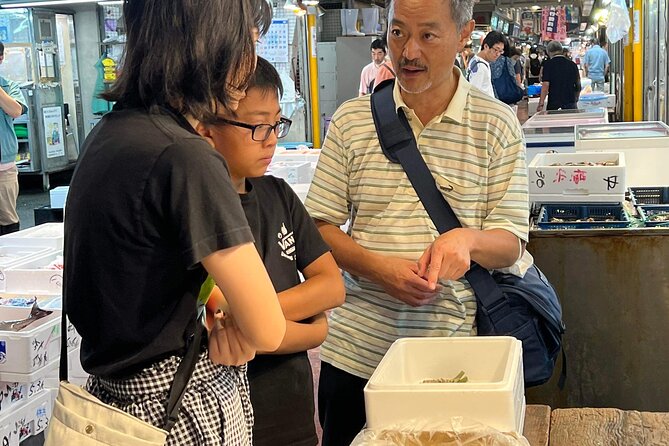
Sushi lessons start in the fish lanes. This Yokohama Fish Market tour turns breakfast curiosity into real sushi knowledge: you’ll see the morning catch, hear how fishermen keep it fresh, and then connect those ingredients to sushi you’ll order later. I especially liked the chance to learn why free tuna tasting isn’t just a snack—it’s your entry ticket into how the fish is cut and discussed in Japan.
What I really enjoyed is the way the guide makes you practice. You’ll get quiz moments while you walk, plus cooking tips, and you’ll learn Japanese fish names (and how to ask for them) so you can talk about what you’re eating—not just point at it.
One drawback to plan for: this is a real wholesale market with raw fish, including eyes and bones. If that feels like too much, or if you’re worried about slippery floors, you’ll probably want to choose a different kind of food experience.
In This Review
- Key highlights you’ll actually use
- First stop: JR East Yokohama Station, then a short walk in sneakers
- Entering the wholesale market: how morning fish becomes sushi-grade
- The part everyone remembers: tuna tasting and a dismantling show
- Sushi ingredient learning that goes beyond names
- Walking through shops and restaurants: where your questions meet real sushi
- Why Yokohama feels different from Tokyo’s big-name markets
- Timing, pace, and what the 2-hour format gets right
- Price and value: is $55.28 worth it?
- Who should book (and who should skip)?
- Should you book this Yokohama sushi-grade fish tour?
- FAQ
- What time does the tour start, and how long is it?
- Where do I meet the guide?
- Is the wholesale market entrance included?
- Is food included in the tour price?
- Do I get to taste tuna during the tour?
- Is the group small?
- What should I consider if I don’t want to see raw fish?
Key highlights you’ll actually use
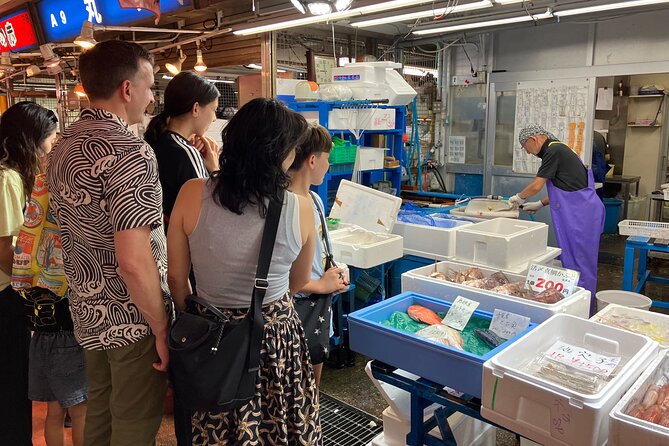
- Wholesale market access with permission to enter where the action happens
- Morning catch from 20+ local fishing grounds, so you get context fast
- A guided focus on how fish is caught, handled, and preserved before freezing became common
- Tuna tasting and a tuna dismantling show with clear explanations
- Quiz-style practice that helps you remember Japanese fish names and how to ask
- Small group size, with a maximum of 2 travelers, for better Q&A
First stop: JR East Yokohama Station, then a short walk in sneakers
The tour starts early, at 7:30 am, with your meeting point at the North gate of JR East Yokohama Station. You’ll be walking about 15 minutes to reach the market, and the morning timing matters—this is when fish is freshest and the stalls and wholesale flow make the most sense.
Comfort counts here. The market floor can be very slippery, so skip high heels and anything with poor grip. I also recommend wearing clothes you don’t mind getting a little fish-air exposure, because you’ll be close to the source.
If you’re traveling with someone, this layout is friendly. The group size is capped at 2 travelers, so the tour doesn’t feel like you’re being rushed through a crowd.
The harbour city next door, reviewed
- Tokyo 8hr Private Tour with Licensed Guide from Yokohama
★ 5.0 · 94 reviews - Shuttle Van Transfer, Yokohama(Port)⇒Tokyo, Narita, Haneda, TDR
★ 5.0 · 63 reviews - Yokohama Ramen Adventure From a Local Noodle Factory to Home
★ 5.0 · 60 reviews - Yokohama 4hr Private Tour with Government-Licensed Guide
★ 5.0 · 34 reviews
Entering the wholesale market: how morning fish becomes sushi-grade
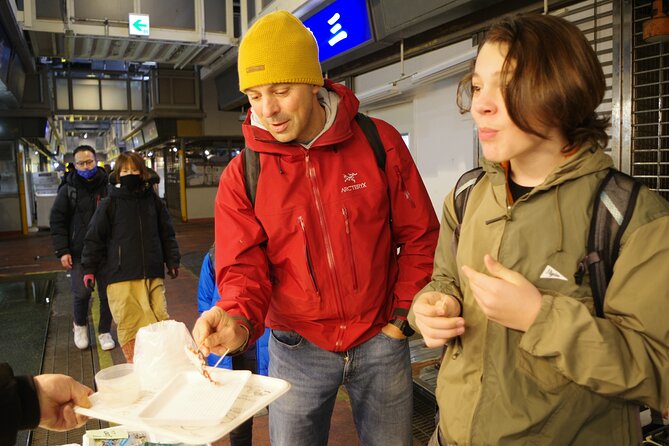
You’re granted permission to enter the whole sale market, which is a big part of the value. You’re not just shopping from the outside. You’ll walk through the market area and see the kinds of fish and seafood that get handled quickly after landing.
A licensed guide leads the experience, and the background matters. The guide has fished from Hokkaido to Kyushu for over 50 years, so the explanations aren’t theoretical. They’re built around how fishing actually works and what happens to fish between catch and counter.
This tour leans hard on the source of the ingredients:
- You’ll see fish caught that morning
- You’ll learn where the fish comes from, including over 20 local fishing grounds
- You’ll hear how fishermen keep fish fresh and why timing is everything
Then comes the part that makes the whole topic click. The guide also explains how fish and seafood were preserved before freezing technology became widely used. Even if you don’t remember every historical term, you’ll walk away understanding the “why” behind Japanese seafood care: freshness isn’t a marketing word here. It’s a chain of handling decisions.
The part everyone remembers: tuna tasting and a dismantling show
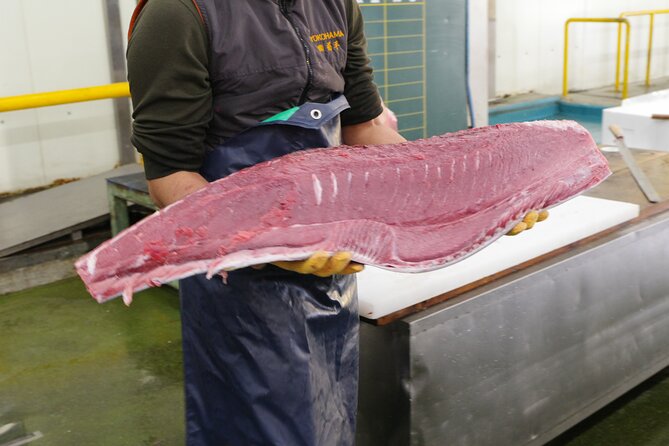
One of the most praised moments is the tuna dismantling show and how it’s explained. If you want to understand sushi, you can’t stay vague. This is where the tour gets practical.
You’ll get a free tuna tasting, and you’ll also have the option to purchase fresh tuna fillets or blocks after you learn what you’re looking for. Even if you don’t buy anything, the tasting gives your brain a reference point: flavor, texture, and what changes when fish is cut differently.
The dismantling show (plus the guide’s commentary) helps you connect:
- the fish you see on the racks
- the cuts you’ll hear about later
- the way people talk about quality at the market
It’s not a lecture that floats above real food. It stays anchored to what’s in front of you.
Sushi ingredient learning that goes beyond names
This tour isn’t only about sightseeing. It’s designed to help you order and talk with confidence later.
As you stroll through, you’ll learn:
- Japanese fish names
- how to ask fish names in Japanese
- quiz-style questions that keep you paying attention instead of passively following
That language piece is more useful than it sounds. In a market setting, it’s the difference between pointing at a case and having a small conversation. And in Yokohama, the local tone can be tricky—this is one reason you’ll appreciate having a guide who can translate what the market people mean, not just what they say.
You’ll also pick up cooking tips from the guide. The goal isn’t to make you run home and cook sushi like a pro. It’s to help you understand how ingredients behave—so when you eat, you can actually read the food.
Walking through shops and restaurants: where your questions meet real sushi
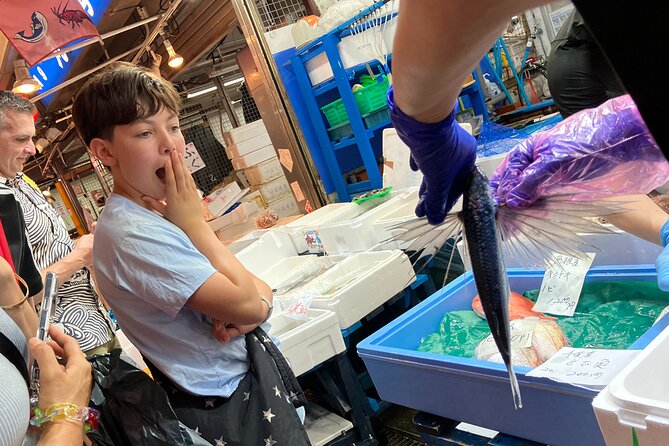
After the wholesale market portion, the tour shifts to a walk around in-market restaurants and shops. This is where you can connect lessons to plates.
Food itself is not included on the tour. You can choose to eat on your own at the market area, and the tour points you toward places where sushi is part of the everyday rhythm. If you’re budgeting, the example price given for a sushi set menu is about ¥2,200.
This part also helps you avoid the most common beginner mistake: ordering without knowing why a topping, cut, or fish type is showing up. With what you learn earlier—where fish comes from and what handling implies—you’ll be better at choosing what sounds right to you.
You’ll finish back near the station, with the plan to return to Yokohama Station around 9:00–9:30. You’re welcome to stay behind for a meal, which I think is smart. If you eat too early, you end up learning about seafood you never taste.
Readers also shortlisted these Yokohama bookings:
- Kamakura 6hr Private Walking Tour with Government-Licensed Guide★ 5.0 · 42 reviews
- Yokohama: Guided Cup Noodles Museum Tour & Make Your Own Cup★ 4.9 · 27 reviews
- Yokohama and Kamakura 6hr Private Trip Government-Licensed Guide★ 5.0 · 25 reviews
- Yokohama Full Day Tour with a Local Expert Guide★ 4.3 · 23 reviews
- Yokohama Half Day Walking Tour with an Expert Local Guide★ 4.5 · 22 reviews
Why Yokohama feels different from Tokyo’s big-name markets
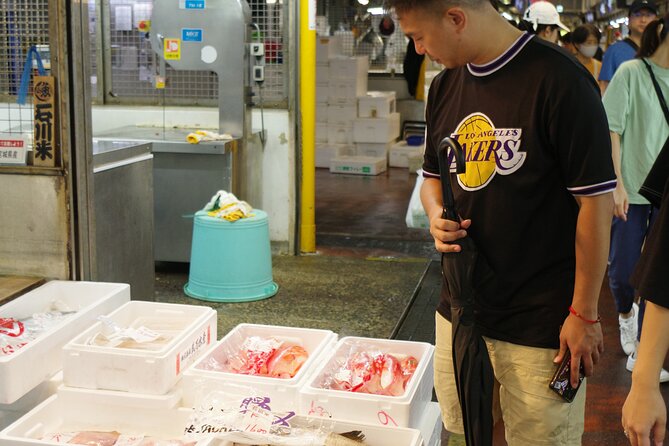
Here’s a context detail that surprised me: there are no fisheries in the greater Tokyo area. The seafood you see around Tokyo is coming from elsewhere, and markets function as the meeting point between catch and city demand.
Yokohama sits close to Tokyo (about 25 minutes from Yokohama Station to Tokyo), but the experience is more directly tied to the local fishing supply chain. That’s why this tour works. You’re not just observing a famous market. You’re learning from a place that links seafood to Kanagawa fishermen and local grounds.
If you’ve been to Tokyo’s most famous markets and found that it feels commercial or overwhelming, this can feel more grounded. It’s still a market environment, but the focus is on seafood education: how it was caught, how it was kept, and what it becomes on a sushi plate.
Timing, pace, and what the 2-hour format gets right
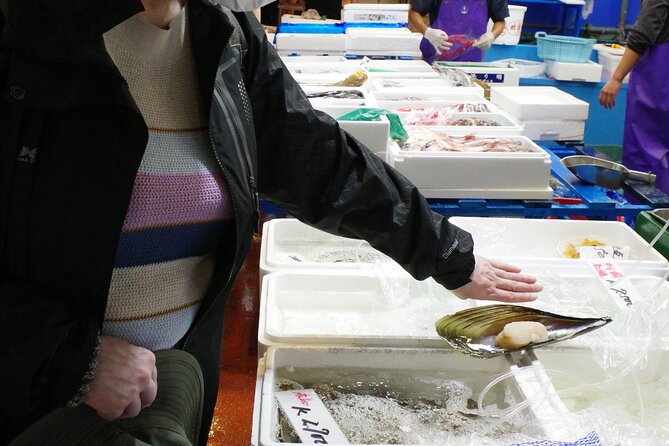
The tour is about 2 hours (approx.), starting at 7:30 am. For a market visit, that’s a manageable length: long enough to see real handling and learn key language points, but short enough that you’re not exhausted before you get hungry.
The pace is helped by the small group size, with a maximum of 2 travelers. That means the guide can answer your questions instead of projecting explanations for a big crowd.
Also: you’ll do a mix of walking and listening, plus quiz moments and a tasting. That structure matters because fish-market tours can be overwhelming if they’re only visual. Here, the tour builds a memory path: see → hear → taste → practice.
One more practical note: this experience works best in good conditions. It’s listed as requiring good weather, and if it’s canceled because of weather, you’ll be offered another date or a full refund.
Price and value: is $55.28 worth it?
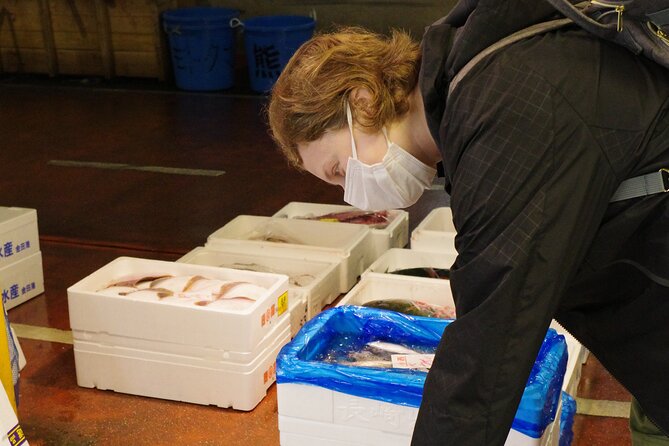
At $55.28 per person, you’re paying for more than a stroll. Here’s what’s included and what that inclusion is really buying you:
Included:
- Permission to enter the wholesale market
- Guided learning with a licensed guide who has 50+ years fishing experience
- Quizzes, cooking tips, Japanese fish-name learning
- Free tuna tasting
Not included:
- Meals (you can buy sushi afterward; a sushi set is roughly ¥2,200)
- Bottled water and soda/pop
If you compare this to paying for guided food experiences that are basically “tour plus a bite,” this one feels more like a lesson. The wholesale access alone usually changes your perspective, because you see how fish is handled before it becomes menu items.
The tasting and tuna dismantling show add value because they connect knowledge to your palate. And the small group format makes the guide’s time feel more personal, not rationed.
So for the right traveler—someone who wants to understand seafood rather than just eat—it’s strong value. If you only want casual street-food vibes, you might feel the market education focus is more than you bargained for.
Who should book (and who should skip)?
This experience is ideal if you:
- love sushi and want to understand the ingredient side, not just the end product
- enjoy fresh seafood and want context on where it came from
- like learning Japanese phrases you can use right away
- prefer small groups and Q&A over a large bus-style tour
It’s not a great fit if you:
- don’t want to see raw fish, including eyes and bones
- feel uneasy with slippery floors and early-morning market walking
- want meals included in the price (food is on you afterward)
Should you book this Yokohama sushi-grade fish tour?
Yes—if you’re the kind of traveler who reads menus like clues and gets excited by process. This tour gives you the missing “how did it get here?” part of sushi. The combination of wholesale access, a guide with decades of fishing background, a tuna tasting, and practical Japanese learning is the reason it stands out.
If you’re squeamish about raw fish, plan around that first. And bring grippy footwear, because the market floor is slippery and you’ll want to move comfortably.
If you want, tell me your travel dates and whether you’re more excited by sushi ingredients or by Japanese language practice, and I’ll help you decide if this timing fits your Yokohama day.
FAQ
What time does the tour start, and how long is it?
It starts at 7:30 am and lasts about 2 hours (approx.). You return to Yokohama Station around 9:00–9:30.
Where do I meet the guide?
Meet at the North gate of JR East Yokohama Station. The address provided is 2 Chome-16 Takashima, Nishi Ward, Yokohama, Kanagawa 220-0011, Japan.
Is the wholesale market entrance included?
Yes. The tour includes permission to enter the whole sale market.
Is food included in the tour price?
Meals are not included. You can walk around market restaurants and shops, and you may want to buy sushi there. A sushi set menu is listed as approximately ¥2,200. Bottled water and soda/pop are also not included.
Do I get to taste tuna during the tour?
Yes. There is FREE tuna tasting.
Is the group small?
Yes. The tour has a maximum of 2 travelers.
What should I consider if I don’t want to see raw fish?
This tour is not recommended for people who do not want to see raw fish, including eyes and bones. The floor in the market can also be slippery, so avoid high heels.
More Guided in Yokohama
- Tokyo 8hr Private Tour with Licensed Guide from Yokohama
★ 5.0 · 94 reviews - Kamakura 6hr Private Walking Tour with Government-Licensed Guide
★ 5.0 · 42 reviews - Yokohama 4hr Private Tour with Government-Licensed Guide
★ 5.0 · 34 reviews - Yokohama: Guided Cup Noodles Museum Tour & Make Your Own Cup
★ 4.9 · 27 reviews - Tokyo Full Day Tour with Licensed Guide and Vehicle from Yokohama
★ 5.0 · 26 reviews
More Tour Reviews in Yokohama
- EVO, WRX, Skyline – JDM Night Run to Daikoku Car Meet
★ 4.9 · 478 reviews - Tokyo: Best Price Daikoku Parking Area JDM Car Meet
★ 4.9 · 192 reviews - Daikoku & Tokyo Private JDM Tour by 700HP R34 GT-R
★ 4.9 · 101 reviews - Tokyo 8hr Private Tour with Licensed Guide from Yokohama
★ 5.0 · 94 reviews - 【Tokyo】JDM Daikoku Parking Area & Nissan Facility Tour
★ 5.0 · 87 reviews
The Harbour City Next Door, Rated
- Tokyo 8hr Private Tour with Licensed Guide from Yokohama
★ 5.0 · 94 reviews - Shuttle Van Transfer, Yokohama(Port)⇒Tokyo, Narita, Haneda, TDR
★ 5.0 · 63 reviews - Yokohama Ramen Adventure From a Local Noodle Factory to Home
★ 5.0 · 60 reviews - Yokohama 4hr Private Tour with Government-Licensed Guide
★ 5.0 · 34 reviews - Japanese Tea Ceremony at Private Home in Yokohama, suburban Tokyo
★ 5.0 · 32 reviews
Latest Yokohama reviews off our desk

Yokohama Day Trips, compared.
 ★ 5.0Tokyo 8hr Private Tour with Licensed Guide from YokohamaFrom $20194 reviews
 ★ 4.5Narita Airport: One Way Private Transfer to Tokyo|Yokohama HotelsFrom $7769 reviews
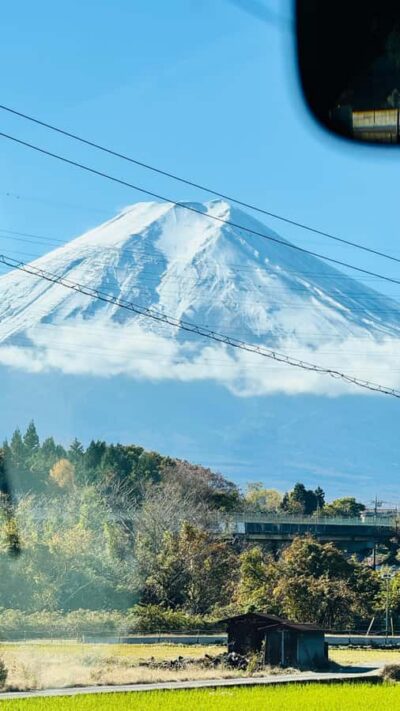 ★ 5.0Tokyo/Yokohama: Mt. Fuji and Hakone Private Day TourFrom $39264 reviews
 ★ 5.0Shuttle Van Transfer, Yokohama(Port)⇒Tokyo, Narita, Haneda, TDRFrom $12263 reviews
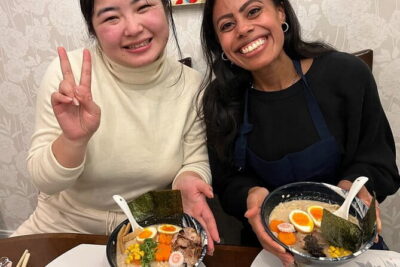 ★ 5.0Yokohama Ramen Adventure From a Local Noodle Factory to HomeFrom $16560 reviews
 ★ 4.5Private One-Way Transfers to/from Yokohama PortFrom $6750 reviews
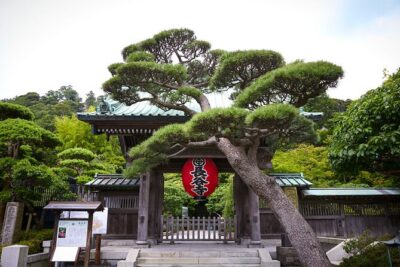 ★ 5.0Private Car Tour to see Highlights of Kamakura, Enoshima, Yokohama from TokyoFrom $1,18348 reviews
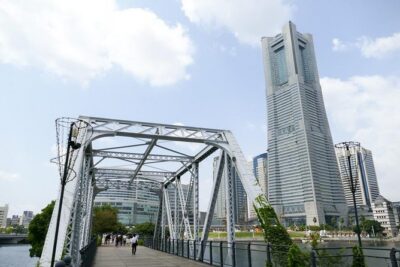 ★ 5.0Yokohama 4hr Private Tour with Government-Licensed GuideFrom $10834 reviews
Browse the lists this tour appears in