
Reviewed · SUMO TOURNAMENTS & SHOWS
Sumo Training Watching Experience in Tokyo
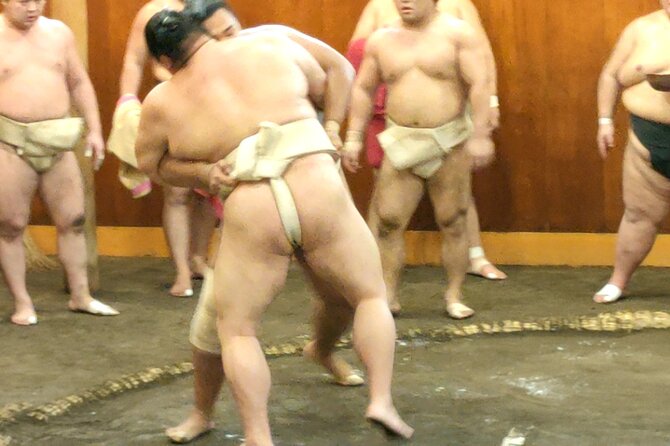
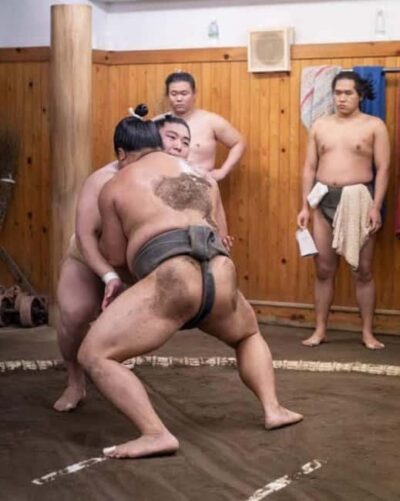
Sumo training at a real stable is different. This is not a comedy show. You watch serious, active wrestlers work their bodies up close, with live commentary that helps you follow what you’re seeing.
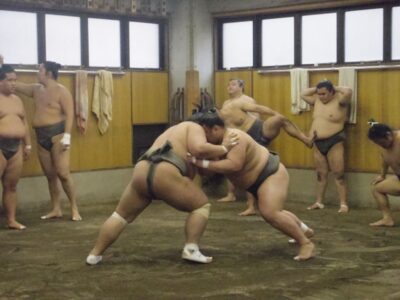
I especially like the sense of proximity. The training happens in front of you, and you can hear the thumps and the effort in a way a stadium match never gives. I also like that the program is structured—stretching and strength work, then basic training, then match-style drills—so the time feels focused instead of random.
One thing to plan for: stable etiquette is strict. You’ll sit on floor cushions, you can’t eat or drink, and late arrivals won’t wait—so bring patience, a calm phone setup, and comfortable posture support.
In This Review
- Key Things to Know Before You Go
- Sumo Training at a Real Stable, Not a Stage Show
- Getting to Ryogoku and Finding the Right Meeting Spot
- What Happens During the Practice: Stretching, Basics, Match-Style, Photos
- What you’ll notice as each part unfolds
- Stable Etiquette That Actually Matters (Silent Phones, No Food, Quiet Behavior)
- Floor Seating in Japan: Comfort Tips for Knees, Backs, and Pregnancy
- Live Commentary: Making the Training Understandable
- Price and Value: Is $84.70 Worth It?
- Photos With Wrestlers: Quick Bonus, Big Memory
- Who This Sumo Training Watch Is Best For
- Should You Book This Sumo Training Watching Tour?
- FAQ
- Is this a real sumo training session or a comedy show?
- How long does the experience last?
- Where do I meet the guide?
- How far is it from the meeting point to the stable?
- Can I eat or drink inside the stable?
- What are the phone rules during the tour?
- Will there be a chance to take photos with wrestlers?
- What seating should I expect?
- What are the age requirements for children?
- Is free cancellation available?
Key Things to Know Before You Go
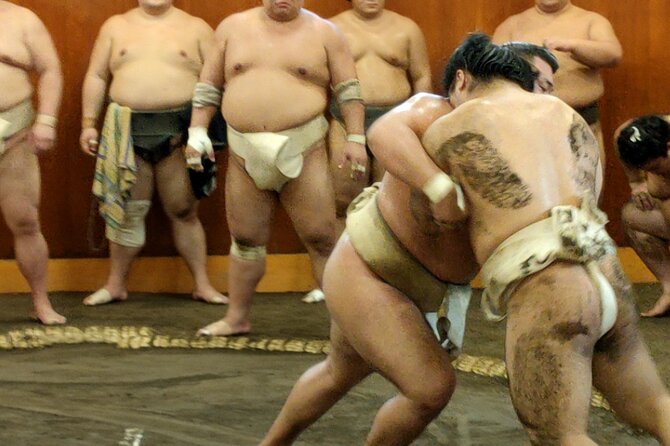
- Real active training: This is a serious session by working wrestlers, not staged entertainment.
- Small group size: Limited to a maximum of 8 people, which keeps the viewing space less chaotic.
- Silent-phone rules: You’ll need your phone on silent and use a silent-camera mode for photos.
- Floor seating (cushions): Expect to sit directly on the ground; knees and backs will feel it.
- A clear training flow: Stretch/strength → basic → match-style → photos (timing shifts by your arrival time).
- Photos after training may happen: You may be able to take a photo with wrestlers once practice ends.
Sumo Training at a Real Stable, Not a Stage Show
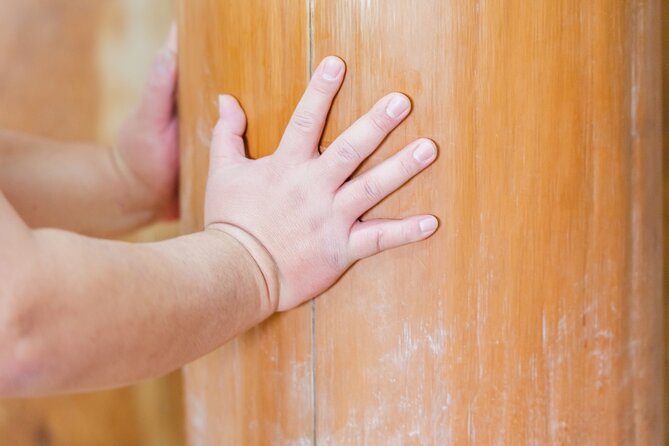
This experience focuses on the training itself, at an actual sumo stable. You’re not watching a scripted performance. You’re watching the craft: the warmups, the fundamentals, and the way wrestlers train for contact and rhythm.
Sumo is treated as sacred in Japan, and the atmosphere reflects that. You’ll likely feel the difference right away—people keep it quiet, movement is purposeful, and the rules exist for a reason. This isn’t about crowd noise. It’s about respectful observation.
Other ringside bookings readers scored
- Tokyo: Sumo Show and Dining Experience
★ 4.8 · 2,742 reviews - the SUMO show
★ 5.0 · 1,960 reviews - Tokyo Shinjuku Sumo Show & Experience with Photo
★ 5.0 · 1,750 reviews - Tokyo: Sumo Show and Experience in Shinjuku
★ 4.8 · 1,001 reviews
Getting to Ryogoku and Finding the Right Meeting Spot
You meet at Ryogoku Sta. 1-chōme-4-29 Yokoami, Sumida City. The walk to the stable is about 10 minutes on foot.
A small but important detail: the meeting place isn’t just “near” the big sumo landmarks. The stable is not right next to the Kokugikan area. It’s a short walk, but it’s long enough for wrong-turns to happen—especially if you’re juggling photos, directions, and jet lag. I’d give myself extra buffer time so you can arrive calm.
The tour also leaves on time. The experience can’t wait for late people, so plan to be early enough that you’re not sprinting while trying to look respectful.
What Happens During the Practice: Stretching, Basics, Match-Style, Photos
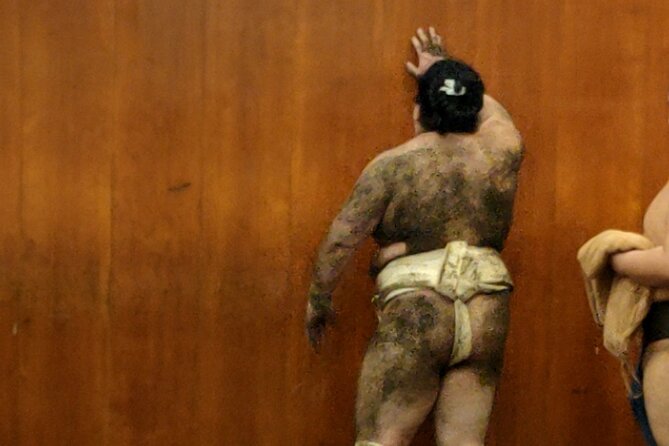
The training session runs about 2 hours 20 minutes (approx.). In real life, your exact flow depends on when you arrive.
Here’s the core program:
- ① Stretching and strength training
- ② Basic training
- ③ Match-style training
- ④ Take photos
If you arrive early (like 7:45), you should get the full sequence and the longer version of the visit—roughly 60 to 120 minutes for the training portion plus the photo segment.
If you arrive later (like 8:20), you generally start from ② basic training, because the earlier warmup portion is already in motion. That shorter start usually means a session around 30 to 90 minutes.
What you’ll notice as each part unfolds
Stretching and strength work sets the tone. It’s less about dramatic impact and more about getting the body ready—range of motion, bracing, and preparing for contact. Then basic training shows you the “why” behind techniques: stance, footwork, grips, balance, and the repeated motion that makes the later action believable.
Match-style training is where you’ll feel the intensity. This is where wrestlers practice the idea of a bout: timing, pushing, resisting, and re-engaging. Because it’s closer than a stadium, the effort and sound land harder.
Finally, you might get photos with wrestlers after the event. It’s not the main event, but it’s a memorable bonus.
Stable Etiquette That Actually Matters (Silent Phones, No Food, Quiet Behavior)
This tour comes with rules because it’s a working training space. Follow them and you’ll have a smoother, more respectful visit. Ignore them and you may be asked to go outside temporarily.
Here are the big ones:
- No eating or drinking inside the stable.
- Set your cell phone to silent.
- For photos, use a silent camera mode on your smartphone.
- Basically don’t talk during the tour.
- Avoid revealing clothing.
- If you have a cold or an infectious disease on the day, you should cancel your participation.
The “silent phone + silent camera” part is the one people miss most. It’s easy to forget your phone buzzes, or that your camera shutter noise still happens even when audio is muted. Check your settings before you step inside.
Also, you’ll likely feel the cultural difference in the way the space works. Even though you’re there to observe, the stable isn’t set up like a theatre. Treat it like a workshop. Quiet eyes, quiet hands, and no lingering with distractions.
- Tokyo: Shinjuku Food Tour (13 Dishes at 4 Local Eateries)★ 5.0 · 6,603 reviews
- Tokyo Mt Fuji 5th St & Hakone Cruise Bus Tour w/Bullet Train★ 4.4 · 5,024 reviews
- Flagship 2-Hours Official Street Go-Kart Tour – Tokyo Bay Shop★ 5.0 · 4,974 reviews
- From Tokyo: Mount Fuji Full-Day Sightseeing Trip★ 4.5 · 4,970 reviews
- Tokyo: Hop-On Hop-Off Sightseeing Bus Ticket★ 3.9 · 4,207 reviews
Floor Seating in Japan: Comfort Tips for Knees, Backs, and Pregnancy
You’ll sit on floor cushions, Japanese-style. There are no chairs in the viewing area. This is normal in a stable—but it can be a problem if you have limited mobility.
The experience specifically warns that people with bad knees or back, and pregnant women, should take care. If you think you’ll struggle sitting on the floor, plan accordingly—bring the most supportive option you can (and consider whether this is really the day for long floor time).
Also, children must be 6 years old or older. And there’s an extra note: even children over 8 who can’t sit still aren’t allowed. That’s not to be harsh. It’s because the stable environment requires calm attention.
Live Commentary: Making the Training Understandable
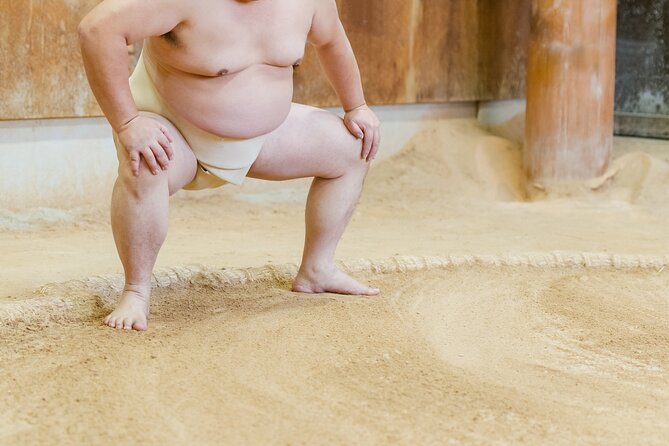
One reason this works better than showing up with no context is the live commentary. You’ll get explanations using original documents, which helps translate what you’re seeing.
You don’t need to be a sumo expert. The whole point is to make sense of the training rhythm: what they’re doing, why they’re doing it, and how it connects to bouts. That turns a simple viewing session into something you can actually remember with details.
And the group is small—up to 8 people—so explanations aren’t drowned out by a big crowd. You’re closer to the action, and the guidance is easier to follow.
Price and Value: Is $84.70 Worth It?
At $84.70 per person, this isn’t “cheap fun.” But it does offer value if you care about one thing: close-up reality.
You’re paying for:
- Real training by active wrestlers
- Small group access (max 8)
- Live commentary with structured explanations
- Photo opportunity after practice may happen
- The “how it feels” advantage—sound, heat, and intensity that you don’t get from a distant match seat
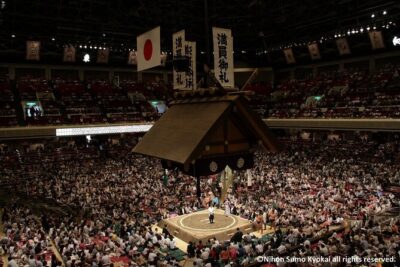
The alternative is usually either a stadium ticket (farther away, more crowd energy, less detailed observation) or a tourist show (entertainment first, training second). This sits in the middle: you get the training culture, but in a visitor-friendly format that still respects the stable’s rules.
If you’re visiting Tokyo and want one experience that feels genuinely “Japanese” in practice—not just in decor—this is a strong candidate.
Photos With Wrestlers: Quick Bonus, Big Memory
Photos are not the whole event, but it’s a nice ending. The program includes a final take photos segment, and you might be able to take a photo with wrestlers after training.
Because the stable rules are strict during practice, the photos feel like a controlled release of the tension you’ve built while watching technique. It’s often the part people remember most when the rest is quieter and more focused.
Treat it like a respectful moment. Keep your phone quiet and follow direction when it’s time.
Who This Sumo Training Watch Is Best For
I think this is best for you if:
- You want authentic access to Japanese sports culture
- You enjoy practical context (commentary that helps you understand what you’re seeing)
- You don’t need a loud show; you want serious training up close
- You can follow quiet rules and stable etiquette
It might not be the best fit if:
- You need chairs or have trouble sitting on the floor for an extended period
- You get uncomfortable with strict phone and behavior rules
- You’re arriving late and can’t adjust for a schedule that won’t wait
If you’re traveling with kids, double-check age needs and whether they can sit calmly for floor viewing.
Should You Book This Sumo Training Watching Tour?
If your goal is to see real sumo training in a setting that feels like a working stable—not a performance—then yes, it’s worth booking.
I’d book it when:
- You want one Tokyo activity that’s genuinely tied to Japan’s national sport.
- You care about technique and routine, not just big match moments.
- You can handle silent-phone expectations and floor seating.
Skip or think twice if you have significant floor-seat limitations, dislike rule-based settings, or you can’t reliably arrive on time. In sumo, timing and respect matter. This experience runs the same way.
FAQ
Is this a real sumo training session or a comedy show?
It’s a real training session by active sumo wrestlers, not a staged comedy show.
How long does the experience last?
It runs about 2 hours 20 minutes (approx.), though the actual time depends on when you arrive. With an earlier arrival, you may get about 60–120 minutes; with a later arrival, it can be around 30–90 minutes.
Where do I meet the guide?
Meet at Ryogoku Sta. 1-chōme-4-29 Yokoami, Sumida City, Tokyo 130-0015, Japan. The activity ends back at the meeting point.
How far is it from the meeting point to the stable?
It’s about a 10-minute walk to the stable on foot.
Can I eat or drink inside the stable?
No. You cannot eat or drink in the stable.
What are the phone rules during the tour?
You should set your cell phone to silent mode. For photos, you’ll need to use a silent camera mode on your smartphone.
Will there be a chance to take photos with wrestlers?
A photo with wrestlers may be possible after the event, as part of the program.
What seating should I expect?
You’ll sit directly on cushions on the floor instead of chairs. If you have bad knees or back, or if you are pregnant, take extra care.
What are the age requirements for children?
Children must be at least 6 years old. Children over 8 who can’t sit still are not allowed.
Is free cancellation available?
Yes, you can cancel for a full refund up to 24 hours before the experience’s start time.
More Tour Reviews in Tokyo
- Mt Fuji and Hakone 1-Day Bus Tour Return by Bullet Train
★ 5.0 · 26,383 reviews - 1-Day Tokyo Bus Tour
★ 5.0 · 14,250 reviews - Tokyo: teamLab Planets TOKYO Digital Art Museum Entry Ticket
★ 4.6 · 9,779 reviews - Mt Fuji & Hakone Cruise, Drum Show Bullet Train 1 Day from Tokyo
★ 4.0 · 7,413 reviews - Tokyo: Shinjuku Food Tour (13 Dishes at 4 Local Eateries)
★ 5.0 · 6,603 reviews
More Sumo, Ringside and Rated
- Tokyo: Sumo Show and Dining Experience
★ 4.8 · 2,742 reviews - the SUMO show
★ 5.0 · 1,960 reviews - Tokyo Shinjuku Sumo Show & Experience with Photo
★ 5.0 · 1,750 reviews - Tokyo: Sumo Show and Experience in Shinjuku
★ 4.8 · 1,001 reviews - Tokyo Grand Sumo Tournament Viewing Tour with Tickets
★ 5.0 · 692 reviews
Latest Tokyo reviews off our desk






Sumo Tournaments & Shows, compared.
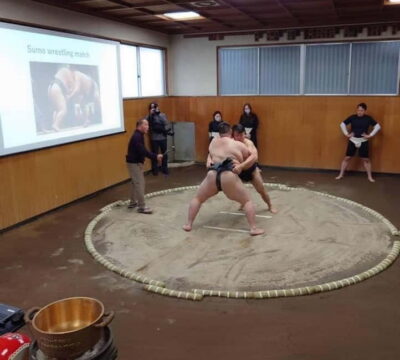 ★ 4.8Sumo Show and Dining ExperienceFrom $792,742 reviews
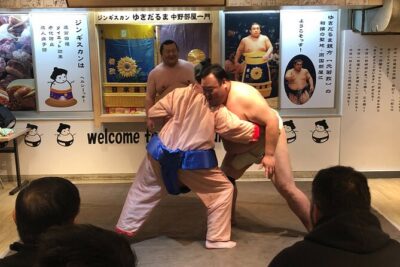 ★ 5.0the SUMO showFrom $891,960 reviews
 ★ 5.0Tokyo Shinjuku Sumo Show & Experience with PhotoFrom $791,750 reviews
 ★ 4.8Sumo Show and Experience in ShinjukuFrom $691,001 reviews
 ★ 5.0Tokyo Grand Sumo Tournament Viewing Tour with TicketsFrom $124692 reviews
 ★ 5.0Tokyo Sumo Wrestling Tournament ExperienceFrom $124660 reviews
 ★ 4.7Luxury Sumo Show Experience & Japanese cuisine & DrinkFrom $103577 reviews
 ★ 4.8Sumo Morning Practice Viewing TourFrom $81570 reviews
Browse the lists this tour appears in