
Reviewed · SUMO TOURNAMENTS & SHOWS
The SUMO Show & Experience with Hot pot lunch
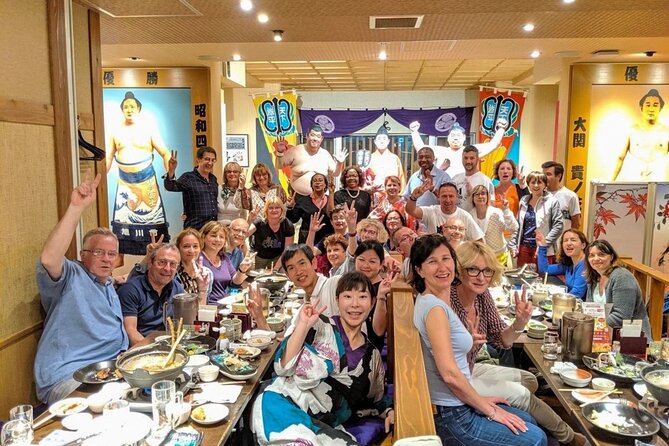
Sumo in Tokyo is louder than you expect. This is a family-friendly clay dohyo experience with a bilingual MC, plus a pro live match feel you can see up close. I like how hands-on it is with basic sumo footwork drills and ritual talk, and I also like the lunch side of things, since the Chanko Nabe set can be vegan and allergy-friendly with requests made ahead of time.
One thing to consider: at $97.55 per person, you’re paying for the whole package (show + costume + lunch), so it’s best if you’ll actually use every part of it. You’ll also want to be ready for the 10:00 am start so you don’t miss the ring training.
In This Review
- Key highlights worth showing up for
- Ryogoku clay ring: the sacred part feels real fast
- The bilingual intro: rituals, meanings, and practical viewing tips
- Into the dohyo: what you learn (and what you should watch for)
- Former wrestlers on display: power you can hear
- The padded-suit challenge: fun, safe, and a real test of strength
- Costume experience and photo time: get scale in your camera roll
- Chanko Nabe lunch: the protein-rich payoff with dietary care
- Timing, meeting point, group size: how to make it easy
- Cost and what $97.55 buys you (and what you should check before booking)
- Who this fits best (and who might want a different option)
- Should you book the SUMO show and Chanko Nabe lunch in Ryogoku?
- FAQ
- How long is the SUMO show and experience?
- Where do we meet for the tour?
- What time does it start?
- Is Chanko Nabe lunch included?
- Are vegan or allergy-friendly meal options available?
- Does the experience include anything besides the show?
- Is alcohol included with lunch?
- What about young kids and meals?
- Do I need a mobile ticket?
Key highlights worth showing up for
- Real clay ring (dohyo) practice in Ryogoku instead of just watching from the seats
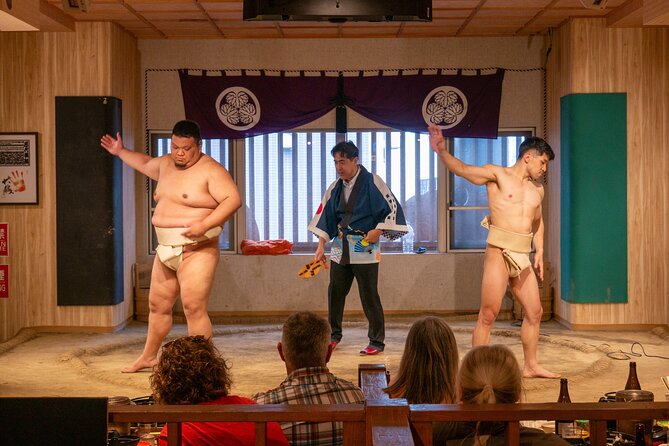
- Bilingual MC explanations of sumo rituals like salt-tossing and why shiko matters
- Former wrestlers teach the basics: shiko stomps, teppen pushing drills, and suriashi sliding footwork
- A friendly challenge moment where a volunteer tries to push a 160 kg wrestler in a padded suit
- Costume experience + photo time so you can get a memory standing near the wrestlers
- Chanko Nabe lunch options with vegan and allergy-friendly choices available
Ryogoku clay ring: the sacred part feels real fast
Ryogoku is where sumo belongs. Even before the action starts, there’s a sense that you’re stepping into a sports space that locals actually care about, not a far-off theme set. The format also helps: you’re not stuck behind glass. You’re in the room with the ring, learning what to look for and why it’s done.
The event runs about two hours, and it’s built for mixed ages. That matters because sumo can feel intimidating at first—until someone breaks down the basics in plain language and you see how the training moments are handled. If you’re going with kids, this kind of structured, safe fun is a big deal.
I also like the pacing. You get the rituals and drills, then the pro match, then the hands-on challenge. It keeps momentum so you’re not waiting around for long stretches.
Other ringside bookings readers scored
- Tokyo: Sumo Show and Dining Experience
★ 4.8 · 2,742 reviews - the SUMO show
★ 5.0 · 1,960 reviews - Tokyo Shinjuku Sumo Show & Experience with Photo
★ 5.0 · 1,750 reviews - Tokyo: Sumo Show and Experience in Shinjuku
★ 4.8 · 1,001 reviews
The bilingual intro: rituals, meanings, and practical viewing tips
A bilingual MC kicks things off with the core ideas behind sumo rituals. You’ll hear about the why—not just the what. For example, salt-tossing is explained as part of the tradition before a bout, and you’ll learn how shiko leg stomps fit into warding off evil spirits in the cultural story of sumo.
This is useful even if you only know sumo from clips. After you understand those signals, you start noticing them in real time when the pros go to work. It turns a random match into something you can actually follow.
You’ll also see the demonstrations move through the basics in a logical order:
- shiko (the stomps)
- teppen (push drills)
- suriashi (sliding footwork)
Because these are shown as skills—not just theatrics—you’ll leave with a better sense of what wrestlers are doing under the spectacle.
Into the dohyo: what you learn (and what you should watch for)
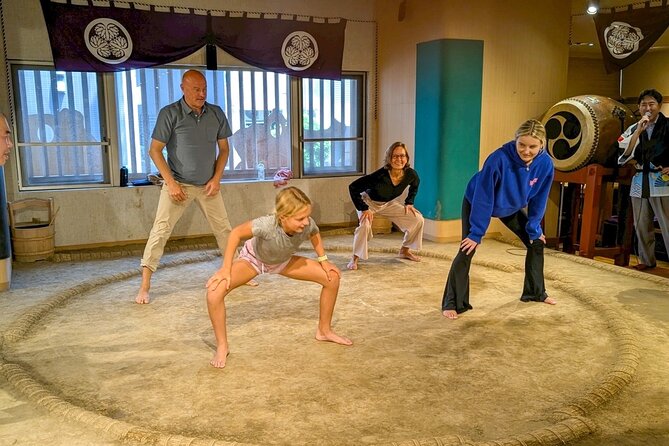
This part is hands-on. You’ll be invited to step onto the clay dohyo and try traditional footwork, at least in the simpler, safe format. Even if you don’t master anything in the moment (no one does), you’ll feel the difference in the surface. Clay matters. Foot placement and balance feel less forgiving than you’d expect.
What I like here is that the instruction isn’t the type that makes you feel lost. The point is to help you participate while also giving you a mental checklist for watching the pros later. If you want to understand sumo quickly, this is one of the fastest ways I’ve found.
For parents: you can join in or simply watch, depending on what fits your group. If you’re traveling with a stroller or you have a small child who needs breaks, the watching option is a practical choice.
Former wrestlers on display: power you can hear
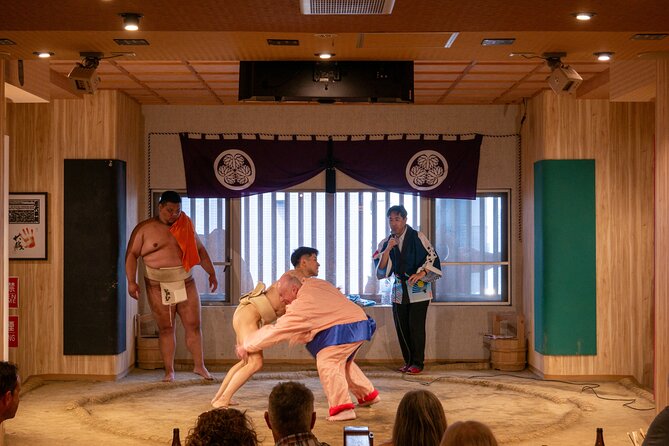
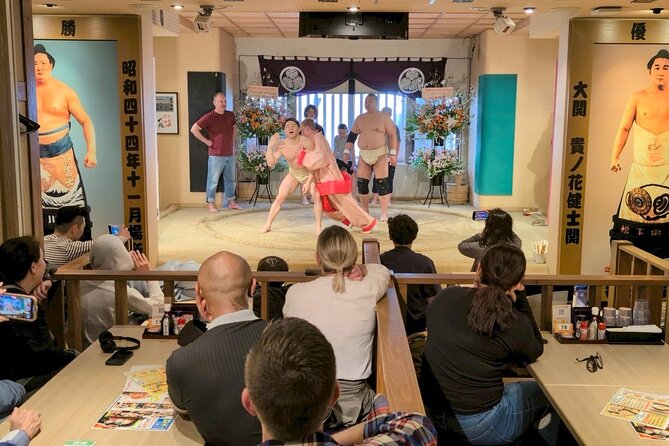
After the intro, you shift into live demonstrations and match viewing. Former wrestlers show you the techniques at full speed for the event setting, so you get the contrast between training moves and match intensity.
This is where sumo stops being “giant men in tights” and becomes a real physical sport. You’ll hear the impact during body collisions, and you’ll understand that much of the drama is in leverage, timing, and footwork. Seeing the stomp and push drills makes more sense after you witness how those mechanics connect to actual bouts.
One of the best value parts of the show is that it’s not only explanation. You get visuals, sound, and scale. The wrestlers look bigger than you expect in real life, and once you’re in the ring space, their size is harder to ignore than it is in TV footage.
The padded-suit challenge: fun, safe, and a real test of strength
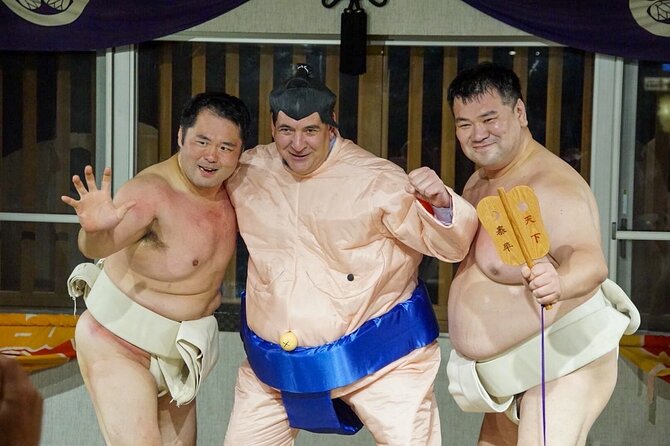
The final challenge is the moment people talk about later. A volunteer wears a padded suit and tries to push a 160 kg wrestler. It’s designed to be safe and hilarious, but it’s also a reminder of what makes sumo hard: body control and force transfer at extreme weight.
This isn’t just a gimmick. It gives you a physical lesson in why sumo looks simple until you try it. Even if you’re not the volunteer, watching it teaches you something you can apply to your viewing later—like how stubborn the balance point is and how much effort goes into even basic forward movement.
If you’re going with friends, this is a great “we were there” moment. If you’re going with kids, it helps them remember sumo as a sport they touched, not just something they watched.
Readers also shortlisted these Tokyo bookings:
- Tokyo: Mt.Fuji & Lake Kawaguchiko 1-Day Bus Tour w/Optional Lunch★ 4.5 · 839 reviews
- Tokyo: Sumo Experience and Chanko Nabe Lunch★ 4.8 · 257 reviews
- Tokyo: Tsukiji Fish Market Tour with 6 Stops & Seafood Lunch★ 4.5 · 165 reviews
- Tokyo: 1 Day Bus Tour with Meiji-Jingu,Odaiba,lunch&Skytree★ 4.6 · 156 reviews
- Tokyo: Full-Day Tour w/Tea Experience,Buffet Lunch & Cruise★ 4.9 · 151 reviews
Costume experience and photo time: get scale in your camera roll
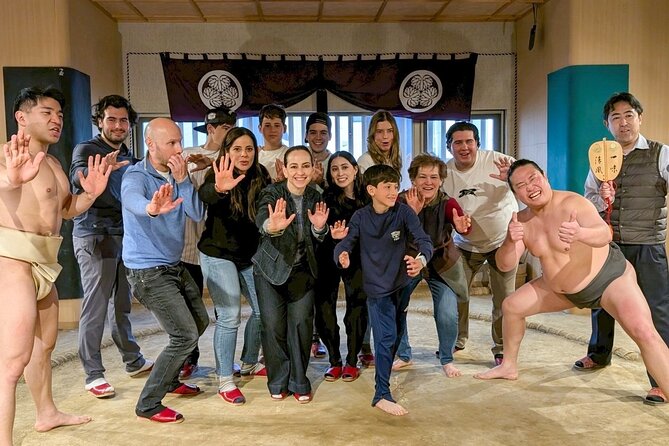
After the training and match moments, there’s a photo session. You stand side-by-side with the wrestlers so you can capture the scale you don’t fully grasp until you’re in the same frame.
A costume experience is included as part of the package. That adds a memorable, playful layer, especially for families who want something more than a standard ticket. It’s also the kind of activity that works across ages, since it’s not physically demanding.
If you care about photos (and who doesn’t), arrive ready to move quickly when the photo window starts. These sessions tend to flow in a set order to keep the schedule on track.
Chanko Nabe lunch: the protein-rich payoff with dietary care
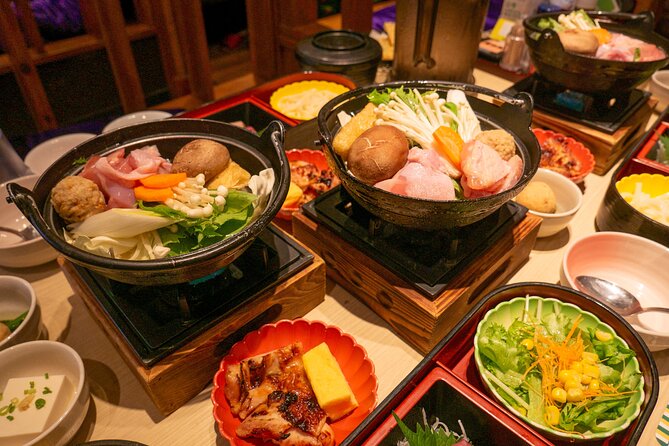
Then comes the part that makes the experience feel complete: Chanko Nabe lunch. This is the classic “soul food” style meal associated with building sumo physiques—protein-rich hotpot with fresh ingredients. In a two-hour event, the lunch isn’t an afterthought. It’s timed so you can refuel after you’ve already used energy in the ring training and watching.
The best practical detail: you can request dietary accommodations at least 48 hours in advance. The lunch is described as having vegan and allergy-friendly options, and that matters because “sumo show + lunch” can turn into a hassle if you can’t eat what’s offered.
From the experience feedback, it’s clear that the team works hard to make substitutions. One family noted gluten-free support by swapping ingredients, and others highlighted vegetarian help—important if you’re traveling with an infant, a picky eater, or someone with restrictions.
Lunch also includes a mini chanko hotpot set. Some guests mentioned sashimi as part of what they received with lunch. Since the exact set can vary by day, think of it as a full chanko lunch experience centered on the hotpot, with additional items possible depending on the service.
Two quick tips for your comfort:
- If you have allergies, send your details early and double-check the specific request (the earlier you do it, the better).
- If your group is hungry after the show, don’t plan a long walk right away after the tour ends. Eat first, enjoy your photos, then head out.
Timing, meeting point, group size: how to make it easy
You’ll meet at Hana no Mai Edo Tokyo Museum, 1-chōme-1-15 Kamezawa, Sumida City, Tokyo 130-0014. It starts at 10:00 am, and the activity ends back at the meeting point.
This is a good fit if you want a single, well-paced block in Tokyo. Two hours is short enough to mix into a busier itinerary, and the return-to-start setup makes it simple for parents and anyone managing transit.
The tour caps at a maximum of 40 travelers, which keeps the event feeling manageable. It also helps with the hands-on components and photo flow, since you don’t end up lost in a massive crowd.
Tickets are mobile. That’s one less thing to track while you’re sightseeing.
Cost and what $97.55 buys you (and what you should check before booking)
At $97.55 per person, you’re not paying for a bare-bones show. You’re paying for the full combo: the sumo show elements, a costume experience, and a Chanko Nabe lunch set.
That value clicks if:
- you want the hands-on ring time, not just passive viewing
- you care about getting a memory photo standing near the wrestlers
- you’ll actually use the lunch and want it catered to dietary needs
It may feel steep if you only want the match portion and plan to eat elsewhere. In that case, you might prefer a simpler ticket.
Also, the experience notes that it depends on good weather. If weather is bad, it may be rescheduled or refunded, so keep that in mind if your plan is tight.
Who this fits best (and who might want a different option)
This is ideal for families because it’s structured, safe, and built around participation. It’s also a strong option for people who want English guidance and clear explanations of sumo rituals and techniques. The format is designed so kids can feel involved without it turning chaotic.
It’s also a good choice if you have elderly relatives in the group. The event is set up as a family-friendly environment with support for different needs.
You might choose something else if:
- you want a purely competitive sports experience with advanced technique breakdowns
- you dislike group activities or photo sessions
- you only care about watching and not participating or eating the included lunch
Should you book the SUMO show and Chanko Nabe lunch in Ryogoku?
If you want a single Tokyo experience that hits three targets—sumo you can understand, a real hands-on clay ring moment, and a filling chanko hotpot lunch with dietary options—this is an easy “yes” to consider. It’s family-friendly without feeling watered down, and it’s practical if you’re traveling with restrictions because requests can be handled ahead of time.
I’d book it if you have a group with mixed ages, you value English explanation, and you like experiences that give you photos plus a meal in the same package. If you’d rather do sumo with zero participation and eat independently, then you may want to look for a different, simpler ticket.
FAQ
How long is the SUMO show and experience?
It runs for about 2 hours.
Where do we meet for the tour?
You meet at Hana no Mai Edo Tokyo Museum, 1-chōme-1-15 Kamezawa, Sumida City, Tokyo 130-0014.
What time does it start?
The start time is 10:00 am.
Is Chanko Nabe lunch included?
Yes. The price includes a mini Chanko Nabe hotpot lunch set.
Are vegan or allergy-friendly meal options available?
Yes. The lunch is described as having vegan and allergy-friendly options, and you should advise dietary requests at least 48 hours before the tour.
Does the experience include anything besides the show?
Yes. It includes the sumo show, a costume experience, and the full Chanko Nabe lunch set.
Is alcohol included with lunch?
No. Alcoholic beverages and additional menu items are not included and can be ordered on site.
What about young kids and meals?
Children under 5 years old are not provided with meals under the child rate. If a meal is required for a child under 5, you need to book at the adult rate.
Do I need a mobile ticket?
Yes. The experience uses a mobile ticket.
More Lunch Experiences in Tokyo
- Tokyo: Mt.Fuji & Lake Kawaguchiko 1-Day Bus Tour w/Optional Lunch
★ 4.5 · 839 reviews - Tokyo: Sumo Experience and Chanko Nabe Lunch
★ 4.8 · 257 reviews - Tokyo: Tsukiji Fish Market Tour with 6 Stops & Seafood Lunch
★ 4.5 · 165 reviews - Tokyo: 1 Day Bus Tour with Meiji-Jingu,Odaiba,lunch&Skytree
★ 4.6 · 156 reviews - Tokyo: Full-Day Tour w/Tea Experience,Buffet Lunch & Cruise
★ 4.9 · 151 reviews
More Tour Reviews in Tokyo
- Mt Fuji and Hakone 1-Day Bus Tour Return by Bullet Train
★ 5.0 · 26,383 reviews - 1-Day Tokyo Bus Tour
★ 5.0 · 14,250 reviews - Tokyo: teamLab Planets TOKYO Digital Art Museum Entry Ticket
★ 4.6 · 9,779 reviews - Mt Fuji & Hakone Cruise, Drum Show Bullet Train 1 Day from Tokyo
★ 4.0 · 7,413 reviews - Tokyo: Shinjuku Food Tour (13 Dishes at 4 Local Eateries)
★ 5.0 · 6,603 reviews
More Sumo, Ringside and Rated
- Tokyo: Sumo Show and Dining Experience
★ 4.8 · 2,742 reviews - the SUMO show
★ 5.0 · 1,960 reviews - Tokyo Shinjuku Sumo Show & Experience with Photo
★ 5.0 · 1,750 reviews - Tokyo: Sumo Show and Experience in Shinjuku
★ 4.8 · 1,001 reviews - Tokyo Grand Sumo Tournament Viewing Tour with Tickets
★ 5.0 · 692 reviews
Latest Tokyo reviews off our desk






Sumo Tournaments & Shows, compared.
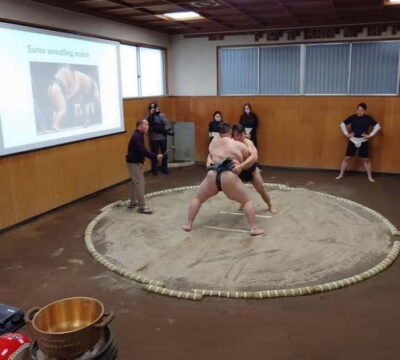 ★ 4.8Sumo Show and Dining ExperienceFrom $792,742 reviews
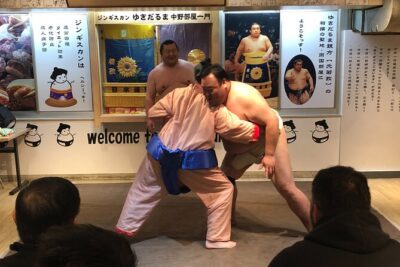 ★ 5.0the SUMO showFrom $891,960 reviews
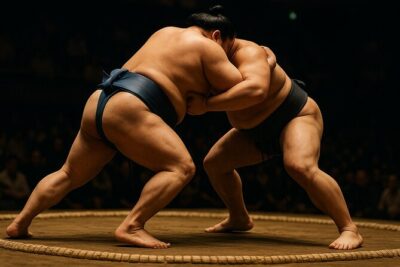 ★ 5.0Tokyo Shinjuku Sumo Show & Experience with PhotoFrom $791,750 reviews
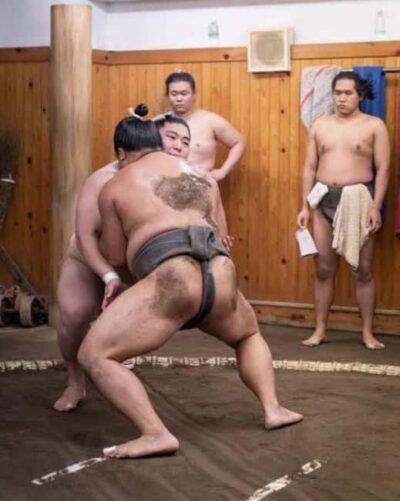 ★ 4.8Sumo Show and Experience in ShinjukuFrom $691,001 reviews
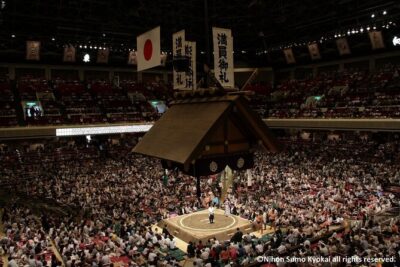 ★ 5.0Tokyo Grand Sumo Tournament Viewing Tour with TicketsFrom $124692 reviews
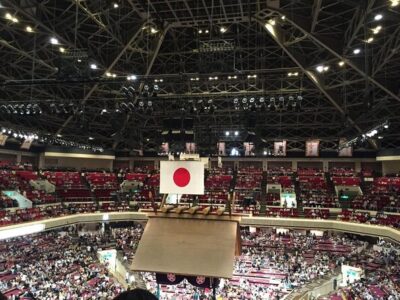 ★ 5.0Tokyo Sumo Wrestling Tournament ExperienceFrom $124660 reviews
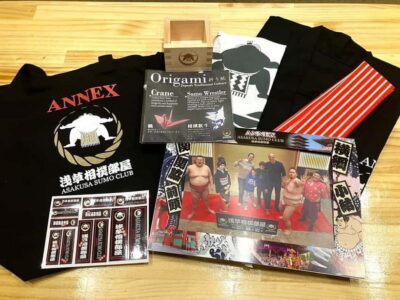 ★ 4.7Luxury Sumo Show Experience & Japanese cuisine & DrinkFrom $103577 reviews
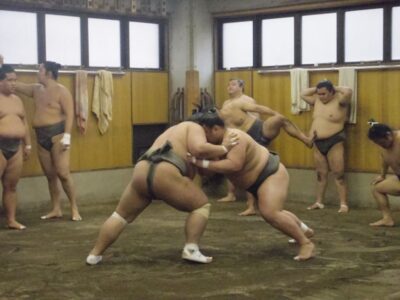 ★ 4.8Sumo Morning Practice Viewing TourFrom $81570 reviews
Browse the lists this tour appears in