
Reviewed · SAMURAI & NINJA CLASSES
Tokyo : Authentic Samurai Experience in a Private Space.
Want sword practice without the intimidation? This hands-on katana practice in a small group setting is one of the most down-to-earth ways to learn samurai basics, with a real focus on how to draw, hold, swing, and sheath. I also like that it goes beyond moves and ties them to Bushido ideas, taught with patient repetition. One thing to consider: it’s only about 1 hour 30 minutes, so you’ll leave feeling more confident, not fully “samurai-skilled.”
You’ll start in an old private house over 100 years old, get dressed in a kimono, and learn through step-by-step guidance in a format that’s specifically designed for beginners. The instruction is mainly in English, and the experience notes mention PokéTalk-compatible conversation, which helps if you’re trying to get meaning across quickly.
The session ends with a cup of carefully selected Japanese tea, plus a chance to ask questions and talk culture during a break. If you’re short on time in Tokyo, the length and capped group size make this one easier to fit in than the big, all-day “experience” formats.
In This Review
- Key highlights you’ll feel right away
- Entering the Old House: Kimono, Setting, and the Real-Deal Mood
- Bushido in Plain Terms: More Than Cool Sword Tricks
- The Core Lesson: Draw, Hold, Swing, Sheath (In Order)
- Target Cutting With a Real Katana: The Moment You’ll Remember
- Q&A, Culture Breaks, and the Tea That Closes the Loop
- Price and Value in Tokyo: Is $72 Worth 1.5 Hours?
- Who Should Book This Samurai Experience (and Who Might Pass)
- Practical Tips Before You Go
- Should You Book This Samurai Sword Experience in Tokyo?
- FAQ
- How long is the Samurai sword experience in Tokyo?
- What’s the group size for this class?
- Is it beginner-friendly?
- Do you wear a kimono during the experience?
- What sword skills will I learn?
- Is there any cutting involved?
- What language is the class taught in?
- Do I get tea at the end?
- Where does the tour start?
- Is there free cancellation?
Key highlights you’ll feel right away
- Cap of four participants, so you’re not lost in a crowd
- Kimono in a house over 100 years old, set the tone before you touch the sword
- Learn the full sequence: draw, grip, swing, and sheath
- Beginner-friendly instruction, with constant coaching as you practice
- Cut straw/tatami targets with a real katana, not just watch demonstrations
- Traditional Japanese tea at the end, with time for questions
Entering the Old House: Kimono, Setting, and the Real-Deal Mood
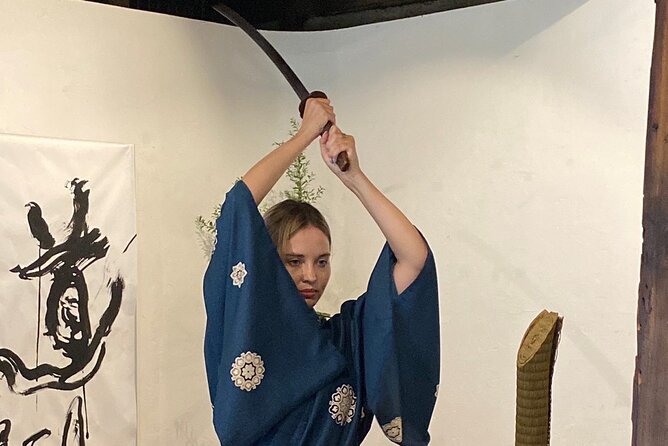
The meeting point is at roji coya 路地裏寺子屋36-1 Senjuasahichō, Adachi City. It’s not a giant tourist complex. That matters. A small, older house creates a different kind of focus—less performing for visitors, more like you’re being brought into someone’s space.
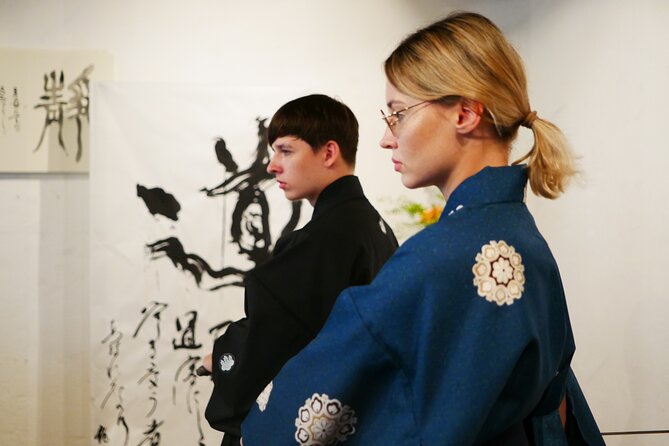
Then comes the kimono. This isn’t just a costume moment. It’s part of the etiquette of the class: you slow down, you stand a bit differently, and you naturally become more aware of your body. It’s also a great equalizer. Even if you’re not into samurai stuff, the physical change pulls you into the rhythm of the session.
And you’re not dealing with a one-size-fits-all crowd. The experience is private to your group, capped at four participants. In practice, that usually means more direct attention, faster feedback, and fewer awkward “waiting your turn” stretches.
More blade-and-dojo sessions, reviewed
- Tokyo: Samurai Ninja Museum Guided tour and Experience
★ 4.6 · 1,010 reviews - Tokyo: Samurai Sword & Archery Class from Samurai Descendant
★ 5.0 · 603 reviews - Best Samurai Experience in Tokyo
★ 5.0 · 458 reviews - Ninja Experience (Family Friendly) at Samurai Ninja Museum TOKYO
★ 5.0 · 441 reviews
Bushido in Plain Terms: More Than Cool Sword Tricks
The program is built around Bushido—way of the samurai. What I like about the way this is presented is that it’s not just a poster concept. You’re asked to practice how you handle the sword while you learn the mindset behind the technique.
You’ll hear facts that are easy to miss elsewhere. The emphasis is on traditional swordsmanship and the reasons behind the movements, not just getting a few poses correct for photos. That’s where the class feels more useful for most people: it teaches you to understand the discipline behind the choreography.
In the reviews, you’ll see how much this teaching style lands. Sensei Musashi Oka and Yoshi-san are described as friendly and welcoming, and the English communication is said to be perfectly fine. That combo—clear coaching plus a relaxed atmosphere—helps you actually learn instead of freezing.
The Core Lesson: Draw, Hold, Swing, Sheath (In Order)
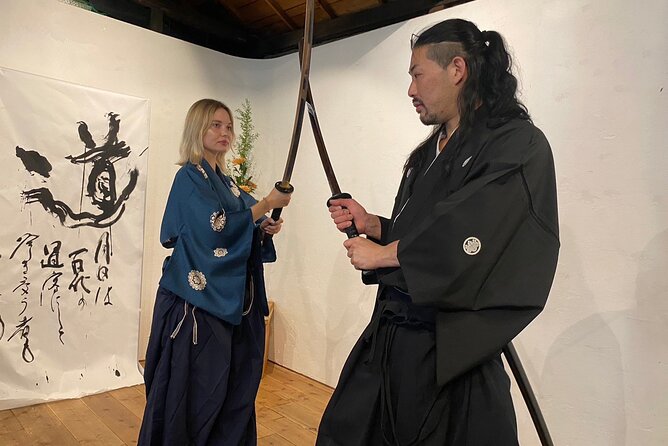
This is a skills class, not a museum talk. The flow matters because samurai sword work is a sequence: the draw connects to your grip, which connects to your swing, which connects to how you sheath. The class is structured so you can practice each part with guidance.
Here’s what you can expect to work on:
- How to handle the sword safely and correctly
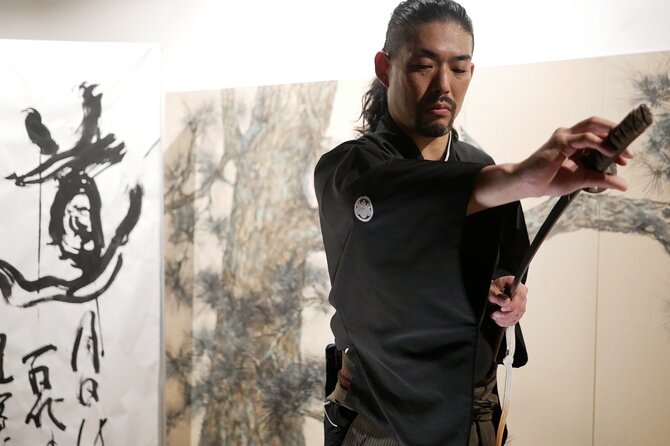
- How to draw (control and timing)
- How to hold and manage your grip
- How to swing in a way that keeps form consistent
- How to sheath, finishing with control
Because it’s a smaller setting, you’re not just learning one move. You’re learning a routine. That matters if you want something you can remember tomorrow, not just a one-time thrill.
Also, the experience specifically notes that beginners feel at ease because they are constantly being taught and supported. I take that seriously, because sword classes can easily become stressful if you’re left to figure things out alone. Here, the teaching is meant to keep you moving forward step by step.
Target Cutting With a Real Katana: The Moment You’ll Remember
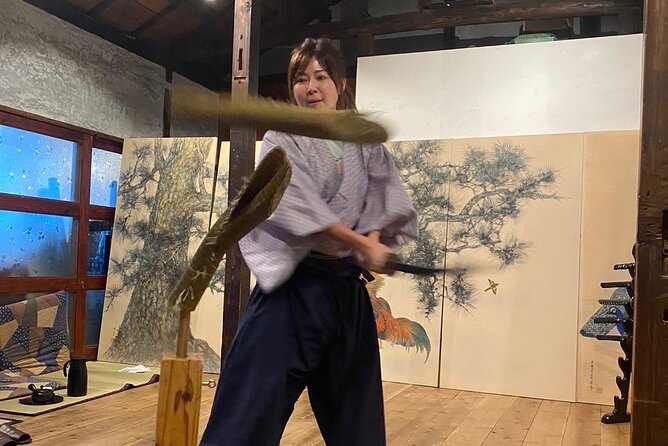
The hands-on part is the big payoff. You’ll put your skills to the test by cutting through straw targets (the experience also references practice that can involve tatami targets, based on the cutting highlight people mention). This isn’t the kind of class where you only swing in the air.
What makes target cutting worth it is feedback. When you cut, you immediately learn what your body is doing—whether your grip is solid, whether your timing is right, and whether your swing has the shape the instructor wants. It turns “technique talk” into something physical.
And yes, the cutting segment is often described as the best part. People highlight how fun it is once the instructor gets you set up properly and you realize you can do it with guidance. The energy changes at that point. It’s not frantic—it’s focused.
One practical consideration: you’ll be dressing in kimono and doing sword practice in a private indoor space. You should expect you’ll be moving with care and following instructions closely. If you don’t like being in a structured activity for your whole short time slot, this might feel like a lot. But if you want your money to translate into real practice, this is where it happens.
Q&A, Culture Breaks, and the Tea That Closes the Loop
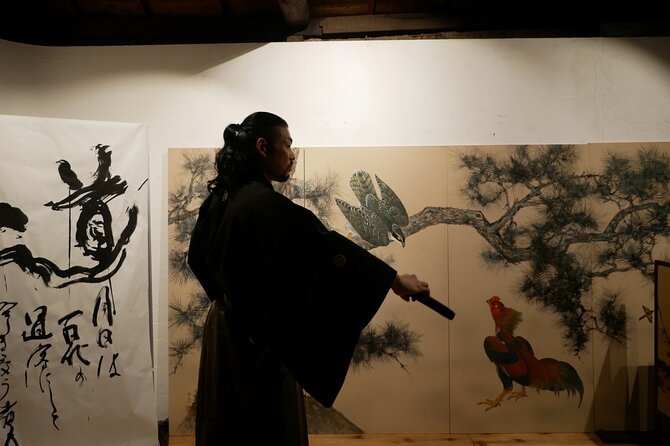
After the main sword training, you wrap up with carefully selected Japanese tea. Tea sounds simple, but it’s a smart ending. It gives you a decompression moment and makes the session feel complete: you don’t just leave energized—you also leave calmer, with questions answered.
The experience also notes exchange meetings with lecturers in the same place, and during breaks you can learn more about Japanese culture. In a format like this, those conversations can be the difference between a gimmicky “samurai photoshoot” and a real cultural experience that makes the next Japan moment click.
In the reviews, tea and hospitality show up again and again as part of the welcome. Sensei Musashi Oka and Yoshi-san are mentioned as hospitable, and people remember the combination of instruction plus kindness, not just the sword.
Readers also shortlisted these Tokyo bookings:
- Private Tour to Mt. Fuji and Hakone (Fully Licenced Operator)★ 5.0 · 1,910 reviews
- Tokyo Customized Private Tour (Must See Places in 1 Day)★ 5.0 · 1,499 reviews
- Mount Fuji Full-Day Private Tour from Tokyo (Customizable)★ 4.9 · 1,470 reviews
- Private Custom Tour: Tokyo in a Day★ 5.0 · 1,432 reviews
- Tokyo 4hr Private Tour with Government-Licensed Guide★ 5.0 · 1,394 reviews
Price and Value in Tokyo: Is $72 Worth 1.5 Hours?
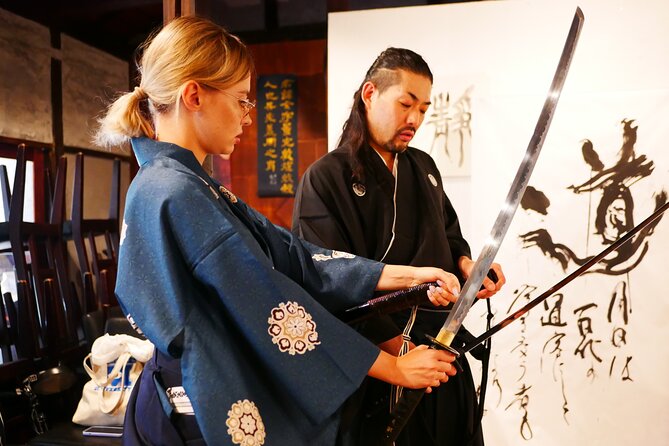
At $72 for about 1 hour 30 minutes, the value mainly comes from what you’re actually buying: time with an instructor in a capped group, plus kimono, plus hands-on sword practice including cutting targets, plus tea.
In Tokyo, a lot of paid activities are either:
1) Mostly watching, or
2) Mostly walking around, or
3) A big group where you don’t get much correction
This one combines the expensive parts of instruction—hands-on coaching and one-on-one attention—without stretching into a half-day. For time-strapped travelers, that shorter format can be exactly what makes it worth it. You get a concentrated experience with a clear finish line.
The other value factor is the “private house” setting over 100 years old. That’s not just atmosphere. It supports the learning tone. You’re not trying to focus in a noisy, crowded place, and the class feels more like a real activity than a show.
Who Should Book This Samurai Experience (and Who Might Pass)
This suits you if you:
- Want hands-on practice, not just a demo
- Are curious about Bushido, not only sword aesthetics
- Prefer small groups where you can ask questions
- Are a beginner and want constant coaching
- Have limited time in Tokyo and want something tight and meaningful
It might not be ideal if you:
- Want a long, multi-hour deep training program with advanced techniques
- Expect a purely historical lecture with lots of passive sightseeing
- Don’t like structured practice and following instruction step by step
The good news is that the experience is explicitly positioned for beginners, and the reviews back up how approachable the instructors are.
Practical Tips Before You Go
A few things will help you get the most out of your session without overthinking it.
- Arrive with a beginner mindset. The class is designed for learning, and constant instruction is part of the format.
- Plan for a focused block. With about 1 hour 30 minutes, treat it like an appointment, not a casual stop.
- Use the language support. The course is mainly in English, and the experience mentions PokéTalk-compatible conversation, so lean on that communication style if you need clarity.
- Stay alert during safety-focused guidance. Sword practice is controlled for a reason. Follow the instructor’s timing and setup instructions closely.
- Save your questions for the right moment. There’s time built into the experience—especially around breaks and the tea closeout.
Should You Book This Samurai Sword Experience in Tokyo?
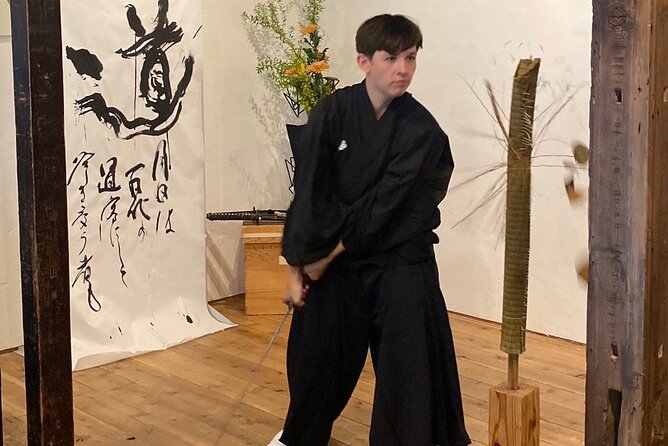
I’d book it if you want a real skill-and-culture class in a tight time window, with a small group and an instructor who teaches you how to do things correctly. The biggest wins are the hands-on structure, the beginner-friendly coaching, the capped group size, and the finishing touch of tea and questions.
Skip it if you’re looking for a long sightseeing tour or an advanced-only training program. But if your goal is to walk away understanding the routine and the mindset—plus having done the target cutting with real katana guidance—this is a strong choice for Tokyo.
FAQ
How long is the Samurai sword experience in Tokyo?
It runs for about 1 hour 30 minutes.
What’s the group size for this class?
It’s capped at four participants, and it’s a private tour/activity for your group only.
Is it beginner-friendly?
Yes. The experience notes that beginners can feel at ease because you are constantly taught and supported during practice.
Do you wear a kimono during the experience?
Yes. You suit up in traditional kimono as part of the program.
What sword skills will I learn?
You practice how to draw, hold, swing, and sheath a samurai sword.
Is there any cutting involved?
Yes. You put your skills to the test by cutting through straw targets.
What language is the class taught in?
Courses are mainly in English, and conversations are described as PokéTalk-compatible.
Do I get tea at the end?
Yes. After the experience, you’re served traditional Japanese tea.
Where does the tour start?
It starts at rojicoya 路地裏寺子屋36-1 Senjuasahichō, Adachi City, Tokyo.
Is there free cancellation?
Yes, you can cancel for free up to 24 hours in advance for a full refund. Cancellations within 24 hours of the start time are not refunded.
More Private in Tokyo
- Tokyo 6hr Private Tour with Government-Licensed Guide
★ 5.0 · 3,902 reviews - Private Tour to Mt. Fuji and Hakone (Fully Licenced Operator)
★ 5.0 · 1,910 reviews - Tokyo Customized Private Tour (Must See Places in 1 Day)
★ 5.0 · 1,499 reviews - Mount Fuji Full-Day Private Tour from Tokyo (Customizable)
★ 4.9 · 1,470 reviews - Tokyo: Private City Highlights Tour with Local Guide
★ 4.8 · 1,433 reviews
More Tour Reviews in Tokyo
- Mt Fuji and Hakone 1-Day Bus Tour Return by Bullet Train
★ 5.0 · 26,383 reviews - 1-Day Tokyo Bus Tour
★ 5.0 · 14,250 reviews - Tokyo: teamLab Planets TOKYO Digital Art Museum Entry Ticket
★ 4.6 · 9,779 reviews - Mt Fuji & Hakone Cruise, Drum Show Bullet Train 1 Day from Tokyo
★ 4.0 · 7,413 reviews - Tokyo: Shinjuku Food Tour (13 Dishes at 4 Local Eateries)
★ 5.0 · 6,603 reviews
More Samurai and Ninja Sessions
- Tokyo: Samurai Ninja Museum Guided tour and Experience
★ 4.6 · 1,010 reviews - Tokyo: Samurai Sword & Archery Class from Samurai Descendant
★ 5.0 · 603 reviews - Best Samurai Experience in Tokyo
★ 5.0 · 458 reviews - Ninja Experience (Family Friendly) at Samurai Ninja Museum TOKYO
★ 5.0 · 441 reviews - Tokyo: Samurai Entertainment Night Show in Kanda Shrine
★ 4.6 · 417 reviews
Latest Tokyo reviews off our desk






Samurai & Ninja Classes, compared.
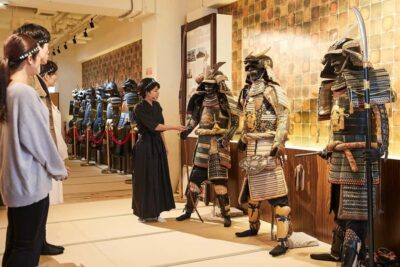 ★ 4.6Samurai Ninja Museum Guided tour and ExperienceFrom $271,010 reviews
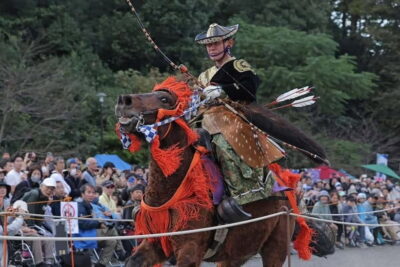 ★ 5.0Samurai Sword & Archery Class from Samurai DescendantFrom $193603 reviews
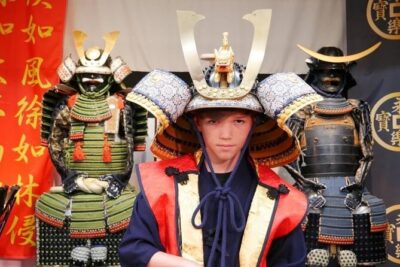 ★ 5.0Best Samurai Experience in TokyoFrom $65458 reviews
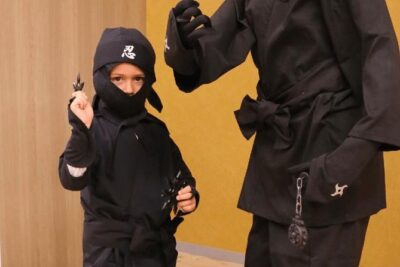 ★ 5.0Ninja Experience (Family Friendly) at Samurai Ninja Museum TOKYOFrom $47441 reviews
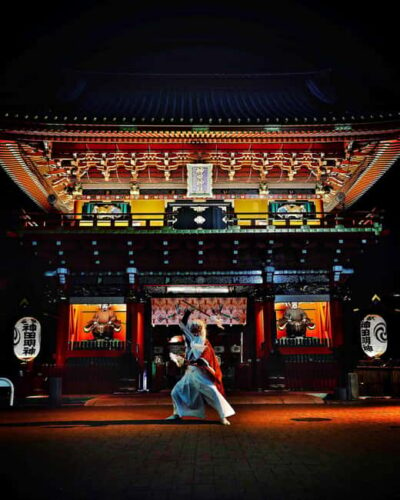 ★ 4.6Samurai Entertainment Night Show in Kanda ShrineFrom $41417 reviews
 ★ 4.2Ninja Kabuki PerformanceFrom $29330 reviews
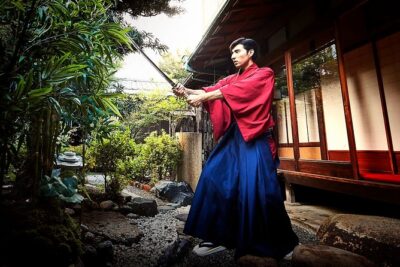 ★ 5.0Tokyo Sword Experience – includes Museum Ticket/Ninja ExperienceFrom $84314 reviews
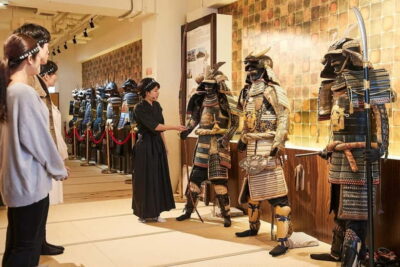 ★ 4.8Samurai Ninja Museum Asakusa: Samurai Sword Lesson & TourFrom $63306 reviews
Browse the lists this tour appears in