
Reviewed · SUMO TOURNAMENTS & SHOWS
Tokyo: Family Sumo Workshop & Live Wrestling Show with Lunch
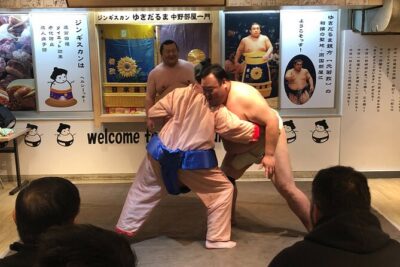
Sumo sounds huge, then you step into a tiny ring. In Ryogoku, you get former pros up close, learn basics like shiko, teppo, and suri-ashi, and then try the action yourself with plenty of laughs. I really like the hands-on format, not just watching, and the chanko nabe lunch is hearty and genuinely satisfying. One drawback to note: ring time means shoes come off and the drills/challenge are optional but still physical, so you’ll want comfortable clothes and good health if you plan to volunteer.
What also sells this experience is the way the teaching comes through in the room. The English MC pacing keeps it easy to follow, and you’ll hear context about the rituals as you train, from salt tossing to the meaning behind the leg stomps. I’ve seen guides like Rio and Alyssa (plus hosts with names like Yo, Kai, Ede, Yuto, and Nozomi) keep the energy moving, with Q&A at the end so kids and adults can ask real questions.
If you’re watching more than participating, you can still enjoy the show side: spectators can remain seated and film. But if you’re traveling with strict allergy or halal needs, read this carefully ahead of time because the meal can avoid pork and alcohol, yet cross-contamination limits are mentioned for very strict requirements.
In This Review
- Key reasons this Ryogoku sumo workshop is worth your morning
- Entering the Ryogoku dohyo: traditions you can actually feel
- The training session: shiko, teppo, suri-ashi (and why those drills matter)
- Watching the live wrestling exhibition, then trying it yourself
- The photo moment: proof you were in the ring, not just nearby
- Mini chanko nabe lunch: the food that actually explains sumo culture
- Vegan and allergy options (with a clear halal reality check)
- Who this is best for (and who might want to adjust expectations)
- Practical tips before you go: what to wear, what to expect in the ring
- Price and value: why $60 feels fair for what you get
- Should you book this Tokyo family sumo workshop?
- FAQ
- How long is the Tokyo family sumo workshop and lunch?
- Where is the meeting point?
- What’s included in the price?
- What should we wear or bring?
- Is the ring challenge required?
- Does the tour offer vegan or allergy-friendly meals?
- Is there Halal certification for the meal?
- Are there age rules for children?
Key reasons this Ryogoku sumo workshop is worth your morning
- You train in the dohyo with former pro wrestlers, not a demo-only stage show
- Three classic basics are taught: shiko, teppo, and suri-ashi footwork
- You can challenge a wrestler in a padded suit if you’re feeling brave (true family-fun territory)
- Chanko nabe lunch is included and can be made vegan or allergy-friendly on request
- Free photo time with wrestlers gives you real memories, not just a program stamp
- English support plus EN/JP commentary helps the traditions make sense fast
Entering the Ryogoku dohyo: traditions you can actually feel
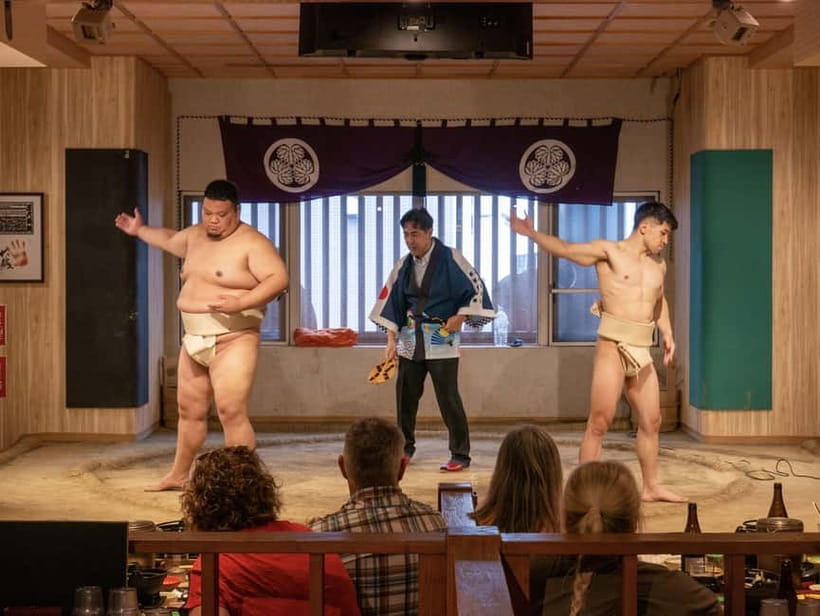
Tokyo has plenty of ways to see sumo, but most options are built around crowds. This one flips the script. You meet in Ryogoku, the area tied to sumo’s culture, and you go straight into a ring-access setting where the atmosphere is immediate. When you’re close enough, you notice the details you normally miss: the rhythm of drills, the way the wrestlers move as a group, and the sound of bodies meeting in practice.
Ryogoku also changes how the rituals land. You don’t just hear that sumo has rules; you watch the salt-tossing moments and shiko leg stomps, and you get an explanation of what they symbolize. That matters because sumo’s pageantry can feel like background noise if you only watch from far away. Here, it’s part of the training flow.
The vibe is also more human than arena sports. Former pros are not hiding behind distance. They’re in your space, coaching the basics and demonstrating what “power” looks like in practice—not as a highlight reel, but as technique and timing.
Other ringside bookings readers scored
- Tokyo: Sumo Show and Dining Experience
★ 4.8 · 2,742 reviews - the SUMO show
★ 5.0 · 1,960 reviews - Tokyo Shinjuku Sumo Show & Experience with Photo
★ 5.0 · 1,750 reviews - Tokyo: Sumo Show and Experience in Shinjuku
★ 4.8 · 1,001 reviews
The training session: shiko, teppo, suri-ashi (and why those drills matter)
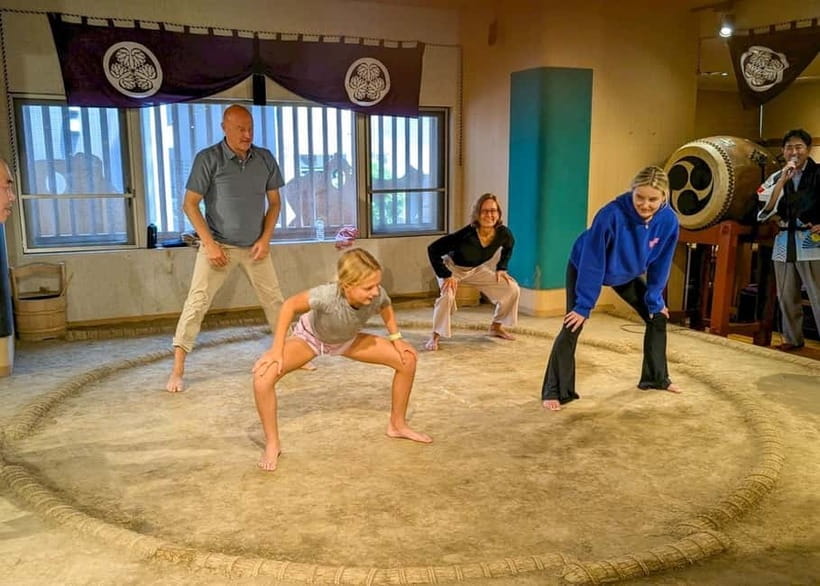
The workshop format is built around getting you to move. You start with a guided lesson that’s designed to be understandable even if sumo is brand-new for you. You learn the core basics—shiko, teppo, and suri-ashi—and each one teaches a different part of how wrestlers control balance.
- Shiko (leg stomps) isn’t just theatrics. You learn the posture and pacing behind the stomp, which connects to stability and presence in the ring.
- Teppo focuses on disciplined striking form. It’s not about hurting anyone; it’s about controlled technique and learning how wrestlers generate force safely.
- Suri-ashi is the one many people think they can do easily—until they try it. The sliding footwork is about angles and traction, and it’s a great way to understand why sumo isn’t only strength.
What I like is that the session doesn’t treat you like a museum visitor. You’re not asked to memorize commands like a sport class, but you are put through the motions enough to feel the difference between “I watched sumo” and “I understand how the movement works.”
This is also where the bilingual MC helps. You get short, clear context about what you’re seeing while you train. That keeps things from turning into a random physical comedy show. Yes, it’s funny. But it’s also structured.
Watching the live wrestling exhibition, then trying it yourself
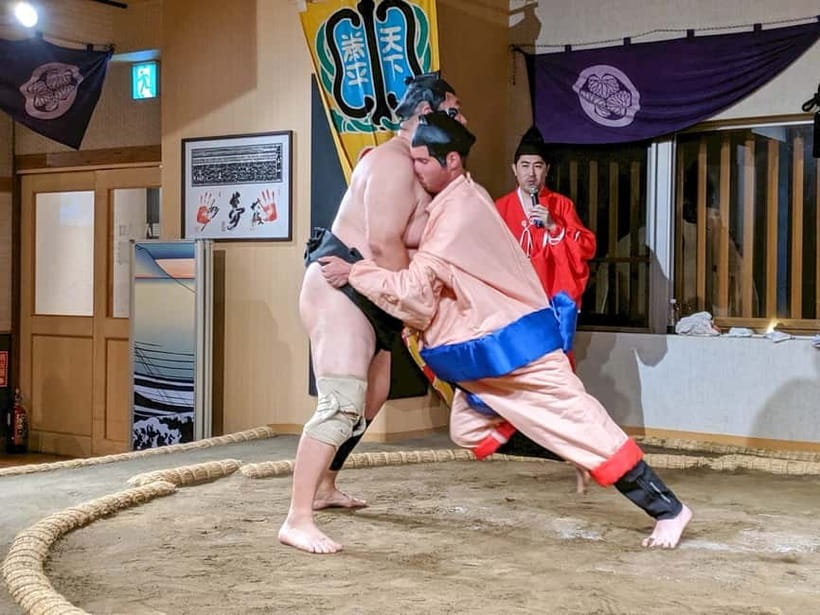
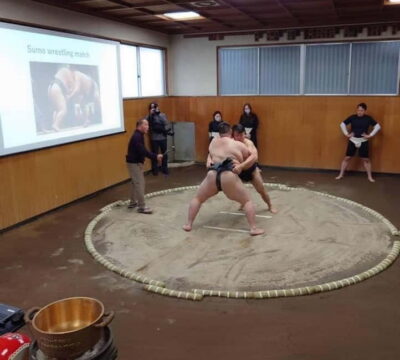
After drills, you shift into the faster part: a full-speed exhibition match where you see the power and agility up close. That contrast—slow drill learning, then real speed—hits hard. You’ll notice how quick the transitions are and how wrestlers constantly manage distance and balance.
Then comes the best part for many families: the challenge. With the right setup (including padded-suit protection), you can step into the ring area and go up against a wrestler. The goal isn’t to “win.” It’s to experience what it feels like to confront a massive, skilled athlete and learn the basic physics of sumo contact.
If you opt in, you’ll probably feel how the ring works underfoot: the controlled footing, the stability needed to keep your balance, and the way strength alone isn’t enough. You learn fast that technique and positioning matter. Even if you’re an adult, it’s a moment that usually turns into laughter within the first few seconds.
One practical note: ring participation is optional, and spectators can stay seated and film. So if you’re traveling with kids who want to watch first, that’s completely workable. If a child is game, the setup is designed for safe, silly fun rather than actual competition.
The photo moment: proof you were in the ring, not just nearby
A lot of Tokyo activities give you a photo or two at the end. Here, you get dedicated photo time with the wrestlers, using your own cameras and phones. That’s a big value add because sumo wrestlers look so different from everyday life—taller, broader, and somehow more powerful in person.
It also helps that the activity supports family participation. Parents may film or join the action during the experience. In practice, it means you’re not stuck being a passive bystander holding the kid’s hand while everyone else gets the memory.
If you like taking pictures, you’ll want to keep your phone charged and ready, and you should be prepared to get a few shots from angles you don’t normally get at public events. Being close matters.
Mini chanko nabe lunch: the food that actually explains sumo culture
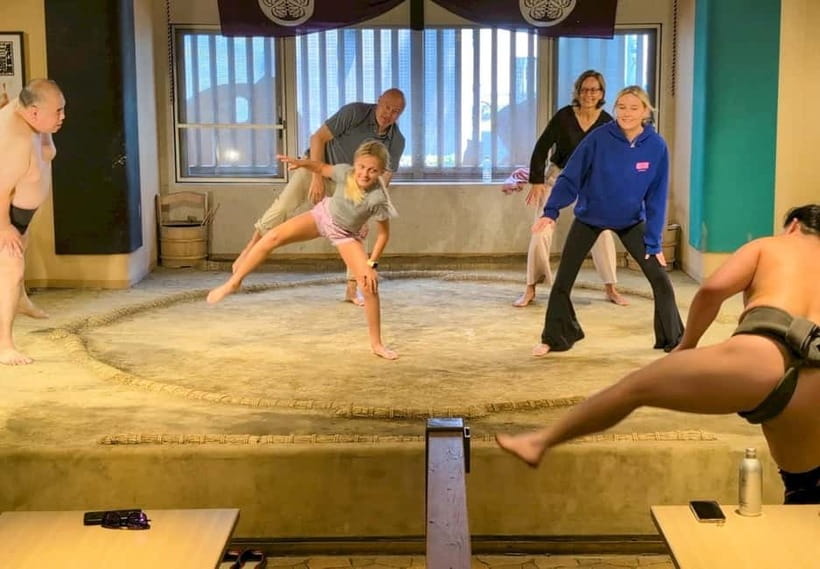
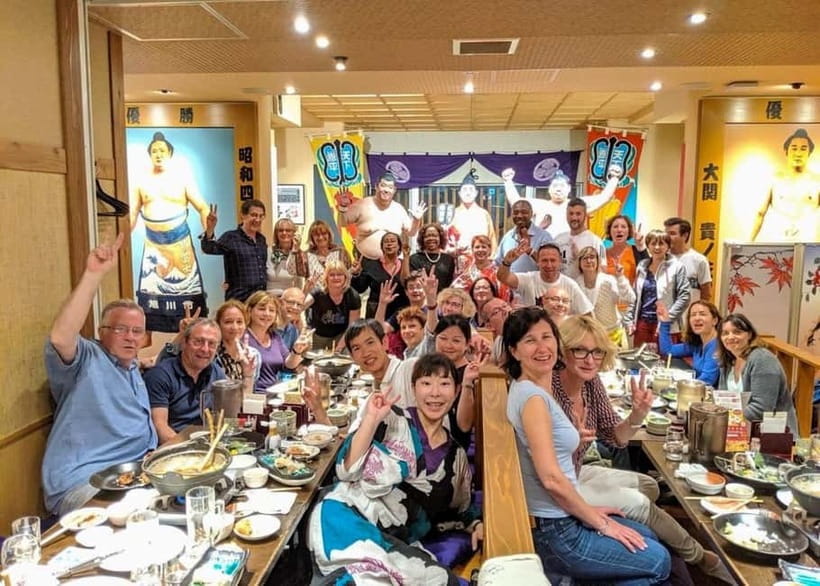
After training and wrestling, you sit down to lunch. The included meal is a mini chanko nabe hotpot, the kind sumo wrestlers are associated with for fueling training and building body mass.
What’s great for real life is that it’s not a tiny garnish portion. Everyone I’ve seen talk about this says it’s plentiful, and it’s the kind of meal you’ll want to pace. If you arrive hungry—and most people do after moving—you’ll likely finish feeling satisfied rather than stuffed with just snacks.
The flavor story is also part of the experience. The host explains why this dish is tied to sumo life, and you get vegetables and protein in a hot, comforting bowl. You’re eating something that feels like a cultural staple, not a tourist substitute.
Readers also shortlisted these Tokyo bookings:
- Tokyo: Mt.Fuji & Lake Kawaguchiko 1-Day Bus Tour w/Optional Lunch★ 4.5 · 839 reviews
- Tokyo: Sumo Experience and Chanko Nabe Lunch★ 4.8 · 257 reviews
- Tokyo: Tsukiji Fish Market Tour with 6 Stops & Seafood Lunch★ 4.5 · 165 reviews
- Tokyo: 1 Day Bus Tour with Meiji-Jingu,Odaiba,lunch&Skytree★ 4.6 · 156 reviews
- Tokyo: Full-Day Tour w/Tea Experience,Buffet Lunch & Cruise★ 4.9 · 151 reviews
Vegan and allergy options (with a clear halal reality check)
You can request vegan and allergy-friendly meals in advance, and the kitchen accommodates those needs. That’s a strong point for families, especially when everyone wants to eat together.
For halal needs, the meal is not described as having official Halal certification. The team can ensure no pork or alcohol is used, but they only note limited accommodation regarding cross-contamination if you have strict avoidance requirements.
So here’s the practical takeaway: if your needs are strict or medical-level, send your request clearly at least 48 hours before, and don’t assume they can meet every cross-contact standard. For many diners, the no-pork/no-alcohol promise is enough to feel comfortable. For others, it may not.
Who this is best for (and who might want to adjust expectations)
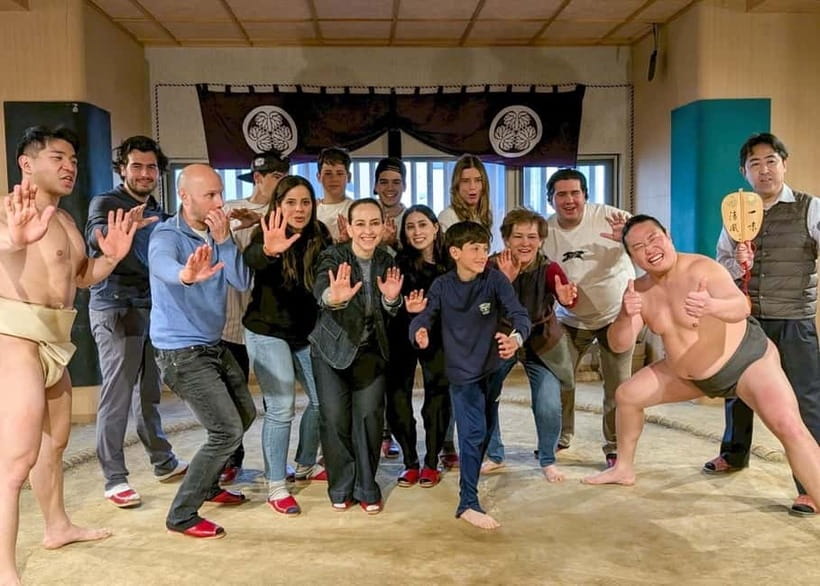
This tour fits a lot of travel styles, but it shines for families and for people who learn by doing.
- Best for families with kids: The format is participatory, and kids can try drills or simply watch and film. Many families also like that the environment stays upbeat and friendly.
- Great for first-time sumo fans: You get context about rituals while you train, so it doesn’t feel like random movement.
- Solid for groups: Adults and kids can share the same experience—training, challenge, and lunch—without splitting the day into separate plans.
What might require a rethink:
- If you hate physical activities, the drills and challenge are still optional, but you’ll likely want to be at least comfortable standing and moving a bit.
- If you have very strict dietary restrictions, confirm details early, especially around cross-contamination limitations.
- If you’re expecting a big stadium event feel, this is intentionally closer and smaller, which can be a plus or a mismatch depending on your preferences.
Practical tips before you go: what to wear, what to expect in the ring
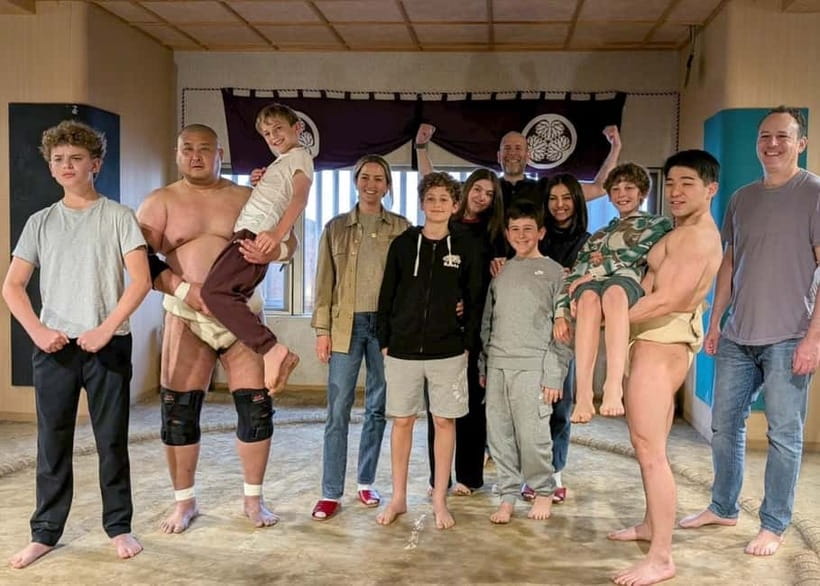
This part is easy, but it can save you stress.
Wear loose sportswear so you can move during drills. You’ll remove shoes when you enter the ring area, so slipping on comfortable footwear outside and being ready for sock-only movement is helpful.
You should also come with the mindset that participation is flexible. If you want to watch, you can. If your group wants to jump in, padded equipment is provided for challenges, and volunteers must be in good health.
Timings matter for comfort. You’re asked to wait in front of the store and not enter until 10:00 AM. If you arrive early, use that time to find the meeting spot calmly rather than rushing into the building.
Meeting point is specific: you’ll meet in front of the face-in-hole photo board at the shop. Your guide will be holding a smartphone showing AlvaJapan.
And yes, there’s a practical help line: if you get lost, contact is available via WhatsApp.
Also, because it’s wheelchair accessible, you should still be prepared for a venue setup where you may remove shoes or navigate around ring access areas. The access is supported, but you’ll want to move at your comfort level.
Price and value: why $60 feels fair for what you get
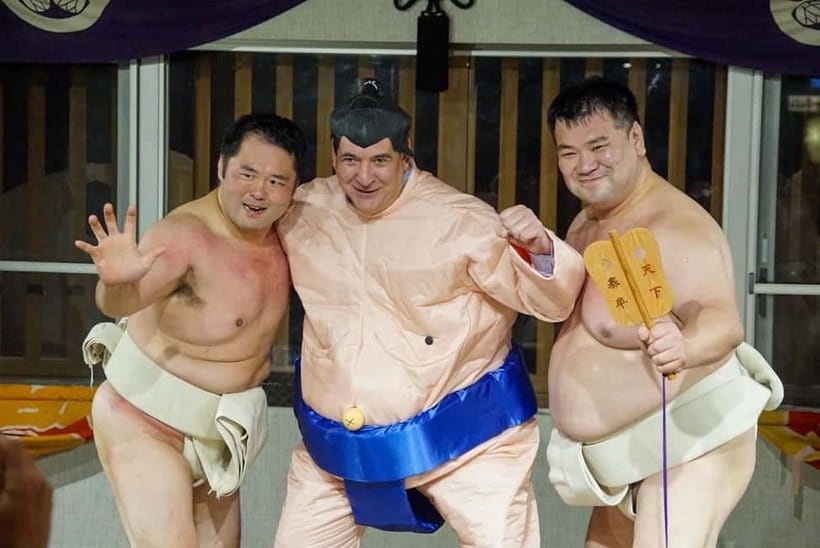
At $60 per person for a 105-minute experience, you’re not paying for a lecture or a photo-op. You’re paying for four main things bundled together:
1) Ring access and hands-on instruction with former pros
2) A live exhibition plus the option to challenge in the ring
3) Photo time with wrestlers using your own phone or camera
4) A mini chanko nabe lunch, with vegan and allergy-friendly options on request
That combination is where the value lands. Lots of Tokyo experiences focus on one “wow” moment. This one gives you multiple: training, speed match, ring challenge, then the meal that completes the cultural picture.
It’s especially good when you’re traveling with kids because it avoids the common problem of kids tiring out during long museum-style content. Here, movement and play keep the momentum.
Should you book this Tokyo family sumo workshop?
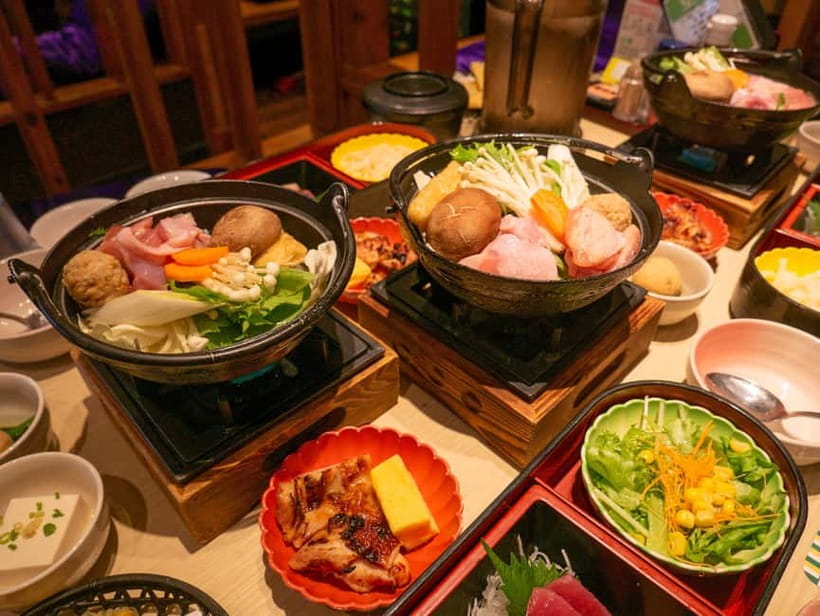
You should book if you want a real, close-up sumo experience where you participate, not just watch. If you like hands-on learning, and your group includes kids or mixed ages, this hits a sweet spot. The English instruction, the friendly coaching from former pros, and the included chanko nabe lunch make it feel like a complete morning, not a quick add-on.
I’d pause and think twice if your family needs very strict dietary cross-contamination avoidance or if everyone in your group is uncomfortable with physical activity. Also, if you hate the idea of shoe removal in a ring setting, make peace with it now.
Otherwise, for most people, this is one of those Tokyo experiences that ends with everyone talking about the same moment—usually the first time you step into the ring area and realize sumo is far more technique than strength.
FAQ
How long is the Tokyo family sumo workshop and lunch?
The experience runs for 105 minutes.
Where is the meeting point?
Meet in front of the face-in-hole photo board at the shop. The guide will be holding a smartphone showing AlvaJapan.
What’s included in the price?
Admission to the sumo venue and ring access, instruction from former professional wrestlers (EN/JP commentary), interactive training and audience challenge equipment (padded suit), the mini chanko hotpot lunch with vegan and allergy options on request, and free photo time with the wrestlers.
What should we wear or bring?
Wear loose sportswear. Shoes are removed on the ring. Bring your camera or phone for the free photo time.
Is the ring challenge required?
No. Ring drills are optional, and spectators can remain seated and film. Challengers must be in good health.
Does the tour offer vegan or allergy-friendly meals?
Yes. Vegan and allergy-friendly options are available if you advise the team at least 48 hours in advance.
Is there Halal certification for the meal?
The meal is not described as having official Halal certification. The team can ensure no pork or alcohol is used, but they note limits for very strict cross-contamination avoidance.
Are there age rules for children?
Children under 5 are not provided meals under the child rate, so if they require meals you should book them at the adult rate. Children aged 6 and older cannot be booked at the child rate.
More Lunch Experiences in Tokyo
- Tokyo: Mt.Fuji & Lake Kawaguchiko 1-Day Bus Tour w/Optional Lunch
★ 4.5 · 839 reviews - Tokyo: Sumo Experience and Chanko Nabe Lunch
★ 4.8 · 257 reviews - Tokyo: Tsukiji Fish Market Tour with 6 Stops & Seafood Lunch
★ 4.5 · 165 reviews - Tokyo: 1 Day Bus Tour with Meiji-Jingu,Odaiba,lunch&Skytree
★ 4.6 · 156 reviews - Tokyo: Full-Day Tour w/Tea Experience,Buffet Lunch & Cruise
★ 4.9 · 151 reviews
More Tour Reviews in Tokyo
- Mt Fuji and Hakone 1-Day Bus Tour Return by Bullet Train
★ 5.0 · 26,383 reviews - 1-Day Tokyo Bus Tour
★ 5.0 · 14,250 reviews - Tokyo: teamLab Planets TOKYO Digital Art Museum Entry Ticket
★ 4.6 · 9,779 reviews - Mt Fuji & Hakone Cruise, Drum Show Bullet Train 1 Day from Tokyo
★ 4.0 · 7,413 reviews - Tokyo: Shinjuku Food Tour (13 Dishes at 4 Local Eateries)
★ 5.0 · 6,603 reviews
More Sumo, Ringside and Rated
- Tokyo: Sumo Show and Dining Experience
★ 4.8 · 2,742 reviews - the SUMO show
★ 5.0 · 1,960 reviews - Tokyo Shinjuku Sumo Show & Experience with Photo
★ 5.0 · 1,750 reviews - Tokyo: Sumo Show and Experience in Shinjuku
★ 4.8 · 1,001 reviews - Tokyo Grand Sumo Tournament Viewing Tour with Tickets
★ 5.0 · 692 reviews
Latest Tokyo reviews off our desk




Sumo Tournaments & Shows, compared.
 ★ 4.8Sumo Show and Dining ExperienceFrom $792,742 reviews
 ★ 5.0the SUMO showFrom $891,960 reviews
 ★ 5.0Tokyo Shinjuku Sumo Show & Experience with PhotoFrom $791,750 reviews
 ★ 4.8Sumo Show and Experience in ShinjukuFrom $691,001 reviews
 ★ 5.0Tokyo Grand Sumo Tournament Viewing Tour with TicketsFrom $124692 reviews
 ★ 5.0Tokyo Sumo Wrestling Tournament ExperienceFrom $124660 reviews
 ★ 4.7Luxury Sumo Show Experience & Japanese cuisine & DrinkFrom $103577 reviews
 ★ 4.8Sumo Morning Practice Viewing TourFrom $81570 reviews
Browse the lists this tour appears in