
Reviewed · IMPERIAL PALACE TOURS
Tokyo Imperial Palace:Guided Walking Tour of East Gardens
Two hours, and Edo Castle makes sense. I love how this small-group walk (up to 8 people) keeps the pace friendly, and I love that you focus on the Sakurada Tatsumi Yagura watchtower plus the East Gardens ruins instead of just doing a quick photo stop.
You’ll get a professional English-speaking guide who links the scenery to real power shifts over time, from emperors to samurai-era politics. One thing to plan for: some parts of the Imperial Palace area can be restricted on certain days, so your experience may lean more toward viewpoints and surrounding ground rather than every interior photo you’d hope for.
The tour is simple to use: a mobile ticket, about 2 hours on foot, and it ends back at the same meetup point near transit. In other words, it’s an easy way to spend a morning or afternoon in central Tokyo without burning your whole day on logistics.
In This Review
- Key highlights at a glance
- Why the East Gardens feel different from a typical Tokyo sightseeing loop
- Getting there: the Starbucks meetup by Wadakura Fountain Park
- The pacing: what 2 hours on foot really feels like
- Stop 1: Sakurada Tatsumi Yagura watchtower and why it survives
- Stop 2: The Imperial Palace area and how to look at it intelligently
- Stop 3: East Gardens and Edo Castle ruins on the same walking route
- The guide makes it: small-group questions and real explanation time
- Price and value: how $0.39 changes the way you should think about it
- What you’ll learn: emperors, samurai-era politics, and power on display
- Weather reality check: plan for sun and outdoor time
- Who should book this Tokyo Imperial Palace East Gardens tour
- Should you book it? My call
- FAQ
- How long is the Tokyo Imperial Palace East Gardens walking tour?
- What does the tour cost?
- How many people are in the group?
- Do I need to pay for admission at the stops?
- Where does the tour start?
- Does the tour end back at the same place?
- What is the cancellation policy?
Key highlights at a glance
- Max 8 people: small group means you can ask questions and actually hear the stories.
- English-speaking guide: explanations are clear and built for non-Japanese speakers.
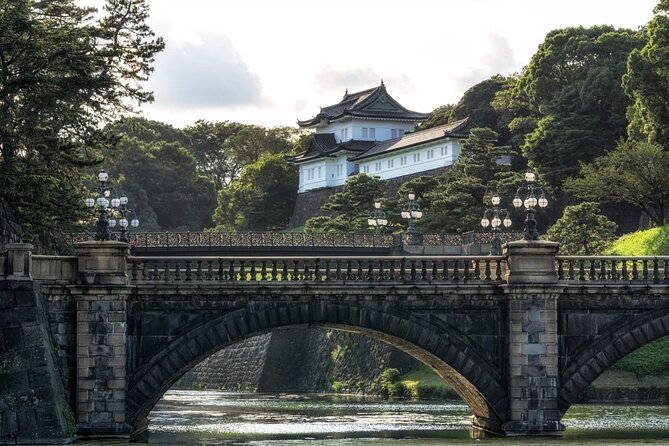
- Sakurada Tatsumi Yagura stop: one of the key surviving Edo-era structures in the grounds.
- Imperial Palace area viewpoints: you learn what you’re looking at even when you can’t go everywhere.
- East Gardens + Edo Castle ruins: stone walls, gates, and traces of the old castle site.
- Mobile ticket meetup: you start and finish at the same point near Kokyo Gaien.
Why the East Gardens feel different from a typical Tokyo sightseeing loop
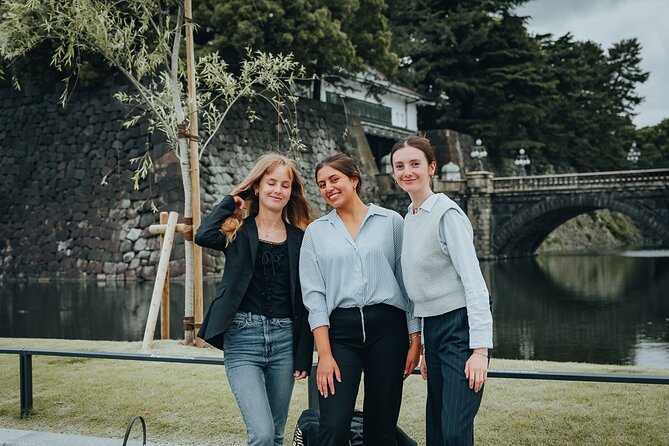
The Imperial Palace grounds are one of those places where Tokyo’s modern city life suddenly drops away. You’re in Chiyoda, yet the walk gives you that rare feeling of breathing room, especially once you’re inside the East Gardens.
What makes this tour work well is that it doesn’t just point. It explains. You’ll learn what the East Gardens were connected to before they became part of the Imperial Palace setting, and you’ll understand why a single watchtower matters when you’re looking at the big picture.
The best part, for me, is that the focus stays practical: you’re not stuck standing in one spot. You’ll move through landscaped paths and reach specific landmarks and ruins that actually help you picture the past.
More walks around the Imperial grounds
- Tokyo: Imperial Palace and Shogun Historical Walking Tour
★ 5.0 · 2,251 reviews - Tokyo: Imperial Palace Japanese History Walking Tour
★ 4.9 · 987 reviews - Tokyo: Imperial Palace and Shogun Walking Tour
★ 4.9 · 935 reviews - Imperial Palace East Garden and Edo Castle Walking Tour in Tokyo
★ 5.0 · 510 reviews
Getting there: the Starbucks meetup by Wadakura Fountain Park
Meet up at Starbucks Coffee at Kokyo Gaien Wadakura Fountain Park, 3-1 Kōkyogaien, Chiyoda City, Tokyo 100-0002. It’s a clear, easy reference point, and that matters in Tokyo when you’re trying to be on time.
You don’t need to overthink transport either. The tour notes that the meeting area is near public transportation, so you can plug it into your day without a complicated route plan.
Also, the tour runs about 2 hours and returns to the meeting spot. That means your plans afterward don’t have to be written around a faraway finish point.
The pacing: what 2 hours on foot really feels like
This is a walking tour, but it’s not a long endurance march. With stops spaced out at roughly 30 minutes each, the timing helps you avoid that common problem where you finish already tired but still feel like you missed the meaning.
Most people can participate, so you don’t have to be an athlete to do it. Still, you should expect walking on garden paths and time outdoors, which is especially important during hot weather.
One useful detail from a real experience: on a very hot day, the guide still managed to keep everyone engaged and learning. That’s a good sign, because the tour’s success is partly about how well the guide keeps the energy up when you’re under sun and heat.
Stop 1: Sakurada Tatsumi Yagura watchtower and why it survives
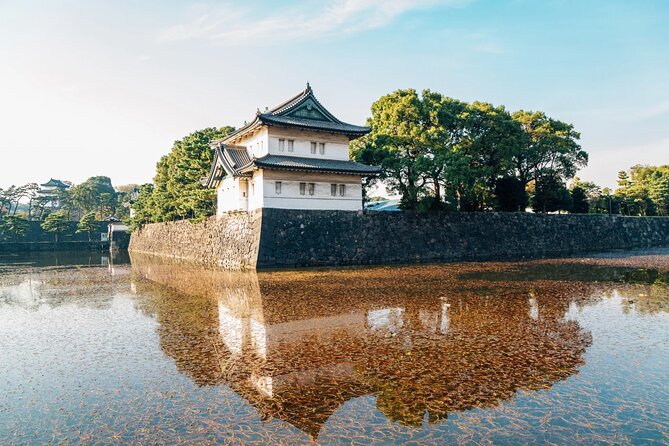
Your first stop is Sakurada Tatsumi Yagura, also known as the Sakurada Nijū Yagura. This is a historic watchtower within the Imperial Palace grounds, and it’s connected to the Edo period.
Why you should care: it’s one of the few remaining structures from that era, which means it’s a physical anchor. Instead of hearing general stories, you’re standing near something built for observation and security—something that was meant to watch over activity and movement.
The guide’s role here is to make the structure readable. You’ll connect what you see—tower form, location within the grounds—to the way Edo-era power worked. Even if you’re not an architecture person, the explanation helps you understand what the tower was for beyond its looks.
If you like history that you can point to, this stop is the payoff. It also sets the tone for the rest of the walk, because it frames the Imperial Palace area as more than just a residence—it’s a layered site.
Stop 2: The Imperial Palace area and how to look at it intelligently
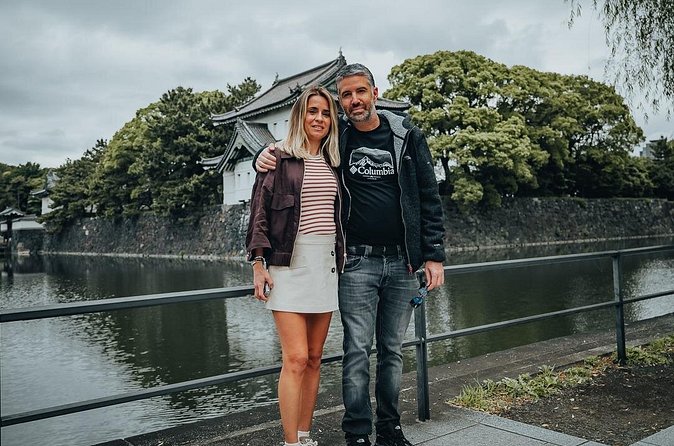
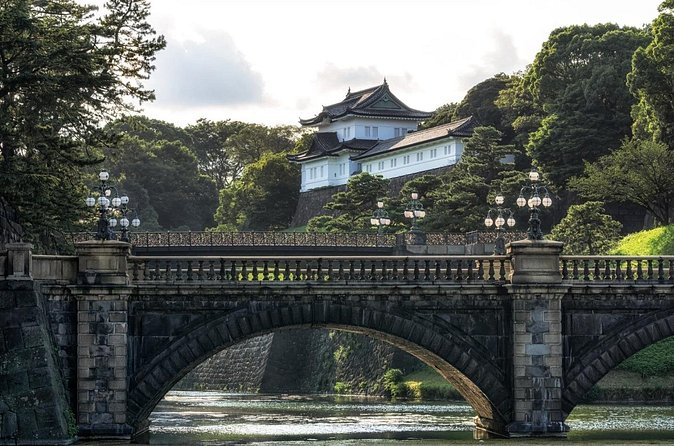
Next you’ll visit the Imperial Palace area. It’s the primary residence of the Emperor of Japan and one of Tokyo’s most recognizable landmarks, surrounded by gardens, moats, and historic stone walls.
Even if you mostly see the palace from outside the way a walking tour allows, the value is in understanding the setting. You’ll learn what surrounds the palace and why those boundaries were built the way they were—stone wall lines, water defenses, and the overall layout of the inner grounds.
This is where the tour earns its keep: you don’t just take in an icon. You get context that helps your eyes work better. When you understand why the moats and walls are there, you stop seeing them as random background and start seeing them as part of governance and security.
A practical consideration: on some days, access inside specific sections may be limited. One of the standout things about the guides is that they adjust. If palace access is restricted, you can still get meaningful stops and good explanations nearby rather than feeling like your tour turned into a short walk with no story.
Readers also shortlisted these Tokyo bookings:
- Tokyo Tsukiji Fish Market Food and Culture Walking Tour★ 5.0 · 3,184 reviews
- Tokyo: Shinjuku Local Bar and Izakaya Guided Walking Tour★ 4.9 · 1,794 reviews
- Tokyo: Tsukiji Fish Market Food and Walking tour★ 5.0 · 1,724 reviews
- Tokyo: Asakusa Walking Tour with Sensoji Temple Visit★ 4.8 · 1,583 reviews
- Tokyo: Tsukiji Fish Market Guided Walking Tour★ 4.9 · 1,397 reviews
Stop 3: East Gardens and Edo Castle ruins on the same walking route
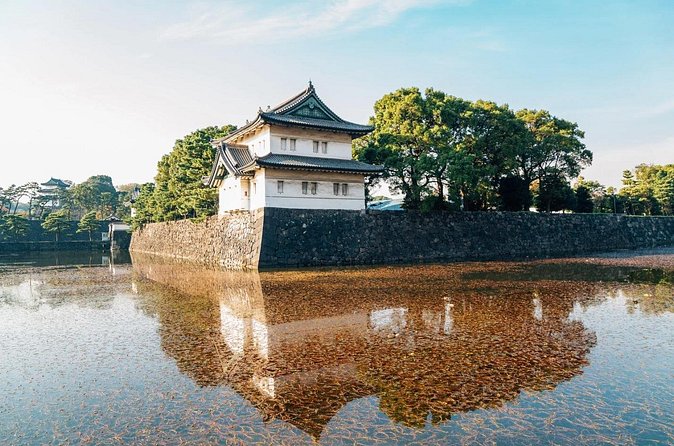
The final stop is the East Gardens of the Imperial Palace, which are open to the public. This area is tied to the former site of Edo Castle, so you’re walking over ground that once shaped power in a different era.
What you’ll appreciate here is the mix of calm and visible traces. Expect features like stone ruins, stone walls, gates, and landscaped paths that help you visualize what the old castle site looked like.
The tour focuses on the East Gardens as a bridge between eras: Edo Castle to Imperial Palace. That means the stories aren’t just about rulers in the abstract. They connect to place—how an earlier political center became a later imperial setting.
If you enjoy going beyond postcard views, this stop gives you something to interpret. Ruins and gates are never just stones. In a guided setting, you start to see them as remnants of decisions—defensive choices, ceremonial space, and political symbolism built into the geography.
The guide makes it: small-group questions and real explanation time
The tour is led by a professional English-speaking guide, and that matters because this is a site where details can get lost if you’re self-guiding. You’ll want someone to translate what you see into why it mattered.
From a hot-weather experience, one guide named Taro stood out for keeping things both interesting and educational. That’s the kind of skill that improves your trip even if the day isn’t perfect. When you’re outside in the sun, you need an active, clear storyteller, not a slow script.
Another helpful note: when the palace was closed to access, the guide still brought the group to good nearby spots and explained them well. That kind of flexibility is exactly what you want from a tour leader at a major landmark, where rules can shift.
With a maximum of 8 people, you’re not competing with a crowd for listening space. If you like asking questions—or if you simply want to hear the key points without straining—this group size helps.
Price and value: how $0.39 changes the way you should think about it
At $0.39 per person, the price is so low that it practically forces you to judge value by effort, not cost. In a case like this, you should look for three things:
- Does the guide actually add meaning to what you see?
- Are you walking a real route with multiple stops, not just one location?
- Is the experience easy to fit into your day?
This tour checks those boxes. You’re spending about 2 hours in central Tokyo hitting specific, meaningful points: a surviving Edo watchtower, the Imperial Palace setting, and the East Gardens connected to Edo Castle ruins.
Also, the stops are listed as admission ticket free, which reduces the “hidden costs” feeling that can come with major sites. In practical terms, you’re paying mostly for guidance and structure—what makes a landmark worth more than a quick glance.
One more value angle: a guided walk can save you time. Instead of spending the day trying to piece together what you’re looking at, you can leave with a clearer mental map of the area and the political story behind it.
What you’ll learn: emperors, samurai-era politics, and power on display
The tour’s theme is the rise and change of political power around the Imperial Palace area. You’ll hear stories tied to Japan’s emperors, samurai warriors, and the ways power operated across different periods.
The best way to enjoy this part is to treat it like a guided timeline built into geography. When you’re at the watchtower, the story connects to military-era oversight. When you’re at the Imperial Palace setting, it connects to imperial authority and governance.
Then the East Gardens bring it together. Since this was once Edo Castle’s site, the ruins and boundaries help you picture how a castle town was structured. The guide helps you avoid the common mistake of viewing history as separate chapters. Here, place acts like the spine holding the chapters together.
If you care about history but you don’t want to read a thick book on vacation, this is a good format. It gives you enough context to make the grounds feel intentional, not random.
Weather reality check: plan for sun and outdoor time
This is a walking tour in outdoor grounds, so weather matters. One review specifically calls out how hot it was, and how Taro kept things educational and interesting anyway.
That tells you something useful for your planning. Go prepared for sun and heat when it’s warm out. Bring water. Wear comfortable shoes. If it’s a bright day, consider a hat or sunscreen, because this type of route doesn’t offer constant indoor shelter.
If you’re traveling in cooler months, you’ll likely enjoy the same route at a more comfortable pace. Either way, the guide can only do so much, so your job is to show up ready.
Who should book this Tokyo Imperial Palace East Gardens tour
I think this tour is a great match if you want:
- A guided walk through Tokyo Imperial Palace East Gardens with clear storytelling.
- A small group experience where questions are realistic.
- A compact route you can finish in about 2 hours in central Tokyo.
- Context around what you’re seeing, not just photos.
It’s also a solid pick if you like “place-based history.” You’ll get more out of this if you enjoy looking at stone walls, gates, and structures and wondering what they were for.
If you prefer totally independent sightseeing with zero structure, you might feel like a guided tour is added effort. But for most people—especially first-timers in Tokyo—guidance here tends to unlock the site faster.
Should you book it? My call
Book it if you want a practical, guided way to understand the Tokyo Imperial Palace East Gardens and the Edo Castle remnants without spending hours researching on your own. The combination of a small group, a professional English-speaking guide, and multiple meaningful stops makes the experience feel worth your time—especially at the extremely low price point.
Skip it only if you’re looking for a long, inside-the-palace visit with lots of access. This tour is built around the grounds, viewpoints, ruins, and context. If you know what kind of experience you want—guided explanation on foot—you’ll likely enjoy it a lot.
FAQ
How long is the Tokyo Imperial Palace East Gardens walking tour?
It’s about 2 hours.
What does the tour cost?
The price is listed as $0.39 per person.
How many people are in the group?
The maximum group size is 8 travelers.
Do I need to pay for admission at the stops?
The tour lists admission tickets for the stops as free.
Where does the tour start?
It starts at Starbucks Coffee – Kokyo Gaien Wadakura Fountain Park, 3-1 Kōkyogaien, Chiyoda City, Tokyo 100-0002, Japan.
Does the tour end back at the same place?
Yes, it ends back at the meeting point.
What is the cancellation policy?
You can cancel for a full refund up to 24 hours before the experience starts.
More Tours in Tokyo
- Mt Fuji and Hakone 1-Day Bus Tour Return by Bullet Train
★ 5.0 · 26,383 reviews - 1-Day Tokyo Bus Tour
★ 5.0 · 14,250 reviews - Tokyo: Shinjuku Food Tour (13 Dishes at 4 Local Eateries)
★ 5.0 · 6,603 reviews - Tokyo Mt Fuji 5th St & Hakone Cruise Bus Tour w/Bullet Train
★ 4.4 · 5,024 reviews - Flagship 2-Hours Official Street Go-Kart Tour – Tokyo Bay Shop
★ 5.0 · 4,974 reviews
More Tour Reviews in Tokyo
- Mt Fuji and Hakone 1-Day Bus Tour Return by Bullet Train
★ 5.0 · 26,383 reviews - 1-Day Tokyo Bus Tour
★ 5.0 · 14,250 reviews - Tokyo: teamLab Planets TOKYO Digital Art Museum Entry Ticket
★ 4.6 · 9,779 reviews - Mt Fuji & Hakone Cruise, Drum Show Bullet Train 1 Day from Tokyo
★ 4.0 · 7,413 reviews - Tokyo: Shinjuku Food Tour (13 Dishes at 4 Local Eateries)
★ 5.0 · 6,603 reviews
More Imperial Palace Walks
- Tokyo: Imperial Palace and Shogun Historical Walking Tour
★ 5.0 · 2,251 reviews - Tokyo: Imperial Palace Japanese History Walking Tour
★ 4.9 · 987 reviews - Tokyo: Imperial Palace and Shogun Walking Tour
★ 4.9 · 935 reviews - Imperial Palace East Garden and Edo Castle Walking Tour in Tokyo
★ 5.0 · 510 reviews - Tokyo: Imperial Palace East Gardens Walking Tour
★ 4.8 · 353 reviews
Latest Tokyo reviews off our desk






Imperial Palace Tours, compared.
 ★ 5.0Imperial Palace and Shogun Historical Walking TourFrom $222,251 reviews
 ★ 4.9Imperial Palace Japanese History Walking TourFrom $32987 reviews
 ★ 4.9Imperial Palace and Shogun Walking TourFrom $16935 reviews
 ★ 5.0Imperial Palace East Garden and Edo Castle Walking Tour in TokyoFrom $25510 reviews
 ★ 4.8Imperial Palace East Gardens Walking TourFrom $19353 reviews
 ★ 4.5Imperial Palace, Sensō-ji Temple, & Tokyo Tower TourFrom $40339 reviews
 ★ 5.0Tokyo Castle, Imperial Palace, Shogun & Garden Walking TourFrom $31211 reviews
 ★ 4.7Edo Castle & East Garden of the Imperial Palace TourFrom $42112 reviews
Browse the lists this tour appears in