
Reviewed · SAMURAI & NINJA CLASSES
Tokyo: Samurai Adventure! Authentic Sword Action Experience
Want samurai training without the risk?
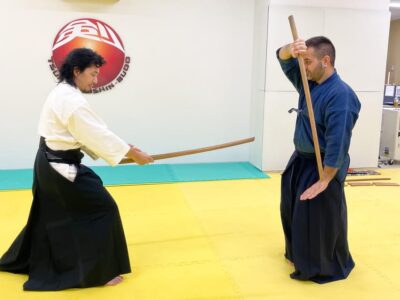
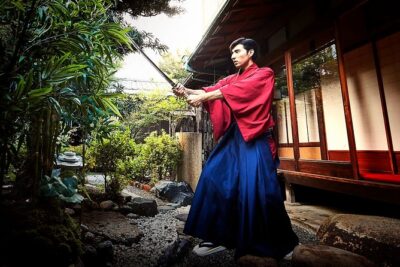
This one-hour Tokyo workshop brings you into real sword-action technique taught by action-actor samurai instructors Dai and Kume, with safe training swords and live demonstrations. I love that it’s hands-on from the start, not just watching a performance, and I also like the practical way they teach basics like gripping and swinging so you can actually feel the movements. A possible drawback: it is short (about 1 hour), so don’t expect a full skill course, and you won’t do real steel sparring.
If you’re in Tokyo looking for something more personal than another “see it, take a photo, move on” stop, this fits well. It’s capped at 15 travelers, it runs in central areas easy to reach from Tokyo Station and Ginza, and the class format includes both group trial sessions and private lessons.
In This Review
- Key Highlights You’ll Feel Right Away
- Why This Tokyo Samurai Class Feels Different Than a Typical Performance
- Your 60-Minute Flow: Warm-ups to an Action Scene
- What You Actually Practice: Wooden Swords and Real Technique
- Group Session vs Private Lesson: Which One Fits Your Travel Style?
- Group class: energy, interaction, and a fun trial vibe
- Private lesson: more direct coaching
- Price and Value: Is $32.84 for 1 Hour Worth It?
- Where to Go in Tokyo: Tsukuda Meeting Point and Transit-Friendly Access
- Who Should Book This Samurai Adventure (and Who Might Skip It)
- A Nice Extra: Friendly Guidance Beyond the Sword
- Quick Practical Tips Before You Go
- Should You Book This Tokyo Samurai Workshop?
- FAQ
- How long is the Tokyo Samurai Adventure workshop?
- How much does it cost?
- What’s included in the price?
- Do I get to practice with a sword?
- Is this real sword fighting?
- Is kimono dressing included?
- What are the options: group or private?
- How big is the class?
- Where do I meet, and where does the tour end?
- Can I cancel for a full refund?
Key Highlights You’ll Feel Right Away
- Dai and Kume lead the training: Former-action style instruction with a friendly, professional vibe.
- Watch then practice: You’ll see demonstrations up close before you try the fundamentals yourself.
- Training swords only: You use provided wooden swords, so the focus stays on technique and safety.
- Group class includes interaction: You join other participants and Japanese students/Aspiring actors for a lively trial session.
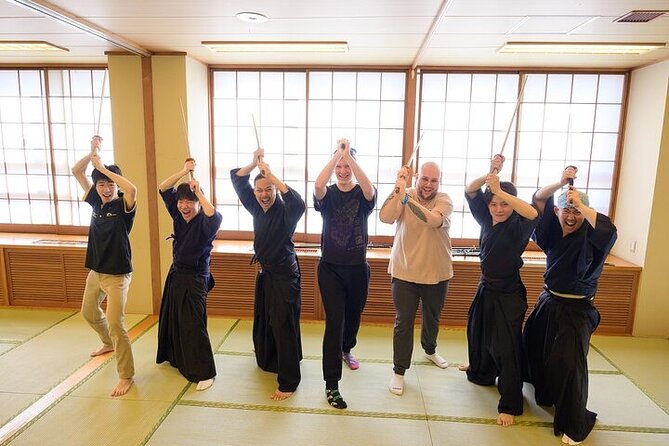
- A photo session closes it out: You can end the workshop with memorable shots alongside the samurai instructors.
- Beginner-friendly: They welcome beginners and start with warm-ups and core movements.
Why This Tokyo Samurai Class Feels Different Than a Typical Performance
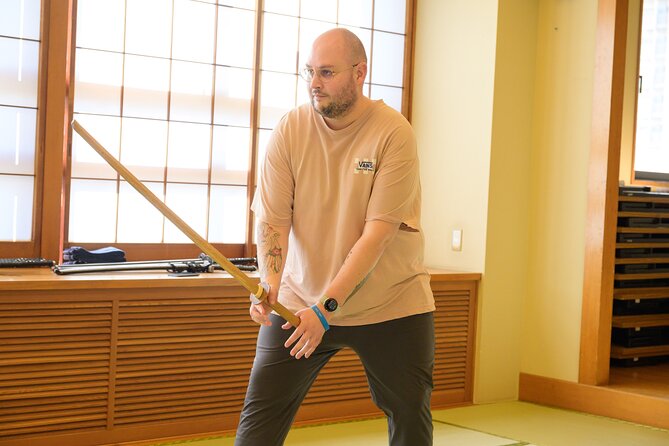
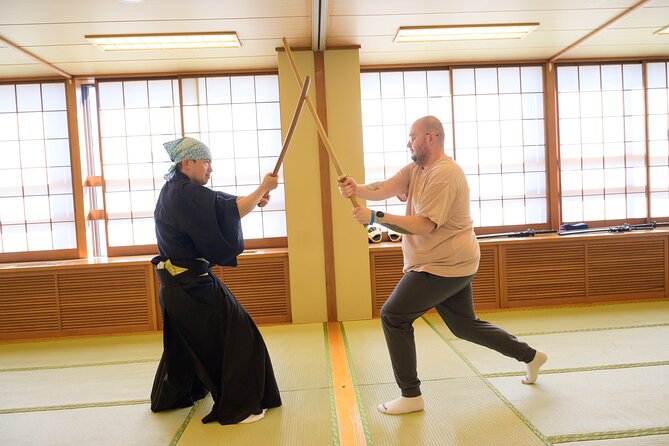
Tokyo has plenty of shows. This isn’t that. You’ll still see the dramatic side of samurai training, but the point is movement—how you grip, hold, and swing. The instructors (Dai and Kume) teach you the shapes and timing first, then you test them with partners in a staged, action-ready way.
Two things I particularly like about the experience are:
First, the teaching style is built around action-actor discipline. That usually means clear steps, lots of repetition, and a focus on doing it correctly, not just performing for the camera. Second, the workshop ends with a photo session, which makes the whole thing feel like an event you attended, not an encounter that passes in the background.
One thing to consider: the workshop runs about 1 hour, so it’s best for travelers who want a strong taste of the craft. If you want to come out of Tokyo as a sword master, you’ll need multiple sessions—or a longer training program elsewhere.
More blade-and-dojo sessions, reviewed
- Tokyo: Samurai Ninja Museum Guided tour and Experience
★ 4.6 · 1,010 reviews - Tokyo: Samurai Sword & Archery Class from Samurai Descendant
★ 5.0 · 603 reviews - Best Samurai Experience in Tokyo
★ 5.0 · 458 reviews - Ninja Experience (Family Friendly) at Samurai Ninja Museum TOKYO
★ 5.0 · 441 reviews
Your 60-Minute Flow: Warm-ups to an Action Scene
The workshop follows a simple, practical structure. You’ll start with warm-ups, then move into the fundamentals. That matters because samurai sword movement is very technical in small ways, and the course builds you up so you’re not thrown into chaos.
Here’s how your hour typically unfolds:
1) Warm-ups and setup
You’ll begin with a body-ready start. Even though you’re using training swords, you’ll still want your stance and wrist control to feel comfortable. This is where you get your bearings and learn what the instructors expect.
2) Core technique basics
Next come fundamentals such as how to hold and grip, plus basic swinging motions. This is where beginners can feel confident fast because the instruction is broken down into components instead of “just copy what I do.”
3) Pairing up for an action moment
Once you pick up the basics, you’ll pair with a professional samurai for an action-packed scene. The emphasis stays on safe, controlled practice, not real fighting. You should think of it like: learn the moves, then experience how they look when staged with a trained partner.
4) A close-up demonstration
Between your practice segments, you’ll also witness a powerful samurai demonstration up close. Watching after you’ve warmed up helps you notice details you might have missed if you’d only watched first.
5) Photos to finish
At the end, you’ll get a photo session with the samurai. It’s a nice way to turn the training into something you can remember later—especially if you like souvenirs that aren’t just another postcard.
What You Actually Practice: Wooden Swords and Real Technique
You’ll use training wooden swords provided for the workshop. That’s important for two reasons. First, it keeps things safe in a short class setting. Second, it changes what you focus on: technique, timing, and control rather than power or fear of impact.
The style of practice covers the key pieces that make samurai movement convincing:
- Grip and control (so your swing isn’t wild)
- Stance and body alignment
- Draw-and-swing motion patterns
- Controlled partner work during the staged action scene
In the reviews, people consistently highlight learning forms and exercises, and you can feel that matches the workshop’s structure. You’re not just doing one cool move for a few minutes and calling it done. You’ll go through enough repetition to walk away understanding how the pieces fit together.
Group Session vs Private Lesson: Which One Fits Your Travel Style?
You can choose between a group class and a private lesson.
Group class: energy, interaction, and a fun trial vibe
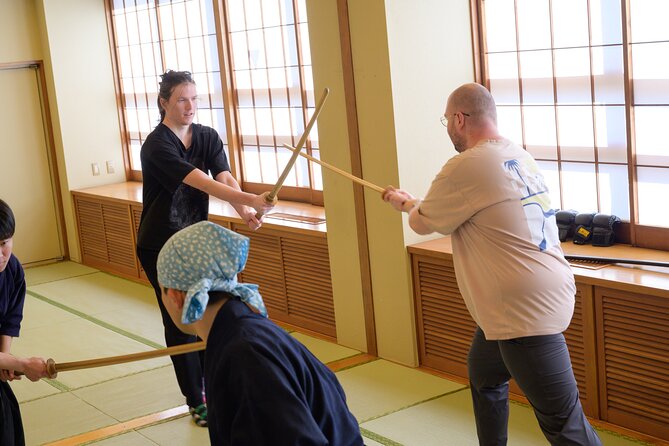
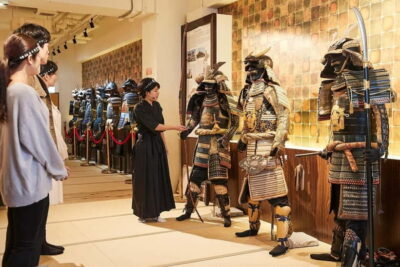
If you want a lively atmosphere, the group option is for you. Group sessions are designed to let you watch training up close, then practice alongside others. You’ll also interact with Japanese students who are learning samurai action, and that shared setting can make the lesson feel more like a cultural exchange than a solo attraction.
One more practical advantage: group pricing generally offers better value when you’re traveling with friends, since it’s a short, structured activity that fills the hour without extra cost.
- Tokyo: Shinjuku Food Tour (13 Dishes at 4 Local Eateries)★ 5.0 · 6,603 reviews
- Tokyo Mt Fuji 5th St & Hakone Cruise Bus Tour w/Bullet Train★ 4.4 · 5,024 reviews
- Flagship 2-Hours Official Street Go-Kart Tour – Tokyo Bay Shop★ 5.0 · 4,974 reviews
- From Tokyo: Mount Fuji Full-Day Sightseeing Trip★ 4.5 · 4,970 reviews
- Tokyo: Hop-On Hop-Off Sightseeing Bus Ticket★ 3.9 · 4,207 reviews
Private lesson: more direct coaching
If you prefer personal attention, the private option is worth considering. Since the tour includes hands-on practice with instructors guiding your movements, private time can help if you’re nervous, have a specific goal, or just want more feedback.
What I’d do: if you’re comfortable in a small group and want the social vibe, go group. If you want maximum coach time, go private.
Price and Value: Is $32.84 for 1 Hour Worth It?
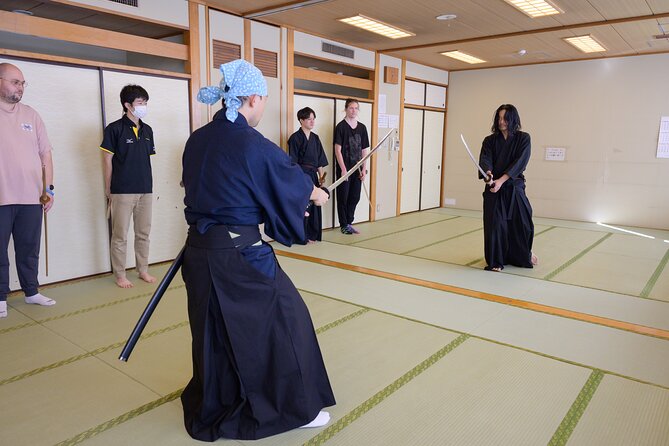
$32.84 for an approximately one-hour workshop is, in my view, a fair price for what you get—especially because the class includes more than one “moment.” You get:
- Intro to samurai history
- Live training demonstrations
- Hands-on swordsmanship practice with provided wooden swords
- A photo session
Many short activities in Tokyo either focus on watching or focus on doing. This one mixes both: you watch, then you practice, then you finish with a photo. The instruction is led by Dai and Kume, who are described in participant feedback as professional and passionate, and that professional tone shows up in how a class like this typically runs: steps are explained, corrections happen, and the end scene doesn’t feel random.
Also, the workshop offers mobile ticket entry and group discounts, which helps if you’re booking multiple people.
The biggest value trade-off is time. You only have one hour, so choose this if you want a memorable entry point into samurai-style movement, not if you want a multi-day training commitment.
Where to Go in Tokyo: Tsukuda Meeting Point and Transit-Friendly Access
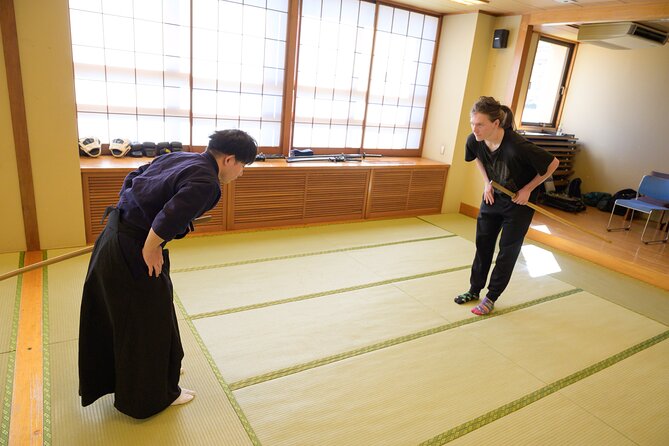
The workshop meets at 2-chōme-15-3 Tsukuda, Chuo City, Tokyo 104-0051, Japan, and it ends back at the meeting point. The location is in central Tokyo and is described as easy to reach from areas like Tokyo Station, Ginza, and Tsukiji.
That’s a big deal for planning. You don’t have to clear a whole day for travel time. It’s the kind of activity you can slot into a Tokyo morning or afternoon without turning it into a logistics puzzle.
Tip: because you’re doing physical practice, plan to arrive with enough buffer that you can settle in calmly. If you’re rushing in from a long walking day, you’ll feel it once the warm-ups start.
Who Should Book This Samurai Adventure (and Who Might Skip It)
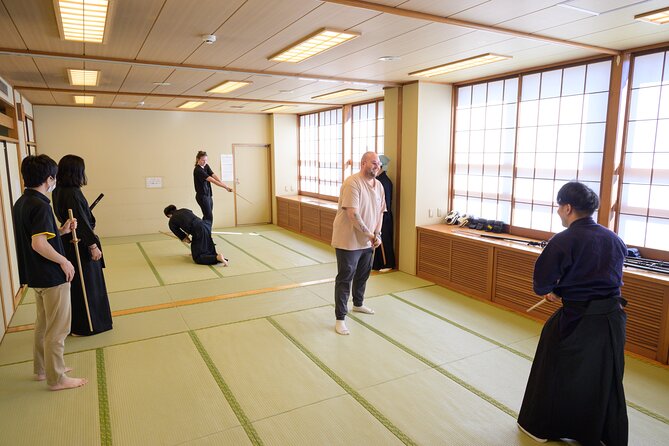
This workshop is a strong match for:
- First-time visitors who want an authentic Tokyo activity with a hands-on twist
- Travelers who like cultural experiences they can actively participate in
- Beginners who want instruction without intimidation
- People who enjoy action-movie style training, where performance and discipline overlap
- Groups that want an activity that feels special but doesn’t eat a full day
You might skip it if:
- You’re looking for advanced sword training or longer skill development (this is about basics and a staged action moment)
- You don’t like structured classes at all and prefer totally free-form experiences
- You want to include kimono dressing as part of the experience (that’s not included)
A Nice Extra: Friendly Guidance Beyond the Sword
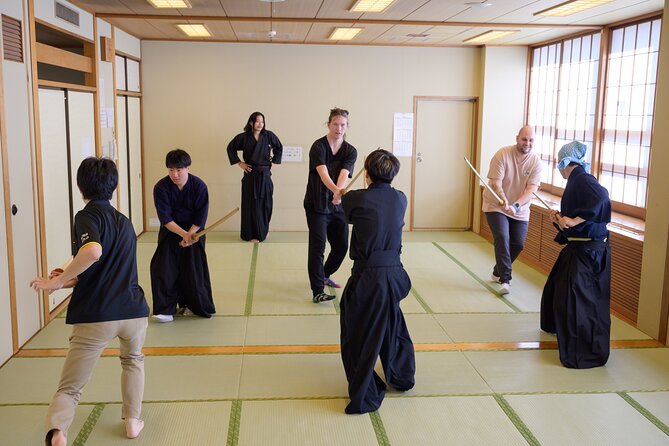
One of the sweet spots people bring up is how warm and engaged Dai and Kume are. In some cases, instructors may walk with you a bit afterward to point out traditional places to eat, and at least one group reports trying melon bread as part of that friendly send-off.
You shouldn’t expect a guaranteed food tour every time, but it’s a good sign. When the instructors care about how your day feels, it often shows up in small, practical ways—like where to go next and how to make the rest of your neighborhood time more enjoyable.
Quick Practical Tips Before You Go
You only have about an hour, so preparation matters more than people think.
- Wear something you can move in comfortably. You’ll be holding and swinging training swords, so avoid anything that restricts your stance.
- Bring your camera/phone for the photo session. The workshop includes a photo moment, but you’ll still want to capture it in your own way.
- Come with a beginner mindset. The class is designed for beginners, and the payoff is learning the basics well enough to look good in that staged action scene.
Should You Book This Tokyo Samurai Workshop?
If you want a memorable Tokyo experience that mixes safety, technique, and real instruction, I think this is an easy yes. The short duration doesn’t feel like a gimmick because it’s packed: warm-ups, fundamentals, demonstrations, partner practice, and photos—all in one session. And when instructors like Dai and Kume are described as friendly and professional, that usually means the class runs smoothly and you don’t feel lost.
Book it if you’re the type who likes doing instead of only watching. Skip it only if you need advanced training or if kimono dressing is a must-have for your perfect Tokyo day.
FAQ
How long is the Tokyo Samurai Adventure workshop?
The experience runs for about 1 hour.
How much does it cost?
The price is $32.84 per person.
What’s included in the price?
It includes an introduction to samurai history, live training demonstrations, hands-on sword practice with provided wooden swords, and a photo session with the samurai.
Do I get to practice with a sword?
Yes. You’ll do hands-on practice using training wooden swords provided for the workshop.
Is this real sword fighting?
No. The workshop uses training swords and focuses on safe practice of samurai movements rather than real sword fighting.
Is kimono dressing included?
No, kimono dressing is not included.
What are the options: group or private?
You can choose between a group trial session or private lessons.
How big is the class?
The maximum group size is 15 travelers.
Where do I meet, and where does the tour end?
The meeting point is 2-chōme-15-3 Tsukuda, Chuo City, Tokyo 104-0051, Japan, and the experience ends back at the meeting point.
Can I cancel for a full refund?
Yes. Free cancellation is available if you cancel at least 24 hours before the experience start time for a full refund.
More Tour Reviews in Tokyo
- Mt Fuji and Hakone 1-Day Bus Tour Return by Bullet Train
★ 5.0 · 26,383 reviews - 1-Day Tokyo Bus Tour
★ 5.0 · 14,250 reviews - Tokyo: teamLab Planets TOKYO Digital Art Museum Entry Ticket
★ 4.6 · 9,779 reviews - Mt Fuji & Hakone Cruise, Drum Show Bullet Train 1 Day from Tokyo
★ 4.0 · 7,413 reviews - Tokyo: Shinjuku Food Tour (13 Dishes at 4 Local Eateries)
★ 5.0 · 6,603 reviews
More Samurai and Ninja Sessions
- Tokyo: Samurai Ninja Museum Guided tour and Experience
★ 4.6 · 1,010 reviews - Tokyo: Samurai Sword & Archery Class from Samurai Descendant
★ 5.0 · 603 reviews - Best Samurai Experience in Tokyo
★ 5.0 · 458 reviews - Ninja Experience (Family Friendly) at Samurai Ninja Museum TOKYO
★ 5.0 · 441 reviews - Tokyo: Samurai Entertainment Night Show in Kanda Shrine
★ 4.6 · 417 reviews
Latest Tokyo reviews off our desk




Samurai & Ninja Classes, compared.
 ★ 4.6Samurai Ninja Museum Guided tour and ExperienceFrom $271,010 reviews
 ★ 5.0Samurai Sword & Archery Class from Samurai DescendantFrom $193603 reviews
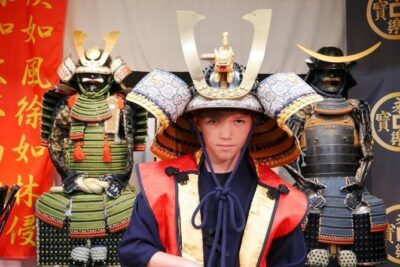 ★ 5.0Best Samurai Experience in TokyoFrom $65458 reviews
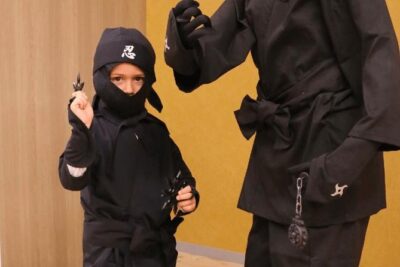 ★ 5.0Ninja Experience (Family Friendly) at Samurai Ninja Museum TOKYOFrom $47441 reviews
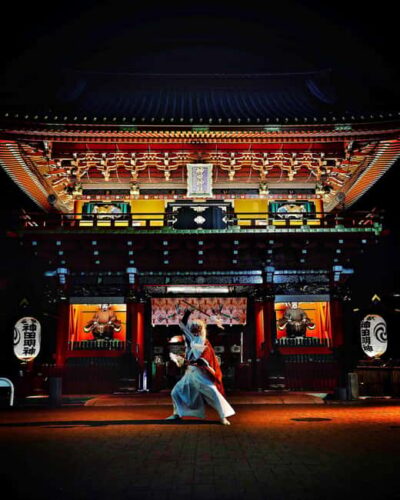 ★ 4.6Samurai Entertainment Night Show in Kanda ShrineFrom $41417 reviews
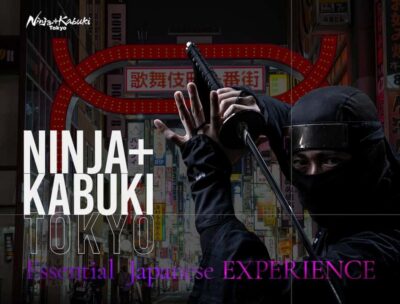 ★ 4.2Ninja Kabuki PerformanceFrom $29330 reviews
 ★ 5.0Tokyo Sword Experience – includes Museum Ticket/Ninja ExperienceFrom $84314 reviews
 ★ 4.8Samurai Ninja Museum Asakusa: Samurai Sword Lesson & TourFrom $63306 reviews
Browse the lists this tour appears in