
Reviewed · SAMURAI & NINJA CLASSES
Tokyo: Samurai Adventure! Authentic Sword Experience
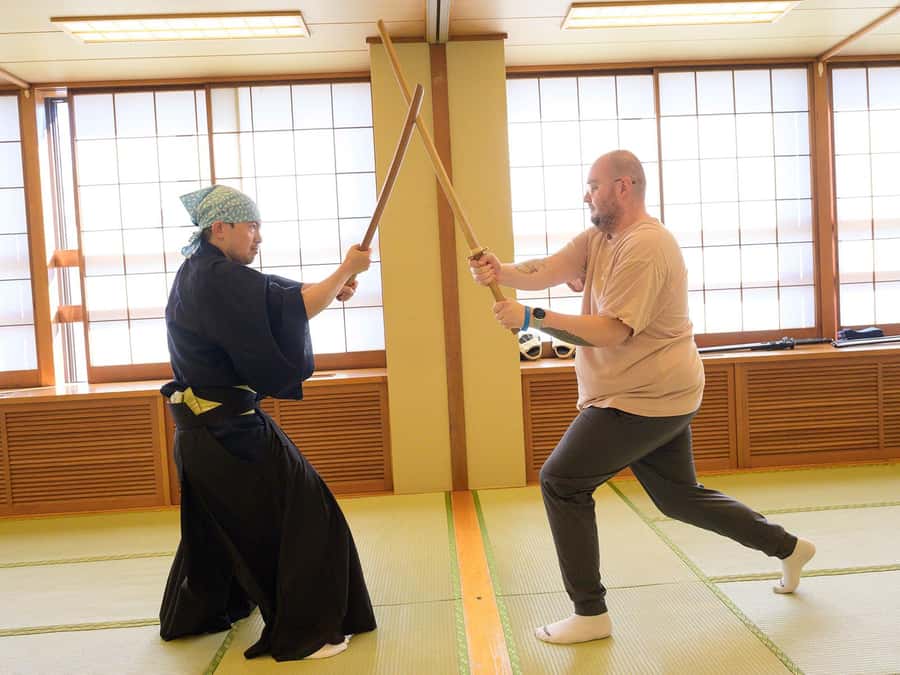
Samurai training feels like action-movie magic, but it’s built for real beginners. I love the mix of hands-on practice and close-up live demonstrations with instructors Dai and Kume. The main drawback to consider: this is physical practice, so it’s not a fit if you have issues like back problems or vertigo.
What makes this experience work is the format. You’ll learn stance, grip, and safe sword movements with practice wooden swords, with professional action actors guiding you. And yes, you’ll still get the fun stuff—paired practice moments and a photo session—without being thrown into actual fighting.
In This Review
- Key Points Before You Go
- Samurai Training Without Real Fighting: What Makes It Different
- The Lesson Flow: From Warm-up to Paired Practice
- What You Actually Learn: Grip, Stance, Strikes, and Defense
- Dai and Kume’s Instruction Style: Why It Feels Fun, Not Scary
- Public Course vs Private Course: Pick the Right Energy
- Public course: watch, join in, learn the rhythm
- Private course: more focus on your goals
- Price and Value in Tokyo Terms (About $24)
- Where It Happens: Samurai Experience Photo Studio ICHI
- What to Wear (and What to Avoid)
- Photo Time With the Samurai: Why This Keeps It Memorable
- Who This Is For (And Who Should Skip It)
- Small Practical Tips That Make the Day Easier
- Should You Book This Samurai Adventure in Tokyo?
- FAQ
- How much is the samurai sword experience?
- What’s included in the price?
- Do I need experience with swords or martial arts?
- Is there actual sword fighting during the lesson?
- Where do I meet for the activity?
- What should I wear?
- How early should I arrive, and what if I cancel?
Key Points Before You Go
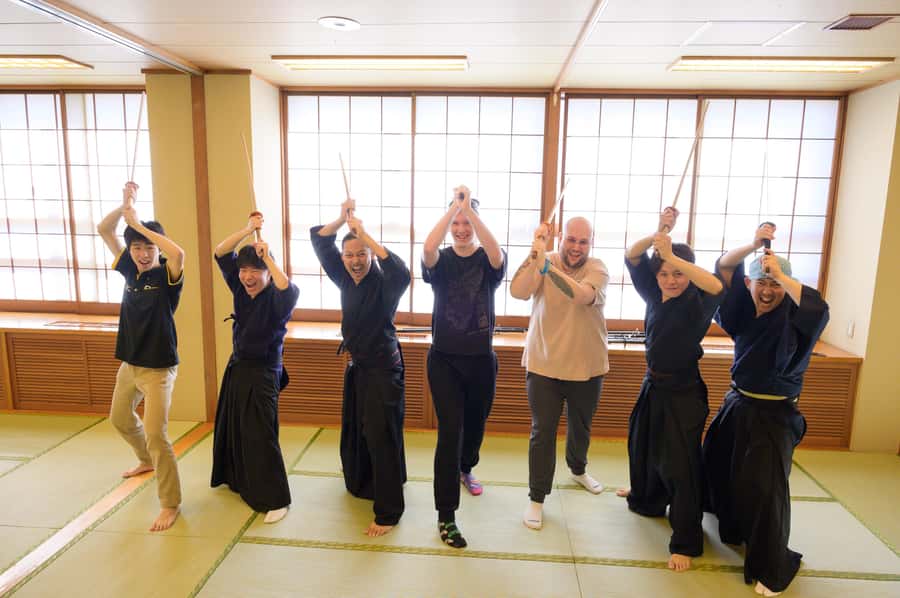
- Dai and Kume guide you step-by-step, with an emphasis on beginner-friendly movement basics
- No real sword combat: you use wooden practice swords, then pair up in controlled practice
- Public course includes a class vibe, where aspiring Japanese actors train while you watch and practice
- Private course can be more tailored, starting with brief samurai history and adjusting to your goals
- A photo session is part of the experience, so you leave with a real keepsake, not just memories
Samurai Training Without Real Fighting: What Makes It Different
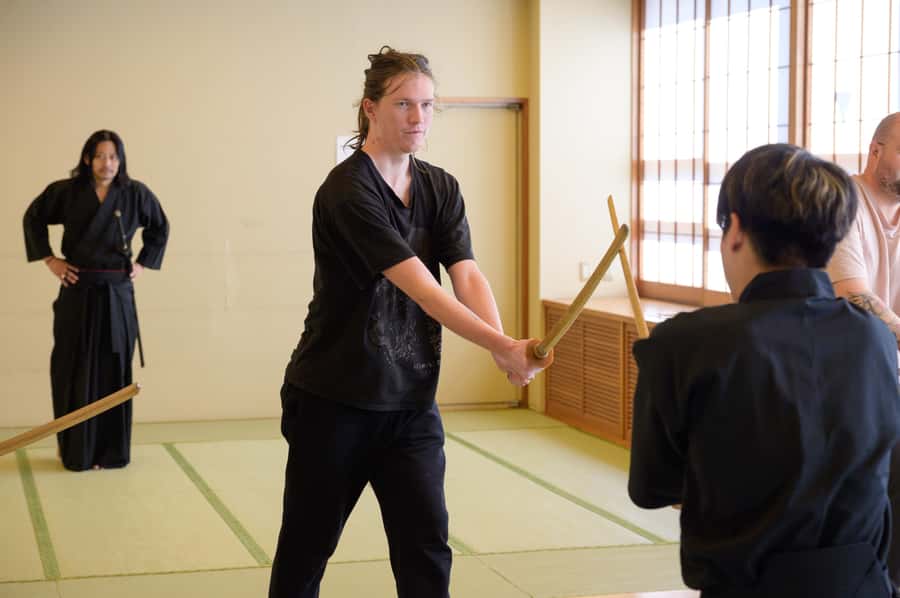
This is a sword experience that stays on the smart side of safety. You won’t be doing actual sword-on-sword combat. Instead, you learn the movements of samurai sword handling using practice wooden swords, guided by professional action actors.
That matters, because Tokyo has plenty of “see and pose” cultural activities. Here, you do the work: grip, stance, and controlled strikes and defensive moves. You get the feeling of samurai practice without the fear factor that would scare off most first-timers.
You’ll also get to watch training and demonstrations up close. Even if you only remember a few techniques, you’ll understand what samurai action is supposed to look and feel like when done correctly.
More blade-and-dojo sessions, reviewed
- Tokyo: Samurai Ninja Museum Guided tour and Experience
★ 4.6 · 1,010 reviews - Tokyo: Samurai Sword & Archery Class from Samurai Descendant
★ 5.0 · 603 reviews - Best Samurai Experience in Tokyo
★ 5.0 · 458 reviews - Ninja Experience (Family Friendly) at Samurai Ninja Museum TOKYO
★ 5.0 · 441 reviews
The Lesson Flow: From Warm-up to Paired Practice
The workshop generally follows a clear rhythm, so you’re never left guessing what happens next. It starts with warm-up exercises to get your body ready for movement, then it moves into the core basics: how to grip and hold the sword, how to swing it, and how to keep a stable stance.
Once you’ve got the fundamentals, the session shifts into partner-style practice. That’s when you’ll practice paired movements with a professional samurai so it feels like a scene from an action film—still using practice swords and still focused on safe technique.
You’ll also witness a strong demonstration by the samurai during the lesson. Watching comes at the right time: after you’ve learned the basic mechanics, you can actually see what the mechanics create.
What You Actually Learn: Grip, Stance, Strikes, and Defense
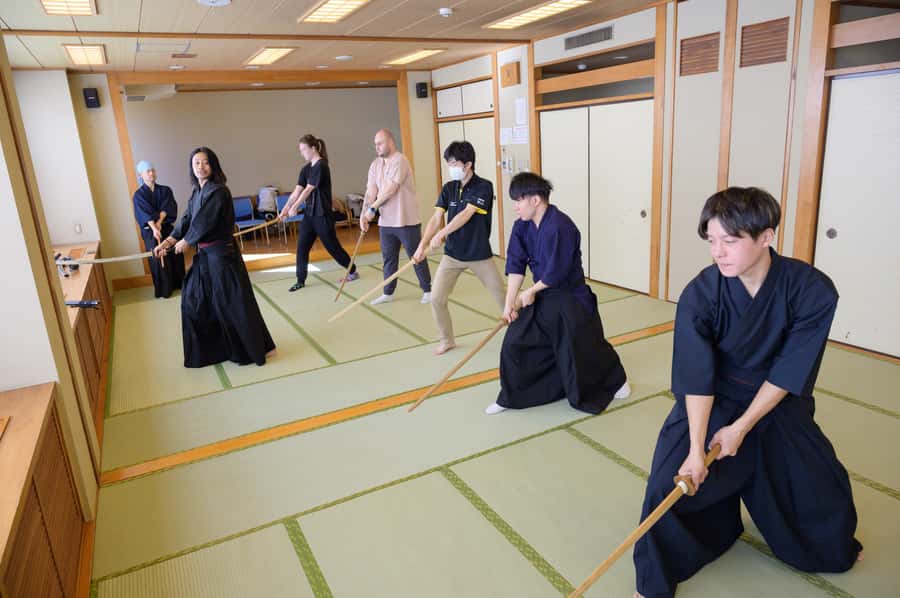
This isn’t about becoming a swordsman in one afternoon. It’s about understanding the building blocks of katana-style action and learning them in a way that you can repeat back home.
Here’s what you’re working on:
- Proper stance and grip for holding and controlling the sword
- Basic strikes (practiced safely with wooden swords)
- Basic defensive moves so you understand how timing and positioning work
In plain terms: you learn the body mechanics that make sword action look convincing. That’s the part that usually feels mysterious in videos and photos. In this workshop, you get enough structure to understand the “why” behind the movement.
And because the instructors are professional action actors, the teaching style is built for guests. Expect coaching that focuses on what your body should do, not just lectures about swords.
Dai and Kume’s Instruction Style: Why It Feels Fun, Not Scary
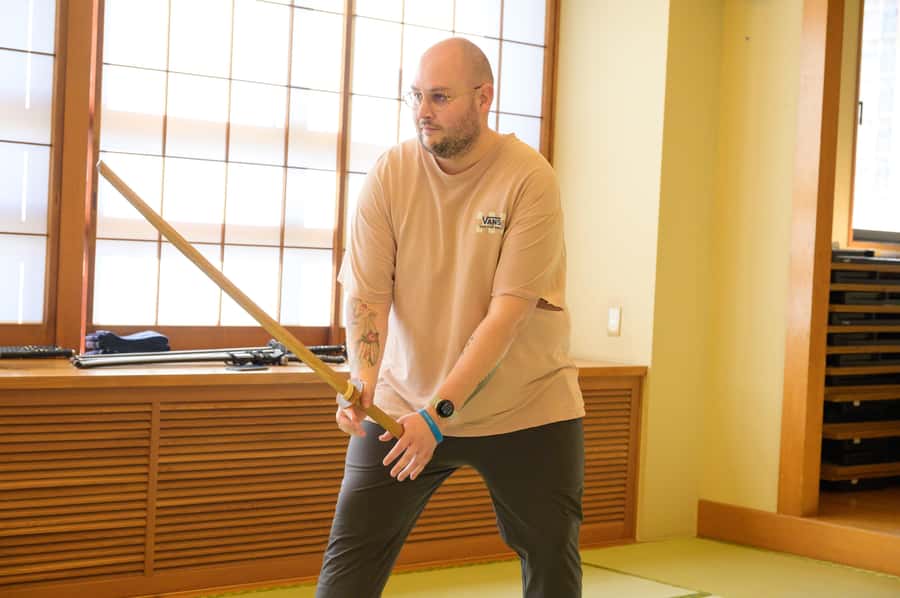
The standout in this experience is the people teaching it. Dai and Kume (the instructors you’ll hear about most in English-language sessions) are described as friendly, patient, and detailed. The vibe is upbeat, even when you’re working on technique.
What I like about this setup is that it’s both performance and training. Action actors know how to communicate movement clearly. They also know how to keep a group moving and engaged, which makes beginners feel comfortable fast.
You’ll get help if something isn’t going right. In one example, an instructor helped fix a broken item for a friend. That kind of practical care tells you the workshop is run like an actual class, not a chaotic one-off photo opportunity.
Public Course vs Private Course: Pick the Right Energy
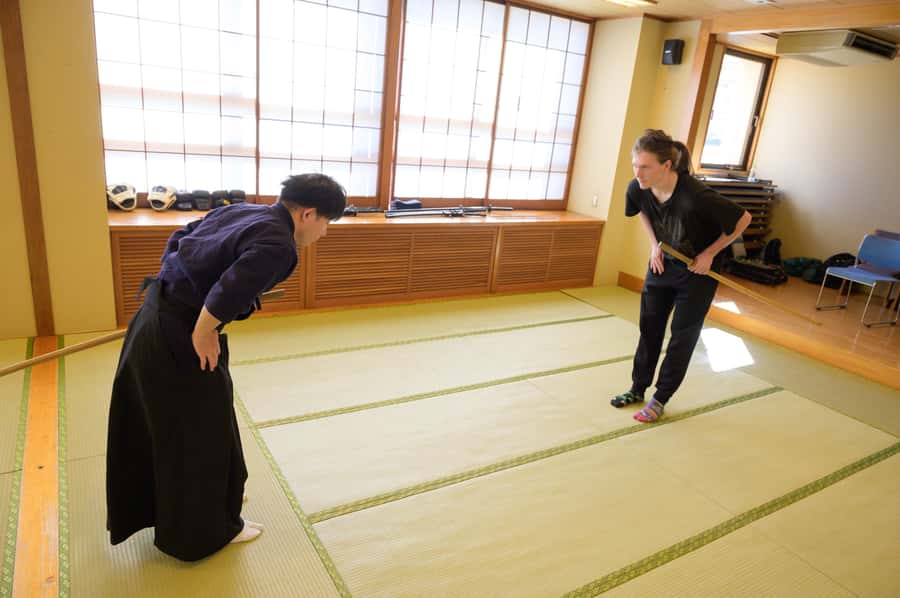
You can choose a public course or a private course. The difference is less about “quality” and more about the atmosphere and how much tailoring you get.
- Tokyo: Shinjuku Food Tour (13 Dishes at 4 Local Eateries)★ 5.0 · 6,603 reviews
- Tokyo Mt Fuji 5th St & Hakone Cruise Bus Tour w/Bullet Train★ 4.4 · 5,024 reviews
- Flagship 2-Hours Official Street Go-Kart Tour – Tokyo Bay Shop★ 5.0 · 4,974 reviews
- From Tokyo: Mount Fuji Full-Day Sightseeing Trip★ 4.5 · 4,970 reviews
- Tokyo: Hop-On Hop-Off Sightseeing Bus Ticket★ 3.9 · 4,207 reviews
Public course: watch, join in, learn the rhythm
In the public format, you join a class where aspiring Japanese actors learn samurai action. You’ll start by observing, then you can practice alongside them. This can be a fun option if you like a lively group setting and don’t mind sharing attention.
It also adds a cultural layer without turning the experience into a lecture. You’re seeing training habits from a Japanese group right there in Tokyo, and you get to participate in the same style of movement work.
Private course: more focus on your goals
In the private course, you first get a brief introduction to the history and culture of the samurai. Then Dai or the instructor tailors the lesson to your level and what you want out of it.
This format tends to make sense if you:
- already have some martial arts background
- want more explanation of what you’re doing
- prefer a quieter pace and more direct feedback
Private also tends to be a strong choice for groups who want everyone’s learning needs handled without timing pressure from a larger class.
Price and Value in Tokyo Terms (About $24)
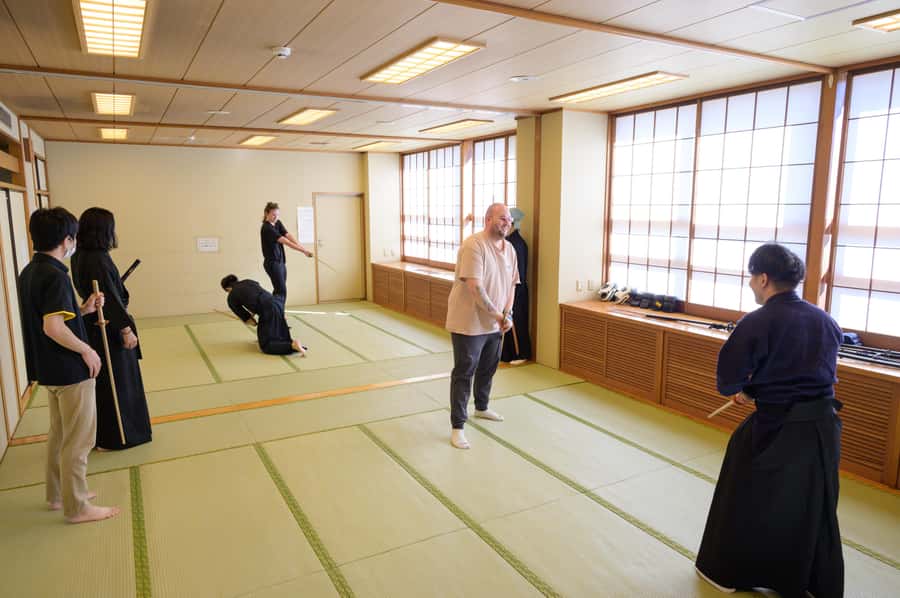
At $24 per person, you’re paying for a guided experience that includes instruction, equipment (practice wooden swords), and a photo session. That’s a pretty solid value in Tokyo, where “one hour, one photo” activities can cost more with less to show for it.
What justifies the cost here is the combination:
- you learn movement basics you can repeat
- you watch samurai demonstrations up close
- you get a photo keepsake at the end
Also, the workshop runs with professionals. Even if you’re a total beginner, you’re being coached by people who do this kind of training for a living.
You can think of it as a short, structured training session plus a fun souvenir moment—without the expense of a long-term dojo plan.
Where It Happens: Samurai Experience Photo Studio ICHI
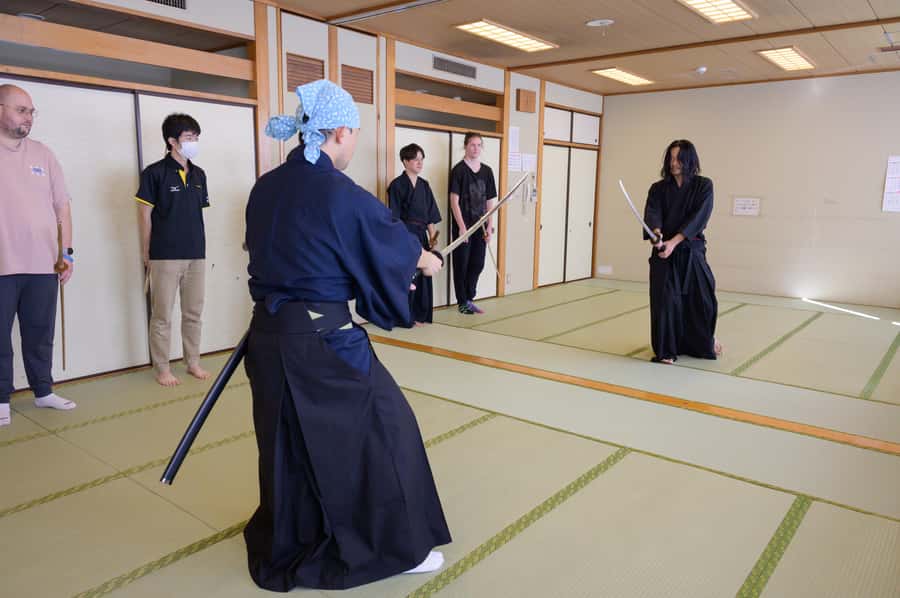
The meeting point is listed as Samurai Experience Photo Studio ICHI on Google Maps. That’s how you should find it—search the exact name and you’ll be able to locate it quickly.
In practice, the flow is simple. You meet at the studio area, you handle the initial setup (including dressing if you opt for a samurai costume), and then you walk to a nearby building where the training/dojo space happens.
The activity ends back at the meeting point. So you’re not stuck trying to get yourself across town after you’re done. This is one of those small logistical wins that makes the whole thing feel easier.
What to Wear (and What to Avoid)
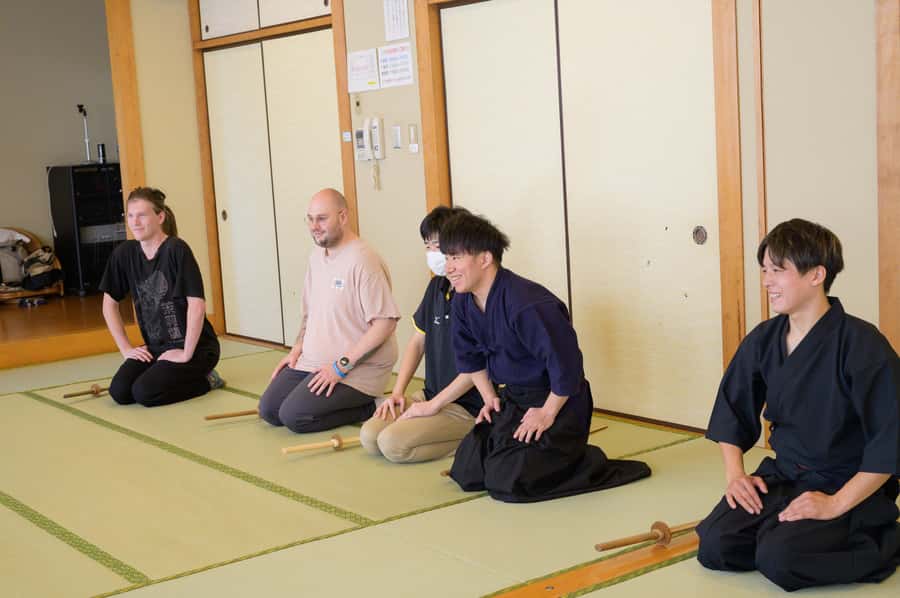
This is physical, so your clothing matters more than you might expect. Wear comfortable clothes you can move in. Closed-toe shoes are required for the physical part.
Avoid high heels. You also can’t bring drones, and you shouldn’t smoke. Alcohol and drugs aren’t allowed either. If you’re tempted to dress up extra, think practical first. Your goal is to move safely and learn the technique without slipping or losing balance.
If you’re selecting what to wear in Tokyo that day, I’d pack this rule in your head: comfortable socks and sturdy shoes will beat style.
Photo Time With the Samurai: Why This Keeps It Memorable
The photo session is built into the end of the experience, not tacked on as an afterthought. If you’re worried about it being awkward, don’t be. The photo part is tied to the samurai theme, and by the time you get there, you’ve already done the training basics. That makes the photos feel earned.
You’re also likely to notice the workshop takes care with the look and pacing. People describe getting to wear samurai clothes as part of the experience. Costume is listed as an option rather than included by default, so if this is important to you, plan to choose it when available.
Either way, even if you only observe during a portion of the lesson, the atmosphere and close-up demonstration still make the session feel like more than a quick stop.
Who This Is For (And Who Should Skip It)
This experience is best for people who want an active cultural moment in Tokyo—something you can feel in your legs and arms, not just look at.
It fits well if you:
- want a beginner-friendly sword basics introduction
- enjoy action-movie style training and demonstrations
- like hands-on lessons more than museum-style viewing
But it’s not suitable if you’re dealing with physical limits or medical risk. It isn’t for pregnant women, people with back problems, wheelchair users, people with vertigo, or anyone with pre-existing medical conditions. If any of those apply, you should skip this one and choose a lower-impact Tokyo activity.
Small Practical Tips That Make the Day Easier
Arrive 15 minutes early. That buffer helps you settle in before the training starts and keeps the whole session moving smoothly.
Also plan your day so you’re not rushing between major sights. After sword practice—especially learning stance and strikes—your body might feel worked in a good way. Build in a little breathing room afterward.
If you’re choosing between public and private, go with your comfort level. Public is social and energetic. Private is more controlled and more personal.
Should You Book This Samurai Adventure in Tokyo?
Book it if you want a short, structured Tokyo experience where you do real technique work with safe practice swords, taught by Dai and Kume. The price makes sense for what you get, and the photo session gives you a tangible souvenir that matches the training you went through.
Skip it if you want a purely passive activity, or if any of the health and mobility limits apply. Also skip it if you’re looking for a deep historical deep-dive—this is primarily a movement and technique workshop, with history included more directly in the private format.
If your goal is to leave Tokyo with a story that includes movement, coaching, and a samurai demonstration you actually saw up close, this is a strong call.
FAQ
How much is the samurai sword experience?
It’s priced at $24 per person.
What’s included in the price?
You’ll get an introduction to samurai history, live training demonstrations, hands-on swordsmanship practice with wooden practice swords, and a photo session with the samurai.
Do I need experience with swords or martial arts?
No. The workshop is designed for beginners. You’ll learn basic handling techniques like stance and grip, and you practice safely with wooden swords.
Is there actual sword fighting during the lesson?
No. You won’t engage in actual sword fighting. The instruction focuses on learning movements safely using practice wooden swords.
Where do I meet for the activity?
Use Samurai Experience Photo Studio ICHI on Google Maps as your meeting point.
What should I wear?
Wear comfortable clothes and closed-toe shoes suitable for physical activity.
How early should I arrive, and what if I cancel?
Arrive 15 minutes early. If you need to cancel, you can cancel up to 24 hours in advance for a full refund.
More Tour Reviews in Tokyo
- Mt Fuji and Hakone 1-Day Bus Tour Return by Bullet Train
★ 5.0 · 26,383 reviews - 1-Day Tokyo Bus Tour
★ 5.0 · 14,250 reviews - Tokyo: teamLab Planets TOKYO Digital Art Museum Entry Ticket
★ 4.6 · 9,779 reviews - Mt Fuji & Hakone Cruise, Drum Show Bullet Train 1 Day from Tokyo
★ 4.0 · 7,413 reviews - Tokyo: Shinjuku Food Tour (13 Dishes at 4 Local Eateries)
★ 5.0 · 6,603 reviews
More Samurai and Ninja Sessions
- Tokyo: Samurai Ninja Museum Guided tour and Experience
★ 4.6 · 1,010 reviews - Tokyo: Samurai Sword & Archery Class from Samurai Descendant
★ 5.0 · 603 reviews - Best Samurai Experience in Tokyo
★ 5.0 · 458 reviews - Ninja Experience (Family Friendly) at Samurai Ninja Museum TOKYO
★ 5.0 · 441 reviews - Tokyo: Samurai Entertainment Night Show in Kanda Shrine
★ 4.6 · 417 reviews
Latest Tokyo reviews off our desk






Samurai & Ninja Classes, compared.
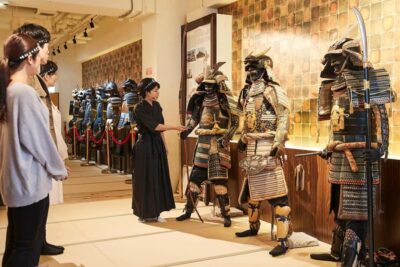 ★ 4.6Samurai Ninja Museum Guided tour and ExperienceFrom $271,010 reviews
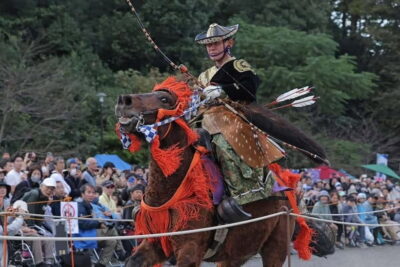 ★ 5.0Samurai Sword & Archery Class from Samurai DescendantFrom $193603 reviews
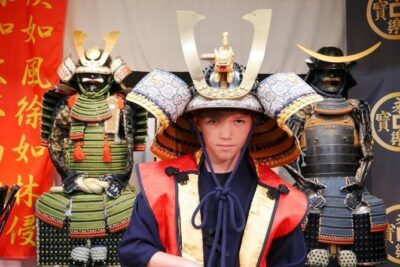 ★ 5.0Best Samurai Experience in TokyoFrom $65458 reviews
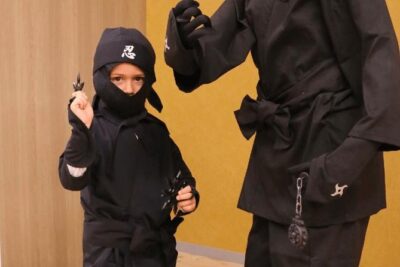 ★ 5.0Ninja Experience (Family Friendly) at Samurai Ninja Museum TOKYOFrom $47441 reviews
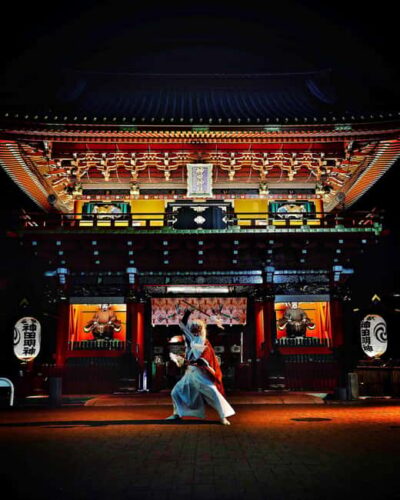 ★ 4.6Samurai Entertainment Night Show in Kanda ShrineFrom $41417 reviews
 ★ 4.2Ninja Kabuki PerformanceFrom $29330 reviews
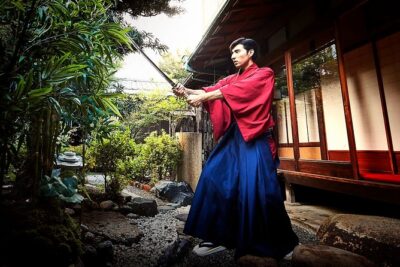 ★ 5.0Tokyo Sword Experience – includes Museum Ticket/Ninja ExperienceFrom $84314 reviews
 ★ 4.8Samurai Ninja Museum Asakusa: Samurai Sword Lesson & TourFrom $63306 reviews
Browse the lists this tour appears in