
Reviewed · SAMURAI & NINJA CLASSES
Tokyo Samurai Experience: Kyudo (Archery) and Swordsmanship
Samurai fantasy meets real technique in Asakusa. In about one hour, you dress in hakama, learn kyudo archery, and get hands-on practice with a single-edged katana, plus you’ll wrap it up with snacks and plenty of photo support. It’s a fun, approachable way to get a feel for samurai tradition without needing any prior experience.
Two things I really like: first, the way the class uses traditional clothing and picture-taking so you leave feeling like you actually stepped into the era. Second, I like that the coaching is bilingual (English explanations) and designed for different English levels, so you’re not left guessing what to do with the bow or the sword. You’ll also get a history and philosophy angle through a mini-game, not just “stand here and listen.”
One drawback to consider: since everything is packed into 1 hour, you’ll get solid basics and key poses, but it’s not long enough to become a true expert at archery or swordsmanship. If you want lots of repetition, this is more of a “first training session with wow-factor” than a full mastery course.
In This Review
- Key highlights worth your time
- Why This Kyudo and Katana Class Works So Well in One Hour
- Finding Heiwa Building in Asakusa (And Getting There Without Stress)
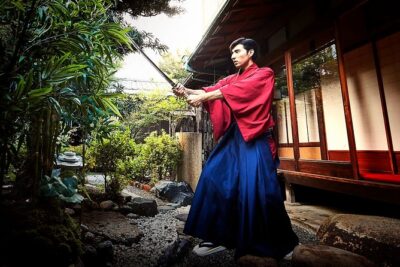
- Hakama Outfit Fitting: Instant Samurai Presence
- Kyudo Archery: Learning the Bow and Competing for Shogun Rank
- Katana Swordsmanship: Holding the Katana and Fixing Your Pose
- The Samurai History Mini-Game (How It Teaches Without Feeling Like School)
- Snacks, Bilingual Coaching, and What the Staff Style Means for You
- Price and Value: Is $96 for 1 Hour Fair?
- Who Should Book This Samurai Experience in Asakusa?
- Should You Book This Tokyo Samurai Experience?
- FAQ
- What does the price include?
- How long is the experience?
- Do I need any experience with archery or swords?
- Where is the meeting point?
- What should I wear or bring?
- Is the class in English?
- Is there anything I’m not allowed to bring?
Key highlights worth your time
- Hakama outfit included in a wide range of sizes, so the look works for you
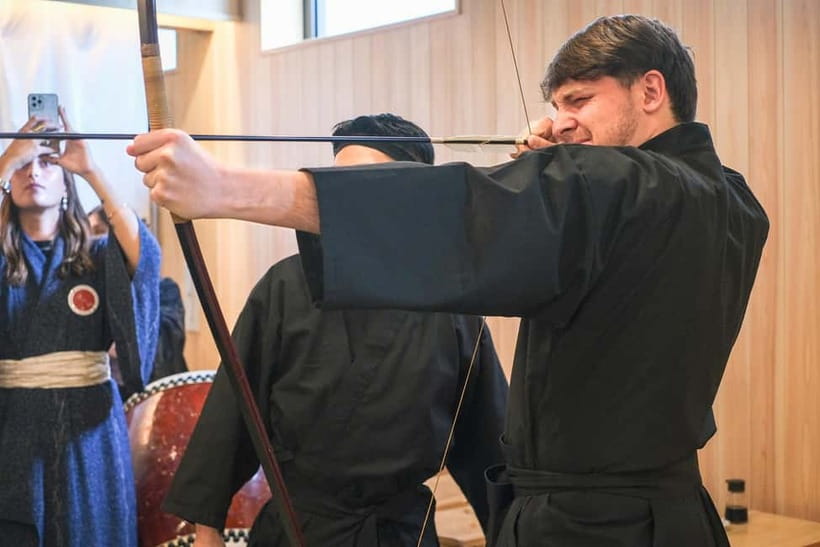
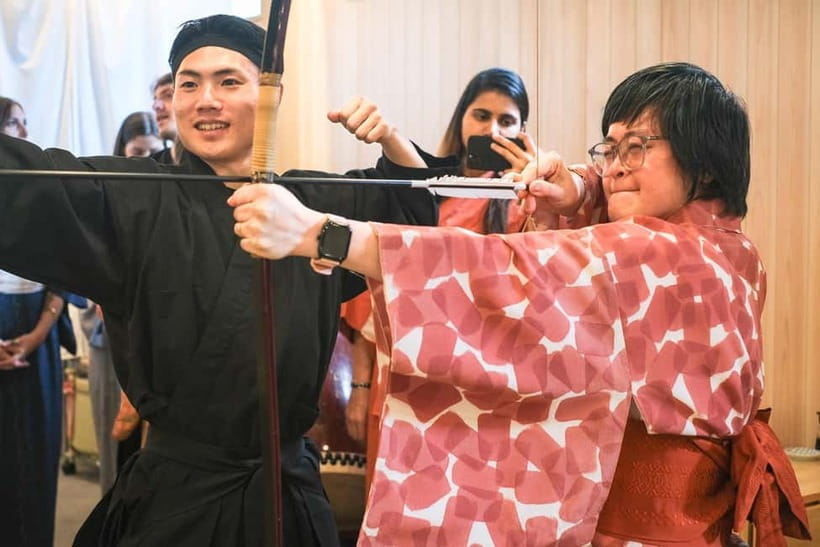
- Kyudo archery with a traditional Japanese bow and a friendly competition vibe
- Katana practice focused on the right way to hold the sword and get the pose down
- Samurai mini-game that teaches history and rank in a way that stays fun
- Bilingual staff (English) with clear guidance for your level
- Snacks and photo help so you actually capture the moment
Why This Kyudo and Katana Class Works So Well in One Hour
If you’re short on time in Tokyo, this kind of experience hits the sweet spot. You’re not trying to squeeze in a long class, and you’re not just paying for a costume. You get a full arc: outfit, intro to samurai traditions, practice with both kyudo and katana, then a mini-game and photos to finish strong.
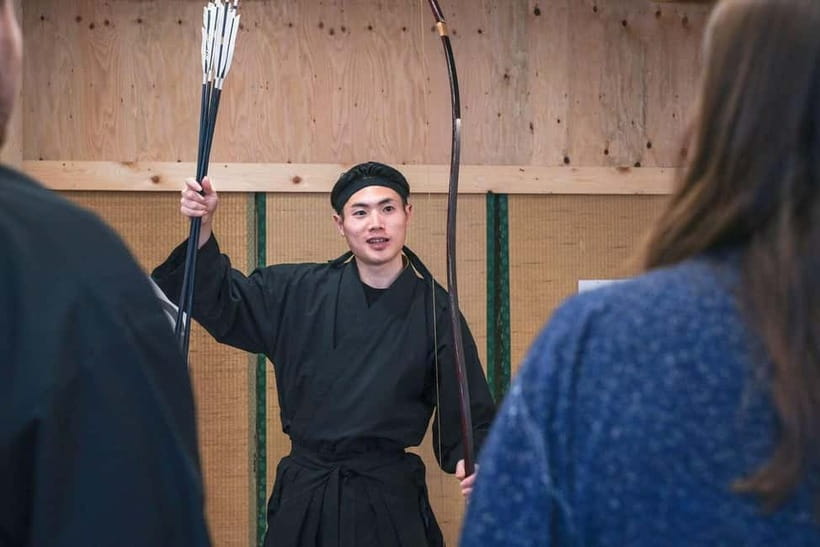
What makes it especially practical is that you can go in with zero background. The staff builds the session around simple, teachable steps: how to hold the bow, how to approach practice, and how to manage the katana basics and signature-style posing. That matters in a city where a lot of “cultural experiences” are either too rigid or too vague.
And Asakusa helps, too. This area is one of those places where people come for old Tokyo energy. Doing a samurai-themed activity here makes the whole day feel more coherent, like you’re not hopping between unrelated attractions.
The “difference from Western archery” line is real in spirit: you’re taught through a Japanese martial art lens, and you’ll feel that change fast. Even if you’re used to sports shooting, the approach here is meant to feel distinct and traditional, not like a basic target range.
More blade-and-dojo sessions, reviewed
- Tokyo: Samurai Ninja Museum Guided tour and Experience
★ 4.6 · 1,010 reviews - Tokyo: Samurai Sword & Archery Class from Samurai Descendant
★ 5.0 · 603 reviews - Best Samurai Experience in Tokyo
★ 5.0 · 458 reviews - Ninja Experience (Family Friendly) at Samurai Ninja Museum TOKYO
★ 5.0 · 441 reviews
Finding Heiwa Building in Asakusa (And Getting There Without Stress)
Your meeting point is in Tokyo, Taito-ku, Asakusa at 2 Chome 6-11 Heiwa Building. The key detail: you need to take the elevator up to the 5th floor.
Here’s how I’d handle it if I were going today:
- Arrive about 10 minutes early so you’re not rushing when you’re trying to locate the right office floor.
- Use comfortable shoes. You’ll be moving around enough to make flip-flops or slippery footwear a bad idea.
- If you get turned around, contact the provider. They explicitly say to reach out if you have trouble finding the place.
This is one of those activities where being calm at the start pays off. Once you’re in hakama, you want to focus on your instructor, not on your own navigation.
Hakama Outfit Fitting: Instant Samurai Presence
The moment you change into the hakama-set, the experience shifts from “tourist activity” into something more physical and memorable. You’ll have lots of different heights and sizes available, which is a big deal because the classic look depends on fit. Staff help you with the whole setup so you can actually enjoy the moment instead of fighting clothes.
You should expect the outfit to affect how you stand and move. That’s part of the training vibe. Even the way you carry yourself becomes a practice in posture and presence—exactly what you want before you touch the sword and bow.
Then comes the photo part. Staff help you take lots of pictures, so you’re not stuck begging a stranger to shoot a shaky action pose. This is also where you’ll likely feel the funniest side of the experience: you’ll be learning serious skills, but you’ll also be seeing yourself in a samurai look that’s a little surreal (in a good way).
You’ll also get Japanese snacks included. That’s not just a nice perk. After 1 hour of activity, it helps you finish on a good note rather than walking off hungry.
Kyudo Archery: Learning the Bow and Competing for Shogun Rank
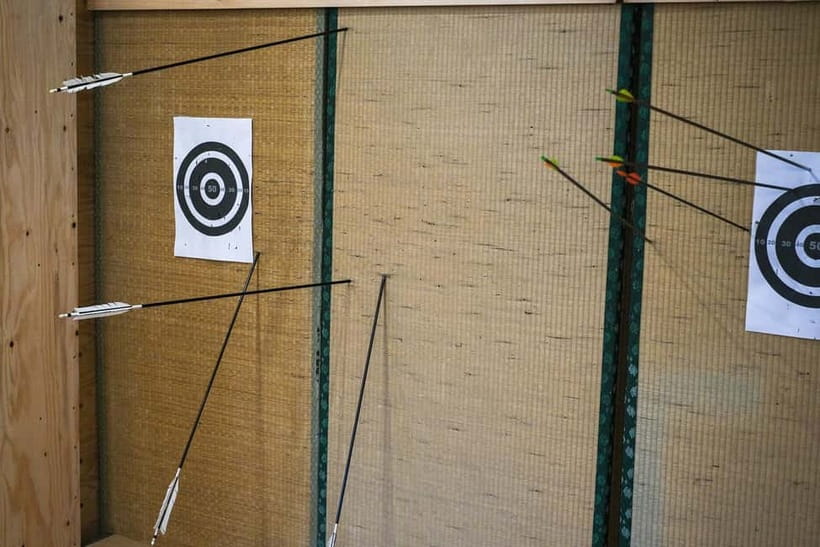
Kyudo here is taught using a traditional Japanese bow. The goal isn’t a Western-style scoring chase—it’s learning the art through a samurai-themed structure and friendly competition.
A big plus is the way the class frames kyudo as something you do with others. You’ll compete with friends for the general (shogun) position. That makes it feel like a game, but still gives you a real training focus: you’re using the bow as instructed, practicing the basic technique, and paying attention to form.
What surprised me in the way this is described is that you’re explicitly told kyudo is different from Western archery. That’s helpful because it sets expectations. If you go in thinking it’s “just archery,” you might be frustrated when the style and philosophy feel different. If you go in expecting a Japanese martial art approach, you’ll likely enjoy it more.
This also connects to samurai philosophy. You don’t just throw arrows and move on. You’ll learn philosophy as part of the flow, so the bow training feels like part of a larger tradition rather than a standalone gimmick.
Katana Swordsmanship: Holding the Katana and Fixing Your Pose
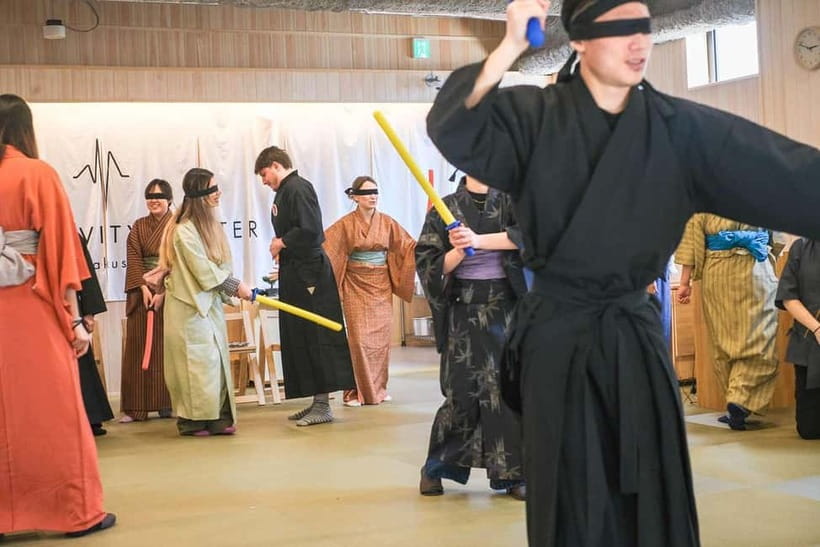
The katana section focuses on two things that matter for beginners: the right way to hold the single-edged sword and mastering a key pose. That pose part is important. If you’re new to swords, you often think the hard part is technique. In reality, for most people the hard part is posture, hand placement, and confidence.
The instruction is designed for you to improve quickly within the time limit. Staff coach you on the “how,” not just the “what.” If you like structured guidance, this will feel satisfying. You’ll also get help that keeps you safe and comfortable while you practice the holding-and-posing basics.
And yes, it’s very photo-friendly. Staff are helping you capture the strongest samurai pose, which means you’re not just doing the movements once and walking away. You’re encouraged to repeat or refine enough that you’ll look good in your photos and feel the improvement.
Instructors are described as patient and supportive, including a Coach Mori and an instructor Joe. That’s exactly what you want when you’re learning something that’s both new and a little intimidating.
- Tokyo: Shinjuku Food Tour (13 Dishes at 4 Local Eateries)★ 5.0 · 6,603 reviews
- Tokyo Mt Fuji 5th St & Hakone Cruise Bus Tour w/Bullet Train★ 4.4 · 5,024 reviews
- Flagship 2-Hours Official Street Go-Kart Tour – Tokyo Bay Shop★ 5.0 · 4,974 reviews
- From Tokyo: Mount Fuji Full-Day Sightseeing Trip★ 4.5 · 4,970 reviews
- Tokyo: Hop-On Hop-Off Sightseeing Bus Ticket★ 3.9 · 4,207 reviews
The Samurai History Mini-Game (How It Teaches Without Feeling Like School)
One reason this experience doesn’t drag is that it teaches history through a mini-game. You’ll get a brief intro into the history and traditions of samurai, and then you step into a game that determines your samurai rank.
The tone matters here. You might lose at the mini-game, but the idea is that you don’t end the session feeling defeated. The real training starts after that. That keeps the mood light while still giving you structure.
For me, that’s the best way to teach something like this during a short tour. If you only listen to history, you’ll forget it. If you do a game tied to rank and tradition, you remember because your brain links facts to experience.
It also sets up the overall theme: you’re not just practicing kyudo and katana in isolation. You’re playing a samurai scenario where bow and sword skills connect back to status, philosophy, and presence.
And since it’s family-friendly, it’s clearly designed to keep different ages engaged. Kids and young adults are specifically mentioned as being suited for the style of instruction.
Snacks, Bilingual Coaching, and What the Staff Style Means for You
This is an English-led activity with bilingual staff. Explanations are adapted to your English level, which matters more than you might think. In practical terms, it reduces the risk of you missing key instructions right when you’re about to handle the bow or the sword.
You’ll also notice staff being described as friendly, fun, and knowledgeable. More importantly, they give good tips beyond the activity, which can turn your visit into a better day in Asakusa. If you’re the type who likes to ask smart questions, this is a good moment to do it.
The session includes traditional clothing and Japanese snacks, so you don’t have to worry about extra purchases to keep the experience feeling complete. And since no prior experience is necessary, this is a good choice if you’re traveling with friends who are not “into martial arts.”
Also, the class is described as wheelchair accessible. That’s useful to know, since it means the experience is planned with at least some access needs in mind. (You’ll still want to check details with the provider if mobility needs are complex.)
Price and Value: Is $96 for 1 Hour Fair?
At $96 per person for 1 hour, the price is not “cheap,” but it also isn’t overpriced for what you get. You’re paying for a structured, guided experience that includes:
- Use of a traditional Japanese bow and katana
- A hakama outfit
- Japanese snacks
- Bilingual support in English
- Staff help with photos
In Tokyo, costume-only experiences can be overpriced because you mostly pay for dressing up and taking pictures. Here, you’re paying for instruction and the chance to practice. That’s the value driver.
Also, you’re getting multiple “wins” in a short window: outfit, archery practice, sword practice, and a mini-game with history. If your schedule is tight, packing this into 60 minutes can be a good deal compared with stacking multiple separate activities.
If you want unlimited repetition, this won’t satisfy you. But if you want a memorable introduction that looks great on camera and teaches you enough to feel confident, the price makes sense.
Who Should Book This Samurai Experience in Asakusa?
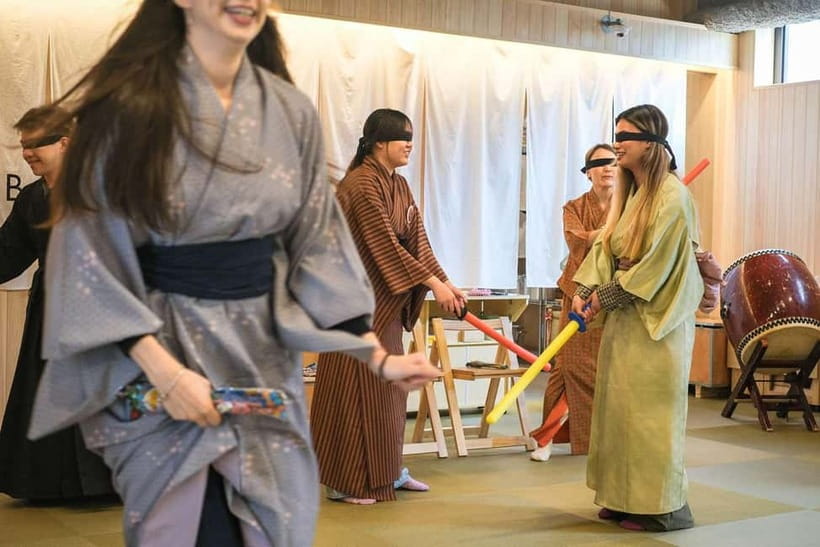
This works especially well if:
- You’re curious about Japanese culture but want something hands-on
- You want a fun group activity with a competitive game element
- You like dressing up and want help getting photos that actually look good
- You want English instruction and clear guidance with no experience required
- You’re traveling with family or young people since it’s described as family-friendly
If you’re a serious archer or sword student seeking deep, technical training, you might feel the time is too short. But if you want a high-impact “first try” that feels authentic and guided, it’s a strong choice.
Should You Book This Tokyo Samurai Experience?
I’d book it if you want a one-hour Tokyo experience that blends kyudo, katana basics, samurai-themed learning, and a full outfit-and-photo moment in Asakusa. It’s built for beginners, and the coaching style sounds patient and supportive, which helps a lot when you’re trying something new.
I’d skip it if you’re only interested in long practice, hardcore competition, or highly detailed sword technique. This is about a fast start and a fun, structured session—not mastery.
If you’re in the Asakusa area and you want something different from temples and shopping, this is one of the better “hands-on” cultural activities you can pick up quickly.
FAQ
What does the price include?
The price includes use of a traditional Japanese bow and katana, a traditional outfit (hakama), Japanese snacks, and bilingual staff support.
How long is the experience?
It lasts 1 hour.
Do I need any experience with archery or swords?
No prior experience is needed.
Where is the meeting point?
You meet in Taito-ku, Asakusa at 2 Chome 6-11 Heiwa Building, and you should take the elevator to the 5th floor.
What should I wear or bring?
Wear comfortable shoes and comfortable clothes.
Is the class in English?
Yes. The instructor provides instruction in English, and staff explanations are adapted to different English levels.
Is there anything I’m not allowed to bring?
Alcohol and drugs are not allowed.
If you’d like, tell me your travel dates and whether you’re going solo, as a couple, or with kids, and I’ll help you decide if this timing and format fits your Asakusa day.
More Tour Reviews in Tokyo
- Mt Fuji and Hakone 1-Day Bus Tour Return by Bullet Train
★ 5.0 · 26,383 reviews - 1-Day Tokyo Bus Tour
★ 5.0 · 14,250 reviews - Tokyo: teamLab Planets TOKYO Digital Art Museum Entry Ticket
★ 4.6 · 9,779 reviews - Mt Fuji & Hakone Cruise, Drum Show Bullet Train 1 Day from Tokyo
★ 4.0 · 7,413 reviews - Tokyo: Shinjuku Food Tour (13 Dishes at 4 Local Eateries)
★ 5.0 · 6,603 reviews
More Samurai and Ninja Sessions
- Tokyo: Samurai Ninja Museum Guided tour and Experience
★ 4.6 · 1,010 reviews - Tokyo: Samurai Sword & Archery Class from Samurai Descendant
★ 5.0 · 603 reviews - Best Samurai Experience in Tokyo
★ 5.0 · 458 reviews - Ninja Experience (Family Friendly) at Samurai Ninja Museum TOKYO
★ 5.0 · 441 reviews - Tokyo: Samurai Entertainment Night Show in Kanda Shrine
★ 4.6 · 417 reviews
Latest Tokyo reviews off our desk






Samurai & Ninja Classes, compared.
 ★ 4.6Samurai Ninja Museum Guided tour and ExperienceFrom $271,010 reviews
 ★ 5.0Samurai Sword & Archery Class from Samurai DescendantFrom $193603 reviews
 ★ 5.0Best Samurai Experience in TokyoFrom $65458 reviews
 ★ 5.0Ninja Experience (Family Friendly) at Samurai Ninja Museum TOKYOFrom $47441 reviews
 ★ 4.6Samurai Entertainment Night Show in Kanda ShrineFrom $41417 reviews
 ★ 4.2Ninja Kabuki PerformanceFrom $29330 reviews
 ★ 5.0Tokyo Sword Experience – includes Museum Ticket/Ninja ExperienceFrom $84314 reviews
 ★ 4.8Samurai Ninja Museum Asakusa: Samurai Sword Lesson & TourFrom $63306 reviews
Browse the lists this tour appears in