
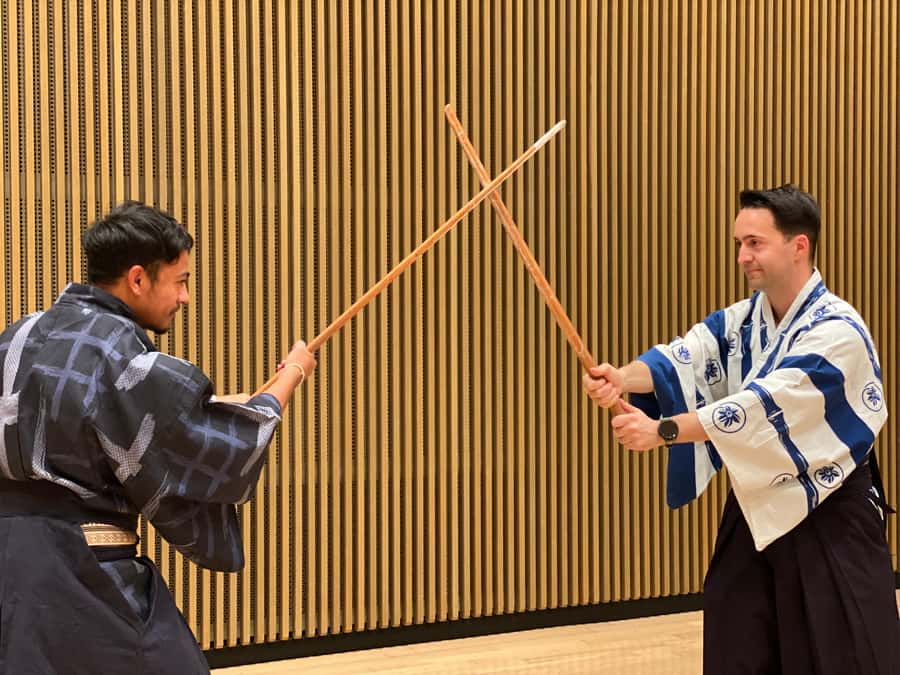
Reviewed · SAMURAI & NINJA CLASSES
Tokyo: Samurai Experience with a real sword
A real sword makes people lean in. In Tokyo, this 2-hour session turns you into a samurai with kimono and hakama plus hands-on sword training, including iai basics and a sword-to-sword drill.
Two things I especially like: you get structured samurai etiquette (zarei) before any blade work, and you finish with video and photos that actually capture what you did.
One thing to consider: you’ll need to follow safety rules closely, and there’s some physical coordination involved when you’re handling a real sword and participating in combat-style drills.
In This Review
- Key Highlights Worth Booking For
- Tokyo Samurai Sword Experience: What You’re Really Getting in 2 Hours
- Kimono and Hakama Dressing: The Easy Way to Feel Like a Samurai
- Zarei Etiquette First: The Ritual That Makes the Sword Lesson Click
- Shiden-ryu Iai Demonstration: Watching Before You Practice
- Sword-to-Sword Combat Drills and Uchikomi-Style Practice
- Cutting with a Real Sword: The Moment You’ll Want to Replay
- Your Souvenir Package: Video, Photos, and the Commemorative Shoot
- Meeting Near McDonald’s: The Logistics That Keep Your Session Calm
- Price and Value: Why $102 Can Be Worth It
- Who This Samurai Sword Experience Suits Best (and Who Might Skip It)
- Should You Book This Tokyo Samurai Experience?
- FAQ
- How long is the Tokyo samurai sword experience?
- Where do I meet the staff in Tokyo?
- What should I bring with me?
- What is the minimum age for cutting objects with a real sword?
- Is the experience wheelchair-friendly or suitable during pregnancy?
- Do I get photos and video to take home?
Key Highlights Worth Booking For
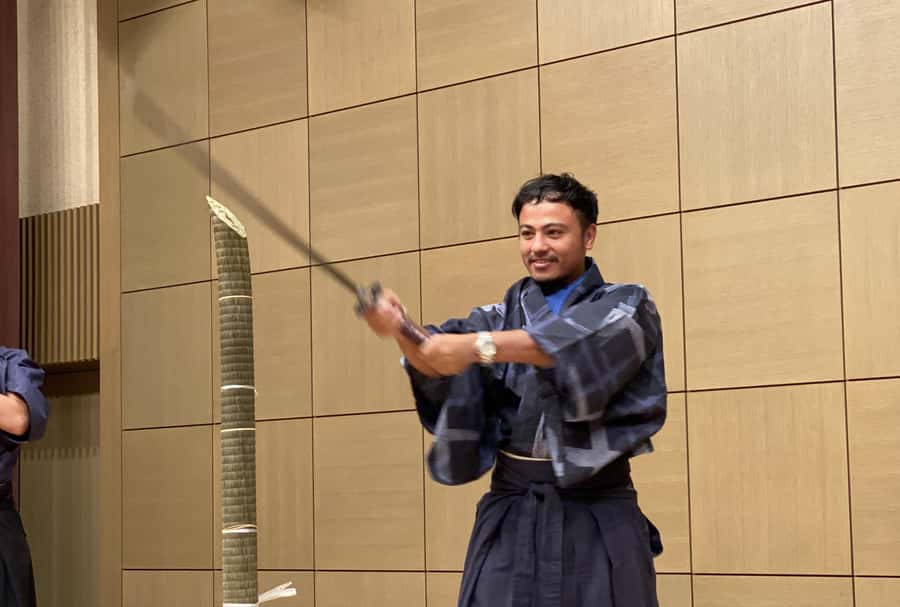
- Kimono + hakama dressing for a full visual transformation
- Zarei etiquette before swordwork, so you understand the ritual side
- Shiden-ryu iai and swordsmanship demonstration
- Sword-to-sword combat practice (uchikomi-style drills)
- Cutting with a real samurai sword, filmed so you can keep the moment
- Commemorative photos and an included souvenir video
Tokyo Samurai Sword Experience: What You’re Really Getting in 2 Hours
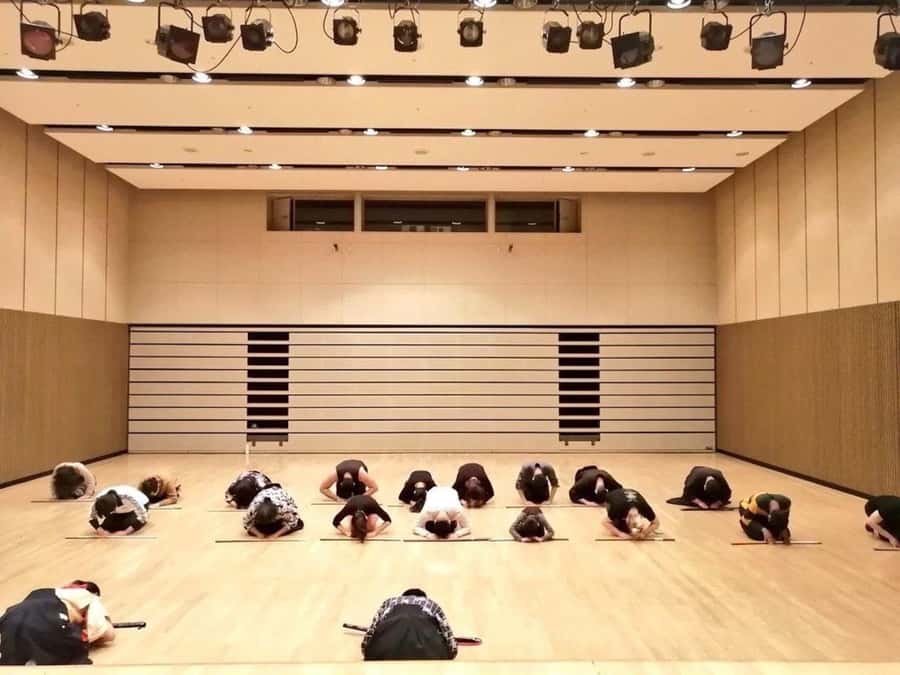
This isn’t a costume photo stop where you watch from the sidelines. The main point here is training: learning how a sword is handled, seeing it demonstrated properly, then doing a safe, guided version of the actions yourself. You dress the part, get taught the basics, and then the session becomes interactive.
The time is tight in a good way. In about two hours, you cover etiquette, sword handling, forms and movement practice, and then combat-style drills. Finally, you add the moment most people came for: trying cutting objects with a genuine samurai sword, with video recording available.
For many visitors, the “value” isn’t just the gear or the setting. It’s the coaching, the structure, and the fact that you leave with a visual record instead of vague memories. That matters, because sword training is hard to describe well after the fact.
More blade-and-dojo sessions, reviewed
- Tokyo: Samurai Ninja Museum Guided tour and Experience
★ 4.6 · 1,010 reviews - Tokyo: Samurai Sword & Archery Class from Samurai Descendant
★ 5.0 · 603 reviews - Best Samurai Experience in Tokyo
★ 5.0 · 458 reviews - Ninja Experience (Family Friendly) at Samurai Ninja Museum TOKYO
★ 5.0 · 441 reviews
Kimono and Hakama Dressing: The Easy Way to Feel Like a Samurai
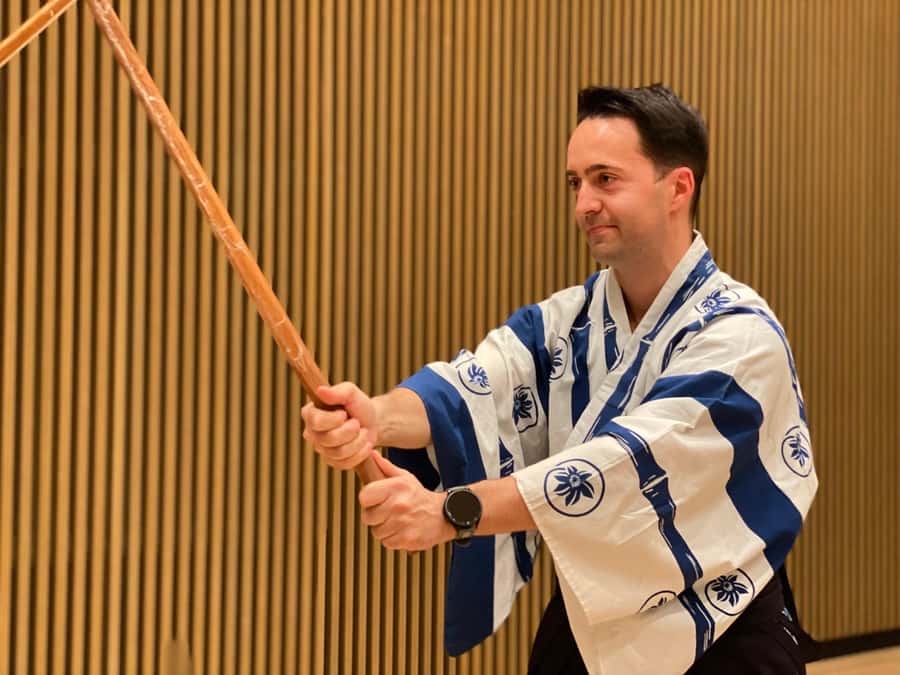
Your session begins with reception and dressing in kimono and hakama. This is more than vanity. Wearing the traditional clothing changes your posture and your sense of formality, which makes the later etiquette lessons land better.
Practical tip: bring a change of clothes. That’s not because anything is dramatic, but because you’ll want to get out of the outfit comfortably when you’re done. Also bring water, and pack comfortable clothes for before and after.
If you’re tall or heavy-set, don’t guess—when you reserve, you’ll be asked to share your height and weight. That helps the staff fit the clothing and set you up properly, which makes the sword portion easier and safer.
Zarei Etiquette First: The Ritual That Makes the Sword Lesson Click
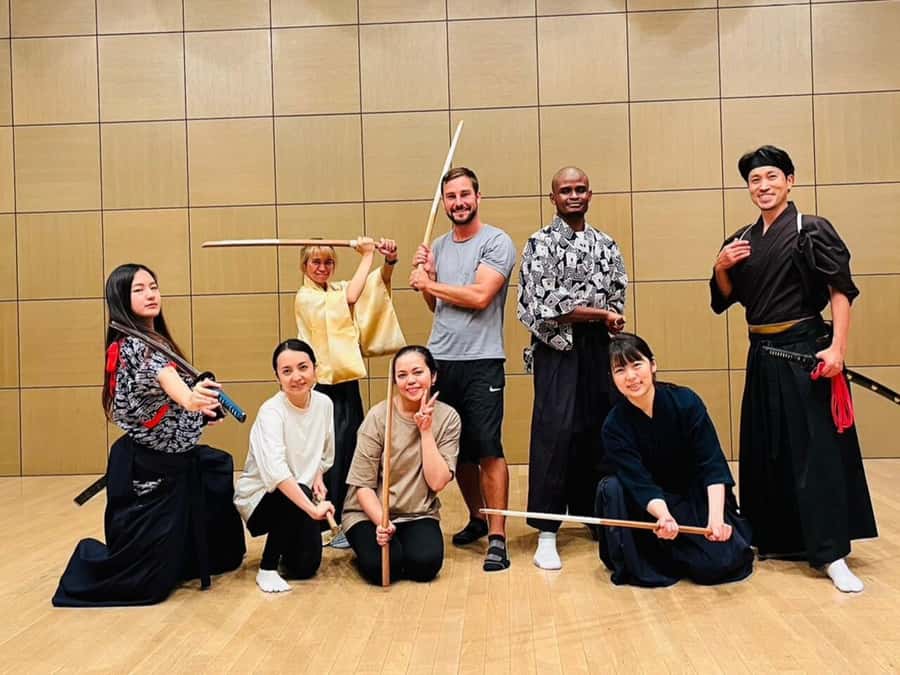
Before any sword swings, you get an introduction to samurai etiquette (zarei). You’ll also do seated etiquette, which sounds simple until you realize it’s part of how samurai training builds discipline and calm. It sets a tone: you’re not just playing at “warrior mode,” you’re learning a system.
Then you move into sword handling techniques. You’ll get instruction on how to hold and manage the sword in a controlled way. The order matters. If you jump straight into blade work, you miss the mindset. Here, the lesson starts with rules and manners, then transitions into movement and technique.
You can also expect a guide-led introduction to the session’s rules and etiquette right at the start. Even if you know nothing about Japanese martial arts, you’re not thrown into chaos.
Shiden-ryu Iai Demonstration: Watching Before You Practice
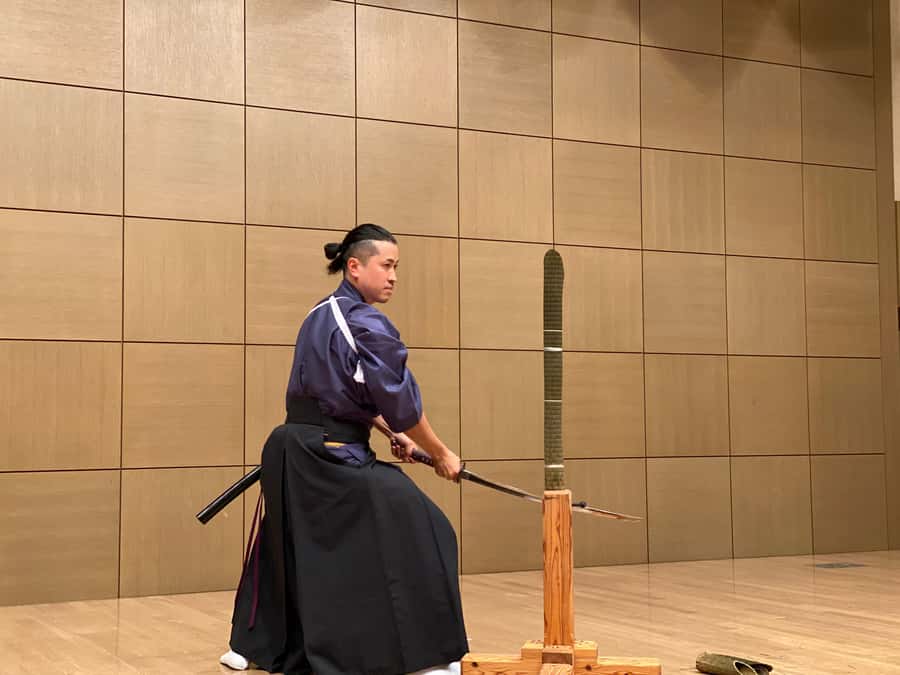
A key moment is the demonstration of iai and swordsmanship by Shiden-ryu. Iai is the idea of drawing and using the sword in a controlled, precise sequence. Watching it first helps your brain understand what “proper” looks like, and then you can try to replicate the movements with guidance.
This is also where the experience becomes more than physical. One guide name that shows up in the experience highlights is Hiryu. In one account, he was praised for bringing knowledge of samurai history and philosophy into the lesson, so the training feels tied to meaning, not just motion.
Important note for communication: even though the program is described as English-supported, one account also mentioned that English fluency may vary. If you rely on perfect explanations, have a translation app handy and don’t hesitate to ask for a slower repeat of key points. The point is to keep you learning, not guessing.
Sword-to-Sword Combat Drills and Uchikomi-Style Practice
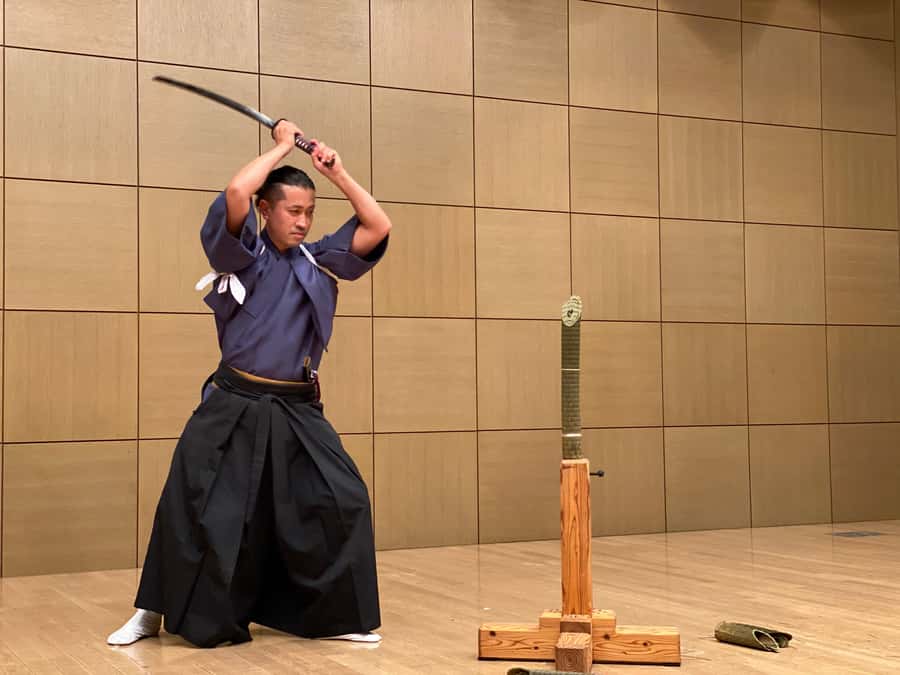
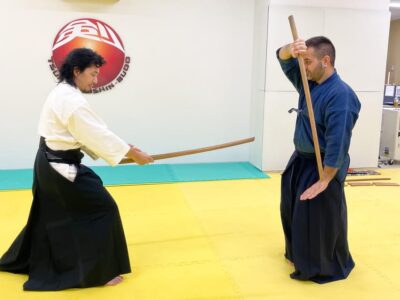
After the etiquette and handling basics, you get into interactive work. You’ll participate in samurai forms and movements, and then sword-to-sword combat (uchikomi) style drills.
This is where the experience becomes noticeably more exciting. The goal isn’t free-for-all fighting. It’s practicing timing and technique with a partner or within a guided structure. You’ll learn how the movements connect and how to keep your actions controlled.
One practical advantage of doing this in a workshop setting is that the staff can correct posture and handling quickly. With something as technical as blade work, small fixes make a huge difference. You also get a clear progression, so it doesn’t feel random.
- Tokyo: Shinjuku Food Tour (13 Dishes at 4 Local Eateries)★ 5.0 · 6,603 reviews
- Tokyo Mt Fuji 5th St & Hakone Cruise Bus Tour w/Bullet Train★ 4.4 · 5,024 reviews
- Flagship 2-Hours Official Street Go-Kart Tour – Tokyo Bay Shop★ 5.0 · 4,974 reviews
- From Tokyo: Mount Fuji Full-Day Sightseeing Trip★ 4.5 · 4,970 reviews
- Tokyo: Hop-On Hop-Off Sightseeing Bus Ticket★ 3.9 · 4,207 reviews
Cutting with a Real Sword: The Moment You’ll Want to Replay
Yes, you can cut objects with a genuine samurai sword, and the action is recorded on video for you to take home. That combination is why people talk about this experience as a highlight. Even if you’re not a martial-arts person, you get to do the action and see it afterward from an outsider’s perspective.
There’s a clear requirement here: cutting objects with a real sword is available for participants aged 12 and above.
Safety is part of the instruction. You’ll be taught how to handle the sword and follow the rules. You also need to dress and behave in ways that keep the training environment safe. If you’re the type who gets frustrated by rules, factor that in now. The experience works because you follow the process.
If you want the cutting moment to feel good, wear comfortable clothing for the training period and don’t show up underprepared. The staff guidance plus your own focus is what turns this into a skill moment instead of a clumsy swing.
Your Souvenir Package: Video, Photos, and the Commemorative Shoot
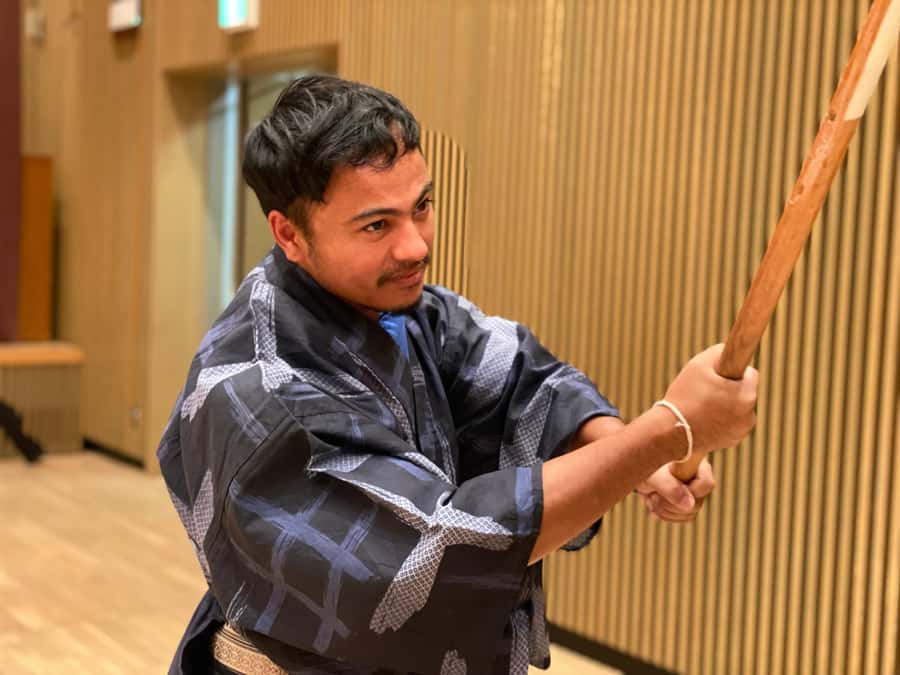
You’ll receive a video and photos as keepsakes. The session includes presentation and video recording, plus a commemorative photo session.
This is one of the best “value” parts of the experience. Many cultural activities give you a nice memory and a photo or two. Here, you’re specifically filmed during training and cutting, so you can review what you did and how your form looked.
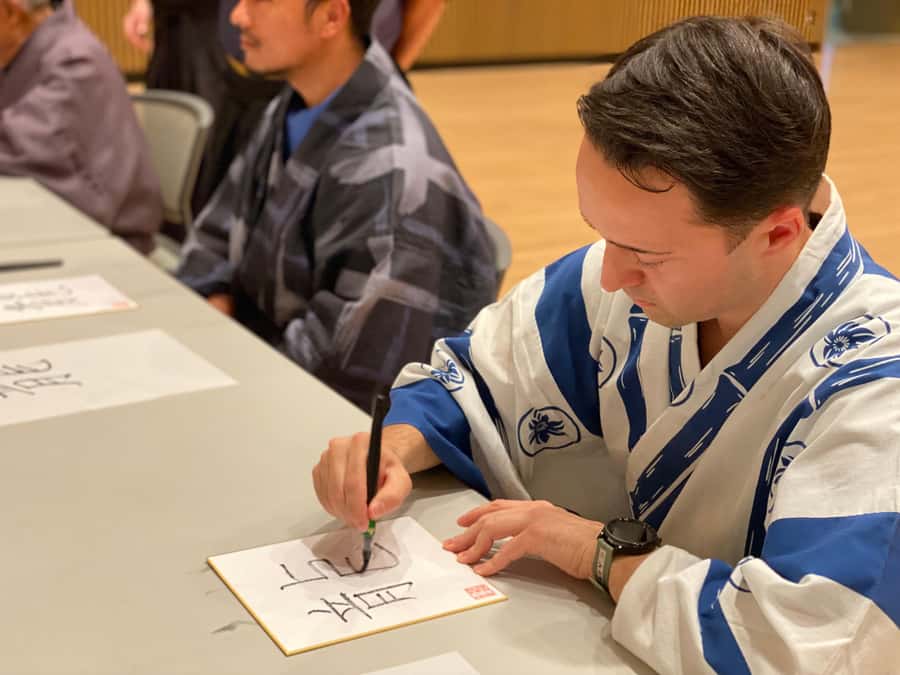
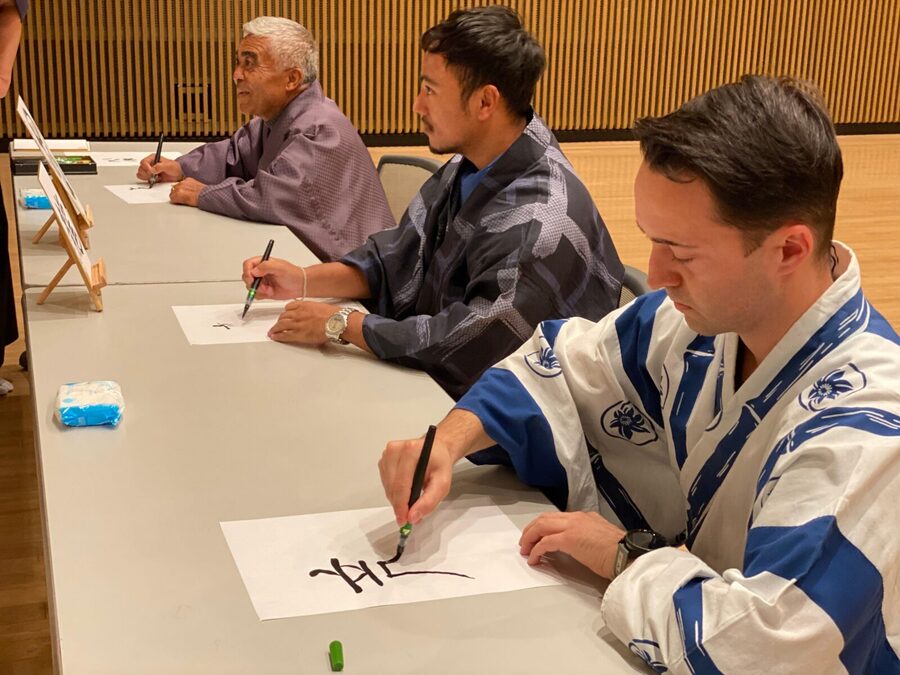
In at least some sessions, people have also described extras like a calligraphy moment and a small meal. That’s not stated as a core element in every run, so treat it as a nice bonus if it appears on your day.
Either way, the main takeaway is that you leave with more than “I took a photo in a cool costume.” You walk away with a record of the actions and a story you can actually show.
Meeting Near McDonald’s: The Logistics That Keep Your Session Calm
This is one of those activities where being early helps. You should arrive 20 minutes prior to your scheduled meeting time.
The meeting point is specific: after exiting the ticket gates, go out the west exit, then go down to the ground floor where you’ll find McDonald’s. Look for staff holding a meeting board.
One small detail that can save stress: the meeting location can vary within Tokyo depending on the date, and you should expect an update if there’s any change. So keep an eye on your message from the provider.
At the end, the activity returns you to the same meeting point area.
Price and Value: Why $102 Can Be Worth It
At $102 per person for roughly two hours, this is not a budget-only attraction. The value is in what’s included, not in a generic “experience fee.”
Here’s what you’re getting for the price:
- A professional coach
- English-speaking staff
- Experience and venue fees
- Photography charge
- Kimono dressing and reception
- Etiquette and instruction (including zarei)
- Sword handling techniques, forms and movement, and uchikomi-style combat drills
- Presentation and video recording
- Cutting objects with a real sword with video recording available
- Commemorative photos
- Clothing changing and the session wrap-up
So you’re paying for coached instruction plus the real-sword, filmed training component. If you’re the kind of traveler who values activities where you learn a skill and leave with a real souvenir video, this makes sense. If you just want casual sightseeing, the price may feel steep because the whole time is focused on training.
Not included: the info only says expense not mentioned, so plan on any personal purchases being on you.
Who This Samurai Sword Experience Suits Best (and Who Might Skip It)
This is a strong match if you want a hands-on Tokyo activity that goes beyond watching. It suits people who:
- Like structured instruction and clear progression
- Want a real sword experience with coaching and safety rules
- Care about leaving with video and photos, not just a ticket stub
- Enjoy dressing up and doing something a little theatrical, but still disciplined
It may not be a fit if:
- You’re sensitive to physical activity or strict rules
- You’re pregnant (it’s not suitable)
- You use a wheelchair (not suitable)
- You’re expecting a relaxed museum-style visit instead of active training
If you’re traveling with friends, it’s also easier to enjoy because you’ll all be in the same “samurai mode,” from kimono dressing to the cutting moment.
Should You Book This Tokyo Samurai Experience?
If you want a memorable, skill-based Tokyo activity with real sword training, a guided progression, and a souvenir package that includes video and photos, I think this is an easy yes. The biggest “selling point” is the combination: etiquette first, then instruction, then hands-on action, then filmed cutting so you can replay the moment later.
I’d only hesitate if you need a fully accessible, low-physical-effort experience, or if you’re looking for something purely observational. Otherwise, this is the kind of activity that turns Tokyo into a story you can show.
FAQ
How long is the Tokyo samurai sword experience?
The experience runs for about 2 hours.
Where do I meet the staff in Tokyo?
Meet after exiting the ticket gates, go out the west exit, and head to the ground floor where you’ll find McDonald’s. Look for staff holding a meeting board.
What should I bring with me?
Bring a change of clothes, water, and comfortable clothes. You should also bring a drink with a secure lid.
What is the minimum age for cutting objects with a real sword?
Cutting objects with a real sword is available for participants aged 12 and above.
Is the experience wheelchair-friendly or suitable during pregnancy?
It is not suitable for wheelchair users and it is not suitable for pregnant women.
Do I get photos and video to take home?
Yes. You’ll receive a video and photos, and cutting objects can be recorded on video as well. A commemorative photo session is included.
More Tour Reviews in Tokyo
- Mt Fuji and Hakone 1-Day Bus Tour Return by Bullet Train
★ 5.0 · 26,383 reviews - 1-Day Tokyo Bus Tour
★ 5.0 · 14,250 reviews - Tokyo: teamLab Planets TOKYO Digital Art Museum Entry Ticket
★ 4.6 · 9,779 reviews - Mt Fuji & Hakone Cruise, Drum Show Bullet Train 1 Day from Tokyo
★ 4.0 · 7,413 reviews - Tokyo: Shinjuku Food Tour (13 Dishes at 4 Local Eateries)
★ 5.0 · 6,603 reviews
More Samurai and Ninja Sessions
- Tokyo: Samurai Ninja Museum Guided tour and Experience
★ 4.6 · 1,010 reviews - Tokyo: Samurai Sword & Archery Class from Samurai Descendant
★ 5.0 · 603 reviews - Best Samurai Experience in Tokyo
★ 5.0 · 458 reviews - Ninja Experience (Family Friendly) at Samurai Ninja Museum TOKYO
★ 5.0 · 441 reviews - Tokyo: Samurai Entertainment Night Show in Kanda Shrine
★ 4.6 · 417 reviews
Latest Tokyo reviews off our desk




Samurai & Ninja Classes, compared.
 ★ 4.6Samurai Ninja Museum Guided tour and ExperienceFrom $271,010 reviews
 ★ 5.0Samurai Sword & Archery Class from Samurai DescendantFrom $193603 reviews
 ★ 5.0Best Samurai Experience in TokyoFrom $65458 reviews
 ★ 5.0Ninja Experience (Family Friendly) at Samurai Ninja Museum TOKYOFrom $47441 reviews
 ★ 4.6Samurai Entertainment Night Show in Kanda ShrineFrom $41417 reviews
 ★ 4.2Ninja Kabuki PerformanceFrom $29330 reviews
 ★ 5.0Tokyo Sword Experience – includes Museum Ticket/Ninja ExperienceFrom $84314 reviews
 ★ 4.8Samurai Ninja Museum Asakusa: Samurai Sword Lesson & TourFrom $63306 reviews
Browse the lists this tour appears in