
Reviewed · SUMO TOURNAMENTS & SHOWS
Tokyo Sumo Experience: Chanko & Mochi with a Former Pro
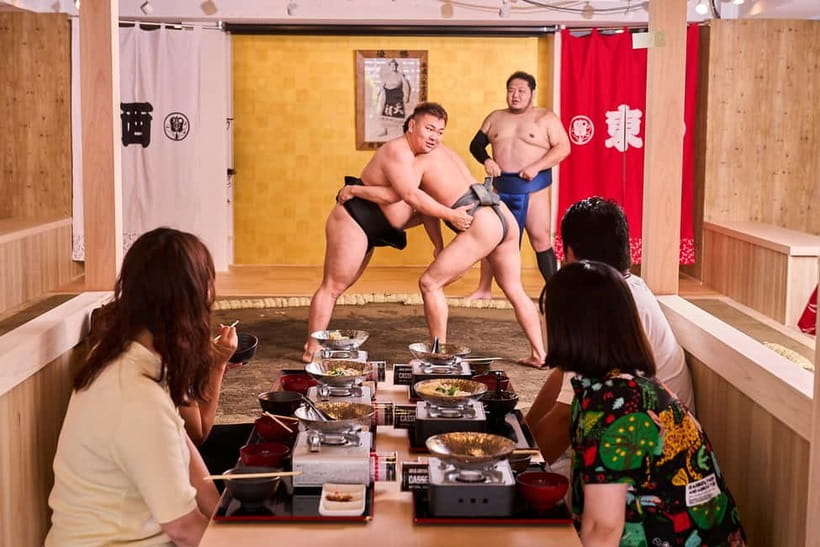
Sumo is usually something you watch from far away. Here you get closer—right in Ryogoku—with a former-pro style show that mixes wrestling, food, and hands-on games. I especially like the chanko nabe meal, served in a way that feels tied to real stable life, not just a performance. You also get to jump into the fun yourself, not only watch.
The other standout for me is the mochi part: you learn the traditional pounding flow, then make sweet mochi to eat. It’s simple, tasty, and surprisingly satisfying after being around big personalities and bigger athletes.
One consideration: this is built as an entertaining, audience-participation experience, not the serious morning training vibe—so if you want strict discipline and long-form practice, you might find the tone a bit lighter.
In This Review
- Key points before you go
- Ryogoku sumo zone: where the culture feels real
- A 2-hour format that keeps both kids and adults engaged
- Chanko nabe: the meal that explains sumo diet without lecturing
- Mochi pounding and making: a hands-on tradition you can taste
- On the dohyo: trying sumo moves up close (without needing experience)
- Seating, finding the place, and comfort tips that save your time
- What you’re really paying for: $103 value in Tokyo terms
- Who should book this former-pro sumo experience
- When you should rethink it
- Should you book this tour?
- FAQ
- Where is the meeting point?
- How long is the experience?
- What’s included in the price?
- What languages are available?
- Can I choose my seat?
- Is the experience suitable for wheelchair users?
- What should I bring?
- Are there any food restrictions?
- Is smoking allowed during the experience?
- Is there a cancellation option?
Key points before you go
- Ryogoku, the core sumo area, with the dohyo experience kept front-and-center
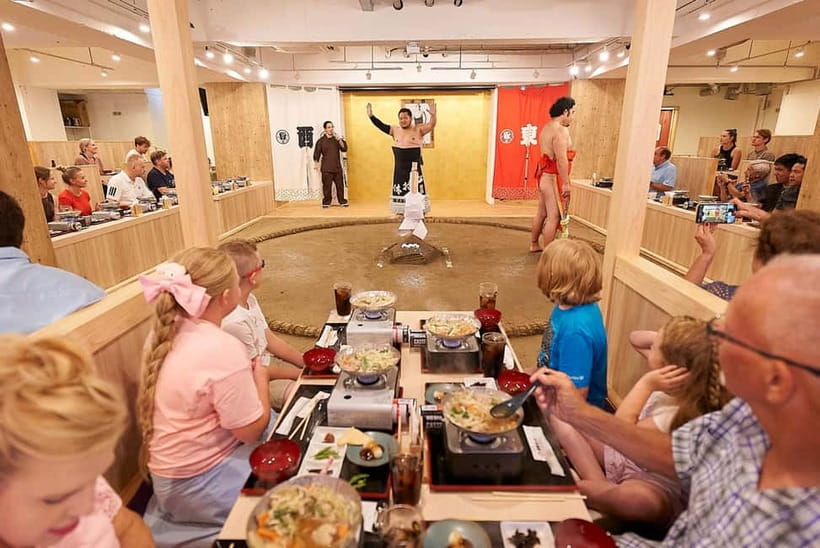
- Chanko nabe in a hot-pot format, supervised by sumo wrestlers for the real feel
- Hands-on dohyo time: try sumo moves and wrestling with the wrestlers
- Mochi pounding + mochi making with a dessert you actually eat at the end
- Assigned seating, so focus on comfort and plan for where you’re directed
Ryogoku sumo zone: where the culture feels real
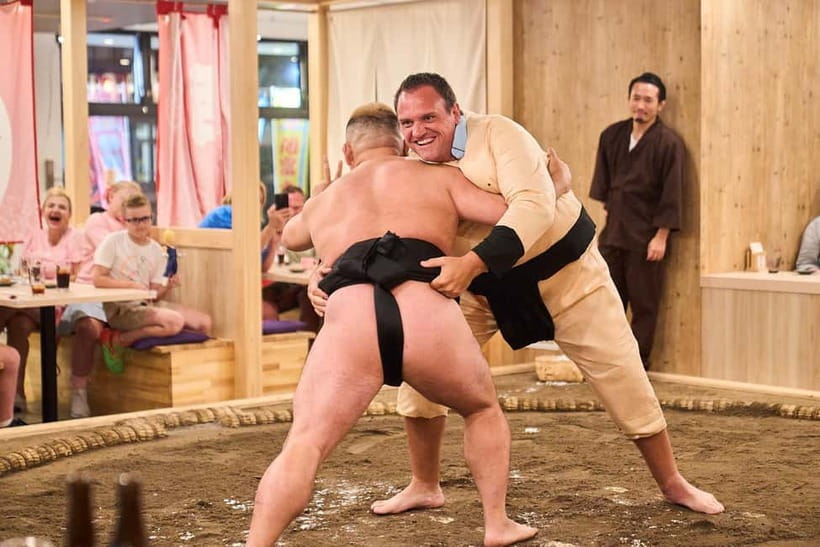
Ryogoku is the place you come to for sumo—not just the word, but the whole rhythm. This experience runs right in that mood, with the action built around getting you close to the dohyo (the sumo ring). When you’re seated around the ring, the wrestlers don’t feel like distant stars. They feel like the main event, because they are.
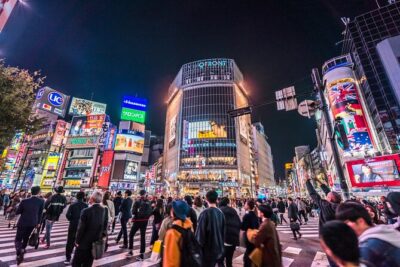
This is also a smart base area. If you’re building your day around classic Tokyo stops, Ryogoku connects easily to other must-sees like Asakusa, Akihabara, Nihonbashi, and Tokyo Skytree. You don’t need to spend the whole trip commuting in circles.
Other ringside bookings readers scored
- Tokyo: Sumo Show and Dining Experience
★ 4.8 · 2,742 reviews - the SUMO show
★ 5.0 · 1,960 reviews - Tokyo Shinjuku Sumo Show & Experience with Photo
★ 5.0 · 1,750 reviews - Tokyo: Sumo Show and Experience in Shinjuku
★ 4.8 · 1,001 reviews
A 2-hour format that keeps both kids and adults engaged
The whole thing is designed to move at a good pace: watch, eat, try, learn, and repeat. You’re not stuck in one long lecture or one long match. Instead, you bounce between show moments (watching rounds on the ring), participation (sumo practice and mochi work), and a proper meal that lands in the middle of the experience.
Also note the type of sumo you’re getting. This is not the serious morning training tour style. Expect entertaining sumo with audience interaction. That matters because it changes the energy in the room: you’ll see demonstrations meant to be understood quickly, not just respected quietly.
The instruction is in English and Japanese, which helps if you want to follow the why behind the movements, not just the what.
Chanko nabe: the meal that explains sumo diet without lecturing
Chanko nabe is the “why do they eat like that?” dish. It’s a hot pot associated with sumo wrestlers, and in this experience it’s presented as part of the culture, not a random meal add-on. You sit down, get your chanko nabe hot pot, and you eat while watching action close to the dohyo.
What I like about this setup is the supervision. The flavor and handling are overseen by sumo wrestlers from an actual stable. That turns the meal into more than just comfort food in a tourist setting. You’re getting the message that sumo training is supported by food, routines, and team culture.
Practical note: you’ll want comfortable clothes because hot food + motion on and off the ring area can add up. Also, if you have dietary needs, plan ahead. Vegetarian/vegan and gluten-free options can be provided if you notify the venue at least two days before. Halal meals can’t be provided, but bringing your own food is allowed.
Mochi pounding and making: a hands-on tradition you can taste
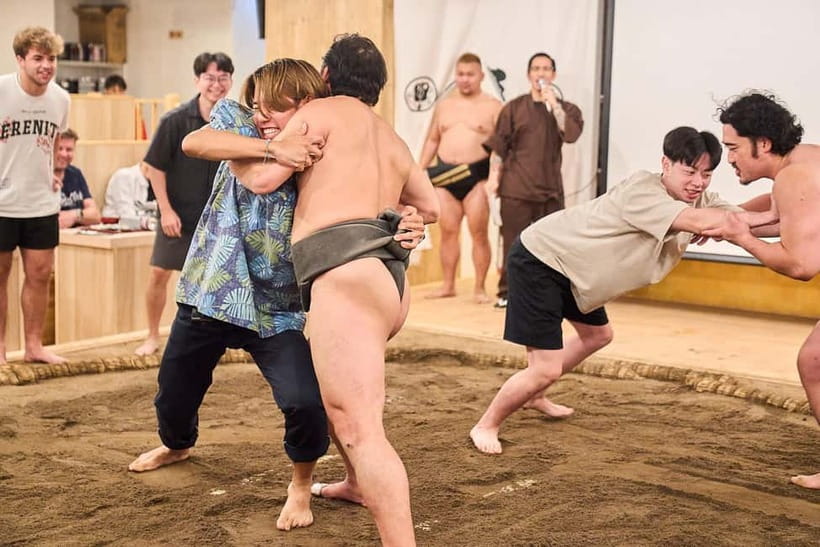
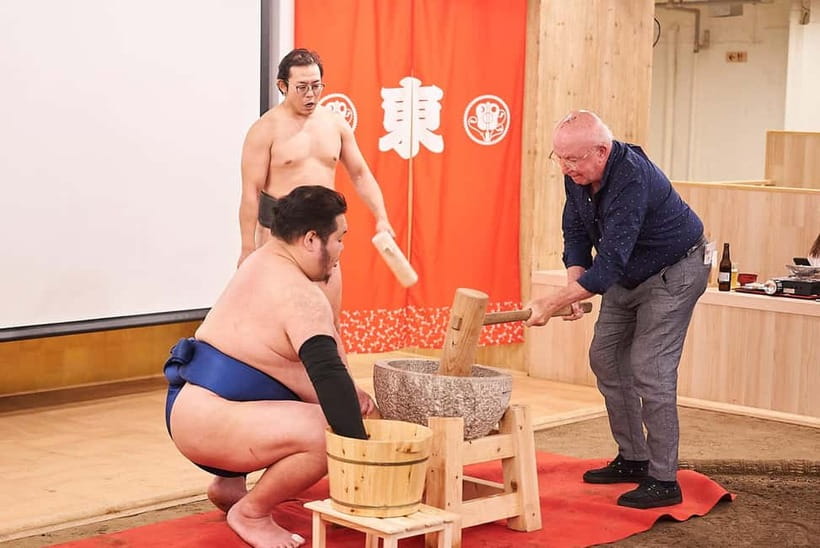
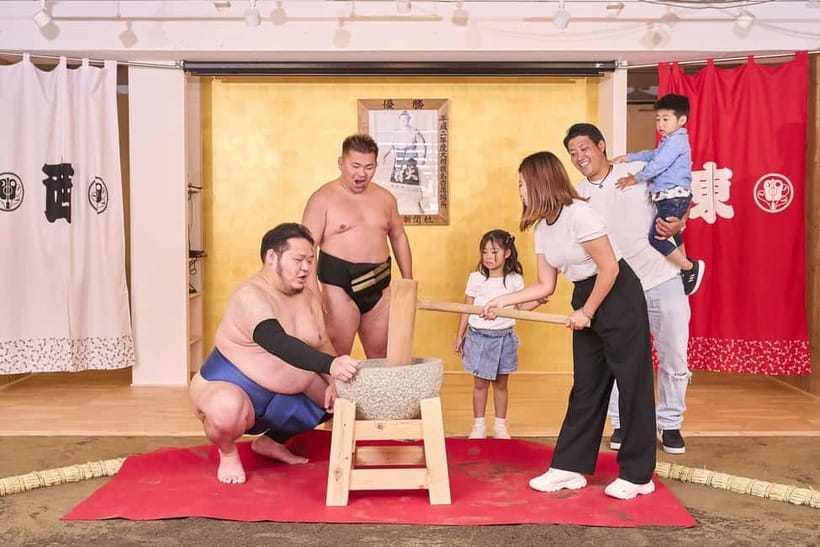
Mochi might sound like a simple dessert, but the pounding part is where it becomes memorable. You’ll learn the traditional process and get to take part in mochi pounding with the wrestlers. Then you make sweet mochi and eat it as dessert.
This is the kind of activity that feels small in description and big in real life. The pounding is physical, but it’s also guided. You’re not just copying steps—you’re learning the workflow of how mochi changes with the pounding and handling. And because you eat the finished product, it doesn’t feel like a craft you later forget.
One more reason this works: it breaks the schedule. After sumo action and chanko nabe, mochi gives you a calmer, focused moment that still feels authentic. It’s also great for photo ops without forcing you to pose awkwardly for every shot.
On the dohyo: trying sumo moves up close (without needing experience)
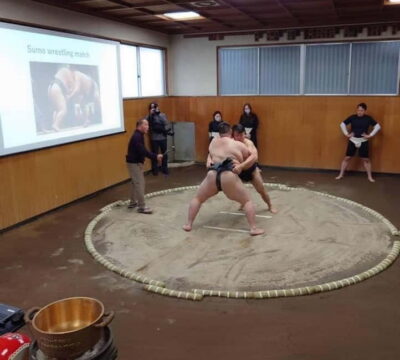
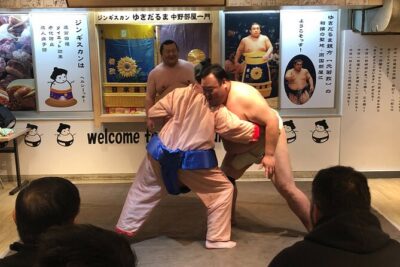
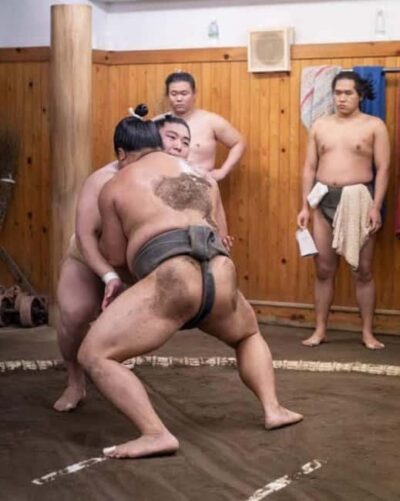
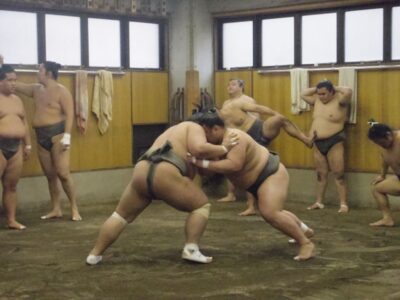
This experience is built around one big idea: don’t just watch sumo—try it. When you get on the dohyo, you’re in the same space where the wrestlers train and demonstrate. You’ll try sumo in a controlled, entertainment-focused way that’s meant for both adults and kids.
You can think of it as three layers:
- Techniques and coaching: you get basic ideas on how to move and balance
- Interactive drills: the wrestlers guide you while you participate
- Wrestling tryouts: you get to test your strength against the real thing, in a friendly format
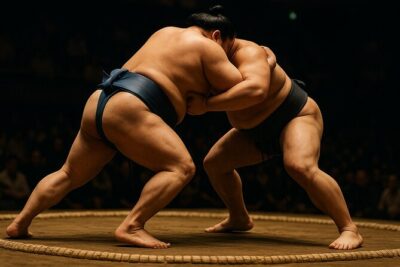
This is where the former-pro angle matters. Even if this isn’t a strict training session, you’ll still learn something about posture, grip, and pushing power. One of the most practical outcomes for me is how quickly you understand that sumo isn’t just brute force. It’s stance, timing, and leverage.
If you’re sensitive about what you wear, don’t overthink it. Comfortable clothes are what you need most. Bring a camera, and you’ll have plenty of chances to capture the mochi and ring moments.
- Tokyo: Shinjuku Food Tour (13 Dishes at 4 Local Eateries)★ 5.0 · 6,603 reviews
- Tokyo Mt Fuji 5th St & Hakone Cruise Bus Tour w/Bullet Train★ 4.4 · 5,024 reviews
- Flagship 2-Hours Official Street Go-Kart Tour – Tokyo Bay Shop★ 5.0 · 4,974 reviews
- From Tokyo: Mount Fuji Full-Day Sightseeing Trip★ 4.5 · 4,970 reviews
- Tokyo: Hop-On Hop-Off Sightseeing Bus Ticket★ 3.9 · 4,207 reviews
Seating, finding the place, and comfort tips that save your time
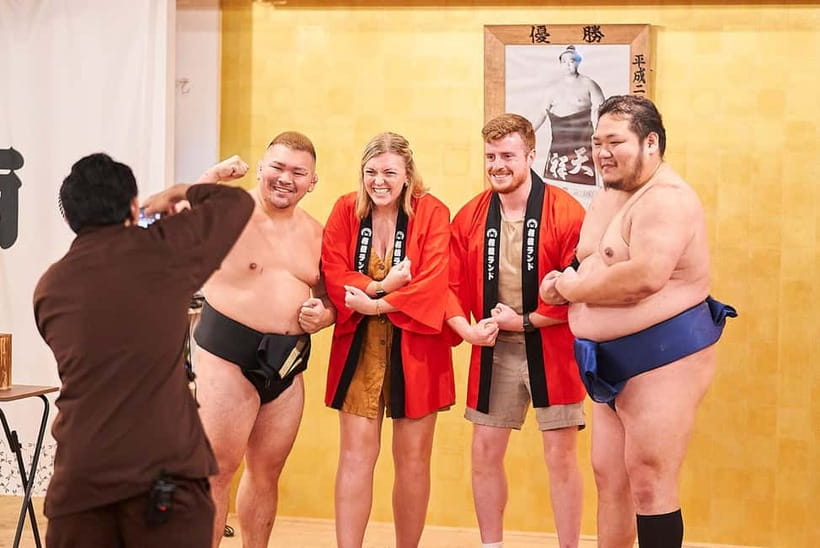
The meeting point is on the first floor near Ryogoku Station, a short walk away. Look for a large sumo wrestler sign and flags. If you tend to arrive at the last second, I’d urge you to arrive early. One part of the experience is close to the ring, and you’ll want to settle in without stress.
Seats are assigned by the venue. You can’t request specific seats. This matters because the dohyo is the center, and where you land can affect visibility and comfort. Also, standard seats have a safety note: it can be dangerous to hold a child on your lap. If you’re traveling with a child, you may want to choose the safer box seat option, since those seats are described as safe for lap seating up to six people.
Smoking isn’t allowed, so plan your breaks accordingly.
Wheelchair users aren’t suitable for this experience based on the provided information, so if mobility is a concern, you’ll need a different plan.
What you’re really paying for: $103 value in Tokyo terms
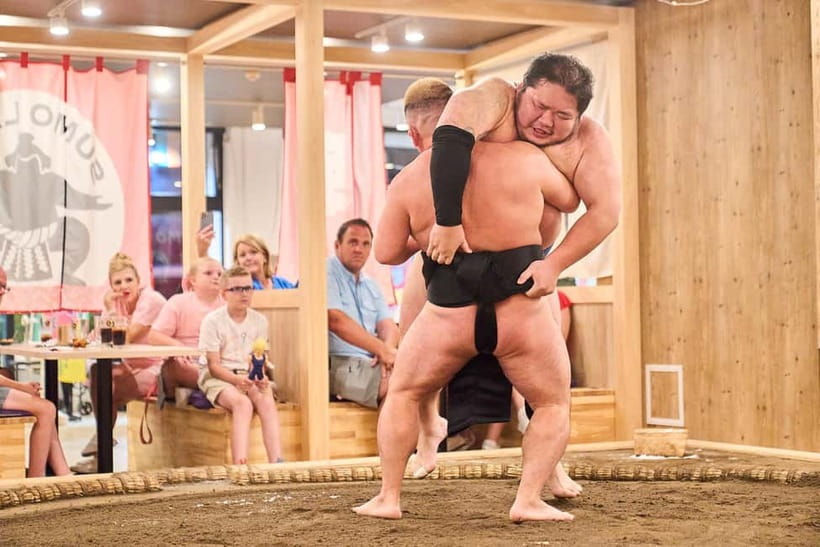
At $103 per person for about 2 hours, this isn’t the cheapest thing in Tokyo. But it’s also not a bare-bones show ticket. You’re paying for a bundle:
- Sumo ring time with participation
- Chanko nabe hot pot
- Mochi pounding + mochi making
- Wrestler-led supervision and on-the-spot coaching
Tokyo can be expensive when you’re trying to do something interactive. This is value if you want a hands-on evening that includes food rather than a quick performance and then you’re done.
Another value point: you’re not locked into one single “thing.” The meal and dessert keep the experience from feeling like a long event. If you’re comparing it to other Tokyo entertainment options, the strongest argument is participation plus two food moments tied to sumo culture.
Who should book this former-pro sumo experience
This is ideal if you fall into one of these groups:
- Families who want an activity that isn’t just passive
- Adults who love food and want to understand diet and routine in a fun way
- Anyone curious about sumo but unsure how to start beyond watching tournament clips
- Groups who want laughs and interaction, not a stiff cultural class
It’s also a strong choice if your trip timing lands you away from full tournament season. You still get sumo energy, just in a different format than a tournament day.
Language support in English and Japanese helps a lot. If you’re traveling with someone who doesn’t speak Japanese, the structure keeps you from feeling lost.
When you should rethink it
This may not be your best match if:
- You want only serious training with zero audience participation
- You need a halal meal provided by the venue (it can’t be provided, though you can bring your own)
- You need wheelchair accessibility (not suitable based on the provided info)
- You are very focused on choosing exact seats (you can’t request specific seating)
Also, if you have strict allergy requirements beyond gluten-free/vegan/vegetarian categories, plan carefully. The activity includes food and might include a complimentary sour plum drink in some sessions, so check your needs early.
Should you book this tour?
If you want a Tokyo experience that feels like more than a show, this one is a solid yes. Chanko nabe + mochi + dohyo participation is a rare combination, and the ring access makes it feel close to the sport. The price makes sense when you factor in the meal and the hands-on components, not just the entertainment.
Book it if you’re traveling with kids or if you like learning by doing. Skip it if your priority is tournament-level seriousness or if accessibility needs don’t match what’s offered.
FAQ
Where is the meeting point?
The store is on the first floor, just a short walk from Ryogoku Station. It’s marked with a large sumo wrestler sign and flags.
How long is the experience?
The duration is 2 hours.
What’s included in the price?
It includes a dynamic sumo experience, chanko nabe meal, mochi making experience, and sumo wrestling experience.
What languages are available?
Instruction is available in English and Japanese.
Can I choose my seat?
No. Seat locations are assigned by the venue, and you can’t request specific seats.
Is the experience suitable for wheelchair users?
No. It is not suitable for wheelchair users based on the provided information.
What should I bring?
Bring a camera and wear comfortable clothes.
Are there any food restrictions?
Vegetarian and vegan meals, as well as gluten-free, can be provided upon request if you notify at least two days before. Halal meals cannot be provided, but you can bring your own food.
Is smoking allowed during the experience?
Smoking is not allowed.
Is there a cancellation option?
Yes. Free cancellation is available up to 24 hours in advance for a full refund.
More Tour Reviews in Tokyo
- Mt Fuji and Hakone 1-Day Bus Tour Return by Bullet Train
★ 5.0 · 26,383 reviews - 1-Day Tokyo Bus Tour
★ 5.0 · 14,250 reviews - Tokyo: teamLab Planets TOKYO Digital Art Museum Entry Ticket
★ 4.6 · 9,779 reviews - Mt Fuji & Hakone Cruise, Drum Show Bullet Train 1 Day from Tokyo
★ 4.0 · 7,413 reviews - Tokyo: Shinjuku Food Tour (13 Dishes at 4 Local Eateries)
★ 5.0 · 6,603 reviews
More Sumo, Ringside and Rated
- Tokyo: Sumo Show and Dining Experience
★ 4.8 · 2,742 reviews - the SUMO show
★ 5.0 · 1,960 reviews - Tokyo Shinjuku Sumo Show & Experience with Photo
★ 5.0 · 1,750 reviews - Tokyo: Sumo Show and Experience in Shinjuku
★ 4.8 · 1,001 reviews - Tokyo Grand Sumo Tournament Viewing Tour with Tickets
★ 5.0 · 692 reviews
Latest Tokyo reviews off our desk

Sumo Tournaments & Shows, compared.
 ★ 4.8Sumo Show and Dining ExperienceFrom $792,742 reviews
 ★ 5.0the SUMO showFrom $891,960 reviews
 ★ 5.0Tokyo Shinjuku Sumo Show & Experience with PhotoFrom $791,750 reviews
 ★ 4.8Sumo Show and Experience in ShinjukuFrom $691,001 reviews
 ★ 5.0Tokyo Grand Sumo Tournament Viewing Tour with TicketsFrom $124692 reviews
 ★ 5.0Tokyo Sumo Wrestling Tournament ExperienceFrom $124660 reviews
 ★ 4.7Luxury Sumo Show Experience & Japanese cuisine & DrinkFrom $103577 reviews
 ★ 4.8Sumo Morning Practice Viewing TourFrom $81570 reviews
Browse the lists this tour appears in