
Reviewed · KIMONO & PHOTO SESSIONS
Tokyo: Taishu Engeki Show with Kimono and Sword Lesson
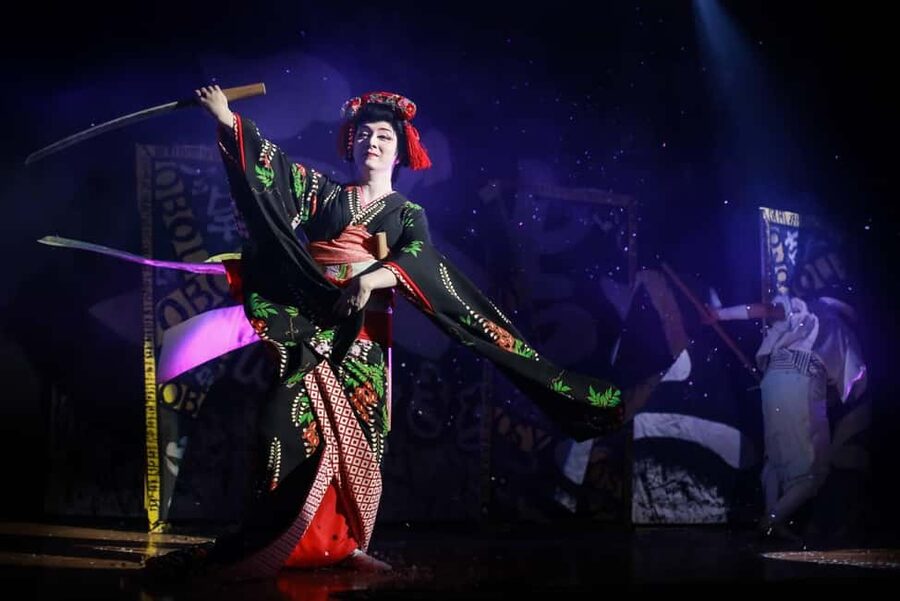
A sword lesson in a kimono starts here. At Asakusa’s Mokubakan Theater, you get the full Taishu Engeki experience: a live performance up close, then a hands-on workshop with fan dance and samurai sword movements.
What I really like is the combo—kimono dressing plus an actual participation workshop, not just watching. Second, I love that the sword-and-fan segment is taught in a friendly way, so you can follow along even if you have zero stage experience.
One thing to consider: the workshop is physically active, and the theatre performance uses loud sounds and flashing lights, so it may not feel great if you’re sensitive or if you’re pregnant.
In This Review
- Key things I think you’ll care about
- Taishu Engeki at Mokubakan: why this show hits differently
- Your 3-hour plan: afternoon starts 2:20, evening starts 5:40
- Meeting your program leader and the respectful ohana custom
- The live Taishu Engeki performance: sword, music, and clear storytelling
- The quick transfer, then kimono dressing in Asakusa style
- Fan dance and chanbara swordplay: what you’ll actually do
- Commemorative photos: leave with a real kimono memory
- Price and value: why around $12 can still feel like a full evening
- Who should book this (and who should skip)
- Should you book this Taishu Engeki workshop in Asakusa?
- FAQ
- How long is the Taishu Engeki show with kimono and sword lesson?
- Where does this take place?
- How much does it cost?
- What happens in the program?
- Is the kimono included?
- Do I have to speak Japanese?
- Is the sword lesson beginner-friendly?
- Are photos included?
- What if I’m sensitive to flashing lights or loud sounds?
- Can I cancel for a refund?
Key things I think you’ll care about
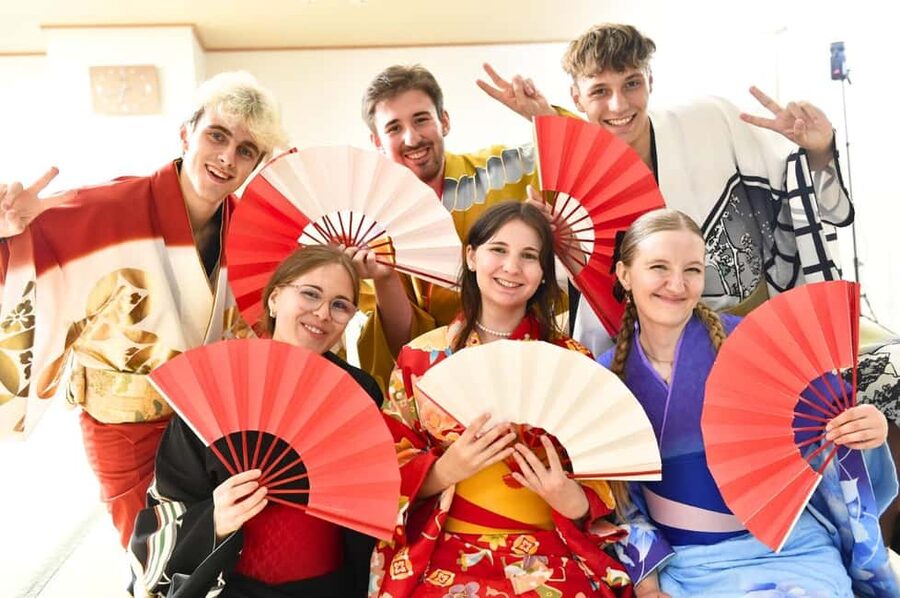
- Mokubakan Theater in Asakusa: dedicated Taishu Engeki venue since 1977, with an intimate feel
- Small group size (up to 6): you actually get room to participate in the workshop
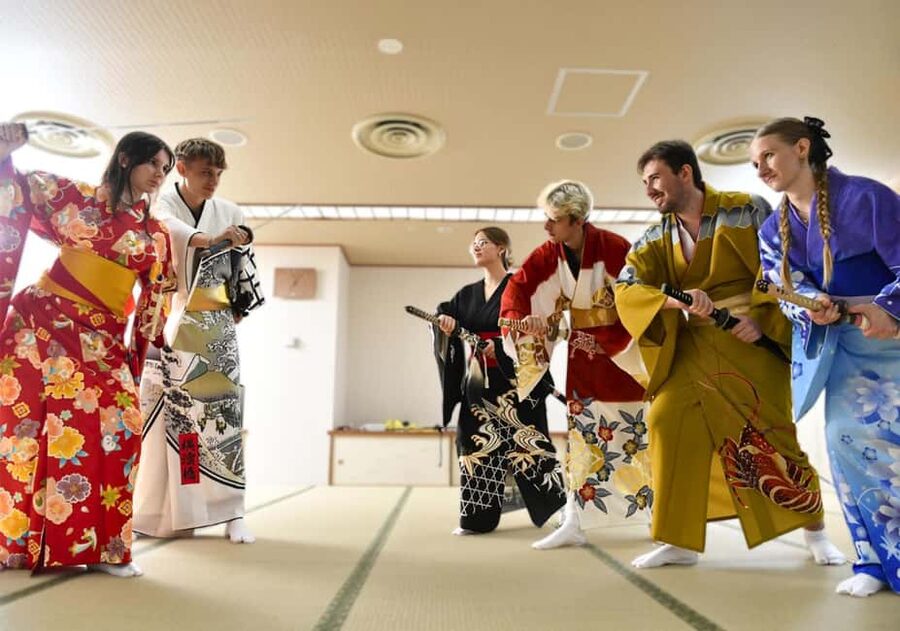
- Kimono dressing + tatami workshop: costume first, then instruction in a traditional room setting
- Fan dance and chanbara sword choreography: structured for fun, not performance pressure
- Commemorative photos included: you leave with mementos in your kimono
- English/German support: the program instructor can explain what to do
Taishu Engeki at Mokubakan: why this show hits differently
Taishu Engeki is popular Japanese theatre—more accessible than some of the more formal, rule-heavy classics, and easier to enjoy even if you don’t speak Japanese. The stories land through big emotions, expressive movement, and clear staging. You also get the visual payoff fast: swordplay, music, and dance-like choreography that reads instantly from the audience.
At Mokubakan Theater in Asakusa, that style feels especially human. You’re not far away, and the action has energy. The show also leans into the onnagata tradition, where male actors portray female roles with grace and poise—so you’ll notice the acting style is all about controlled body language and presence.
More kimono shoots, compared
- Tokyo: Kimono Dressing, Walking, and Photography Session
★ 4.9 · 427 reviews - Let’s make kimono !(Kimono is a gift for you
★ 5.0 · 252 reviews - Tokyo: Matcha and Kimono Experience
★ 4.7 · 219 reviews - Tokyo: Asakusa Kimono Dressing and Matcha Experience
★ 4.9 · 173 reviews
Your 3-hour plan: afternoon starts 2:20, evening starts 5:40
This experience is timed as a compact 3-hour program. The main difference is the order.
- Afternoon slot: meeting at 2:20pm, then you watch the performance first, then do kimono dressing and the workshop.
- Evening slot: meeting at 5:40pm, and the order is reversed—the workshop comes before the performance.
The important practical point: wear shoes you can move in comfortably. You’ll go from theatre-style viewing to hands-on movement, and the workshop happens in a traditional tatami room setting.
Meeting your program leader and the respectful ohana custom
You’ll meet your international program leader in front of the Asakusa Mokubakan Theater area. Your coordinates place the meeting at the Mokubakan theatre area, and the program leader is there to guide you through the flow of the event.
During the show portion, you’ll also be guided through a local custom connected to audience appreciation. The program mentions offering small gifts in the form of お花を贈る (ohana o okuru) to performers you like. That’s one of those small cultural touches that makes the evening feel participatory rather than transactional.
The live Taishu Engeki performance: sword, music, and clear storytelling
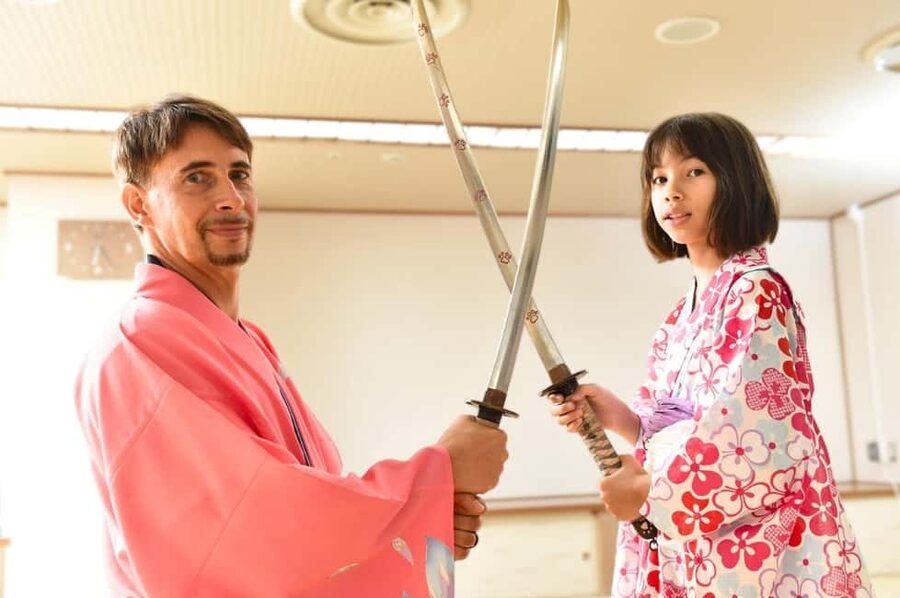
The professional performance is the anchor of the night. It mixes drama, swordplay, music, and dance-style movement so the story remains easy to follow. Even if you catch only parts of dialogue, you still get what’s happening through action and expression.
A practical note before you go in: the theatre performance uses flashing lights and loud sounds. The workshop portion doesn’t use those effects, but the show does. If you know you’re sensitive to strobe-type lighting or sudden sound, contact the organizers beforehand so they can set expectations for you.
Also, the theatre is close enough that the performers feel physically present. In the feedback for this experience, people talk about how near the action is—close enough that the stage movement and impact feels tangible. That’s a big reason this feels different from a standard ticket-and-sit arrangement.
The quick transfer, then kimono dressing in Asakusa style
After the performance (or before it, for the evening slot), there’s a short walk—about 5 to 7 minutes—to the separate cultural venue for the hands-on portion. It’s not a long commute, so don’t worry about losing the momentum of the event.
Then comes the kimono moment. You change into a kimono for the workshop segment, which turns the setting from watch-only into full cultural participation. The kimono also matters for photos—because you’re not just taking pictures outside a theatre, you’re in traditional dress with a professional-style photo setup.
If you’re the type who likes “I did something” travel souvenirs, this is the part that delivers fast.
Readers also shortlisted these Tokyo bookings:
- Mt Fuji & Hakone Cruise, Drum Show Bullet Train 1 Day from Tokyo★ 4.0 · 7,413 reviews
- Tokyo: Sumo Show and Dining Experience★ 4.8 · 2,742 reviews
- the SUMO show★ 5.0 · 1,960 reviews
- Tokyo Shinjuku Sumo Show & Experience with Photo★ 5.0 · 1,750 reviews
- Mt Fuji & Hakone Cruise, Drum Show Bus 1 Day from Tokyo★ 4.0 · 1,287 reviews
Fan dance and chanbara swordplay: what you’ll actually do
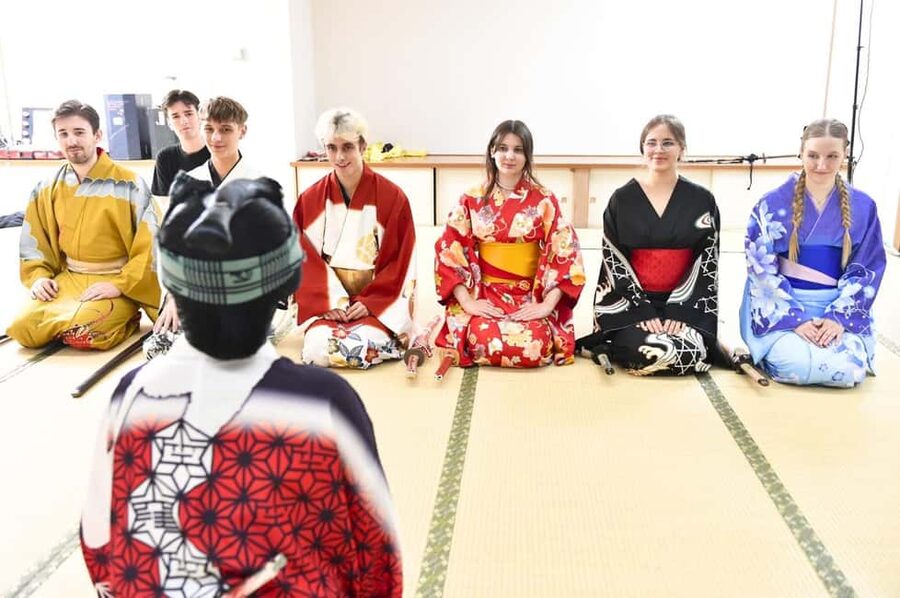
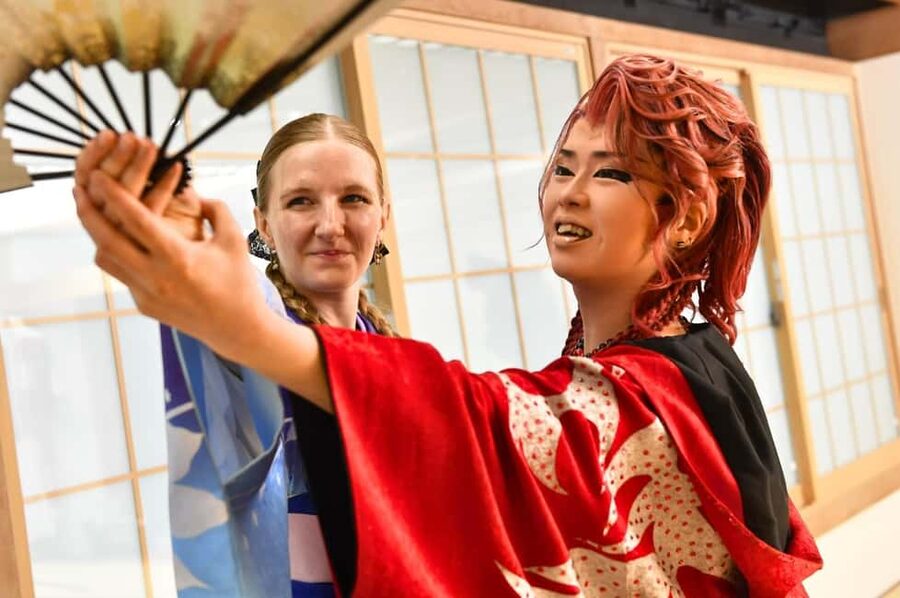
Once you’re in the kimono, you move into a tatami room and get instruction directly from a local professional dancer/instructor. This is where the experience earns its keep: you’re not left standing around. You learn a short, structured introduction to the folding fan (sensu) and choreographed samurai swordplay (chanbara).
Key things to know:
- The workshop focuses on enjoyment and participation, not difficult choreography.
- It’s beginner-friendly in tone, with staff described as patient and encouraging.
- You’ll learn movement sequences that fit the style of Taishu Engeki—graceful fan gestures plus the dynamic, dance-like sword choreography.
One of the most useful expectations to set: think of it like learning a short stage routine, not like weapon training. The program frames it as choreographed performance movement, taught with guidance and pacing so you can follow.
You’ll likely also notice that the instructor explains in a way that makes the movements make sense. Several people highlighted that the instruction is easy to understand and the atmosphere stays friendly, with plenty of time for you to ask questions and get corrected.
Commemorative photos: leave with a real kimono memory
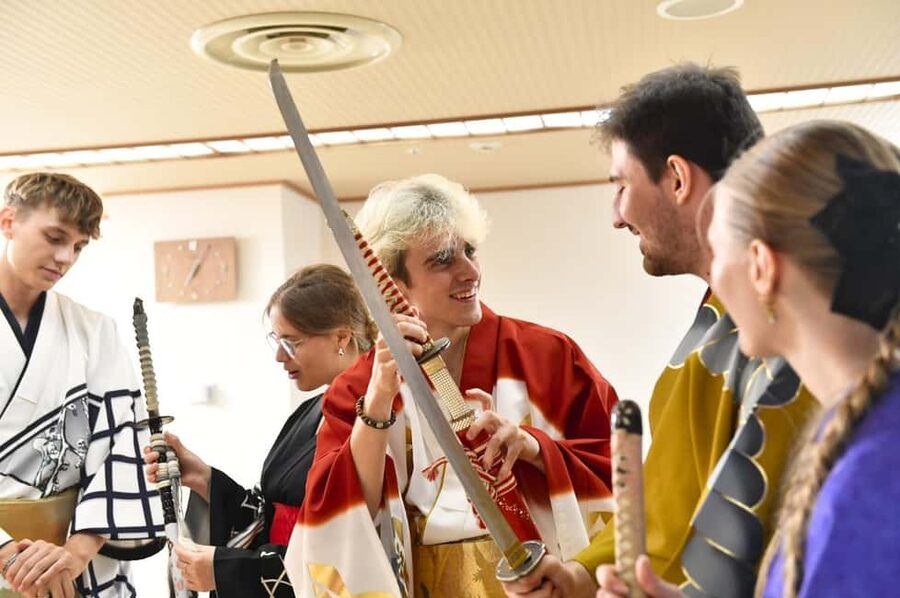
The experience ends with commemorative photos in your kimono. This is a common souvenir idea, but what matters is that it’s built into the program rather than tacked on as an optional add-on. You’re not chasing a photographer after you’ve already changed back out of your costume.
From the feedback, the staff also help you keep digital mementos—people noted photos and videos taken for them. That’s especially valuable if you don’t want to spend your Asakusa time trying to coordinate camera angles, poses, and timing on your own.
Price and value: why around $12 can still feel like a full evening
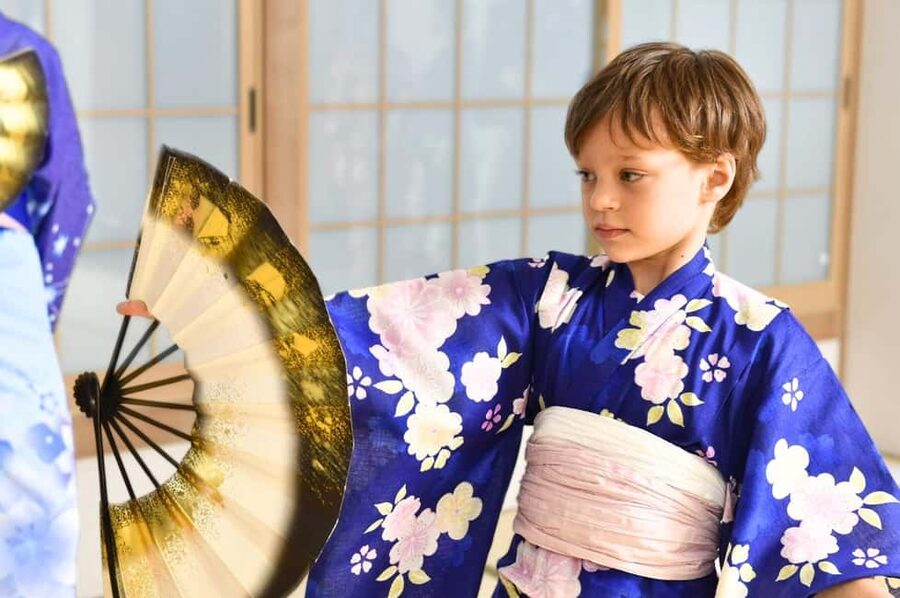
At about $12 per person, the value here is mostly in the mix of activities. You’re not just paying for a live show ticket; you’re paying for a full package:
- a professional performance experience
- kimono dressing
- a hands-on workshop with fan and sword choreography
- commemorative photos
For Tokyo, that combination is the standout. Many cultural activities either focus on a show only (and you watch from the side) or focus on a lesson only (and you don’t get the larger context of seeing how it looks on stage). Here, you get both the performance and the practice, and the pacing is designed to keep you moving through the cultural experience without feeling stretched thin.
Who should book this (and who should skip)
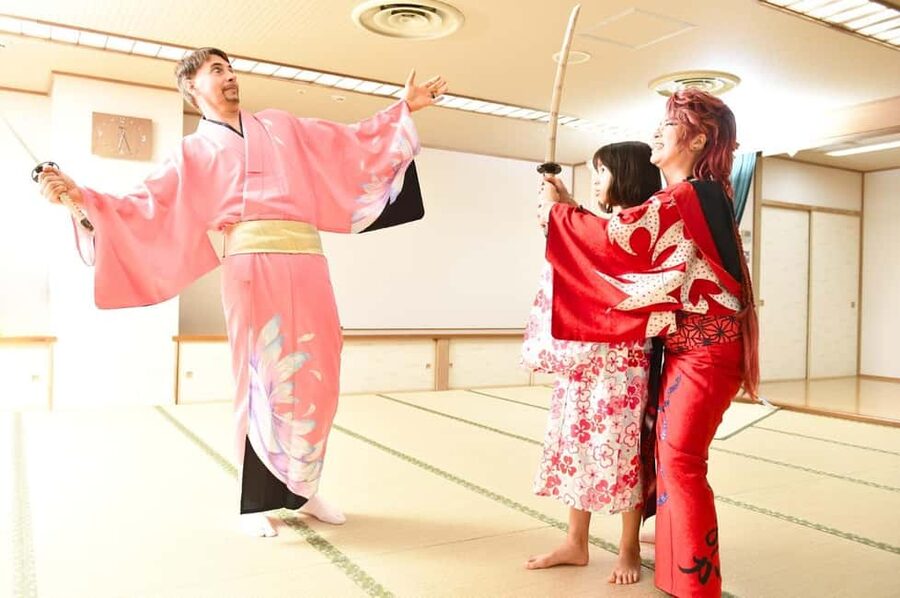
This is a great fit if you want an up-close introduction to Japanese popular theatre and you’re curious about performing arts beyond the usual sightseeing circuit. It’s also a good match if you like interactive experiences and don’t mind a short burst of physical activity.
You might want to skip if:
- you’re pregnant (the program states it’s not suitable)
- you’re very sensitive to loud sounds or flashing lights (those effects are used in the professional performance portion)
- you prefer fully seated, low-movement activities
If you do go, plan for movement time. Comfortable clothing under your kimono prep helps you feel steadier during the fan and sword sequence practice.
Should you book this Taishu Engeki workshop in Asakusa?
I’d book it if you want a compact cultural evening that’s both watchable and hands-on. The small group size (up to 6) makes participation feel realistic, and the kimono + fan/sword teaching turns the night into a personal memory, not just an event you attended.
I’d hesitate only if flashing lights or loud sound would be a problem for you, or if you’re not comfortable with the physically active workshop segment. If those are fine, this is one of the more cost-friendly ways to experience Asakusa theatre life properly—inside the Mokubakan atmosphere, with real instruction and a performance right after or right before your practice.
FAQ
How long is the Taishu Engeki show with kimono and sword lesson?
The program lasts about 3 hours.
Where does this take place?
It’s held at Mokubakan Theater in Asakusa, Tokyo.
How much does it cost?
It’s listed at about $12 per person.
What happens in the program?
You’ll watch a Taishu Engeki performance, then (depending on the time slot) you’ll walk to a workshop venue for kimono dressing, learn fan dance and samurai sword choreography, and finish with commemorative photos.
Is the kimono included?
Yes. You change into a kimono as part of the experience.
Do I have to speak Japanese?
No. The instructor supports English and German.
Is the sword lesson beginner-friendly?
The workshop is designed for enjoyment and includes instruction so beginners can follow along.
Are photos included?
Yes. The program includes commemorative photos in your kimono.
What if I’m sensitive to flashing lights or loud sounds?
Flashing lights and loud sounds are used during the professional theatre performance portion only. The workshop portion does not use those effects.
Can I cancel for a refund?
Yes. Free cancellation is available up to 24 hours in advance for a full refund.
More Show in Tokyo
- Mt Fuji & Hakone Cruise, Drum Show Bullet Train 1 Day from Tokyo
★ 4.0 · 7,413 reviews - Tokyo: Sumo Show and Dining Experience
★ 4.8 · 2,742 reviews - the SUMO show
★ 5.0 · 1,960 reviews - Tokyo Shinjuku Sumo Show & Experience with Photo
★ 5.0 · 1,750 reviews - Mt Fuji & Hakone Cruise, Drum Show Bus 1 Day from Tokyo
★ 4.0 · 1,287 reviews
More Tour Reviews in Tokyo
- Mt Fuji and Hakone 1-Day Bus Tour Return by Bullet Train
★ 5.0 · 26,383 reviews - 1-Day Tokyo Bus Tour
★ 5.0 · 14,250 reviews - Tokyo: teamLab Planets TOKYO Digital Art Museum Entry Ticket
★ 4.6 · 9,779 reviews - Mt Fuji & Hakone Cruise, Drum Show Bullet Train 1 Day from Tokyo
★ 4.0 · 7,413 reviews - Tokyo: Shinjuku Food Tour (13 Dishes at 4 Local Eateries)
★ 5.0 · 6,603 reviews
More Kimono Photo Shoots
- Tokyo: Kimono Dressing, Walking, and Photography Session
★ 4.9 · 427 reviews - Let’s make kimono !(Kimono is a gift for you
★ 5.0 · 252 reviews - Tokyo: Matcha and Kimono Experience
★ 4.7 · 219 reviews - Tokyo: Asakusa Kimono Dressing and Matcha Experience
★ 4.9 · 173 reviews - Asakusa: Kimono Tea Ceremony with Matcha and Sweet
★ 4.9 · 153 reviews
Latest Tokyo reviews off our desk






Kimono & Photo Sessions, compared.
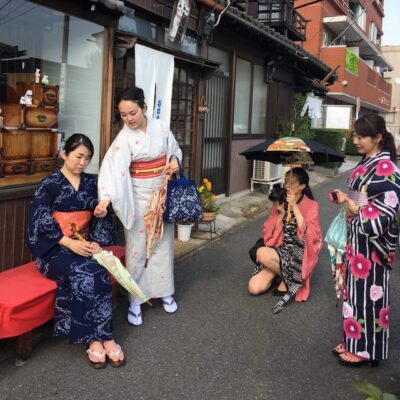 ★ 4.9Kimono Dressing, Walking, and Photography SessionFrom $67427 reviews
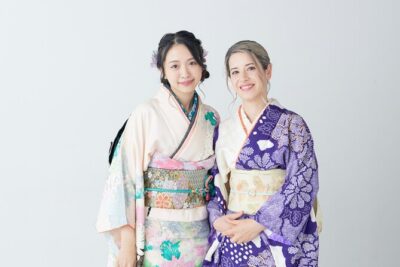 ★ 5.0Let’s make kimono !(Kimono is a gift for youFrom $43252 reviews
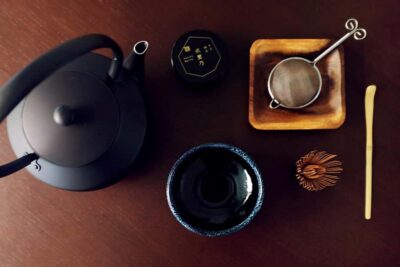 ★ 4.7Matcha and Kimono ExperienceFrom $57219 reviews
 ★ 4.9Asakusa Kimono Dressing and Matcha ExperienceFrom $56173 reviews
 ★ 4.9Asakusa: Kimono Tea Ceremony with Matcha and SweetFrom $66153 reviews
 ★ 5.0Matcha Kimono Tea Ceremony in TokyoFrom $59104 reviews
 ★ 4.7Tokyo Asakusa: Traditional Kimono Rental Experience at WargoFrom $3387 reviews
 ★ 5.0Authentic Kimono Culture Experience Dress, Walk, and CaptureFrom $7157 reviews
Browse the lists this tour appears in