
Reviewed · ASAKUSA & SENSOJI TOURS
Tokyo Tours in Spanish (Asakusa – Skytree Tower- Akihabara)
Tokyo moves fast, this tour keeps pace. What makes it appealing is the hotel-lobby start, so you begin the day without hunting for a meeting point in Tokyo’s rail-and-side-street maze. You also get a Spanish guide throughout, which makes the explanations click instead of turning into sign-reading practice.
I also like that the group stays small (max 10) and the guides have 15+ years living in Japan, so language worries fade and you’re not stuck guessing your way around. You’ll get help to understand what you’re seeing, not just a checklist of places to photograph.
One consideration: food, city transportation, and entrance fees to temples or viewpoints are not included. Add a few paid stops to your budget, and plan on walking—this is a comfortable-shoes kind of day.
In This Review
- Key things to know before you go
- Price and logistics: what $103 buys you
- Your hotel lobby start: less stress, more Tokyo time
- Spanish-guided explanations that help you see what matters
- The day’s structure: 8 hours across three Tokyo worlds
- Asakusa: classic Tokyo energy with an easier path through it
- Skytree Tower: when you want the view, plan the entry
- Akihabara: tech and pop culture without the lost-in-the-streets feeling
- Local transportation: riding with the guide, paying your share
- Group size and pacing: easier questions, calmer route
- What you should bring and plan for
- Who this tour is best for
- Should you book this Spanish Tokyo tour?
- FAQ
- What areas are included in this Tokyo tour en español?
- Where does the tour start?
- Is the guide available in Spanish throughout the tour?
- How many people are in the group?
- How long is the tour, and is there an extension?
- What costs are not included in the tour price?
- Do I need comfortable shoes?
- Can I cancel, and will I get a refund?
- Is pay later available?
Key things to know before you go
- Hotel-lobby meet-up (when available), plus a clear meeting point option
- Spanish guide the whole time, built for real understanding, not translation
- Small group up to 10 people, so you can ask questions and keep pace
- 8 hours long, with an extension possible for no extra charge
- Asakusa → Skytree Tower → Akihabara, a smart trio of classic + modern Tokyo
- Walking tour format, so you’ll want comfortable shoes from the start
Price and logistics: what $103 buys you
At $103 per person for 8 hours, you’re mostly paying for three things: a Spanish-speaking guide, local navigation, and time. In a city as big as Tokyo, those three add up fast—especially if you don’t want your day swallowed by transit confusion.
What you should plan for upfront is what’s not included: local transportation in the city, food and drinks, and entrance fees for temples or viewpoint access. That doesn’t make the tour worse value. It just means the price covers the guided route and the “how to experience this place” part, while you budget your personal spending for entries and meals.
Also note the tour is designed for people of different ages, but it’s still a walking day. If you like to stop, look, take photos, and still keep moving, this format tends to feel just right.
More temple mornings in old Asakusa
- Tokyo: Japanese Dance Cabaret Theater Asakusa-Kaguwa Ticket
★ 4.8 · 2,270 reviews - Tokyo: Meiji Shrine, Asakusa, Skytree Bus Tour and Cruise
★ 4.7 · 1,986 reviews - Tokyo: Roll and Authentic Sushi Making Class in Asakusa
★ 4.9 · 1,957 reviews - Tokyo: Asakusa Walking Tour with Sensoji Temple Visit
★ 4.8 · 1,583 reviews
Your hotel lobby start: less stress, more Tokyo time
I like hotel-lobby meetings because they remove one of the hardest parts of first-day Tokyo: finding the right person in the right place. If the tour group is small, that lobby pick-up helps you start calmly, with zero guesswork.
When there isn’t hotel pick-up, you’ll use a meeting point instead. Either way, the approach is the same: you’re not left to translate your way into a correct train platform at 9 a.m.
This also sets the tone for how the day is run. You’re treated like someone who wants to enjoy Tokyo, not someone who’s trying to survive it. The guide then handles the moving part—guiding you on local transport and keeping the tour coherent.
Spanish-guided explanations that help you see what matters
A Spanish-only guide changes the whole experience. You’ll get context as you go—why certain streets look the way they do, what different neighborhoods represent, and how Tokyo’s culture shows up in daily life.
What stands out in the way the guides are described is how practical they can be with tips. Names that show up repeatedly include Ana, Beto, and Huit. People also highlight that these guides are friendly and willing to help, not just recite facts.
That matters because Tokyo can feel like sensory overload: lights, crowds, gadgets, temples, food smells, and signage in a mix of scripts. When your guide can explain in Spanish, you’re free to do what you actually came for—look around with understanding. Instead of asking yourself what you’re seeing, you’ll ask better questions like how people live here or why certain traditions still matter.
The day’s structure: 8 hours across three Tokyo worlds
Your route is built around three major areas: Asakusa, Skytree Tower, and Akihabara. That’s a smart mix because it gives you contrast. You’ll go from old-school Tokyo atmosphere to a modern skyline moment, then land in the tech-and-pop-culture playground.
The exact pacing depends on the group, but the goal is clear: you get enough time at each stop to feel the neighborhood, not just pose at the landmark and rush off.
Because it’s 8 hours, you can also avoid the common traveler trap: trying to cram everything into a half-day and ending up tired and unimpressed. This format is long enough to settle in, but not so long that you lose the energy to enjoy what you’re doing.
If there’s an extension, it’s without an extra charge, which can be useful if you’re the type who hates leaving before you’re done exploring.
Asakusa: classic Tokyo energy with an easier path through it
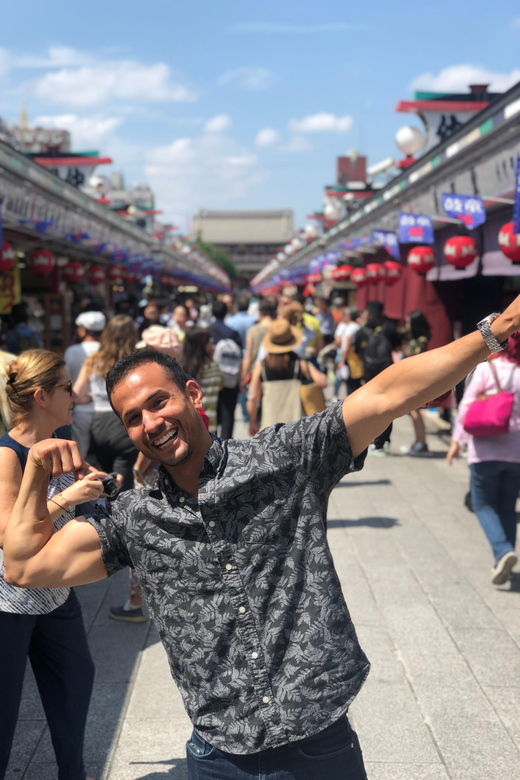
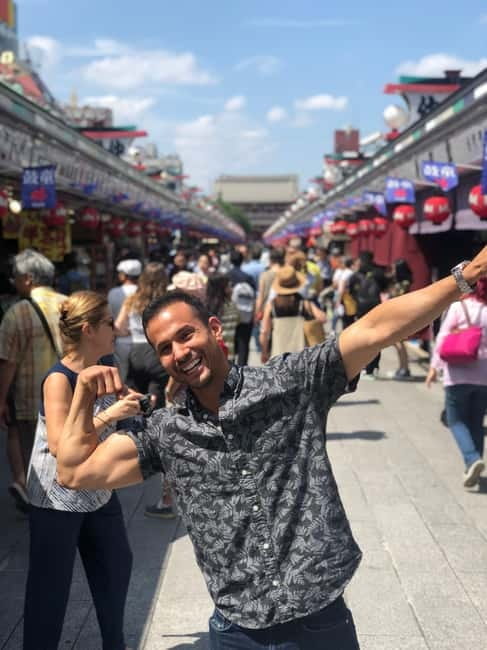
Asakusa is the part of Tokyo many people imagine first: traditional streets, historic vibes, and a sense of ritual in everyday movement. With a guide, you’ll get more out of the area than walking past it with your camera.
What makes Asakusa a great start on a guided day is how it helps you get oriented. You’ll start to notice how Tokyo blends old and new, including how people queue, how they move through spaces, and how local customs shape the atmosphere.
A practical note: this portion can include temple or viewpoint access fees, which are not included. If you want certain gates or official areas, plan for that cost ahead of time so you don’t get surprised mid-walk.
Also, Asakusa can be crowded depending on the day and time. The advantage of a guide is simple: you spend less time figuring out where to go next, and more time enjoying the streets while your photos still come out looking like Tokyo, not like a scramble.
More of Akihabara, ranked by our reviewers
- Official Street Go-Kart Tour – Akihabara★ 5.0 · 1,578 reviews
- Akihabara Anime & Game Adventure Walking Tour (Group or Private)★ 5.0 · 404 reviews
- Tokyo: Gameboy Mod Workshop at Akihabara★ 5.0 · 253 reviews
- Akihabara: Private Anime and Pop Culture Tour★ 4.8 · 152 reviews
- Akihabara Tailor-made Private Tour for Anime Fans★ 5.0 · 142 reviews
Skytree Tower: when you want the view, plan the entry
Skytree Tower is your big “skyline moment.” Even if you’re not obsessed with heights, the viewpoint helps you understand how massive Tokyo is—how neighborhoods stack and how far the urban reach goes.
This is also where you’ll want to be aware of the money side. Entrance fees to viewpoints are not included, so you’ll likely pay separately if you want to go up. That’s not a dealbreaker. Just treat it as a planned add-on to complete the experience.
From a value standpoint, Skytree is often worth it because it gives you a bird’s-eye context for everything you’ll see afterward. After Asakusa’s human-scale streets, the tower helps you shift mental gears: you see the city as a system, not just a set of photos.
And because you’ll be with a Spanish guide, you’re not stuck standing there wondering what you’re looking at. You’ll get explanations so your photos feel anchored to something real.
Akihabara: tech and pop culture without the lost-in-the-streets feeling
Then you move into Akihabara, a neighborhood famous for electronics, games, and pop-culture energy. This is where Tokyo feels playful and fast: signs, gadgets, characters, and lots of people hunting for the next thing.
Akihabara can be a lot for first-timers if you’re wandering alone. The streets are full of small decisions—where to go in, what’s worth a look, which stores match your interests. With a guide, you get help choosing directions and understanding what different sections tend to offer.
If you love shopping, Akihabara is the part of the tour that often clicks hardest. Even people who don’t shop much still enjoy it because it’s one of the best places to watch modern Tokyo culture in action.
Like the rest of the day, you’ll pay your own way for food and drinks, and any optional paid entries. The good news is the route is built for walking, so you’re not trapped in one spot. You’ll have time to move, browse, and take Instagram-style shots without feeling rushed.
Local transportation: riding with the guide, paying your share
The tour uses local transportation, but it’s not included in the price. That means you’ll need to budget for transit rides during the day.
Still, having the guide coordinate transport is a big deal. Tokyo transit is not just confusing—it’s busy. A guide helps you avoid the “wrong train, wrong exit” problem, and it cuts down the time you spend studying maps while everyone else waits.
This also helps you keep your day flowing. When the guide knows the practical routes, you get more walking time in the neighborhoods and less time stuck in transit limbo.
Group size and pacing: easier questions, calmer route
Max 10 participants may sound like a small detail, but it affects everything. With a smaller group, you move with less chaos. You can ask questions without shouting over a crowd. The guide can also adjust pace when some people are slow to walk, or when someone wants extra time for photos.
From what’s emphasized in feedback about the guides, the tone tends to be friendly and supportive. Guides like Ana, Beto, and Huit are specifically mentioned for being approachable and for giving helpful travel tips beyond just the neighborhood facts.
That’s important because Tokyo travel is not only about knowing where to go. It’s about knowing what to do when you get there—what to try, what to pay attention to, and how to plan your next day.
What you should bring and plan for
Since this is a walking tour, you should show up with comfortable shoes. Also, expect to spend time outside, because the route is based on neighborhoods rather than indoor-only attractions.
For money planning, think in three buckets:
- Your tour price ($103)
- Food and drinks during the day (not included)
- Entrance fees for temples and viewpoints (not included)
- City transportation during the day (not included)
If you do a quick mental budget for those items, the day stays enjoyable. If you wait until you’re already there to decide on paid entries, Tokyo can feel a little stressful.
Who this tour is best for
This experience is a strong match if:
- You want a Spanish guide and clearer cultural context
- You’re in Tokyo for a limited time and want a guided route that covers both tradition and modern culture
- You’re worried about getting lost in a huge metropolis
- You prefer small groups with time for questions and photos
It may be less ideal if you:
- Want full control to roam freely with no structure
- Already know the areas well and don’t need guidance
- Can’t handle a walking-focused day
Should you book this Spanish Tokyo tour?
If you want Tokyo without the stress of navigation, I’d book it. The hotel-lobby start, Spanish guidance throughout, and small group size all point to a day designed to feel manageable. Add the Asakusa + Skytree + Akihabara trio and you get a balanced snapshot of Tokyo’s personality.
Just go in with realistic expectations: you’ll pay separately for food, local transit, and entrance fees, and you’ll walk. If that fits your travel style and budget, this is one of the cleaner ways to see the highlights while still understanding what you’re looking at. Free cancellation up to 24 hours ahead and reserve-and-pay-later options also make it easier to match to your plans.
FAQ
What areas are included in this Tokyo tour en español?
The tour covers Asakusa, Skytree Tower, and Akihabara.
Where does the tour start?
Tours begin either at your hotel lobby (sometimes with pick-up) or at a designated meeting point.
Is the guide available in Spanish throughout the tour?
Yes. You’ll have a Spanish-speaking guide throughout the experience.
How many people are in the group?
It’s a small group, limited to up to 10 participants.
How long is the tour, and is there an extension?
The duration is 8 hours. If there is an extension, it is stated to be no extra charge.
What costs are not included in the tour price?
The tour price does not include city transportation, food and drink, or entrance fees to viewpoints or temples.
Do I need comfortable shoes?
Yes. It’s described as a walking tour, so you should wear comfortable shoes.
Can I cancel, and will I get a refund?
Cancellation is listed as free up to 24 hours in advance for a full refund.
Is pay later available?
Yes. It’s listed as reserve now & pay later, so you can book without paying immediately.
More Skytree Entries
- Tokyo: Meiji Shrine, Asakusa, Skytree Bus Tour and Cruise
★ 4.7 · 1,986 reviews - Tokyo Panoramic 1 Day: Meiji Shrine, Asakusa, Odaiba and SKYTREE®
★ 4.5 · 1,222 reviews - Tokyo Go Kart: Asakusa, Skytree, and Akihabara **IDP MUST**
★ 5.0 · 988 reviews - Tokyo: Asakusa, Skytree & Akhihabara Go-Kart City Experience
★ 4.7 · 761 reviews - Tokyo Skytree Admission Ticket with Tembo Deck and Galleria
★ 4.0 · 589 reviews
More of Akihabara, Reviewed
- Official Street Go-Kart Tour – Akihabara
★ 5.0 · 1,578 reviews - Tokyo Go Kart: Asakusa, Skytree, and Akihabara **IDP MUST**
★ 5.0 · 988 reviews - Akihabara Anime & Game Adventure Walking Tour (Group or Private)
★ 5.0 · 404 reviews - Tokyo: Gameboy Mod Workshop at Akihabara
★ 5.0 · 253 reviews - Akihabara: Private Anime and Pop Culture Tour
★ 4.8 · 152 reviews
More Mornings in Old Asakusa
- Tokyo: Japanese Dance Cabaret Theater Asakusa-Kaguwa Ticket
★ 4.8 · 2,270 reviews - Tokyo: Meiji Shrine, Asakusa, Skytree Bus Tour and Cruise
★ 4.7 · 1,986 reviews - Tokyo: Roll and Authentic Sushi Making Class in Asakusa
★ 4.9 · 1,957 reviews - Tokyo: Asakusa Walking Tour with Sensoji Temple Visit
★ 4.8 · 1,583 reviews - Tokyo Asakusa Rickshaw Tour
★ 5.0 · 1,375 reviews
Latest Tokyo reviews off our desk






Asakusa & Sensoji Tours, compared.
 ★ 4.8Japanese Dance Cabaret Theater Asakusa-Kaguwa TicketFrom $492,270 reviews
 ★ 4.7Meiji Shrine, Asakusa, Skytree Bus Tour and CruiseFrom $1221,986 reviews
 ★ 4.9Roll and Authentic Sushi Making Class in AsakusaFrom $581,957 reviews
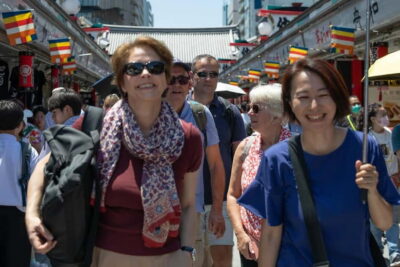 ★ 4.8Asakusa Walking Tour with Sensoji Temple VisitFrom $221,583 reviews
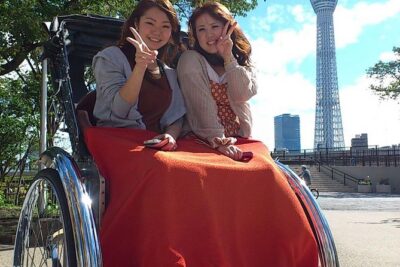 ★ 5.0Tokyo Asakusa Rickshaw TourFrom $421,375 reviews
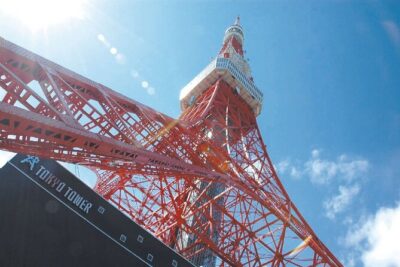 ★ 4.5Tokyo Panoramic 1 Day: Meiji Shrine, Asakusa, Odaiba and SKYTREE®From $851,222 reviews
 ★ 5.0Tokyo Go Kart: Asakusa, Skytree, and Akihabara **IDP MUST**From $99988 reviews
 ★ 4.7Asakusa, Skytree & Akhihabara Go-Kart City ExperienceFrom $96761 reviews
Browse the lists this tour appears in