
Reviewed · SAMURAI & NINJA CLASSES
Tokyo: Xinobi Samurai Legacy Journey, 60-minute Seminar
A wooden sword and a quiet dojo. That mix is what makes this 60-minute seminar feel special. You’ll learn core samurai and shinobi ideas through hands-on practice: stances with a bokken, partner sparring, and a shuriken try, all explained in a traditional setting.
Two things I really like: you actually do the movements (not just watch), and you get context for why samurai swordsmanship mattered, not only how it looks.
One consideration: it’s a low-movement, 1-hour session, so if you’re hoping for intense combat training, you may find the pace more calm than action-packed.
In This Review
- Key takeaways
- Stepping into a 450-year dojo atmosphere in Asakusa
- Cost and value: what $117.99 buys you (and what it doesn’t)
- The flow of the seminar: what you’ll do minute by minute
- 1) Dress up first: jimbaori battle jacket spirit
- 2) Mindset training: meditation, breathing, and chanting cues
- 3) Katana appreciation: viewing a sword as art
- 4) Learn the stances: Hasso, Johdan, Gedan
- 5) Practice sparring with a partner (in a controlled way)
- 6) Shuriken throwing practice
- The cultural context you’ll actually remember: samurai and shinobi ideas
- What to expect from the dojo rules and safety vibe
- Who this is for (and who might want a different activity)
- How to prepare so you feel confident during the 60 minutes
- The best parts, according to how the experience is designed
- Should you book it? My honest decision guide
- FAQ
- How long is the Tokyo Xinobi Samurai Legacy Journey seminar?
- What weapon training do I do during the workshop?
- Is samurai attire included?
- Do I need to bring my own equipment?
- Is food included?
- Where does the seminar start, and where does it end?
- What if I need to cancel?
Key takeaways
- Historic family dojo setting: practice in Musashi Ninja Clan Honjin Dojo in Asakusa, described as a 450-year family tradition.
- Real gear, real basics: you use a rental bokken (wooden sword) and shuriken.
- Specific stances you’ll learn: Hasso, Johdan, and Gedan.
- Traditional “warrior mindset” training: breathing and chanting mental focus, plus a short meditation approach.
- Samurai attire for the session: you can rent a dogi/jimbaori battle jacket style outfit and take photos in costume.
- Small groups: maximum of 12 people, which helps you get attention during practice.
Stepping into a 450-year dojo atmosphere in Asakusa
The meeting point is in Taito City’s Matsugaya area, at Musashi Ninja Clan Shinobi Samurai Honjin Dojo in a building labeled Mets八番館 (3rd floor). This matters because you’re not wandering into a pop-up classroom. You’re walking into a dojo-style setup.
The experience is described as happening in a family dojo with 450 years of tradition. Even if you’re not a martial-arts person, the setting helps you slow down. You’ll be asked to arrive about 5 minutes early to settle in, which sets a calm tone right away.
Another practical bonus: the class is short and focused. With a 1-hour duration and a max group size of 12, you won’t spend your whole trip trapped on a bus or waiting in a long line. You’ll show up, get briefed, train, and leave with something you can remember.
More blade-and-dojo sessions, reviewed
- Tokyo: Samurai Ninja Museum Guided tour and Experience
★ 4.6 · 1,010 reviews - Tokyo: Samurai Sword & Archery Class from Samurai Descendant
★ 5.0 · 603 reviews - Best Samurai Experience in Tokyo
★ 5.0 · 458 reviews - Ninja Experience (Family Friendly) at Samurai Ninja Museum TOKYO
★ 5.0 · 441 reviews
Cost and value: what $117.99 buys you (and what it doesn’t)
This seminar costs $117.99 per person. On paper, it’s not a bargain. But when you compare it to what you receive in that one hour, the price starts to make more sense.
You’re paying for:
- A licensed interpreter/trainer style instruction (the materials say licensed interpreters and trainers).
- Rental equipment: dogi (outfit) rental if you want samurai garb, plus a bokken and shuriken rental.
- A structured experience that includes both movement practice and cultural explanation.
What’s not included is also clear. There’s no hotel pickup or drop-off, and there’s no food or drinks. Also note that spectators have a separate fee (2,750 JPY per person, paid on arrival).
My takeaway: if you want hands-on practice in a real dojo setting, with outfit rental and multiple weapon experiences in just an hour, this is likely a solid value. If you’re purely after photos or only want a talk with no participation, you might want to shop for a different kind of activity.
The flow of the seminar: what you’ll do minute by minute
This is a 60-minute workshop in a dojo. The schedule isn’t listed like a timed itinerary, but the training components are spelled out clearly, and you can expect a logical sequence: get set up, learn mindset, practice stances, then try weapons.
Here’s what the session is built around.
1) Dress up first: jimbaori battle jacket spirit
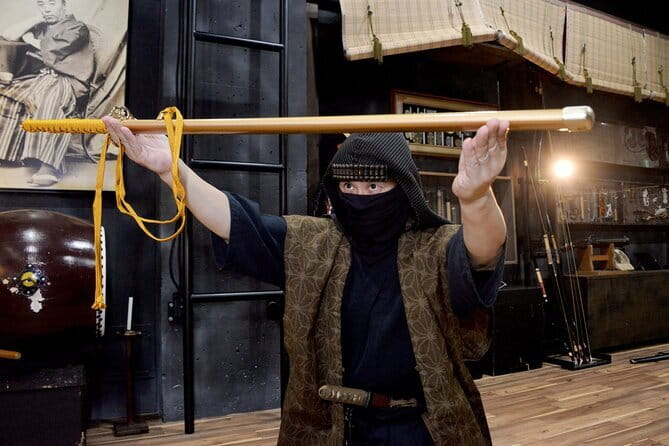
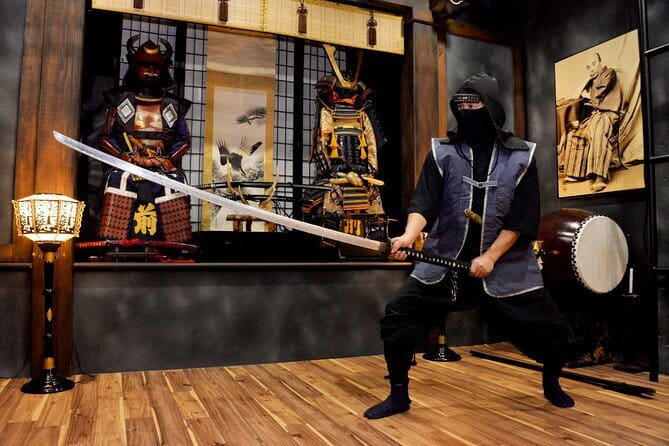
You’ll have a chance to wear traditional samurai attire. The info mentions Jimbaori Battle Jacket style, and dogi rental is included if you request it when booking. This isn’t just for show. Costume tends to help you take the session seriously, and it also makes it easier to follow the instructor’s form and posture cues.
You can also use the costume for a photo opportunity, which is genuinely fun if you like the idea of stepping into a historical role for an hour.
2) Mindset training: meditation, breathing, and chanting cues
Before you pick up weapons, you’ll work on inner focus. The seminar includes:
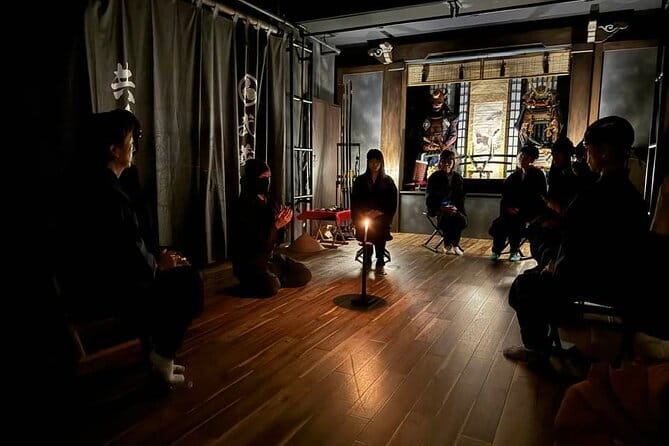
- Meditation and mental focus through a samurai method approach
- Breathing and chanting techniques practiced as concentration exercises
This is one of the more interesting parts because it shifts the experience from “do cool moves” to “understand the discipline behind them.” Even if you’re just trying this once, the breathing/chanting piece can help you control nerves and posture during the stances and partner drills.
- Tokyo: Shinjuku Food Tour (13 Dishes at 4 Local Eateries)★ 5.0 · 6,603 reviews
- Tokyo Mt Fuji 5th St & Hakone Cruise Bus Tour w/Bullet Train★ 4.4 · 5,024 reviews
- Flagship 2-Hours Official Street Go-Kart Tour – Tokyo Bay Shop★ 5.0 · 4,974 reviews
- From Tokyo: Mount Fuji Full-Day Sightseeing Trip★ 4.5 · 4,970 reviews
- Tokyo: Hop-On Hop-Off Sightseeing Bus Ticket★ 3.9 · 4,207 reviews
3) Katana appreciation: viewing a sword as art
You’ll also get instruction on how to look at a katana as art. Even though you’re using a wooden sword (bokken), this talk adds context. It helps you see why sword skills in Japan weren’t only about fighting—they were tied to craft, form, and cultural values.
4) Learn the stances: Hasso, Johdan, Gedan
The core movement lessons focus on traditional stances:
- Hasso
- Johdan
- Gedan
This is where the session becomes practical. You’re not guessing what to do—you’re learning named positions. Having specific names is helpful, because you can remember what you practiced later instead of only thinking I waved a sword for an hour.
5) Practice sparring with a partner (in a controlled way)
The workshop includes sparring practice with a partner. That tells you it’s designed for interaction, not solo posing. You’ll be guided on how to move safely, and the setting being a dojo means you’re likely getting clear boundaries.
Important rules are stated: no touching weapons without permission, and inattentive people may be asked to leave the dojo. In other words, the instructors are keeping the environment disciplined.
6) Shuriken throwing practice
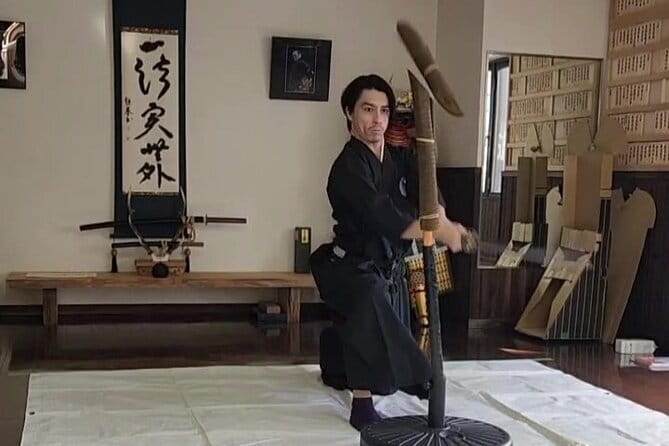
You’ll also try throwing a shuriken. This is one of the most fun “instant feedback” elements of the seminar. It’s also a good test of how the instructor’s focus work translates into real actions—calm breathing and measured posture can make the throwing feel less random.
You get rental shuriken as part of the experience, so you won’t need to bring anything.
The cultural context you’ll actually remember: samurai and shinobi ideas
This seminar doesn’t treat samurai history like a lecture you’ll forget on the train. You’ll hear about the role samurai played in Japanese history and culture, plus shinobi knowledge tied into the training.
The material also references the Shibata family when describing samurai history, and it’s framed around traditional warrior philosophies. Even with just an hour, you’re getting a few key points that connect the physical practice to the bigger picture.
Here’s why this matters for you as a visitor: a sword workshop can become pure spectacle. But learning why the movements exist—how stances relate to readiness and how mental focus fits the discipline—makes the experience feel like more than a novelty stop.
What to expect from the dojo rules and safety vibe
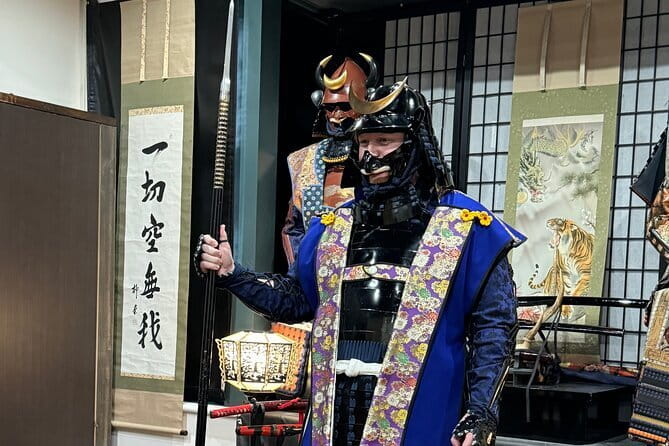
This activity has clear boundaries, and that’s a good thing in a sword-and-throwing setting.
You should expect:
- A rule about no touching weapons without permission.
- A no-alcohol/no-drugs admission rule.
- Service animals allowed.
- Most travelers can participate, with children under 12 needing a participating adult.
- Maximum group size of 12 travelers, which helps instructors manage safety and attention.
There’s also a spectator fee of 2,750 JPY per person, paid upon arrival. If you’re bringing friends who just want to watch, plan for that cost.
A practical note: since you can be asked to leave for inattentive behavior, treat this like a real training space, not a casual performance. Follow instructions quickly. You’ll get more out of the hour.
Who this is for (and who might want a different activity)
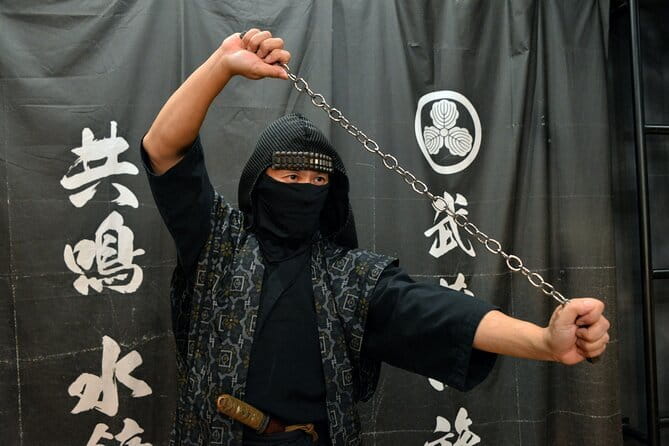
This seminar is a great fit if you want:
- Hands-on instruction in a traditional setting
- A quick, structured activity that doesn’t eat half your day
- Samurai and shinobi culture explained alongside technique
- A calm “train and learn” tone rather than high-energy action
It may be less ideal if you want:
- A long, intensive curriculum
- Advanced sparring without form guidance
- A high-speed, high-contact workout
The “low-movement, relaxed” style is specifically part of the description. So think controlled practice, not cardio.
How to prepare so you feel confident during the 60 minutes
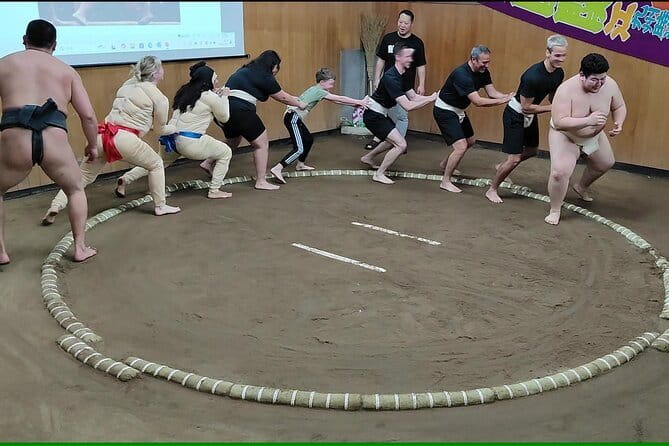
Because the class is short, your preparation affects how smoothly it goes.
Do this:
- Arrive about 5 minutes early so you can settle in.
- Wear comfortable clothing that lets you move safely. Even though you’ll have a dojo setting, your body still needs freedom for stances and partner work.
- If you opt for the outfit rental, plan to follow instructor guidance about fit and movement.
Don’t do this:
- Don’t plan to handle any weapon unless the instructor gives permission.
- Don’t arrive after alcohol or in any condition that violates the no-alcohol/no-drugs rule.
If you like taking photos, consider using the costume portion. It’s one of those moments that turns your “I did this” memory into something you can show later.
The best parts, according to how the experience is designed
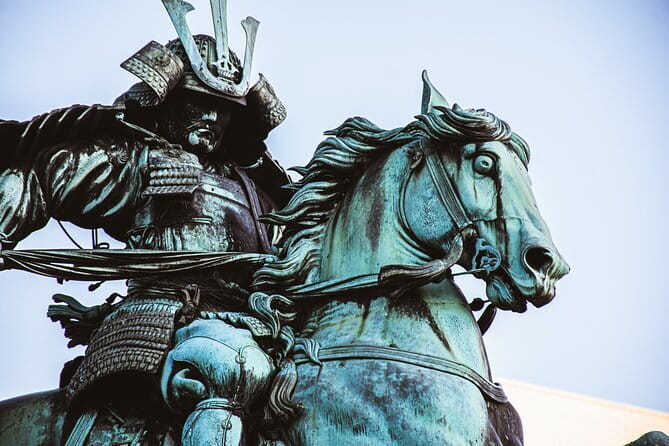
The highest-praise elements make sense when you connect them to what the seminar offers.
One big win is the full participation: you get dressed, you practice basic moves, and you try multiple weapons. That combination is harder to find in short workshops.
Another strong point is interaction with staff. The experience description says the instructors are licensed, and the session is described as friendly and picture-friendly. If you enjoy learning while being guided through the details, this format is likely your speed.
Also, the history component is described as fun and interactive rather than dull. That matters because a sword workshop can easily turn into silence and awkward nodding. Here, the teaching style is meant to keep you engaged.
Should you book it? My honest decision guide
Book this seminar if you want a short, real-dojo experience with hands-on practice in samurai stances, partner sparring, and shuriken throwing—plus outfit rental and cultural context. The small group size and the fact you use a rental bokken and shuriken make it more than a photo stop.
Skip or swap to another option if you’re looking for intense combat training or a long class. This is described as relaxed and low-movement, so it’s designed for learning and discipline, not for exhausting yourself.
If you can work with a 60-minute time block and you like the idea of learning named stances like Hasso, Johdan, and Gedan, this is the kind of activity you’ll remember because you actually did it.
FAQ
How long is the Tokyo Xinobi Samurai Legacy Journey seminar?
It runs for about 1 hour.
What weapon training do I do during the workshop?
You practice with a rental bokken (wooden sword), learn samurai stances, and try throwing a rental shuriken.
Is samurai attire included?
Dogi (outfit) rental is included if you prefer to wear samurai garb. You should let them know when you book.
Do I need to bring my own equipment?
No. The instructor provides or arranges rental equipment for the bokken and shuriken, and outfit rental is available.
Is food included?
No. Food and drinks are not included.
Where does the seminar start, and where does it end?
It starts at Musashi Ninja Clan Shinobi Samurai Honjin Dojo in Asakusa (Tokyo, Taito City, Matsugaya, Mets八番館 3階) and ends back at the meeting point.
What if I need to cancel?
You can cancel for free up to 24 hours before the experience start time for a full refund.
More Tour Reviews in Tokyo
- Mt Fuji and Hakone 1-Day Bus Tour Return by Bullet Train
★ 5.0 · 26,383 reviews - 1-Day Tokyo Bus Tour
★ 5.0 · 14,250 reviews - Tokyo: teamLab Planets TOKYO Digital Art Museum Entry Ticket
★ 4.6 · 9,779 reviews - Mt Fuji & Hakone Cruise, Drum Show Bullet Train 1 Day from Tokyo
★ 4.0 · 7,413 reviews - Tokyo: Shinjuku Food Tour (13 Dishes at 4 Local Eateries)
★ 5.0 · 6,603 reviews
More Samurai and Ninja Sessions
- Tokyo: Samurai Ninja Museum Guided tour and Experience
★ 4.6 · 1,010 reviews - Tokyo: Samurai Sword & Archery Class from Samurai Descendant
★ 5.0 · 603 reviews - Best Samurai Experience in Tokyo
★ 5.0 · 458 reviews - Ninja Experience (Family Friendly) at Samurai Ninja Museum TOKYO
★ 5.0 · 441 reviews - Tokyo: Samurai Entertainment Night Show in Kanda Shrine
★ 4.6 · 417 reviews
Latest Tokyo reviews off our desk






Samurai & Ninja Classes, compared.
 ★ 4.6Samurai Ninja Museum Guided tour and ExperienceFrom $271,010 reviews
 ★ 5.0Samurai Sword & Archery Class from Samurai DescendantFrom $193603 reviews
 ★ 5.0Best Samurai Experience in TokyoFrom $65458 reviews
 ★ 5.0Ninja Experience (Family Friendly) at Samurai Ninja Museum TOKYOFrom $47441 reviews
 ★ 4.6Samurai Entertainment Night Show in Kanda ShrineFrom $41417 reviews
 ★ 4.2Ninja Kabuki PerformanceFrom $29330 reviews
 ★ 5.0Tokyo Sword Experience – includes Museum Ticket/Ninja ExperienceFrom $84314 reviews
 ★ 4.8Samurai Ninja Museum Asakusa: Samurai Sword Lesson & TourFrom $63306 reviews
Browse the lists this tour appears in