
Reviewed · SAMURAI & NINJA CLASSES
Train in Samurai Swordsmanship and Defeat the Demon in Tokyo
A sword lesson with a demon twist. This is a Tokyo workshop that mixes samurai swordsmanship training with a story-driven finale called the Hyakki Yakō Oni battle.
What I like most is that you practice real basics (etiquette, breathing, posture, strikes, blocks, focus), not just watch. And it’s fully in English, family-friendly, and designed so you won’t feel shoved or rushed.
One consideration: this is hands-on training, so if you’re hoping for a passive viewing-style show, you may find it too interactive for your comfort level.
In This Review
- Quick hits before you train
- The Hyakki Yakō story: why the Oni theme works
- Inside the dojo: Sengoku-era techniques you practice
- The moment armor and photos make sense
- The Demon battle: how the finale is taught to your mind
- Recognition: your name scroll turns practice into a keepsake
- English-friendly and family-ready, but still real
- Price and logistics for $84.70 in Tokyo
- Who should book this Oni sword trial
- Should you book it?
- FAQ
- How long is the Tokyo samurai sword training and Oni battle experience?
- Is the experience taught in English?
- What’s included during the lessons?
- Do I get anything at the end?
- Is there food and drink included?
- How big are the groups?
- Can I cancel for a full refund?
Quick hits before you train
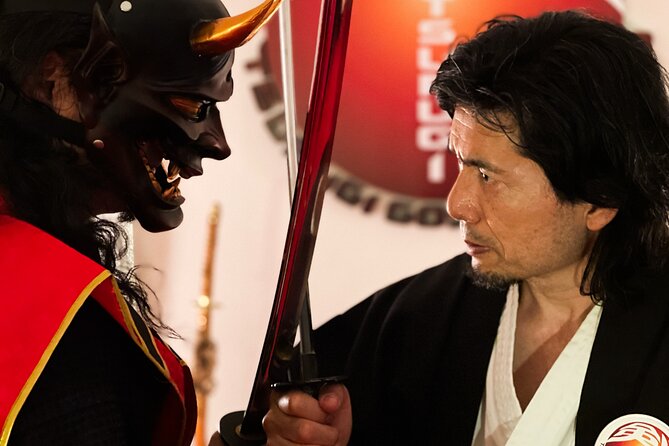
- Sengoku-era fundamentals: etiquette, breathing, posture, and practical striking and blocking
- A guided, story-based flow with four chapters: Prologue → Training → Battle → Recognition
- Active Oni confrontation that’s framed as facing fear and weakness, not just fighting for show
- Small groups (max 6), which usually helps you get more attention and direction
- Included uniform rental plus a live instructor sword demonstration so you know what you’re aiming for
- Your name on a scroll at the end, along with a commemorative photo and a matcha sweets break
The Hyakki Yakō story: why the Oni theme works
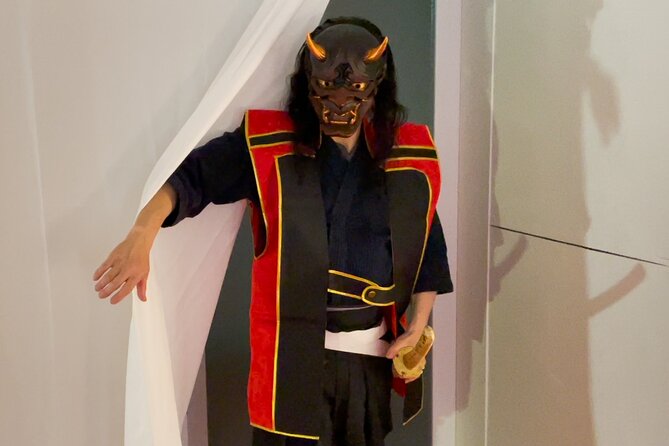
Tokyo has a real love for yokai and oni legends, and this experience uses that folklore in a way that feels more like meaning than gimmick. You start with the idea of Hyakki Yakō, the Night Parade of a Hundred Demons—supernatural beings said to roam at night in old scrolls and stories. Then the mood shifts: the Demon (Oni) is described as returning, breaking an ancient seal, and showing up in the modern world.
Here’s the useful part for you: the Oni isn’t only treated like a monster. The lesson frames the Demon as a mirror for inner darkness—fear, doubt, weakness—so the emotional arc matters as much as the physical one. By the time you reach the finale, the symbolism is already set up. That makes the ending feel like a conclusion to the training, not a random add-on.
More blade-and-dojo sessions, reviewed
- Tokyo: Samurai Ninja Museum Guided tour and Experience
★ 4.6 · 1,010 reviews - Tokyo: Samurai Sword & Archery Class from Samurai Descendant
★ 5.0 · 603 reviews - Best Samurai Experience in Tokyo
★ 5.0 · 458 reviews - Ninja Experience (Family Friendly) at Samurai Ninja Museum TOKYO
★ 5.0 · 441 reviews
Inside the dojo: Sengoku-era techniques you practice
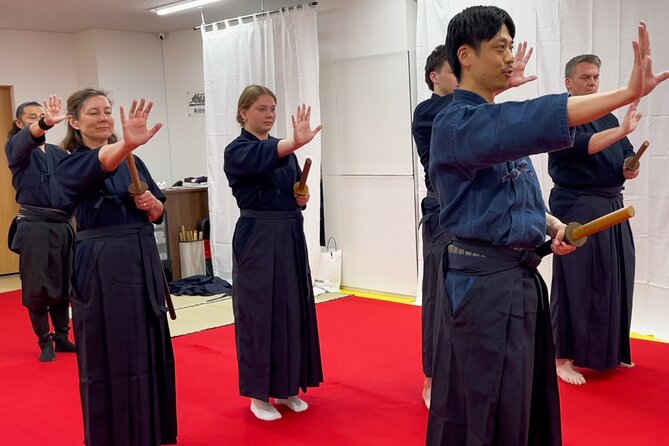
This isn’t positioned as entertainment. It’s structured as training drawn from centuries-old samurai sword culture from the Sengoku era, and it’s led by the tsurugi samurai squad concept (the instructors guide you through the story while teaching the mechanics).
During the Training chapter, you’ll work on core elements:
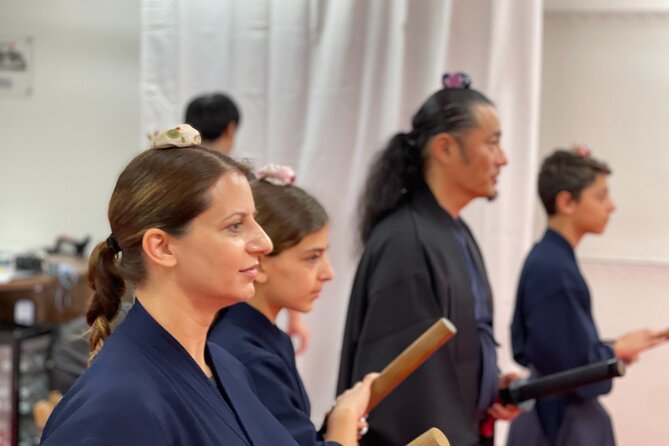
- Etiquette and posture: the kind of basics that calm you down and help you move correctly
- Breathing and focus: you’re taught to manage tension instead of just swinging
- Strikes and blocks: you learn offensive and defensive techniques
- A live demonstration by the instructor: you get a clear model before you try
One practical win: you’re not left to guess what “good form” means. The live demonstration plus the English guide helps you connect the physical movements to the purpose behind them. That matters because sword basics are easy to do wrong in a way that still looks convincing.
And yes, you’ll get a samurai uniform rental during lessons. Wearing it isn’t just for photos. It can help you take the session seriously and settle into the role-based training environment.
The moment armor and photos make sense
There’s a photo-friendly side to this, but it’s not “only for cameras.” You can wear armor during the experience, and you’ll get a commemorative photo with the samurai at the end. If you’re traveling with family or friends, this is the part that usually turns the training into a shared memory, not just a skill you tried once.
Also included: authentic matcha tea and Japanese sweets. That’s a nice break after physical practice, and it turns the session into a more complete Tokyo cultural moment. You’re not just collecting a certificate; you’re taking a breath, tasting something Japanese, and letting the experience land.
The Demon battle: how the finale is taught to your mind
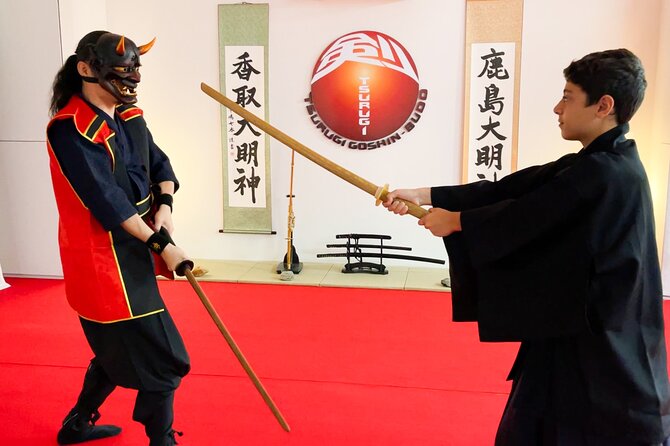
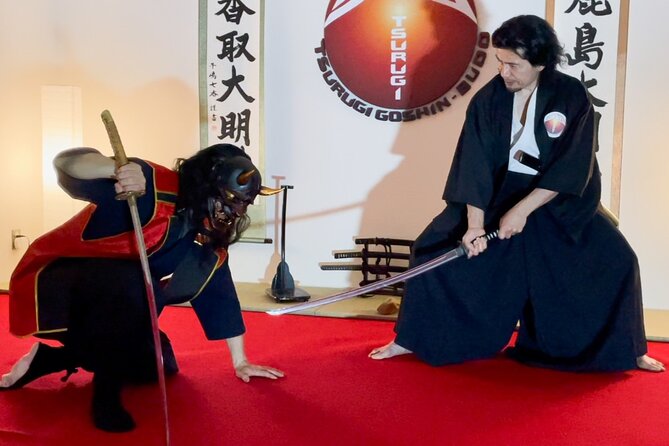
The Battle chapter is the headline: you confront the Demon (Oni) in a dramatic symbolic clash of spirit and shadow. But the key point is how it’s framed. The challenge isn’t about raw strength. It’s about courage—facing your inner darkness.
In practical terms, you’re likely combining the techniques you learned in the Training chapter. The idea is that you take what you worked on—offensive and defensive basics—and apply it in a controlled, symbolic “defeat the Oni” moment.
Why this is valuable, even if you’re a beginner: many sword experiences either stop at form or jump straight into choreography. Here, the language of fear and focus is already built in from the start. That gives you a reason to stay calm during the finale, and calm control is part of martial arts whether you’re training in a dojo or just trying not to look awkward.
Recognition: your name scroll turns practice into a keepsake
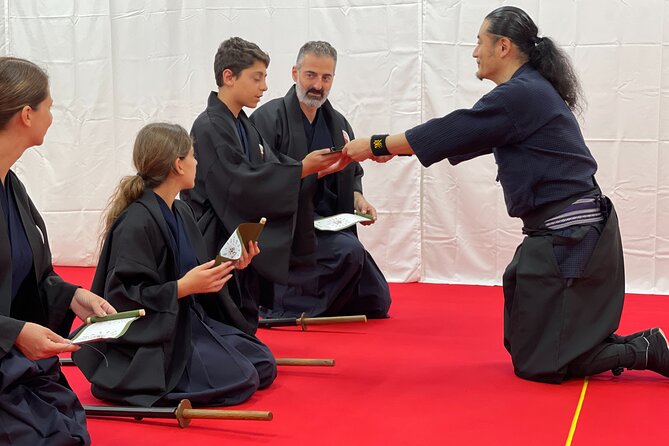
At the end, you receive a personalized certificate scroll with your name and the techniques you gained. This matters more than you might think. A lot of workshops feel forgettable after a few days because you didn’t leave with proof that you completed a real learning arc.
This scroll acts like a “receipt” for the skills: it turns the experience into something you can remember with specifics, not just a vague sense of fun. The session also includes an English guide on samurai history and Bushido, so the techniques aren’t floating in a vacuum.
- Tokyo: Shinjuku Food Tour (13 Dishes at 4 Local Eateries)★ 5.0 · 6,603 reviews
- Tokyo Mt Fuji 5th St & Hakone Cruise Bus Tour w/Bullet Train★ 4.4 · 5,024 reviews
- Flagship 2-Hours Official Street Go-Kart Tour – Tokyo Bay Shop★ 5.0 · 4,974 reviews
- From Tokyo: Mount Fuji Full-Day Sightseeing Trip★ 4.5 · 4,970 reviews
- Tokyo: Hop-On Hop-Off Sightseeing Bus Ticket★ 3.9 · 4,207 reviews
English-friendly and family-ready, but still real
This is described as fully in English and most travelers can participate. That combination is a big deal in Tokyo because sword training can easily become intimidating if you can’t understand what you’re being asked to do.
Because the session is capped at a maximum of 6 travelers, you’re not going to get swallowed by a huge group. Smaller numbers generally mean you can ask questions and adjust without feeling lost.
For families: the experience is built to be engaging. You get uniform rental, armor for photos, and a story that keeps the session moving through chapters. But it’s not a cartoon. You still get actual instruction in posture, breathing, strikes, blocks, and focus.
Price and logistics for $84.70 in Tokyo
At $84.70 per person for about 2 hours, the price looks fair once you count what’s included:
- Samurai uniform rental during lessons
- Live sword demonstration by the instructor
- English guide on sword skills, Bushido, and samurai history
- Personalized certificate scroll with your name and techniques
- Matcha tea and Japanese sweets
- Commemorative photo
What you should plan for: it does not include air-conditioned vehicle or private transportation. Since it ends back at the meeting point, you’re mostly responsible for getting yourself there and back. The meeting location is in Chiyoda City (Kōjimachi, MK麹町ビル) and is noted as near public transportation, so it’s workable even if you’re not booking a ride.
If you’re trying to compare value against other Tokyo activities, this one usually wins if you want skill-based learning plus a strong cultural story arc. It’s not a long day. It’s a short session with a clear ending and tangible souvenirs.
Who should book this Oni sword trial
This fits best if you want:
- Beginner-friendly martial arts learning with clear guidance
- A Tokyo experience that mixes culture, story, and physical training
- Something you can enjoy with friends or family, not just solo sightseeing
- A keepsake at the end (your name scroll) that makes it feel real
You might skip it if:
- You only want to watch and take photos, with no hands-on part
- You’re looking for a large-scale production or theater-like pacing
- You strongly prefer private, silent, fully structured training with no story framing (the Demon theme is part of the design)
Should you book it?
If you want a fun Tokyo stop that teaches basics you can actually use—plus a memorable story finale and a personalized scroll—this is a strong pick. The small group size, English instruction, and “no-pressure” feel make it approachable for a wide range of visitors, including families.
Book it if you’ll enjoy active participation and you like the idea of training as both skill-building and self-control. Pass if you’re after a purely passive show. If you match the vibe, this is the kind of workshop you’ll still talk about when you’re back home.
FAQ
How long is the Tokyo samurai sword training and Oni battle experience?
The experience lasts about 2 hours.
Is the experience taught in English?
Yes. It’s fully in English, with an English guide covering sword skills, Bushido, and samurai history.
What’s included during the lessons?
You get samurai uniform rental during lessons, a live sword demonstration by the instructor, English guidance, and the training includes instruction on etiquette, breathing, posture, strikes, blocks, and focus.
Do I get anything at the end?
Yes. You receive a personalized certificate scroll with your name and the techniques you gained, plus a commemorative photo with the samurai.
Is there food and drink included?
Yes. Authentic matcha tea and Japanese sweets are provided.
How big are the groups?
The experience has a maximum of 6 travelers.
Can I cancel for a full refund?
Yes. You can cancel for free up to 24 hours before the experience starts for a full refund.
More Tour Reviews in Tokyo
- Mt Fuji and Hakone 1-Day Bus Tour Return by Bullet Train
★ 5.0 · 26,383 reviews - 1-Day Tokyo Bus Tour
★ 5.0 · 14,250 reviews - Tokyo: teamLab Planets TOKYO Digital Art Museum Entry Ticket
★ 4.6 · 9,779 reviews - Mt Fuji & Hakone Cruise, Drum Show Bullet Train 1 Day from Tokyo
★ 4.0 · 7,413 reviews - Tokyo: Shinjuku Food Tour (13 Dishes at 4 Local Eateries)
★ 5.0 · 6,603 reviews
More Samurai and Ninja Sessions
- Tokyo: Samurai Ninja Museum Guided tour and Experience
★ 4.6 · 1,010 reviews - Tokyo: Samurai Sword & Archery Class from Samurai Descendant
★ 5.0 · 603 reviews - Best Samurai Experience in Tokyo
★ 5.0 · 458 reviews - Ninja Experience (Family Friendly) at Samurai Ninja Museum TOKYO
★ 5.0 · 441 reviews - Tokyo: Samurai Entertainment Night Show in Kanda Shrine
★ 4.6 · 417 reviews
Latest Tokyo reviews off our desk






Samurai & Ninja Classes, compared.
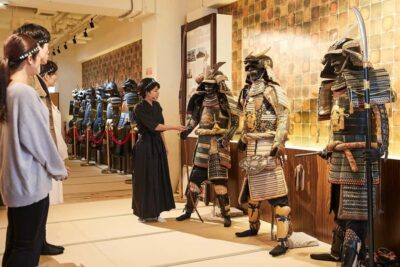 ★ 4.6Samurai Ninja Museum Guided tour and ExperienceFrom $271,010 reviews
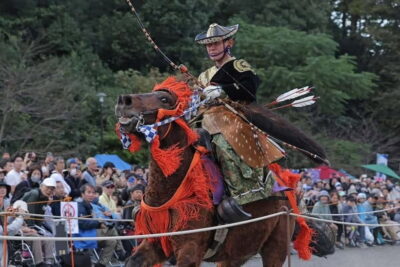 ★ 5.0Samurai Sword & Archery Class from Samurai DescendantFrom $193603 reviews
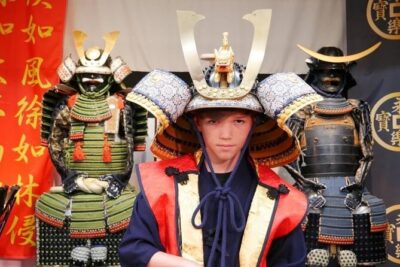 ★ 5.0Best Samurai Experience in TokyoFrom $65458 reviews
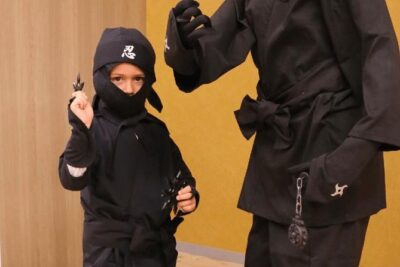 ★ 5.0Ninja Experience (Family Friendly) at Samurai Ninja Museum TOKYOFrom $47441 reviews
 ★ 4.6Samurai Entertainment Night Show in Kanda ShrineFrom $41417 reviews
 ★ 4.2Ninja Kabuki PerformanceFrom $29330 reviews
 ★ 5.0Tokyo Sword Experience – includes Museum Ticket/Ninja ExperienceFrom $84314 reviews
 ★ 4.8Samurai Ninja Museum Asakusa: Samurai Sword Lesson & TourFrom $63306 reviews
Browse the lists this tour appears in