
Reviewed · SUMO TOURNAMENTS & SHOWS
Ultimate Sumo Tournament: Tokyo, Osaka, Nagoya, Fukuoka
Sumo makes sense when someone explains it. This day tour gives you reserved seats at Japan’s official basho arenas, then a local sumo expert helps you decode what you’re seeing.
I especially like two things: the audio headset makes the guide’s commentary clear even with arena noise, and you get a banzuke ranking chart so the matches feel less random.
One possible downside to plan around: if you choose the standard option, your seats are second-floor B/C, which can make the action feel a bit farther away than the private A/S seats.
In This Review
- Key things to know before your sumo tournament day
- How to choose your city and sumo tournament month
- Reserved seats at the official arenas: B/C vs A/S
- The 2:00 pm flow inside the basho arenas
- Tokyo at Ryogoku Kokugikan: what your guide helps you notice
- Osaka, Nagoya, and Fukuoka tournament days: same format, different venue feel
- Off-season option: sumo stable morning practice near Warabi Station
- Your guide plus the audio headset: turning rituals into a play-by-play
- Chanko nabe dinner add-on: when it’s worth it
- Value check: what you’re really paying about $184
- Who should book this Ultimate Sumo Tournament experience
- Should you book Ultimate Sumo Tournament: Tokyo, Osaka, Nagoya, Fukuoka?
- FAQ
- What’s the start time for this tour?
- How long does the sumo tournament tour last?
- Which cities are offered for the Ultimate Sumo Tournament experience?
- Are tournament tickets included?
- Is dinner included?
- Can I get a vegetarian option for chanko nabe?
- Is an English-speaking guide and audio headset provided?
- Can I bring outside food or drinks into the arena?
- Is there an off-season sumo stable option?
- Can the tour be refunded or changed if I cancel?
Key things to know before your sumo tournament day
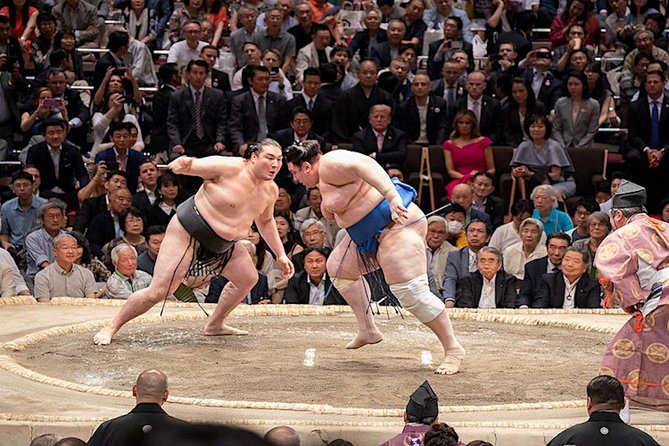
- Reserved seats at the official basho: you’re not gambling on ticket availability.
- B-class/C-class vs A-class/S-class: closer seats cost more in private tours.
- Audio headset inside the arena: you’ll hear play-by-play and rituals explained.
- Timing can include a wait: seating may happen after matches end, depending on venue flow.
- Optional chanko nabe dinner: you can add sumo’s famous hot pot, with a vegetarian option available.
How to choose your city and sumo tournament month
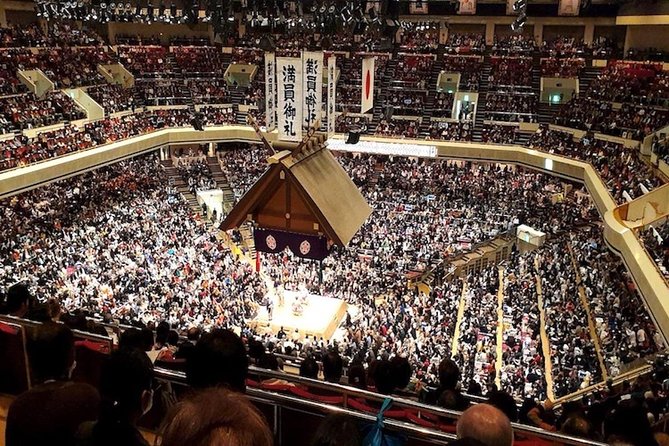
The big decision is where you want to watch, because the official tournaments rotate by city during the year. Tokyo typically hosts January, May, and September; Osaka has March; Nagoya has July; and Fukuoka runs November. Each tournament is a 15-day basho, with start and end dates landing on Sundays.
This matters because your tour date is tied to the tournament season, not just the city you’re visiting. If you’re only in Japan for a short window, you’ll want to match your travel dates to the right basho month so your day is about the main event, not a backup.
Other ringside bookings readers scored
- Tokyo: Sumo Show and Dining Experience
★ 4.8 · 2,742 reviews - the SUMO show
★ 5.0 · 1,960 reviews - Tokyo Shinjuku Sumo Show & Experience with Photo
★ 5.0 · 1,750 reviews - Tokyo: Sumo Show and Experience in Shinjuku
★ 4.8 · 1,001 reviews
Reserved seats at the official arenas: B/C vs A/S
Your ticket is the core value. The tour includes a reserved seat for the tournament, and you choose the level of access.
- Standard tour: B-class or C-class seats on the second floor (rows 7–11 for B).
- Private tour: S-class or A-class seats closer to the ring.
If you’re the type who cares about seeing footwork, hand positions, and the wrestlers’ posture right at the tachiai moment, the private A/S option is the easier choice. If you mostly want the atmosphere and the culture lesson, second-floor B/C seats still work well, especially with the guide calling out what to look for.
One practical note: the tour may involve waiting prior to seating because the venue needs everyone out and cleared first. You’re not usually stuck forever, but you should expect some standing around as the arena transitions between sections.
The 2:00 pm flow inside the basho arenas
The meeting time is 2:00 pm, and the guided portion is about 4 hours for the tournament-day visits. What you’re really buying is structure: someone helps you get your bearings fast and turns the chaos of a busy arena into something you can follow.
Inside, the guide uses multiple tools at once:
- an English-speaking local sumo expert
- a banzuke ranking chart and an info pamphlet
- an audio headset so you can hear explanations over the crowd
You’ll also get time to roam for snacks or shopping. Outside food and drinks are not allowed in the arena, but vendors are on-site, so you can grab drinks or simple eats where allowed.
Also, dress with the arena in mind. The venue can run warm, and wearing layers that can breathe helps.
Tokyo at Ryogoku Kokugikan: what your guide helps you notice
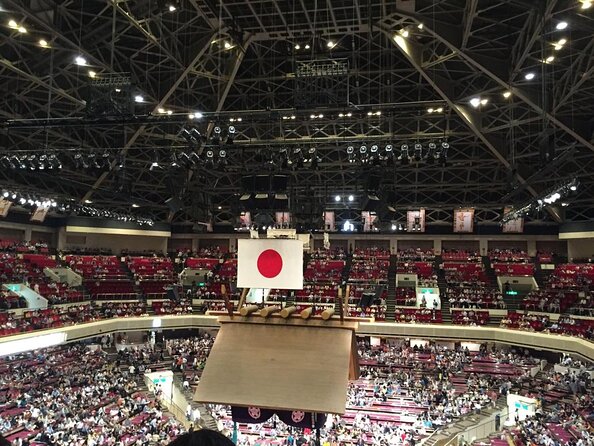
Tokyo’s stop centers on Ryogoku Kokugikan, the official sumo hall. This is where most people imagine sumo when they picture Japan: large, formal, and steeped in tradition.
The experience is designed around two modes of learning:
1) a quick orientation so you know what you’re looking for
2) commentary tied to what happens in the ring
That’s where the guide names really start to matter. Across past groups, guides like Miyko, Hiro, Miyoko, Seizo, and Izumi have been praised for turning rules, rituals, and match strategy into clear, step-by-step explanations. If you’re worried that sumo is too confusing on your own, the whole point here is to make it readable in real time.
There’s also mention of the Sumo Museum area at Ryogoku. It can get congested, and with a larger group it may be hard to move slowly. Your guide may steer you to enjoy parts of it on your own if the crowd flow is tight—so don’t assume you’ll get a leisurely, guided museum tour.
Osaka, Nagoya, and Fukuoka tournament days: same format, different venue feel
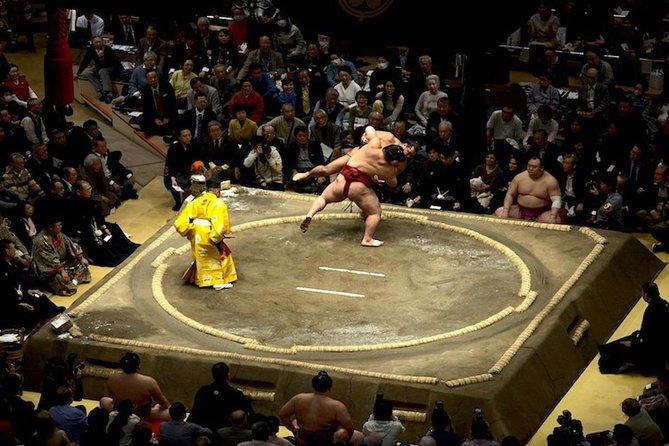
Once you move out of Tokyo, the tour stays consistent in how it teaches sumo, but the setting changes.
- Osaka (March) happens at EDION Arena Osaka.
- Nagoya (July) is at IG Arena.
- Fukuoka (November) is at Fukuoka Kokusai Center.
Each city’s tournament-day tour is also built around a guided visit of about 4 hours, with reserved seating included or arranged as part of the package (and tickets included or stated as free in the tour overview for those city options). The exact seat level depends on whether you chose standard vs private.
What stays the same is the rhythm: orientation, your reserved-seat viewing, and the guide translating the “why” behind the “what.” In sumo, that’s often the difference between watching two wrestlers collide and actually understanding the rituals, timing, and the decision-making behind the bout.
- Tokyo: Shinjuku Food Tour (13 Dishes at 4 Local Eateries)★ 5.0 · 6,603 reviews
- Tokyo Mt Fuji 5th St & Hakone Cruise Bus Tour w/Bullet Train★ 4.4 · 5,024 reviews
- Flagship 2-Hours Official Street Go-Kart Tour – Tokyo Bay Shop★ 5.0 · 4,974 reviews
- From Tokyo: Mount Fuji Full-Day Sightseeing Trip★ 4.5 · 4,970 reviews
- Tokyo: Hop-On Hop-Off Sightseeing Bus Ticket★ 3.9 · 4,207 reviews
Off-season option: sumo stable morning practice near Warabi Station
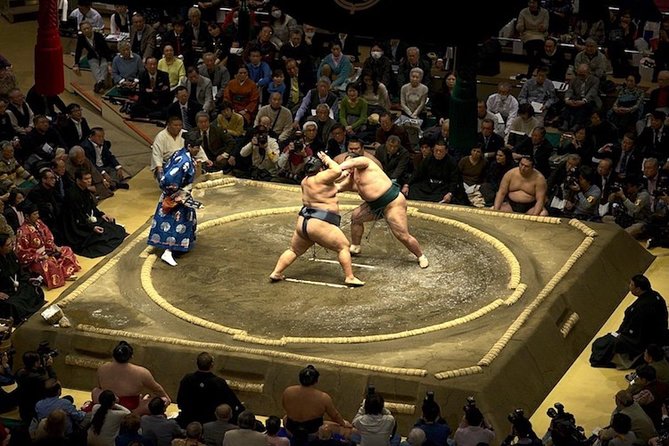
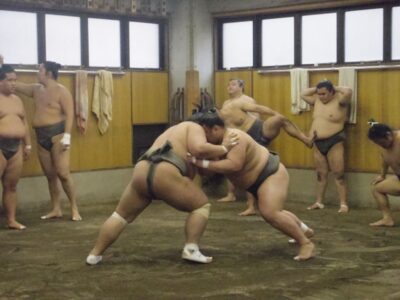
If you’re traveling when no tournament is running (the off-season), there’s a different option: a sumo stable morning practice tour instead of tournament seating. This is for those months when basho isn’t happening.
Key details:
- It runs 8:00 am to 12:00 pm
- You meet near Warabi Station (about 30 minutes from Tokyo Station)
- It’s a join-in group (8–16 people)
- You watch training with a guide and audio headsets
- You’ll also enjoy chanko lunch after the session
- This option does not include tournament seat tickets because it’s not a tournament day
This is a great swap if you want authenticity without chasing match schedules. Training at a stable shows the discipline side of sumo, not just the afternoon drama of a specific bout list.
Your guide plus the audio headset: turning rituals into a play-by-play
The standout theme across the strongest feedback is simple: the guide changes everything. People repeatedly praised hosts for:
- clear instructions on where to meet and how to find the correct entrance
- a running explanation tied to what’s happening in the ring
- answering questions without sounding scripted
Names that showed up in positive feedback include Miyko, Hiro, Seizo, Izumi, Shunsuke Moriyama, Taku, Duke, and Yumi. Even when the match list moves fast, these guides have a habit of keeping the group oriented by calling out rankings, ages, and visible style cues.
One very practical tip: the headset volume can be loud. If you’re sensitive to sound, bring a small earplug or loop. It’s the easiest way to make the commentary comfortable without muffling your ability to hear.
Chanko nabe dinner add-on: when it’s worth it
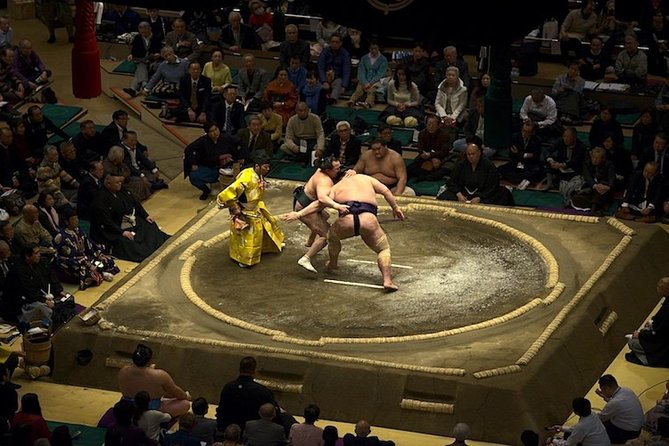
If you select the optional dinner, you’ll eat at a local chanko hot pot restaurant. This is sumo’s famous food culture: hot pot made with a chicken-stock base (traditional versions are often pork or chicken-based). The tour notes that chanko is strongly tied to the Ryogoku area, and sumo wrestlers are known for eating large quantities because it cooks in bulk and keeps a group fueled.
A few helpful expectations:
- Dinner is not included unless you pick the add-on at checkout.
- Vegetarian options are available, but broth substitutions can happen depending on what the restaurant can prepare.
- The meal is chanko hot pot, and the default is dinner without drinks.
If you hate surprises with dietary needs, use the special requirements field when you book. And once your dinner request is accepted, changes may not be possible within a week of the tour date, so plan early.
Value check: what you’re really paying about $184
At about $184.38 per person, you’re not just paying for a seat. You’re paying for three things that are hard to line up on your own:
1) Ticket arrangement for a tournament that can sell out quickly
2) Reserved seating in a specific section level
3) A guide who turns unfamiliar rituals into something you can follow while the matches happen
One of the practical realities with sumo is that official tickets can disappear fast. If you’ve ever tried to grab limited sports tickets in Japan, you already know the stress factor. Here, your stress drops because someone handles seating allocation and logistics.
Is it the cheapest way to watch sumo? No. But it often ends up being the best value when you consider your time and the chance that you’ll be seated in a helpful section rather than wandering around hoping for luck.
Who should book this Ultimate Sumo Tournament experience
This fits best if you:
- want to watch the real basho with minimal friction
- feel overwhelmed by sumo rules and want a straight-to-the-point guide
- care about context: why wrestlers do what they do, and how rankings affect matchups
- want an easy add-on dinner with chanko if you like food-based cultural experiences
If you’re the type who wants total freedom with zero structure, you might find the guided pacing a little “adult supervision.” And if you prefer to learn by reading quietly on your own, the explanation-heavy headset format may feel like more than you need. But most people looking for a first-time sumo fix are exactly the ones who appreciate the structure.
Should you book Ultimate Sumo Tournament: Tokyo, Osaka, Nagoya, Fukuoka?
If your goal is a first-time sumo experience that feels understandable, this is a strong bet. The reserved-seat coverage plus an expert-led, headset-supported explanation is the difference between watching a spectacle and actually following what’s going on.
I’d especially book it if:
- your travel dates line up with January/March/July/November or another Tokyo basho month listed for the official tournaments
- you want the option to upgrade to closer private A/S seats
- you like getting cultural meaning, not just event photos
Skip it only if you’re set on DIY discovery without guided commentary, or you’re on a tight budget where paying for reserved seating and a guide doesn’t make sense. Otherwise, it’s one of those days where the logistics are handled and the sport becomes readable in real time.
FAQ
What’s the start time for this tour?
The meeting start time is 2:00 pm.
How long does the sumo tournament tour last?
The tournament-day guided visit is about 4 hours, and the overall experience is listed as approximately 1 day.
Which cities are offered for the Ultimate Sumo Tournament experience?
You can choose Tokyo, Osaka, Nagoya, or Fukuoka depending on the tournament season.
Are tournament tickets included?
Yes. Reserved seat tickets for the sumo tournament are included. Standard tours use B-class or C-class seats (2nd floor), while private tours use closer S-class or A-class seats.
Is dinner included?
Dinner at a local chanko hot pot restaurant is optional. It’s included only if you select the dinner add-on at checkout.
Can I get a vegetarian option for chanko nabe?
A vegetarian option is available. You should add your dietary needs at checkout so the restaurant can adjust the broth if needed.
Is an English-speaking guide and audio headset provided?
Yes. The tour includes an English-speaking local sumo expert guide and an audio headset.
Can I bring outside food or drinks into the arena?
No. Outside food or drinks are not allowed in the arena, but vendors are available inside.
Is there an off-season sumo stable option?
Yes. During off-season only, you can join a morning sumo stable practice near Warabi Station. It runs 8:00 am–12:00 pm, includes guide and headset, and you will not receive a tournament seat ticket because there is no basho that day.
Can the tour be refunded or changed if I cancel?
This experience is non-refundable and cannot be changed for any reason. If canceled due to poor weather, you’ll be offered a different date or a full refund.
More Tour Reviews in Tokyo
- Mt Fuji and Hakone 1-Day Bus Tour Return by Bullet Train
★ 5.0 · 26,383 reviews - 1-Day Tokyo Bus Tour
★ 5.0 · 14,250 reviews - Tokyo: teamLab Planets TOKYO Digital Art Museum Entry Ticket
★ 4.6 · 9,779 reviews - Mt Fuji & Hakone Cruise, Drum Show Bullet Train 1 Day from Tokyo
★ 4.0 · 7,413 reviews - Tokyo: Shinjuku Food Tour (13 Dishes at 4 Local Eateries)
★ 5.0 · 6,603 reviews
More Sumo, Ringside and Rated
- Tokyo: Sumo Show and Dining Experience
★ 4.8 · 2,742 reviews - the SUMO show
★ 5.0 · 1,960 reviews - Tokyo Shinjuku Sumo Show & Experience with Photo
★ 5.0 · 1,750 reviews - Tokyo: Sumo Show and Experience in Shinjuku
★ 4.8 · 1,001 reviews - Tokyo Grand Sumo Tournament Viewing Tour with Tickets
★ 5.0 · 692 reviews
Latest Tokyo reviews off our desk






Sumo Tournaments & Shows, compared.
 ★ 4.8Sumo Show and Dining ExperienceFrom $792,742 reviews
 ★ 5.0the SUMO showFrom $891,960 reviews
 ★ 5.0Tokyo Shinjuku Sumo Show & Experience with PhotoFrom $791,750 reviews
 ★ 4.8Sumo Show and Experience in ShinjukuFrom $691,001 reviews
 ★ 5.0Tokyo Grand Sumo Tournament Viewing Tour with TicketsFrom $124692 reviews
 ★ 5.0Tokyo Sumo Wrestling Tournament ExperienceFrom $124660 reviews
 ★ 4.7Luxury Sumo Show Experience & Japanese cuisine & DrinkFrom $103577 reviews
 ★ 4.8Sumo Morning Practice Viewing TourFrom $81570 reviews
Browse the lists this tour appears in