
Reviewed · AKIHABARA ANIME TOURS
3-Hour Manga Drawing Workshop in Tokyo
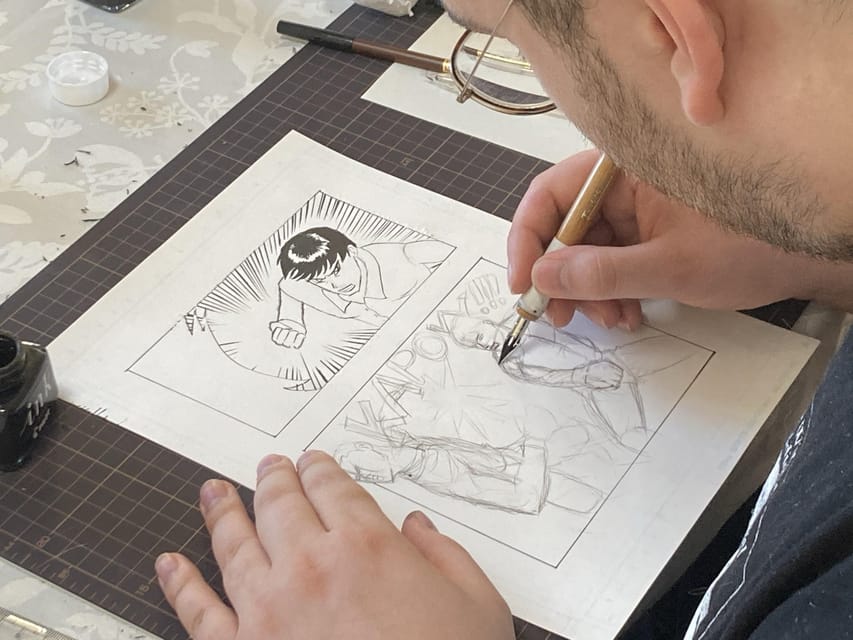
Your manga page starts in a tiny Tokyo room. In this 3-hour manga workshop near Kichijoji and the Ghibli Museum area, you’ll work step-by-step with a professional manga artist to create a finished page you can take home. I especially like the practical sequence (sketching through screen tones) and the fact that you don’t just watch—you produce a real outcome, not a demo. The main catch: instruction is mainly in Japanese, though you’ll get English support via slides, so expect a little effort if your Japanese is rusty.
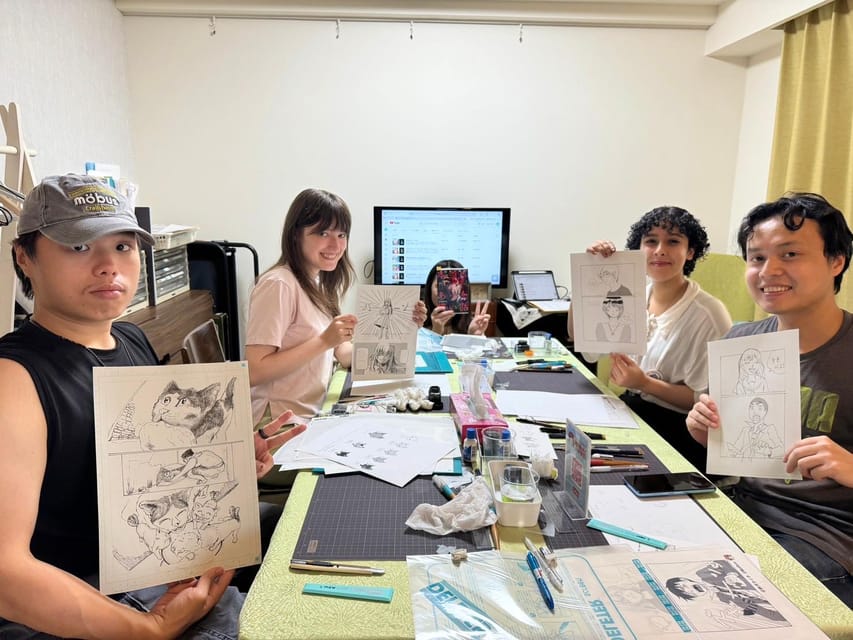
What makes this workshop feel manageable is the small format. The class is limited to 5 participants, so you’re not lost in a crowd, and you can ask questions during the process. You’ll be in an apartment room (not a big school classroom), which tends to make the pace calmer and more hands-on.
You should also plan for mess. Ink can stain clothes and hands, and you’ll want to wear something you don’t mind getting dirty. With that said, the materials are included, and the session covers the key manga skills that most beginners want fast: dip-pen practice, inking, black painting, effect lines, and screen tones.
In This Review
- Key highlights in plain English
- A 3-hour manga page workshop in Kichijoji (near Ghibli Museum area)
- Finding room 601: the Kichijoji walk that saves your time
- What you make: your A4 manga page, step by step
- Sketch on manga paper (A4 size)
- Practice using a dip pen
- Inking
- Painting black
- Effect lines
- Screen-tones
- Inside the workshop room: small-group help that matters
- Price and value: what $129 buys in 3 hours
- Ink, clothing, and the real-life practicalities
- Language support: Japanese instruction with English on slides
- Who this workshop is perfect for (and who might want something else)
- Should you book this 3-hour manga workshop near Kichijoji?
- FAQ
- Where is the meeting point for the manga workshop?
- How long is the workshop?
- What does the price include?
- Do I need to bring drawing tools?
- What languages are used during instruction?
- What will I take home?
- Is lunch or dinner included?
- How big is the group?
- Is the workshop wheelchair accessible?
Key highlights in plain English
- Make your own A4 manga page: you’ll leave with a completed souvenir you created yourself
- Dip pen technique, not just tracing: you practice before you ink for real
- A full workflow: sketch, inking, black painting, effect lines, then screen tones
- Small group help (max 5): more guidance per person
- Japanese instruction with English slide support: easier than you’d expect if you don’t speak much Japanese
- Everything you need is provided: tools and materials are included, so you can pack light
A 3-hour manga page workshop in Kichijoji (near Ghibli Museum area)
This is the kind of activity that makes Tokyo feel personal. Instead of ticking off one more photo stop, you spend three hours building something by hand in a quiet neighborhood setting—Kichijoji, in Musashino. The location also gives you an easy add-on plan: after your workshop, you can keep exploring Kichijoji, or tack it onto a day that also includes the Ghibli Museum area in Mitaka since it’s nearby.
The group size matters more than people think. With only up to five participants, the professional manga artist can correct small issues early—like how you hold the pen, how you start your lines, and how you control thickness. That’s the difference between learning manga and just copying an example.
And yes, you’ll be learning Japanese culture manga style basics, but the workshop approach stays practical. You get a structured sequence that gradually builds complexity, so beginners don’t feel thrown into the deep end.
One thing to note up front: this class is conducted in Japanese. The instruction includes English on the slides, and the instructor is listed as Japanese/English, which helps a lot. Still, your brain will work a little harder than in an all-English class.
More of Akihabara, ranked by our reviewers
- Tokyo Go Kart: Asakusa, Skytree, and Akihabara **IDP MUST**
★ 5.0 · 988 reviews - Akihabara Anime & Game Adventure Walking Tour (Group or Private)
★ 5.0 · 404 reviews - Tokyo: Gameboy Mod Workshop at Akihabara
★ 5.0 · 253 reviews - Akihabara: Private Anime and Pop Culture Tour
★ 4.8 · 152 reviews
Finding room 601: the Kichijoji walk that saves your time
The meeting point is straightforward once you know what to watch for. You’re an 8-minute walk from the north exit of Kichijoji Station. The address is:
601 H-Square Kichijoji, 2-4-6 Kichijoji Honcho, Musashino-shi, Tokyo
Here’s the detail I’d treat as important: there may be a building with a similar name, so don’t assume you’ve arrived until you confirm the right building. When you get there, press 601 and the call button. The door is unlocked.
This is one of those logistics moments that can either smooth your experience or make you late. I suggest arriving a bit early so you’re not rushing while looking for the right entrance. Also, if you’re carrying bags, plan to keep your hands free—ink and paper don’t mix well with stress.
What you make: your A4 manga page, step by step
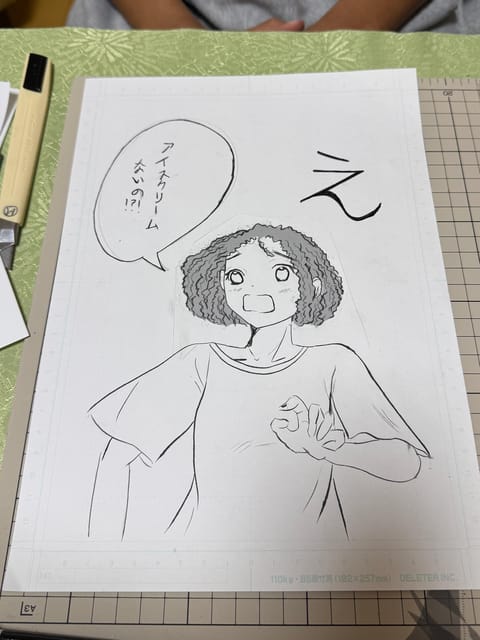
At the core, you’re creating a single finished page on A4 manga paper. That matters for two reasons. First, it gives you a clear end goal. Second, it keeps the timeline focused, so you don’t end up spending most of the workshop just preparing.
The session flows through these stages:
Sketch on manga paper (A4 size)
You start with a sketch on the provided manga paper. This isn’t just freehand play. The goal is to build a layout you can successfully ink and tone later. For beginners, this is a relief—your manga page has a plan before the messy tools come out.
Potential snag: sketching can feel slower than you expect, especially if you’re trying to translate what you’re hearing in Japanese into actions with your pencil. If you tend to freeze when you’re unsure, remind yourself that you’re learning a process, not delivering a masterpiece.
Practice using a dip pen
Then you practice with a dip pen. This is a big deal in manga-style work. Dip pens help you feel line pressure and control in a way many modern pens don’t. You’re not just drawing lines—you’re learning how line weight changes how your page looks.
This part also sets you up for inking. If you rush it, your inks will look uneven later. If you take your time here, the rest of the workshop gets easier.
Readers also shortlisted these Tokyo bookings:
- Sushi Making Tokyo Roll and Authentic Japanese Sushi Class★ 5.0 · 3,971 reviews
- Tokyo: Roll and Authentic Sushi Making Class in Asakusa★ 4.9 · 1,957 reviews
- Tokyo Shinjuku Chopsticks Making Class★ 5.0 · 1,763 reviews
- Tokyo: Sushi Making Class in a Happi Coat near a Famous Spot★ 4.9 · 1,377 reviews
- Chopstick Making Workshop in Ginza★ 4.8 · 1,366 reviews
Inking
Next comes inking. This is where your sketch turns into the bold black lines that define manga characters and panels. In most manga art lessons, inking is the make-or-break step, and here it’s guided rather than left to guesswork.
A practical tip: slow down on the first few lines you ink. Once you see how your hands follow the dip pen, you’ll gain confidence quickly.
Painting black
After you get your lines, you move into black painting. This is part of what gives manga its contrast. It’s also the stage where a page stops looking like a drawing and starts looking like a manga panel.
Because ink may stain clothes and hands, treat this segment like a craft project. You’ll likely want to handle your tools carefully and keep your workspace organized.
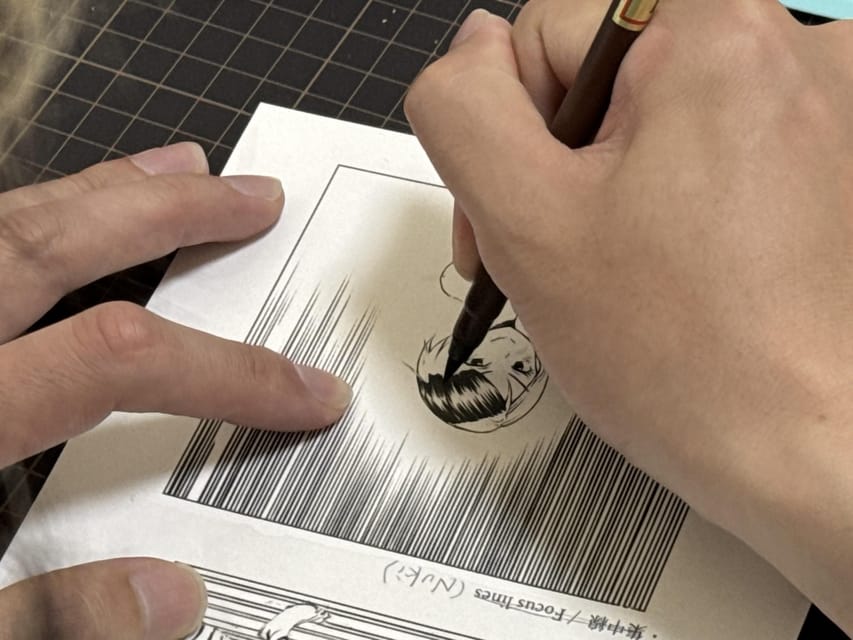
Effect lines
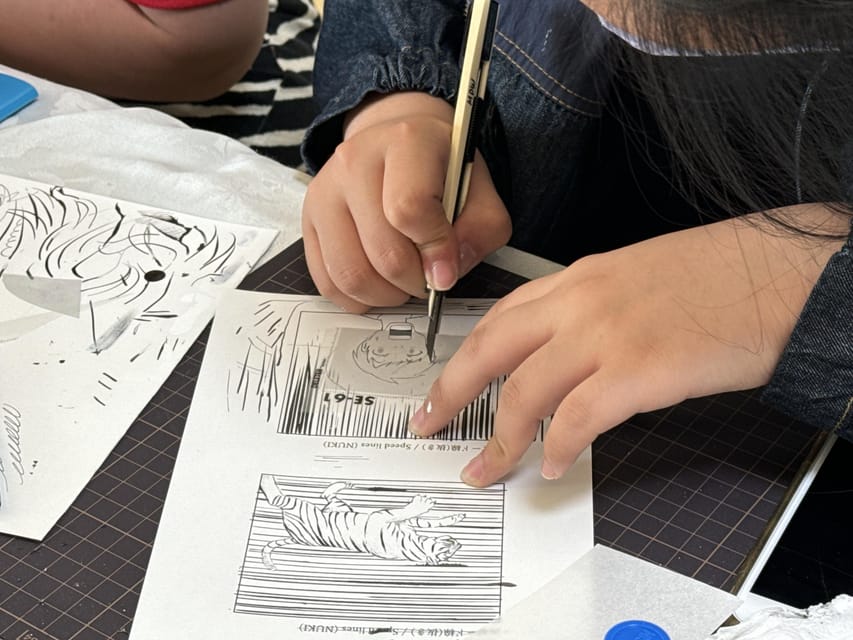
Then you add effect lines. These are the visual language for motion, emotion, and impact—things like speed, drama, or emphasis. Effect lines are where beginners can make a page feel instantly more “manga” even if their character skill is still developing.
If you’re worried about doing this part “wrong,” don’t. The whole workshop is designed to teach you how to add these elements in a controlled way.
Screen-tones
Finally, you work with screen tones. Screen tones are one of the signature manga techniques that create texture and shading. They’re also a common reason manga looks more professional than plain black-and-white line art.
This stage helps you finish your page with depth. Even if your lines are still learning, screen tones can level up the look fast.
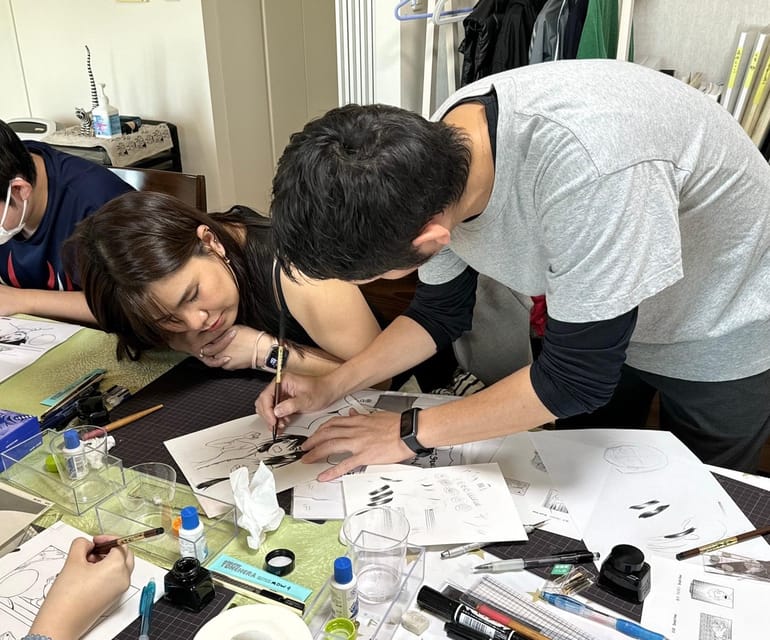
Inside the workshop room: small-group help that matters
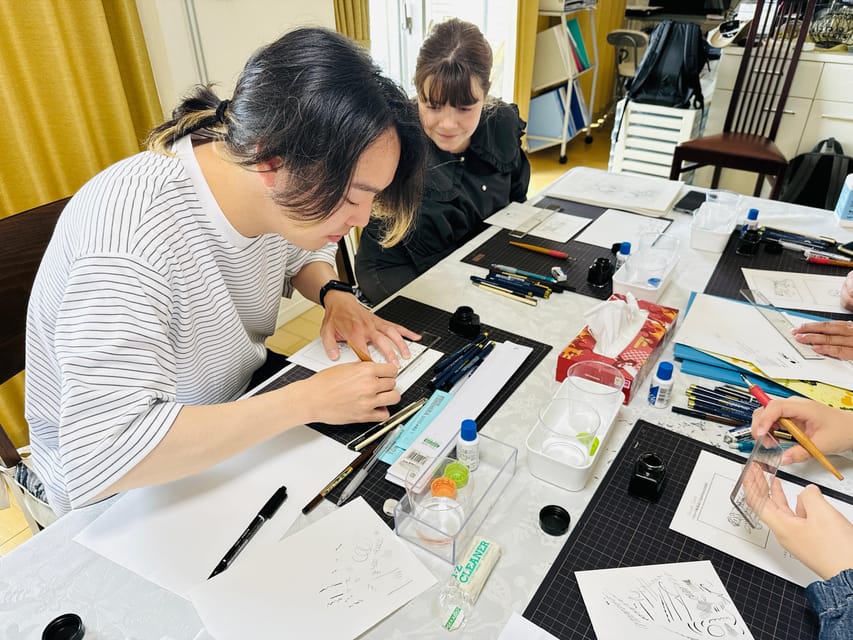
This is held in an apartment room, which changes the feel. You’re not in a lecture hall. You’re working at a table with paper in front of you while a professional manga artist guides the steps.
That style tends to benefit you in two ways:
- You can ask for clarification while you’re still at the stage where it matters.
- You get more targeted feedback on your line work and technique.
The workshop also uses English slides during Japanese instruction. This means you’re not left completely in the dark even if you don’t speak much Japanese. You’ll still hear Japanese explanations, but the slides help you connect what you’re hearing to what you’re doing.
One helpful signal from past participants: even people who felt nervous about speaking Japanese found the process manageable because the guidance was clear and supportive. That’s exactly what you want from a workshop—permission to be new at it without feeling embarrassed.
Price and value: what $129 buys in 3 hours
At $129 per person for 3 hours, this isn’t a “cheap activity,” but it’s also not priced like a full-day art class. The value comes from what’s included and how much of the process you actually do.
Here’s what you get for the price:
- Guidance from a professional manga artist
- All necessary drawing materials
- A full 1-page manga experience
- Instruction on multiple techniques (dip pen, inking, black painting, effect lines, screen tones)
That combination matters. If you were to buy tools on your own and try to learn from scratch, you’d spend time figuring out supplies, technique order, and what to practice first. This class gives you structure plus direct coaching.
Also, you don’t just take home “practice sheets.” You take home the page you made. That’s the kind of souvenir you’ll actually keep, because you built it yourself.
If you’re the type of traveler who likes hands-on souvenirs instead of store-bought crafts, this price starts to make a lot more sense.
Ink, clothing, and the real-life practicalities
Let’s talk about the part nobody wants to think about until it happens: ink stains.
The workshop notes that ink may stain clothes and hands. You might also get staining on hands if you’re not careful. This is normal for traditional inking and dip-pen work. So plan your outfit accordingly.
Wear clothes you can live with if they get a little ruined. Long sleeves are often safer, but the key point is comfort and tolerance for mess—not fashion.
Also, expect a smell and texture typical of ink and paper. It’s not a problem, but it is part of the experience. If you’re sensitive to strong smells, you may want to mention it to the instructor when you arrive.
No meals or drinks are included, so plan for that around your schedule. A workshop like this can take focus, and it’s easier if you’re not starving or distracted.
Language support: Japanese instruction with English on slides
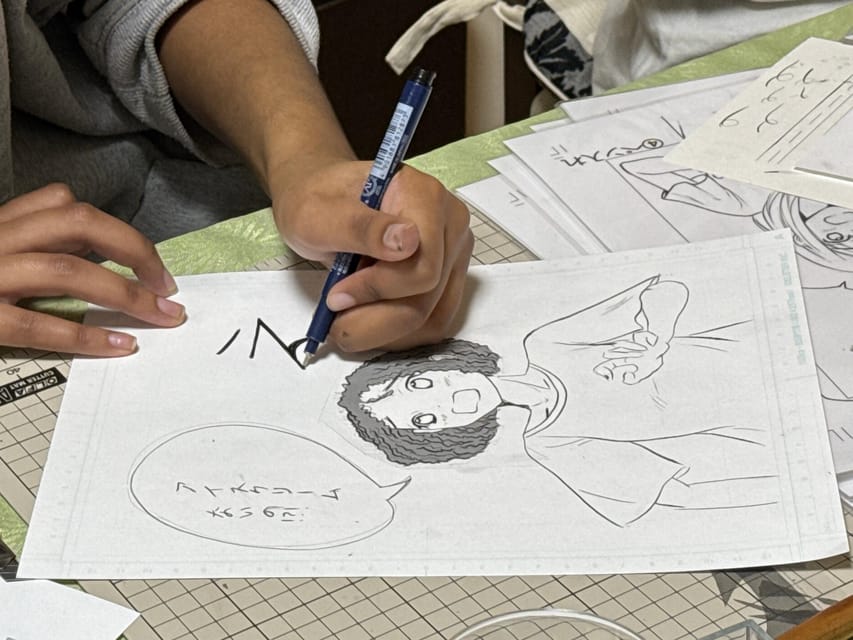
If you worry you won’t understand the instructions, take comfort in how the class is built. It’s conducted in Japanese, but English is shown on the slides during instruction, and the instructor is listed as Japanese/English.
In practice, that means you’ll still hear Japanese, but you can follow along with the visuals. For many people, that’s enough to participate fully even if you can’t hold a conversation.
One more thing: the workshop is small, so you’ll have more chances to clarify a point. When you’re working at a craft table, small misunderstandings don’t have to derail everything.
Who this workshop is perfect for (and who might want something else)
This workshop is a strong fit if you:
- Want a hands-on Tokyo activity that ends with a finished artwork
- Are curious about manga techniques beyond drawing a character
- Like small-group classes where you can get individual help
- Want something fun to do near Kichijoji, without needing perfect Japanese
You might want to consider other options if:
- You’re very uncomfortable with any Japanese spoken around you, even with English slide support
- You hate messy art materials or don’t want to risk ink stains on your clothes
But even then, the structure helps. The steps are guided, the class is short, and you’re producing one page, not an endless project.
Should you book this 3-hour manga workshop near Kichijoji?
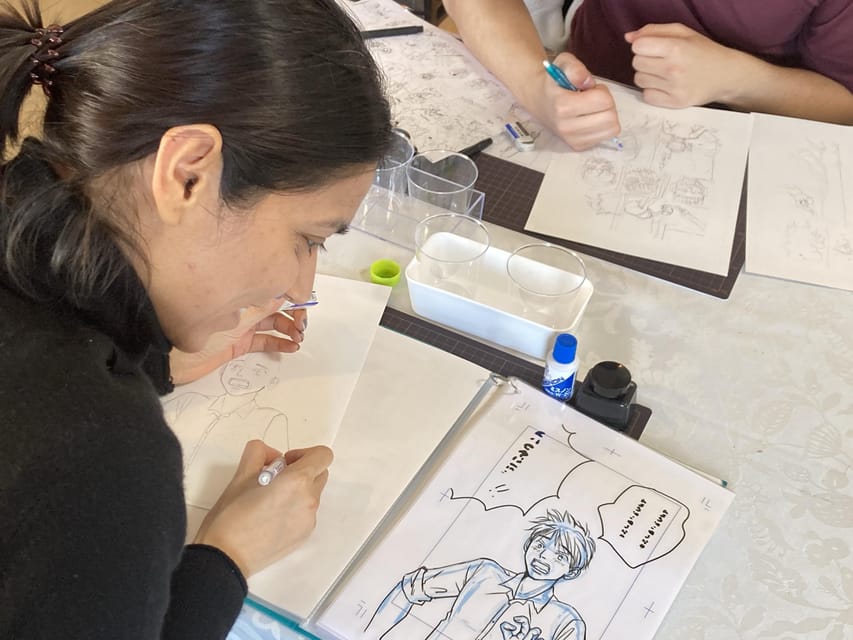
I’d book it if you want a Tokyo souvenir that feels personal. A guided manga workflow—sketch to inking to screen tones—gives you real technique practice and a tangible result. The small group size is a big plus, and the materials being included means you can focus on learning, not shopping.
Also, it’s a smart pick if your schedule is tight. Three hours is long enough to get into the craft and finish a page, but short enough to keep your day flexible.
Just go in prepared for mess (ink stains) and for Japanese instruction with English slide support. If you can accept those two realities, this workshop is one of the more satisfying “do something” experiences in the Kichijoji area.
FAQ
Where is the meeting point for the manga workshop?
The meeting point is 8 minutes’ walk from the north exit of Kichijoji Station. The address is 601 H-Square Kichijoji, 2-4-6 Kichijoji Honcho, Musashino-shi, Tokyo. Press 601 and the call button when you arrive.
How long is the workshop?
The workshop lasts 3 hours.
What does the price include?
The price includes guidance from a professional manga artist, all necessary manga drawing materials, and the 1-page manga experience (including learning techniques).
Do I need to bring drawing tools?
No. You’ll have all the tools and materials needed for the workshop.
What languages are used during instruction?
The workshop is conducted in Japanese, and there is English on the slides during instruction. The instructor is listed as Japanese and English.
What will I take home?
You’ll take home your completed manga page as a souvenir.
Is lunch or dinner included?
No meals or drinks are included.
How big is the group?
It’s a small group limited to 5 participants.
Is the workshop wheelchair accessible?
Yes, it is listed as wheelchair accessible.
More Workshops in Tokyo
- Sushi Making Tokyo Roll and Authentic Japanese Sushi Class
★ 5.0 · 3,971 reviews - Tokyo: Roll and Authentic Sushi Making Class in Asakusa
★ 4.9 · 1,957 reviews - Tokyo Shinjuku Chopsticks Making Class
★ 5.0 · 1,763 reviews - Tokyo: Sushi Making Class in a Happi Coat near a Famous Spot
★ 4.9 · 1,377 reviews - Chopstick Making Workshop in Ginza
★ 4.8 · 1,366 reviews
More Tour Reviews in Tokyo
- Mt Fuji and Hakone 1-Day Bus Tour Return by Bullet Train
★ 5.0 · 26,383 reviews - 1-Day Tokyo Bus Tour
★ 5.0 · 14,250 reviews - Tokyo: teamLab Planets TOKYO Digital Art Museum Entry Ticket
★ 4.6 · 9,779 reviews - Mt Fuji & Hakone Cruise, Drum Show Bullet Train 1 Day from Tokyo
★ 4.0 · 7,413 reviews - Tokyo: Shinjuku Food Tour (13 Dishes at 4 Local Eateries)
★ 5.0 · 6,603 reviews
More of Akihabara, Reviewed
- Official Street Go-Kart Tour – Akihabara
★ 5.0 · 1,578 reviews - Tokyo Go Kart: Asakusa, Skytree, and Akihabara **IDP MUST**
★ 5.0 · 988 reviews - Akihabara Anime & Game Adventure Walking Tour (Group or Private)
★ 5.0 · 404 reviews - Tokyo: Gameboy Mod Workshop at Akihabara
★ 5.0 · 253 reviews - Akihabara: Private Anime and Pop Culture Tour
★ 4.8 · 152 reviews
Latest Tokyo reviews off our desk






Akihabara Anime Tours, compared.
 ★ 5.0Official Street Go-Kart Tour – AkihabaraFrom $611,578 reviews
 ★ 5.0Tokyo Go Kart: Asakusa, Skytree, and Akihabara **IDP MUST**From $99988 reviews
 ★ 5.0Akihabara Anime & Game Adventure Walking Tour (Group or Private)From $90404 reviews
 ★ 5.0Gameboy Mod Workshop at AkihabaraFrom $360253 reviews
 ★ 4.8Akihabara: Private Anime and Pop Culture TourFrom $95152 reviews
 ★ 5.0Akihabara Tailor-made Private Tour for Anime FansFrom $132142 reviews
 ★ 5.0Original Street Kart Experience from AkihabaraFrom $51111 reviews
 ★ 5.0Ramen Making from Scratch +Akihabara Tour –Tokyo Cooking ClassFrom $123107 reviews
Browse the lists this tour appears in