
Reviewed · ASAKUSA & SENSOJI TOURS
Asakusa: 3.5-hour Big-picture History Walk
Three centuries click into focus quickly. This 210-minute Asakusa history walk uses major landmarks as story checkpoints, so Japan’s isolation, reopening, and spiritual life make sense fast. You’ll leave with a clear big-picture map of how the past shaped modern Tokyo.
I especially like the English-speaking guide who explains why each site matters, not just what it is. And I like that you get fresh Japanese snacks and sweets as part of the route, so the tour feels like an active day out, not a lecture.
One thing to consider: the walking is moderate, and the tour isn’t suitable for mobility impairments.
In This Review
- Key highlights to watch for
- Kaminarimon to Asakusa Pier: Getting the Big Picture Before You Hit the Temples
- Japan’s 300-Year Isolation to Reopening: The Netherlands Thread You Won’t Forget
- Two Religions, One Set of Worshippers: Sensō-ji and Asakusa Shrine in Context
- East Meets West on the Street: Dragons, Mindsets, and Unexpected Parallels
- Sacred Temple to Working-Class Entertainment: Nakamise, Back Lanes, and Hoppy Street
- Edo-Period Nostalgia on the Shopping Streets: Old-Movie Japan Without the Theme-Park Feel
- The Smaller Stops That Add the Missing Pieces: Hōzōmon, Yōgō-dō, Mokubakan, and More
- Price and pacing: what $88 gets you in a 3.5-hour history walk
- Who this Asakusa walk is best for (and who should skip it)
- Should you book this Asakusa history walk?
- FAQ
- How long is the Asakusa big-picture history walk?
- Where is the meeting point?
- Is hotel pickup or drop-off included?
- What’s included in the price?
- How large is the group?
- Does the tour run in bad weather?
- What should I bring?
- Is this tour suitable for mobility impairments?
- Can children join?
Key highlights to watch for
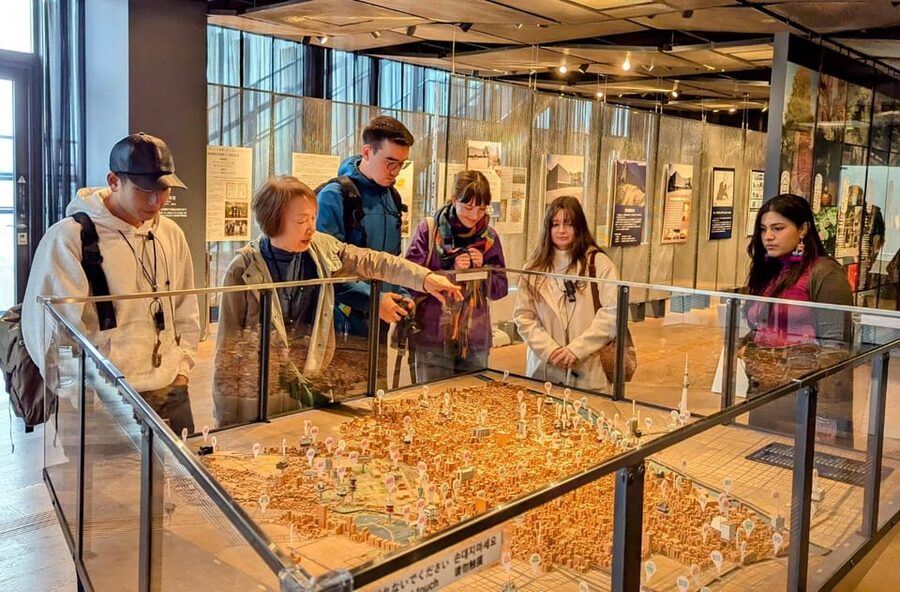
- Decoding Japan’s isolation to reopening with a focus on the Netherlands link and a transition sign
- Two religions, one set of worshippers (Shinto and Buddhism) and how they complement daily life
- East–West cultural parallels, including the surprising role of dragons
- Sacred temple space next to everyday entertainment, including old-style pub lanes
- Edo-period nostalgia in shopping streets, with a quiet, old-movie feeling
- Small group pacing (max 8) with headsets for clearer listening
Kaminarimon to Asakusa Pier: Getting the Big Picture Before You Hit the Temples
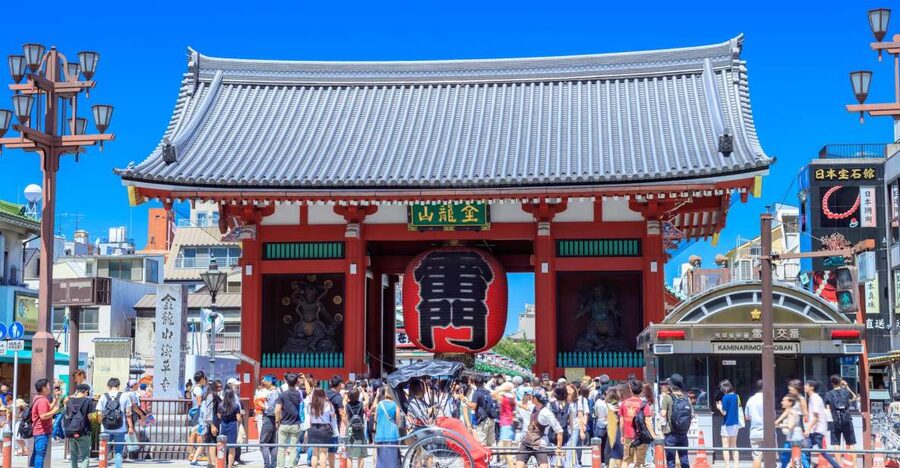
This walk is built like a guided “Japan story” mapped onto Asakusa’s most recognizable spots. You start near Kaminarimon (2-chōme-20-6 Kaminarimon area), then head toward the river side at Asakusa Pier, which helps you see the neighborhood as part of Tokyo’s larger trading-and-travel story rather than just a temple zone. It’s a smart way to set context early, so later details don’t feel random.
Because it’s capped at 8 participants, the guide can pace the group through tight areas without you getting swallowed by the crowd. If your group is 3 or more, you’ll get headsets, which matters in Asakusa where foot traffic can make normal conversation tough.
What you should plan for is a steady flow of guided walking. Even with short stops, you’re moving for the full 210 minutes, so good shoes and a water bottle help a lot.
More temple mornings in old Asakusa
- Tokyo: Japanese Dance Cabaret Theater Asakusa-Kaguwa Ticket
★ 4.8 · 2,270 reviews - Tokyo: Meiji Shrine, Asakusa, Skytree Bus Tour and Cruise
★ 4.7 · 1,986 reviews - Tokyo: Roll and Authentic Sushi Making Class in Asakusa
★ 4.9 · 1,957 reviews - Tokyo: Asakusa Walking Tour with Sensoji Temple Visit
★ 4.8 · 1,583 reviews
Japan’s 300-Year Isolation to Reopening: The Netherlands Thread You Won’t Forget
One of the most useful parts of this tour is how it answers the tough questions behind Japan’s big turning points. You’ll hear why Japan chose isolation in the first place, and then what changed when it reopened to the world. That arc gives you a framework you can reuse while you visit museums or read Japanese history later.
A standout theme is the focus on why the Netherlands ended up as Japan’s key trading partner during isolation. This is the kind of detail that usually gets skipped in short sightseeing stops, but here it’s treated as the clue to how knowledge and trade still moved even when official contact was limited.
You’ll also see a sign symbolizing Japan’s transition from isolation to opening, and you’ll connect that shift to global cultural impact. The tour specifically links Japan’s 19th-century art to the world’s reaction—especially how it influenced French Impressionist painters—so it’s not just politics. It’s cultural spillover you can actually picture.
If you like “why history matters,” this is where you’ll feel the tour earn its time. You’re not memorizing dates. You’re learning a cause-and-effect story that turns Tokyo’s modern identity into something logical.
Two Religions, One Set of Worshippers: Sensō-ji and Asakusa Shrine in Context
Asakusa is a perfect stage for understanding Japan’s spiritual duality. The tour brings you to Sensō-ji Temple, Asakusa Shrine, and the Yōgō-dō Pavilion, which is exactly the trio you need to grasp how people practice religion in overlapping ways. Your guide explains how Japan’s two major religions have coexisted for over a millennium, including why they can complement each other while sharing many worshippers.
Instead of treating Shinto and Buddhism like separate worlds, the walk frames them as different lenses on the same daily life. You’ll hear how they fit together in everyday habits and beliefs, which is the practical takeaway you want. It’s one thing to know both exist; it’s another to understand how the same person might navigate both.
This is also where the tour does something surprisingly grounded: it emphasizes human nature’s swing between sacred and secular. You’ll be thinking about that theme even while you’re standing among temple gates and incense-space solemnity. That tension—reverence next to ordinary life—is one of the keys to making sense of Japan as a lived-in culture.
East Meets West on the Street: Dragons, Mindsets, and Unexpected Parallels
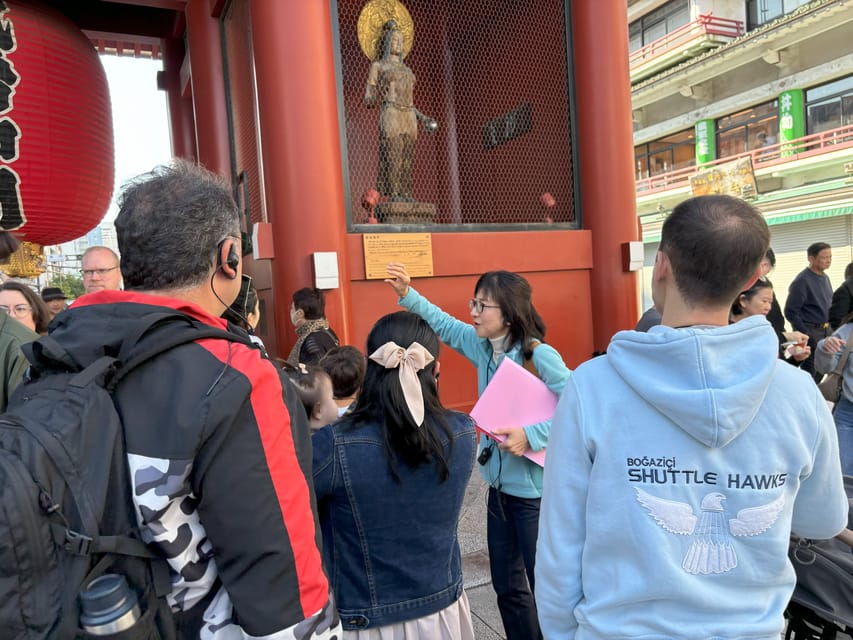
Some Tokyo tours stay inside Japanese-only explanations. This one gives you more credit than that, especially when it comes to cultural comparison. You’ll hear about surprising parallels between Japan and the West, including the roles of dragons in both places. It’s a useful reminder that symbols travel, even when societies seem distant.
The walk also points out mindset similarities—how people 1,000 years ago could share ways of thinking across large geography gaps. That kind of context helps you stop treating history as a museum of oddities and start seeing it as a set of shared human patterns.
Even if you’re not a history buff, these comparisons make the tour easier to remember. They turn abstract ideas into mental pictures, and that’s what helps you connect Asakusa to the rest of Japan after you leave.
Sacred Temple to Working-Class Entertainment: Nakamise, Back Lanes, and Hoppy Street
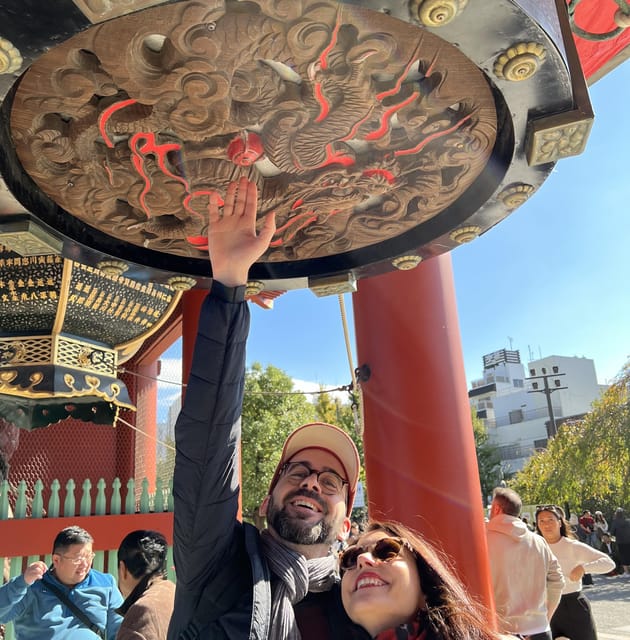
Here’s the part I think you’ll feel in your body, not just your head. After you’ve absorbed the spiritual framing at Sensō-ji, the tour shifts toward the neighborhood’s entertainment side—the reality that sacred places sit next to people’s day-to-day energy.
Your guide explains how that area right next to the temple used to be a major entertainment hub before Shinjuku and Shibuya became the main nightlife magnets. So when you’re walking along street life, you’re also hearing why it was shaped this way historically.
You’ll also visit a narrow lane famous for old-style Japanese pubs and postwar working-class vigor. The point isn’t to turn the tour into a food-and-drinks detour. The point is to show how resilience and leisure live side by side in places like this, and how that shapes what you see today.
Then there’s Hoppy Street, which ties that theme together. Even if you don’t stop for a drink, the atmosphere makes the explanation stick—sacred and secular aren’t enemies here. They’re neighbors.
Readers also shortlisted these Tokyo bookings:
- Tokyo Tsukiji Fish Market Food and Culture Walking Tour★ 5.0 · 3,184 reviews
- Tokyo: Imperial Palace and Shogun Historical Walking Tour★ 5.0 · 2,251 reviews
- Tokyo: Shinjuku Local Bar and Izakaya Guided Walking Tour★ 4.9 · 1,794 reviews
- Tokyo: Tsukiji Fish Market Food and Walking tour★ 5.0 · 1,724 reviews
- Tokyo: Asakusa Walking Tour with Sensoji Temple Visit★ 4.8 · 1,583 reviews
Edo-Period Nostalgia on the Shopping Streets: Old-Movie Japan Without the Theme-Park Feel
The tour leans into nostalgia in a way that still respects what’s real on the ground. You spend guided time on Nakamise Shopping Street, then you move through Asakusa’s other lanes, including Asakusa Nishi-sandō Shopping Street. The tone you’re aiming for is quieter, older, and more time-worn than what you might expect from a modern tourist strip.
Your guide helps you “rewind” toward the Edo period, so the shopping lanes become more than places to browse. They become a living reminder that Asakusa’s identity didn’t start with the last travel trend. It has roots—long ones—and the streets carry that legacy in their layout and atmosphere.
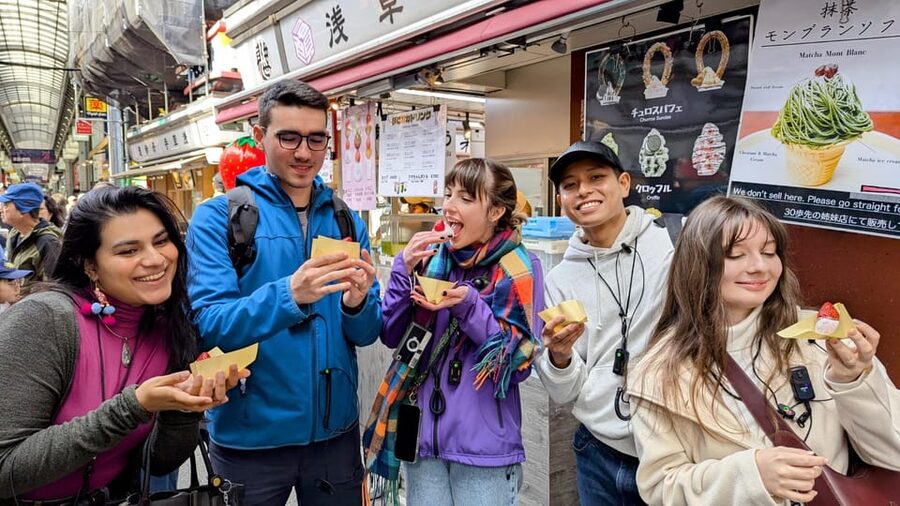
This is also where the snack stops help. Fresh sweets and traditional bites fit the sensory rhythm of shopping streets, and they turn your downtime into part of the story. You’ll feel less like you’re waiting between stops and more like you’re moving through an actual neighborhood day.
The Smaller Stops That Add the Missing Pieces: Hōzōmon, Yōgō-dō, Mokubakan, and More
Not every stop has to be huge to matter. The tour includes gates and specific precinct points that help you understand the temple complex as a designed space, not just an icon you pose in front of. For example, you pass through Hōzōmon Gate, where the transition into the deeper temple area reinforces the sacred setting.
You also visit Asakusa Shrine and Yōgō-dō Pavilion, which helps round out the temple-to-shrine-to-ritual picture. Your guide ties these stops to the larger themes—beliefs, shared worship, and how religion fits into public life.
Then you hit Asakusa Mokubakan, a stop that adds depth beyond the standard temple-route formula. Even without turning it into a museum-style detour, it gives you something to look at that supports the tour’s “big picture” promise. It’s the kind of place where a good guide can make a short visit feel meaningful.
Finally, Hoppy Street closes the emotional loop. You’ve learned why sacred and secular share a space here, and then you walk into the kind of street environment that makes that theme tangible.
Price and pacing: what $88 gets you in a 3.5-hour history walk
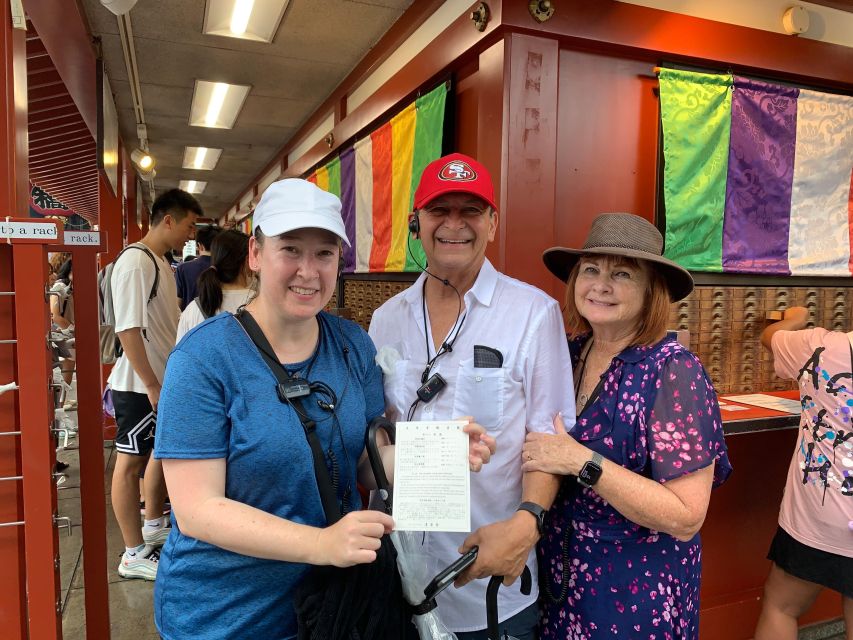
At $88 per person for about 3.5 hours, the value comes from three things you don’t get on a solo walk.
First, the guide does the heavy lifting of interpretation. You’re not just seeing temples and shopping streets—you’re getting the reasons behind isolation, reopening, and the religion blend that shaped Japanese life. That’s what turns Asakusa into a framework for understanding Japan.
Second, the tour includes fresh Japanese traditional snacks and sweets, which is a practical benefit. You’ll save time deciding what to eat, and you get a tastier flow than random vending-machine grabs.
Third, the setup stays group-friendly: small group size (max 8) and headsets for groups of 3 or more. Clear audio matters if you want to actually follow the story while you’re moving through crowded streets.
What you should know is what’s not included: there’s no hotel pickup or drop-off. You’ll need to get yourself to the meeting point on your own time.
Overall, this pricing makes sense if you want meaning, not just photos.
Who this Asakusa walk is best for (and who should skip it)
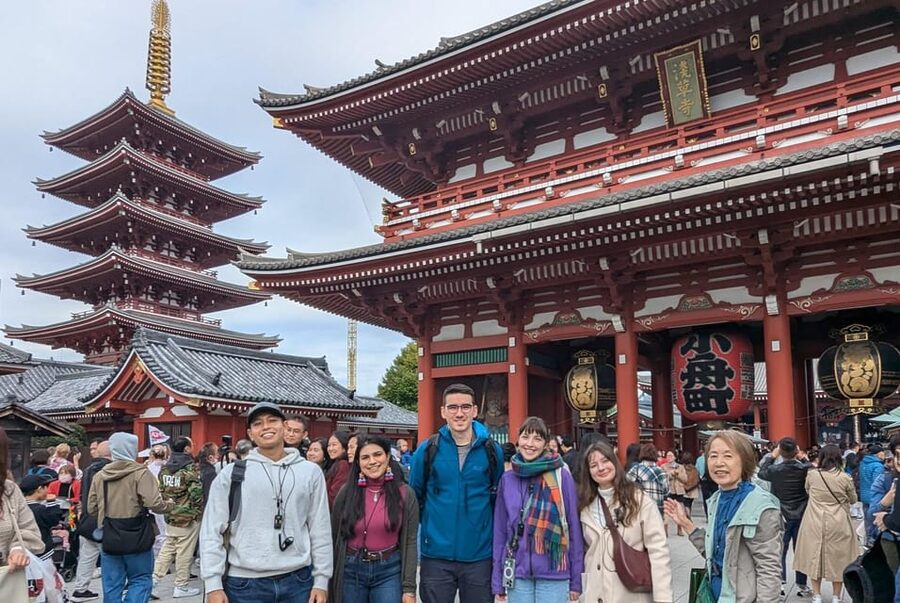
This tour fits best if you want context without committing to a full-day program. You’ll likely enjoy it if you like big-picture explanations—how history, belief, and culture connect—while still getting street time in real Asakusa.
It’s also a good match if you’re traveling with people who want different kinds of things: one person can focus on temples and gates, another on streets and food, while the guide keeps linking it all back to the same themes.
It’s not suitable for people with mobility impairments, mainly because the experience involves a moderate amount of walking and navigating historical streets.
Should you book this Asakusa history walk?
If you want Asakusa to feel like a story you understand, not a checklist of landmarks, I think this is a strong booking. The best part is how the guide uses each site as a gateway: isolation to reopening, religion to daily life, sacred spaces to entertainment streets, and Edo-era nostalgia to the modern neighborhood.
If you prefer low-effort sightseeing where you wander freely with zero structure, you might find this format too guided. But if you’re the type who wants to leave Tokyo knowing what you just saw and why it matters, this 3.5-hour walk is one of the more efficient ways to get there.
FAQ
How long is the Asakusa big-picture history walk?
It lasts 210 minutes, which is about 3.5 hours.
Where is the meeting point?
Meet in front of a Burger King restaurant right next to Exit 4 of Asakusa subway station (G19) on the Ginza line, then step outside when you reach Exit 4.
Is hotel pickup or drop-off included?
No. Hotel pickup and drop-off are not included.
What’s included in the price?
You get an English-speaking certified guide, freshly made Japanese traditional snacks and sweets, and headsets (for groups of 3 or more) to hear the guide clearly.
How large is the group?
The group is limited to 8 participants.
Does the tour run in bad weather?
Yes. It operates in all weather conditions, so dress appropriately.
What should I bring?
Wear comfortable shoes and bring water. Bottled water is recommended, and vending machines are available.
Is this tour suitable for mobility impairments?
No. It is not suitable for people with mobility impairments.
Can children join?
Children younger than 6 may join the tour without charge.
More Walking Tours in Tokyo
- Tokyo Tsukiji Fish Market Food and Culture Walking Tour
★ 5.0 · 3,184 reviews - Tokyo: Imperial Palace and Shogun Historical Walking Tour
★ 5.0 · 2,251 reviews - Tokyo: Shinjuku Local Bar and Izakaya Guided Walking Tour
★ 4.9 · 1,794 reviews - Tokyo: Tsukiji Fish Market Food and Walking tour
★ 5.0 · 1,724 reviews - Tokyo: Asakusa Walking Tour with Sensoji Temple Visit
★ 4.8 · 1,583 reviews
More Tour Reviews in Tokyo
- Mt Fuji and Hakone 1-Day Bus Tour Return by Bullet Train
★ 5.0 · 26,383 reviews - 1-Day Tokyo Bus Tour
★ 5.0 · 14,250 reviews - Tokyo: teamLab Planets TOKYO Digital Art Museum Entry Ticket
★ 4.6 · 9,779 reviews - Mt Fuji & Hakone Cruise, Drum Show Bullet Train 1 Day from Tokyo
★ 4.0 · 7,413 reviews - Tokyo: Shinjuku Food Tour (13 Dishes at 4 Local Eateries)
★ 5.0 · 6,603 reviews
More Mornings in Old Asakusa
- Tokyo: Japanese Dance Cabaret Theater Asakusa-Kaguwa Ticket
★ 4.8 · 2,270 reviews - Tokyo: Meiji Shrine, Asakusa, Skytree Bus Tour and Cruise
★ 4.7 · 1,986 reviews - Tokyo: Roll and Authentic Sushi Making Class in Asakusa
★ 4.9 · 1,957 reviews - Tokyo: Asakusa Walking Tour with Sensoji Temple Visit
★ 4.8 · 1,583 reviews - Tokyo Asakusa Rickshaw Tour
★ 5.0 · 1,375 reviews
Latest Tokyo reviews off our desk

Asakusa & Sensoji Tours, compared.
 ★ 4.8Japanese Dance Cabaret Theater Asakusa-Kaguwa TicketFrom $492,270 reviews
 ★ 4.7Meiji Shrine, Asakusa, Skytree Bus Tour and CruiseFrom $1221,986 reviews
 ★ 4.9Roll and Authentic Sushi Making Class in AsakusaFrom $581,957 reviews
 ★ 4.8Asakusa Walking Tour with Sensoji Temple VisitFrom $221,583 reviews
 ★ 5.0Tokyo Asakusa Rickshaw TourFrom $421,375 reviews
 ★ 4.5Tokyo Panoramic 1 Day: Meiji Shrine, Asakusa, Odaiba and SKYTREE®From $851,222 reviews
 ★ 5.0Tokyo Go Kart: Asakusa, Skytree, and Akihabara **IDP MUST**From $99988 reviews
 ★ 4.7Asakusa, Skytree & Akhihabara Go-Kart City ExperienceFrom $96761 reviews
Browse the lists this tour appears in