
Reviewed · ASAKUSA & SENSOJI TOURS
Asakusa: A Big-picture History Walk to Know Japan
One short walk, and Japan clicks into place. This Asakusa tour turns familiar landmarks into a big-picture history lesson, and I especially like the way it connects everyday details (gates, incense, street symbols) to ideas that shaped Japan for centuries. Two things I really value are the isolation-to-opening story framed along the Sumida River and the art connection—how ukiyo-e prints helped reshape Western painting. One thing to consider: it’s a 2-hour route with moderate walking, rain or shine, so wear solid shoes.
I also like that the guide work is built for clarity: headsets are provided for groups of 3 or more, so you can actually hear the explanation while you’re walking. Traditional snack tastings are included too, which is a nice break from the constant staring at temples and street stalls.
Finally, it’s very plug-and-play logistically. You meet in front of a Burger King right by Exit 4 of Asakusa Station (Ginza line), and there’s no hotel pickup, so plan to get there under your own steam.
In This Review
- Key highlights that make this Asakusa tour worth your time
- Why Asakusa works so well for a whole-country history lesson
- Starting at Tokyo Cruise Asakusa Pier: isolation, Perry, and modern Tokyo’s echoes
- Asakusa Culture Tourist Information Center: the quick religions starter pack you’ll reuse all day
- Kaminarimon Thunder Gate: dragons, symbols, and what gates are really doing
- Nakamise Shopping Street: vajra symbols and why Japanese prints changed Europe
- Hōzōmon Gate: how Japanese and Europeans shared a mindset a thousand years ago
- Senso-ji Temple: the oldest Buddhist temple, plus a clear guide to prayer
- Asakusa Shrine: the long-running Buddhist and Shinto coexistence you can actually see
- Price, time, and what you get for $58
- What to bring, and how to make the most of the walking pace
- Who this Asakusa walk suits best
- Should you book this Asakusa Big-Picture History Walk?
- FAQ
- How long is the Asakusa big-picture history walk?
- Is the tour in English?
- Where do I meet the guide?
- What’s included in the price?
- Does the tour run in bad weather?
- Is hotel pickup or drop-off included?
- Is there free cancellation?
Key highlights that make this Asakusa tour worth your time
- Sumida River big-picture storytelling: isolation, limited trade, and the shock that forced Japan back into world contact
- Buddhism vs Shinto explained visually: not just terms, but how the beliefs show up in real worship
- Kaminarimon dragon comparison: a fun culture lesson that helps you read symbolism instead of just snapping photos
- Nakamise symbols + ukiyo-e to Europe: you’ll see how religious street life connects to global art history
- Hōzōmon’s 1,000-year mindset comparison: a thoughtful bridge between Japan and medieval Europe
- Senso-ji and Asakusa Shrine on the same grounds: a practical look at Buddhist and Shinto coexistence in everyday life
Why Asakusa works so well for a whole-country history lesson
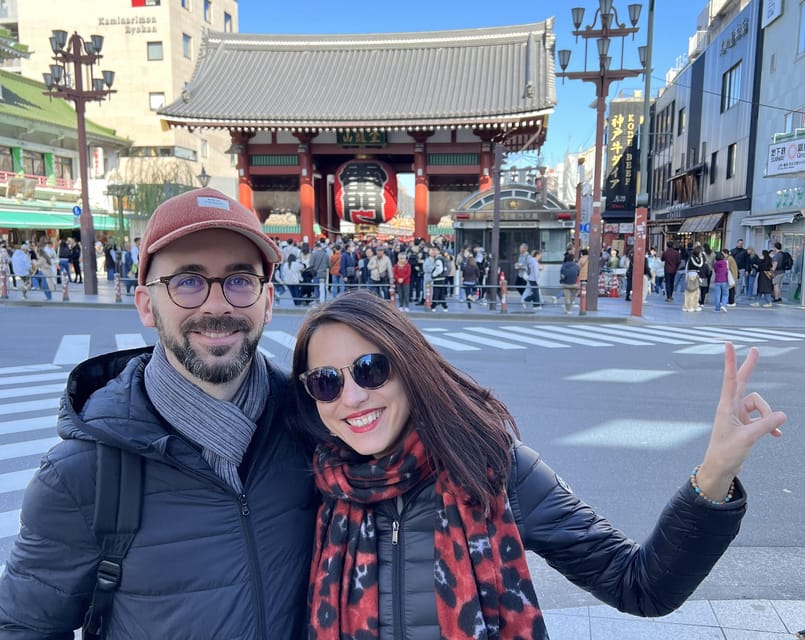
Asakusa is the rare Tokyo neighborhood where you can feel layers of time. You’re not only wandering through pretty streets—you’re moving through places that hold Japan’s spiritual traditions in public view.
What makes this tour different is the method. Instead of treating each stop like a photo-op, the guide uses each one as a doorway into a bigger theme: Japan’s closed period, its religious framework, and even how Japanese art influenced the West.
More temple mornings in old Asakusa
- Tokyo: Japanese Dance Cabaret Theater Asakusa-Kaguwa Ticket
★ 4.8 · 2,270 reviews - Tokyo: Meiji Shrine, Asakusa, Skytree Bus Tour and Cruise
★ 4.7 · 1,986 reviews - Tokyo: Roll and Authentic Sushi Making Class in Asakusa
★ 4.9 · 1,957 reviews - Tokyo: Asakusa Walking Tour with Sensoji Temple Visit
★ 4.8 · 1,583 reviews
Starting at Tokyo Cruise Asakusa Pier: isolation, Perry, and modern Tokyo’s echoes
You begin along the Sumida River, which is a smart choice. Rivers are where cities traded ideas, goods, and power—so this is a natural “timeline setting” for what came next.
Here, you’ll get the story behind Edo shogunate isolation: Japan was sealed for over 200 years. You also learn the unusual exception—when the Netherlands was the only Western power allowed to trade—and why that narrow contact mattered.
Then the story snaps into modern relevance with a turning point: Admiral Perry’s arrival forced Japan to reopen. The guide connects the past to Tokyo today, even pointing to places like Odaiba’s former gun batteries and today’s Statue of Liberty replica facing the Pacific. It’s not random trivia; it helps you read Tokyo’s coastal scenery as more than scenery.
Practical take: this first stretch gives you a mental map. Once you understand the isolation-to-opening arc, the rest of the tour lands faster, because the guide keeps using that same lens.
Asakusa Culture Tourist Information Center: the quick religions starter pack you’ll reuse all day
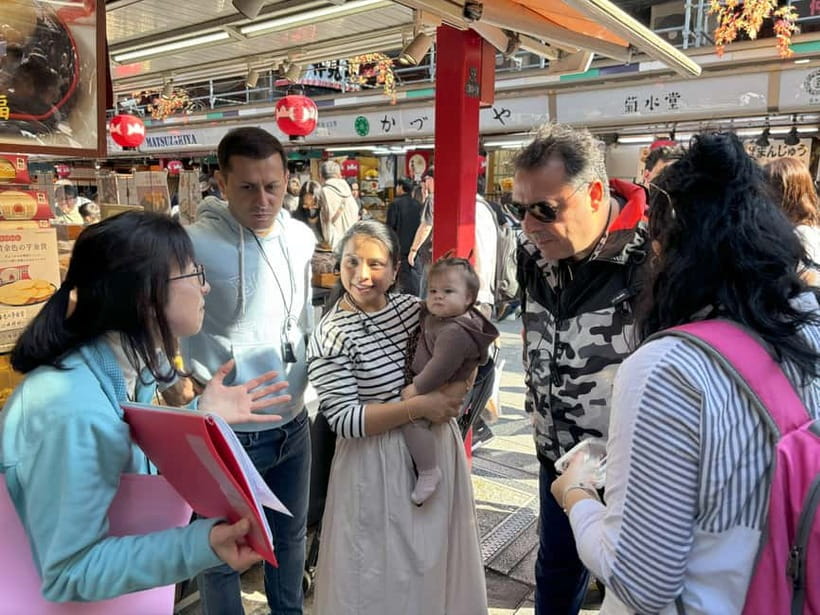
Before you hit the famous gate and temples, you get an introduction to Japan’s two major religions: Buddhism and Shinto. This matters because Asakusa can look like one blended “temple zone” if you don’t know what you’re looking at.
You’ll also learn how these faiths show up in everyday worship patterns, not just textbook definitions. By the time you reach the gates and major sites, you’re not guessing. You can separate what’s Buddhist, what’s Shinto, and why the differences exist.
This stop isn’t meant to be a lecture marathon. It’s a quick foundation—enough to make the next places feel legible.
Kaminarimon Thunder Gate: dragons, symbols, and what gates are really doing
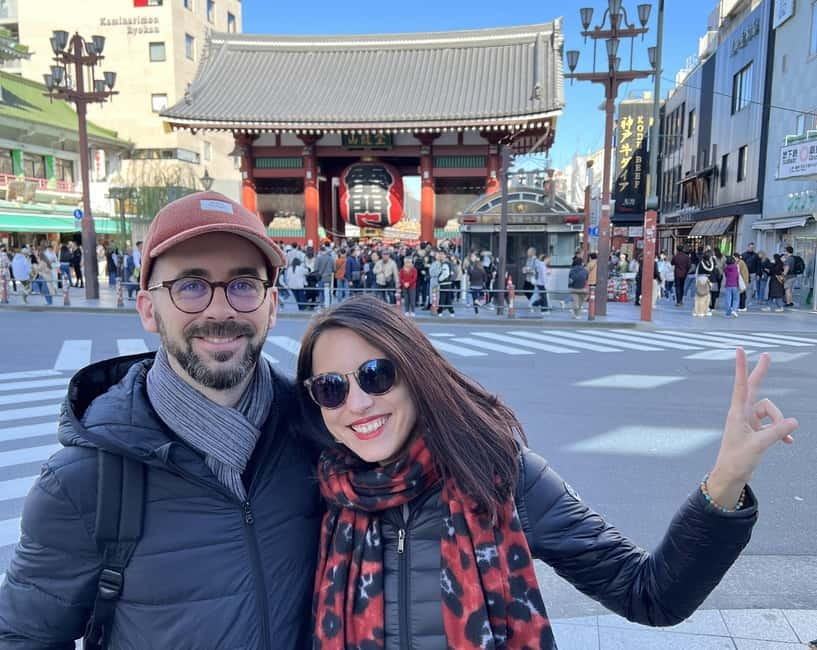
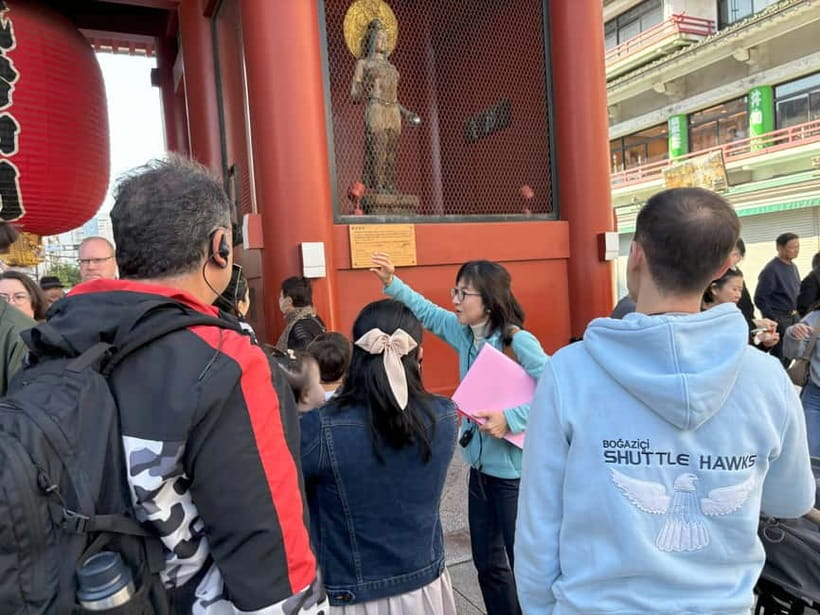
At Kaminarimon, you get one of Asakusa’s best-known landmarks, the Thunder Gate. But the tour doesn’t treat it like a decoration.
You’ll explore the contrast between Japanese and Western dragons—and learn why the Japanese dragon plays an opposite role. That might sound like a quirky detail, but it’s actually a great example of what this tour does well: it uses symbolism to teach cultural mindset.
You’ll also get help reading how gate architecture and religious imagery are meant to guide behavior. It changes how you walk under the structure because you understand it as a threshold, not just a big photo frame.
Nakamise Shopping Street: vajra symbols and why Japanese prints changed Europe
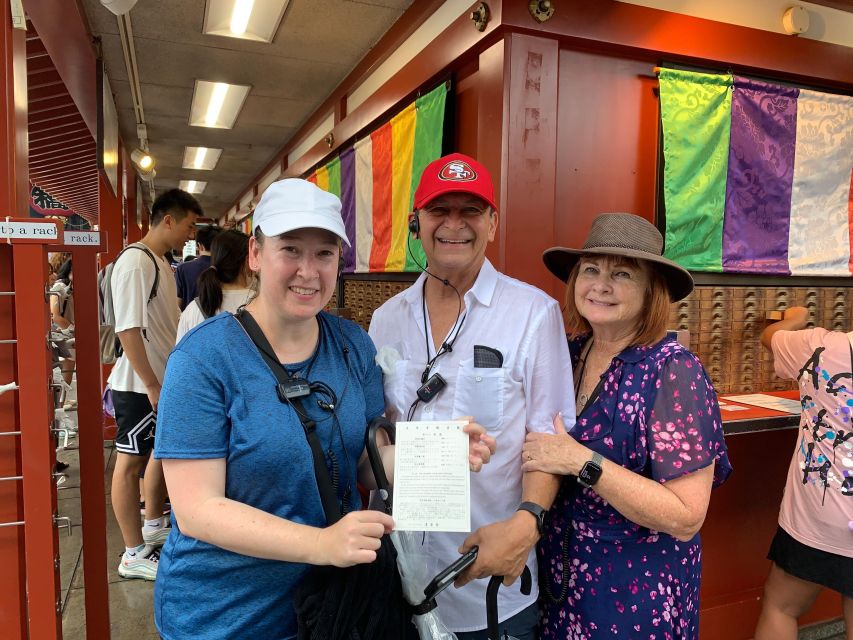
Nakamise is where Asakusa becomes real street life. You’ll stroll one of the area’s oldest shopping streets while learning about the symbols you’ll see on snacks, charms, and stall signage.
A standout detail here is the explanation of Buddhist symbols like the vajra (tokko). Once you know what the symbol is pointing to, you’re no longer treating everything as souvenirs. You start noticing what’s tied to belief and ritual.
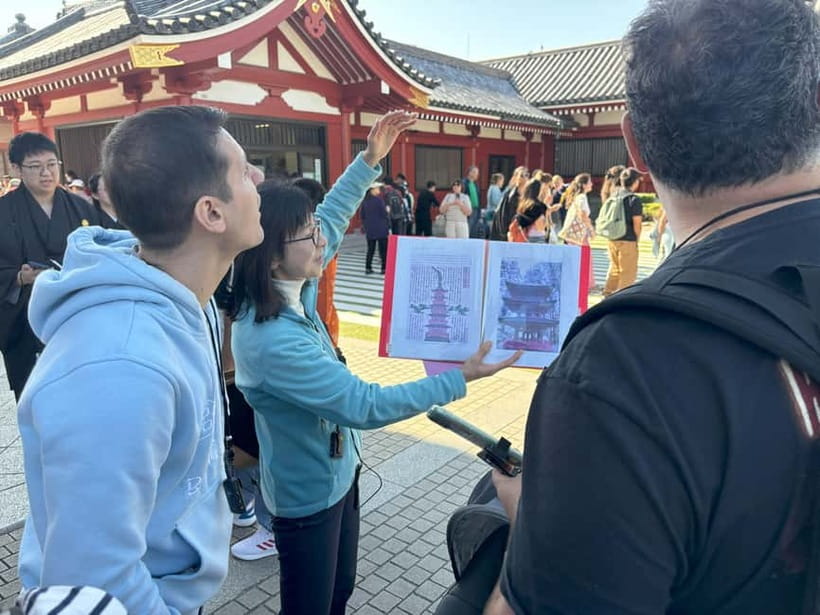
Then the tour zooms out—big time. You’ll learn about ukiyo-e woodblock prints and their world-changing impact. The guide connects how these prints reached Europe and influenced Western Impressionist painters. It’s a satisfying shock: you came for temple streets, and you leave with a global art story you can actually explain to friends.
Practical tip: Nakamise is fun to browse, but it’s also crowded. Keep moving with the group so you don’t lose the timing of the next gates and major temple moments.
Readers also shortlisted these Tokyo bookings:
- Tokyo Tsukiji Fish Market Food and Culture Walking Tour★ 5.0 · 3,184 reviews
- Tokyo: Imperial Palace and Shogun Historical Walking Tour★ 5.0 · 2,251 reviews
- Tokyo: Shinjuku Local Bar and Izakaya Guided Walking Tour★ 4.9 · 1,794 reviews
- Tokyo: Tsukiji Fish Market Food and Walking tour★ 5.0 · 1,724 reviews
- Tokyo: Asakusa Walking Tour with Sensoji Temple Visit★ 4.8 · 1,583 reviews
Hōzōmon Gate: how Japanese and Europeans shared a mindset a thousand years ago
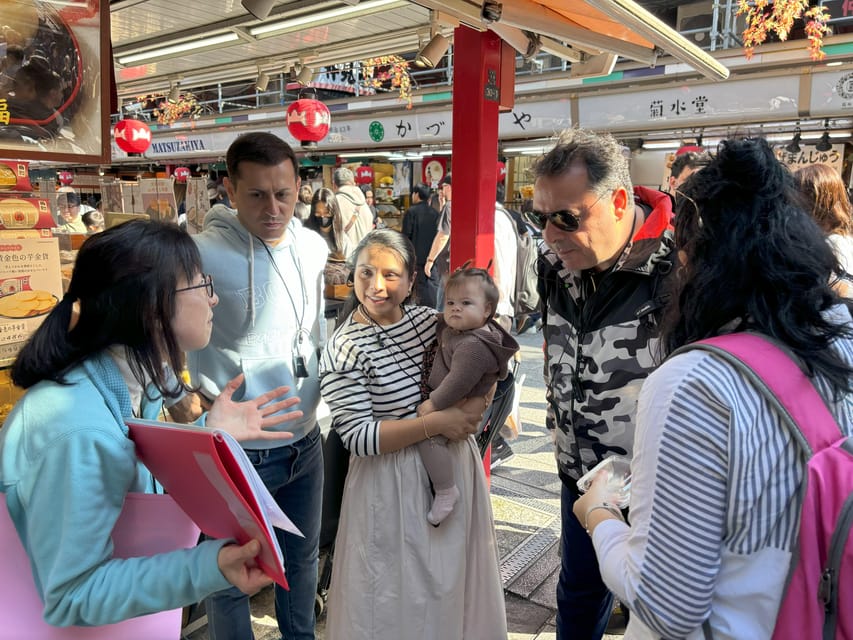
At Hōzōmon, the tour adds a thought-provoking layer. You’ll hear a surprising truth: people in Japan and the West shared remarkably similar ways of thinking about a thousand years ago.
This isn’t presented as “everyone thought the same thing.” It’s more like a bridge for understanding cultural contact through time, especially the way communities build meaning through ritual, art, and public religion.
I like this stop because it challenges the usual travel habit of treating history as disconnected islands. Instead, it shows you how ideas can travel and echo—sometimes across oceans, sometimes through shared human patterns.
Senso-ji Temple: the oldest Buddhist temple, plus a clear guide to prayer
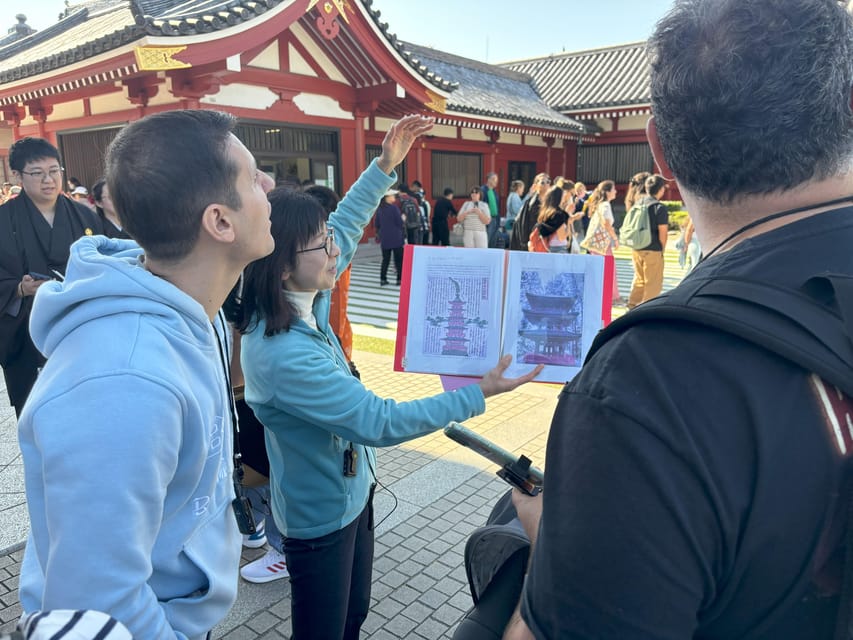
Senso-ji is the headline stop, and you’ll see why. As Japan’s oldest Buddhist temple, it’s a center of worship that still feels active, not staged.
The guide gives you a clear explanation of how prayer differs in Buddhism and Shinto. That’s useful on two levels. First, it helps you participate respectfully without turning worship into a performance for your camera. Second, it helps you understand why the same space can feel emotionally different depending on the tradition.
If you’ve ever wondered why certain gestures look similar but carry different meaning, this is the kind of answer that prevents confusion later—both here and in other Japanese sites you visit after Asakusa.
Asakusa Shrine: the long-running Buddhist and Shinto coexistence you can actually see
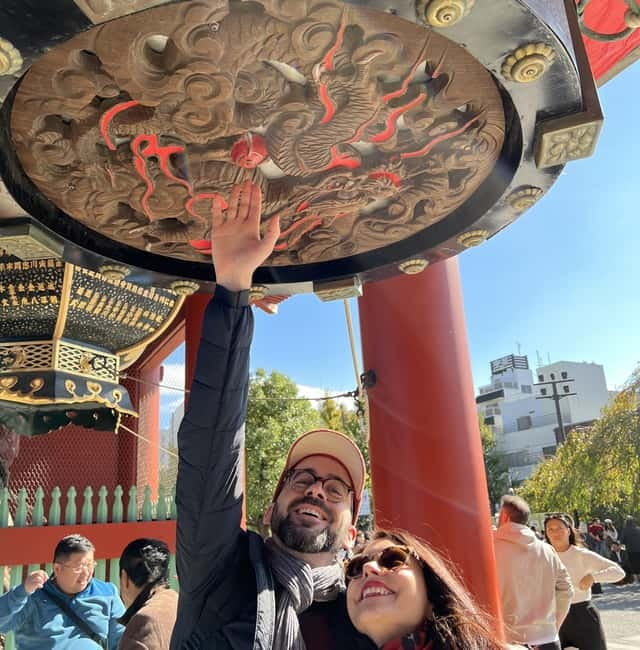
The tour ends at Asakusa Shrine, and the choice makes sense. This is where the story becomes visual proof.
You’ll see a Shinto shrine and Buddhist temple sharing the same grounds, worshippers, and history—peacefully coexisting for over a millennium. It’s not a theoretical idea. It’s a lived pattern you can feel in the way people behave and move through the space.
The tour also explains why that coexistence works in practice. You’ll come away with a clearer picture of how Japan’s religious life can be plural without being chaotic.
Small bonus: this ending reframes the entire walk. If you started thinking of religion as two separate boxes, you finish understanding how they overlap in everyday space and tradition.
Price, time, and what you get for $58
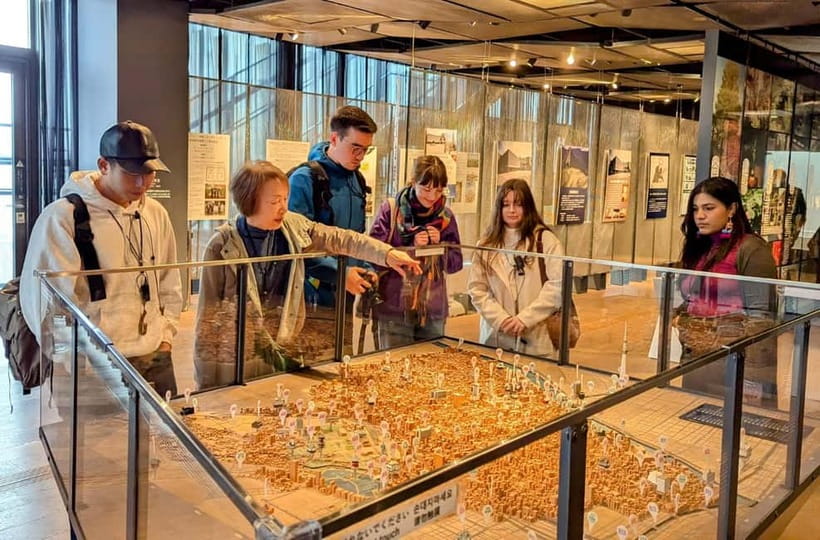
At $58 per person for a 2-hour walking experience, you’re paying for context, not just access. The included certified guide is the main value driver, because the tour is built around explanations that connect multiple themes—history, religion, and art—with each landmark acting like a chapter.
You also get headsets for groups of 3 or more, which is a big deal in crowded Asakusa streets. If you’ve ever tried to listen to a guide over the sound of a busy temple approach, you already know why this matters.
Traditional snack tastings are included too. In a short tour, snack time isn’t just fun—it’s a reset that keeps energy up while you move from gate to temple to shrine.
What you don’t get: hotel pickup or drop-off. So factor in time to reach the meeting point yourself.
My value take: this is a good buy if you like learning as you walk and you want a “why does this exist?” story. If you’re only looking for casual sightseeing and don’t care about religion or art history, you might find the price less satisfying.
What to bring, and how to make the most of the walking pace
Plan for comfortable shoes and water. The tour is described as moderate walking, and you’ll be moving between multiple nearby stops over about two hours.
It runs rain or shine, so wear weather-appropriate clothing. Asakusa weather can change quickly, and you don’t want soggy shoes to distract from the story.
If you’re visiting with kids, the tour is recommended for adults but families are welcome, and past participants have noted an 8-year-old staying engaged. That doesn’t mean it’s a theme park. The focus is still historical and spiritual context.
Who this Asakusa walk suits best
This tour fits best if you want more than photos. It’s great for you if you:
- like connecting facts into a timeline (isolation to opening, then global art influence)
- want a clearer sense of Buddhism and Shinto before visiting Japanese temples and shrines elsewhere
- enjoy symbolism and cultural comparisons (like dragons and religious icons)
- prefer walking with an expert guide over self-guided guessing
It might be a weaker fit if you want a slow, free-form stroll with lots of personal time at each site. This walk has structure, and the payoff comes from moving together.
Also, it is noted as not suitable for people with mobility impairments, so consider alternatives if walking is a challenge for you.
Should you book this Asakusa Big-Picture History Walk?
Yes, if you want one focused, high-yield afternoon in Asakusa that helps you understand Japan’s religions and its global connections without needing a dozen separate museum stops. The river framing, the Buddhist/Shinto explanations, and the ukiyo-e Europe link create a story arc that’s hard to get from wandering alone.
Hold off if you’re mainly there for relaxed browsing, or if you can’t handle moderate walking in variable weather. In that case, you’ll probably enjoy the neighborhood more on your own.
If you’re the type who likes to leave a place knowing what something means, not just what it looks like, this is a smart way to spend two hours in Tokyo.
FAQ
How long is the Asakusa big-picture history walk?
It lasts about 2 hours.
Is the tour in English?
Yes. It offers a live English guide and an English audio guide.
Where do I meet the guide?
Meet in front of a Burger King restaurant next to Exit 4 of Asakusa subway station (Ginza line, G19). Step outside when you reach Exit 4.
What’s included in the price?
The tour includes a certified guide, the walking tour, headsets to hear the guide clearly for groups of 3 or more, and traditional snack tastings.
Does the tour run in bad weather?
Yes, it operates rain or shine, so dress appropriately.
Is hotel pickup or drop-off included?
No, hotel pickup and drop-off are not included.
Is there free cancellation?
Yes. You can cancel up to 24 hours in advance for a full refund.
More Walking Tours in Tokyo
- Tokyo Tsukiji Fish Market Food and Culture Walking Tour
★ 5.0 · 3,184 reviews - Tokyo: Imperial Palace and Shogun Historical Walking Tour
★ 5.0 · 2,251 reviews - Tokyo: Shinjuku Local Bar and Izakaya Guided Walking Tour
★ 4.9 · 1,794 reviews - Tokyo: Tsukiji Fish Market Food and Walking tour
★ 5.0 · 1,724 reviews - Tokyo: Asakusa Walking Tour with Sensoji Temple Visit
★ 4.8 · 1,583 reviews
More Tour Reviews in Tokyo
- Mt Fuji and Hakone 1-Day Bus Tour Return by Bullet Train
★ 5.0 · 26,383 reviews - 1-Day Tokyo Bus Tour
★ 5.0 · 14,250 reviews - Tokyo: teamLab Planets TOKYO Digital Art Museum Entry Ticket
★ 4.6 · 9,779 reviews - Mt Fuji & Hakone Cruise, Drum Show Bullet Train 1 Day from Tokyo
★ 4.0 · 7,413 reviews - Tokyo: Shinjuku Food Tour (13 Dishes at 4 Local Eateries)
★ 5.0 · 6,603 reviews
More Mornings in Old Asakusa
- Tokyo: Japanese Dance Cabaret Theater Asakusa-Kaguwa Ticket
★ 4.8 · 2,270 reviews - Tokyo: Meiji Shrine, Asakusa, Skytree Bus Tour and Cruise
★ 4.7 · 1,986 reviews - Tokyo: Roll and Authentic Sushi Making Class in Asakusa
★ 4.9 · 1,957 reviews - Tokyo: Asakusa Walking Tour with Sensoji Temple Visit
★ 4.8 · 1,583 reviews - Tokyo Asakusa Rickshaw Tour
★ 5.0 · 1,375 reviews
Latest Tokyo reviews off our desk






Asakusa & Sensoji Tours, compared.
 ★ 4.8Japanese Dance Cabaret Theater Asakusa-Kaguwa TicketFrom $492,270 reviews
 ★ 4.7Meiji Shrine, Asakusa, Skytree Bus Tour and CruiseFrom $1221,986 reviews
 ★ 4.9Roll and Authentic Sushi Making Class in AsakusaFrom $581,957 reviews
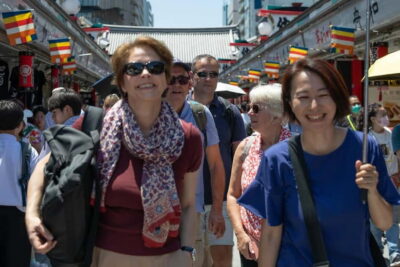 ★ 4.8Asakusa Walking Tour with Sensoji Temple VisitFrom $221,583 reviews
 ★ 5.0Tokyo Asakusa Rickshaw TourFrom $421,375 reviews
 ★ 4.5Tokyo Panoramic 1 Day: Meiji Shrine, Asakusa, Odaiba and SKYTREE®From $851,222 reviews
 ★ 5.0Tokyo Go Kart: Asakusa, Skytree, and Akihabara **IDP MUST**From $99988 reviews
 ★ 4.7Asakusa, Skytree & Akhihabara Go-Kart City ExperienceFrom $96761 reviews
Browse the lists this tour appears in