
Reviewed · HAKONE TOURS
Do You Want to Try Skywalk? A New Way of Enjoying Hakone!
Skywalk, without the language stress. This Hakone-to-Mishima private day turns a tricky hop across towns into a smooth route, with a guide handling translation and keeping the day on track. I love the combination of Mt. Fuji views from Mishima Skywalk and the calm, scenic pauses around Lake Ashi. One thing to plan around: Skywalk admission isn’t included, and a few stops may not take credit cards, so bring cash.
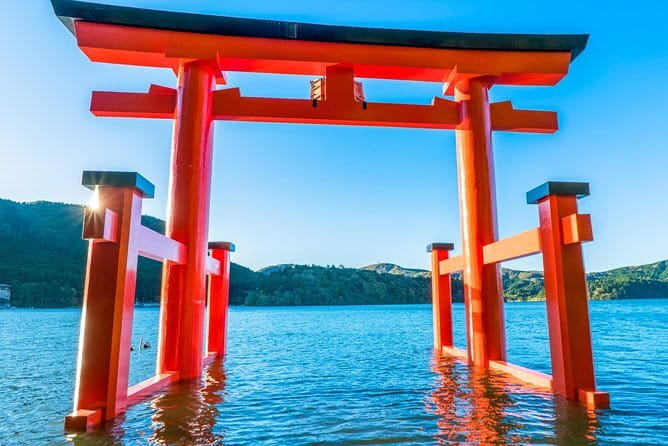
You’re paying for fewer decisions and less guesswork. The tour is built around real, walkable stops like Ajisai Bridge, Hakone Shrine (with that lake torii look), a bakery-and-footbath break, then up to Mishima for the suspension-bridge thrill. If you want the Hakone experience but don’t want to study bus times all morning, a private guide is the whole point.
At about 7.5 hours, it’s a focused day, not a slow wander. It’s also not a hotel pick-up tour—meeting at Hakone-Yumoto Station is part of the deal—so get there early, wear comfy shoes, and expect some route tweaks if weather turns.
In This Review
- Key things I think you’ll like
- Why Mishima Skywalk fits an actual Hakone day
- Private guide + translation: the time saver you can feel
- Stop 1: Ajisai Bridge near Hakone-Yumoto Station
- Stop 2: Hakone Shrine (and Kuzuryu Shrine) plus the lake torii photos
- Stop 3: Bakery & Table Hakone for bread and a footbath break
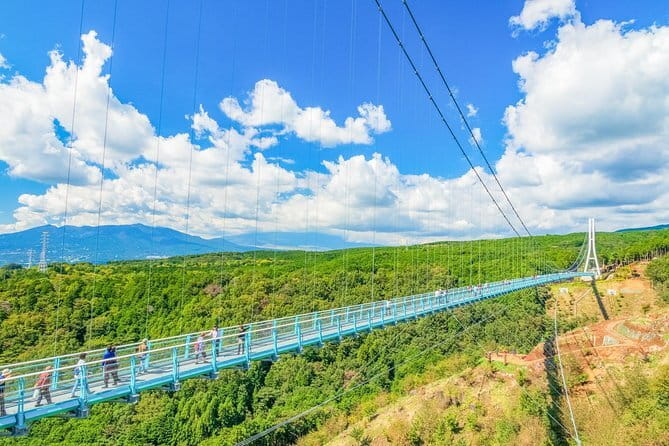
- Stop 4: Mishima Skywalk—the 400m bridge with Mount Fuji views
- Stop 5: Hakone Amazake Tea House for a 400-year-old mountain pause
- Price and what you’ll likely spend beyond the tour
- Timing, transit, and why the meet-up time matters
- Weather changes the day (and that’s not always bad)
- Who should book this tour—and who might not need it
- Quick decision guide: should you book this one?
- FAQ
- How long is the Hakone to Mishima Skywalk tour?
- Where does the tour start, and what time is the meeting?
- Is the Mishima Skywalk admission included in the tour price?
- What costs are included versus not included?
- Do I need cash during the tour?
- Can I use the Hakone Free Pass during the tour?
- Can I get a full refund if I cancel?
Key things I think you’ll like
- A private guide who translates so you can focus on the sights, not signboards
- Mishima Skywalk’s 400m pedestrian suspension bridge with views toward Mount Fuji and Suruga Bay
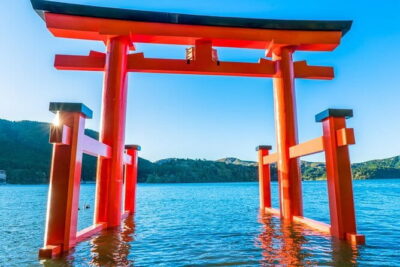
- Photo-ready stops like Ajisai Bridge and the Hakone Shrine torii out on the lake
- A mountain tea-house break at a 400-year-old amazake chaya
- Scenic downtime at Bakery & Table Hakone with bread by Lake Ashi plus a footbath
- A day that runs on foot and transit—so cash, comfortable clothes, and time buffer matter
Why Mishima Skywalk fits an actual Hakone day
Hakone is full of viewpoints, but the big “wow” moments can be scattered. This tour solves that by linking Hakone’s Lake Ashi area with Mishima, where the Skywalk delivers a modern, easy-to-enjoy thrill: you walk a long suspension bridge above the scenery and look back toward Mount Fuji on clear days.
The best part is how the day flows. You don’t bounce randomly between bus stops. You move from iconic Hakone visuals to a food-and-rest pause, then head to Mishima at the right point in the day—so you’re not exhausted when you reach the main attraction.
And the tone is right for a day trip. It’s not a “run fast, see everything” sprint. It’s more like: set a route, hit the highlights, then take short pauses that make the whole day feel human.
Other Hakone loops worth the fare
- Hakone 6 hour Private Tour with Government-Licensed Guide
★ 5.0 · 218 reviews - Hakone: Train Pass with Unlimited Rides & Activity Discounts
★ 4.4 · 102 reviews - Custom Private Tour in Hakone with a Certified Local Guide
★ 5.0 · 91 reviews - Hakone 8 hour Private Tour with Government-Licensed Guide
★ 5.0 · 63 reviews
Private guide + translation: the time saver you can feel
The tour’s big value isn’t the headline attraction. It’s the fact that a private guide is working with your group the whole time, including translation. That matters in Japan because the day-to-day stuff—asking where to go, understanding what to order, moving between spots—can cost time and energy.
With translation handled, you can do things like:
- understand what each stop is known for (not just take photos and guess)
- get practical guidance on what’s worth your attention at that exact moment
- keep moving efficiently even if you hit a closure or need a route adjustment due to weather
One theme that stands out from the experience feedback is guide quality and smart pacing. The day is designed to maximize time in the region, and the guide’s role is very much part of that.
Stop 1: Ajisai Bridge near Hakone-Yumoto Station
Ajisai Bridge is one of those places that looks simple—until you see it in person. It’s a vermilion bridge near Hakone-Yumoto Station, and it’s a well-known photo spot. The name cues the seasonal vibe: hydrangea blooms around June, and Hakone has a reputation for flowers in that period.
The tour gives you about 10 minutes here. That’s enough time for:
- a few quick photos without rushing everyone
- a short look at the bridge angle and surroundings
- moving on before the day gets too crowded elsewhere
If you’re visiting outside hydrangea season, don’t worry. The bridge color and the easy location still make it a good “starter” stop to set the tone for the day.
Stop 2: Hakone Shrine (and Kuzuryu Shrine) plus the lake torii photos
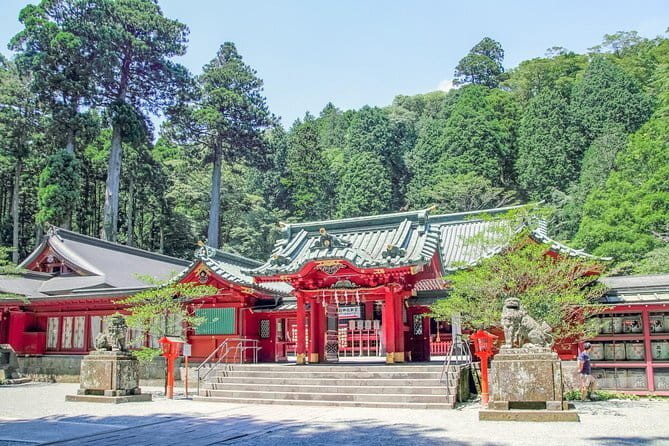
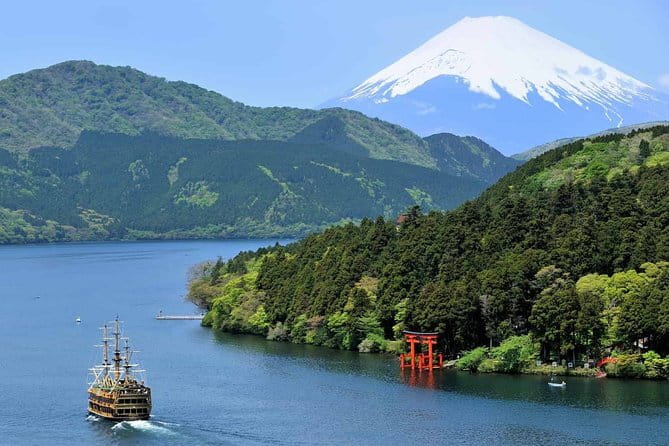
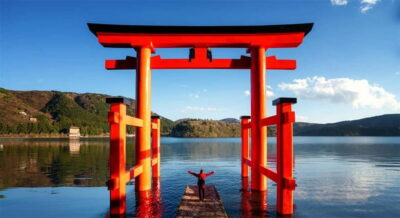
Next comes Hakone Shrine, where you get a quieter, older-feeling contrast to the bridge photos. The shrine is described as having 1,200 years of history or more, and the highlight for many visitors is the torii (wooden gate) standing on the lake—a look that’s become especially popular for photos lately.
You’ll have around 50 minutes at this stop. That’s a good length because shrine areas reward slow looking. You can circle, pause for photos from different angles, and take in the water-and-wood color combo that Hakone does well.
Admission is free here, which helps the budget. The only “gotcha” is how weather affects lake reflections and visibility. On clear days, the torii look can be much more dramatic.
Stop 3: Bakery & Table Hakone for bread and a footbath break
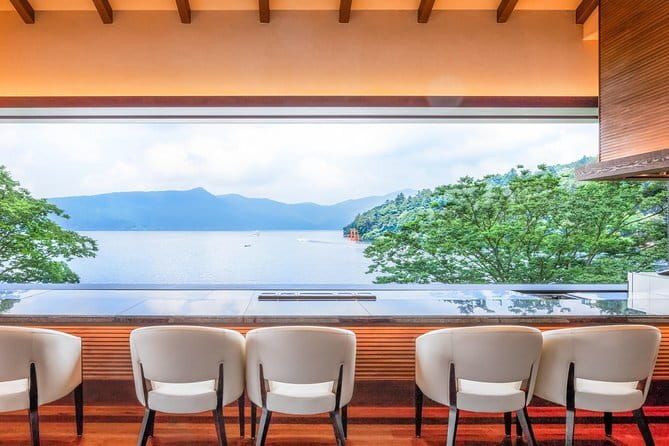
Hakone’s “hot spring town” identity shows up in small comfort details, and this stop leans into that. Bakery & Table Hakone is set up for a relaxed meal pause: you eat bread in front of Lake Ashi, and you can soak your feet in a footbath while you wait for your next view.
You’ll spend about 1 hour 20 minutes here. That’s longer than a typical photo stop, and that’s intentional. You’re not just killing time—you’re recharging.
A practical note: the tour description frames this as bread and a footbath experience, so don’t expect a full sit-down multi-course Japanese meal unless you’re doing that on your own. The break is more about comfort and scenery than dining ceremony.
One more reason this stop works well: it keeps the day balanced. After a shrine, it’s nice to shift to something lighter and more sensory in the calm setting of the lake.
- Private Tour – Hakone Day Trip! A Tour to Explore All Must-Sees!★ 5.0 · 58 reviews
- Hike Hakone Hachiri★ 5.0 · 48 reviews
- Private Hakone Half-day Car Tour with Hotel Pickup – Local Guide★ 5.0 · 48 reviews
- Hike Japan Heritage Hakone Hachiri with certified mountain guide★ 5.0 · 46 reviews
- Traverse Outer Rim of Hakone Caldera and Enjoy Onsen Hiking Tour★ 5.0 · 30 reviews
Stop 4: Mishima Skywalk—the 400m bridge with Mount Fuji views
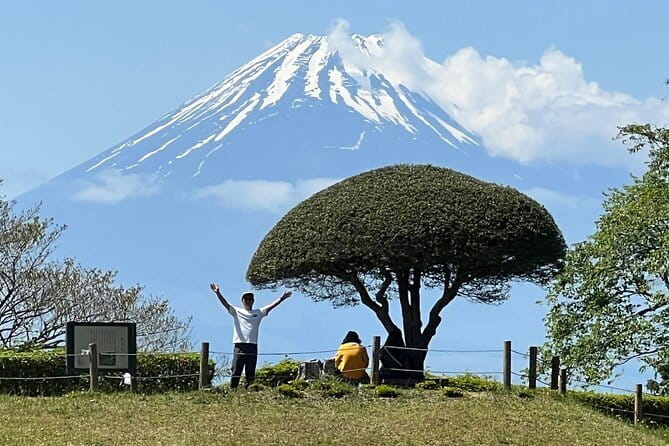
This is the reason many people book: the Mishima Skywalk, a 400m long pedestrian suspension bridge. The big promise is the view. From the bridge area, you can enjoy sights toward Mount Fuji and Suruga Bay.
You’ll have about 50 minutes here. That should be enough time to:
- walk out for the primary viewpoint
- pause for photos from the best spots
- step aside if crowds or wind make it uncomfortable
Budget heads-up: Skywalk admission isn’t included. So even though you’re paying for the guided route and translation, you’ll still want cash or card readiness for the bridge entry and any on-site purchases.
Weather matters a lot here. If clouds roll in, the Fuji view can be reduced. Still, even when visibility isn’t perfect, the bridge itself is the draw—the long suspension span gives you that classic “look down, feel the height” thrill.
Stop 5: Hakone Amazake Tea House for a 400-year-old mountain pause
After the Skywalk, you’ll slow down again with the tea-house stop: Amazake Chaya, described as a 400-year-old tea house in the mountains.
The focus is on amazake, a non-alcoholic, non-sugar sweet beverage. It’s paired with options like rice cakes at this stop, and the tea house experience is framed around specialty sake as well. (So if you drink sake, you might have a choice; if you don’t, you still get the amazake angle.)
You’ll have about 20 minutes. Short, yes, but it fits the day. This isn’t a “settle in for an hour” restaurant visit—it’s a tasting-and-rest moment that keeps you from feeling like the day only consists of walking and viewpoints.
This stop is also a nice emotional reset after the Skywalk’s height and motion. Mountain tea houses tend to feel cooler and quieter, and that contrast is part of why people love ending with something grounded and old-school.
Price and what you’ll likely spend beyond the tour

The listed price is $168.42 per person for a private tour experience running about 7 hours 30 minutes. That covers a lot of the “how,” but not everything you’ll need once you’re out there.
What’s included is essentially the guide: a private tour guide and the necessary expenses for the tour guide.
What’s not included is the stuff you pay at stops and for transit during the day. The tour also notes that all transportation costs, entrance fees, food, and drink costs incurred at visited spots are borne by you. In other words, you’re paying for coordination and interpretation, while you still handle your own day-to-day expenses.
There’s an estimated extra cost figure of 6,050 JPY per person, with this breakdown:
- Transportation: 3,650 JPY
- Meal costs: 1,000 JPY
- Admission fees: 1,400 JPY
Important: Mishima Skywalk admission is specifically not included, so treat that as part of the admission budget even if the estimate lumps things together.
If you’re budgeting, here’s how I’d think about value:
- If you’re comfortable spending some extra yen on entry fees and meals, the private-guide structure can feel worth it.
- If you want strict, all-in pricing where everything is paid upfront, this one might feel more like a guided itinerary with add-ons.
Timing, transit, and why the meet-up time matters
You start at 9:30 am at Hakone-Yumoto Station. The activity ends back at the meeting point, so you’re not stuck figuring out how to get home on your own after a long day.
Because the tour isn’t offering hotel pickup or a private van, your first job is simple: be at the station on time. The tour info also warns that if you can’t get to the meeting point by the start time, you might miss part of the experience due to lost time getting there.
So do this:
- arrive early enough to absorb any train/routing confusion
- plan for a slow morning buffer, especially if you’re coming from another Hakone area
Also, bring cash. The tour notes that some spots don’t accept credit cards. You don’t want to be scrambling mid-route, especially when Skywalk admission and tea-house items may require payment.
Weather changes the day (and that’s not always bad)
Hakone and the surrounding area can swing fast with cloud cover and rain. The tour is set up to adjust if weather is bad, including changing means of transportation, destinations, and routes.
That’s not a reason to cancel. It’s a reason to travel smart:
- keep your day flexible
- wear comfortable clothing since you’ll be walking a lot
- expect that visibility for Mount Fuji might vary
Even when the view is muted, the region itself has a rugged look that works well in misty weather. One of the strongest positive impressions from the experience feedback is that the terrain and surroundings can be exceptionally beautiful, and the guide helps you maximize time in the area.
Who should book this tour—and who might not need it
This is a strong match if you:
- want the Hakone-to-Mishima connection without doing research and route planning
- prefer a private guide who translates
- care about both classic views (lake and shrine) and a modern highlight (Skywalk)
It may be less ideal if you:
- hate spending extra money on entrances, transit, and meals during the day
- want a totally self-paced experience with no set stops
- don’t want to walk around shrine areas and bridge viewpoints
Think of it like this: you’re buying structure plus translation. If that’s your style, you’ll likely enjoy the day.
Quick decision guide: should you book this one?
If your priority is Skywalk views plus Hakone’s most photogenic lakeside stops, and you’d rather spend your mental energy enjoying the scenery than decoding transit, I think this tour is a good fit.
The pricing makes sense when you value the private guide. You’re not paying just for the bridge. You’re paying for the smooth path between Hakone-Yumoto, the shrine-and-lake-photo moments, the bakery-and-footbath reset, and the tea-house stop that gives the day a calm finish.
If you’re the type who already knows the transit system well and loves making your own itinerary, you could recreate parts of this trip on your own. But if you want the day to feel effortless—especially with translation handled—this is built for that.
FAQ
How long is the Hakone to Mishima Skywalk tour?
It’s approximately 7 hours 30 minutes.
Where does the tour start, and what time is the meeting?
The meeting point is Hakone-Yumoto Station, and the start time is 9:30 am. The tour ends back at the meeting point.
Is the Mishima Skywalk admission included in the tour price?
No. Mishima Skywalk admission is not included.
What costs are included versus not included?
Included: a private tour guide and necessary expenses for the guide. Not included: estimated transportation, meals, and admission fees, plus hotel pickup/drop-off and a private van.
Do I need cash during the tour?
Yes. The tour notes that some spots do not accept credit cards, so bring cash.
Can I use the Hakone Free Pass during the tour?
Yes. You can use the Hakone Free Pass for transportation during the tour. If you plan to buy it, tell your guide on the day.
Can I get a full refund if I cancel?
Yes, free cancellation is offered. You can cancel up to 24 hours in advance for a full refund.
More Tour Reviews in Hakone
- Hakone 6 hour Private Tour with Government-Licensed Guide
★ 5.0 · 218 reviews - Hakone: Train Pass with Unlimited Rides & Activity Discounts
★ 4.4 · 102 reviews - Custom Private Tour in Hakone with a Certified Local Guide
★ 5.0 · 91 reviews - Hakone 8 hour Private Tour with Government-Licensed Guide
★ 5.0 · 63 reviews - Private Tour – Hakone Day Trip! A Tour to Explore All Must-Sees!
★ 5.0 · 58 reviews
Hakone, A Few More Ways
- Hakone 6 hour Private Tour with Government-Licensed Guide
★ 5.0 · 218 reviews - Hakone: Train Pass with Unlimited Rides & Activity Discounts
★ 4.4 · 102 reviews - Custom Private Tour in Hakone with a Certified Local Guide
★ 5.0 · 91 reviews - Hakone 8 hour Private Tour with Government-Licensed Guide
★ 5.0 · 63 reviews - Private Tour – Hakone Day Trip! A Tour to Explore All Must-Sees!
★ 5.0 · 58 reviews
Latest Hakone reviews off our desk
Hakone Tours, compared.
 ★ 5.0Mt Fuji and Hakone 1-Day Bus Tour Return by Bullet TrainFrom $16326,383 reviews
 ★ 4.0Mt Fuji & Hakone Cruise, Drum Show Bullet Train 1 Day from TokyoFrom $1497,413 reviews
 ★ 4.4Tokyo Mt Fuji 5th St & Hakone Cruise Bus Tour w/Bullet TrainFrom $1545,024 reviews
 ★ 4.7Mt. Fuji Tour, Hakone Ropeway, Owakudani, Lake AshiFrom $544,002 reviews
 ★ 4.2Mt. Fuji 5th Station & Hakone Cruise 1-Day Bus TourFrom $1292,381 reviews
 ★ 5.0Private Tour to Mt. Fuji and Hakone (Fully Licenced Operator)From $4971,910 reviews
 ★ 4.0Mt Fuji & Hakone Cruise, Drum Show Bus 1 Day from TokyoFrom $1221,287 reviews
 ★ 4.2From Tokyo: Mt. Fuji & Hakone Tour w/ Return by Bullet TrainFrom $1171,278 reviews
Browse the lists this tour appears in