
Reviewed · HAKONE TOURS
Hakone, majestic moment waiting!
Hakone looks dramatic from every angle, and this tour keeps it moving. You’ll hit the volcanic Owakudani zone, ride on toward Lake Ashinoko, and wrap with Hakone Shrine and the Hakone Sekisho checkpoint—without wasting your morning figuring out transit.
I especially like how efficient it feels: your guide helps you get from place to place fast, with built-in context so the sights connect instead of feeling like a random checklist.
One thing to consider is that you’ll still need to budget for extra tickets you buy on-site—like ropeway/mountain train at Owakudani and the cruise ticket on Lake Ashi—plus the Sekisho entrance fee isn’t included. And at this price point, you’ll want a guide who’s really on their game; one past guest felt the knowledge level didn’t match expectations.
In This Review
- Key points to know before you go
- Starting at Hakone-Yumoto Station: a simple way to begin your Hakone day
- Owakudani Valley: Hell Valley views from the ropeway—and why the black egg matters
- Lake Ashinoko by cruise: the easiest scenic transport you’ll have all day
- Hakone Sekisho and Museum: Edo checkpoint control, restored in 2007
- Hakone Shrine and Kuzuryu Shrine: a calm finish with old trail atmosphere
- Why a private English guide changes the whole day
- Price and ticket reality: what you pay for at $203.95 per person
- Who should book this Hakone highlights tour (and who should skip it)
- Should you book this tour?
- FAQ
- What time does this tour start, and where do I meet?
- How long is the tour?
- Is this a private tour?
- Will I have an English-speaking guide?
- Is pickup available?
- What tickets do I need for Owakudani?
- Do I need a ticket for the Lake Ashi cruise?
- Do I pay for the Hakone Sekisho entrance?
- What happens if I cancel?
Key points to know before you go
- First-timer friendly day plan for hitting several Hakone highlights in about 6 hours
- Owakudani in real time: steam, sulfur smell, and the Hell Valley story
- Lake Ashi by cruise: an easy way to see the lake and connect sights with less hassle
- Hakone Sekisho Museum explains how Edo-era checkpoint control worked
- Hakone Shrine + old trail vibes that feel different from the busier waterfront areas
- Private for your group with an English-speaking professional guide
Starting at Hakone-Yumoto Station: a simple way to begin your Hakone day
Your day starts at Hakone-Yumoto Station at 9:00 am, and it ends back at the same place. That matters more than you might think. Hakone can feel like a puzzle—trains, ropeways, cruise lines, and different viewpoints stacked on steep terrain. Starting in one clear hub means you can focus on the scenery, not the clock.
This is also a private tour, so you’re not stuck listening to someone else’s pace or your timing getting bumped by a big group. If you’re traveling as a couple, with friends, or even solo, that privacy can make the day feel less like a schedule and more like a guided walk through major highlights.
Pickup is listed as offered, and you’ll also get a mobile ticket. That usually helps because you’re not scrambling to find paper confirmations when you’re hopping between transport links. Before you go, I’d double-check whether pickup is included for your exact location and how the meeting details appear in your booking.
Other Hakone loops worth the fare
- Hakone 6 hour Private Tour with Government-Licensed Guide
★ 5.0 · 218 reviews - Hakone: Train Pass with Unlimited Rides & Activity Discounts
★ 4.4 · 102 reviews - Hakone 8 hour Private Tour with Government-Licensed Guide
★ 5.0 · 63 reviews - Private Tour – Hakone Day Trip! A Tour to Explore All Must-Sees!
★ 5.0 · 58 reviews
Owakudani Valley: Hell Valley views from the ropeway—and why the black egg matters
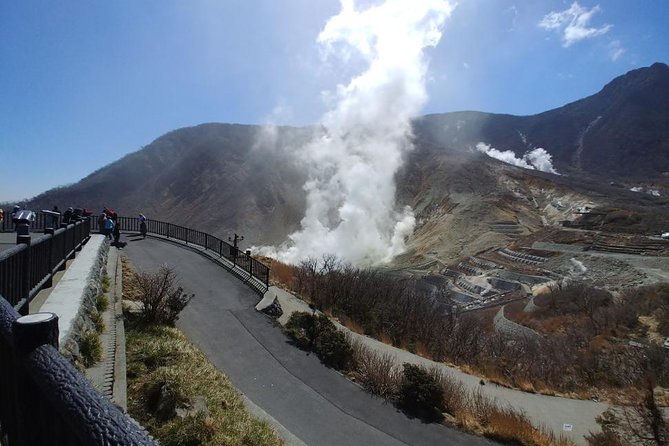
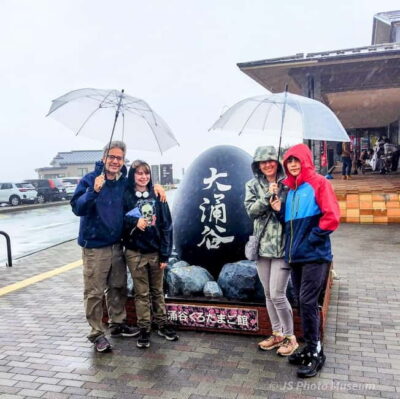
Owakudani is the headliner for a reason. This volcanic zone is active even now, so you can see sulfuric gas and steam rising from the mountain top areas. It still feels wild and a bit industrial at the same time—like nature hasn’t fully switched off. The area’s old nickname, Hell Valley, comes from exactly this kind of setting.
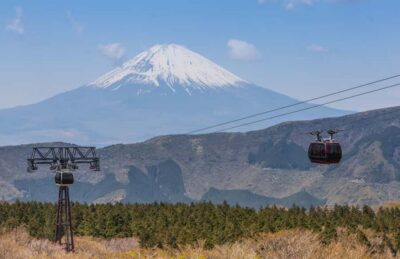
What you’ll do here centers on the most practical way to take in the dramatic views: you ride in ropeway pods for that sweeping perspective over the steaming zone. You’re also in the right place for the classic Hakone souvenir-style snack: the black egg. It’s a boiled and steamed egg prepared in hot spring waters of the valley. Even if you don’t turn it into a food quest, it’s a fun cultural detail that makes the volcanic theme feel more tangible.
Important practical note: you need to buy the mountain train and ropeway tickets before you ride. The stop itself is listed as admission ticket free, but your transport to reach the best viewpoints still requires separate tickets. This is one of those “free sightseeing, paid logistics” situations that can trip people up if they assume the guide ticket covers everything.
You’ll have about 1 hour here, which is usually enough to:
- get your bearings on the views from the ropeway
- walk around where you can see the steam vents
- grab the black egg if it sounds fun
One consideration: volcanic areas can be windy or cold depending on conditions. If you tend to feel chilly easily, bring a light layer. Also, the sulfur smell is part of the experience, but you’ll notice it.
Lake Ashinoko by cruise: the easiest scenic transport you’ll have all day
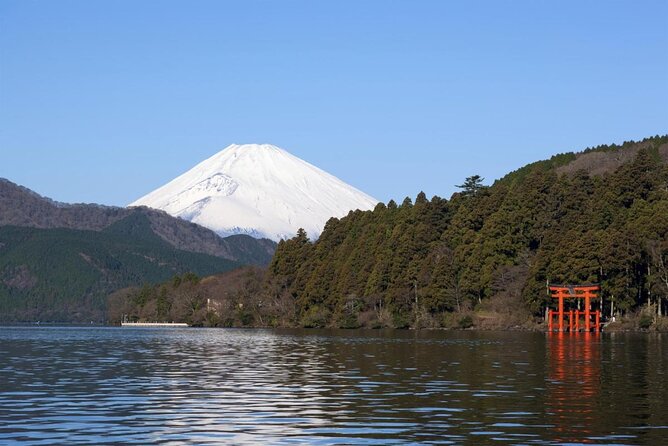
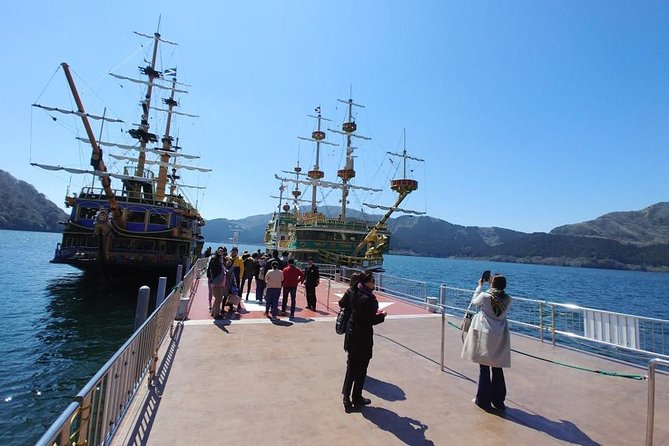
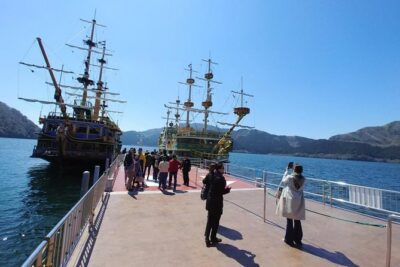
From the ropeway side, the next step is Lake Ashinoko—Hakone’s water view that balances the volcanic intensity. The key experience here is getting out on the lake on a cruise ship.
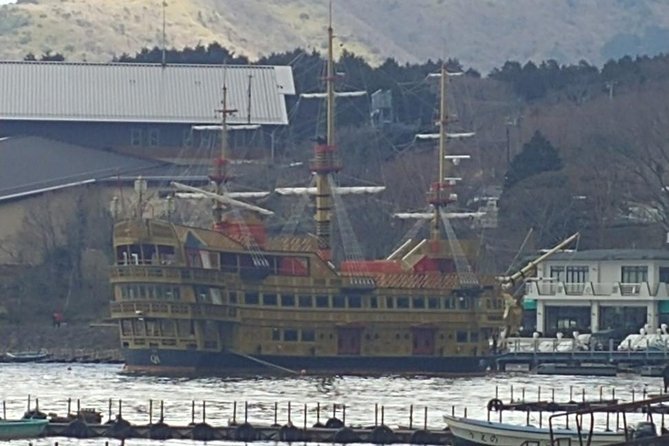
A cruise is a smart move because it does two things at once. First, it gives you big scenic payoff without requiring long walks. Second, the cruise route connects three major sightseeing spots around the Hakone area, which is especially helpful if your main goal is to see a lot without wrestling with multiple transfers.
You’ll spend about 1 hour on the lake. The stop itself is listed as admission ticket free, but the cruise ticket is required, and that’s not included. So treat this part like a “transport cost, scenery benefit” trade. If you like viewpoints but don’t want to over-plan, this is the section that feels most relaxing.
Why this part works for first-timers: many Hakone days become a battle between mountains and timetables. Here, you get a calm interlude that still keeps you moving through major highlights. You’re also going from the steam and heat of Owakudani to open water views, which keeps the day from blurring together.
Hakone Sekisho and Museum: Edo checkpoint control, restored in 2007
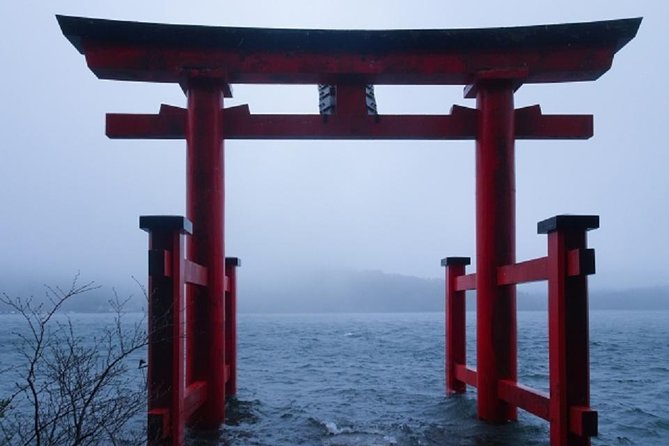
Next up is the Hakone Sekisho and Hakone Sekisho Museum. This is where the day turns from scenic to historical in a focused way.
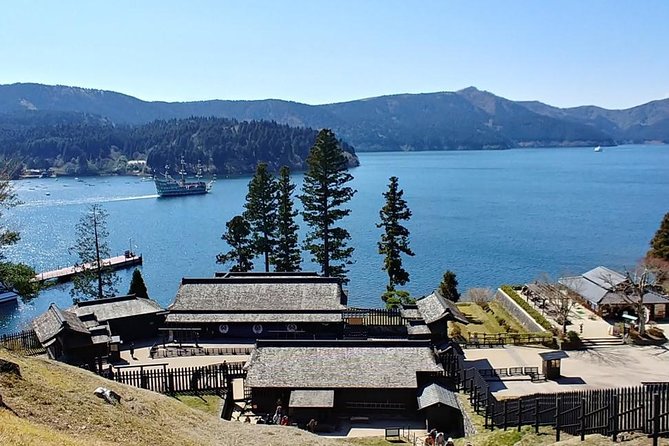
Hakone Sekisho was a police station system used in the Edo period (1603 to 1868). Think of it as checkpoint control at a tough passage. This mattered because the feudal government watched key checkpoints closely to prevent serious crimes or rebellions by powerful local leaders. In other words: this wasn’t just a random building. It was part of how authority traveled and held.
The buildings were restored in 2007 to reflect how they were in the old days. That restoration gives you something more concrete than a vague story. You can observe how the checkpoint functioned and learn how the structures supported that role.
There’s a practical “where you feel it” detail too: Hakone is described as a steep mountain area, and the checkpoint was known as a tough place to pass through. Even if you keep expectations realistic about walking, you’ll likely feel the terrain theme in how the site is laid out.
Admission for Hakone Sekisho is listed as not included, so you’ll pay that on your side. Time-wise, it’s about 1 hour—enough to understand the overall function without turning the day into a museum marathon.
If you like history that explains why places mattered (not just what they look like), this stop is a good anchor. It also gives context for the way Hakone has long been both scenic and strategic.
Hakone Shrine and Kuzuryu Shrine: a calm finish with old trail atmosphere
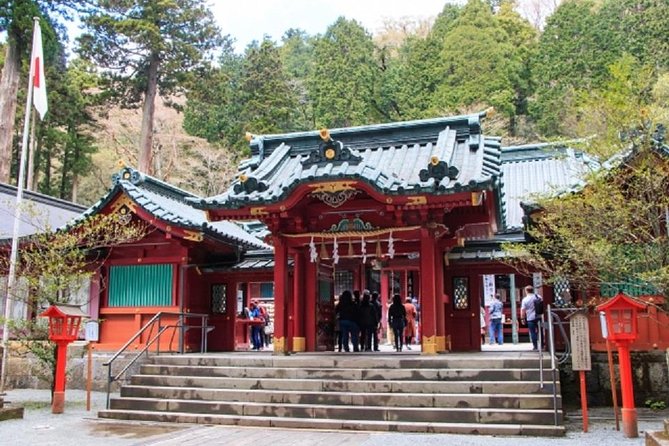
Your final sightseeing block is Hakone Shrine / Kuzuryu Shrine. This is a Shinto shrine that local people worship. It’s also known for a big seasonal moment: on New Year’s Day, thousands of visitors staying in Hakone go to this shrine as their first shrine visit of the year.
Even if you’re not there in January, that detail helps you understand the shrine’s role. It isn’t only tourist-photo scenery; it’s part of local tradition and year-by-year life.
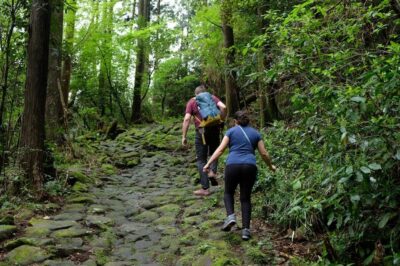
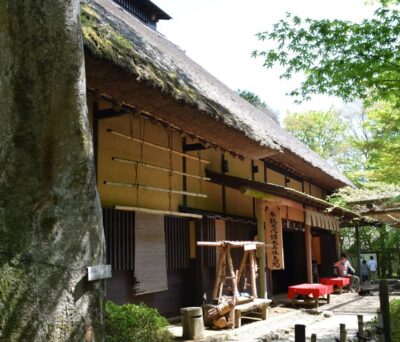
There’s also a thoughtful way the shrine experience connects to travel history. On the way to the shrine, you can drop by the old path of Hakone, which reminds you how hard the trail was for travelers in those days. That’s a nice contrast to the modern transport rhythm you’ll have experienced earlier in the day.
This is a shorter stop—about 30 minutes—and it’s listed as free. That makes it a good closing act. It’s enough time to slow down, look around, and take in the atmosphere without feeling like you’re rushing or stuck on a long timed ticket.
- Private Tour – Hakone Day Trip! A Tour to Explore All Must-Sees!★ 5.0 · 58 reviews
- Hike Hakone Hachiri★ 5.0 · 48 reviews
- Private Hakone Half-day Car Tour with Hotel Pickup – Local Guide★ 5.0 · 48 reviews
- Hike Japan Heritage Hakone Hachiri with certified mountain guide★ 5.0 · 46 reviews
- Traverse Outer Rim of Hakone Caldera and Enjoy Onsen Hiking Tour★ 5.0 · 30 reviews
Why a private English guide changes the whole day
The biggest value of this experience is not that it hits famous locations. It’s that a guide helps you understand what you’re looking at as you’re looking at it.
You’ll have an English-speaking professional guide, and the tour is private for your group. That means you can ask follow-up questions and adjust to what you care about—volcano explanations, checkpoint history, or just how to time the transport links so you don’t feel like you’re sprinting.
A past guest highlighted a guide named Mochi for being patient, giving great information, and offering strong recommendations tailored to their group. That kind of guide makes a real difference on a day like Hakone, where timing and navigation are half the challenge.
At the same time, there’s a fair caution from another review: one person felt the tour was overpriced and the guide didn’t seem fully knowledgeable about the locations. That doesn’t mean every guide is the same, but it does point to a practical move: if you book, be ready to ask questions early and gauge how your guide responds. If you’re paying for English guidance, you should get actual interpretation, not just friendly company.
Price and ticket reality: what you pay for at $203.95 per person
At $203.95 per person, this isn’t a budget add-on. So I look at value in three parts:
1) You’re buying time and stress reduction. Hakone is not the easiest place to self-navigate in a single half-day. A guide plus private routing helps you avoid wasting hours figuring out which connection works best.
2) You’re paying for interpretation. Places like Hakone Sekisho work better when someone explains checkpoint logic and Edo-era purpose. Owakudani works better when you understand the Hell Valley framing and why the black egg tradition fits the volcanic setting.
3) You still pay for key transportation and entrance fees separately. Owakudani requires mountain train and ropeway tickets before you ride. Lake Ashi needs the cruise ticket. Hakone Sekisho entrance is not included. Shrine and Owakudani/Lake Ashi stop admissions are listed as free, but “free stop” doesn’t mean “free day.”
So, the math isn’t only about the base price. It’s about whether you’d otherwise spend time researching, routing, and buying multiple tickets in a place that can be confusing. If you’d rather trade a little money for a smoother day, this can be a good deal. If you like to roam independently and enjoy planning logistics, you might not need a private guide.
Who should book this Hakone highlights tour (and who should skip it)
This tour fits best if:
- You have limited time and want a guided hit list across Owakudani, Lake Ashi, Sekisho, and Hakone Shrine
- You prefer a day that’s planned for you, with an English-speaking guide to explain context
- You like seeing both nature (volcano and lake) and history (Edo checkpoint) without doing extra research
You might want to skip or consider another option if:
- You expect a lot of museum-level depth at the checkpoint and want very detailed historical breakdowns beyond the essentials
- You’re cost-sensitive and would rather self-organize Hakone on your own
- Your schedule is flexible and you’d prefer to stay longer at one place instead of following a fixed pace
For most people, it’s also described as suitable for many travelers and features a pickup option. Still, Hakone’s terrain is steep in places, and the checkpoint is on a tough pass—so build in a realistic expectation for uneven ground and hilly walking.
Should you book this tour?
If your goal is the classic Hakone highlights in one clean day, I think this is a strong choice—especially because the tour is private and guided by an English-speaking professional who can connect the sights into a story. The Owakudani-to-Lake Ashi rhythm is practical, and the Sekisho stop gives your day more meaning than just photos.
I’d book it if you want efficiency, you don’t want to wrestle with planning, and you value explanations. I’d hesitate if you’re very budget-focused or if you’re the type who wants to control every minute and linger on your own schedule.
If you decide to go, come ready to buy the extra ropeway/mountain train and cruise tickets on your side, and plan to pay for Sekisho entrance separately. Then you’ll be set for a smooth, memorable Hakone day.
FAQ
What time does this tour start, and where do I meet?
The tour starts at 9:00 am at Hakone-Yumoto Station in Hakone, Japan.
How long is the tour?
It runs for about 6 hours.
Is this a private tour?
Yes. It’s private, and only your group participates.
Will I have an English-speaking guide?
Yes. The tour includes an English speaking professional guide.
Is pickup available?
Pickup is listed as offered, and you’ll want to confirm the exact pickup details during booking.
What tickets do I need for Owakudani?
You need to buy mountain train and ropeway tickets before you ride.
Do I need a ticket for the Lake Ashi cruise?
Yes. You’ll need to buy cruise tickets.
Do I pay for the Hakone Sekisho entrance?
Yes. The Hakone Checkpoint (Sekisho) entrance fee is not included.
What happens if I cancel?
This experience is non-refundable and cannot be changed for any reason.
More Tour Reviews in Hakone
- Hakone 6 hour Private Tour with Government-Licensed Guide
★ 5.0 · 218 reviews - Hakone: Train Pass with Unlimited Rides & Activity Discounts
★ 4.4 · 102 reviews - Custom Private Tour in Hakone with a Certified Local Guide
★ 5.0 · 91 reviews - Hakone 8 hour Private Tour with Government-Licensed Guide
★ 5.0 · 63 reviews - Private Tour – Hakone Day Trip! A Tour to Explore All Must-Sees!
★ 5.0 · 58 reviews
Hakone, A Few More Ways
- Hakone 6 hour Private Tour with Government-Licensed Guide
★ 5.0 · 218 reviews - Hakone: Train Pass with Unlimited Rides & Activity Discounts
★ 4.4 · 102 reviews - Custom Private Tour in Hakone with a Certified Local Guide
★ 5.0 · 91 reviews - Hakone 8 hour Private Tour with Government-Licensed Guide
★ 5.0 · 63 reviews - Private Tour – Hakone Day Trip! A Tour to Explore All Must-Sees!
★ 5.0 · 58 reviews
Latest Hakone reviews off our desk
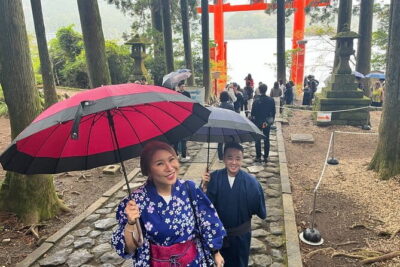
Hakone Tours, compared.
 ★ 5.0Mt Fuji and Hakone 1-Day Bus Tour Return by Bullet TrainFrom $16326,383 reviews
 ★ 4.0Mt Fuji & Hakone Cruise, Drum Show Bullet Train 1 Day from TokyoFrom $1497,413 reviews
 ★ 4.4Tokyo Mt Fuji 5th St & Hakone Cruise Bus Tour w/Bullet TrainFrom $1545,024 reviews
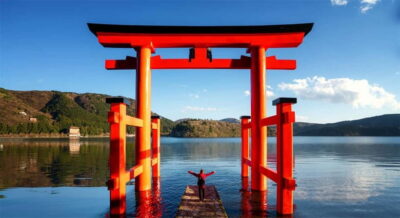 ★ 4.7Mt. Fuji Tour, Hakone Ropeway, Owakudani, Lake AshiFrom $544,002 reviews
 ★ 4.2Mt. Fuji 5th Station & Hakone Cruise 1-Day Bus TourFrom $1292,381 reviews
 ★ 5.0Private Tour to Mt. Fuji and Hakone (Fully Licenced Operator)From $4971,910 reviews
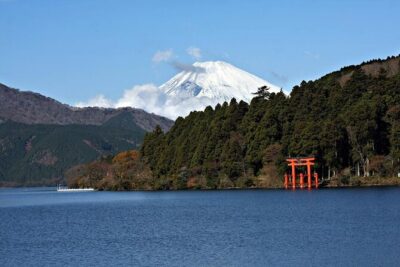 ★ 4.0Mt Fuji & Hakone Cruise, Drum Show Bus 1 Day from TokyoFrom $1221,287 reviews
 ★ 4.2From Tokyo: Mt. Fuji & Hakone Tour w/ Return by Bullet TrainFrom $1171,278 reviews
Browse the lists this tour appears in