
Reviewed · ASAKUSA & SENSOJI TOURS
Flavors of Asakusa Food & Traditions with a Friendly Guide
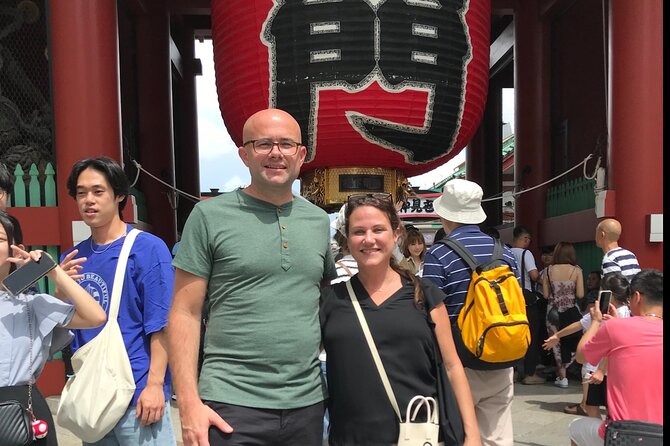
Asakusa is Tokyo you can taste. This 4-hour walk mixes old-school temple sights with snack stops so you’re never stuck deciding what to eat.
I especially like the small group feel (max 10), and I like that you’ll hit 4 to 5 food stops instead of wandering hungry and hoping for the best.
One consideration: this is a walking tour, so if you’re sensitive to crowds and steps, you’ll want comfortable shoes and a bit of patience.
In This Review
- Key highlights before you go
- Starting at Asakusa Culture Tourist Information Center (get your bearings fast)
- Kaminarimon and the souvenir streets: where Asakusa sets the tone
- Nakamise Shopping Street: snack tasting without the guesswork
- Sensō-ji and Asakusa Shrine: the temple experience with a guided rhythm
- Rokku Yumemachi Theatre and Hoppy Street: the Asakusa you don’t plan for
- Tokyo Skytree from the observation deck: understand Tokyo’s scale
- Food stops: what you’ll eat (and how to pace it)
- Price and value: is $167.40 a fair deal?
- Who should book this (and who might skip it)
- Booking take: should you book it?
- FAQ
- How long is the tour?
- What’s included in the price?
- Where does the tour start and end?
- How many people are in the group?
- Does the tour include the temple and shrine areas?
- Is free cancellation available?
Key highlights before you go
- Friendly guide guidance that keeps you moving with context, not just photos
- 4–5 snack and dessert tastings plus soft drinks and water
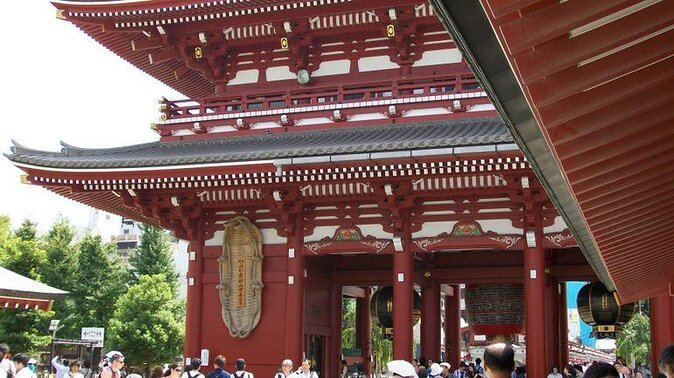
- Asakusa classics in one loop: Kaminarimon, Nakamise, Sensō-ji, and more nearby shrines
- A calm launch point at the Asakusa Culture Tourist Information Center, with free Wi-Fi and multi-language help
- An observation-deck experience at Tokyo Skytree to understand Tokyo’s size and density from above
Starting at Asakusa Culture Tourist Information Center (get your bearings fast)
Your tour kicks off at the Asakusa Culture Tourist Information Center, right on Kaminarimon. I like starting here because it gives you an easy way to orient yourself before the streets get crowded and noisy—exactly what you want on a first Asakusa visit.
This center is also practical for travelers: they offer guidance in Japanese, English, Chinese, and Korean, plus free Wi-Fi. Even if you don’t need help, it’s a handy place to refresh your maps and plan your next move without stressing out.
If you’re traveling with kids or you just want things to feel organized, this setup is a quiet win. You meet, you get oriented, then you head straight into the area’s sights and food.
More temple mornings in old Asakusa
- Tokyo: Japanese Dance Cabaret Theater Asakusa-Kaguwa Ticket
★ 4.8 · 2,270 reviews - Tokyo: Meiji Shrine, Asakusa, Skytree Bus Tour and Cruise
★ 4.7 · 1,986 reviews - Tokyo: Roll and Authentic Sushi Making Class in Asakusa
★ 4.9 · 1,957 reviews - Tokyo: Asakusa Walking Tour with Sensoji Temple Visit
★ 4.8 · 1,583 reviews
Kaminarimon and the souvenir streets: where Asakusa sets the tone
Right away you’ll pass through Asakusa’s main shopping lanes, including Kaminarimondori and the older souvenir flow on the way toward Nakamise. This is the part where Asakusa feels like old Tokyo: lots of small stalls, familiar snack smells, and a steady stream of people hunting for small gifts.
These streets are also a great warm-up for the tour’s food focus. You’ll see the kinds of items people stop for—traditional sweets, compact snack packs, and the showy stuff that looks great in photos.
A small heads-up: souvenir streets can slow down when the crowd thickens. Since this is a group walk, you’ll generally move as a unit. That’s a good thing—less decision fatigue—but you still need to expect stop-and-go moments.
Nakamise Shopping Street: snack tasting without the guesswork
Nakamise Shopping Street is where the food energy really ramps up. This is the classic approach: you’re near Sensō-ji, surrounded by stalls selling everything from savory bites to sweet treats, and you can sample without having to research each vendor.
What makes this portion valuable is the pacing. Instead of telling you to taste everything, the tour is built around 4 to 5 food stops, plus snacks and desserts included. That matters because Asakusa can tempt you into overbuying. You’ll get variety without turning your afternoon into a sugar marathon.
Photo-friendly bonus: Nakamise is easy to shoot. The shop fronts, paper lanterns, and lines of stalls create a “story” in your pictures. Just be mindful of foot traffic—Asakusa is popular, so stand to the side when you pause.
Sensō-ji and Asakusa Shrine: the temple experience with a guided rhythm
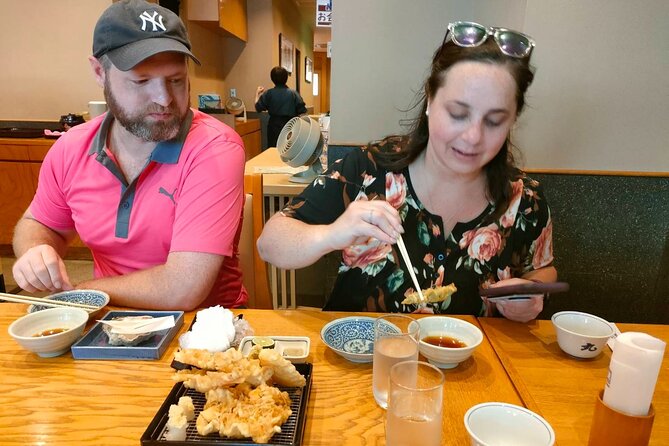
Sensō-ji is the big reason most people come to Asakusa. The approach through the streets gives you that ceremonial feeling fast: incense, lanterns, and the sense that the place has been important for a long time.
The tour doesn’t just point at the main temple. You also get a stop at Asakusa Shrine, which is a smart move. It helps you see that this area isn’t only one landmark—it’s a cluster of spiritual spaces that share the neighborhood’s identity.
The best part of having a guide here is rhythm. Sensō-ji can be overwhelming if you try to “figure it out” on your own while also managing crowds. A good guide helps you know what to notice and how to move through it without losing time.
Practical tip: keep your camera ready but don’t keep it in your hand the whole time. You’ll need both hands sometimes—especially once you start handling snack bags.
Rokku Yumemachi Theatre and Hoppy Street: the Asakusa you don’t plan for
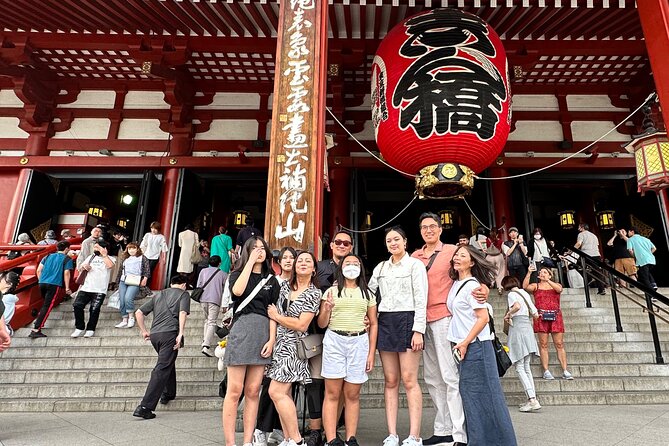
After the temple concentration, the tour shifts into the more local-feeling Asakusa vibe—less of the main postcard shot, more of the lived-in neighborhood.
You’ll visit Asakusa Rokku Yumemachi Theatre, tied to the historic theatre-and-amusement district known as Rokku Broadway. Even if you’re not into theatre history, it’s a fascinating contrast to the temple area. It reminds you that Asakusa wasn’t only a religious destination; it was also a place for entertainment and everyday fun.
Then comes Hoppy Street, where the name alone signals the mood. Even if you don’t drink alcohol on your outing, the area is known for its hoppy atmosphere and classic street character. The tour includes soft drinks and water, while alcoholic drinks can be purchased separately, so you can keep it family-friendly without missing the vibe.
This part of the walk is often what makes the tour feel like more than a checklist. You start seeing Asakusa as a whole neighborhood, not just a single famous site.
Readers also shortlisted these Tokyo bookings:
- Tokyo: Shinjuku Food Tour (13 Dishes at 4 Local Eateries)★ 5.0 · 6,603 reviews
- Tokyo Tsukiji Fish Market Food and Culture Walking Tour★ 5.0 · 3,184 reviews
- Tokyo: Shinjuku Food Tour (15 Dishes and 4 Eateries)★ 4.9 · 2,033 reviews
- Best of Shinjuku: Izakaya Food Tour (4 Stops, 14+ Tastings)★ 5.0 · 1,863 reviews
- Tokyo: Tsukiji Fish Market Food and Walking tour★ 5.0 · 1,724 reviews
Tokyo Skytree from the observation deck: understand Tokyo’s scale
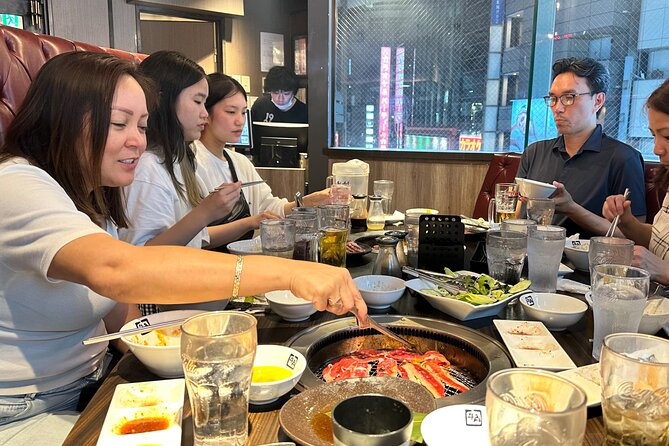
Tokyo is hard to comprehend from street level. From the ground, everything looks busy and packed, but the real scale hits differently when you get above it.
This experience includes an observation-deck moment at Tokyo Skytree, which makes perfect sense for a tour focused on Tokyo’s density. You’ll be able to see how the city spreads out and how neighborhoods interlock—an important lesson for first-timers who plan to explore more after this tour.
If you’re worried about timing or crowds up high, don’t. The tour is designed as a compact loop, so you’re not spending your afternoon stuck navigating transit on your own.
One practical tip: dress for wind. Skytree is elevated, and even on mild days, you can feel temperature shifts.
Food stops: what you’ll eat (and how to pace it)
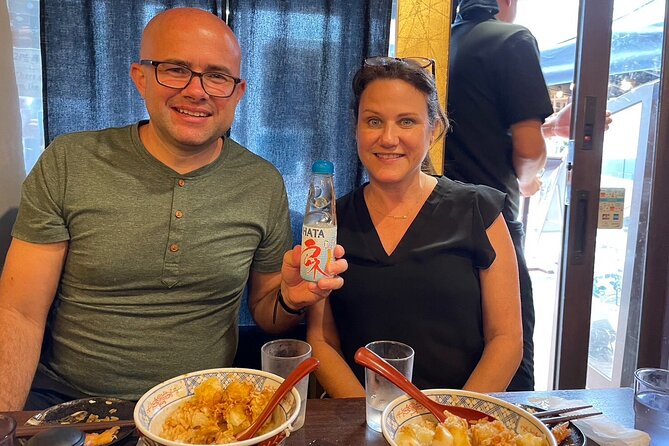
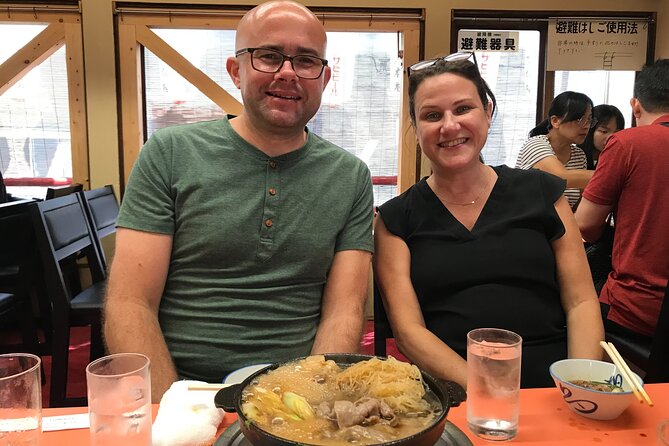
This tour is clearly built around food. You get snacks and desserts, plus 2 soft drinks and water, and you’ll try 4 to 5 food stops in Asakusa.
Here’s why that’s good value: street food is one of the best parts of Tokyo, but it can be hard to order confidently if you’re unfamiliar with names or menus. With a friendly guide, you get help choosing without turning every stop into a language puzzle.
Also, a guided snack plan prevents the most common mistake: trying to “squeeze in one more thing” after you’re already full. The included tastings are spread across the walk, which keeps the experience enjoyable instead of chaotic.
If you have dietary restrictions, I’d handle it carefully before booking, because the tour data only says snacks and desserts are included—not what can be substituted. When a tour is food-heavy, it’s worth confirming your needs up front.
Price and value: is $167.40 a fair deal?
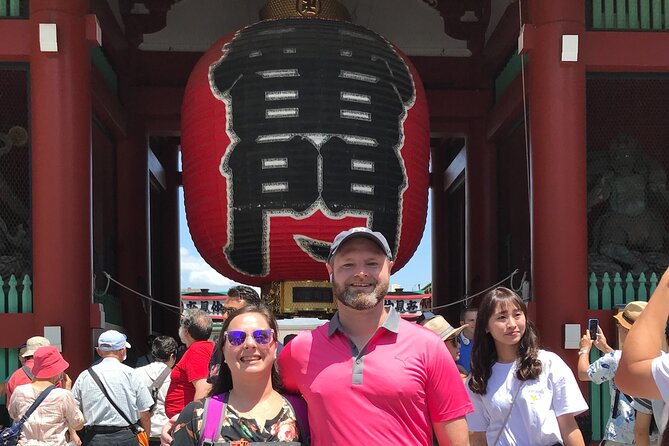
At $167.40 per person for about 4 hours, you’re paying for three things:
- a local guide for the full walk
- a snack-focused plan with 4 to 5 food stops
- included refreshments (soft drinks and water)
If you try to copy this yourself, you’d likely spend time researching where to eat, then lose time again figuring out what’s worth it. And Tokyo street food costs add up fast once you start buying multiple items at random vendors.
In other words, the price is less about the temple entrances (those parts are free) and more about the guided flow and tasting structure. For a first-time Asakusa visit—especially if you want the food experience without the stress—it’s a strong bargain.
And because the group max is 10 travelers, you’re not getting shoved into a giant crowd with a guide shouting from the back. That matters for both comfort and how much you can ask.
Who should book this (and who might skip it)
I think this tour fits best if you:
- want a guided Asakusa loop that includes major sights plus street-food time
- like small-group travel and conversation with a guide
- want to try several snacks without spending your vacation time researching
- plan to keep exploring Tokyo after Asakusa and want the Skytree perspective
You might want to skip or adjust if you:
- hate walking or dislike busy areas
- prefer fully independent eating, where you choose every vendor yourself
- need specific dietary guarantees and can’t risk menus changing from stop to stop
Booking take: should you book it?
I’d book this if you’re visiting Asakusa for the first time and want a smart blend: temple sights, historic streets, and snack tastings handled in a single smooth day. The best thing is that the tour doesn’t just move you from landmark to landmark—it gives you a plan for food, plus a guide who helps you make sense of what you’re seeing.
If you’re the type who loves walking neighborhoods, tasting your way through them, and learning a little along the way, this is exactly the right format.
FAQ
How long is the tour?
The tour runs for about 4 hours.
What’s included in the price?
It includes snacks and desserts, a 4-hour walking tour with a local guide, experience in Asakusa local markets, 4 to 5 food stops, and 2 soft drinks plus water. Alcoholic drinks are not included.
Where does the tour start and end?
It starts at the Asakusa Culture Tourist Information Center (2-chōme-18-9 Kaminarimon, Taito City, Tokyo 111-0034, Japan) and ends back at the meeting point.
How many people are in the group?
The maximum group size is 10 travelers.
Does the tour include the temple and shrine areas?
Yes. The route includes Sensō-ji Temple and Asakusa Shrine.
Is free cancellation available?
Yes. You can cancel up to 24 hours in advance for a full refund. If you cancel less than 24 hours before the start time, the amount paid isn’t refunded.
More Food & Drink in Tokyo
- Tokyo: Shinjuku Food Tour (13 Dishes at 4 Local Eateries)
★ 5.0 · 6,603 reviews - Tokyo Tsukiji Fish Market Food and Culture Walking Tour
★ 5.0 · 3,184 reviews - Tokyo: Shinjuku Food Tour (15 Dishes and 4 Eateries)
★ 4.9 · 2,033 reviews - Best of Shinjuku: Izakaya Food Tour (4 Stops, 14+ Tastings)
★ 5.0 · 1,863 reviews - Tokyo: Tsukiji Fish Market Food and Walking tour
★ 5.0 · 1,724 reviews
More Tour Reviews in Tokyo
- Mt Fuji and Hakone 1-Day Bus Tour Return by Bullet Train
★ 5.0 · 26,383 reviews - 1-Day Tokyo Bus Tour
★ 5.0 · 14,250 reviews - Tokyo: teamLab Planets TOKYO Digital Art Museum Entry Ticket
★ 4.6 · 9,779 reviews - Mt Fuji & Hakone Cruise, Drum Show Bullet Train 1 Day from Tokyo
★ 4.0 · 7,413 reviews - Tokyo: Shinjuku Food Tour (13 Dishes at 4 Local Eateries)
★ 5.0 · 6,603 reviews
More Mornings in Old Asakusa
- Tokyo: Japanese Dance Cabaret Theater Asakusa-Kaguwa Ticket
★ 4.8 · 2,270 reviews - Tokyo: Meiji Shrine, Asakusa, Skytree Bus Tour and Cruise
★ 4.7 · 1,986 reviews - Tokyo: Roll and Authentic Sushi Making Class in Asakusa
★ 4.9 · 1,957 reviews - Tokyo: Asakusa Walking Tour with Sensoji Temple Visit
★ 4.8 · 1,583 reviews - Tokyo Asakusa Rickshaw Tour
★ 5.0 · 1,375 reviews
Latest Tokyo reviews off our desk






Asakusa & Sensoji Tours, compared.
 ★ 4.8Japanese Dance Cabaret Theater Asakusa-Kaguwa TicketFrom $492,270 reviews
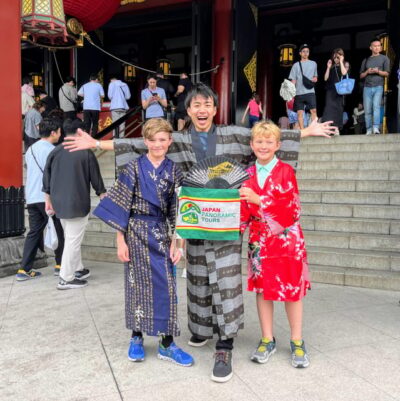 ★ 4.7Meiji Shrine, Asakusa, Skytree Bus Tour and CruiseFrom $1221,986 reviews
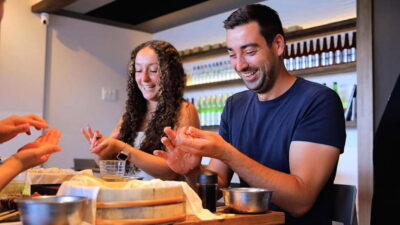 ★ 4.9Roll and Authentic Sushi Making Class in AsakusaFrom $581,957 reviews
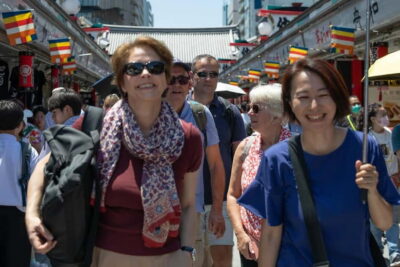 ★ 4.8Asakusa Walking Tour with Sensoji Temple VisitFrom $221,583 reviews
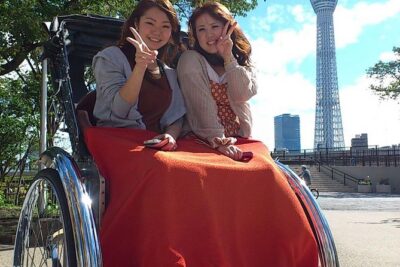 ★ 5.0Tokyo Asakusa Rickshaw TourFrom $421,375 reviews
 ★ 4.5Tokyo Panoramic 1 Day: Meiji Shrine, Asakusa, Odaiba and SKYTREE®From $851,222 reviews
 ★ 5.0Tokyo Go Kart: Asakusa, Skytree, and Akihabara **IDP MUST**From $99988 reviews
 ★ 4.7Asakusa, Skytree & Akhihabara Go-Kart City ExperienceFrom $96761 reviews
Browse the lists this tour appears in