
Reviewed · WALKING TOURS
Holiday Lights Walk Tour Hibiya Midtown Tokyo Station Marunouchi
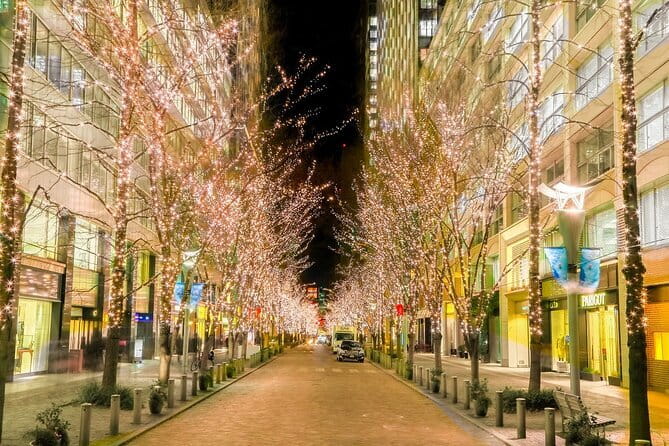
Tokyo glows from station to station. This 2.5-hour holiday lights walk strings together some of the prettiest lighting scenes around Marunouchi and Tokyo Midtown Hibiya, built for easy wandering on a winter night. I like that the route is clearly timed, starts near Yurakucho, and ends at Marunouchi Oazo, so you’re not guessing your way through the crowds.
I especially love the 1.2km feel of the Nakadori Christmas illumination, plus the mix of classic Christmas displays with playful Super Mario-style character spots around Marunouchi. I also like that the guide experience can be picture-focused, with help and encouragement from guides like Kodai (spelled Koda in some feedback), who aim for good angles and smooth pacing.
One thing to consider: winter nights here can be crowded, and you’ll be doing a real night walk. If you’re sensitive to cold or prefer a slow stroll with lots of free time at each spot, plan accordingly.
In This Review
- Key highlights you should care about
- Entering the Christmas City: Marunouchi’s lights, trees, and character stops
- Price and timing: what $26 gets you (and why it can be good value)
- Meeting at THE STAND (Yurakucho) and how to start without stress
- Stop-by-stop: the Christmas route from Peninsula to Oazo
- Peninsula Tokyo: tree glow and a mini market vibe
- Tokyo Midtown Hibiya: Milky Way lighting in a white garden
- Step Square HIROBA: rooftop tree views in Midtown Hibiya
- Kokusai Building: quick hit of photogenic Christmas display
- Marunouchi BRICK SQUARE: a classic big tree at night
- Marunouchi Building: the main tree and show timing every 15 minutes
- Shin-Marunouchi Building: arts-and-tree style décor
- Marunouchi Oazo: cute arts, final lighting stretch, and the end point
- What the guides do that you’d miss on your own
- Photo tips for winter lights (so your pictures don’t come out like smears)
- Food, drinks, and comfort: plan your cold-weather rhythm
- The end-of-tour coffee moment: what to expect
- Should you book this holiday lights walk?
- FAQ
- How long is the Holiday Lights Walk Tour?
- How much does the tour cost?
- Where do I meet for the tour?
- Where does the tour end?
- What time does the tour start?
- Do I need to print a ticket?
- Are food or drinks included?
- How big is the group?
- Is there any coffee at the end?
- What kind of weather should I plan for?
Key highlights you should care about
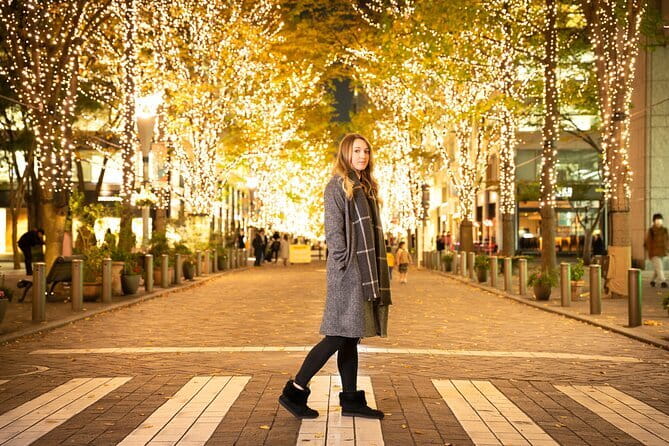
- 1.2 million champagne-gold lights over about 1.2km along Nakadori-style streets, giving you that true Tokyo Christmas tunnel effect
- Super Mario-themed character décor in the Marunouchi area, not just generic ornaments
- Tokyo Midtown Hibiya’s Milky Way white illumination, with garden lighting that looks especially good after dark
- Several major “big tree” moments: Brick Square’s tall classic tree, Marunouchi Building’s main tree with show timing, and more
- Photo-friendly guidance from the tour team (Kodai/Koda comes up often) so you can get the shot without stopping everyone
- Optional coffee time at the end if timing stays on track
Entering the Christmas City: Marunouchi’s lights, trees, and character stops
This tour is a smart way to see Tokyo’s holiday lighting without burning an entire evening playing map-and-maybe. You’re walking through a pocket of central Tokyo where the lighting is designed for public viewing: long photo lines, big set pieces, and recognizable landmarks clustered close together.
Marunouchi is also a fun choice in winter because the area reads like downtown Tokyo meets business-district architecture. So when the lighting shows up—champagne-gold glows and classic Christmas trees—it feels extra cinematic against the clean city geometry.
Two ideas drive the whole experience. First, you get repeated “wow” moments: big trees, rooftop or garden-style scenes, and photogenic building façades. Second, you get character-style décor mixed into the official Christmas feel, so the night isn’t only about ornaments—it’s also about playful details you’ll want to point out to friends.
Readers also shortlisted these Tokyo bookings:
- Tokyo Tsukiji Fish Market Food and Culture Walking Tour
★ 5.0 · 3,184 reviews - Tokyo: Imperial Palace and Shogun Historical Walking Tour
★ 5.0 · 2,251 reviews - Tokyo: Shinjuku Local Bar and Izakaya Guided Walking Tour
★ 4.9 · 1,794 reviews - Tokyo: Tsukiji Fish Market Food and Walking tour
★ 5.0 · 1,724 reviews
Price and timing: what $26 gets you (and why it can be good value)
At $26 per person for about 2 hours 30 minutes, you’re paying mostly for three things: a guided route, timed stops that reduce guesswork, and someone to help you hit the key photo areas efficiently.
This is not an all-you-can-eat-and-drink tour. Food and drinks aren’t included, and alcohol isn’t part of the price. That’s actually a good deal for many people because it lets you choose your own comfort level—hot drink now, dessert later, or just focus on photos.
The tour also caps at 40 travelers and uses a mobile ticket. That usually means the group moves as one unit rather than splitting into chaos, which matters a lot during winter light crowds.
Meeting at THE STAND (Yurakucho) and how to start without stress
The meet-up is at THE STAND near JR Yurakucho station, at the Hibiya-guchi side. Pickup is scheduled in a window from 7:30 pm to 7:45 pm, so you’re not left staring at your phone for long.
Here’s the practical trick: arrive a few minutes early, get your footing, and decide what you’ll prioritize first—trees, character décor, or those long-line light stretches. Once you’re walking, you’ll keep moving between highlights, and it’s easier if your brain already has a target.
After the pickup, the group heads into the heart of the Marunouchi and Midtown Hibiya lighting area. The goal is to catch the big scenes at the right time of night, when the lighting looks crisp and photographers aren’t constantly stepping into your line of sight.
Stop-by-stop: the Christmas route from Peninsula to Oazo
The route is built like a greatest-hits playlist. Each stop is designed to feel like a different “set,” so you don’t get bored halfway through.
Peninsula Tokyo: tree glow and a mini market vibe
Your early checkpoint is at THE PENINSULA TOKYO, where you’ll see a Christmas tree in the hotel garden area. There’s also a mini Christmas market feel here, so this stop works as your warm-up. It’s less about one single photo and more about getting into the holiday mood quickly.
If you’re the type who likes variety, this is a good start: you get classic tree lighting plus a market-style scene rather than only a grand landmark.
- Tokyo: Shinjuku Food Tour (13 Dishes at 4 Local Eateries)★ 5.0 · 6,603 reviews
- Tokyo Mt Fuji 5th St & Hakone Cruise Bus Tour w/Bullet Train★ 4.4 · 5,024 reviews
- Flagship 2-Hours Official Street Go-Kart Tour – Tokyo Bay Shop★ 5.0 · 4,974 reviews
- From Tokyo: Mount Fuji Full-Day Sightseeing Trip★ 4.5 · 4,970 reviews
- Tokyo: Hop-On Hop-Off Sightseeing Bus Ticket★ 3.9 · 4,207 reviews
Tokyo Midtown Hibiya: Milky Way lighting in a white garden
Next you reach Tokyo Midtown Hibiya, where the lights shift into a more dreamy, celestial theme. The outdoor lawn and garden get painted white, matching a Milky Way image concept, and the effect can look almost unreal after dark.
This stop is one of the best reasons to do the tour instead of wandering solo, because Midtown Hibiya’s lighting is the kind of thing you appreciate more when you’re guided to the right viewing angles (and not just scanning randomly).
Step Square HIROBA: rooftop tree views in Midtown Hibiya
Then the group moves to Step Square HIROBA. This is where the lighting opens up to wider viewing—especially across the Hibiya Midtown area. You get another garden-style rooftop moment, with the same Milky Way idea showing up from a different perspective.
If you’re photographing, this is a good segment to slow down for a minute, check your camera settings, and take a few test shots. The light is different here than at ground-level scenes.
Kokusai Building: quick hit of photogenic Christmas display
At Kokusai Building, the emphasis is on the photo value. It’s a shorter stop, but it fits perfectly into a night walk schedule: you get a memorable view and then keep rolling without wasting time.
If you tend to lose track of time at each location, these short checkpoints help you stay on schedule.
Marunouchi BRICK SQUARE: a classic big tree at night
The route then brings you to Marunouchi BRICK SQUARE, where a 15-meter big Christmas tree creates a very classic, tall landmark moment. It’s the kind of tree that makes it easy to frame full shots rather than only close-ups.
This is also a great spot to compare styles: earlier scenes feel more themed and garden-like, while this one is more traditional “standing centerpiece” energy.
Marunouchi Building: the main tree and show timing every 15 minutes
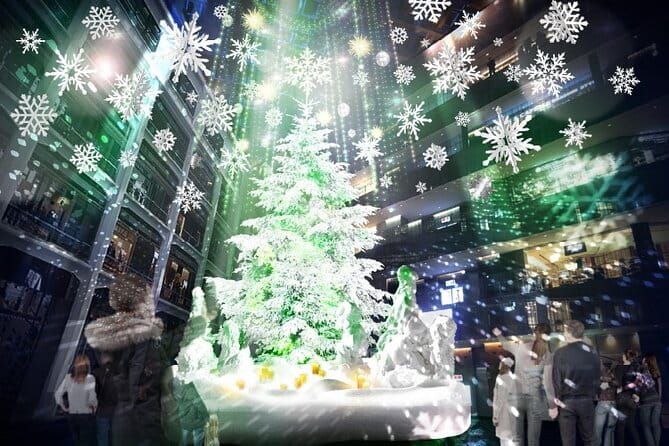
The next big stop is Marunouchi Building, and this is where you’ll spend the most time for a reason. There’s a large Christmas tree, and there’s a show time every 15 minutes.
That matters because it turns passive looking into something with rhythm. You’ll want to arrive ready to wait a few minutes so you can catch the show window without stressing.
If you’re coming here mainly for the iconic tree experience, prioritize this stop mentally. Once you’ve seen it, everything after feels like bonus scenes.
Shin-Marunouchi Building: arts-and-tree style décor
At Shin-Marunouchi Building, you’ll see Christmas arts and tree elements. The style feels more “designed” and less like a single massive centerpiece, which gives the night a nice balance.
This part is especially good if you like looking closely at details—patterns, lighting layouts, and how the installation reads from different angles.
Marunouchi Oazo: cute arts, final lighting stretch, and the end point
The final checkpoint is Marunouchi Oazo. Here you’ll find Christmas arts and tree lighting, plus it’s positioned so you can enjoy the Marunouchi Nagadori-style street illumination experience as part of the walk.
The official end point is at Marunouchi Oazo, which is convenient. You finish in a central area with good onward transit options, instead of ending somewhere obscure.
What the guides do that you’d miss on your own
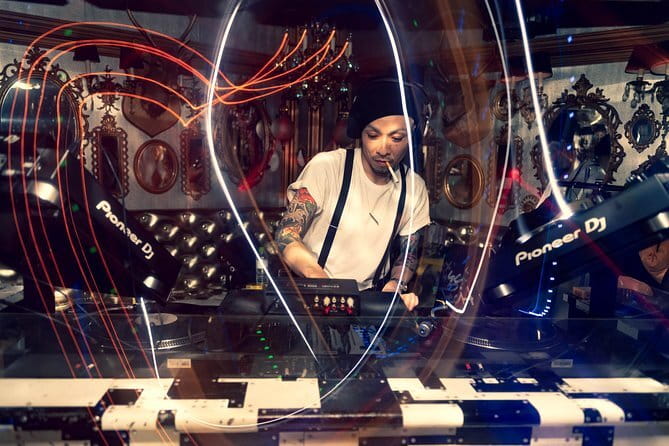
A big part of the value is the “how” of the night, not just the “what.” Guides like Kodai/Koda show up in feedback as helpful and attentive—explaining what you’re seeing and making sure you get good picture moments without losing the group.
That means you’re less likely to miss the best angle for a specific tree or end up standing where the lighting looks good but your face is blocked. You also move with purpose, which matters when people are stopping abruptly for photos.
If you’re traveling solo, a guided night walk can also feel safer. You’re not hunting for the right intersection in winter darkness—you’re following a plan.
Photo tips for winter lights (so your pictures don’t come out like smears)
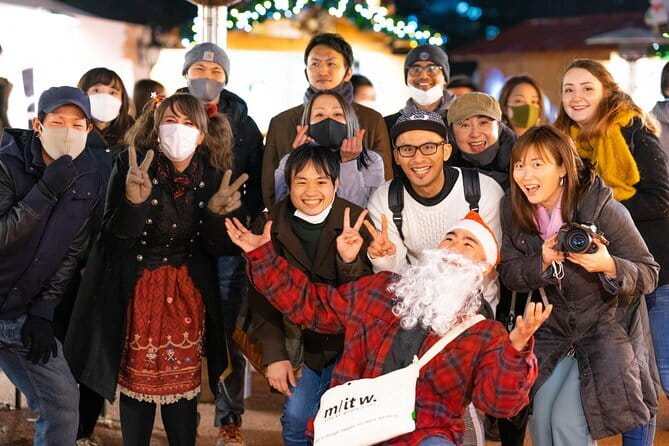
You’ll be shooting at night with strong light points, which is where many camera phones struggle. I suggest you treat the night like a slow photo session, not a quick selfie sprint.
Practical approach:
- Keep your shots steadier than you think you need (support your phone against a bag or railing when possible).
- Take a couple wider frames first, then zoom or step in for details at the taller trees.
- When you see a rooftop or wider garden view, do at least one “set-and-frame” shot before the crowd shifts.
The tour helps because you’re hitting known photo zones in the right order. You still need to slow down for a few seconds at each major tree.
Food, drinks, and comfort: plan your cold-weather rhythm
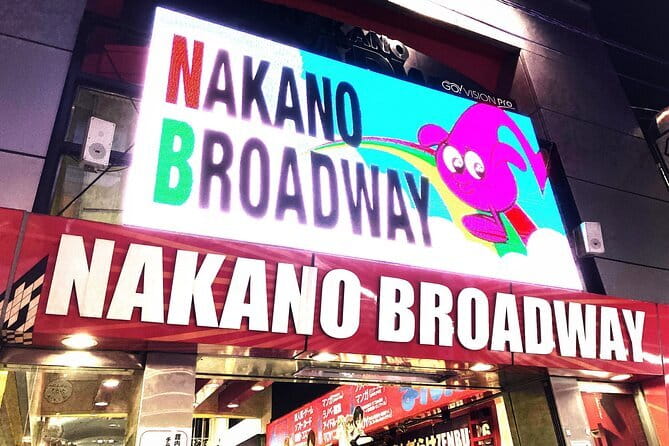
Food and drinks are not included. That’s not a dealbreaker; it just means you should bring your own plan. If you want hot coffee, you’ll need to buy it.
Your comfort matters on a 2.5-hour walk. Wear layers, expect cold air to hit harder near open streets, and bring something for your hands if you’re sensitive. Tokyo lighting looks best when you’re not rushing, and rushing usually means colder fingers and less patience.
If you’re tempted to buy alcohol during the tour, note that alcohol isn’t included in the price. Keep it simple and focus on the lights.
The end-of-tour coffee moment: what to expect
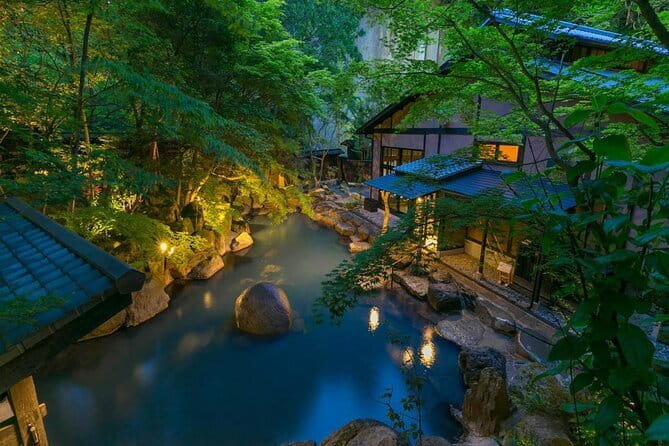
At the end, there might be an opportunity for coffee time at the last checkpoint, depending on whether the schedule stays on track.
So plan for it as a nice bonus, not a guarantee. If coffee is a must for you, it’s smart to also know where you’d grab one on your own after the tour ends.
Should you book this holiday lights walk?
Book it if you want a guided way to see Marunouchi’s long Christmas illumination stretch, several major big-tree moments, and a theme shift into Milky Way-style lighting at Tokyo Midtown Hibiya—without spending your evening figuring out transit and street corners.
Skip it if you hate winter crowds or you prefer lots of free time at just one or two locations. This tour is paced. You’re meant to see many highlights in one night, so it’s not designed for lingering for hours in a single spot.
If your goal is photos plus variety in central Tokyo Christmas lighting, this one is a strong value.
FAQ
How long is the Holiday Lights Walk Tour?
It lasts about 2 hours 30 minutes.
How much does the tour cost?
The price is $26.00 per person.
Where do I meet for the tour?
Meet at THE STAND near JR Yurakucho station (Hibiya-guchi exit) in Chiyoda City, Tokyo.
Where does the tour end?
The tour ends at Marunouchi Oazo in Chiyoda City, Tokyo.
What time does the tour start?
Pickup is scheduled for 7:30 pm, with pickup time listed from 19:30–19:45.
Do I need to print a ticket?
No. The tour uses a mobile ticket.
Are food or drinks included?
No. Food and drinks are not included, and alcoholic beverages are not included in the tour fee.
How big is the group?
The tour has a maximum of 40 travelers.
Is there any coffee at the end?
There might be an opportunity for coffee time at the last checkpoint if the timetable stays on track.
What kind of weather should I plan for?
This is a night walking tour of outdoor holiday lights, so plan for winter nighttime conditions and dress accordingly.
More Walking Tours in Tokyo
- Tokyo Tsukiji Fish Market Food and Culture Walking Tour
★ 5.0 · 3,184 reviews - Tokyo: Imperial Palace and Shogun Historical Walking Tour
★ 5.0 · 2,251 reviews - Tokyo: Shinjuku Local Bar and Izakaya Guided Walking Tour
★ 4.9 · 1,794 reviews - Tokyo: Tsukiji Fish Market Food and Walking tour
★ 5.0 · 1,724 reviews - Tokyo: Asakusa Walking Tour with Sensoji Temple Visit
★ 4.8 · 1,583 reviews
More Tours in Tokyo
- Mt Fuji and Hakone 1-Day Bus Tour Return by Bullet Train
★ 5.0 · 26,383 reviews - 1-Day Tokyo Bus Tour
★ 5.0 · 14,250 reviews - Tokyo: Shinjuku Food Tour (13 Dishes at 4 Local Eateries)
★ 5.0 · 6,603 reviews - Tokyo Mt Fuji 5th St & Hakone Cruise Bus Tour w/Bullet Train
★ 4.4 · 5,024 reviews - Flagship 2-Hours Official Street Go-Kart Tour – Tokyo Bay Shop
★ 5.0 · 4,974 reviews
More Tour Reviews in Tokyo
- Mt Fuji and Hakone 1-Day Bus Tour Return by Bullet Train
★ 5.0 · 26,383 reviews - 1-Day Tokyo Bus Tour
★ 5.0 · 14,250 reviews - Tokyo: teamLab Planets TOKYO Digital Art Museum Entry Ticket
★ 4.6 · 9,779 reviews - Mt Fuji & Hakone Cruise, Drum Show Bullet Train 1 Day from Tokyo
★ 4.0 · 7,413 reviews - Tokyo: Shinjuku Food Tour (13 Dishes at 4 Local Eateries)
★ 5.0 · 6,603 reviews
Latest Tokyo reviews off our desk
Walking Tours, compared.
 ★ 5.0Tokyo Tsukiji Fish Market Food and Culture Walking TourFrom $993,184 reviews
 ★ 5.0Imperial Palace and Shogun Historical Walking TourFrom $222,251 reviews
 ★ 4.9Shinjuku Local Bar and Izakaya Guided Walking TourFrom $341,794 reviews
 ★ 5.0Tsukiji Fish Market Food and Walking tourFrom $301,724 reviews
 ★ 4.8Asakusa Walking Tour with Sensoji Temple VisitFrom $221,583 reviews
 ★ 4.9Tsukiji Fish Market Guided Walking TourFrom $221,397 reviews
 ★ 4.7Tokyo Castle & Imperial PalaceーShogun Walking TourFrom $231,068 reviews
 ★ 4.9Imperial Palace Japanese History Walking TourFrom $32987 reviews
Browse the lists this tour appears in