

Reviewed · COOKING CLASSES
Home Cooking with a Local Host (Optional Shiba Inu Picnic)
Bento in a real home makes Tokyo feel close. You’ll learn handmade bento the way a Japanese mom teaches, right in her kitchen, with translation and cultural tips to guide you.
I also like the format: short, doable cooking steps, then a relaxed picnic at a nearby park and shrine with Ginta the Shiba Inu. One thing to consider is the price: at $150 for about 3 hours, it’s more about a hands-on experience than just getting a meal, and you’ll start at the station since private transit isn’t included.
In This Review
- Key highlights you’ll care about
- A hands-on bento lesson in a Tokyo home kitchen
- Bento making: what the kitchen time actually includes
- The guide’s job: translation plus cultural context
- From Iidabashi Station to the shrine picnic with Ginta
- A quick consideration
- What the picnic adds to the bento experience
- Photos and souvenirs: leaving with more than memories
- 1) Photos provided after the tour
- 2) Your bento box as a souvenir
- Price and value: is $150 for 3 hours worth it?
- Who this bento-and-shrine day is best for
- Practical schedule: what your morning will feel like
- Small details that matter on the day
- Should you book this bento-and-Ginta tour?
- FAQ
- Where does the tour start?
- How long is the experience?
- Is this a private tour?
- What’s included in the bento making?
- Will there be English support?
- Are photos included?
Key highlights you’ll care about
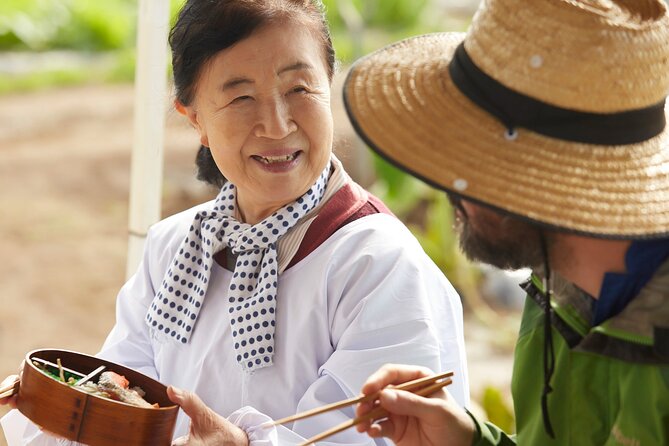
- A kitchen lesson in a real Japanese home with aprons, cooking cap, gloves, sanitizer, ingredients, and guidance
- Shrine picnic time with Ginta the Shiba Inu (plus photo chances)
- Your bento box as a souvenir, so you’re not leaving with only photos
- English support and cultural commentary throughout the cooking and picnic
- Digital photos taken by the guide provided after the tour
A hands-on bento lesson in a Tokyo home kitchen
Tokyo has no shortage of food tours. This one is different because it’s not only about tasting. It’s about learning the process in a real home setting, where you can see how everyday Japanese cooking turns into something neat, portioned, and travel-friendly.
What makes it work well is the pacing. You get about 1.5 hours for bento making, with step-by-step help and translation. Then you shift gears to a calm 1-hour picnic at a nearby park and shrine, instead of rushing from stop to stop.
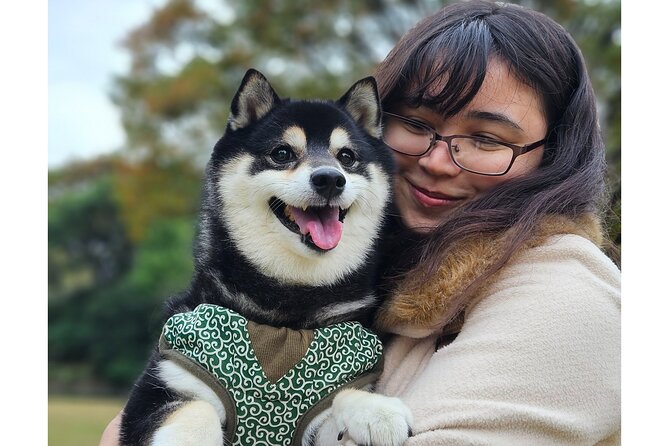
And yes, Ginta the Shiba Inu is part of the day. The Shiba element can make this feel a bit more playful than the usual class, but it also gives you a clear reason to slow down and eat what you made.
Readers also shortlisted these Tokyo bookings:
- Ramen & Gyoza Cooking Class in Tokyo with Local Supermarket Visit
★ 5.0 · 823 reviews - Tokyo: Easy Ramen Cooking Experience in Kabukicho, Shinjuku
★ 4.6 · 321 reviews - Ramen and Sushi Cooking Class with Sake Pairing Set in Tokyo
★ 5.0 · 291 reviews - Tokyo: Wagyu and 7 Japanese Dishes Cooking Class
★ 4.9 · 273 reviews
Bento making: what the kitchen time actually includes
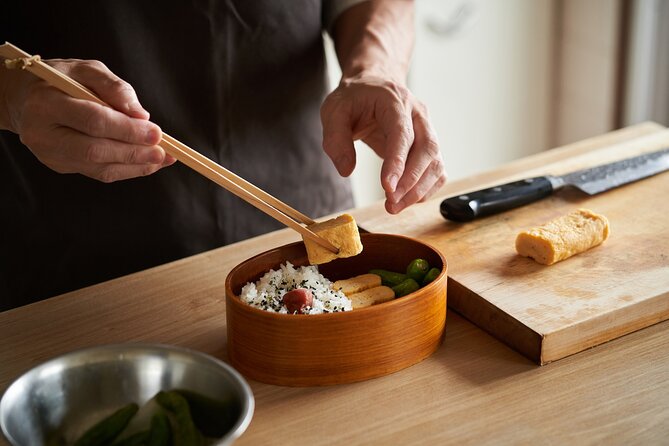
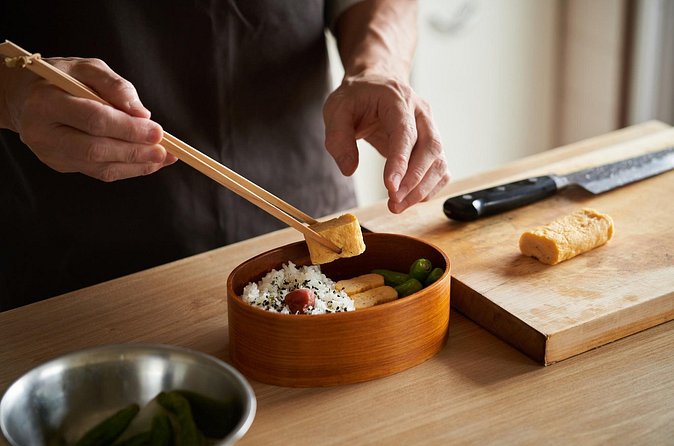
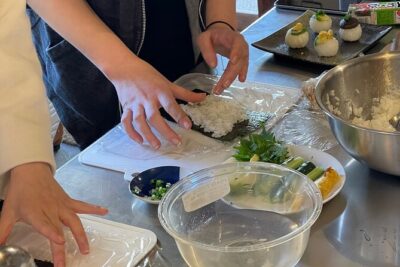
The cooking portion is designed to be practical, not intimidating. You’ll meet your local host setup in the home kitchen and make traditional handmade bentos with guidance from the Japanese mom. Your English guide translates as you cook and adds cultural context so the steps make sense, not just instructions to follow.
Here’s what you’re provided with:
- Apron and cooking cap
- Hand sanitizer and vinyl gloves
- Ingredients and recipe guidance
- Your bento box
That sounds like “just supplies,” but it matters. When you’re in someone’s kitchen, the goal is that you can focus on learning the technique, not scrambling for basics. Gloves and sanitizer are especially useful if you’re handling ingredients in a shared space.
Also, you keep the bento box afterward. That’s a small thing until you remember most food experiences end with a full stomach and empty hands. This one gives you something usable and lasting.
The guide’s job: translation plus cultural context
This tour is built around English interpreter support. Your guide (bilingual staff in English and Japanese) helps you throughout the cooking and picnic experience. That means you’re not stuck trying to translate instructions in the moment, and you’re less likely to miss the little “why” behind a step.
In practical terms, that support helps with:
- Following the sequence without confusion
- Understanding food manners and small customs
- Asking questions in real time
You’ll also get photos taken by the guide. You don’t need to worry about timing every shot while your hands are full with ingredients.
From Iidabashi Station to the shrine picnic with Ginta
You start at Iidabashi Station West Exit, meeting your guide at the station around 10:00 am. The experience then moves to a nearby park and shrine area for the picnic portion.
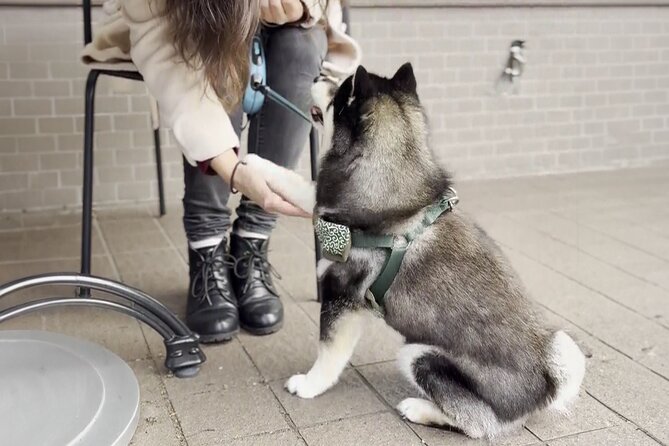
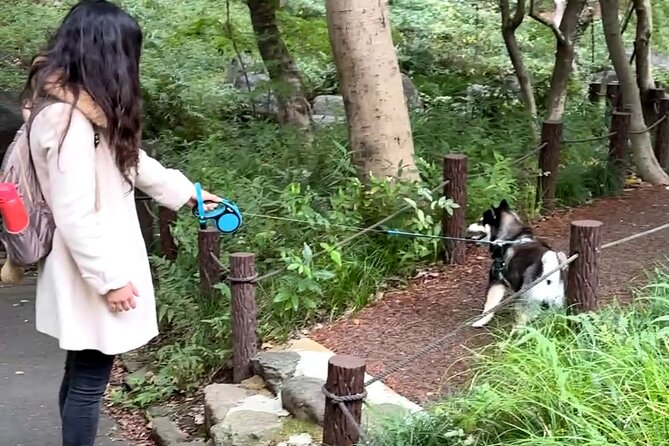
This is where the tour becomes more “Tokyo local day” and less “class.” You meet Ginta the Shiba Inu, then head out for about an hour of picnic time while you eat what you made. The shrine setting gives a visual calm that’s very different from a typical crowded eating stop.
One smart thing here: after cooking, you’re not immediately asked to sprint back into transit. The schedule gives you breathing room, plus time for photos with Ginta while you’re already in the relaxed mode.
A quick consideration
If you’re hoping for a major sightseeing route, this isn’t that kind of tour. It’s more about food practice and a single scenic picnic location near transit.
- Tokyo: Shinjuku Food Tour (13 Dishes at 4 Local Eateries)★ 5.0 · 6,603 reviews
- Tokyo Mt Fuji 5th St & Hakone Cruise Bus Tour w/Bullet Train★ 4.4 · 5,024 reviews
- Flagship 2-Hours Official Street Go-Kart Tour – Tokyo Bay Shop★ 5.0 · 4,974 reviews
- From Tokyo: Mount Fuji Full-Day Sightseeing Trip★ 4.5 · 4,970 reviews
- Tokyo: Hop-On Hop-Off Sightseeing Bus Ticket★ 3.9 · 4,207 reviews
What the picnic adds to the bento experience
Eating bento at home is one thing. Eating it outdoors, at a shrine area, is another. You get a different feel for why bentos exist in Japan: they’re portable, tidy, and meant for situations where you want a pleasant meal without complicated cleanup.
In that 1-hour picnic window, you’re doing three things at once:
- enjoying your homemade bento
- taking photos (including with Ginta)
- having a guided moment of “slow down and be here”
That’s also a good time to learn how to present or handle your meal the way locals do. Even if you don’t memorize every custom, you’ll leave with better instincts for eating situations in Japan.
Photos and souvenirs: leaving with more than memories

Two value points make this feel like a complete experience rather than a quick workshop.
1) Photos provided after the tour
The guide takes photos during the cooking and picnic, then distributes the digital photos after the tour at no extra cost. If you care about documentation, this is handy because you don’t have to manage camera angles while cooking.
2) Your bento box as a souvenir
Keeping your authentic bento box is a simple, practical souvenir. It’s not just a cute token. It’s something you can use at home, which helps you remember the steps you learned.
Price and value: is $150 for 3 hours worth it?
At $150 per person for about 3 hours, this is not a budget activity. The value comes from the combination, not a single ingredient like “free translation” or “a picnic.”
You’re paying for:
- A home kitchen experience (which naturally costs more than a public cooking school)
- Guided instruction and translation for both cooking and etiquette
- Supplies and ingredients included
- A photo service taken by the guide
- A tangible souvenir (the bento box)
- A small private group format (designed for 2–6 participants)
So the question becomes: do you want to learn a skill you can repeat, or do you mainly want to eat a good meal? If you want the skill, the price starts to make sense fast.
Who this bento-and-shrine day is best for
This works especially well if you:
- enjoy hands-on classes more than lectures
- want a more personal view of daily life in Japan
- like the idea of eating outdoors in a calm shrine/park setting
- want English support so the experience stays smooth
- travel with a small group and want a private vibe
It can also be a great option for food lovers who are tired of only doing restaurant meals. You’ll come away knowing how a Japanese bento structure is built, not just what it tastes like.
If you’re traveling solo, the private setup still makes it feel tailored, but you may want to check group size expectations when booking. The experience is limited to small groups, generally 2–6 people, for safety and an authentic feel.
Practical schedule: what your morning will feel like
This runs about 10:00 am to about 12:45 pm.
- 10:00: Meet at Iidabashi Station West Exit
- 10:00–11:30: Bento making in the Japanese home kitchen (aprons, guidance, translation)
- 11:30–11:45: Walk to the picnic location
- 11:45–12:45: Picnic time with Ginta the Shiba Inu and time to eat
- 12:45: Return to the station with the guide
That timeline is one reason I think it’s a good value. You get a full experience without it turning into a whole day plan. It’s the right length for a morning slot, especially if you want more afternoon time for Tokyo sights.
Small details that matter on the day
A few items you should know before you go:
- You’ll be cooking in a home kitchen, so you’ll be provided with apron, cap, gloves, sanitizer, and the ingredients. Still, you’ll want comfortable clothes you don’t mind slightly getting around food preparation.
- The tour doesn’t include private transportation. They take you to and from the tour location to the station, but you’re responsible for getting to Iidabashi Station on your own.
- This is a private tour/activity, meaning only your group participates.
Also, there’s a limited-time pricing offer that can reduce your cost by 20% if you agree to be photographed for the website, complete a survey, and write a review. If you’re okay with that, it can be a straightforward way to get better value.
Should you book this bento-and-Ginta tour?
Book it if you want a skill-based food experience in a real home and you like the idea of eating your work outdoors near a shrine. The combo of bento making plus the picnic with Ginta is a strong match for people who enjoy stories you can taste, not just locations you can check off.
Skip it if you mostly want a sightseeing-focused day, or if $150 feels too high for your travel style. This is a class, a meal, and a guided picnic wrapped together. It’s not a long itinerary.
If you want an authentic Japanese day that’s organized, guided in English, and ends with a souvenir you can actually use, this is the kind of tour that makes travel feel personal.
FAQ
Where does the tour start?
You’ll meet your guide at Iidabashi Station West Exit at 10:00 am. The listed meeting address is 4-chōme-9-5 Iidabashi, Chiyoda City, Tokyo 102-0072, Japan.
How long is the experience?
It’s about 3 hours total, including cooking time, walking time, and the picnic.
Is this a private tour?
Yes. It’s described as a private tour/activity, with only your group participating.
What’s included in the bento making?
You’ll get the recipe and guidance, apron, cooking cap, hand sanitizer, vinyl gloves, ingredients, and a bento box.
Will there be English support?
Yes. The tour includes a local guide with English and Japanese support, with translation provided throughout the cooking and picnic.
Are photos included?
Yes. The guide will take photos and provide the digital photos after the tour at no extra cost.
More Cooking Classes in Tokyo
- Ramen & Gyoza Cooking Class in Tokyo with Local Supermarket Visit
★ 5.0 · 823 reviews - Tokyo: Easy Ramen Cooking Experience in Kabukicho, Shinjuku
★ 4.6 · 321 reviews - Ramen and Sushi Cooking Class with Sake Pairing Set in Tokyo
★ 5.0 · 291 reviews - Tokyo: Wagyu and 7 Japanese Dishes Cooking Class
★ 4.9 · 273 reviews - Tokyo Washoku 4-hour Cooking Class: From Market to Table
★ 5.0 · 253 reviews
More Tour Reviews in Tokyo
- Mt Fuji and Hakone 1-Day Bus Tour Return by Bullet Train
★ 5.0 · 26,383 reviews - 1-Day Tokyo Bus Tour
★ 5.0 · 14,250 reviews - Tokyo: teamLab Planets TOKYO Digital Art Museum Entry Ticket
★ 4.6 · 9,779 reviews - Mt Fuji & Hakone Cruise, Drum Show Bullet Train 1 Day from Tokyo
★ 4.0 · 7,413 reviews - Tokyo: Shinjuku Food Tour (13 Dishes at 4 Local Eateries)
★ 5.0 · 6,603 reviews
Latest Tokyo reviews off our desk






Cooking Classes, compared.
 ★ 5.0Ramen & Gyoza Cooking Class in Tokyo with Local Supermarket VisitFrom $122823 reviews
 ★ 4.6Easy Ramen Cooking Experience in Kabukicho, ShinjukuFrom $29321 reviews
 ★ 5.0Ramen and Sushi Cooking Class with Sake Pairing Set in TokyoFrom $79291 reviews
 ★ 4.9Wagyu and 7 Japanese Dishes Cooking ClassFrom $67273 reviews
 ★ 5.0Tokyo Washoku 4-hour Cooking Class: From Market to TableFrom $79253 reviews
 ★ 5.0Small-Group Wagyu Beef and 7 Japanese Dishes Tokyo Cooking ClassFrom $72190 reviews
 ★ 5.0Private Home Cooking in Yanaka – Local Flavors in a Warm SettingFrom $122173 reviews
 ★ 5.0Tokyo Sushi Making Experience & Japanese Cooking ClassFrom $59150 reviews
Browse the lists this tour appears in