
Reviewed · COOKING CLASSES
Japanese Sake Tasting & Wagyu Sukiyaki Cooking Class in Tokyo
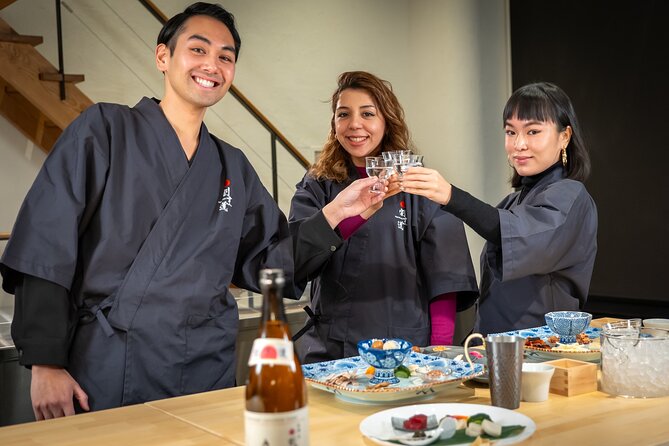
Sake tastes different by the hour. This Tokyo class is built around a sake tasting where you compare the same drinks chilled, at room temperature, and warm, plus you’ll learn how serving vessels can shift the flavor. It’s a smart way to understand Japanese drinking beyond just getting tipsy.
I especially liked the mix of tasting and hands-on cooking. You’ll go from learning how sake changes to cooking Wagyu sukiyaki yourself, with an expert-led vegetable carving demo happening while the pot simmers. In this setup, instructors like Hiromi-san guide the sake side, and the cooking is led by the chef team (including Naoya-san and Kimagai, depending on the session).
One possible drawback: it’s a set, 2-hour format with a small group cap (max 8), so it’s not ideal if you’re chasing a slow, private, custom experience. Also, it’s clearly alcohol-forward, since sake is part of the core pairing.
In This Review
- Key highlights you should know
- Tokyo Kitchen Studio at Kappodo: what the start feels like
- Sake tasting at three temperatures: the real learning moment
- From tasting to cooking: Wagyu sukiyaki in a hands-on workshop
- When your hot pot is ready: pairing your sukiyaki with sake
- What’s included in the $129 price: where your money goes
- Getting the most out of the class (without overthinking it)
- Who this Tokyo workshop is perfect for
- Should you book the Japanese sake tasting & Wagyu sukiyaki class?
- FAQ
- FAQ
- What is the starting location for the class?
- What time does it start?
- How long is the experience?
- How many people are in the group?
- What is included in the price?
- Is transportation included?
- Do you get Wagyu beef in the cooking class?
- Is there a shop discount after the class?
- What is the cancellation policy?
- Does the activity end where it starts?
Key highlights you should know
- Sake at three temperatures plus notes on how vessels affect flavor
- Snacks and pairings that teach you what to match with what
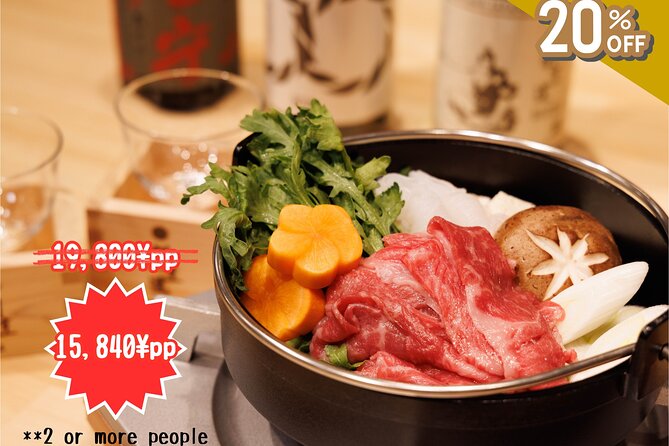
- Hands-on Wagyu sukiyaki cooking with premium beef
- Chef vegetable carving demo while your hot pot cooks
- Small group size (max 8) for a calmer pace
- Certificate + same-day shop discount after the class
Tokyo Kitchen Studio at Kappodo: what the start feels like
This class takes place in a modern cooking-studio setting tied to Kappodo, starting at Kappodo H.Q / Tokyo D kitchen Studio in Nishiazabu (Minato City). The meeting point is listed right on the DK building address, and it’s described as near public transportation, which matters in Tokyo because getting stuck in long transfers can kill your meal plans fast.
You start at 11:00 am, and the whole experience runs about 2 hours. The small group limit (maximum 8 travelers) is a big deal: you’re not just watching from the back row. You’ll have time for questions, and the pace stays human.
From a practical point of view, showing up hungry-but-not-starved helps. You’ll be tasting sake first, then eating your own hot pot lunch. If you arrive too full, the sake comparisons can feel muted. If you arrive too hungry, you might rush the process. Aim for that sweet spot where you’re ready to learn, then ready to eat.
Readers also shortlisted these Tokyo bookings:
- Tokyo: Shinjuku Food Tour (13 Dishes at 4 Local Eateries)
★ 5.0 · 6,603 reviews - Tokyo Tsukiji Fish Market Food and Culture Walking Tour
★ 5.0 · 3,184 reviews - Tokyo: Shinjuku Food Tour (15 Dishes and 4 Eateries)
★ 4.9 · 2,033 reviews - Best of Shinjuku: Izakaya Food Tour (4 Stops, 14+ Tastings)
★ 5.0 · 1,863 reviews
Sake tasting at three temperatures: the real learning moment
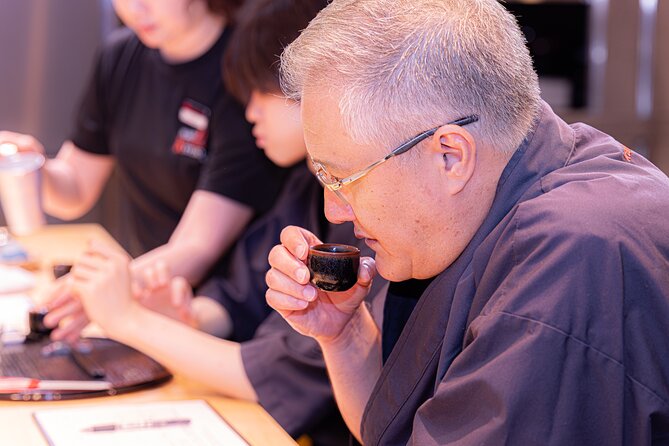
The heart of this class is a sake tasting lesson led by an expert, and it’s designed with a simple experiment: same sake, different temperatures. You’ll compare chilled, room temperature, and warm, and you’ll also hear how the serving vessel can change what you notice.
Why this matters: temperature doesn’t just change drink comfort. It changes aroma and how the flavors land on your tongue. Chilled sake often feels cleaner and sharper, while warmer sake tends to feel more rounded. And the glass or cup shape can shift how aroma reaches you. This is exactly the kind of detail that makes sake feel mysterious for beginners, then suddenly understandable.
You won’t be tasting in isolation, either. Each pour is paired with selected Japanese snacks. That pairing piece is one of the best ways to turn learning into a real takeaway. Instead of remembering notes from a lecture, you’ll get a feel for matching sweetness, saltiness, and texture with different sake styles.
The lesson also includes alcoholic beverages beyond the temperature comparison. So even if you’re new to sake, you’ll likely leave with more than one idea of what you like. One of the most repeated points from people who booked this is that they appreciated the explanations and the variety, not just the drinking.
From tasting to cooking: Wagyu sukiyaki in a hands-on workshop
After the sake section, you shift into the Wagyu sukiyaki workshop. This is the part that turns the experience from educational to genuinely memorable: you cook and then eat what you make.
You’ll be using equipment provided for the class, and you’ll be working with premium Wagyu beef. Sukiyaki is a comfort-food style hot pot, but the process is still technique-focused. You’re not just dumping ingredients in a pot. You’ll be guided through how to build the meal while keeping an eye on simmering so everything stays flavorful.
As the pot cooks, there’s also a live vegetable carving demonstration by a professional chef. This is more than decoration. Knife work is part of Japanese cooking culture, and seeing the shapes done in real time gives you a sense of intention—texture, bite size, and even how vegetables will cook.
In the sessions I’m recommending this to, the chef team is a big part of the experience. People highlighted instructors by name—Hiromi-san on sake—and also praised the cooking leadership, including Naoya-san and Kimagai. The consistent theme: the staff makes it feel smooth and friendly, not awkward for newcomers.
Timing-wise, since the class runs about 2 hours total, the sukiyaki segment moves at a steady pace. You should expect to participate, not just observe. If you like learning by doing, this format is a strong fit.
When your hot pot is ready: pairing your sukiyaki with sake
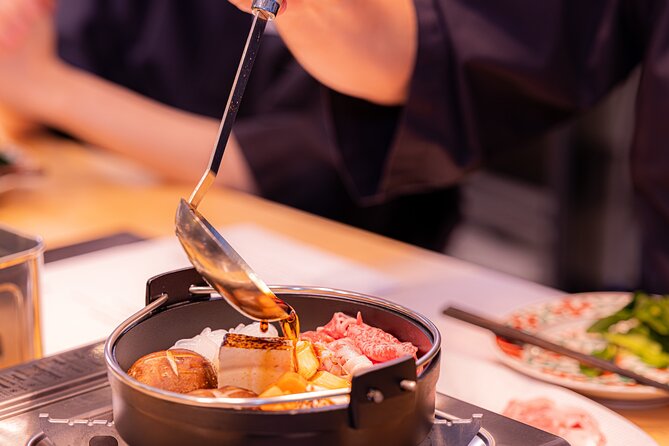
Once your sukiyaki is done, the class doesn’t drop the ball with a random pairing at the end. You’ll savor your own hot pot and pair it with sake.
This is where the temperature lesson pays off. You’ll likely find yourself noticing which sake style feels right with the beef richness, the savory broth, and the sweetness that often shows up in sukiyaki-style seasoning. The idea isn’t that there’s one perfect answer. It’s that your palate gets better at making choices once you’ve practiced the comparison earlier.
If you’re the type who likes to figure out flavor logic—why one combination works and another doesn’t—this section is a win. You’re tasting in context, with a real meal in front of you.
What’s included in the $129 price: where your money goes
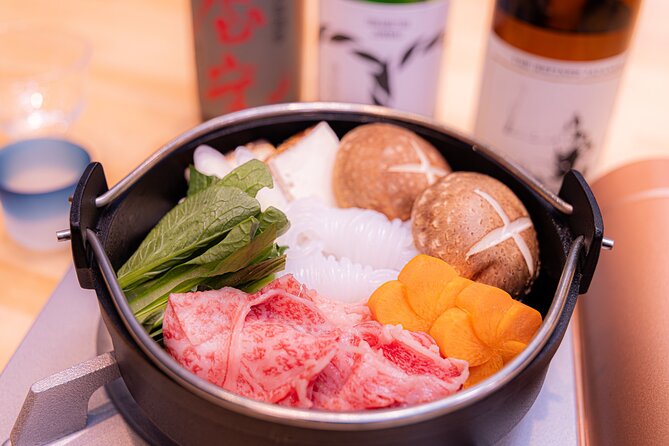
At $129 per person for about 2 hours, this class is priced like a true food experience, not a basic demo. Here’s what you’re paying for, and why it’s usually good value in Tokyo:
- Sake tastings across three temperature ranges, plus other sake options
- Lunch: Wagyu beef sukiyaki that you cook and then eat
- All equipment needed for the sake pairing lesson and the cooking session
- A certificate of participation (small, but it’s a nice souvenir-style touch)
- 10% off at the 1F Shop on the same day as your workshop visit
The same-day shop discount can matter if you want to bring home something related to the lesson—especially if you decide you like one of the sake styles you tasted. A lot of Tokyo cooking classes stop at the meal. This one gives you a reason to connect it to what you buy after.
Also, the max group size (8 people) helps justify the price. You’re not just buying food. You’re buying guided attention, hands-on participation, and a structured tasting experience.
Group discounts are listed as a feature too. So if you’re coming with friends or family, it may be worth checking whether your booking rate changes based on group size.
Readers also shortlisted these Tokyo bookings:
- Ramen & Gyoza Cooking Class in Tokyo with Local Supermarket Visit★ 5.0 · 823 reviews
- Tokyo: Easy Ramen Cooking Experience in Kabukicho, Shinjuku★ 4.6 · 321 reviews
- Ramen and Sushi Cooking Class with Sake Pairing Set in Tokyo★ 5.0 · 291 reviews
- Tokyo: Wagyu and 7 Japanese Dishes Cooking Class★ 4.9 · 273 reviews
- Tokyo Washoku 4-hour Cooking Class: From Market to Table★ 5.0 · 253 reviews
Getting the most out of the class (without overthinking it)
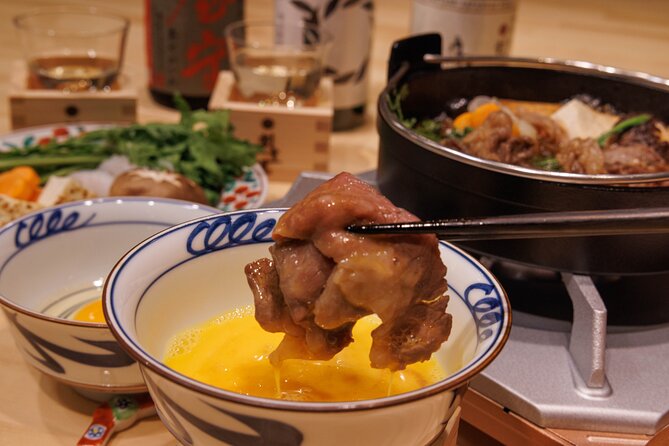
If you want your experience to feel worth every yen, go in with a simple plan:
- Ask what you should pay attention to during each sake temperature. The lesson is built around comparison, so questions help you lock in the idea faster.
- Treat the snacks like cues. Those bite-sized pairings are part of the curriculum, even if they look small.
- Join the cooking step fully. Sukiyaki is forgiving, but the fun comes from doing it yourself while the pot simmers.
- Be ready for hot food and alcohol. The class includes sake pairings, so it’s not a low-key tea-and-dessert stop.
If you don’t normally drink much sake, you can still enjoy the cooking. The sake section is a core component, though, so think of this as a culture-and-flavor class where alcohol is part of the pairing framework.
Who this Tokyo workshop is perfect for
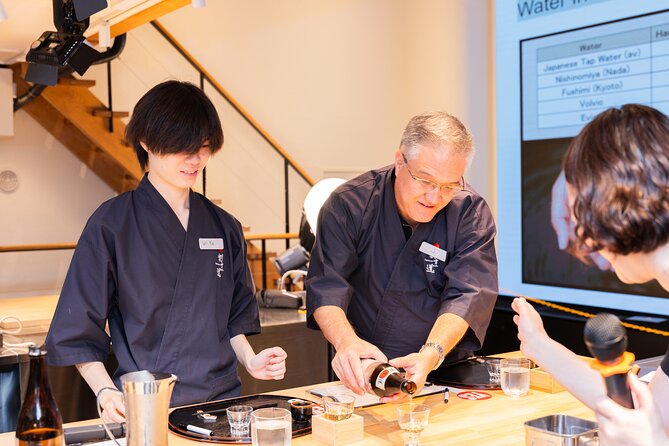
This is a strong choice if you fit one of these profiles:
- You want a short, guided way to understand sake without needing prior knowledge
- You like hands-on cooking more than watching from a distance
- You’re traveling in a small group and want a calmer experience than big-city tours
- You’re a family group looking for a friendly, structured activity (the tone here is clearly welcoming)
It may be less ideal if you’re only looking for a quick meal. This is a tasting + cooking program, and the value comes from the pairing and instruction, not just the food.
Should you book the Japanese sake tasting & Wagyu sukiyaki class?
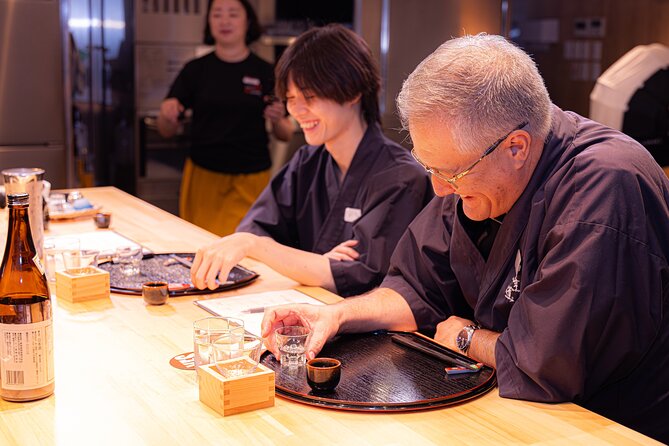
I’d book it if you want two things at once: a practical introduction to sake temperature and a meal you cook yourself with premium Wagyu. The small-group size, the temperature comparisons, and the chef-led vegetable carving demo are the reasons this class works, even if you’re not a die-hard foodie.
I’d skip or reconsider if you’re looking for a fully non-alcohol experience, or if you need something private and customized. For most people who like good food and straightforward learning, this hits a nice sweet spot: informative, hands-on, and built for a Tokyo lunch you’ll actually remember.
FAQ
FAQ
What is the starting location for the class?
The class starts at Kappodo H.Q / Tokyo D kitchen Studio / Cooking Workshop, located in Nishiazabu, Minato City, with the full listed address on DK building: 2-chōme2112 DKビル, 106-0031 Tokyo.
What time does it start?
It starts at 11:00 am.
How long is the experience?
The duration is about 2 hours.
How many people are in the group?
The class has a maximum of 8 travelers.
What is included in the price?
Included are sake tastings (with sake available in three temperature ranges and other sake), Wagyu beef sukiyaki lunch, equipment for the sake pairing lesson, a certificate of participation, and access to a 10% off offer at the 1F Shop on the same day.
Is transportation included?
No. Private transportation is not included.
Do you get Wagyu beef in the cooking class?
Yes. The lunch is Wagyu beef sukiyaki, and it’s part of the hands-on cooking portion.
Is there a shop discount after the class?
Yes. Participants can enjoy 10% off all items at the 1F Shop on the same day.
What is the cancellation policy?
You can cancel for a full refund if you cancel at least 24 hours before the experience’s start time. Cancellation within 24 hours is not refundable. Free cancellation is listed.
Does the activity end where it starts?
Yes. The activity ends back at the meeting point.
More Cooking Classes in Tokyo
- Ramen & Gyoza Cooking Class in Tokyo with Local Supermarket Visit
★ 5.0 · 823 reviews - Tokyo: Easy Ramen Cooking Experience in Kabukicho, Shinjuku
★ 4.6 · 321 reviews - Ramen and Sushi Cooking Class with Sake Pairing Set in Tokyo
★ 5.0 · 291 reviews - Tokyo: Wagyu and 7 Japanese Dishes Cooking Class
★ 4.9 · 273 reviews - Tokyo Washoku 4-hour Cooking Class: From Market to Table
★ 5.0 · 253 reviews
More Food & Drink in Tokyo
- Tokyo: Shinjuku Food Tour (13 Dishes at 4 Local Eateries)
★ 5.0 · 6,603 reviews - Tokyo Tsukiji Fish Market Food and Culture Walking Tour
★ 5.0 · 3,184 reviews - Tokyo: Shinjuku Food Tour (15 Dishes and 4 Eateries)
★ 4.9 · 2,033 reviews - Best of Shinjuku: Izakaya Food Tour (4 Stops, 14+ Tastings)
★ 5.0 · 1,863 reviews - Tokyo: Tsukiji Fish Market Food and Walking tour
★ 5.0 · 1,724 reviews
More Tour Reviews in Tokyo
- Mt Fuji and Hakone 1-Day Bus Tour Return by Bullet Train
★ 5.0 · 26,383 reviews - 1-Day Tokyo Bus Tour
★ 5.0 · 14,250 reviews - Tokyo: teamLab Planets TOKYO Digital Art Museum Entry Ticket
★ 4.6 · 9,779 reviews - Mt Fuji & Hakone Cruise, Drum Show Bullet Train 1 Day from Tokyo
★ 4.0 · 7,413 reviews - Tokyo: Shinjuku Food Tour (13 Dishes at 4 Local Eateries)
★ 5.0 · 6,603 reviews
Latest Tokyo reviews off our desk






Cooking Classes, compared.
 ★ 5.0Ramen & Gyoza Cooking Class in Tokyo with Local Supermarket VisitFrom $122823 reviews
 ★ 4.6Easy Ramen Cooking Experience in Kabukicho, ShinjukuFrom $29321 reviews
 ★ 5.0Ramen and Sushi Cooking Class with Sake Pairing Set in TokyoFrom $79291 reviews
 ★ 4.9Wagyu and 7 Japanese Dishes Cooking ClassFrom $67273 reviews
 ★ 5.0Tokyo Washoku 4-hour Cooking Class: From Market to TableFrom $79253 reviews
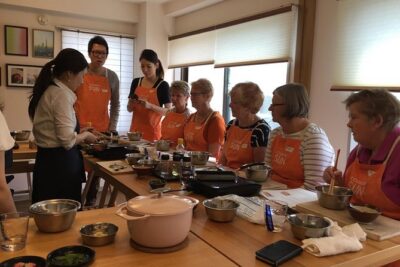 ★ 5.0Small-Group Wagyu Beef and 7 Japanese Dishes Tokyo Cooking ClassFrom $72190 reviews
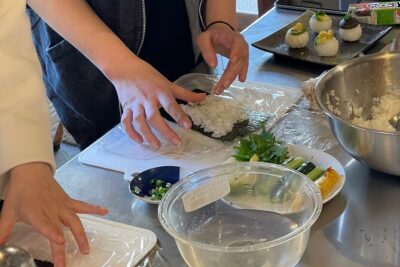 ★ 5.0Private Home Cooking in Yanaka – Local Flavors in a Warm SettingFrom $122173 reviews
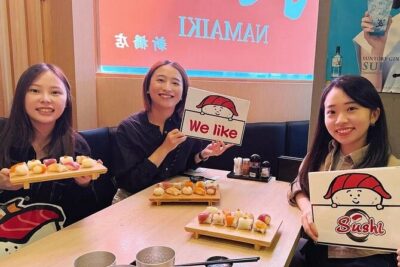 ★ 5.0Tokyo Sushi Making Experience & Japanese Cooking ClassFrom $59150 reviews
Browse the lists this tour appears in