
Reviewed · AKIHABARA ANIME TOURS
Manga Lesson with a Professional Japanese Manga Artist in Nakano
Tokyo manga gets real when you sit down and draw. This private lesson in Nakano pairs a professional manga artist with hands-on tools and a finished page you can take home. The main thing to plan for is finding the studio location at Arai without overthinking it.
I especially like how the class walks you through the exact processes manga artists use, from pencil draft to inking and screen tones. I also like that the teaching is flexible for all levels, so beginners aren’t stuck and practiced drawers don’t feel bored. One possible drawback: the address is in a local neighborhood, and clear directions can matter when you arrive.
You’ll spend about 2 hours working step-by-step at the Manga School Nakano, and you’ll leave with a complete manga-style character. The lesson uses real materials like dip pens, ink, specialized nibs, and screen tones, plus a short talk on techniques and the history of manga.
In This Review
- Key highlights
- Nakano Manga Lesson: what makes it feel authentic
- Meeting up at Manga School Nakano: location and arrival tips
- Tools you actually use: screen tones, ink, nibs, and white highlights
- The 2-hour workflow: from pencil draft to finished character
- Your instructor and the teaching style: patient, practical, and tailored
- What you take home: your souvenir manga page
- Price and value in Tokyo terms: $67.77 for real coaching
- Who should book this manga lesson (and who might not)
- Should you book the Nakano manga lesson?
- FAQ
- How long is the manga lesson?
- Where does the class start?
- What is included in the price?
- Do I need any drawing experience?
- What tools will I use during the class?
- Is it a private class?
- Are drinks included?
- What is the cancellation policy?
Key highlights
- Professional instruction in English with no interpreter needed
- Hands-on manga tools including screen tones and specialized pen nibs
- Step-by-step workflow: pencil draft to ink to highlights to screen tones
- Copying references with guidance, even if you’re a total beginner
- A finished artwork to take home as your souvenir
- Private class format customized for solo or small groups
Nakano Manga Lesson: what makes it feel authentic
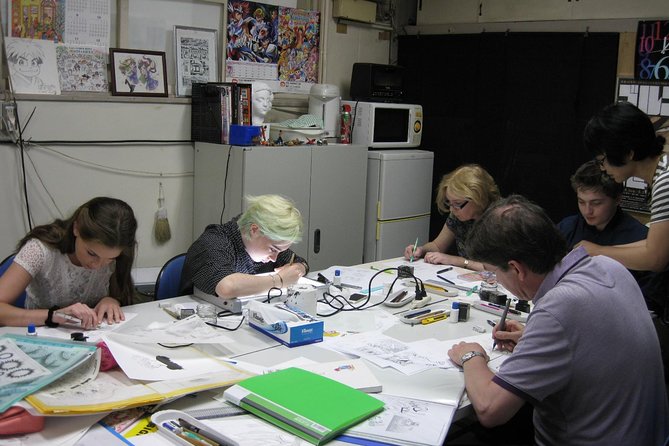
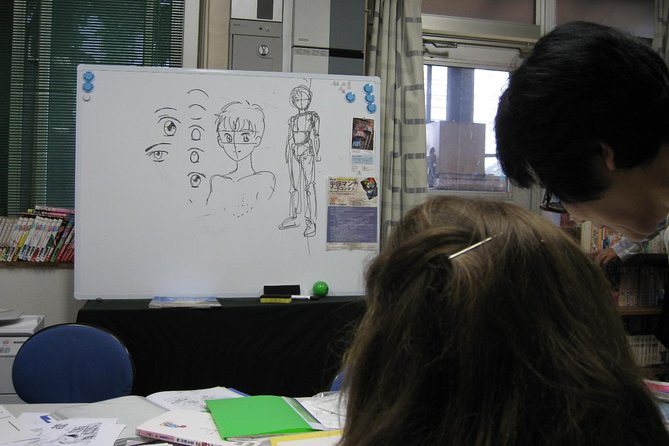
This isn’t a “watch from the sidelines” class. You sit at your station and make choices about your drawing, while your instructor guides each step. In other words, you’re not just learning manga in theory. You’re learning it the way manga gets made: in layers, with tools that do specific jobs.
Nakano helps with that vibe. It’s a local Tokyo neighborhood, not an attraction-built bubble. That means the experience feels closer to how manga artists work day to day, not like a theme-park workshop. If you like Tokyo that mixes everyday life with creativity, this location fits.
One more practical win: the class is private and customizable. If you’re a solo traveler, you can choose a solo tuition slot. If you’re traveling as a couple or a small group, you can keep it intimate rather than joining a large public class. That matters because manga drawing is fussy—small corrections make a big difference—and one-on-one time helps.
More of Akihabara, ranked by our reviewers
- Official Street Go-Kart Tour – Akihabara
★ 5.0 · 1,578 reviews - Tokyo Go Kart: Asakusa, Skytree, and Akihabara **IDP MUST**
★ 5.0 · 988 reviews - Akihabara Anime & Game Adventure Walking Tour (Group or Private)
★ 5.0 · 404 reviews - Tokyo: Gameboy Mod Workshop at Akihabara
★ 5.0 · 253 reviews
Meeting up at Manga School Nakano: location and arrival tips
The start point is in Nakano City, Arai 2-chōme, at 7-13 in the Nangoku building area (南国ビル). It’s listed as: 165-0026 Tokyo, Nakano City, Arai, 2-chōme 7-13 南国ビル.
Because this is a neighborhood studio, your biggest challenge is simply finding the place efficiently. Do yourself a favor: save the address before you leave, check your map app for the exact building, and arrive a few minutes early so you’re not rushing while trying to orient yourself.
Also note that instructions for finding the studio may not be super detailed at first, based on how some people have described their experience. The good news: once you’re there, the teaching experience itself runs smoothly.
Tools you actually use: screen tones, ink, nibs, and white highlights
A big part of the fun is getting your hands on the real manga toolkit. The class provides materials such as screen tone, manga pens and ink, manga paper, and several types of specialized pen nibs. You also use dip pen and ink materials during the workflow.
Here’s why this matters for you, not just for your inner art-nerd. Screen tones are one of the fastest ways manga drawings look “real.” They add texture, shadows, and mood without you having to invent shading from scratch. Once you paste screen tones onto your piece, you’ll understand why manga looks the way it does.
You’ll also work with black areas and highlights using white ink. That last part surprises a lot of first-timers: white ink isn’t just for decoration. It helps you correct the look of shapes and add shine or emphasis in a manga style that reads clearly at a glance.
And the specialized nibs are more than novelty. Different nibs help you create different line weights—thin for detail, stronger for structure. When you see how line thickness changes the feel of a face or hair outline, the whole drawing process clicks.
The 2-hour workflow: from pencil draft to finished character
The lesson is built around clear steps. You won’t be left guessing what to do next. The workflow typically goes like this:
First comes pencil drawing (draft). You sketch your manga-type character and get the proportions down. Then you move to inking, where pencil lines get erased or ignored so the final lines look clean and intentional.
Next is inking and cleanup: you ink over your structure, then remove the pencil lines. That’s the moment your drawing starts looking like a finished panel. Your instructor adjusts what you’ve done so the line work matches manga conventions rather than looking like random sketch marks.
After that, you add black parts—the heavy values that create the bold manga look. This is where you learn what gets filled in and what stays light. Then you correct mistakes. That’s part of the process and not a disaster, so you can relax and keep moving forward.
Then comes highlights with white ink. It’s a small step but it’s powerful. White highlights make eyes, hair shine, and certain surfaces pop. It also helps your piece look polished rather than flat.
Finally, you add screen tones—the gray textures and effects that create depth. The class includes pasting screen tones at the end, so you’re not stuck learning a technical hobby after the main lesson is done.
You’ll also get references to copy from. Beginners can choose manga reference material and copy it with help, which keeps you from getting stuck on the hardest part: starting.
Your instructor and the teaching style: patient, practical, and tailored
From the feedback style shared by past students, the teaching tone tends to be welcoming and pressure-free. People often mention that even if they’re not confident drawing, the instructor breaks things down clearly.
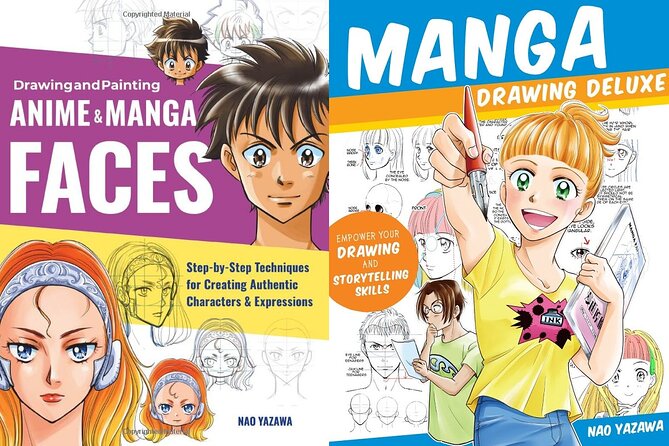
One instructor name that comes up is Nao Yazawa. She’s described as kind and patient, with a long career as a manga artist and series creator. If you get assigned to Nao, you can expect lots of attention to detail—how you hold the pen, how you place line weight, and how you build the face and hair so it reads clearly in manga style.
A key detail for English speakers: instruction is described as precise and direct, without the need for interpreters. That matters because manga techniques involve small, specific corrections. If you’re explaining your question in a second language while someone tries to translate, it adds stress.
The private, custom nature also shows up in pacing. If you need more time on pencil proportions, you’ll likely get it. If you’re faster, you still get guidance so your final result doesn’t collapse under rushed inking.
Readers also shortlisted these Tokyo bookings:
- Sushi Making Tokyo Roll and Authentic Japanese Sushi Class★ 5.0 · 3,971 reviews
- Tokyo: Roll and Authentic Sushi Making Class in Asakusa★ 4.9 · 1,957 reviews
- Tokyo Shinjuku Chopsticks Making Class★ 5.0 · 1,763 reviews
- Tokyo: Sushi Making Class in a Happi Coat near a Famous Spot★ 4.9 · 1,377 reviews
- Chopstick Making Workshop in Ginza★ 4.8 · 1,366 reviews
What you take home: your souvenir manga page
At the end of the class, you walk away with your completed manga drawing as a souvenir. That’s the best kind of vacation activity: you’re not just buying a memory, you’re collecting something you can keep on your desk or frame later.
Also, because the class is step-by-step, you’re likely to finish with a real outcome even if your drawing skills are brand new. Many people describe the experience as turning a blank page into something they feel proud showing others.
One extra note: in at least one class account, the instructor kept copies to display or share, such as posting on Instagram. Whether that happens in your session can’t be guaranteed, but it’s a good sign of how seriously the studio treats the work you create.
If you’re thinking ahead, take a photo before you leave and bring a simple bag or folder to protect the page on the way back to your hotel.
Price and value in Tokyo terms: $67.77 for real coaching
At $67.77 per person, the price is easier to justify when you look at what’s included: a professional manga artist and the manga tools you use during the workshop. You’re not paying only for instructions—you’re also paying for materials that typically would cost money if you tried to replicate the experience later.
The class is about 2 hours, which is long enough to cover a full workflow (draft → ink → blacks → highlights → screen tones). In many art experiences, you either get a quick “taste” or you commit to a full multi-session course. This hits the middle.
Is it expensive compared with a museum ticket? Sure. But it’s a different kind of value. You get a finished piece, a creative skill you’ll carry forward, and access to tool knowledge you probably can’t learn from a single YouTube video.
One practical note: drinks aren’t included. So plan to have water before you arrive or pick some up nearby. No big deal—just don’t count on the studio to provide it.
Who should book this manga lesson (and who might not)
This is a strong pick if you:
- Love manga and want a hands-on Tokyo experience, not just a photo stop
- Want to learn the “why” behind style—line weight, texture, and layer work
- Travel as a family, couple, or small group and want something that keeps everyone busy
- Are a complete beginner and want a structured path that ends with a finished drawing
It also works for experienced artists, because the instructor can adjust the lesson. If you already draw, you’ll likely appreciate tool technique and how screen tones and inking steps change the final look.
It might be less ideal if you’re looking for a long art session. Two hours is enough for a single strong page, but not for elaborate multi-page spreads. If you’re expecting a deep manga “production” training program over days, this isn’t that.
Should you book the Nakano manga lesson?
If you want a creative souvenir and a genuinely hands-on workshop led by a working professional, I’d book it. The combination of private instruction, real manga tools (including screen tones and ink), and a clear step-by-step workflow makes the value feel straightforward.
Do book with one mindset: arrive ready to draw and follow each step. If you do that, you’ll likely leave with something you can show friends back home—plus a better understanding of why manga art looks the way it does.
If you’re worried about getting lost, plan extra time for the meeting point and double-check the address saved to your phone. That’s the main thing that could trip you up before the fun part starts.
FAQ
How long is the manga lesson?
The class lasts about 2 hours.
Where does the class start?
The meeting point is at Manga School Nakano in Nakano City, Arai 2-chōme 7-13, 南国ビル (165-0026 Tokyo).
What is included in the price?
The price includes a professional manga artist and the manga tools.
Do I need any drawing experience?
No. The lesson welcomes all skill levels and the instructor tailors guidance to your level, including helping beginners.
What tools will I use during the class?
You’ll use provided manga tools and materials, including screen tones, manga pens and ink, manga paper, and specialized pen nibs.
Is it a private class?
Yes. Only your group participates, and you can choose solo or small-group tuition.
Are drinks included?
No. Drinks are not included.
What is the cancellation policy?
You can cancel for a full refund up to 24 hours in advance of the experience’s start time. If you cancel less than 24 hours before, the amount paid is not refunded.
More Workshops in Tokyo
- Sushi Making Tokyo Roll and Authentic Japanese Sushi Class
★ 5.0 · 3,971 reviews - Tokyo: Roll and Authentic Sushi Making Class in Asakusa
★ 4.9 · 1,957 reviews - Tokyo Shinjuku Chopsticks Making Class
★ 5.0 · 1,763 reviews - Tokyo: Sushi Making Class in a Happi Coat near a Famous Spot
★ 4.9 · 1,377 reviews - Chopstick Making Workshop in Ginza
★ 4.8 · 1,366 reviews
More Tour Reviews in Tokyo
- Mt Fuji and Hakone 1-Day Bus Tour Return by Bullet Train
★ 5.0 · 26,383 reviews - 1-Day Tokyo Bus Tour
★ 5.0 · 14,250 reviews - Tokyo: teamLab Planets TOKYO Digital Art Museum Entry Ticket
★ 4.6 · 9,779 reviews - Mt Fuji & Hakone Cruise, Drum Show Bullet Train 1 Day from Tokyo
★ 4.0 · 7,413 reviews - Tokyo: Shinjuku Food Tour (13 Dishes at 4 Local Eateries)
★ 5.0 · 6,603 reviews
More of Akihabara, Reviewed
- Official Street Go-Kart Tour – Akihabara
★ 5.0 · 1,578 reviews - Tokyo Go Kart: Asakusa, Skytree, and Akihabara **IDP MUST**
★ 5.0 · 988 reviews - Akihabara Anime & Game Adventure Walking Tour (Group or Private)
★ 5.0 · 404 reviews - Tokyo: Gameboy Mod Workshop at Akihabara
★ 5.0 · 253 reviews - Akihabara: Private Anime and Pop Culture Tour
★ 4.8 · 152 reviews
Latest Tokyo reviews off our desk






Akihabara Anime Tours, compared.
 ★ 5.0Official Street Go-Kart Tour – AkihabaraFrom $611,578 reviews
 ★ 5.0Tokyo Go Kart: Asakusa, Skytree, and Akihabara **IDP MUST**From $99988 reviews
 ★ 5.0Akihabara Anime & Game Adventure Walking Tour (Group or Private)From $90404 reviews
 ★ 5.0Gameboy Mod Workshop at AkihabaraFrom $360253 reviews
 ★ 4.8Akihabara: Private Anime and Pop Culture TourFrom $95152 reviews
 ★ 5.0Akihabara Tailor-made Private Tour for Anime FansFrom $132142 reviews
 ★ 5.0Original Street Kart Experience from AkihabaraFrom $51111 reviews
 ★ 5.0Ramen Making from Scratch +Akihabara Tour –Tokyo Cooking ClassFrom $123107 reviews
Browse the lists this tour appears in