
Reviewed · WALKING TOURS
Private Customizable Walking Tour of Tokyo
Tokyo feels personal on this private walk. Tokyo stops feel personal on this private walk, because you’re not locked into a bus-and-brochure route—you choose the half-day or full-day rhythm and the neighborhoods you care about. I like the hotel meet-up setup and the customizable pacing that keeps the day from feeling like a checklist.
Two things I really like: you get subway navigation help without the headache of sorting transfers on your own, and most of the core sights here have free admission, so your tour budget goes toward time and local context. One possible drawback: even with pickup, this is still a walking tour, so if your group hates steps or long transfers, you’ll want to plan shorter stays in each area.
In This Review
- Key highlights that matter in Tokyo
- What makes this private Tokyo walk worth your time
- Hotel pickup, subway legs, and staying sane
- How customization actually changes the day
- Shibuya Crossing and Hachikō: the modern Tokyo kickoff
- Harajuku street energy next to Meiji Jingu calm
- Shinjuku neon views, then Asakusa’s old-town atmosphere
- Akihabara and Nihonbashi: pop culture and the roots of trade
- Tsukiji outer market and Yanaka’s slower side
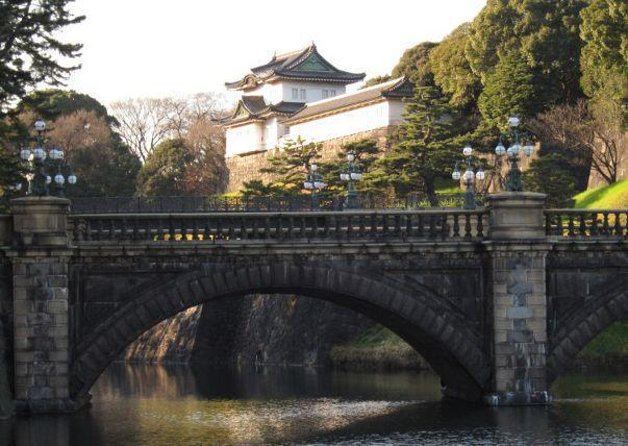
- Imperial Palace East Gardens and Edo Castle remnants
- Skyline tickets: Skytree, Tokyo Tower, and Shibuya Sky
- What you should budget beyond the tour price
- Who this tour fits best
- Quick advice to get the most from your guide
- Should you book this private custom walking tour of Tokyo?
- FAQ
- How long is the tour?
- Is this tour private?
- Do I get hotel pickup and drop-off?
- Is it only walking, or is there other transportation?
- Do I need to buy a subway travel pass?
- Are tickets included for all the main sights?
- Can I choose where we start and what we see?
- Is food included?
- What about kids?
- Is the tour dependent on weather?
Key highlights that matter in Tokyo
- Hotel pickup and drop-off: you start and end the day with less logistics stress
- Choose half-day or full-day: you control how much ground you cover
- Guide can help with a day travel pass: fewer ticket-machine headaches
- Free admission for many core stops: more value where it counts
- Optional skyline tickets: add Skytree, Tokyo Tower, or Shibuya Sky if the timing works
- Private only: it’s just your group, so interests drive the route
What makes this private Tokyo walk worth your time
Tokyo can feel like two cities in one day: fast, loud, neon-first Shibuya and Harajuku energy on one side, and calm shrine-and-temple Tokyo on the other. This tour earns its keep because it treats Tokyo like a series of neighborhoods you move between, not a single museum you rush through.
You’re also not stuck with the most common problem in group tours: waiting for the slowest person, then feeling rushed when you finally reach your favorite street. Here, the guide designs the day around your interests—so if you care more about street food and shopping lanes than observation decks, you can keep attention where you’ll enjoy it.
Pricing is about $202.18 per person for a private guided walking experience. That sounds “premium,” but the value comes from what you’re buying: a guide who handles sequencing, transit guidance, and the small decisions that make Tokyo manageable on day one.
And it’s popular. The average booking window is about 73 days in advance, which usually means people plan this early—often because they want a first-day orientation or a carefully scheduled day around their hotel location.
Readers also shortlisted these Tokyo bookings:
- Tokyo Tsukiji Fish Market Food and Culture Walking Tour
★ 5.0 · 3,184 reviews - Tokyo: Imperial Palace and Shogun Historical Walking Tour
★ 5.0 · 2,251 reviews - Tokyo: Shinjuku Local Bar and Izakaya Guided Walking Tour
★ 4.9 · 1,794 reviews - Tokyo: Tsukiji Fish Market Food and Walking tour
★ 5.0 · 1,724 reviews
Hotel pickup, subway legs, and staying sane
This tour includes hotel meet-up and drop-off, and that’s a big deal in Tokyo. Getting started without hunting for the right station entrance saves energy and prevents that first-day spiral of wrong exits.
But here’s the practical truth: it’s still a walking tour. Even though pickup exists, most moving between neighborhoods is on the subway. Public transportation costs are excluded, so you’ll still need a day pass (or equivalent tickets), unless you already have something in mind. The good news is the guide can help you purchase a travel pass for the day, which is often the difference between feeling confident and feeling lost.
If you want to make the day feel smoother, do this:
- Tell the guide your subway comfort level at the start (totally new vs. already confident).
- Ask for a plan that reduces backtracking. Tokyo’s big sights are close enough to connect, but not always in the direction you expect after a long day of walking.
How customization actually changes the day
Customization matters most when Tokyo changes mood every few train stops. This tour is set up with a menu of stops—then the guide builds the route to match you.
You can choose a half-day or full-day format, and the guide helps shape timing and logistics so you’re not bouncing randomly across town. If you want more modern Tokyo, you can bias toward Shibuya, Shinjuku, Akihabara, Marunouchi, and skyline views. If you want tradition, you can lean into Meiji Jingu, Asakusa and Senso-ji, the Imperial Palace East Gardens area, and Yanaka.
One small tip from the way guides handle these days: if there’s a specific “must-see” section like the East Gardens area near the Imperial Palace, bring it up early so it gets time in the schedule rather than getting squeezed out.
Shibuya Crossing and Hachikō: the modern Tokyo kickoff
A Tokyo day often needs a dramatic start, and Shibuya delivers. The route typically begins with Shibuya and the famous Shibuya Crossing—widely known as the busiest pedestrian crossing in the world—where you can watch crowds move like a coordinated system.
Right nearby, you’ll find the bronze statue of Hachikō, the symbol of loyalty in Tokyo storytelling. It’s a quick stop, but it helps you understand why Shibuya isn’t only fashion and screens—it’s also about everyday legends tied to real places.
How to enjoy it:
- Go at a pace that lets you watch how people flow across the crossing without rushing your photos.
- If you’re sensitive to crowds, you can ask the guide to plan timing around the least stressful moments.
Harajuku street energy next to Meiji Jingu calm
From Shibuya’s momentum, Tokyo often flips to youth-fashion streets and shrine quiet within a short ride. The next typical stretch is Harajuku, right by Meiji Shrine.
Harajuku is known as a youth fashion center, and it shows up in the backstreets as much as in the main lanes—street art, wacky style, themed cafes, and food that looks as good as it tastes. It’s a fun area when you want Tokyo to feel current and playful.
Then you transition to Meiji Jingu Shrine. This is where the day slows. You’re walking into a huge forested setting—about 700,000 square meters—and the focus shifts to Shinto practice and atmosphere. It’s a strong contrast that keeps your day from becoming one long shopping loop.
One practical balance:
- If you want shopping and people-watching, keep Harajuku time focused on a short route.
- If you want quiet and meaning, protect Meiji Jingu time so you don’t feel hurried in a place designed for slowing down.
Readers also shortlisted these Tokyo bookings:
- Tokyo 6hr Private Tour with Government-Licensed Guide★ 5.0 · 3,902 reviews
- Private Tour to Mt. Fuji and Hakone (Fully Licenced Operator)★ 5.0 · 1,910 reviews
- Tokyo Customized Private Tour (Must See Places in 1 Day)★ 5.0 · 1,499 reviews
- Mount Fuji Full-Day Private Tour from Tokyo (Customizable)★ 4.9 · 1,470 reviews
- Tokyo: Private City Highlights Tour with Local Guide★ 4.8 · 1,433 reviews
Shinjuku neon views, then Asakusa’s old-town atmosphere
Shinjuku is Tokyo’s entertainment district: tall buildings, neon, and a dense, city-at-night feeling even during the day. You can also get a wide Tokyo view from an observatory on the 45th floor of the Tokyo Metropolitan Government Building. It’s not an optional add-on in the way some tower tickets are, so it’s a good way to see the city with less extra cost planning.
From there, the tour can move toward Asakusa, the historic center of Tokyo. Asakusa is where tradition becomes visible in streets and shops. You’ll often have time around Nakamise Shopping Street—a 250-meter stretch of stalls leading to the temple area—plus the craft shops that surround the main sights.
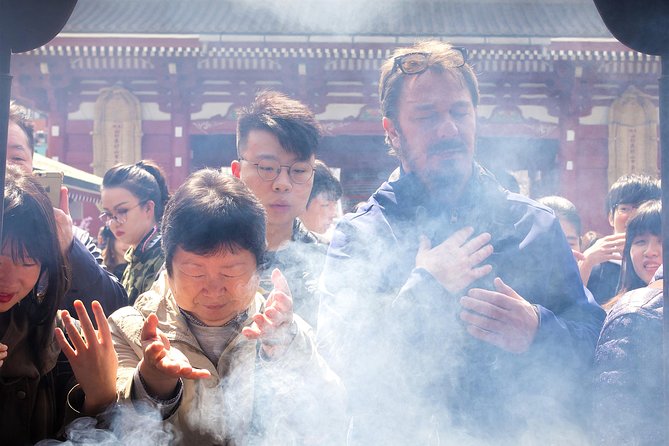
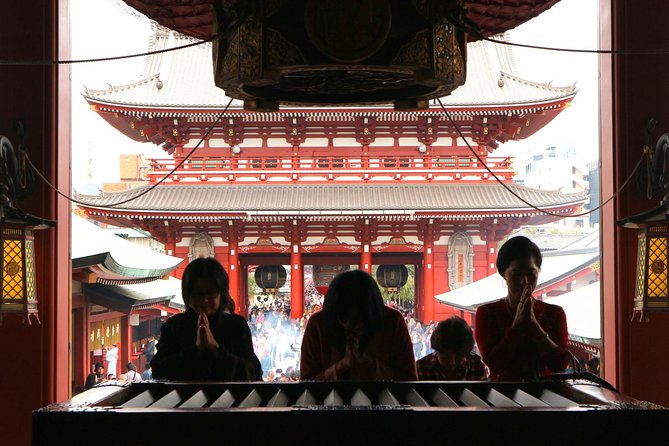
Then comes Senso-ji Temple. This is Tokyo’s oldest temple, dating back to 628, and it’s tied to Buddhism. It’s a place where you’ll notice how religion and daily life share the same space—people come to pay respect, and they also come to browse, snack, and wander.
If you prefer a softer version of Asakusa:
- Spend more time on side streets and craft shops rather than only the main approach lane.
- If you want calmer photos, ask the guide where the foot traffic seems lighter.
Akihabara and Nihonbashi: pop culture and the roots of trade
Tokyo has a strong tech-and-fandom side, and Akihabara is where that shows up. Expect anime, manga, video games, electronics, and a sensory overload that can be genuinely fun even if you’re not a diehard fan. The point isn’t only shopping—it’s seeing how Tokyo brands its passions into real storefronts.
After that, the route can shift to Marunouchi and Nihonbashi, moving from pop culture to business-to-heritage geography. Marunouchi sits around the Imperial Palace area and includes major architecture and good food options. It’s a contrast zone: clean lines, big city planning, and a “Tokyo as a modern capital” feel.
Then Nihonbashi brings the story back to commerce. It was the original center of trade and commerce from the Edo period (1603–1868). You’ll also see traditional food and craft shops, and there’s a focus on the foundation of Japanese cooking—helpful if you want the day to connect with culture, not just visuals.
Tsukiji outer market and Yanaka’s slower side
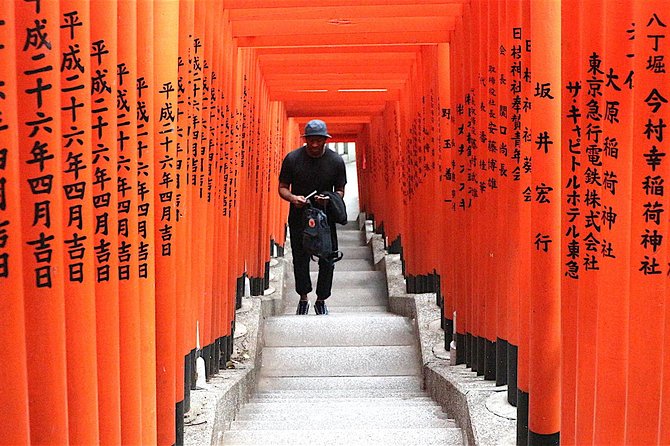
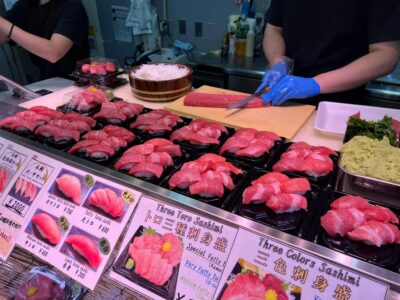
The tour may include Tsukiji Fish Market, but with an important modern detail: the world-famous tuna auction and the inner market moved to Toyosu, while the outer market remains. That means you still get the classic fish-market atmosphere—fresh fish and the surrounding stalls—but with today’s layout.
This stop works well when you like food markets that are active but still easy to navigate in a guided format. You can look, ask questions, and choose what fits your appetite without guessing what you’re seeing.
Then there’s Yanaka, a district that feels like older Tokyo still exists in pockets. It’s known for temples, sweets, and a traditional tea house experience. If you want one calmer segment after the market buzz, Yanaka is a strong choice.
Practical note: since this is walking-focused, you’ll get more enjoyment by choosing the food and tea moments that match your energy level, not by trying to do everything in one pass.
Imperial Palace East Gardens and Edo Castle remnants
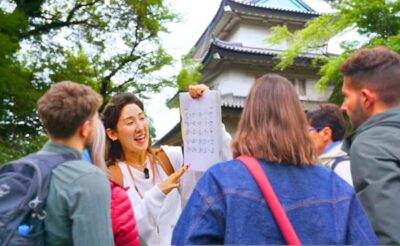
Another high-value stop is the East Gardens of the Imperial Palace area, plus the remnants tied to Edo Castle. It’s one of those places where Tokyo’s modern power and older political past share the same geography.
You can get up close to remnants like moat walls, which is an easy “aha” moment—Tokyo’s present shape has older engineering underneath. If you enjoy city history without heavy museum time, this is the kind of stop that can feel light but meaningful.
To make this section work:
- Tell your guide whether you want a photo-heavy walk, a slow contemplative pace, or a short visit so the rest of the day stays on track.
- If you’re also trying to see multiple observation decks, balance time so you’re not rushing through gardens just to make a ticket window.
Skyline tickets: Skytree, Tokyo Tower, and Shibuya Sky
Tokyo has a lot of views, and this tour can include skyline add-ons. Tokyo Skytree is the tallest tower at 634 meters, and you can add observation deck tickets if you want the big-number view. Tokyo Tower is another major icon, completed in 1958 and previously Japan’s tallest structure until 2012. Shibuya Sky adds a different perspective: a 360-degree observatory over Tokyo.
The key detail: observation deck admissions are listed as not included for these stops, so you’ll plan for extra ticket costs if you choose them.
How to decide which one fits you:
- Pick one main tower unless your group loves skyline views. Two can be repetitive if the skies are hazy.
- If you’re short on time, Shibuya’s location can pair nicely with a modern-neighborhood day, while Skytree can work when you’re already covering the east side.
And weather matters. The experience notes it requires good weather, which makes perfect sense for towers and skyline decks.
What you should budget beyond the tour price
Your base tour price is about $202.18 per person. What’s included is the guided walking experience plus hotel meet-up and drop-off, along with a professional guide. Children age 11 and under are free of charge.
What you’ll still need to cover:
- Subway/public transportation costs (the guide can help you buy a travel pass for the day)
- Food and drinks
- Optional observation deck tickets (Skytree, Tokyo Tower, Shibuya Sky)
So the real value question is how you use the day. If you select mostly free-admission stops, you’ll spend more on transit and food and less on tickets. If you add multiple skyline decks, you’ll increase your daily costs—but you might also walk away feeling like you got the full Tokyo “view” experience.
Who this tour fits best
This tour is a great match when:
- You’re seeing Tokyo for the first time and want confidence with the subway.
- You want a day built around your interests, not someone else’s schedule.
- You’re traveling as a couple or family and want private pacing.
The tour has a strong track record for adaptability. Examples from guide experiences include Paiva tailoring days to keep kids engaged and handle food needs, Laura giving first-day visitors a confidence boost with practical city know-how, and Miko walking step-by-step through major stops while helping people navigate the metro without stress.
If you like structured group tours with zero decision-making, this might feel like you’re doing some planning too—because you are. For many people, that’s the point.
Where it might not fit as well:
- If your group strongly dislikes walking or long subway rides.
- If everyone in the group wants the exact same type of attraction (you’ll still be able to customize, but you might find yourself negotiating priorities).
Quick advice to get the most from your guide
To keep the day smooth, I’d do these simple things:
- Pick your priority order before you start: modern Tokyo, old Tokyo, food, shopping, skyline.
- Tell the guide how adventurous your food and walking preferences are.
- If you want a specific section like the Imperial Palace East Gardens or an observation deck, mention it early so time doesn’t get swallowed by crowd-heavy streets.
Should you book this private custom walking tour of Tokyo?
Yes, if you want a private, flexible Tokyo day that helps you connect neighborhoods without feeling trapped by a fixed itinerary. The combination of hotel pickup, a guide who can help with transit passes, and a route built from major area highlights makes it an efficient way to see a lot while still feeling personal.
Skip it if you’re determined to avoid walking-heavy days, or if your trip timing makes good weather unlikely for skyline add-ons. In that case, choose dates with clearer skies—or plan your priorities around the stops that don’t depend on tower visibility.
If you’re booking for a first visit, for a family day, or for a couple who wants Tokyo in your own rhythm, this is a smart way to start.
FAQ
How long is the tour?
The duration is listed as 4 to 8 hours, and you can choose a half-day or full-day format.
Is this tour private?
Yes. It’s described as a private activity, meaning only your group participates.
Do I get hotel pickup and drop-off?
Yes. The guide will come to your hotel and pick you up for convenience, and drop you off afterward.
Is it only walking, or is there other transportation?
It is a walking tour, but travel between areas is done on the subway. Public transportation costs are not included.
Do I need to buy a subway travel pass?
Public transportation costs are excluded, and the tour notes that you’ll need to purchase a travel pass. The guide can help you arrange this.
Are tickets included for all the main sights?
Many stops are listed as free admission. However, observation deck tickets for places like Tokyo Skytree, Tokyo Tower, and Shibuya Sky are listed as not included and can be added on.
Can I choose where we start and what we see?
Yes. The tour is described as completely customizable. You can choose your start time, where you’d like to visit, and how long you’d like to tour.
Is food included?
No. Food and drinks are not included.
What about kids?
Children aged 11 and under are free of charge. You just need to tell the company they are coming.
Is the tour dependent on weather?
Yes. The experience requires good weather. If it’s canceled due to poor weather, you’ll be offered a different date or a full refund.
More Walking Tours in Tokyo
- Tokyo Tsukiji Fish Market Food and Culture Walking Tour
★ 5.0 · 3,184 reviews - Tokyo: Imperial Palace and Shogun Historical Walking Tour
★ 5.0 · 2,251 reviews - Tokyo: Shinjuku Local Bar and Izakaya Guided Walking Tour
★ 4.9 · 1,794 reviews - Tokyo: Tsukiji Fish Market Food and Walking tour
★ 5.0 · 1,724 reviews - Tokyo: Asakusa Walking Tour with Sensoji Temple Visit
★ 4.8 · 1,583 reviews
More Tours in Tokyo
- Mt Fuji and Hakone 1-Day Bus Tour Return by Bullet Train
★ 5.0 · 26,383 reviews - 1-Day Tokyo Bus Tour
★ 5.0 · 14,250 reviews - Tokyo: Shinjuku Food Tour (13 Dishes at 4 Local Eateries)
★ 5.0 · 6,603 reviews - Tokyo Mt Fuji 5th St & Hakone Cruise Bus Tour w/Bullet Train
★ 4.4 · 5,024 reviews - Flagship 2-Hours Official Street Go-Kart Tour – Tokyo Bay Shop
★ 5.0 · 4,974 reviews
More Tour Reviews in Tokyo
- Mt Fuji and Hakone 1-Day Bus Tour Return by Bullet Train
★ 5.0 · 26,383 reviews - 1-Day Tokyo Bus Tour
★ 5.0 · 14,250 reviews - Tokyo: teamLab Planets TOKYO Digital Art Museum Entry Ticket
★ 4.6 · 9,779 reviews - Mt Fuji & Hakone Cruise, Drum Show Bullet Train 1 Day from Tokyo
★ 4.0 · 7,413 reviews - Tokyo: Shinjuku Food Tour (13 Dishes at 4 Local Eateries)
★ 5.0 · 6,603 reviews
Latest Tokyo reviews off our desk






Walking Tours, compared.
 ★ 5.0Tokyo Tsukiji Fish Market Food and Culture Walking TourFrom $993,184 reviews
 ★ 5.0Imperial Palace and Shogun Historical Walking TourFrom $222,251 reviews
 ★ 4.9Shinjuku Local Bar and Izakaya Guided Walking TourFrom $341,794 reviews
 ★ 5.0Tsukiji Fish Market Food and Walking tourFrom $301,724 reviews
 ★ 4.8Asakusa Walking Tour with Sensoji Temple VisitFrom $221,583 reviews
 ★ 4.9Tsukiji Fish Market Guided Walking TourFrom $221,397 reviews
 ★ 4.7Tokyo Castle & Imperial PalaceーShogun Walking TourFrom $231,068 reviews
 ★ 4.9Imperial Palace Japanese History Walking TourFrom $32987 reviews
Browse the lists this tour appears in