
Reviewed · WALKING TOURS
Private Full-day Tokyo Walking Subway Tour by Japan Gray Line
Tokyo clicks into place fast when you ride smart. This private full-day tour strings together major sights with hotel pickup and guided subway routing, so you spend less time figuring it out and more time noticing real Tokyo. You’ll get context as you go, including history you won’t pick up from a map.
My favorite part is the private guide with public-transport know-how. In the feedback I’ve seen, guides like Yuki, Yuko, Yoshi, and Reiko are praised for patience with trains, keeping the group on track, and even helping with extra needs like lunch locations or directions afterward.
One thing to consider: it’s a lot of walking outdoors. Lunch isn’t included, and you’ll want comfortable sneakers because you’ll be on your feet for temples, markets, and viewpoints.
In This Review
- Key points I’d plan around
- Why this Tokyo subway day feels easier than solo sightseeing
- Hotel pickup and the Metro Pass: the real value
- Meiji Jingu Shrine: a calm reset to start the day
- Shibuya Crossing: the world’s busiest street, but explained
- Tokyo Tower Main Deck: the classic skyline view you can actually use
- Tsukiji Outer Market: food atmosphere without the whole wholesale maze
- Asakusa and Senso-ji: old Tokyo that still feels alive
- How the guide’s commentary makes the day stick
- Price and value: why $203.63 can make sense
- Packing and pacing tips that will save your day
- Who this tour suits best (and who might prefer something else)
- Should you book this private full-day Tokyo walking subway tour?
- FAQ
- Is the tour private?
- How long is the tour and when does it start?
- What’s included in the price?
- Is lunch included?
- Which attractions are free and which have admission included?
- Do I get hotel pickup?
- What happens if the weather is bad?
Key points I’d plan around
- Hotel pickup plus a one-day Metro Pass removes the guesswork of routes and transfers.
- Private pacing: the guide can adapt if you want to skip a stop or slow down.
- Big-sight variety in one day: shrine, crossing, tower views, market energy, and old-street temple area.
- Tokyo Tower Main Deck included (150 meters up) instead of you shopping for tickets on arrival.
- Free admissions at most stops so your day’s costs stay predictable.
- Guides help you navigate the train system, which can pay off for the rest of your trip.
Why this Tokyo subway day feels easier than solo sightseeing
Tokyo looks chaotic until you use the system correctly. With this kind of guided day, you’re not just touring landmarks—you’re learning the logic behind how locals move across the city.
I like that you’re covering multiple neighborhoods without switching to taxis or spending your morning buried in station maps. You’re also getting commentary tied to what you’re seeing—why Meiji Jingu matters, how Shibuya became a global pop-culture icon, and what Tokyo Tower represents in the city’s modern skyline.
The “private” part matters too. If your group moves faster or slower than average, a human guide can adjust in real time. That’s one reason people consistently rate this tour highly: you’re not stuck with a bus rhythm.
Readers also shortlisted these Tokyo bookings:
- Tokyo Tsukiji Fish Market Food and Culture Walking Tour
★ 5.0 · 3,184 reviews - Tokyo: Imperial Palace and Shogun Historical Walking Tour
★ 5.0 · 2,251 reviews - Tokyo: Shinjuku Local Bar and Izakaya Guided Walking Tour
★ 4.9 · 1,794 reviews - Tokyo: Tsukiji Fish Market Food and Walking tour
★ 5.0 · 1,724 reviews
Hotel pickup and the Metro Pass: the real value
This tour includes hotel pickup / drop-off, plus a one-day Metro Pass for transportation. For first-time visitors, that combo can be the difference between a great day and a day that feels like logistics.
Here’s the practical upside: you don’t have to figure out which line to take to each stop, or how to exit at the right side of a station. Your guide handles the routing so you can focus on the streets, not the subway interface.
Two things to watch:
- If your hotel is outside the pickup range and subway access isn’t feasible, you may need to cover extra transport for the guide’s travel to/from the first and last destinations.
- Your day also includes time for pickup and movement between stops, so start thinking of it as a “day of transit + sights,” not just a lineup of attractions.
Meiji Jingu Shrine: a calm reset to start the day
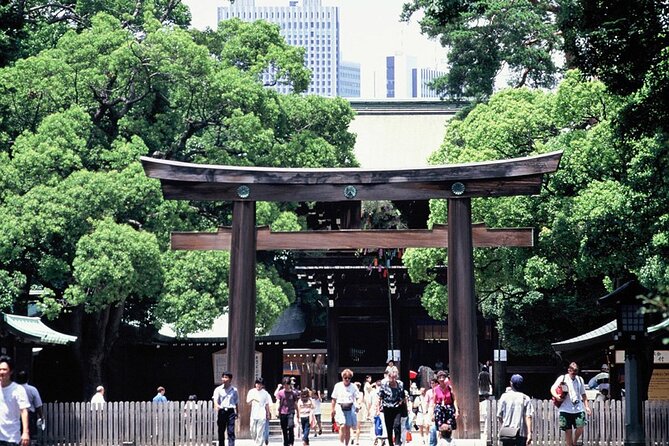
Your morning begins at Meiji Jingu Shrine, reached by subway from the closest station to your hotel. It was completed in 1920 and honors Emperor Meiji, a central figure in Japan’s 19th-century modernization.
This stop is a strong opener because the vibe is the opposite of Tokyo’s street energy. You move from urban motion into a more still, ritual-focused space. Even if you’re not big on religious sites, this is a great place to feel Tokyo’s layers: tradition right next to the intensity of the modern city.
Why it works in a group: you’re not rushed. The time here is long enough to wander and notice details rather than just checking a box. It’s also the kind of stop where a guide can point out what to look for so you don’t just walk past the meaningful parts.
A small drawback: you’ll likely get some curb-to-temple walking, then more time strolling. If you’re sensitive to uneven surfaces or long indoor-outdoor transitions, wear shoes that can handle temple grounds comfortably.
Shibuya Crossing: the world’s busiest street, but explained
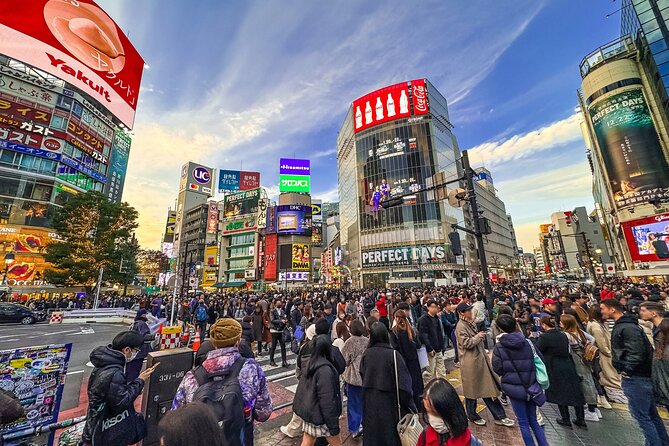
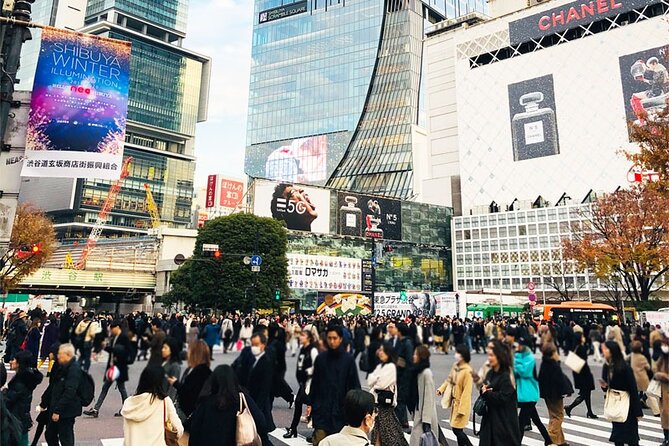
From Meiji Jingu, you head toward Shibuya Station for Shibuya Crossing. The crossing is famous for pedestrian flow, and the surrounding area is one of Tokyo’s most recognizable commercial and pop-culture zones.
What I like about including this after a peaceful shrine is contrast. You get the “old Tokyo” feeling first, then you step into a place that’s all about movement, lights, and modern energy. It’s the kind of stop that photographs well too, even if you’re not trying to take a hundred pictures.
The main consideration here is timing and crowd density. This is a short stop, so you’ll probably want your guide’s help picking where to stand for the best view and quickest flow back toward the subway.
Tokyo Tower Main Deck: the classic skyline view you can actually use
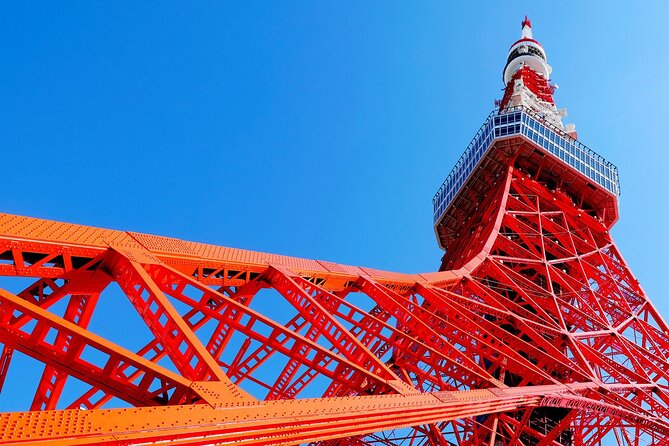
Next up is Tokyo Tower, built in 1958. At one point, it was the world’s tallest structure, and today it’s still a classic piece of the skyline.
You’ll go up to the observation deck at 150 meters via a high-speed elevator. The Main Deck admission is included, which is a real convenience. Instead of deciding on the spot whether it’s worth it, you already know you’ve bought the right ticket level for the view.
Why this stop is valuable on a one-day plan: Tokyo is huge. A skyline overview helps you connect places you’ve just visited (and places you’ll visit later). Looking down from above also gives you a better sense of distance, especially for neighborhoods that feel far apart when you’re on foot.
Possible drawback: if you’re someone who hates lines or crowded indoor viewpoints, build in patience here. Tower observation decks can get busy, and the tour includes time for the elevator and deck experience—so it helps to go in with a calm mindset.
Readers also shortlisted these Tokyo bookings:
- Tokyo 6hr Private Tour with Government-Licensed Guide★ 5.0 · 3,902 reviews
- Private Tour to Mt. Fuji and Hakone (Fully Licenced Operator)★ 5.0 · 1,910 reviews
- Tokyo Customized Private Tour (Must See Places in 1 Day)★ 5.0 · 1,499 reviews
- Mount Fuji Full-Day Private Tour from Tokyo (Customizable)★ 4.9 · 1,470 reviews
- Tokyo: Private City Highlights Tour with Local Guide★ 4.8 · 1,433 reviews
Tsukiji Outer Market: food atmosphere without the whole wholesale maze
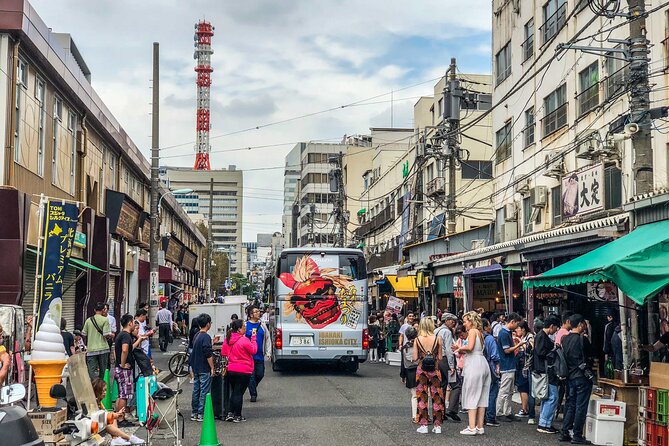
You’ll spend time at Tsukiji Fish Market’s Outer Market, which still operates where it always did, even after the wholesalers relocated to Toyosu in 2018. This area is well known for fresh seafood, quick bites, and that “Tokyo street food” buzz.
You’ll have about 50 minutes here, with admission listed as free. That time window is perfect for grazing: you can try a snack or two, browse stalls, and still get back to the group without feeling trapped in market logistics.
What to expect:
- More walking and standing in busy lanes.
- Lots of choices, including seafood-focused items.
- Strong photo opportunities, especially if you’re into street-level Tokyo.
One note: Tsukiji is popular with international visitors, so it’s not quiet. If you want a calmer market experience, come in ready to move with the crowd and let your guide point you toward stalls that fit your interests.
A plus from the feedback: people singled out the market as a favorite, including praise for street food being delicious. That lines up with what this neighborhood is best at—quick flavors and the theater of a working-food area.
Asakusa and Senso-ji: old Tokyo that still feels alive
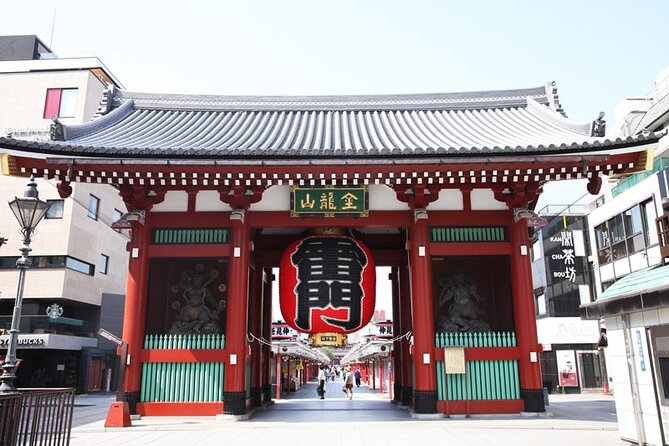
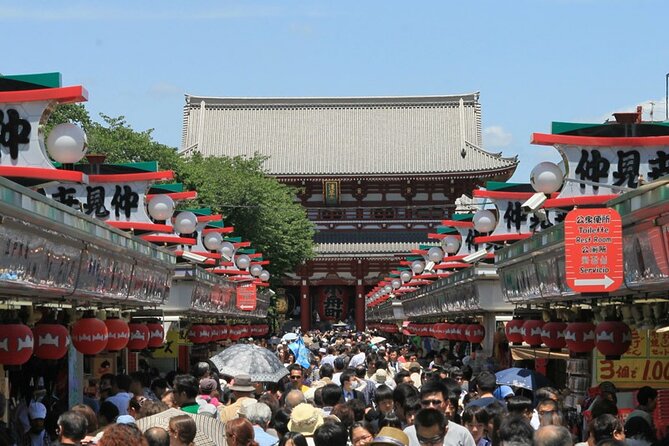
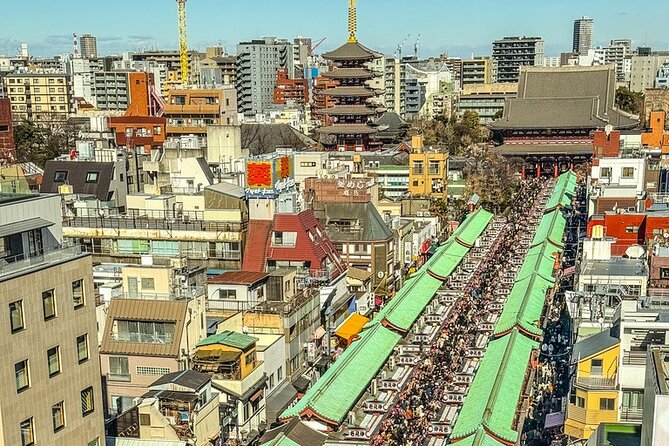
After Tsukiji, you head to Asakusa, a traditional shopping district known for crafts, souvenirs, and street food. Then you move to Senso-ji Temple, one of Tokyo’s oldest and largest Buddhist temples, with history going back to 628.
This pairing works because Asakusa is more than just a temple stop. You get a chance to walk the surrounding streets, peek into shops, and catch the everyday energy around the shrine complex. It’s a place where the atmosphere feels “human scale” compared with newer skyscraper districts.
Time allocation is balanced: Asakusa (about 20 minutes) gives you a warm-up, and Senso-ji (about 40 minutes) gives you enough time to experience the temple grounds without a sprint.
What I’d watch for:
- It can be crowded near major temple areas, so keep your camera ready but stay flexible.
- The walk is outdoors, so rain or heat matters here as much as it does anywhere else on the tour.
In the feedback I’ve seen, Meiji Jingu and Senso-ji both get highlighted for feeling special—one quieter and serene, the other iconic and energetic.
How the guide’s commentary makes the day stick
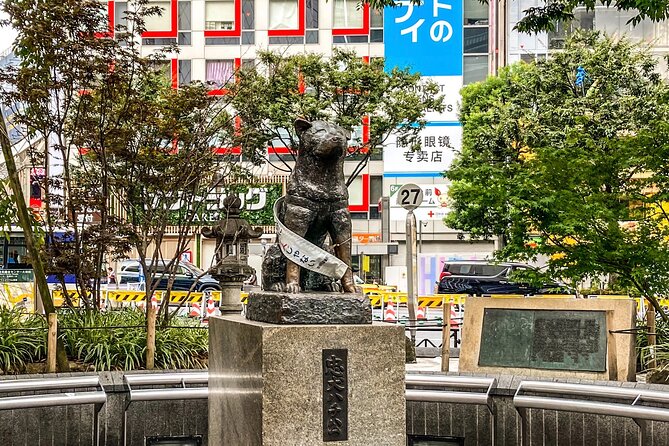
This isn’t just a route with stops. A big part of why this tour gets 5-star ratings is that the guide connects the dots.
In the feedback, guides are praised for:
- navigating the train system smoothly,
- staying patient when plans change,
- explaining history in a way that helps you remember what you saw.
That matters because Tokyo is layered. If you’re just snapping photos, you might miss why a place matters. A good guide helps you see patterns: how modern Tokyo grew around older cultural anchors, and how neighborhoods keep distinct identities even as the city changes.
Also, the tour format makes it easier to ask questions. When you’re moving across stations all day, having a person who can answer quickly saves time and frustration.
Price and value: why $203.63 can make sense
Let’s talk money in a practical way.
At $203.63 per person, you’re paying for:
- a private guide,
- hotel pickup and drop-off,
- a one-day Metro Pass,
- and Tokyo Tower Main Deck admission included.
A lot of self-guided days in Tokyo rack up costs fast through tickets, taxis, and the time cost of getting lost. Here, your paid pieces include one of the pricier attractions (Tokyo Tower’s deck) plus the transit tool you’ll need to hop across the city.
So the value angle is simple: if you’d otherwise spend time figuring out routes, buying multiple tickets, and paying for convenience, this can feel like a smart shortcut. If you’re already very confident with Tokyo subway navigation and you don’t mind building your own day, you might choose cheaper options. But if you want a smooth “first Tokyo day” that sets you up for later exploration, the price starts looking reasonable.
Packing and pacing tips that will save your day
This tour has a clear reality check: it’s about 7 hours and includes outdoor walking. You’ll want a plan for weather, stamina, and meals.
Here’s what I’d do before you go:
- Wear comfortable sneakers. It’s repeatedly emphasized for a reason.
- Bring rain gear like a compact umbrella or light raincoat. Bad weather can force itinerary changes.
- Plan lunch on your terms. Lunch is not included, but guides may help you find a good spot nearby based on your group’s needs.
- Start your morning hydrated. In hot weather, comfort becomes the whole game.
One more practical note: the itinerary can be changed due to weather or operational reasons. The tour may not be canceled, and certain visits may be omitted or substituted. That’s not unusual for a walking-transit day, so keep expectations flexible.
Who this tour suits best (and who might prefer something else)
This works especially well if:
- you’re visiting Tokyo for the first time,
- you want a single day that covers major highlights across different neighborhoods,
- you’d rather learn transit basics than struggle through it alone,
- you’re traveling with family and want the guide to handle pacing and logistics.
It’s also a good fit for active travelers who like walking and don’t mind a full-day schedule.
Consider skipping (or pairing with a lighter plan) if:
- you have limited mobility or find long outdoor walking hard,
- you hate crowds near famous sights,
- you want a slow, unstructured day with no tight transitions.
Should you book this private full-day Tokyo walking subway tour?
If you want an efficient first day that still feels authentic—temples, neighborhoods, a major market, and a proper skyline view—this booking makes sense. The standout strength is the combination of private guidance, subway routing help, and hotel pickup, which protects your time and reduces stress.
Book it if you’re the type who values a smooth plan with smart flexibility, and you’ll enjoy walking and photos. Skip it if you want a low-effort day or you already know Tokyo’s subway so well that you’d rather DIY everything.
FAQ
Is the tour private?
Yes. It’s a private tour/activity, and only your group will participate.
How long is the tour and when does it start?
The tour is about 7 hours and starts at 9:30 am.
What’s included in the price?
The guide (English-speaking), hotel pickup and drop-off, transportation fee with a one-day Metro Pass, and Tokyo Tower admission to the 150-meter Main Deck are included.
Is lunch included?
No. Lunch is not included.
Which attractions are free and which have admission included?
Meiji Jingu Shrine, Shibuya Crossing, Tsukiji Outer Market, Asakusa, and Senso-ji Temple list free admission. Tokyo Tower admission to the Main Deck is included.
Do I get hotel pickup?
Hotel pickup is included, as long as your hotel is within the designated pickup range. If you’re outside the range and an alternative like the subway is not feasible, you may need to cover extra transport costs.
What happens if the weather is bad?
The experience requires good weather. If it’s canceled due to poor weather, you’ll be offered a different date or a full refund. In other cases, the itinerary may be subject to change or certain visits may be omitted or substituted.
More Walking Tours in Tokyo
- Tokyo Tsukiji Fish Market Food and Culture Walking Tour
★ 5.0 · 3,184 reviews - Tokyo: Imperial Palace and Shogun Historical Walking Tour
★ 5.0 · 2,251 reviews - Tokyo: Shinjuku Local Bar and Izakaya Guided Walking Tour
★ 4.9 · 1,794 reviews - Tokyo: Tsukiji Fish Market Food and Walking tour
★ 5.0 · 1,724 reviews - Tokyo: Asakusa Walking Tour with Sensoji Temple Visit
★ 4.8 · 1,583 reviews
More Tours in Tokyo
- Mt Fuji and Hakone 1-Day Bus Tour Return by Bullet Train
★ 5.0 · 26,383 reviews - 1-Day Tokyo Bus Tour
★ 5.0 · 14,250 reviews - Tokyo: Shinjuku Food Tour (13 Dishes at 4 Local Eateries)
★ 5.0 · 6,603 reviews - Tokyo Mt Fuji 5th St & Hakone Cruise Bus Tour w/Bullet Train
★ 4.4 · 5,024 reviews - Flagship 2-Hours Official Street Go-Kart Tour – Tokyo Bay Shop
★ 5.0 · 4,974 reviews
More Tour Reviews in Tokyo
- Mt Fuji and Hakone 1-Day Bus Tour Return by Bullet Train
★ 5.0 · 26,383 reviews - 1-Day Tokyo Bus Tour
★ 5.0 · 14,250 reviews - Tokyo: teamLab Planets TOKYO Digital Art Museum Entry Ticket
★ 4.6 · 9,779 reviews - Mt Fuji & Hakone Cruise, Drum Show Bullet Train 1 Day from Tokyo
★ 4.0 · 7,413 reviews - Tokyo: Shinjuku Food Tour (13 Dishes at 4 Local Eateries)
★ 5.0 · 6,603 reviews
Latest Tokyo reviews off our desk






Walking Tours, compared.
 ★ 5.0Tokyo Tsukiji Fish Market Food and Culture Walking TourFrom $993,184 reviews
 ★ 5.0Imperial Palace and Shogun Historical Walking TourFrom $222,251 reviews
 ★ 4.9Shinjuku Local Bar and Izakaya Guided Walking TourFrom $341,794 reviews
 ★ 5.0Tsukiji Fish Market Food and Walking tourFrom $301,724 reviews
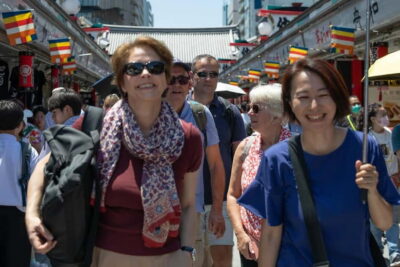 ★ 4.8Asakusa Walking Tour with Sensoji Temple VisitFrom $221,583 reviews
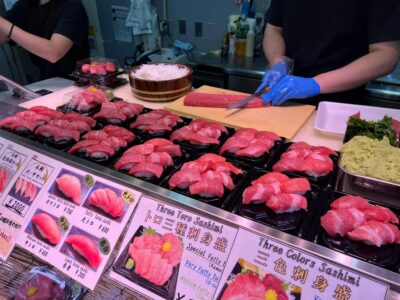 ★ 4.9Tsukiji Fish Market Guided Walking TourFrom $221,397 reviews
 ★ 4.7Tokyo Castle & Imperial PalaceーShogun Walking TourFrom $231,068 reviews
 ★ 4.9Imperial Palace Japanese History Walking TourFrom $32987 reviews
Browse the lists this tour appears in