
Reviewed · WALKING TOURS
Private Walking Tour to explore Tokyo based on your interests
Tokyo feels personal on foot. This private, customizable walking tour turns Tokyo highlights into real-life conversations with local guides who share what life is like in Japan. I especially love the private pace that fits you, and the local friend style of explaining history through everyday culture, not just timelines.
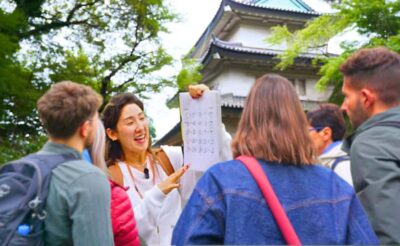
You’ll get a smart mix of iconic landmarks and side streets, from Edo-era remnants at the Imperial Palace to the teen-energy chaos of Takeshita Street. Along the way, guides like Akiko are noted for clear English and for going beyond facts—she’ll connect what you’re seeing to Japanese social habits and modern life.
One consideration: this is a walking-focused experience, so you’ll want comfortable shoes and a realistic plan for breaks (especially if your day overlaps lunch hours). Also, transportation for you and personal food/drink costs are on you.
In This Review
- Key Things You’ll Really Notice on This Tour
- Why This Tokyo Walking Tour Feels Like a Real Day Out
- Price and Logistics: What You’ll Pay (and What You Won’t)
- East Gardens of the Imperial Palace: Edo Castle Ruins and Shogun Power
- Kagurazaka: Geisha-District Atmosphere With a French Edge
- Senso-ji and Nakamise: Oldest Temple Energy and Omikuji Moments
- Ueno Park and Toshogu Shrine: Ieyasu’s Power and a Meiji Turning Point
- Meiji Jingu Shrine: A Tokyo Forest Reset After the City Noise
- Tsukiji Jogai Market: Taste, Shop, and Talk With Storekeepers
- Takeshita Street: 350 Meters of Teen Culture and Fashion History
- How I’d Make This Tour Work for You
- Should You Book This Tokyo Walking Tour?
- FAQ
- How long is the private walking tour?
- Is this tour private?
- Is pickup included?
- What’s included in the price?
- Are the main sights included with admission fees?
- What costs are not included?
- Is the tour suitable for people who like walking?
- Does it require good weather?
- Are service animals allowed?
- Where does the tour take you?
Key Things You’ll Really Notice on This Tour
- Private and customizable: you choose your duration, and the guide proposes a route around your interests
- Local friend conversations: guides talk about Japanese people, character, and current social issues
- A tight “past-to-present” sweep: Shogun-era spaces, Meiji-era change, and modern youth culture
- Food time is built in: street snacks around Senso-ji and shopping + tasting at Tsukiji Jogai Market
- Strong communication: Akiko is specifically praised for excellent English and playful delivery
- Most entries are free: major sights here have admission ticket free listed
Why This Tokyo Walking Tour Feels Like a Real Day Out
The biggest difference isn’t that you’ll see famous Tokyo. It’s that you’ll see it with someone who lives the culture and can answer the questions you actually have on the spot.
This is built for conversation, not a lecture. Guides are described as sharing “true-to-life” information about Japanese people, their character, and social issues they’re dealing with now. In practice, that means you’re not stuck with only photos and history cards—you’re getting context that helps everything click.
Another strong point: the tour is private. That matters in Tokyo, where group pacing can turn your day into a sprint. Here, you can slow down for photos, ask questions, or spend a few extra minutes at a spot that hooks you.
Finally, it’s customizable. Even though the route includes major areas, the guide contacts you to propose the plan based on your interests. That’s how a first-time visitor can focus on essential sites without wasting time, or how a repeat visitor can steer toward the angle they want.
Readers also shortlisted these Tokyo bookings:
- Tokyo Tsukiji Fish Market Food and Culture Walking Tour
★ 5.0 · 3,184 reviews - Tokyo: Imperial Palace and Shogun Historical Walking Tour
★ 5.0 · 2,251 reviews - Tokyo: Shinjuku Local Bar and Izakaya Guided Walking Tour
★ 4.9 · 1,794 reviews - Tokyo: Tsukiji Fish Market Food and Walking tour
★ 5.0 · 1,724 reviews
Price and Logistics: What You’ll Pay (and What You Won’t)
The price shown here lists as $0.00, which is unusually good on paper. Even if your final booking price differs, the value logic is the same: you’re getting a private guide time slot plus a set of sights that are listed with admission ticket free.
What’s not included is clearly part of the budget math:
- Transportation fee for yourself
- Personal expenses, including food and drinks
- Lunch fee if the tour time includes lunch between 12:00 and 13:00
That means you should plan your day like a local: carry transit money, decide how adventurous you want to be with snacks, and treat lunch as part of the experience budget.
Duration is roughly 4 to 8 hours, so it can work as a solid first-day orientation or as a focused “Tokyo highlights + culture” block. Pickup is offered, which can help if you’re juggling jet lag or just don’t feel like figuring out transit on your first morning.
One more practical note: it requires good weather. If the day turns, the experience may be rescheduled or you’ll be offered a full refund. Tokyo can flip from sunny to rainy fast—so keep an eye on the forecast.
East Gardens of the Imperial Palace: Edo Castle Ruins and Shogun Power
This opening stop sets the tone because it mixes stone, strategy, and calm garden time. You’ll visit the East Gardens area tied to Edo Castle ruins—where oversized stone walls and watch towers still show the kind of control the Tokugawa Shogunate maintained.
The guide’s context matters here. You’re not just looking at ruins; you’ll learn about the strategies behind the Edo era lasting 265 years, and you’ll reflect on the life of the shoguns. Even if you don’t consider yourself a history person, that kind of framing makes the place feel purposeful instead of random.
Then you get the softer side. The Japanese garden is recreated after Edo-period gardens, and you can enjoy seasonal flowers and a special variety of carps. That’s a nice reset after moving through Tokyo streets—quiet, scenic, and slower-paced.
Practical tip: give yourself a little extra time to walk the garden paths. If you rush, you’ll miss the contrast between hard fortress remnants and the deliberate calm of a traditional garden.
Kagurazaka: Geisha-District Atmosphere With a French Edge
Kagurazaka is where the tour turns from grand state power to neighborhood texture. It’s described as a historic area developed by the shogunate about 400 years ago, and it remains one of Tokyo’s six geisha districts.
The standout detail is the atmosphere created by proximity to the Institut Francais. This adds a noticeable French thread to the Japanese setting, which you’ll feel as you move through the streets—old-school Tokyo mood with a different architectural and cultural flavor nearby.
You’ll also get time for shopping streets where you can see how ordinary Japanese people live. This is one of those stops where you don’t need to buy anything to get something out of it. Looking closely—small shop displays, street rhythms, how people move—is the point.
Practical tip: treat Kagurazaka like a browse zone. If you come in “I must see everything,” it can feel like a lot. But if you slow down, it becomes a great place to notice details.
Senso-ji and Nakamise: Oldest Temple Energy and Omikuji Moments
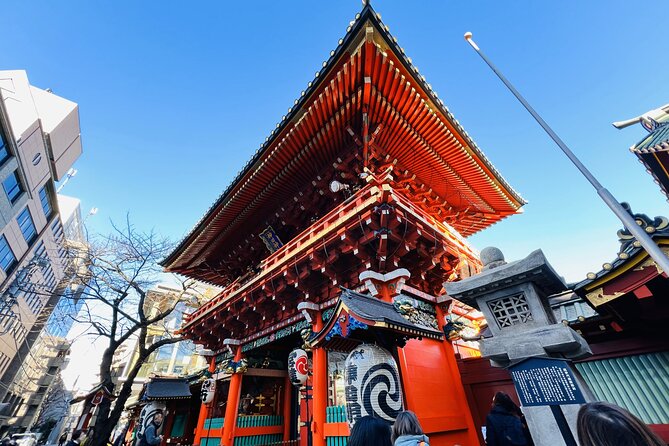
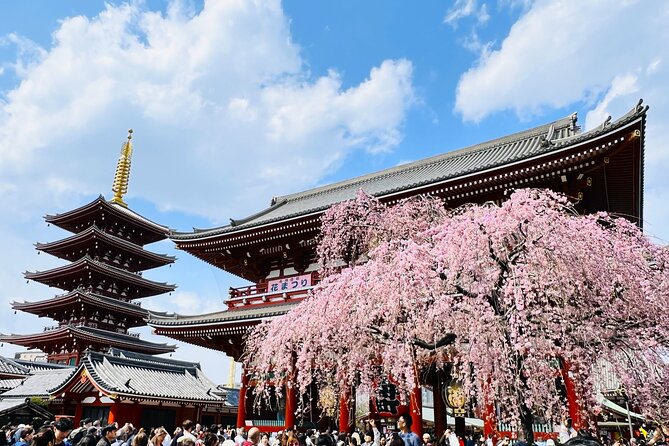
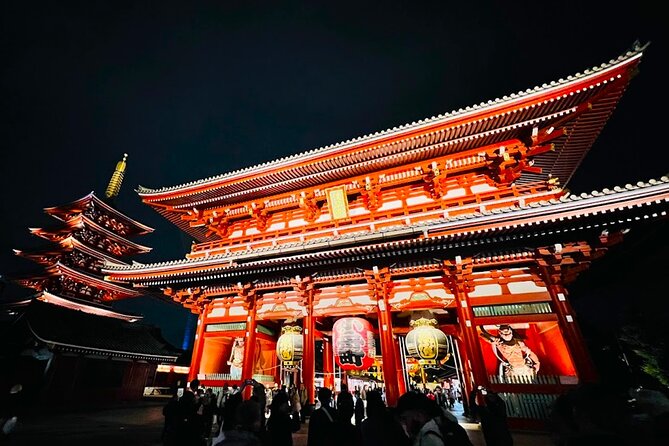
Senso-ji is the kind of landmark that’s famous for a reason. You’ll visit Sensoji Temple, described as the oldest temple in Tokyo, and you’ll pass Kaminarimon Gate with its large red lantern—one of the best photo spots in the area.
Next comes Nakamise, a shopping street lined with souvenir shops and street food. It can feel like a living cultural exhibit: you can sample Japanese sweets/snacks and grab souvenirs without needing extra planning.
What I like most here is the cultural practice part, not just the shopping. You can experience omikuji (fortune teller), purification, and you can learn about differences between temples and shrines. Those are the details that turn a photo stop into a memory that sticks.
If you’re the type who likes understanding customs, this stop gives you that quickly. If you’re not, you can still participate at your own comfort level and keep it light.
Practical tip: try at least one small snack while you’re walking Nakamise. It’s an easy way to feel the place without turning your budget into a disaster.
Readers also shortlisted these Tokyo bookings:
- Private Tour to Mt. Fuji and Hakone (Fully Licenced Operator)★ 5.0 · 1,910 reviews
- Tokyo Customized Private Tour (Must See Places in 1 Day)★ 5.0 · 1,499 reviews
- Mount Fuji Full-Day Private Tour from Tokyo (Customizable)★ 4.9 · 1,470 reviews
- Private Custom Tour: Tokyo in a Day★ 5.0 · 1,432 reviews
- Tokyo 4hr Private Tour with Government-Licensed Guide★ 5.0 · 1,394 reviews
Ueno Park and Toshogu Shrine: Ieyasu’s Power and a Meiji Turning Point
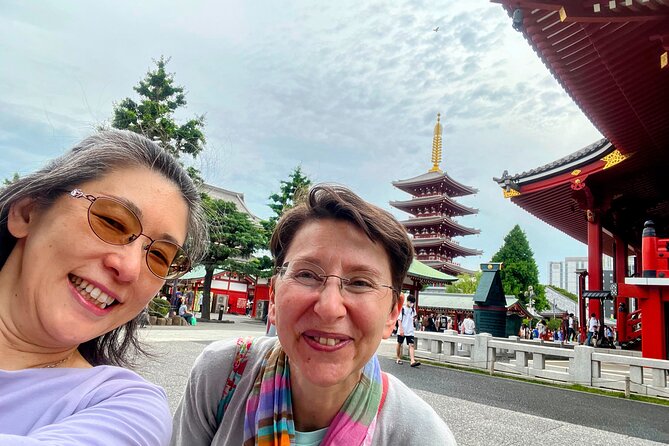
Ueno Park is where the tour connects physical places to political change. You’ll visit Uenokoen and the site of Kan’ei-ji Temple, which was protected by the Tokugawa Shogunate during the Edo era.
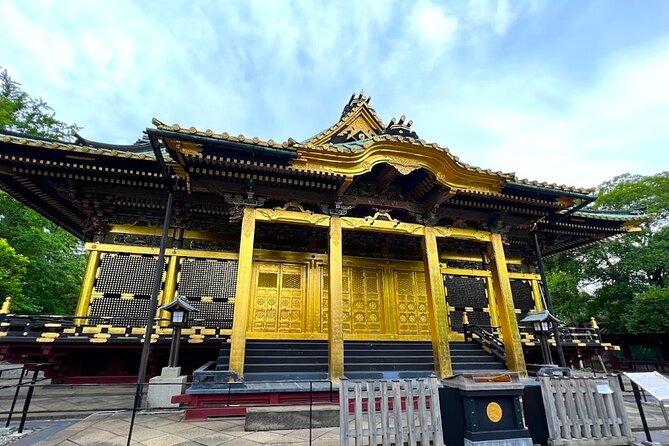
Then it deepens with Ueno Toshogu Shrine, where the first Tokugawa shogun Ieyasu is enshrined. The focus here is visual and symbolic: beautiful sculptures and gold-plated shrine buildings are used to show shogun power.
There’s also a direct connection to modern Japan’s origin story. The tour explains this area as part of a civil war era connected to the shogunate returning power back to the Meiji Emperor—making it an important place in Japanese history.
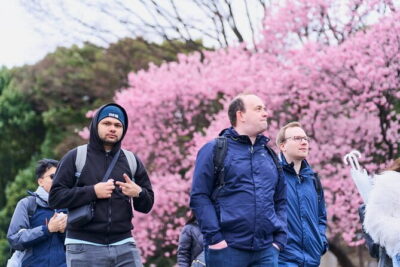
If you visit during cherry blossom season, the park adds another layer. Cherry blossom viewing is specifically noted here, so it can be both scenic and meaningful depending on the time of year.
Practical tip: if you’re visiting in peak seasons, build buffer time. Even if the tour is structured, parks draw crowds because the setting is inviting.
Meiji Jingu Shrine: A Tokyo Forest Reset After the City Noise
Meiji Jingu is one of the best kinds of contrast stops. You’re in Tokyo, then you walk into a shrine dedicated to Emperor Meiji and Empress Shoken, and the mood shifts.
The guide’s storyline is important. The tour frames Meiji Shrine as connected to the start of the Meiji era after the Tokugawa shogunate returned power back to the Emperor. It also highlights major changes Japan made as it caught up with developed countries: education systems, widespread railways, and Westernized dining attire becoming popular.
You’ll learn the human angle too: Emperor Meiji was encouraged by the developments and loved by the people, and after his death, the shrine was built to commemorate him. The result is a sacred atmosphere in a forest that can be hard to believe is inside Tokyo.
Practical tip: treat this as your reset stop. If you’ve been moving fast, slow down here. Take a few minutes to just stand and listen. Not everything in Tokyo needs to be rushed.
Tsukiji Jogai Market: Taste, Shop, and Talk With Storekeepers
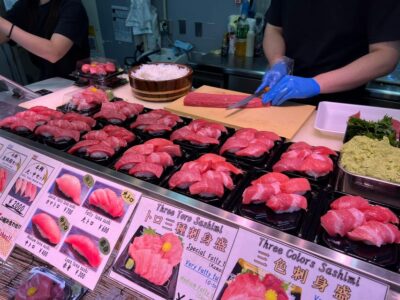
This is the stop that tends to feel like fun, not just sightseeing. Tsukiji is noted as the world’s largest fish market until 2018. Even though the inner market, including the tuna auction, moved to Toyosu, this area still has about 400 retail stores.
You’ll see more than fish. The market sells fresh fish as well as vegetables, fruits, sweets, kitchen utensils, and more. The variety is part of what makes Tsukiji satisfying: it’s a food city inside a city.
The key advantage is your guide’s help. With a knowledgeable guide, you can taste unique products, communicate with shopkeepers, and buy special souvenirs. That’s the difference between walking through a market and actually using it.
Practical tip: go in with an appetite, but set a small rule for yourself like one tasting plus one souvenir category. Markets can turn into a shopping marathon if you don’t decide your boundaries.
Takeshita Street: 350 Meters of Teen Culture and Fashion History
Takeshita Street is short, loud, and memorable—in the best way. It’s described as a mecca that every Japanese teenager dreams of visiting at least once, and the tour connects the street to its origin.
In the 1970s, the Takenoko-zoku started dressing in eccentric costumes and dancing on pedestrian streets, capturing teen attention. Even now, Takeshita Street is treated as the epicenter of youth culture, with both sides of the 350m road packed with what young people love.
You’ll find sweets like crepes and strawberry candy, plus snacks and drinks. There are also second-hand clothing stores, which adds an interesting layer: style here isn’t only new. It can be thrift, replay, and reinvention.
If you like modern Tokyo, this is where the tour becomes less about past eras and more about what people care about right now.
Practical tip: after a sensory-heavy day, give yourself 10 minutes to step aside and take a breath. Then go back for photos or a quick snack run.
How I’d Make This Tour Work for You
A private guide is most powerful when you give them something to aim at. If it’s your first time in Tokyo, tell the guide that you want essential sites plus context. If you’ve been before, ask for a specific angle like Edo-period culture, Meiji-era change, food markets, or youth fashion.
Here are the kinds of prompts that fit this tour’s style:
- Ask for one story that explains what you see, not just the date
- Ask what people think about a place today versus how it was in the past
- If food is a big part of your travel, ask what to taste first at Tsukiji Jogai Market
You’ll also want to plan your timing. Since lunch can fall inside the tour window (12:00 to 13:00), decide whether you want the guide to help you find something simple, or whether you’d rather schedule an eat break before or after.
Finally, bring realistic expectations for walking. The tour is suitable for all who love walking, and most stops are free to enter, which means your time is best spent on moving thoughtfully rather than paying entry fees.
Should You Book This Tokyo Walking Tour?
Book it if you want Tokyo to feel personal, not packaged. A private, customizable walking day with a local guide who talks about Japanese social life—plus free-to-enter anchors like the Imperial Palace East Gardens, Senso-ji, Ueno Toshogu, and Meiji Jingu—can be excellent value for your time.
Skip it or choose a shorter duration if you’re sensitive to walking distances or you prefer museums and indoor stops only. This tour is built for outdoor movement and street-level Tokyo experiences, from markets to temple approaches to teen shopping streets.
If you want a guide who can make the city make sense, and you like asking questions along the way, this is a strong fit—and Akiko-style energy (friendly, flexible, and conversation-ready) is exactly the kind of guide this concept is aiming to deliver.
FAQ
How long is the private walking tour?
The duration is approximately 4 to 8 hours, depending on what you choose.
Is this tour private?
Yes. It’s a private tour/activity, and only your group participates.
Is pickup included?
Pickup is offered.
What’s included in the price?
A friendly local guide is included, along with a mobile ticket.
Are the main sights included with admission fees?
Admission tickets are listed as free for the stops included in the experience.
What costs are not included?
Transportation for yourself isn’t included, and personal expenses like food and drinks are also not included. If your tour time includes lunch from 12:00 to 13:00, lunch fee is not included.
Is the tour suitable for people who like walking?
Yes. It’s suitable for all who love walking.
Does it require good weather?
Yes. The experience requires good weather, and if it’s canceled due to poor weather, you’ll be offered a different date or a full refund.
Are service animals allowed?
Yes, service animals are allowed.
Where does the tour take you?
You’ll visit Tokyo areas including the East Gardens of the Imperial Palace, Kagurazaka, Senso-ji, Uenokoen, Meiji Jingu, Tsukiji Jogai Market, and Takeshita Street.
More Walking Tours in Tokyo
- Tokyo Tsukiji Fish Market Food and Culture Walking Tour
★ 5.0 · 3,184 reviews - Tokyo: Imperial Palace and Shogun Historical Walking Tour
★ 5.0 · 2,251 reviews - Tokyo: Shinjuku Local Bar and Izakaya Guided Walking Tour
★ 4.9 · 1,794 reviews - Tokyo: Tsukiji Fish Market Food and Walking tour
★ 5.0 · 1,724 reviews - Tokyo: Asakusa Walking Tour with Sensoji Temple Visit
★ 4.8 · 1,583 reviews
More Tours in Tokyo
- Mt Fuji and Hakone 1-Day Bus Tour Return by Bullet Train
★ 5.0 · 26,383 reviews - 1-Day Tokyo Bus Tour
★ 5.0 · 14,250 reviews - Tokyo: Shinjuku Food Tour (13 Dishes at 4 Local Eateries)
★ 5.0 · 6,603 reviews - Tokyo Mt Fuji 5th St & Hakone Cruise Bus Tour w/Bullet Train
★ 4.4 · 5,024 reviews - Flagship 2-Hours Official Street Go-Kart Tour – Tokyo Bay Shop
★ 5.0 · 4,974 reviews
More Tour Reviews in Tokyo
- Mt Fuji and Hakone 1-Day Bus Tour Return by Bullet Train
★ 5.0 · 26,383 reviews - 1-Day Tokyo Bus Tour
★ 5.0 · 14,250 reviews - Tokyo: teamLab Planets TOKYO Digital Art Museum Entry Ticket
★ 4.6 · 9,779 reviews - Mt Fuji & Hakone Cruise, Drum Show Bullet Train 1 Day from Tokyo
★ 4.0 · 7,413 reviews - Tokyo: Shinjuku Food Tour (13 Dishes at 4 Local Eateries)
★ 5.0 · 6,603 reviews
Latest Tokyo reviews off our desk






Walking Tours, compared.
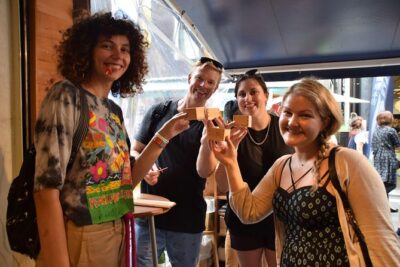 ★ 5.0Tokyo Tsukiji Fish Market Food and Culture Walking TourFrom $993,184 reviews
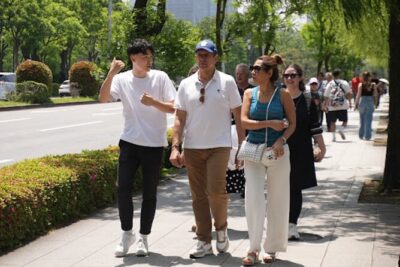 ★ 5.0Imperial Palace and Shogun Historical Walking TourFrom $222,251 reviews
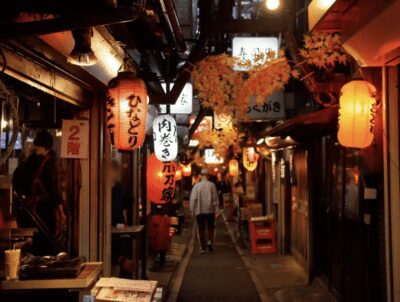 ★ 4.9Shinjuku Local Bar and Izakaya Guided Walking TourFrom $341,794 reviews
 ★ 5.0Tsukiji Fish Market Food and Walking tourFrom $301,724 reviews
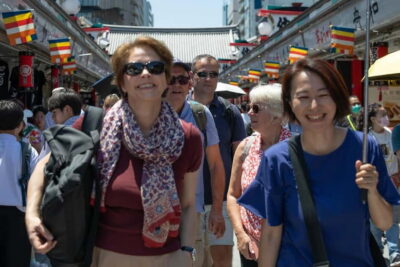 ★ 4.8Asakusa Walking Tour with Sensoji Temple VisitFrom $221,583 reviews
 ★ 4.9Tsukiji Fish Market Guided Walking TourFrom $221,397 reviews
 ★ 4.7Tokyo Castle & Imperial PalaceーShogun Walking TourFrom $231,068 reviews
 ★ 4.9Imperial Palace Japanese History Walking TourFrom $32987 reviews
Browse the lists this tour appears in