
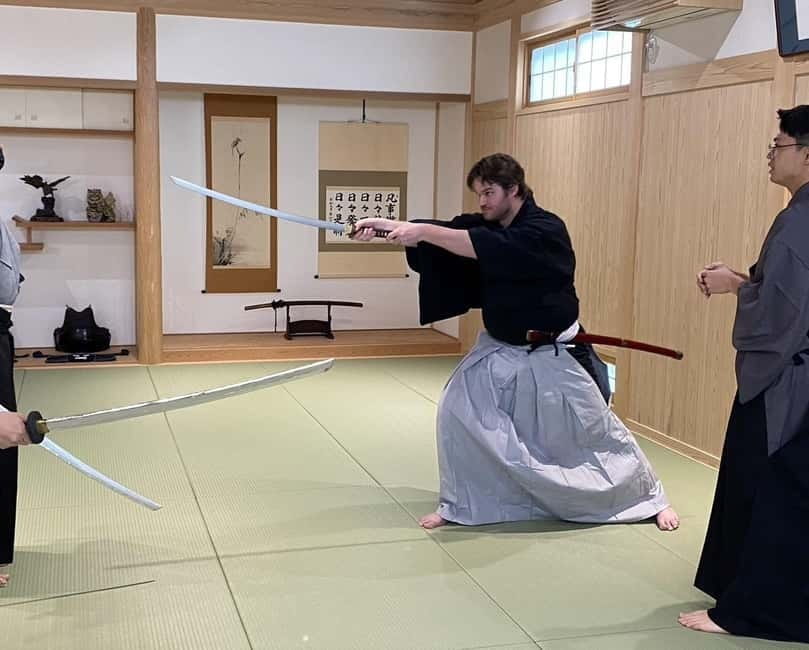
Reviewed · ASAKUSA & SENSOJI TOURS
Tokyo Asakusa : Samurai School, Become a Samurai Warrior
Samurai training in Tokyo feels way more practical than you expect. You’ll learn basic stances and sword movements from a seasoned master, then you’ll turn it into camera-ready action with a costume and photos. I really like that it mixes technique with performance, so you’re not just watching history on a screen.
Two highlights for me are the dress-up experience (you actually put on the costume and pose) and the hands-on guidance on bowing and stylized swordplay. One thing to consider: if you have back problems or are pregnant, this class isn’t suitable, and you’ll need to move in costume and stances for the full 90 minutes.
In This Review
- Key points to know before you go
- Where the Samurai Lesson Happens (and how to find it fast)
- The 90-minute flow: what you’ll do step by step
- 1) Dress as a Samurai when you arrive
- 2) Samurai culture and respect: bowing taught by example
- 3) Sword basics: draw and stylized strikes with a pro
- 4) Optional choreographed battle (safe, staged, and fun)
- 5) Completion certificate + photo session in costume
- Price and value: is $90 worth 90 minutes in Tokyo?
- The best parts: what you’ll likely enjoy most
- Logistics that matter: timing, group size, and what to bring
- Who this is for (and who should skip it)
- How to get the most out of your samurai lesson
- Should you book Samurai School: Become a Samurai Warrior?
Key points to know before you go
- Near Tokyo Skytree, in the Asakusa area: convenient if you’re already sightseeing east Tokyo.
- Small group size (up to 6): more chances to get coached on your form and posing.
- Costume + photos + certificate: you leave with keepsakes, not just memories.
- Sword draw and strike basics: you’re taught respectful sword etiquette, not just swings.
- Optional choreographed duel: safe, controlled, and staged for fun.
- Interpreter support: English-speaking help is included during the lesson.
Where the Samurai Lesson Happens (and how to find it fast)
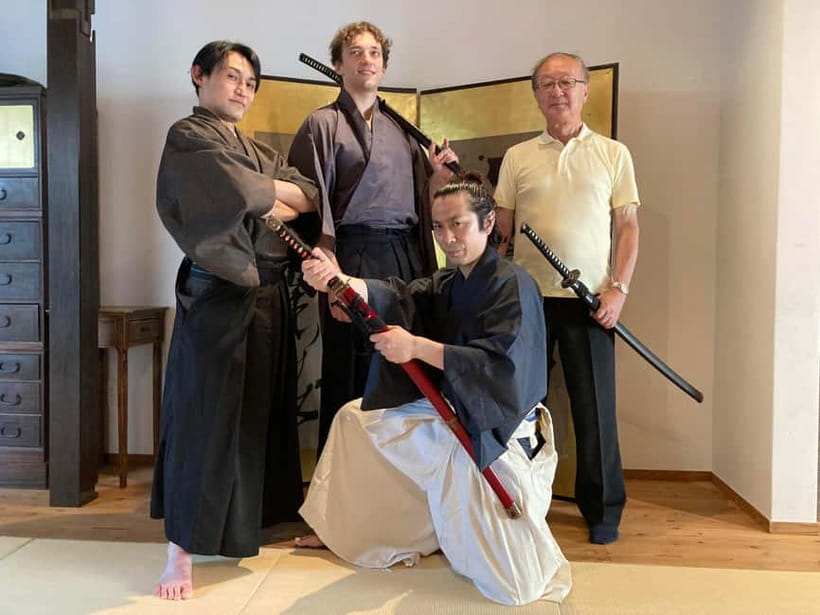
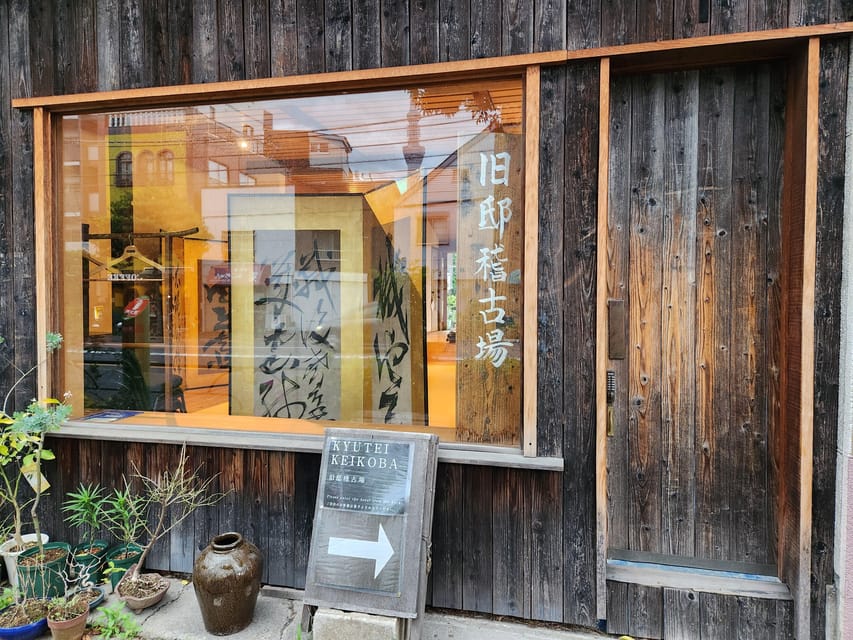
This activity takes place at the dojo 颯志館(Soushi-Kan / Soushi-Kan) in Kita City, Tokyo, with the address listed as 4-6-2 Shimo, Kita City, Tokyo 115-0042. The nearest station is Shimo Station on the Namboku Line, about a 6-minute walk from Exit 2. Meet in front of the dojo building for the start.
One practical heads-up: the listing says sessions are temporarily held at a different dojo because the Asakusa dojo is unavailable. That’s not unusual during a Tokyo schedule, but it does mean you should double-check the exact meeting location right before you head out. If you’re the type who likes to arrive early and not stress, build in a few minutes.
More temple mornings in old Asakusa
- Tokyo: Japanese Dance Cabaret Theater Asakusa-Kaguwa Ticket
★ 4.8 · 2,270 reviews - Tokyo: Meiji Shrine, Asakusa, Skytree Bus Tour and Cruise
★ 4.7 · 1,986 reviews - Tokyo: Roll and Authentic Sushi Making Class in Asakusa
★ 4.9 · 1,957 reviews - Tokyo: Asakusa Walking Tour with Sensoji Temple Visit
★ 4.8 · 1,583 reviews
The 90-minute flow: what you’ll do step by step
The class runs about 90 minutes and stays focused: you’ll get changed, learn key movements, and end with photos (and sometimes a staged duel). Because it’s a small group, the pacing feels more like coaching than a lecture.
1) Dress as a Samurai when you arrive
The first moment is the “okay, I’m really doing this” part: you’ll put on traditional samurai attire at the dojo. From there, your posture, spacing, and movements start to feel more deliberate, even if you’ve never done anything like this before.
This is also where the camera element starts to matter. They don’t just hand you a costume and send you away. You’ll be guided into the kind of pose that works for photos and video, which is why this can be more fun than most short experiences.
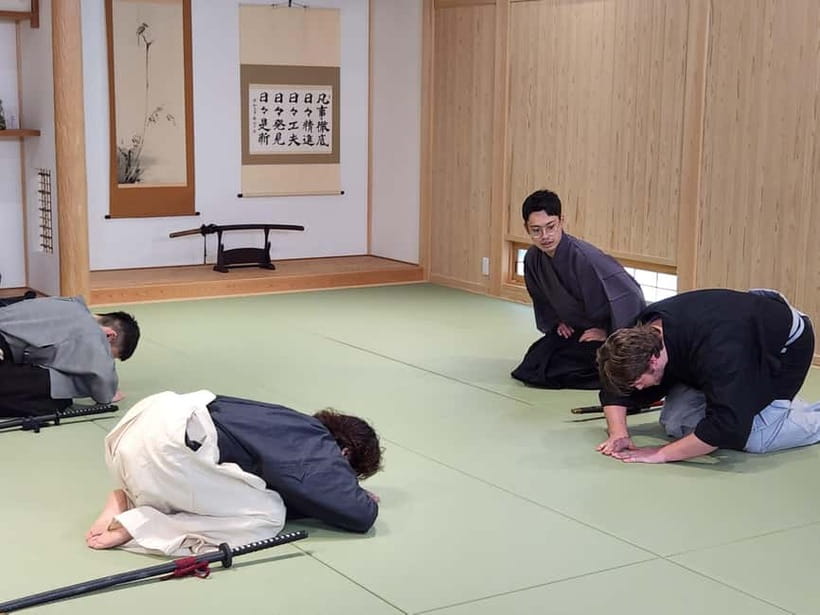
2) Samurai culture and respect: bowing taught by example
Next comes the cultural piece: you’ll learn how to bow and how to show respect to your opponent with the sword. That may sound symbolic, but it’s actually practical because it shapes your whole movement sequence—your stance, timing, and how you hold yourself.
In a lot of swordplay demos, “respect” is treated like a slogan. Here, you’re taught the actual motions. It’s one of the reasons the experience doesn’t feel like cosplay-only.
3) Sword basics: draw and stylized strikes with a pro
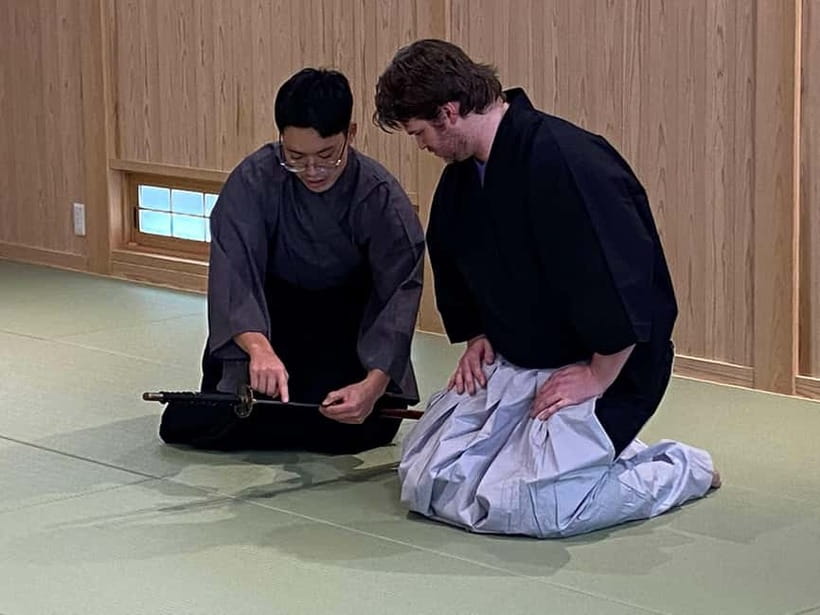
Then you move into the sword workshop. You’ll study fundamental stances, strikes, and movements that define samurai swordsmanship, guided by a professional master with decades of action experience. You also learn how to draw and strike using stylized movements.
They also provide practice swords, and the format is designed for guests rather than expert reenactors. You’re not being asked to do real combat. Instead, you’re learning controlled forms—clean starts, controlled lines, and repeatable footwork.
You’ll also get the chance to pick a sword from among many options. That small choice helps a lot. It makes the experience feel personal rather than generic, and it makes your final photo session look more “yours.”
More blade-and-dojo sessions, reviewed
- Tokyo: Samurai Ninja Museum Guided tour and Experience★ 4.6 · 1,010 reviews
- Tokyo: Samurai Sword & Archery Class from Samurai Descendant★ 5.0 · 603 reviews
- Best Samurai Experience in Tokyo★ 5.0 · 458 reviews
- Ninja Experience (Family Friendly) at Samurai Ninja Museum TOKYO★ 5.0 · 441 reviews
- Tokyo: Samurai Entertainment Night Show in Kanda Shrine★ 4.6 · 417 reviews
4) Optional choreographed battle (safe, staged, and fun)
There’s an optional segment where you can take part in a choreographed sword fight. It’s described as safe and controlled, which matters if you’re worried about injuries or if you’re not confident with movement.
This is where acting and camera work often show up. If you want your photos and video to look dramatic, this is the moment where you get coached into the timing and angles that read well on camera.
5) Completion certificate + photo session in costume
At the end, you’ll get a completion certificate. You’ll also have a photo session while you’re still in costume, and you may get commemorative photos as part of the wrap-up.
The keepsakes are more than paper. When you’ve spent the time dressing, learning, and moving, the certificate feels like proof you didn’t just try on clothing—you actually learned movements and performed them.
Price and value: is $90 worth 90 minutes in Tokyo?
At $90 per person for about 90 minutes, this sits in the mid-range for Tokyo “activity” pricing, but the value comes from what’s included. You’re getting:
- an English-speaking interpreter
- samurai costume
- practice swords
- a photo shoot
- and a completion certificate
So yes, it costs money—but you’re paying for coaching, time with the master, and production-style photos, not just admission. If you’ve been doing Tokyo experiences where you watch from the sidelines, this is one of the better ways to spend short time because you’re actively doing the work.
If you’re a budget traveler, this is the kind of splurge you’ll either love or skip. My advice is simple: if photos and a hands-on “I did this” memory matter to you, the price starts to feel fair.
The best parts: what you’ll likely enjoy most
From what’s been described about past sessions, the most praised parts are the hands-on learning, plus how seriously the instructors take camera-ready posing.
You’ll likely enjoy:
- the way they teach poses and movements so you look good without feeling lost
- the lesson structure that keeps you engaged from costume to sword basics to the final photo/certificate
- the feeling of being treated as a participant, not a spectator
- the friendliness of the staff and the way they help you settle in quickly, even if you arrive early
One small but real-life detail: the area can be a little tricky to navigate if your map pin is off by a street. Showing up early helps. If you arrive before the official start, you may be able to wait inside until the group is ready.
Logistics that matter: timing, group size, and what to bring
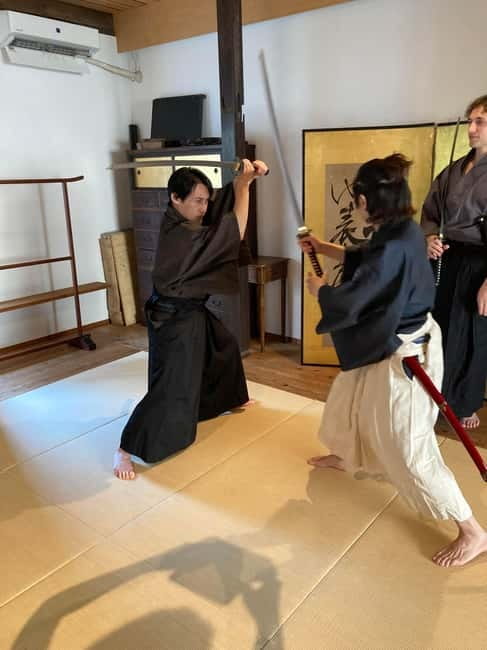
This is a small group activity limited to up to 6 participants, which changes the whole vibe. You’ll get more individual correction, especially during bowing, stances, and the timed camera moments.
You’ll want to bring:
- a towel
- water
- a T-shirt
Also, no food is allowed during the activity, and smoking isn’t allowed. If that’s a deal-breaker for you, plan to eat beforehand. If you show up without what you need, the provider says they can offer alternatives if you contact them in advance.
If you’re sensitive to comfort, note that you’ll be in traditional costume while moving through stances. They also list not suitable for people with back problems. If your mobility isn’t great, you should be cautious.
Who this is for (and who should skip it)
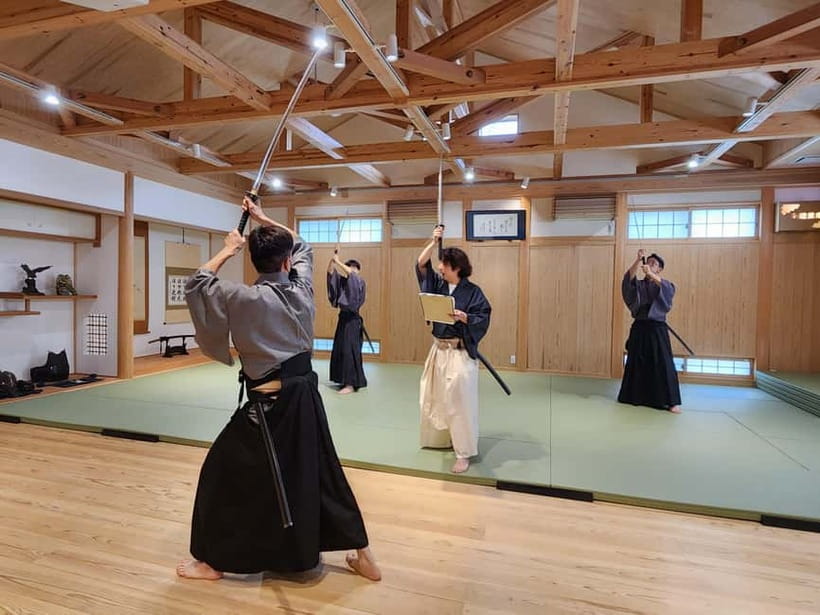
This is a great fit if you want something interactive in Tokyo that’s not just walking around. It works especially well if you like:
- short, structured lessons
- learning a few skills you can repeat later
- dressing up for photos
- doing something “hands-on” rather than purely sightseeing
It may be less suitable if you:
- have a back condition or mobility limitations
- are pregnant (explicitly listed as not suitable)
- want a long, quiet cultural museum-style experience with no physical movement
It’s also a decent option for families, since the format is approachable and interactive. One booking included a 10-year-old and the child part of the experience was a favorite segment, especially choosing the outfit and learning the choreography.
How to get the most out of your samurai lesson
A few mindset tips can make a big difference:
- Go in ready to move. Even if swordwork feels intimidating, they’ll guide you through controlled stylized movements.
- Take the camera seriously for the last part. The pose coaching is part of the value, and your photos will look better if you listen during staging.
- Don’t overthink the sword choice. Pick what you like in the moment and focus on stance and timing.
- Arrive early enough to find the dojo confidently, especially if the session location is temporarily different.
Should you book Samurai School: Become a Samurai Warrior?
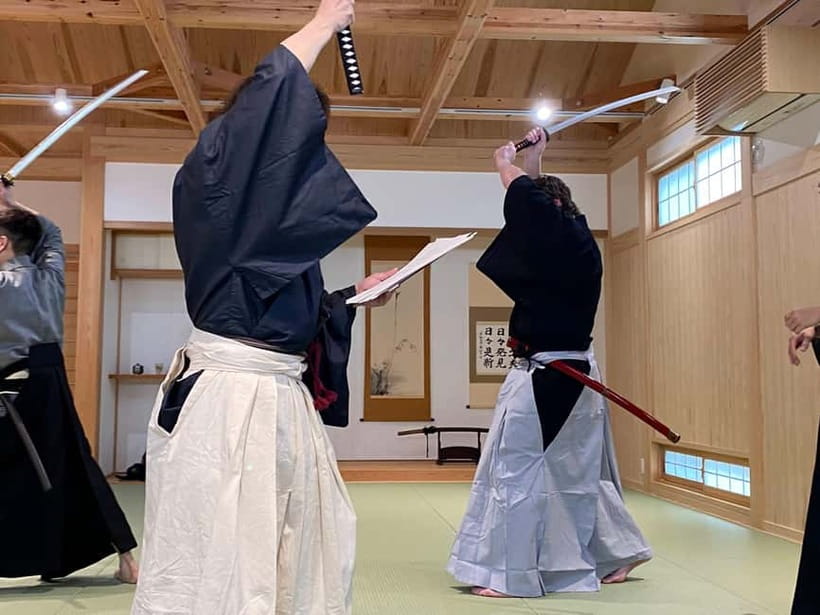
Book it if you want an experience that mixes hands-on learning with costume photos and a small-group feel near Tokyo Skytree. At $90, it’s best viewed as a coached activity plus a keepsake package, not just an online-style “tour.”
Consider skipping if you want a calm, purely observational cultural stop, or if your body can’t handle stances and movement in costume. If you’re unsure, check the not-suitable notes and plan to bring the towel, water, and T-shirt so you’re not scrambling at the start.
If you’re looking for a memorable Tokyo moment that feels active, respectful, and fun, this one has a strong chance of landing well.
More Tour Reviews in Tokyo
- Mt Fuji and Hakone 1-Day Bus Tour Return by Bullet Train
★ 5.0 · 26,383 reviews - 1-Day Tokyo Bus Tour
★ 5.0 · 14,250 reviews - Tokyo: teamLab Planets TOKYO Digital Art Museum Entry Ticket
★ 4.6 · 9,779 reviews - Mt Fuji & Hakone Cruise, Drum Show Bullet Train 1 Day from Tokyo
★ 4.0 · 7,413 reviews - Tokyo: Shinjuku Food Tour (13 Dishes at 4 Local Eateries)
★ 5.0 · 6,603 reviews
More Samurai and Ninja Sessions
- Tokyo: Samurai Ninja Museum Guided tour and Experience
★ 4.6 · 1,010 reviews - Tokyo: Samurai Sword & Archery Class from Samurai Descendant
★ 5.0 · 603 reviews - Best Samurai Experience in Tokyo
★ 5.0 · 458 reviews - Ninja Experience (Family Friendly) at Samurai Ninja Museum TOKYO
★ 5.0 · 441 reviews - Tokyo: Samurai Entertainment Night Show in Kanda Shrine
★ 4.6 · 417 reviews
More Mornings in Old Asakusa
- Tokyo: Japanese Dance Cabaret Theater Asakusa-Kaguwa Ticket
★ 4.8 · 2,270 reviews - Tokyo: Meiji Shrine, Asakusa, Skytree Bus Tour and Cruise
★ 4.7 · 1,986 reviews - Tokyo: Roll and Authentic Sushi Making Class in Asakusa
★ 4.9 · 1,957 reviews - Tokyo: Asakusa Walking Tour with Sensoji Temple Visit
★ 4.8 · 1,583 reviews - Tokyo Asakusa Rickshaw Tour
★ 5.0 · 1,375 reviews
Latest Tokyo reviews off our desk






Asakusa & Sensoji Tours, compared.
 ★ 4.8Japanese Dance Cabaret Theater Asakusa-Kaguwa TicketFrom $492,270 reviews
 ★ 4.7Meiji Shrine, Asakusa, Skytree Bus Tour and CruiseFrom $1221,986 reviews
 ★ 4.9Roll and Authentic Sushi Making Class in AsakusaFrom $581,957 reviews
 ★ 4.8Asakusa Walking Tour with Sensoji Temple VisitFrom $221,583 reviews
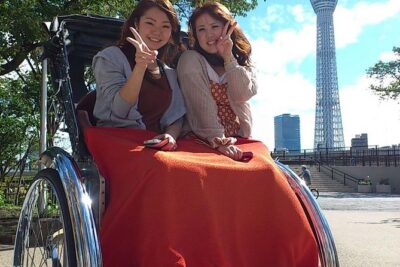 ★ 5.0Tokyo Asakusa Rickshaw TourFrom $421,375 reviews
 ★ 4.5Tokyo Panoramic 1 Day: Meiji Shrine, Asakusa, Odaiba and SKYTREE®From $851,222 reviews
 ★ 5.0Tokyo Go Kart: Asakusa, Skytree, and Akihabara **IDP MUST**From $99988 reviews
 ★ 4.7Asakusa, Skytree & Akhihabara Go-Kart City ExperienceFrom $96761 reviews
Browse the lists this tour appears in