
Reviewed · ASAKUSA & SENSOJI TOURS
Tokyo: Asakusa Walking Tour -Sumida River to Senso-ji Temple
Tokyo’s classics in 90 minutes. This combo tour links a calm Sumida River cruise with a guided Senso-ji walk in Asakusa, so you get both the scenery and the meaning behind what you’re seeing. It’s built for people who want Japanese culture and religion explained without juggling tickets or routes all day.
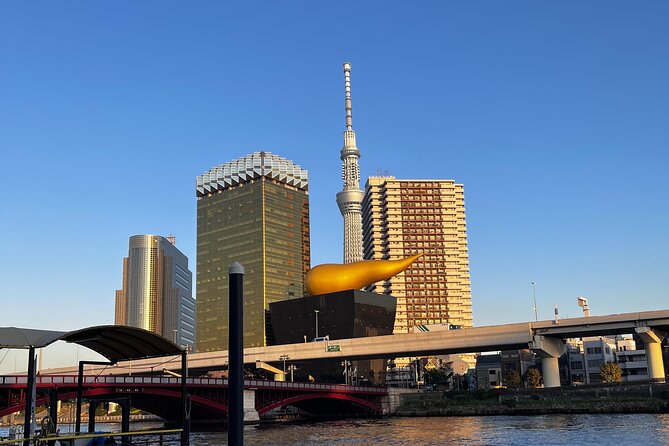
I especially like two parts. First, the river time gives you postcard views of landmarks like Tokyo Skytree and Kaminarimon Gate from a different angle than you’ll see on foot. Second, the price includes fortune-telling at Senso-ji, which turns a sightseeing stop into something you can actually participate in, not just observe.
One thing to plan around: the tour needs good weather, and the schedule is fairly tight at about 1 hour 30 minutes total, so you’ll want comfy shoes and a willingness to move at a guided pace.
In This Review
- Key things to know before you go
- How the Sumida River to Senso-ji Route Fits Together
- Stop 1: 30-Minute Sumida River Cruise and Skytree Views
- Stop 2: Guided Senso-ji Walk Past Kaminarimon and Nakamise-dori
- Fortune-Telling at Senso-ji: A Small Ritual You Can Follow Without Stress
- Small Group Size, Guides Like Nori and Naoko, and Photo-Friendly Pace
- Price, Time, and Value for $43 in 90 Minutes
- Should You Book This Asakusa Tour?
- FAQ
- How long is the Tokyo Asakusa walking tour from the Sumida River to Senso-ji?
- What does the tour cost?
- What are the main stops on the tour?
- Is fortune-telling included?
- Where do I meet the tour?
- Where does the tour end?
- Is this tour ticket-based on a mobile device?
- How many people are in the group?
- What happens if the weather is poor?
- How late can I cancel for a refund?
Key things to know before you go
- Two Tokyo icons, one route: Sumida River views first, then Senso-ji and Kaminarimon second.
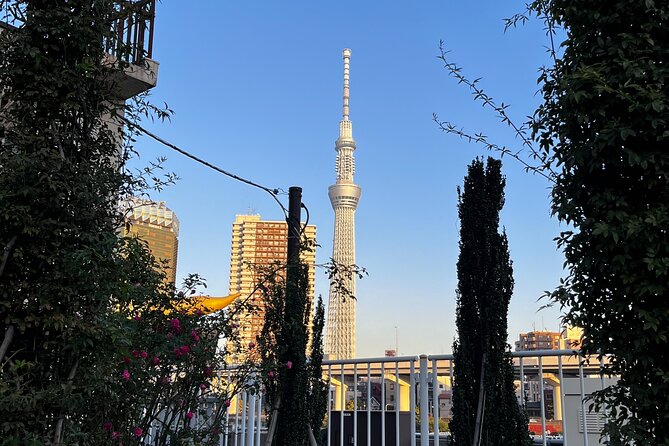
- Skytree + Kaminarimon from the water: that skyline perspective is a big reason this tour works.
- Fortune-telling is included: at Senso-ji, so you’re not hunting for where to do it.
- Small group capped at 10: you’ll get more personal attention and easier Q&A.
- Guides named Nori and Naoko show up in feedback: with humor, context, and time for photos.
How the Sumida River to Senso-ji Route Fits Together
This is a smart “orientation plus tradition” plan for Asakusa. You start on the Sumida River, where Tokyo’s big landmarks look different—less like distant billboards and more like pieces of a living city. Then you shift from the skyline to the spiritual heart of Asakusa at Senso-ji, where the walking part slows down just enough to let the sights and rituals land.
You also get a natural learning flow. On the river, your guide can point out landmark relationships—how the city lines up around the river. Then at Senso-ji, the same guide can explain why people do what they do in and around the temple complex. That two-part setup is exactly why this works well early in a trip: you leave with both context and good habits for shrine-and-temple etiquette.
Timing matters here. The whole experience is about 1 hour 30 minutes, with the river portion at about 30 minutes and the temple walk around 1 hour. That’s short enough to fit on a busy day, but long enough that you’re not stuck doing a “see it, move on” sprint.
More temple mornings in old Asakusa
- Tokyo: Japanese Dance Cabaret Theater Asakusa-Kaguwa Ticket
★ 4.8 · 2,270 reviews - Tokyo: Meiji Shrine, Asakusa, Skytree Bus Tour and Cruise
★ 4.7 · 1,986 reviews - Tokyo: Roll and Authentic Sushi Making Class in Asakusa
★ 4.9 · 1,957 reviews - Tokyo: Asakusa Walking Tour with Sensoji Temple Visit
★ 4.8 · 1,583 reviews
Stop 1: 30-Minute Sumida River Cruise and Skytree Views
The first stop is a cruise along the Sumida River. The focus is views—especially Tokyo Skytree and Kaminarimon Gate—so you’re not paying for a long boat ride just to sit there. The route gives you a rare perspective: the city’s major sights feel connected when you see them from the water.
You’ll also learn context while you’re watching. In feedback, guides like Nori are specifically praised for explaining Edo-period background during the cruise. Even if you don’t consider yourself a history person, that kind of storytelling helps the landmarks make sense instead of just looking pretty.
What I’d watch for as you enjoy the cruise:
- Bring your patience for river views. The best payoff is looking around and letting the landmarks come into view rather than trying to photograph every second.
- Use the cruise to plan your next steps. When you later walk around Asakusa, you’ll recognize locations faster because you’ve already “mapped” the area from the river.
A small practical note: the tour lists the cruise ticket as free, which usually means you’re not trying to buy anything extra at the dock. Still, it’s worth keeping an eye on the day-of instructions from your organizer so you know exactly where to stand and when.
Stop 2: Guided Senso-ji Walk Past Kaminarimon and Nakamise-dori
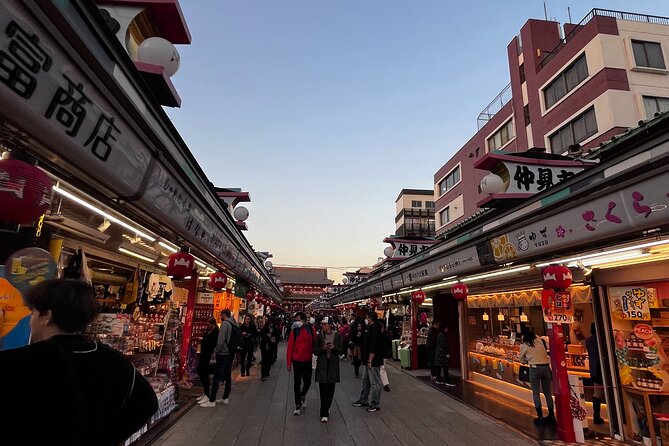
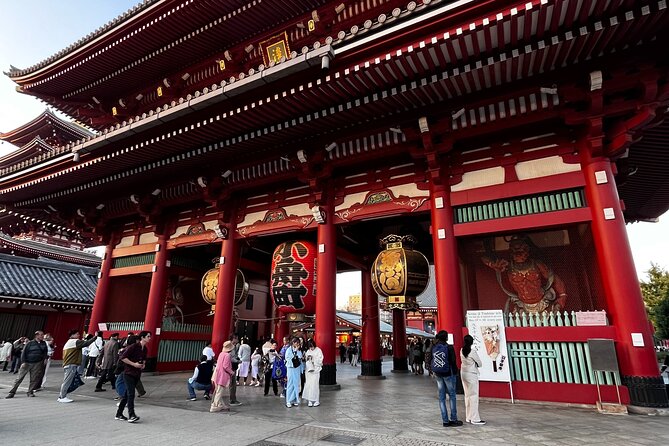
After the river, the tour switches gears to walking through Asakusa’s temple area. The guided portion centers on Senso-ji, with stops that include Kaminarimon Gate, Nakamise-dori, and the temple’s main hall.
This is where guidance really matters. Senso-ji isn’t just a photo destination. People visit for spiritual reasons, and there are small behaviors that help you move respectfully in a crowded place. A good guide can also prevent you from getting lost in the noise of vendors and foot traffic.
Here’s what you can expect from the walk, based on what the tour specifically includes:
- You’ll see Kaminarimon Gate, the iconic entry point people associate with Senso-ji.
- You’ll pass through Nakamise-dori, the shopping street that runs toward the temple approach.
- You’ll reach the main hall, where the atmosphere shifts from street energy to temple focus.
The walking pace is guided, which is a benefit if you’re the type who wants to ask questions. In feedback, Naoko is praised for being funny and informative, and for answering questions while still giving people time to pause for photos and exploration. That matters, because strict group tours often leave you no breathing room. Here, the tone sounds more like: learn the basics, then you get a moment to take it in.
End point: the experience finishes at Asakusa Station (the listing provides a specific Asakusa Sta. 1-chōme address). That’s useful because it helps you transition smoothly to your next plan, whether that’s another neighborhood walk, dinner, or heading back to your hotel.
Fortune-Telling at Senso-ji: A Small Ritual You Can Follow Without Stress
One standout element is that fortune-telling is included in the price at Senso-ji. Even if you’re skeptical, this is one of the easiest “try it” cultural activities in Tokyo because you’re guided to where it happens and what to do.
What I like about including fortune-telling in a tour:
- You don’t waste time searching on your own.
- You can focus on the experience instead of translating every sign.
- You can treat it as a conversation starter with your guide, who can explain the ritual’s meaning and how it fits into temple visits.
In practical terms, this turns the temple stop into more than sightseeing. You’re doing something brief and memorable that feels personal, and you’ll likely remember it long after the photos.
A tip for making this part of the tour feel worth it: when you reach the fortune area, don’t rush. Let the moment settle. Even if the wording is hard to interpret, your guide can help connect it back to the broader idea of how people use rituals and messages as motivation during travel and daily life.
Small Group Size, Guides Like Nori and Naoko, and Photo-Friendly Pace
This is a small-group tour with a maximum of 10 travelers. That’s a big deal in Asakusa. Big-group tours can feel like a human parade line. Smaller groups tend to spread out slightly, which makes it easier to keep up and easier to ask questions without shouting.
The review feedback also puts a spotlight on the guide experience. Nori is mentioned for explaining Edo-period context during the river cruise. Naoko is mentioned for being smart, funny, and informative, plus for giving people time to stop, explore, and take pictures. When a tour includes time for photos, it changes the feel from rushed checking to actual looking.
Here’s what you’ll likely appreciate most about the guide style:
- Context that links what you see (Skytree, Kaminarimon, the temple halls) to why it matters.
- Answers to questions without making you feel like you’re slowing the group.
- A pace that allows short pauses rather than forcing you to keep moving every few seconds.
Also, your tour ends at Asakusa Station, and the guidance includes a nice little real-world touch: ask your guide how to get home after the tour. That’s handy because it’s easy to forget that the “best route” depends on where your hotel is.
Readers also shortlisted these Tokyo bookings:
- Tokyo Tsukiji Fish Market Food and Culture Walking Tour★ 5.0 · 3,184 reviews
- Tokyo: Imperial Palace and Shogun Historical Walking Tour★ 5.0 · 2,251 reviews
- Tokyo: Shinjuku Local Bar and Izakaya Guided Walking Tour★ 4.9 · 1,794 reviews
- Tokyo: Tsukiji Fish Market Food and Walking tour★ 5.0 · 1,724 reviews
- Tokyo: Asakusa Walking Tour with Sensoji Temple Visit★ 4.8 · 1,583 reviews
Price, Time, and Value for $43 in 90 Minutes
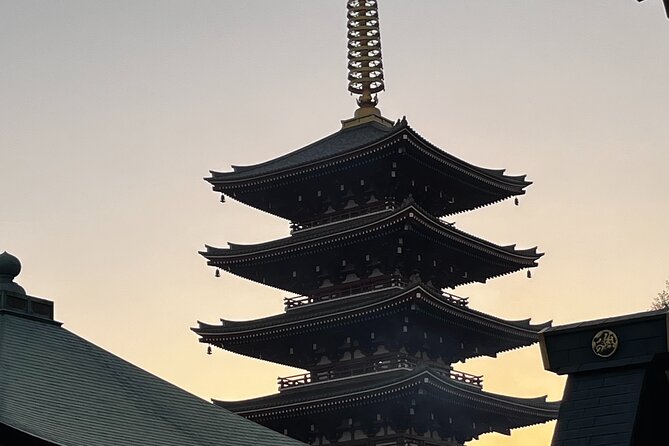
At $43.00 per person, this is priced like a guided combo experience. The big value play isn’t just the dollar amount—it’s what’s bundled into the short duration.
You’re getting:
- A 30-minute Sumida River cruise with views of key landmarks like Tokyo Skytree and Kaminarimon Gate.
- A guided Senso-ji temple walk that covers Kaminarimon Gate, Nakamise-dori, and the main hall.
- Fortune-telling at Senso-ji included in the price.
- A small-group setting, capped at 10 people.
- A mobile ticket approach for easier check-in.
The tour lists admission tickets as free for both stops, which usually signals you won’t need separate paid entries for the included parts. That reduces “hidden cost” feelings when you’re trying to budget.
If you’re comparing this to doing it on your own, you’re paying for saved time and smoother flow. Trying to coordinate a river cruise plus a guided temple experience can turn into multiple ticket lines, multiple transfers, and more time spent figuring things out. This tour tries to remove that friction, so you spend more of your limited sightseeing time seeing and understanding.
One more detail: this tour is commonly booked about 67 days in advance on average. If your trip dates are set, I’d treat that as a hint to reserve early—especially since small-group tours can fill.
Should You Book This Asakusa Tour?
I’d book it if you want a focused Asakusa experience that mixes views, religion, and practical walking guidance. This is especially good for a first visit to the area, because starting on the Sumida River helps you get your bearings fast, then Senso-ji gives you the cultural and ritual context.
I would skip it (or at least rethink your day plan) if you:
- Prefer long, unguided temple wandering with lots of free time.
- Are traveling on a day where weather is unpredictable and you don’t have flexibility (the tour requires good weather).
- Want a slower pace than the approximate 1 hour 30 minutes format.
If you like your Tokyo days structured and meaningful—without feeling like you’re chained to a schedule—this combo makes a lot of sense.
FAQ

How long is the Tokyo Asakusa walking tour from the Sumida River to Senso-ji?
It runs for about 1 hour 30 minutes in total, with roughly 30 minutes for the Sumida River cruise and about 1 hour for the guided Senso-ji portion.
What does the tour cost?
The price is $43.00 per person.
What are the main stops on the tour?
You’ll do a Sumida River cruise first, then you’ll visit Senso-ji Temple. The Senso-ji part includes Kaminarimon Gate, Nakamise-dori shopping street, and the temple main hall.
Is fortune-telling included?
Yes. Fortune-telling at Senso-ji is included in the price.
Where do I meet the tour?
You meet at the Kuramae 2-Chōme Police box at 2-chōme-15-8 Kuramae, Taito City, Tokyo 111-0051.
Where does the tour end?
The tour ends at Asakusa Station (Asakusa Sta. 1-chōme-1-3, Taito City, Tokyo 111-0032).
Is this tour ticket-based on a mobile device?
Yes, the tour uses a mobile ticket.
How many people are in the group?
The maximum group size is 10 travelers.
What happens if the weather is poor?
The experience requires good weather. If it’s canceled due to poor weather, you’ll be offered a different date or a full refund.
How late can I cancel for a refund?
You can cancel up to 24 hours in advance for a full refund. If you cancel less than 24 hours before the start time, the amount paid is not refunded.
More Tours in Tokyo
- Mt Fuji and Hakone 1-Day Bus Tour Return by Bullet Train
★ 5.0 · 26,383 reviews - 1-Day Tokyo Bus Tour
★ 5.0 · 14,250 reviews - Tokyo: Shinjuku Food Tour (13 Dishes at 4 Local Eateries)
★ 5.0 · 6,603 reviews - Tokyo Mt Fuji 5th St & Hakone Cruise Bus Tour w/Bullet Train
★ 4.4 · 5,024 reviews - Flagship 2-Hours Official Street Go-Kart Tour – Tokyo Bay Shop
★ 5.0 · 4,974 reviews
More Tour Reviews in Tokyo
- Mt Fuji and Hakone 1-Day Bus Tour Return by Bullet Train
★ 5.0 · 26,383 reviews - 1-Day Tokyo Bus Tour
★ 5.0 · 14,250 reviews - Tokyo: teamLab Planets TOKYO Digital Art Museum Entry Ticket
★ 4.6 · 9,779 reviews - Mt Fuji & Hakone Cruise, Drum Show Bullet Train 1 Day from Tokyo
★ 4.0 · 7,413 reviews - Tokyo: Shinjuku Food Tour (13 Dishes at 4 Local Eateries)
★ 5.0 · 6,603 reviews
More Mornings in Old Asakusa
- Tokyo: Japanese Dance Cabaret Theater Asakusa-Kaguwa Ticket
★ 4.8 · 2,270 reviews - Tokyo: Meiji Shrine, Asakusa, Skytree Bus Tour and Cruise
★ 4.7 · 1,986 reviews - Tokyo: Roll and Authentic Sushi Making Class in Asakusa
★ 4.9 · 1,957 reviews - Tokyo: Asakusa Walking Tour with Sensoji Temple Visit
★ 4.8 · 1,583 reviews - Tokyo Asakusa Rickshaw Tour
★ 5.0 · 1,375 reviews
Latest Tokyo reviews off our desk






Asakusa & Sensoji Tours, compared.
 ★ 4.8Japanese Dance Cabaret Theater Asakusa-Kaguwa TicketFrom $492,270 reviews
 ★ 4.7Meiji Shrine, Asakusa, Skytree Bus Tour and CruiseFrom $1221,986 reviews
 ★ 4.9Roll and Authentic Sushi Making Class in AsakusaFrom $581,957 reviews
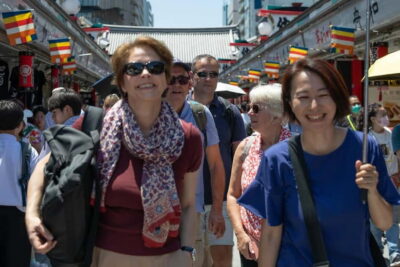 ★ 4.8Asakusa Walking Tour with Sensoji Temple VisitFrom $221,583 reviews
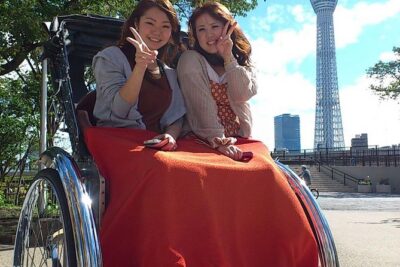 ★ 5.0Tokyo Asakusa Rickshaw TourFrom $421,375 reviews
 ★ 4.5Tokyo Panoramic 1 Day: Meiji Shrine, Asakusa, Odaiba and SKYTREE®From $851,222 reviews
 ★ 5.0Tokyo Go Kart: Asakusa, Skytree, and Akihabara **IDP MUST**From $99988 reviews
 ★ 4.7Asakusa, Skytree & Akhihabara Go-Kart City ExperienceFrom $96761 reviews
Browse the lists this tour appears in