
Reviewed · ASAKUSA & SENSOJI TOURS
Tokyo: Asakusa Walking Tour with Japanese Comedian
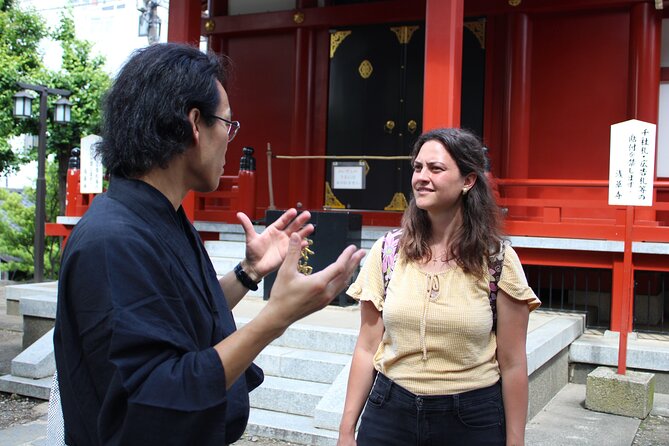
Comedian comedy meets old Tokyo temples. I love how Karate Comic Ryo turns Buddhist and Shinto sights into stories you can actually follow, and I love the small group feel that makes it easy to ask questions as you walk. One possible drawback: the route is concentrated around Senso-ji and its immediate streets, so if you want a tour that stretches across all of Asakusa, you’ll likely need extra free time after.
In about 1 hour 30 minutes, you’ll move from a top-floor orientation spot to iconic gates, side halls, statues, and the shopping lanes that people associate with Asakusa. Most of what you visit is free to enter, so your money goes mostly to the guide, the pacing, and the fact that you won’t be wandering around guessing what everything means.
In This Review
- Quick hits you’ll care about
- Why this Asakusa walk feels different than a standard temple tour
- Getting oriented at the Asakusa Culture Tourist Information Center (8th-floor view)
- Entering Asakusa through Nakamise Shopping Street and Kaminarimon
- Bentendo and the Bell of Time: art, prosperity, and Edo-era rhythms
- Nisombutsu: a calmer spot of bronze and stone (17th-century details)
- Nitenmon Gate and Asakusa Shrine: who gets to pass
- Yogodo and Awashimado: smaller temple spaces with big meaning
- Asakusa Nishisando and the melon bread stop at 花月堂 (Kagetsu-do)
- Hozomon and the walk to Senso-ji’s main hall
- Pacing, crowd control, and why early morning helps
- Price and value: what you’re really paying for at $37.99
- Who should book this Asakusa tour (and who might want something else)
- Should you book Karate Comic Ryo’s Asakusa walking tour
- FAQ
- How long is the Asakusa walking tour with Japanese comedian?
- Where does the tour start and where does it end?
- What sights are included in the route?
- Is there an admission fee for the stops?
- How many people are in the group?
- Can I start early to avoid crowds?
- Is a service animal allowed?
- What is the cancellation policy?
Quick hits you’ll care about
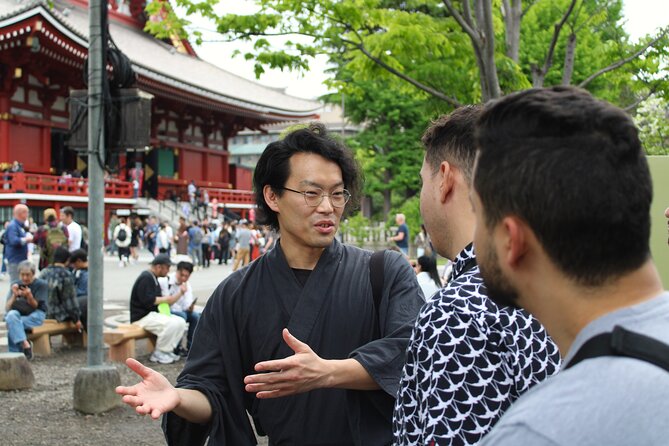
- A stand-up comedian guide (Karate Comic Ryo) explains what you’re seeing in plain language
- Small group, capped at six and listed as maximum eight, so the pace stays human
- A clear, no-getting-lost route built around Senso-ji and the streets around it
- Multiple landmark stops like Bentendo, the Bell of Time, Nitemmon Gate, and Hozomon
- A practical snack moment at Asakusa Nishisando, with melon bread at 花月堂 (Kagetsu-do) if you want
Why this Asakusa walk feels different than a standard temple tour
Asakusa can be a little overwhelming. Senso-ji is famous, so the area draws crowds, and the grounds are packed with gates, halls, statues, and smaller side spots that most people rush past. What I like about this tour format is that it gives you structure without making you feel herded.
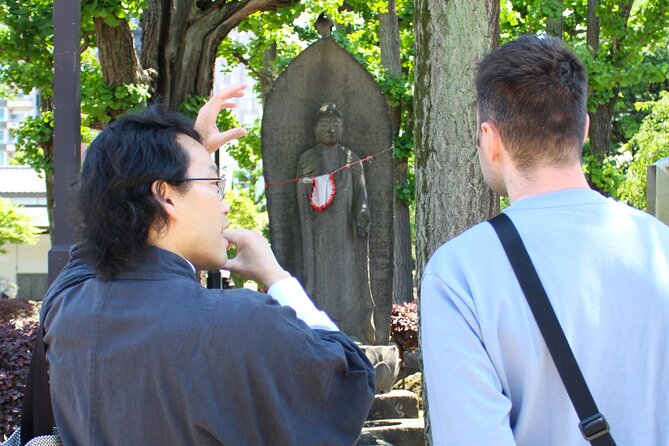
The big twist is the guide: Karate Comic Ryo mixes humor with history as you go. That matters because temple and shrine details can sound complicated if they’re just recited. Here, the explanations are tied to specific places you’re standing in front of—so the facts stick because your eyes already found the landmark.
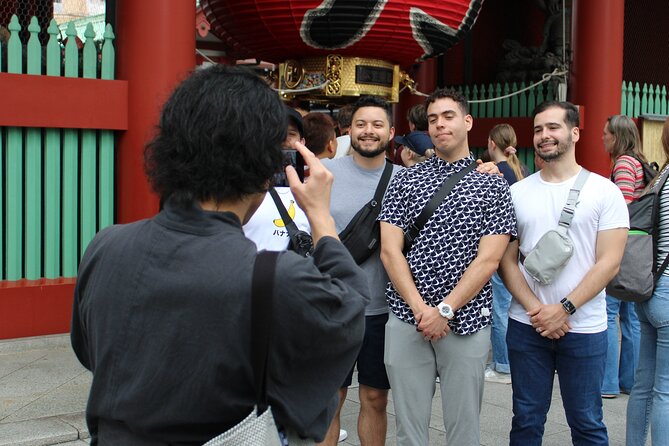
The group is kept small. That means you get time to ask questions, and you can pause for pictures without the whole line falling behind. In reviews and in how the tour is designed, the pacing comes out as efficient but not rushed—important when you’re walking through a well-known tourist zone.
Finally, there’s a practical advantage: you start at an orientation point (an indoor view) and end at the main hall area. That gives you a beginning-to-end flow, so you don’t waste your energy figuring out where you are.
More temple mornings in old Asakusa
- Tokyo: Japanese Dance Cabaret Theater Asakusa-Kaguwa Ticket
★ 4.8 · 2,270 reviews - Tokyo: Meiji Shrine, Asakusa, Skytree Bus Tour and Cruise
★ 4.7 · 1,986 reviews - Tokyo: Roll and Authentic Sushi Making Class in Asakusa
★ 4.9 · 1,957 reviews - Tokyo: Asakusa Walking Tour with Sensoji Temple Visit
★ 4.8 · 1,583 reviews
Getting oriented at the Asakusa Culture Tourist Information Center (8th-floor view)
You start at the Asakusa Culture Tourist Information Center, where you get a view from the 8th floor. Even if you’ve seen pictures of Senso-ji, this top-floor moment helps you understand the layout of the neighborhood: where the main temple axis runs and how the streets funnel toward the temple gates.
It’s a smart first stop for two reasons. First, it reduces that first-day confusion. Second, it gives your guide a chance to frame the route before you step into the busiest streets. You only spend about 10 minutes here, so it doesn’t eat your time, and the ticket is free.
Tip for your photos: look for the lines of streets leading toward the temple area. Once you understand those lines, every later gate and hall feels less random.
Entering Asakusa through Nakamise Shopping Street and Kaminarimon
Next you pass into Nakamise Shopping Street from the Kaminarimon gate, the iconic entry point for Senso-ji. This is where the “classic Asakusa” feel hits: souvenir stalls, snacks, and that sense of walking into a long-running tradition.
This stop is about 10 minutes, but it’s not just sightseeing. It’s your transition from the wide view and explanation mode into street-level Tokyo. Your guide points you toward what’s most meaningful to notice along the way—so you’re not just browsing randomly.
If you’re the type who likes to buy something quickly, this is early enough to set your preferences: do you want sweets, small souvenirs, or something specific like traditional crafts? If you’re trying to keep shopping focused, a guide-led route helps you avoid the trap of wandering too long before you’ve even seen the temple core.
Bentendo and the Bell of Time: art, prosperity, and Edo-era rhythms
The tour then moves into the Senso-ji area, starting with Bentendo. You’ll take a close look at Bentendo, known for the deity of art and prosperity. That sounds abstract until you’re facing the hall and realizing how these smaller shrines are part of people’s daily hope, not just sightseeing.
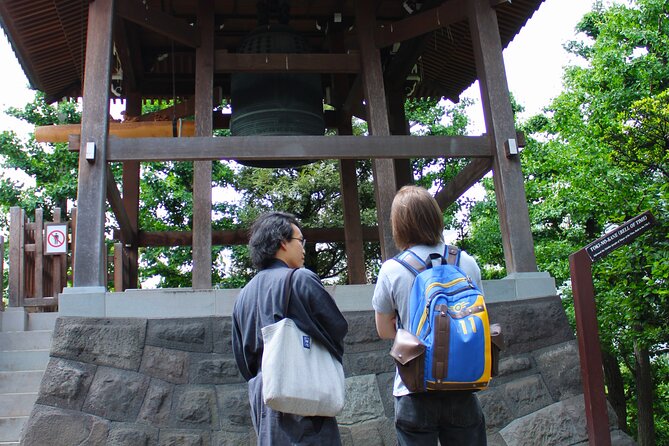
Just next to Bentendo is the Bell of Time. This is where the story of the Edo Period (16th to 18th century) becomes real. The bell was regularly rung by monks to tell people the time. So you’re not just learning a fact—you’re learning how the neighborhood used time as a shared public signal.
Each of these stops is short—around 5 minutes each—but they’re the kind of stops that change the way you look at everything else. You stop seeing the temple as a single big attraction and start noticing the layers of function: art worship, timekeeping, and daily life.
Practical tip: take a moment to slow down at Bell of Time. It’s easy to speed through because it’s near the main flow, but that’s exactly why the story lands well here.
Nisombutsu: a calmer spot of bronze and stone (17th-century details)
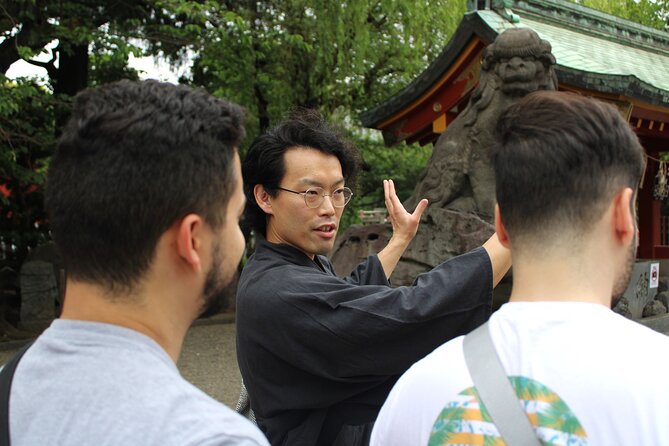
After the more dramatic landmarks, you get a quieter pause at Senso-ji Temple Nisombutsu. This stop centers on statues: two bronze statues and four stone statues of Buddhist deities, constructed in the 17th century.
This is a good example of why a guide matters. Without context, a lot of these statue groups look like “more decoration.” With guidance, you understand they’re part of an intentional devotional setup from a specific era. You’re seeing how the site preserved meaning over centuries.
The stop is brief, about 5 minutes, so don’t expect a long lecture. Instead, expect a focused explanation of what you’re looking at and why these materials and arrangements matter. If you like craftsmanship and symbolism, this is one of the stops that gives you the most return per minute.
Readers also shortlisted these Tokyo bookings:
- Tokyo Tsukiji Fish Market Food and Culture Walking Tour★ 5.0 · 3,184 reviews
- Tokyo: Imperial Palace and Shogun Historical Walking Tour★ 5.0 · 2,251 reviews
- Tokyo: Shinjuku Local Bar and Izakaya Guided Walking Tour★ 4.9 · 1,794 reviews
- Tokyo: Tsukiji Fish Market Food and Walking tour★ 5.0 · 1,724 reviews
- Tokyo: Asakusa Walking Tour with Sensoji Temple Visit★ 4.8 · 1,583 reviews
Nitenmon Gate and Asakusa Shrine: who gets to pass
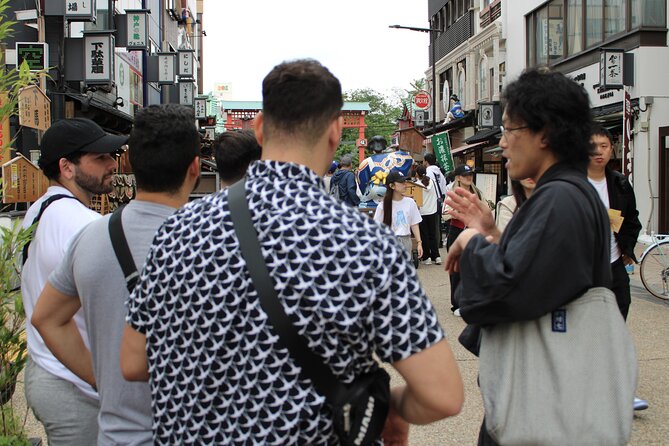
Next comes Nitemmon Gate, also tied to Edo-era power. On the right of Senso-ji’s main hall, you’ll see Nitenmon Gate, described as a National Cultural Property in Japan. Your guide will explain its connection to the Shogun’s gate—meaning only the general was allowed to pass.
That’s a striking shift in tone: temples aren’t only spiritual spaces. They also sit inside historical systems of rank and permission. Standing at the gate makes that idea tangible.
Afterward, you reach Asakusa Shrine. This shrine has three deities closely related to the origin of Senso-ji Temple. You’ll also see a garage for three big portable shrines—storage for shrines carried by locals during festival activity.
These two stops—gate power and shrine origin—work as a bridge between religion and community tradition. Even if you don’t know the background, the combination helps you understand why Asakusa has stayed important for generations.
Yogodo and Awashimado: smaller temple spaces with big meaning
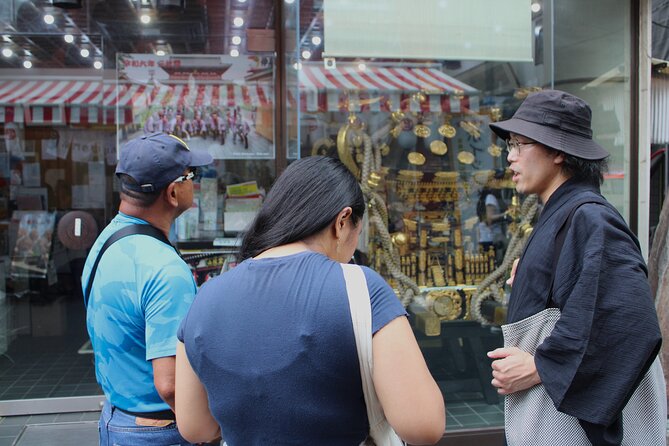
From the major gate and shrine, the route continues to Yogodo and Awashimado. The itinerary keeps these as quick stops (about 5 to 10 minutes each), which is actually ideal. They’re not meant to become distractions. They’re part of showing you how Senso-ji is built like a sequence of devotional spaces, each with its own role.
At these points, you’ll look around and learn what to notice on-site rather than trying to read everything yourself. Since you’re moving, the guide can point out details you’d likely miss—like where to look in relation to the main halls and how the site’s layout supports the flow of worship.
If you’re the kind of visitor who gets impatient at long temple explanations, this is a good place to feel confident: the tour keeps things moving while still giving you context.
Asakusa Nishisando and the melon bread stop at 花月堂 (Kagetsu-do)
Now for the fun break: Asakusa Nishisando. If you want Japanese sweets, this is where you can stop by 花月堂 (Kagetsu-do) for melon bread, often recommended in this area.
The itinerary notes this as optional if you’d like to try it, so don’t feel pressured. But I like this moment because it turns the tour from “seeing” into “living the neighborhood.” You’re not just looking at old Tokyo—you’re sampling the modern snacks that people still grab while walking those same streets.
If you’re traveling with kids or picky eaters, this stop is a useful reset. It’s short, and it gives you a quick win without turning into a long food tour.
Hozomon and the walk to Senso-ji’s main hall
Next is Hozomon, another gate with guardian statues in front of the temple. Guardian figures are a classic feature at many religious sites, but in Asakusa they’re part of the dramatic entry feel as you approach the core.
From here, you continue to Senso-ji Temple itself, the tour’s destination. The tour’s description emphasizes its age—1,400 years of history—and its central Buddhist figure: Kannon Bodhisattva. This is where the guided route pays off. By the time you’re at the main hall area, you’ve already seen multiple gates, statues, and shrine functions that connect back to the site’s meaning.
The tour ends in front of the main hall, so you’re placed well for further wandering on your own afterward. If you still want more pictures, more incense atmosphere, or a bit more shopping in Nakamise and Nishisando, you’re already in the right pocket of the neighborhood.
Pacing, crowd control, and why early morning helps
This tour runs around 1 hour 30 minutes, and the stop times are deliberately short—often 5 to 10 minutes. That structure keeps the day efficient, especially in Tokyo where you can burn time fast.
One of the best pieces of advice from actual experience is to consider an early morning start if you can. Starting around 8am can mean fewer crowds and less heat. Later mornings can bring more foot traffic, and you’ll feel it most near the temple entry gates and main street approaches.
Because the group is limited, you’ll still get time for photos and for conversation with Ryo. But crowd density affects how easily you can pause. Going early is the simplest way to keep the experience relaxed.
Price and value: what you’re really paying for at $37.99
$37.99 sounds reasonable on its own, but the value comes from how the tour uses that money.
Here’s what you get that changes the experience:
- A comedian-style guide who explains what you see as you see it, not after the fact
- A tightly planned route covering major and side features inside the Senso-ji orbit
- Free admission at the stops in the itinerary (you’re not paying entrance fees one by one)
- A small-group format that supports questions and photo pauses
- Practical time for street culture, including Nakamise and Nishisando
If you tried to do this on your own without context, you’d likely spend more time either retracing steps or searching for explanations. This tour compresses that learning curve into a short walk, while keeping the mood light through humor.
Also, there’s a mobile ticket and group discounts listed, which can help if you’re traveling with someone else.
Who should book this Asakusa tour (and who might want something else)
This is a great fit if:
- You want a guided walk with clear stops and a logical flow
- You’re curious about the meaning behind Senso-ji’s halls, gates, and statues
- You like a guide who makes history feel conversational, not like a script
- You want a small-group experience rather than a large bus-tour feel
You might want to plan differently if:
- You’re hoping for a wide survey of all Asakusa beyond the Senso-ji complex and nearby shopping lanes
- You want lots of downtime or long sit-down breaks (this tour is built for moving and viewing)
It’s also a solid choice for families and mixed-age groups, since the route is straightforward and the humor gives everyone something to latch onto.
Should you book Karate Comic Ryo’s Asakusa walking tour
If you’re going to Asakusa and you want the experience to feel guided without feeling stiff, I’d book this. The route hits major Senso-ji highlights, but it also slows down for the details—like Nisombutsu’s bronze and stone statues from the 17th century, the Edo-era Bell of Time, and the meaning behind Nitenmon Gate.
The biggest reason to choose it is simple: you’ll understand more of what you see while still enjoying the walk. And for $37.99, with free entry at the listed stops and a small-group setup, it’s one of the more cost-effective ways to get first-class context in one focused afternoon-or-morning block.
FAQ
How long is the Asakusa walking tour with Japanese comedian?
The tour is about 1 hour 30 minutes.
Where does the tour start and where does it end?
It starts at Tokyo Cruise Asakusa Pier in Taito City and ends in front of the main hall of Senso-ji Temple in Asakusa.
What sights are included in the route?
You’ll see stops including Asakusa Culture Tourist Information Center, Nakamise Shopping Street and Kaminarimon, multiple areas inside Senso-ji like Bentendo, the Bell of Time, Nisombutsu, Nitenmon Gate, Yogodo, Awashimado, plus Hozomon and Asakusa Nishisando.
Is there an admission fee for the stops?
The itinerary lists free admission tickets for the stops included.
How many people are in the group?
The tour is capped at six people in the overview, and it’s listed as having a maximum of eight travelers.
Can I start early to avoid crowds?
Morning starts are available, and one review specifically mentioned an 8am start to beat the crowds.
Is a service animal allowed?
Yes, service animals are allowed.
What is the cancellation policy?
Free cancellation is available up to 24 hours in advance for a full refund. If you cancel less than 24 hours before the start time, there is no refund.
More Tours in Tokyo
- Mt Fuji and Hakone 1-Day Bus Tour Return by Bullet Train
★ 5.0 · 26,383 reviews - 1-Day Tokyo Bus Tour
★ 5.0 · 14,250 reviews - Tokyo: Shinjuku Food Tour (13 Dishes at 4 Local Eateries)
★ 5.0 · 6,603 reviews - Tokyo Mt Fuji 5th St & Hakone Cruise Bus Tour w/Bullet Train
★ 4.4 · 5,024 reviews - Flagship 2-Hours Official Street Go-Kart Tour – Tokyo Bay Shop
★ 5.0 · 4,974 reviews
More Tour Reviews in Tokyo
- Mt Fuji and Hakone 1-Day Bus Tour Return by Bullet Train
★ 5.0 · 26,383 reviews - 1-Day Tokyo Bus Tour
★ 5.0 · 14,250 reviews - Tokyo: teamLab Planets TOKYO Digital Art Museum Entry Ticket
★ 4.6 · 9,779 reviews - Mt Fuji & Hakone Cruise, Drum Show Bullet Train 1 Day from Tokyo
★ 4.0 · 7,413 reviews - Tokyo: Shinjuku Food Tour (13 Dishes at 4 Local Eateries)
★ 5.0 · 6,603 reviews
More Mornings in Old Asakusa
- Tokyo: Japanese Dance Cabaret Theater Asakusa-Kaguwa Ticket
★ 4.8 · 2,270 reviews - Tokyo: Meiji Shrine, Asakusa, Skytree Bus Tour and Cruise
★ 4.7 · 1,986 reviews - Tokyo: Roll and Authentic Sushi Making Class in Asakusa
★ 4.9 · 1,957 reviews - Tokyo: Asakusa Walking Tour with Sensoji Temple Visit
★ 4.8 · 1,583 reviews - Tokyo Asakusa Rickshaw Tour
★ 5.0 · 1,375 reviews
Latest Tokyo reviews off our desk






Asakusa & Sensoji Tours, compared.
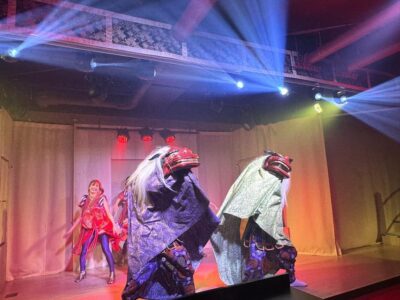 ★ 4.8Japanese Dance Cabaret Theater Asakusa-Kaguwa TicketFrom $492,270 reviews
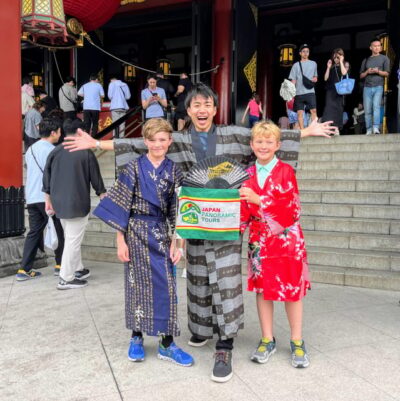 ★ 4.7Meiji Shrine, Asakusa, Skytree Bus Tour and CruiseFrom $1221,986 reviews
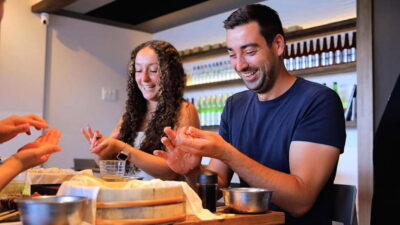 ★ 4.9Roll and Authentic Sushi Making Class in AsakusaFrom $581,957 reviews
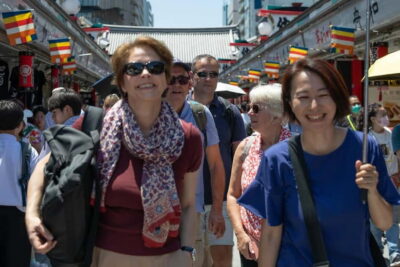 ★ 4.8Asakusa Walking Tour with Sensoji Temple VisitFrom $221,583 reviews
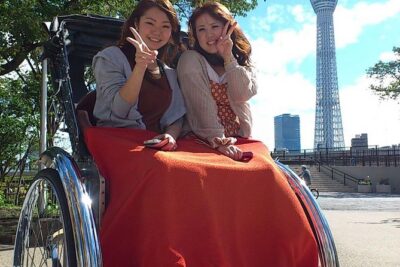 ★ 5.0Tokyo Asakusa Rickshaw TourFrom $421,375 reviews
 ★ 4.5Tokyo Panoramic 1 Day: Meiji Shrine, Asakusa, Odaiba and SKYTREE®From $851,222 reviews
 ★ 5.0Tokyo Go Kart: Asakusa, Skytree, and Akihabara **IDP MUST**From $99988 reviews
 ★ 4.7Asakusa, Skytree & Akhihabara Go-Kart City ExperienceFrom $96761 reviews
Browse the lists this tour appears in