
Reviewed · WALKING TOURS
Tokyo Castle & Imperial PalaceーShogun Walking Tour
Tokyo’s Imperial Palace area can feel like a quiet park until you start hearing the defense story behind it. This small-group walk turns gates, guardhouses, and a koi garden into one connected explanation of Edo Castle and Japan’s imperial legacy. It’s also timed well: about 2 hours, so you get the big picture without burning your whole day.
I like the small group size (up to 10) because you can ask questions and get direct answers. And I especially love that the tour gives you “why this mattered” context at every stop—when guides like K, Ai, Keiko, and Shin point out turrets, walls, and guardhouse roles, the grounds start to make sense instead of just looking pretty. One possible drawback is that it’s English-only, so if your English isn’t strong, you may struggle; there’s no Japanese support, and one guide mismatch has been a real issue for at least some people.
In This Review
- Key Highlights You’ll Actually Care About
- Edo Castle Meets the Present: Why This Walk Feels Different
- Starting at Starbucks by Kokyo Gaien: How the Tour Begins Smoothly
- Sakurada Tatsumi Yagura: The Edo Turret That Makes Security Real
- Kokyo Otemon Gate: Seeing the Two-Gate Defense Idea
- Three Guardhouses (Constable, Hyakunin Bansho, Obansho) That Turn Names Into Jobs
- Fujimi-yagura: A Watchtower View With a Purpose
- Kokyo Sannomaru Shozokan: The Edo Castle Scale Model Moment
- The East Gardens and Edo Castle Ruin: Why the Main Tower Is Gone
- Ninomaru Garden: Koi Pond Calm as a Counterweight
- Price and Value: What $23.88 Buys You in Real Terms
- What to Know Before You Go: Security Check and Walking Terrain
- Who This Tour Fits Best (And Who Might Skip)
- Should You Book the Tokyo Castle & Imperial Palace Shogun Tour?
- FAQ
- How long is the Tokyo Castle & Imperial Palace Shogun Walking Tour?
- What language is the tour offered in?
- How big is the group?
- Where do I meet for the tour?
- Where does the tour end?
- Do I need a ticket on my phone or paper?
- Are there admission tickets included at the stops?
- Do I need to go through security to enter the area?
- Is the Emperor’s residence open to the public during the tour?
- Can I get a refund if I cancel?
Key Highlights You’ll Actually Care About
- Up to 10 people keeps the explanations focused and question-friendly.
- Gate-by-gate storytelling connects Edo Castle security to what you can still see today.
- Free admission at the stops listed during the tour means you’re not stacking extra tickets.
- Garden time with a koi pond gives you a calmer second half after the defensive architecture.
- English-only format makes planning ahead worth it.
- A finish near Tokyo Station helps you fold the walk into the rest of your evening.
Edo Castle Meets the Present: Why This Walk Feels Different
The Imperial Palace grounds sit in the middle of Tokyo. That alone is cool. But what makes this tour worth your time is the way it reframes what you’re seeing: you’re not just looking at old stone and gardens, you’re learning how Edo Castle’s layout aimed to control access and protect power.
The guide’s job is to connect the dots between samurai duties and the physical space around you. You’ll hear about the shogun-era fortress idea and how different guard areas fit into the overall security plan. Even the surviving pieces—like an Edo-period turret—are explained as part of a long chain of defense thinking that still influences how the palace area functions today.
And the imperial side isn’t ignored. The tour includes Japan’s 2,600-year imperial system, so you get both the court legacy and the military layer that shaped daily realities.
Readers also shortlisted these Tokyo bookings:
- Tokyo Tsukiji Fish Market Food and Culture Walking Tour
★ 5.0 · 3,184 reviews - Tokyo: Imperial Palace and Shogun Historical Walking Tour
★ 5.0 · 2,251 reviews - Tokyo: Shinjuku Local Bar and Izakaya Guided Walking Tour
★ 4.9 · 1,794 reviews - Tokyo: Tsukiji Fish Market Food and Walking tour
★ 5.0 · 1,724 reviews
Starting at Starbucks by Kokyo Gaien: How the Tour Begins Smoothly
You meet at Starbucks Coffee by Kokyo Gaien Wadakura Fountain Park. It’s a very “get on with it” start point: easy to find, and it’s near public transportation, so you’re not stressed before the walk even begins.
From the start, your guide sets expectations for what you can and can’t access. The big one: the Emperor’s residence is not open to the public. So you’re going to see the outer areas, the structures and gardens around the palace grounds, and the historic spots that explain what Edo Castle used to be like.
It helps that the tour ends back at the meeting point area, in front of the ginkgo-lined avenue before Tokyo Station. That’s practical—after a structured walk, you can pivot easily to dinner, train links, or nearby sights without needing a long return plan.
Sakurada Tatsumi Yagura: The Edo Turret That Makes Security Real
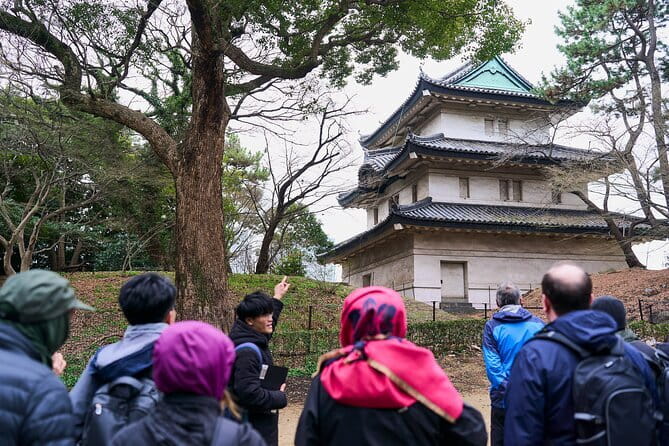
Stop 1 is Sakurada Tatsumi Yagura. This is where the tour starts feeling concrete. You’ll be looking at a surviving turret from the Edo period, and the guide explains how those security concepts connect to the Imperial Palace protections you can see in the present.
Why this stop matters: turrets and towers are easy to skim past on your own. With a guide, you get the “what it was for” layer—how visibility, positioning, and restricted movement are tied together. Even if you’re not a history buff, this is the kind of point that makes the rest of the walk click.
Expect this to be a shorter stop (about 20 minutes). It’s enough time to see the structure, hear the explanation, and reorient your mind from “park visit” to “fortress layout.”
Kokyo Otemon Gate: Seeing the Two-Gate Defense Idea
Next comes Kokyo Otemon Gate. Here, you’ll look at massive gates and stone walls from the original castle and learn how the design helped protect the shogun.
Gates are more than dramatic photo spots. The guide’s framing helps you notice how entrances work as chokepoints—how you control who can enter, how movement is directed, and how barriers slow or redirect action. If you’ve ever wondered why fortresses weren’t just about walls but about motion and access, this is where you start getting that answer in plain language.
This stop is brief (about 10 minutes), but it’s also one of the most visually satisfying parts of the route. You’ll likely do a few photos, then move on quickly so you can keep the story moving.
Three Guardhouses (Constable, Hyakunin Bansho, Obansho) That Turn Names Into Jobs
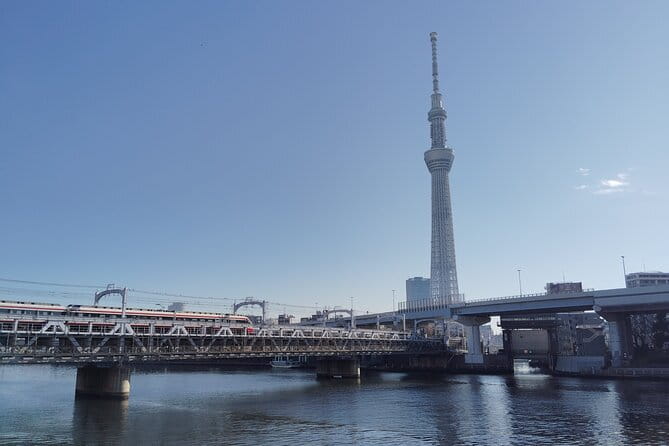
This is where the tour gets very human. Instead of treating samurai as a single “warrior” category, you walk through different guardhouse areas and the guide explains who was stationed where and what their roles were.
You’ll stop at:
- Constable Guardhouse (lower-ranking samurai duties)
- Hyakunin Bansho Guardhouse (many samurai stationed here)
- Obansho Guardhouse (higher-rank samurai near the inner gate)
Each stop is about 10 minutes, but the explanations are what make it valuable. When you hear the terms tied to locations, the grounds stop feeling like random points on a map. You start picturing shifts, responsibility zones, and what “guarding” actually meant day-to-day.
A bonus here: the structure of the tour keeps you from getting bored. You’re never stuck in one spot too long, and the guide keeps linking what you see to why it mattered in the larger defense system.
- Tokyo: Shinjuku Food Tour (13 Dishes at 4 Local Eateries)★ 5.0 · 6,603 reviews
- Tokyo Mt Fuji 5th St & Hakone Cruise Bus Tour w/Bullet Train★ 4.4 · 5,024 reviews
- Flagship 2-Hours Official Street Go-Kart Tour – Tokyo Bay Shop★ 5.0 · 4,974 reviews
- From Tokyo: Mount Fuji Full-Day Sightseeing Trip★ 4.5 · 4,970 reviews
- Tokyo: Hop-On Hop-Off Sightseeing Bus Ticket★ 3.9 · 4,207 reviews
Fujimi-yagura: A Watchtower View With a Purpose
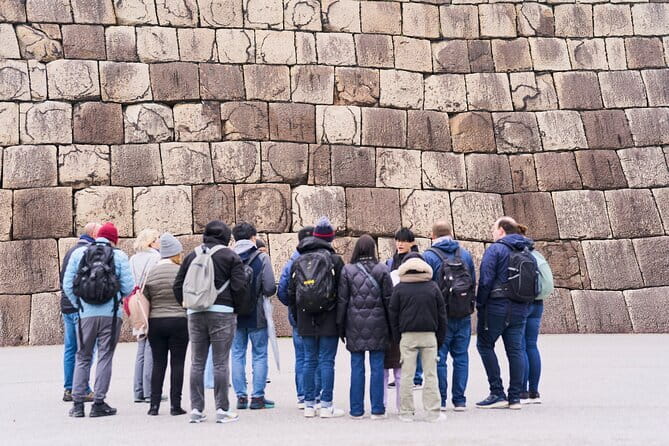
Fujimi-yagura is next, an older watchtower that overlooks the area. This is the kind of stop that’s easy to appreciate even without a deep background. You’ll see the height, you’ll understand the line-of-sight idea, and you’ll learn how it fit into past security.
This stop takes about 10 minutes. But it’s strategically placed after the guardhouse sequence, so the story already has momentum: you’ve learned about who guarded, where they guarded, and now you add the “from here, you watch” piece.
If you like panoramic views, this is one of the better photo moments during the earlier half of the tour. If you don’t, it still serves a purpose by connecting the physical layout to the defense logic.
Kokyo Sannomaru Shozokan: The Edo Castle Scale Model Moment

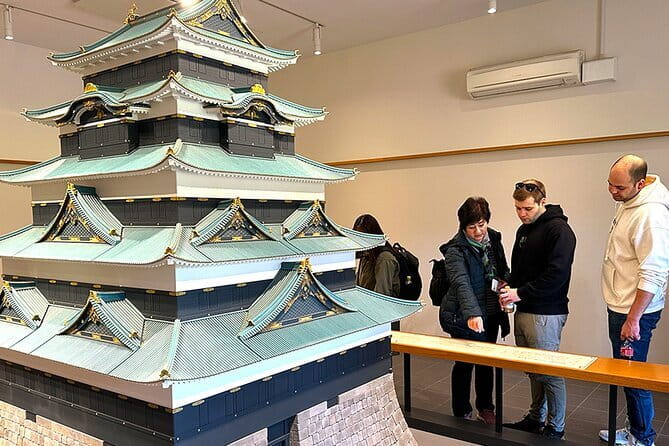
At Kokyo Sannomaru Shozokan, you get a scale model of the former Edo Castle. You also have time to visit a souvenir shop with palace-related goods.
This is a smart break in the flow. Outdoors, you can only absorb so much at once. A model lets you step back mentally and see how individual structures would relate as a whole. Even if you don’t buy anything, it helps you anchor the earlier stops—especially the gates and the tower/watching points.
This stop is about 10 minutes. I’d treat it as your “mental reset” point. Use it to compare what you saw outside with how it likely fit into Edo Castle’s larger system.
The East Gardens and Edo Castle Ruin: Why the Main Tower Is Gone
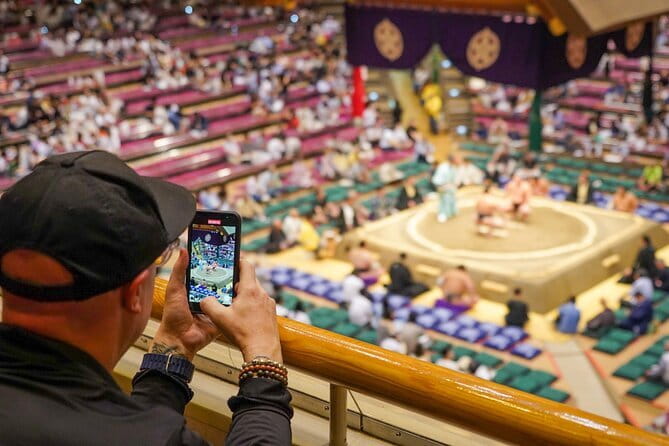
The East Gardens of the Imperial Palace include the Edo Castle ruin area, the former site of Edo Castle’s main tower. The guide explains why it’s no longer standing and what remains today.
This is one of those stops that can be slightly abstract if you’re expecting only visible ruins. But it’s also useful. It teaches you how history often survives as partial shapes—stone, layout hints, and reconstructed understanding—rather than as a perfectly intact structure.
You’ll spend about 15 minutes here. That’s usually enough time to get the “what happened to the tower” explanation (as your guide frames it) and to see the remaining elements in context.
If you love architecture details, arrive with patience: this is more about interpretation than about wandering through a fully preserved site.
Ninomaru Garden: Koi Pond Calm as a Counterweight
The tour ends with peace and beauty at Ninomaru Garden. It’s a traditional Japanese garden with seasonal plants and a pond with koi.
This is more than a scenic finish. After talking defense design, guard roles, and gate protection, you finally get space to breathe and absorb the setting as a living landscape. The contrast helps you remember the story in a human way: power and security were always part of the imperial setting, but so were routine calm and garden time.
You’ll have about 15 minutes here. It’s enough time to slow down, take photos, and enjoy the quieter mood before you head toward Tokyo Station-area streets again.
One practical note: garden time tends to be popular for photos, so if you’re aiming for specific pictures, show up to the pond area early in the garden stop.
Price and Value: What $23.88 Buys You in Real Terms
$23.88 for a 2-hour, small-group tour with gate-by-gate storytelling is a fair value—mostly because you’re paying for interpretation.
The tour includes mobile ticket support, and the listed stops have free admission tickets. That matters because many “walking tours” end up turning into ticket math and line-waiting. Here, the structure stays centered on explanation as you walk.
Also, up to 10 people is not huge. You’re not getting a lecture for a crowd of dozens. That’s why guide quality shows up so clearly in the ratings, with people praising guides who answer questions well and bring visuals into the discussion.
If you’re the type who can enjoy a place on your own, you might still find the gardens relaxing without a guide. But if you want the “why” behind gates, towers, and guardhouses, this price starts to make sense fast.
What to Know Before You Go: Security Check and Walking Terrain
The Imperial Palace area includes a security check. Plan ahead: don’t bring knives or alcohol. Also remember that access is limited—you’ll see grounds and exterior areas, not the Emperor’s residence.
Physically, the tour is not a flat stroll. You’ll need to walk up steep slopes and stairs. That’s doable for most people, but you’ll enjoy it more if you wear comfortable shoes and go at a steady pace.
Sun can also be a factor. On hot days, one guide provided things like menthol napkins and sweets to help people endure the walk. You should still bring your own water and consider a hat or umbrella, especially if you’re visiting in peak heat.
Who This Tour Fits Best (And Who Might Skip)
This tour is ideal if you’re:
- New to Tokyo and want a clear story fast
- Interested in samurai-era roles linked to real locations
- Looking for a guided explanation of gates, towers, and the layout logic of Edo Castle
- Enjoying gardens, but only when they connect to the larger setting
It might be less ideal if:
- You need Japanese language support (the tour is English only)
- You want unstructured wandering with no explanations
- You don’t want any stairs or steep slope walking
One more thing: guide matching matters. There’s at least one report where English wasn’t a workable fit. So if language is a make-or-break point for you, I’d treat the English-only rule as non-negotiable.
Should You Book the Tokyo Castle & Imperial Palace Shogun Tour?
Yes, if you want a structured, understandable route through the Imperial Palace grounds that explains how Edo Castle defense and samurai duties map onto what you can still see. The small group size, the stop-by-stop logic, and the blend of gates, guardhouses, and Ninomaru Garden make it a strong first-to-mid-day history stop.
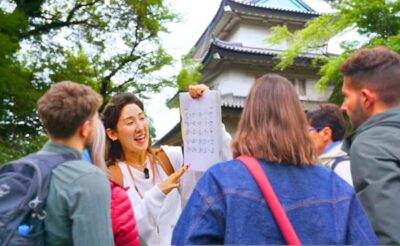
I’d book it especially if you like tours where the guide uses visuals or examples. Some guides on this route bring laminated pictures or flashcards, and that can turn a “walk past stones” moment into something you remember.
Skip it only if English-only is a problem, you strongly dislike stairs, or you’re hoping to access the Emperor’s residence. For everyone else, this is a well-paced way to learn the story behind one of Tokyo’s most important sites without spending all day on logistics.
FAQ
How long is the Tokyo Castle & Imperial Palace Shogun Walking Tour?
The tour runs about 2 hours.
What language is the tour offered in?
The tour is conducted in English only, with no Japanese language support available.
How big is the group?
It’s a small group of up to 10 people. The overall activity has a maximum of 60 travelers.
Where do I meet for the tour?
You meet at Starbucks Coffee – Kokyo Gaien Wadakura Fountain Park, 3-1 Kōkyogaien, Chiyoda City, Tokyo.
Where does the tour end?
It ends back at the meeting point, in front of the ginkgo-lined avenue stretching out before Tokyo Station.
Do I need a ticket on my phone or paper?
The tour uses a mobile ticket.
Are there admission tickets included at the stops?
The stops listed for this tour show admission tickets as free.
Do I need to go through security to enter the area?
Yes. There is a security check, and you should not bring knives or alcohol.
Is the Emperor’s residence open to the public during the tour?
No. The Emperor’s residence is not open to the public.
Can I get a refund if I cancel?
Yes, you can cancel for free up to 24 hours in advance for a full refund. If you cancel less than 24 hours before the start time, the amount paid will not be refunded.
More Walking Tours in Tokyo
- Tokyo Tsukiji Fish Market Food and Culture Walking Tour
★ 5.0 · 3,184 reviews - Tokyo: Imperial Palace and Shogun Historical Walking Tour
★ 5.0 · 2,251 reviews - Tokyo: Shinjuku Local Bar and Izakaya Guided Walking Tour
★ 4.9 · 1,794 reviews - Tokyo: Tsukiji Fish Market Food and Walking tour
★ 5.0 · 1,724 reviews - Tokyo: Asakusa Walking Tour with Sensoji Temple Visit
★ 4.8 · 1,583 reviews
More Tours in Tokyo
- Mt Fuji and Hakone 1-Day Bus Tour Return by Bullet Train
★ 5.0 · 26,383 reviews - 1-Day Tokyo Bus Tour
★ 5.0 · 14,250 reviews - Tokyo: Shinjuku Food Tour (13 Dishes at 4 Local Eateries)
★ 5.0 · 6,603 reviews - Tokyo Mt Fuji 5th St & Hakone Cruise Bus Tour w/Bullet Train
★ 4.4 · 5,024 reviews - Flagship 2-Hours Official Street Go-Kart Tour – Tokyo Bay Shop
★ 5.0 · 4,974 reviews
More Tour Reviews in Tokyo
- Mt Fuji and Hakone 1-Day Bus Tour Return by Bullet Train
★ 5.0 · 26,383 reviews - 1-Day Tokyo Bus Tour
★ 5.0 · 14,250 reviews - Tokyo: teamLab Planets TOKYO Digital Art Museum Entry Ticket
★ 4.6 · 9,779 reviews - Mt Fuji & Hakone Cruise, Drum Show Bullet Train 1 Day from Tokyo
★ 4.0 · 7,413 reviews - Tokyo: Shinjuku Food Tour (13 Dishes at 4 Local Eateries)
★ 5.0 · 6,603 reviews
Latest Tokyo reviews off our desk






Walking Tours, compared.
 ★ 5.0Tokyo Tsukiji Fish Market Food and Culture Walking TourFrom $993,184 reviews
 ★ 5.0Imperial Palace and Shogun Historical Walking TourFrom $222,251 reviews
 ★ 4.9Shinjuku Local Bar and Izakaya Guided Walking TourFrom $341,794 reviews
 ★ 5.0Tsukiji Fish Market Food and Walking tourFrom $301,724 reviews
 ★ 4.8Asakusa Walking Tour with Sensoji Temple VisitFrom $221,583 reviews
 ★ 4.9Tsukiji Fish Market Guided Walking TourFrom $221,397 reviews
 ★ 4.7Tokyo Castle & Imperial PalaceーShogun Walking TourFrom $231,068 reviews
 ★ 4.9Imperial Palace Japanese History Walking TourFrom $32987 reviews
Browse the lists this tour appears in