
Reviewed · ASAKUSA & SENSOJI TOURS
Tokyo History: Sensoji Temple & Asakusa District Private Tour
Tokyo has a way of layering time.
This private tour pairs Senso-ji Temple with Asakusa streets like Nakamise and Kappabashi, so you’re not just seeing sights—you’re getting the story behind them as you walk. I love the one-on-one guide format (only you and your local host), and I love the practical rhythm of the route, with breaks for temple moments and snack stops. One drawback to plan for: there’s no hotel pickup, so you’ll want to arrive on your own at the Kaminarimon meeting area and be ready to do a solid walking session.
The route also feels well chosen because it mixes sacred space, everyday shopping lanes, and workshop-style Tokyo. You get a temple offering at Senso-ji, plus chances to try classic street foods along the way, which turns history into something you can taste and see in context. Guides on this tour have been praised by past visitors for being flexible with requests and for sharing culture and customs, like when people get to watch ceremonial moments during their visit.
Before you go, one consideration: this is a guided walk with a moderate fitness expectation, and you’ll be on your feet through narrow streets and temple areas. If you’re hoping for a long sit-down pace or lots of indoor time, you may find the flow more energetic than you want.
In This Review
- Key highlights you’ll actually care about
- Why Asakusa and Senso-ji work so well for a history walk
- Meeting at Kaminarimon: the private format and the logistics that matter
- Nakamise Shopping Street to Kaminarimon gate: where the story starts
- Hozomon gate and the age manju stop: snack culture with context
- Senso-ji Temple grounds: incense, an offering, and what to notice
- Asakusa Hanayashiki streets and the melon pan moment
- Edo Taito Traditional Crafts Center: watching Tokyo make things
- Kappabashi Street and replica food shopping
- What your local host adds (and why it makes the price feel fair)
- Who should book this Asakusa private history tour
- Should you book this Tokyo History: Senso-ji & Asakusa Private Tour?
- FAQ
- Is hotel pickup included?
- How long is the tour?
- Is this a private tour?
- What’s included in the price?
- Are there any tickets or admissions to pay?
- Where does the tour begin and end?
- Is the tour accessible for people with limited mobility?
- What will we see at Senso-ji Temple?
- What food stops are part of the experience?
- What is the cancellation policy?
Key highlights you’ll actually care about
- Private, you-and-your-guide pacing: Ask questions and adjust the walk to your interests.
- Senso-ji at the right emotional moment: Incense smoke and an offering at a temple dating back to 628.
- Classic snack stops built into the route: Age manju and melon pan are part of the experience flow.
- Traditional crafts at an artisan center: You may see demonstrations, especially on weekends.
- Kappabashi’s food-prop world: Real-world replicas used by restaurants make for fun, useful browsing.
- Easy logistics, no hotel pickup: Start at Kaminarimon and end back there, so you control your day.
Why Asakusa and Senso-ji work so well for a history walk
Asakusa is one of those Tokyo areas where the city’s older pulse still shows up in your footsteps. You start with the famous approach street and temple gates, then you drift into side lanes where shops and crafts keep operating like they’ve been doing it for a long time. The big win here is that the tour isn’t separated into random stops; it’s built as a continuous walk through layers of Tokyo life.
Senso-ji is the centerpiece, and it’s not just a pretty landmark. This is Tokyo’s oldest temple, with roots going back to 628. That age matters because the place has accumulated meaning over centuries, from religious practice to how people pass through the area on daily errands and festivals.
What I like most about the way this tour is structured is that it treats history as behavior, not just dates. You’re walking through commercial streets that have sold items for generations, then you’re stepping into a temple space where customs guide how people move and interact. You don’t have to be a “history person” to enjoy that, because the experience is built around seeing, smelling incense, and noticing how people behave.
And if you like culture details, keep an ear open for your host. In past experiences with guides like Abu, Sheilina, Gulay, RamKy, William, and Carlos, people often highlight that the tour includes explanations of customs and etiquette, not just sightseeing commentary. That’s the difference between watching a temple from behind a camera and understanding what you’re seeing while you’re there.
More temple mornings in old Asakusa
- Tokyo: Japanese Dance Cabaret Theater Asakusa-Kaguwa Ticket
★ 4.8 · 2,270 reviews - Tokyo: Meiji Shrine, Asakusa, Skytree Bus Tour and Cruise
★ 4.7 · 1,986 reviews - Tokyo: Roll and Authentic Sushi Making Class in Asakusa
★ 4.9 · 1,957 reviews - Tokyo: Asakusa Walking Tour with Sensoji Temple Visit
★ 4.8 · 1,583 reviews
Meeting at Kaminarimon: the private format and the logistics that matter
This tour starts at 2-chōme-16-11 Kaminarimon, Taito City, Tokyo 111-0034. It also ends back at the meeting point, so it works smoothly as a half-day anchor in your Tokyo schedule. You’ll want to get yourself there by public transportation, since hotel pickup and drop-off are not included.
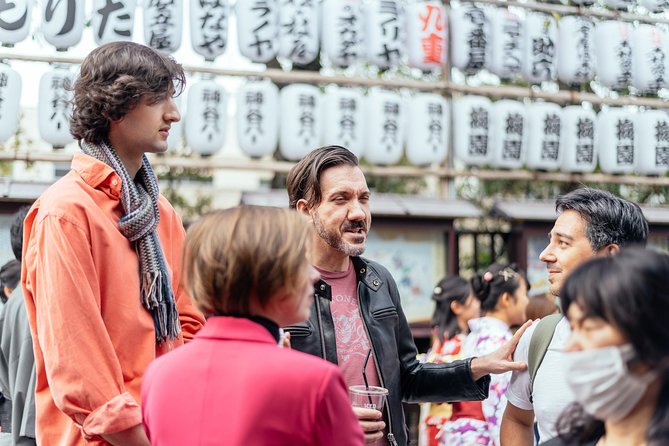
The private aspect is genuinely useful. With only you and your guide, you can slow down when you want photos, shorten stops when the crowds feel too tight, and ask follow-up questions in plain language. You’re not competing with a group for attention at the temple gates or while shopping on Nakamise and Kappabashi.
You’ll also have a mobile ticket, which makes the whole thing easier to manage during a day full of tickets and transit cards. One more small but modern detail: the tour is listed as CO2 neutral, with emissions offset. I can’t tell you that offsets erase environmental impact, but I do like seeing at least an acknowledgment built into the booking.
If you’re traveling with limited mobility or you’re nursing sore knees, take the moderate fitness note seriously. This is a walk-heavy tour through crowded commercial lanes and temple grounds. Bring comfortable shoes and plan to move steadily.
Nakamise Shopping Street to Kaminarimon gate: where the story starts
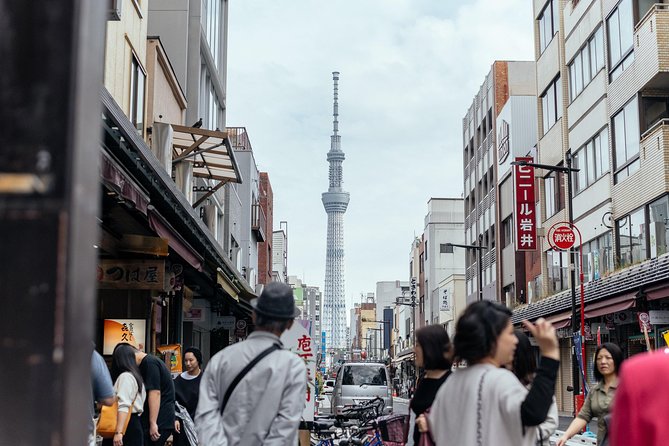
Your first stop is the famous approach area around Nakamise Shopping Street, near Kaminarimon. This is the kind of street that feels made for wandering: old lanterns and classic statues, plus rows of stalls selling souvenirs, snacks, and sweets. The best way to enjoy it is to treat it like a living market, not a museum hallway.
Nakamise is also a useful warm-up for your brain. Before you enter the temple zone, you’ll get your bearings in the area and learn what to pay attention to. Your guide can point out small cultural cues, like how people buy food for sharing and what kinds of goods are common along this route.
Timing helps, too. Early in the day tends to feel more manageable for walking and photos, and it’s easier to hear your host when the street isn’t fully packed. Even if you’re visiting during a busy season, having a guide can save you from the frustration of guessing where to go next.
One practical note: shopping streets can pull you in fast. If you don’t want to overspend, decide in advance what you’re buying—one souvenir category or one edible treat is often enough. The tour keeps moving, and you’ll have more chances later for browsing, especially around Kappabashi.
Hozomon gate and the age manju stop: snack culture with context
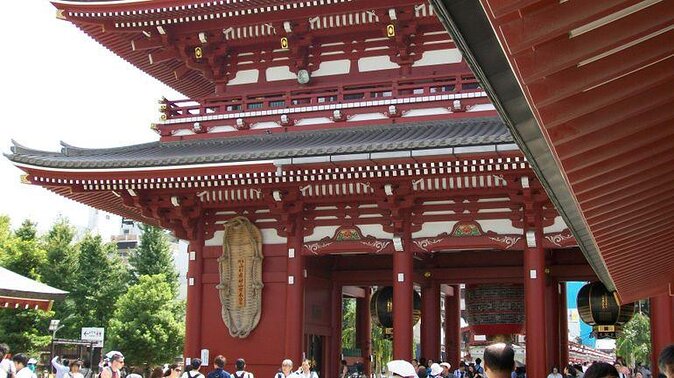
After the opening street, you head toward Hozomon, the second gate leading deeper into the temple area. This is a sweet spot for first-time Asakusa visits because it’s where the vibe shifts from street-market to temple space.
There’s also a built-in flavor moment. The plan includes stopping by a store to try age manju, choosing a flavor that fits your taste. Age manju is one of those classic snacks that instantly makes the area feel local. The outside crunch and warm sweetness are a quick comfort when you’ve been walking in Tokyo heat or humidity.
What I like about this stop is that it’s not random food sampling. It bridges the transition from the shopping street into the temple grounds. You get to learn how the area’s commerce supports the temple visit, rather than treating food as an afterthought.
If you have dietary restrictions, keep it simple: ask your guide what options are available at the moment you reach the store. Since this includes trying something from a vendor, your guide can usually help you navigate choices without turning it into a stressful language problem.
Senso-ji Temple grounds: incense, an offering, and what to notice
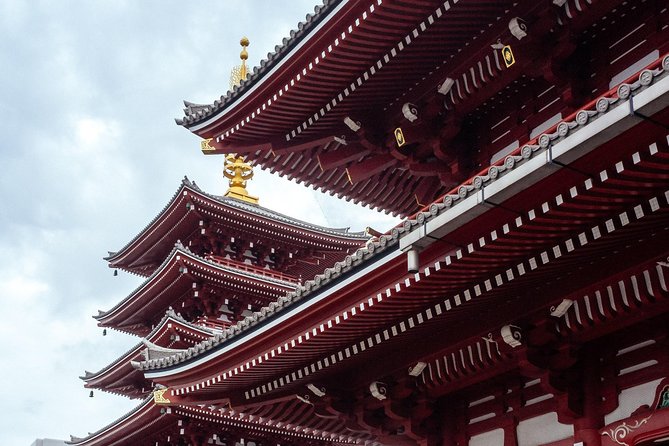
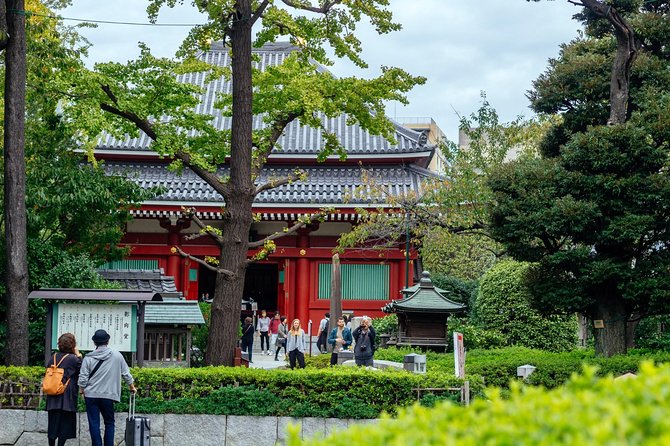
Then you reach Senso-ji Temple, Tokyo’s oldest temple, with origins dating back to 628. The tour includes time to experience the entrance area properly, including the moment when incense smoke wafts over you before you move inside. That sensory detail matters. It changes the emotional tone fast.
You’ll also be part of a meaningful ritual: the experience includes an offering at Senso-ji. Even if you’re not deeply religious, that offering gives the visit structure. It turns your visit into participation, which tends to make photos feel less “touristy” and more grounded.
Here’s what you should actively notice while you’re there:
- How people move through the space (slow, respectful, purposeful).
- How families and visitors balance sightseeing with prayer.
- How vendors and stalls around the temple still feel connected to the visit, not separate from it.
If you get the chance to see ceremonial moments, don’t force it. The chance varies by day, but past visitors have described moments like a Shinto wedding blessing at the temple area. If that happens during your visit, your guide can help you understand what you’re seeing and where to stand so you’re not blocking anyone.
Photo tip that keeps you respectful: focus on framing that includes gates or incense area details, then step aside when the foot traffic thickens. With a guide, you’ll know when it’s worth moving closer and when it’s better to step back and let others pass.
Readers also shortlisted these Tokyo bookings:
- Tokyo 6hr Private Tour with Government-Licensed Guide★ 5.0 · 3,902 reviews
- Private Tour to Mt. Fuji and Hakone (Fully Licenced Operator)★ 5.0 · 1,910 reviews
- Tokyo Customized Private Tour (Must See Places in 1 Day)★ 5.0 · 1,499 reviews
- Mount Fuji Full-Day Private Tour from Tokyo (Customizable)★ 4.9 · 1,470 reviews
- Tokyo: Private City Highlights Tour with Local Guide★ 4.8 · 1,433 reviews
Asakusa Hanayashiki streets and the melon pan moment
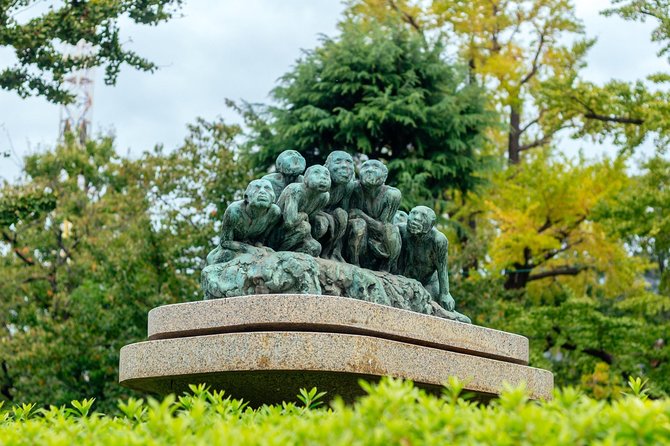
After the temple, the route shifts toward Asakusa Hanayashiki and the smaller streets that feel less like a single postcard and more like lived-in neighborhood Tokyo. You’ll follow your host through narrow lanes, and the stop includes a connection to freshly made melon pan bread in the area.
Hanayashiki is known as a classic amusement spot in Asakusa, and even if you’re not riding anything, it’s a helpful marker. It helps you understand that this neighborhood isn’t frozen in time. It’s still functional, still busy, still attracting people for everyday fun.
The melon pan angle is smart for a history tour because it gives you a break without breaking the theme. Instead of turning into a standard food stop at random, it stays tied to the Asakusa rhythm: temple area, side streets, local bakery culture, then onward to crafts and souvenirs.
If you’re traveling with kids or you want a tour that feels fun rather than purely instructional, this is the moment where the walk often feels easiest. You get warmth in your hands and something sweet to remember later.
Edo Taito Traditional Crafts Center: watching Tokyo make things
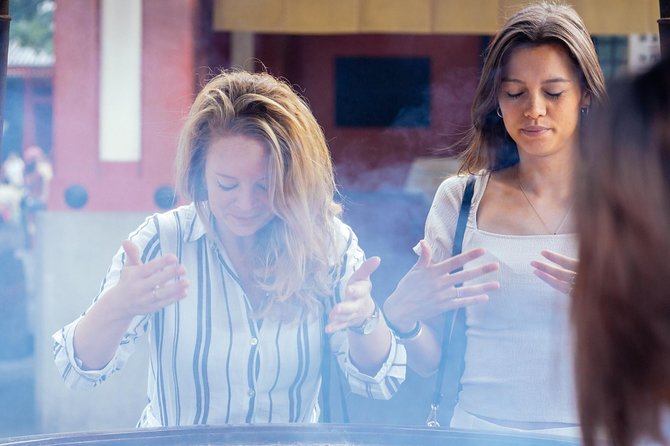
Next up is Edo Taito Traditional Crafts Center (also referenced as Edo Shitamachi Traditional Crafts Museum). This is a change of pace from shopping streets. You’re moving into a place where the theme is making—not just buying.
The experience includes time to check out items created by Tokyo’s creative artists. If you’re visiting on the weekend, you may even see someone performing the craft in front of you. That matters because a live demonstration turns the museum idea into a living workshop moment.
What I love about including a crafts center in an Asakusa walk is that it adds depth to the shopping. Nakamise is about what you can take home. Crafts are about how the objects are made and why certain styles persist. It’s a different kind of appreciation, and it often makes souvenirs feel more meaningful.
If you’re the type who likes to buy gifts, this stop is a good place to slow down. Spend a few minutes looking, then ask your guide what’s distinctive about the items you’re seeing. A private host can connect craft choices to local tradition in a way that’s hard to do on your own.
Kappabashi Street and replica food shopping
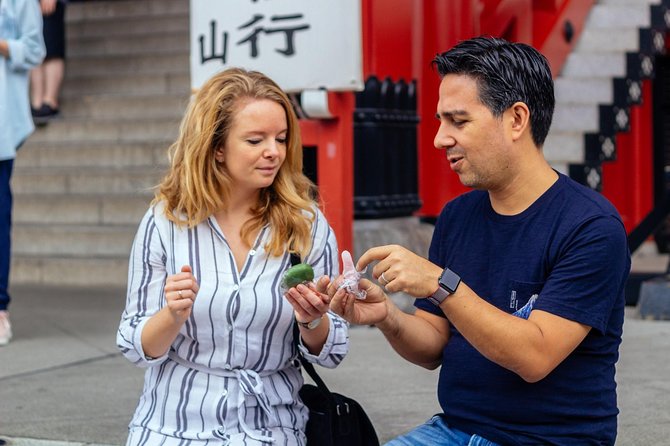
Finally, you head to Kappabashi Street (Kappabashi Dogugai), the area where restaurants source food replicas. This is one of those Tokyo oddities that’s wildly fun if you like food, design, or practical detail.
The tour includes time to explore this street, and it’s listed twice in the itinerary. In practice, that usually means you’ll get enough time to browse different shops and notice how replicas are displayed and made. Even without buying anything, you’ll come away understanding how restaurant presentation works in Japan beyond menus and signage.
If you’re a photographer, Kappabashi is ideal because the windows are like miniature galleries. If you’re shopping, it’s ideal for small, themed purchases—things that make your home kitchen feel more Tokyo, like bowls or small display items (exact items depend on what’s available).
One practical caution: because this is shopping-focused, it’s easy to lose time. Set a quick goal before you walk in—pick one category, like kitchen accessories or a single souvenir item—then enjoy the browsing without letting it swallow the whole afternoon.
What your local host adds (and why it makes the price feel fair)
At $139.63 per person for about 3 hours, the price only feels right if you get more than a checklist. This tour is built to do that through the private guide experience and through small, specific moments that connect to Tokyo culture.
You’re not just walking. You’re getting interpretations while you’re surrounded by the evidence: gates, incense, street vendors, traditional crafts, and the restaurant-prop world at Kappabashi. That’s where local hosting matters. A guide can tell you what to look for, how to read a custom in the moment, and how the neighborhood fits into the city’s larger story.
The reviews for this experience consistently point to guides handling requests with flexibility and sharing culture and customs, often by name. People have praised guides like Abu for being accommodating and able to sort out requests, and Sheilina for personalizing the walk and going above and beyond. Gulay and RamKy are repeatedly described as making the cultural and historical explanations easy to follow, with lots of real-world context.
Also, the tour includes an offering at the temple, which gives the visit an extra level of authenticity beyond sightseeing. And while food isn’t listed as a broad inclusion, the route is intentionally set up with tasting-style stops like age manju and melon pan, plus the chance to sample sweets and treats along the way.
So if you’re weighing value: this is a focused, guided route that covers multiple Asakusa “zones” in one morning or afternoon. It reduces time spent figuring out where to go and what each place means, and it adds cultural context without turning the day into a lecture.
Who should book this Asakusa private history tour
This tour is a strong fit if you want:
- A private walking guide and a pace you control.
- A first visit to Asakusa and Senso-ji where you want context fast.
- A balance of temple culture, neighborhood streets, and shopping that feels purposeful.
- Snack and craft stops that keep the experience lively.
It’s also a good pick for couples or solo travelers who don’t want to join a larger group and who enjoy asking questions as they go. Families can like it too, especially with the snack moments and the more playful Kappabashi area at the end.
You might want to think twice if you hate walking for 2–3 hours, if crowds stress you out, or if you want a day packed with major distant Tokyo sights. This one is intentionally neighborhood-focused, with a single loop from Kaminarimon area back to the same meeting point.
Should you book this Tokyo History: Senso-ji & Asakusa Private Tour?
Book it if you want a guided Asakusa walk that connects temple etiquette, street food culture, traditional crafts, and the quirky restaurant-prop world in a single, organized route. The private format makes the history feel personal instead of generic, and the included offering at Senso-ji gives the visit a real sense of participation.
Skip it if you’re mainly looking for a self-guided photo tour with minimal planning, or if walking narrow streets and temple grounds won’t work for your body that day. Also, since there’s no hotel pickup, you’ll need to be comfortable starting from the Kaminarimon meeting point on your own.
If you’re on your first or second trip to Tokyo and you want one solid neighborhood experience that feels both classic and practical, this is the kind of tour that earns its place on your calendar.
FAQ
Is hotel pickup included?
No. The tour starts at a set meeting point near Kaminarimon, and it ends back at the same meeting point. You’ll need to get there using public transportation.
How long is the tour?
The duration is listed as about 3 hours.
Is this a private tour?
Yes. It’s private, meaning it’s only you and your local guide.
What’s included in the price?
The tour includes a private guide, a CO2-neutral component (with emissions offset), and an offering at Senso-ji Temple. Food and beverages beyond what’s specifically part of the stops are not listed as general inclusions.
Are there any tickets or admissions to pay?
The stops listed show admission tickets as free for each segment.
Where does the tour begin and end?
It begins at 2-chōme-16-11 Kaminarimon, Taito City, Tokyo 111-0034, Japan, and it ends back at the meeting point.
Is the tour accessible for people with limited mobility?
The tour lists a moderate physical fitness level. Since it’s a walking route with temple areas and narrow streets, it may not suit everyone.
What will we see at Senso-ji Temple?
You’ll visit Senso-ji Temple, which dates back to 628, and you’ll experience the incense area before entering. The tour also includes an offering at the temple.
What food stops are part of the experience?
The route includes time to try age manju at the Hozomon area and time connected to freshly made melon pan bread near Asakusa Hanayashiki. Food and beverages beyond that are not listed as general inclusions.
What is the cancellation policy?
Free cancellation is offered. You can cancel up to 24 hours in advance for a full refund. If you cancel less than 24 hours before the start time, the amount paid is not refunded.
More Tours in Tokyo
- Mt Fuji and Hakone 1-Day Bus Tour Return by Bullet Train
★ 5.0 · 26,383 reviews - 1-Day Tokyo Bus Tour
★ 5.0 · 14,250 reviews - Tokyo: Shinjuku Food Tour (13 Dishes at 4 Local Eateries)
★ 5.0 · 6,603 reviews - Tokyo Mt Fuji 5th St & Hakone Cruise Bus Tour w/Bullet Train
★ 4.4 · 5,024 reviews - Flagship 2-Hours Official Street Go-Kart Tour – Tokyo Bay Shop
★ 5.0 · 4,974 reviews
More Tour Reviews in Tokyo
- Mt Fuji and Hakone 1-Day Bus Tour Return by Bullet Train
★ 5.0 · 26,383 reviews - 1-Day Tokyo Bus Tour
★ 5.0 · 14,250 reviews - Tokyo: teamLab Planets TOKYO Digital Art Museum Entry Ticket
★ 4.6 · 9,779 reviews - Mt Fuji & Hakone Cruise, Drum Show Bullet Train 1 Day from Tokyo
★ 4.0 · 7,413 reviews - Tokyo: Shinjuku Food Tour (13 Dishes at 4 Local Eateries)
★ 5.0 · 6,603 reviews
More Mornings in Old Asakusa
- Tokyo: Japanese Dance Cabaret Theater Asakusa-Kaguwa Ticket
★ 4.8 · 2,270 reviews - Tokyo: Meiji Shrine, Asakusa, Skytree Bus Tour and Cruise
★ 4.7 · 1,986 reviews - Tokyo: Roll and Authentic Sushi Making Class in Asakusa
★ 4.9 · 1,957 reviews - Tokyo: Asakusa Walking Tour with Sensoji Temple Visit
★ 4.8 · 1,583 reviews - Tokyo Asakusa Rickshaw Tour
★ 5.0 · 1,375 reviews
Latest Tokyo reviews off our desk






Asakusa & Sensoji Tours, compared.
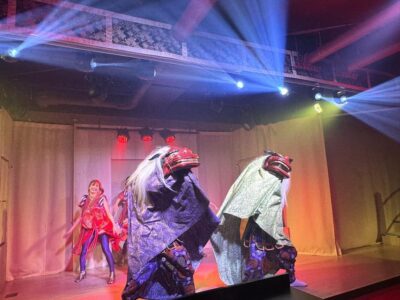 ★ 4.8Japanese Dance Cabaret Theater Asakusa-Kaguwa TicketFrom $492,270 reviews
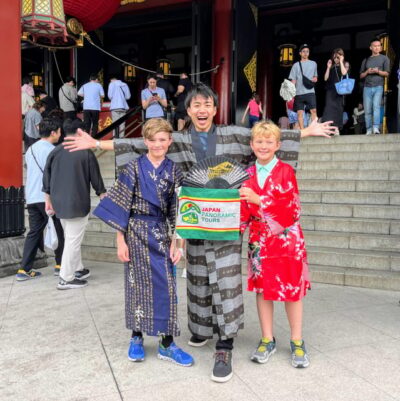 ★ 4.7Meiji Shrine, Asakusa, Skytree Bus Tour and CruiseFrom $1221,986 reviews
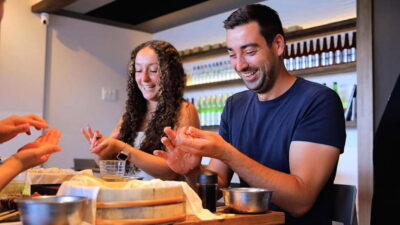 ★ 4.9Roll and Authentic Sushi Making Class in AsakusaFrom $581,957 reviews
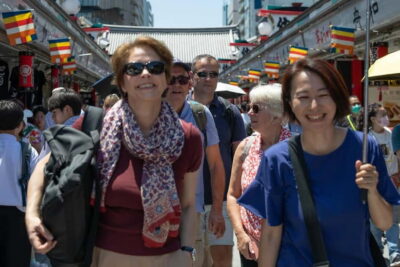 ★ 4.8Asakusa Walking Tour with Sensoji Temple VisitFrom $221,583 reviews
 ★ 5.0Tokyo Asakusa Rickshaw TourFrom $421,375 reviews
 ★ 4.5Tokyo Panoramic 1 Day: Meiji Shrine, Asakusa, Odaiba and SKYTREE®From $851,222 reviews
 ★ 5.0Tokyo Go Kart: Asakusa, Skytree, and Akihabara **IDP MUST**From $99988 reviews
 ★ 4.7Asakusa, Skytree & Akhihabara Go-Kart City ExperienceFrom $96761 reviews
Browse the lists this tour appears in