
Reviewed · AKIHABARA ANIME TOURS
Tokyo/Ikebukuro Manga drawing workshop by pro-Manga artists
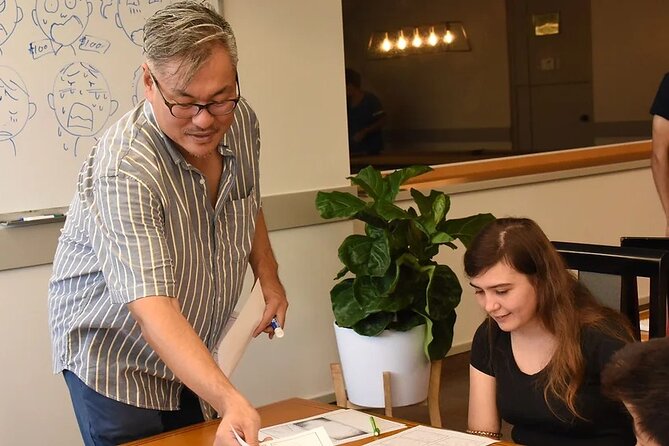
A pen and paper can turn a trip into art fast. This Tokyo/Ikebukuro manga drawing workshop pairs a small group with a professional manga artist and a pick-your-level class, so you can create something you actually want to keep. I like that the format makes it easy to ask questions, and I also like that you’ll get hands-on materials plus custom postcards afterward. One thing to consider: if you’re hoping for a sightseeing-heavy tour, this is mainly a studio class, not a walking tour.
You’ll start by choosing a level that fits you, from beginner to advanced, then you’ll learn the steps behind manga character creation and paneling. The best part is that the session is designed to work even if your drawing comfort level varies within the group. The main drawback is the time window: you have about two hours, so you’ll focus on finishing a piece rather than producing a full manga story.
In This Review
- Key takeaways before you book
- Inside Manga Dojo Tokyo: Why this class feels different
- Picking your level: Beginner, Intermediate, or Advanced
- The two-hour flow: what you’ll actually learn
- Your supplies: included tools that make a difference
- Asking questions: the hidden value of a max-8 class
- Souvenirs you can share: clear file and three custom postcards
- Ikebukuro location: easy to add before or after
- About the price: what $114 buys you in real value
- Who should book this workshop
- A few planning tips so you get the most from the session
- Should you book the Manga Dojo Tokyo workshop?
Key takeaways before you book
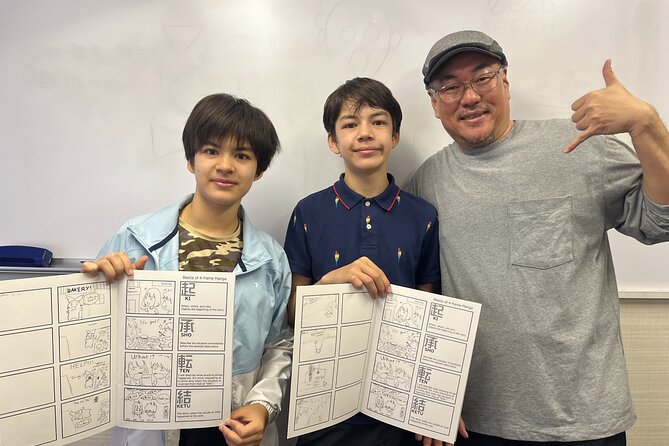
- Pro-taught, question-friendly small group (maximum 8) with English guidance
- Choose your track by skill: Beginner, Intermediate, or Advanced
- All art supplies included, including tones and comic paper
- You leave with souvenirs: an original clear file and a set of three postcards
- Central Ikebukuro location makes it easy to pair with other plans
Inside Manga Dojo Tokyo: Why this class feels different
Ikebukuro is a practical base for exploring Tokyo, but most “manga experiences” are just photo ops or quick demos. This one is different because it’s built like a real drawing lesson: you’re guided step by step, and you’re expected to draw. That matters. When you finish a page (even a small one), you walk away with proof you can do the thing—not just a memory of watching someone else do it.
The workshop takes place at Manga Dojo Tokyo in Higashiikebukuro and runs for about two hours. The group stays small, up to 8 people, which is a big deal for a skill-based activity. In a larger class, questions pile up. Here, you can actually get answers while you still have the pencil in your hand.
I also like the approach to Japanese pop culture. Manga isn’t treated like a decorative theme. It’s treated like craft—story structure, character design, and panel layout. That’s the kind of learning that guidebooks won’t give you, because it changes what you notice later when you read comics back home.
More of Akihabara, ranked by our reviewers
- Official Street Go-Kart Tour – Akihabara
★ 5.0 · 1,578 reviews - Tokyo Go Kart: Asakusa, Skytree, and Akihabara **IDP MUST**
★ 5.0 · 988 reviews - Akihabara Anime & Game Adventure Walking Tour (Group or Private)
★ 5.0 · 404 reviews - Tokyo: Gameboy Mod Workshop at Akihabara
★ 5.0 · 253 reviews
Picking your level: Beginner, Intermediate, or Advanced
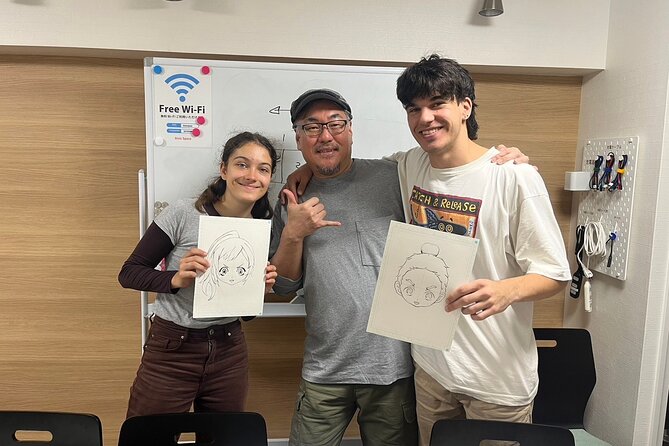
The class is offered at three course levels: Beginner, Intermediate, and Advanced. You’ll choose the one that matches your current drawing comfort and goals. If you’re coming with younger kids, the guidance recommends picking the course that fits them best too.
Here’s how to think about the levels without overthinking it:
- If you’re starting from scratch or feel stuck drawing anything that looks like a person, go Beginner.
- If you can already draw basic shapes and want to organize a page with panels, go Intermediate.
- If you’re more confident and want to push how you structure or refine your manga page, choose Advanced.
The key is that you’re not thrown into the deep end with a single speedrun lesson. The class is designed so you’re working at the right level for your current skills.
The two-hour flow: what you’ll actually learn
Even though every student leaves with their own creation, the core skills are consistent. You’re learning the process behind manga creation and turning it into something visual you can take home.
You’ll cover parts of the manga workflow such as:
- story structure
- panel layout
- character design
- and, depending on the course option you select, options like chibi-style original characters or turning your trip into manga
The workshop also emphasizes guidance from a professional Japanese manga artist. In practical terms, that means you get feedback tied to how manga is constructed, not just general drawing advice. You’re learning the logic behind what makes manga readable and expressive.
You can also choose themes that match how you want to experience the class:
- Experience Drawing Manga: learn the full process elements like story, panels, and character design
- Turn Your Travel Memories into Manga: translate something you’ve done or seen into manga form
- Create Your Own Original Character: focus on designing a character, including chibi-style work using reference samples
This is where the class tends to shine for different personalities. If you want creativity, you’ll get room to design. If you want structure, you’ll have it built in.
Your supplies: included tools that make a difference
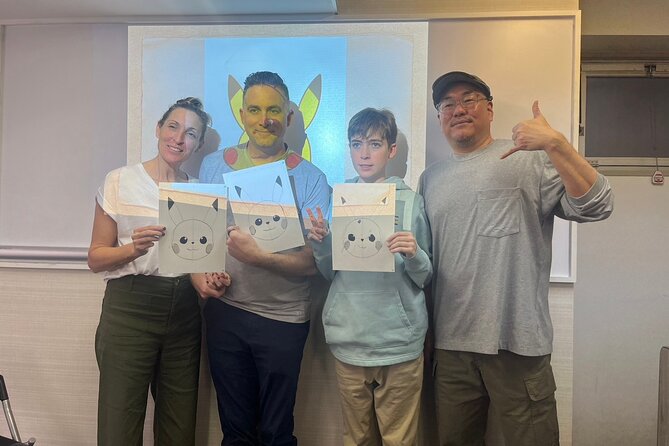
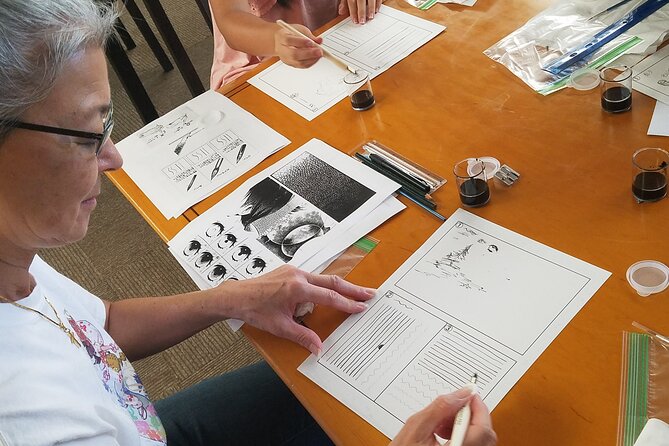
Art classes fail when students don’t have proper tools. This one avoids that by including the essentials. You get all equipment for manga drawing, including:
- Screen tones
- pens
- comic paper
You also receive a MANGA DOJO TOKYO original clear file and a set of three postcards as souvenirs. That clear file matters more than you’d think. A lot of travel “art experiences” hand you a loose page. Here, you have something intended to store and protect what you create.
Also: bottled water and snacks are not included. It’s not a huge problem, but Tokyo classrooms can run warm, and drawing takes stamina. If you tend to get thirsty while focusing, plan to grab a drink nearby before you start.
Asking questions: the hidden value of a max-8 class
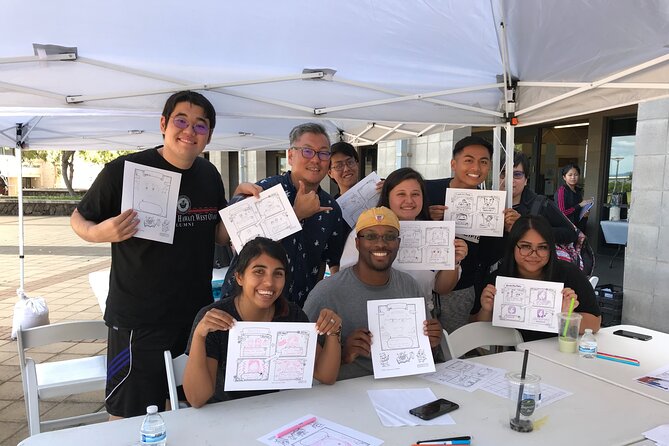
The headline benefit is obvious: you get professional instruction. The real, everyday value is interaction. With a maximum of 8 travelers, you’re more likely to get direct help when something doesn’t click—like how to place a face in a panel, how tones change the mood, or how to shape a character so it looks intentional instead of random.
From the way people describe the class, the teaching style supports mixed skill levels. If one person already draws and another is brand-new, the structure still works. You don’t get stuck in boredom mode waiting for the slowest person, and you also don’t get lost because everyone else started at the same skill level as you. That flexibility is rare in short workshops.
Readers also shortlisted these Tokyo bookings:
- Sushi Making Tokyo Roll and Authentic Japanese Sushi Class★ 5.0 · 3,971 reviews
- Tokyo: Roll and Authentic Sushi Making Class in Asakusa★ 4.9 · 1,957 reviews
- Tokyo Shinjuku Chopsticks Making Class★ 5.0 · 1,763 reviews
- Tokyo: Sushi Making Class in a Happi Coat near a Famous Spot★ 4.9 · 1,377 reviews
- Chopstick Making Workshop in Ginza★ 4.8 · 1,366 reviews
Souvenirs you can share: clear file and three custom postcards
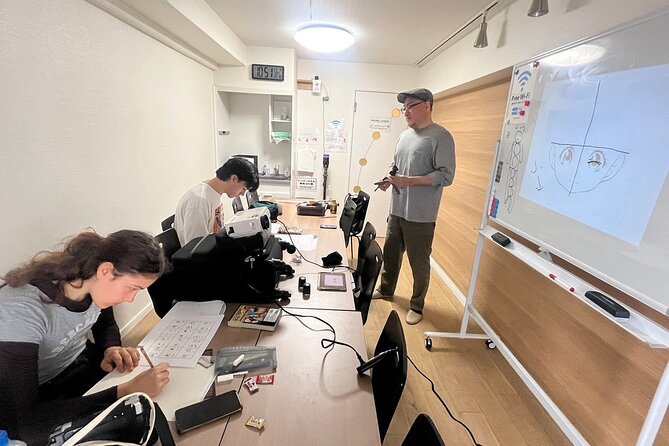
You get more than a single keepsake. After the class, you receive custom postcards plus the original clear file.
Why this is more useful than it sounds:
- Postcards give you something to mail or hand to friends who want a souvenir that isn’t just a photo.
- Three postcards is enough to share without feeling like you’re tearing your own project apart.
- The clear file gives you a practical way to store your page and keep it flat in your luggage.
If you’re the type who likes taking home “proof of doing” instead of just “proof of being there,” this souvenir set matches that mindset.
Ikebukuro location: easy to add before or after
This workshop is in Tokyo’s Toshima City, at Manga Dojo Tokyo in Higashiikebukuro. The meeting point address is:
Manga Dojo Tokyo, 170-0013 Tokyo, Toshima City, Higashiikebukuro, 1-chōme316 三昌ビル 602
The class is described as being near public transportation, which is exactly what you want in a busy city. You can slot this into a day without losing half your time in transit.
Practical pairing idea: do this earlier in your Tokyo stay if you want manga as a creative lens. Or do it later if you want to reward yourself with something hands-on after you’ve done the more typical sightseeing. Either way, Ikebukuro makes it easy to adjust if your day runs behind schedule.
About the price: what $114 buys you in real value
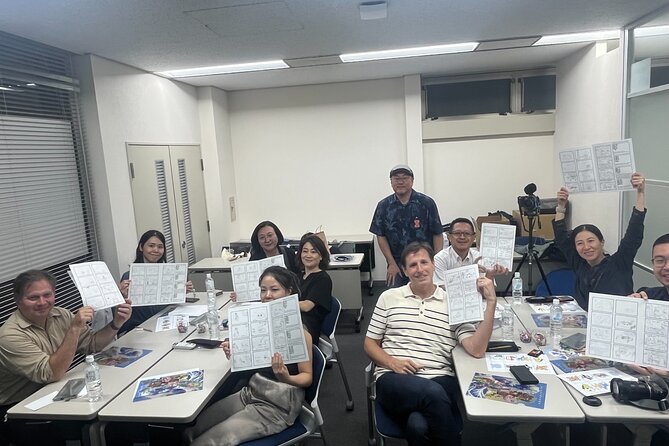
At $114 per person, you’re paying for a short, skill-based class with pro-level teaching and included materials, not just entry into a themed venue.
Here’s what you’re getting for your money:
- Two hours of guided instruction
- Small group size (up to 8), which supports interaction
- Included art supplies (screen tones, pens, comic paper)
- English guide
- Souvenirs: a clear file and three postcards
If you compare that to paying for supplies and taking a general drawing class on your own, the included equipment and structured curriculum are a real time-saver. Plus, the workshop is designed around manga-specific skills like paneling and character design, not generic art practice.
It’s also easier to justify when you treat it as an experience you’ll actually use: you’ll carry the paper work and postcards home, and the process teaches you how to read manga visually. That last part is what makes it feel more “worth it” than a one-time photo stop.
Who should book this workshop
This is a great fit if you want one of those rare travel activities that turns into a tangible result.
You’ll likely enjoy it if:
- you want hands-on culture, not just observation
- you’re interested in manga and want to understand how pages are built
- you like making something small but meaningful in a short time
- you want a class that can handle mixed ability levels within your group
It’s also a good choice for pairing with family travel, since the course levels can be matched for younger kids (with the suggestion to pick the level best suited for them).
A few planning tips so you get the most from the session
Here are practical things that help you walk in ready:
- Choose your level honestly. If you’re a true beginner, go Beginner rather than trying to “look confident.”
- Think of one travel moment you’d actually enjoy turning into a manga scene. You don’t need a complicated story. A small moment becomes fun when it’s drawn.
- Expect to focus. Two hours is short, so you’ll work toward finishing a piece rather than perfecting every detail like you would with unlimited time.
- Bring a curious mindset. The class is partly about drawing, but it’s also about understanding the logic of manga panels and character design.
And yes, screen tones can feel fiddly at first. That’s normal. The point is to learn the technique, not to be perfect on the first try.
Should you book the Manga Dojo Tokyo workshop?
If you want a Tokyo experience that’s interactive and leaves you with something to show for your time, I’d say yes. The combination of pro instruction, a small group, and included supplies makes it a strong value. The souvenir set is also a real plus: you’ll leave with postcards and a clear file, not just a memory.
Don’t book it if you’re mainly after sightseeing or a long guided walk. This is a studio workshop. The payoff comes from creating your own manga page and learning the craft behind it.
If that sounds like your kind of trip, this is an easy “book it” activity—especially because Ikebukuro is a convenient base and the format is built to handle different starting points.
More Workshops in Tokyo
- Sushi Making Tokyo Roll and Authentic Japanese Sushi Class
★ 5.0 · 3,971 reviews - Tokyo: Roll and Authentic Sushi Making Class in Asakusa
★ 4.9 · 1,957 reviews - Tokyo Shinjuku Chopsticks Making Class
★ 5.0 · 1,763 reviews - Tokyo: Sushi Making Class in a Happi Coat near a Famous Spot
★ 4.9 · 1,377 reviews - Chopstick Making Workshop in Ginza
★ 4.8 · 1,366 reviews
More Tour Reviews in Tokyo
- Mt Fuji and Hakone 1-Day Bus Tour Return by Bullet Train
★ 5.0 · 26,383 reviews - 1-Day Tokyo Bus Tour
★ 5.0 · 14,250 reviews - Tokyo: teamLab Planets TOKYO Digital Art Museum Entry Ticket
★ 4.6 · 9,779 reviews - Mt Fuji & Hakone Cruise, Drum Show Bullet Train 1 Day from Tokyo
★ 4.0 · 7,413 reviews - Tokyo: Shinjuku Food Tour (13 Dishes at 4 Local Eateries)
★ 5.0 · 6,603 reviews
More of Akihabara, Reviewed
- Official Street Go-Kart Tour – Akihabara
★ 5.0 · 1,578 reviews - Tokyo Go Kart: Asakusa, Skytree, and Akihabara **IDP MUST**
★ 5.0 · 988 reviews - Akihabara Anime & Game Adventure Walking Tour (Group or Private)
★ 5.0 · 404 reviews - Tokyo: Gameboy Mod Workshop at Akihabara
★ 5.0 · 253 reviews - Akihabara: Private Anime and Pop Culture Tour
★ 4.8 · 152 reviews
Latest Tokyo reviews off our desk






Akihabara Anime Tours, compared.
 ★ 5.0Official Street Go-Kart Tour – AkihabaraFrom $611,578 reviews
 ★ 5.0Tokyo Go Kart: Asakusa, Skytree, and Akihabara **IDP MUST**From $99988 reviews
 ★ 5.0Akihabara Anime & Game Adventure Walking Tour (Group or Private)From $90404 reviews
 ★ 5.0Gameboy Mod Workshop at AkihabaraFrom $360253 reviews
 ★ 4.8Akihabara: Private Anime and Pop Culture TourFrom $95152 reviews
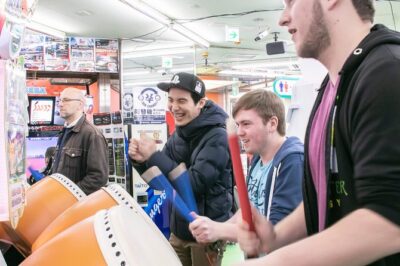 ★ 5.0Akihabara Tailor-made Private Tour for Anime FansFrom $132142 reviews
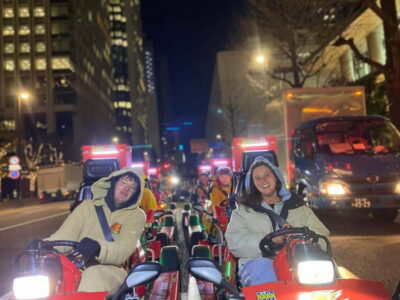 ★ 5.0Original Street Kart Experience from AkihabaraFrom $51111 reviews
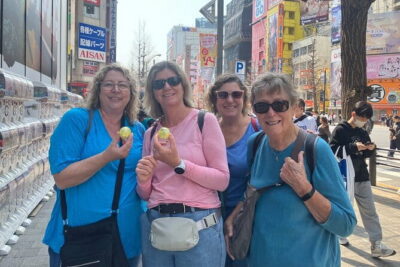 ★ 5.0Ramen Making from Scratch +Akihabara Tour –Tokyo Cooking ClassFrom $123107 reviews
Browse the lists this tour appears in