
Reviewed · AKIHABARA ANIME TOURS
Tokyo Manga Drawing Experience Pro Artist Workshop & MangaHistory
A pen, a pro, and instant manga pride. In this 3-hour Tokyo workshop in Hiroo (Shibuya), you learn manga history and draw an original piece to take home, with no experience needed and all materials provided. It is a fun way to get hands-on with Japanese pop culture without needing a single art qualification.
I really like the step-by-step coaching. You work through the classic stages—pencil sketch, inking, then shading and depth—while the artist stays close enough to answer questions as they come up. And since the group is capped at 6 travelers, the pace feels calm, not rushed.
One thing to consider: you are tied to a specific 3-hour class time and the Lawson meeting point in Hiroo. If your day is already packed, plan your transport and nearby meal timing so you do not end up sprinting to the start.
In This Review
- Key Things You’ll Do (and Why They Matter)
- Why This Tokyo Manga Workshop Works So Well
- Getting Started in Hiroo (Shibuya) at the Lawson Meeting Point
- The Manga History + Tool Tutorial You Get Before You Draw
- Picking Your Character, Pose, and Expression
- Pencil Sketching: Building a Strong Foundation
- Inking: Getting That Clean Manga Line Look
- Shading and Depth: Making Your Character Feel Real
- Snacks, Drinks, and the Pace of a Relaxed 3-Hour Class
- Taking Home Your Finished Manga Artwork
- Price and Value: Is $100 Fair for What You Get?
- Who This Workshop Is Best For (and Who Might Skip It)
- Should You Book This Tokyo Manga Drawing Experience?
- FAQ
- How long is the manga drawing workshop?
- Do I need any drawing experience?
- What is included in the price?
- Where does the class meet?
- How large is the class?
- What is the cancellation window?
Key Things You’ll Do (and Why They Matter)
- Hands-on drawing from scratch using tools provided for you
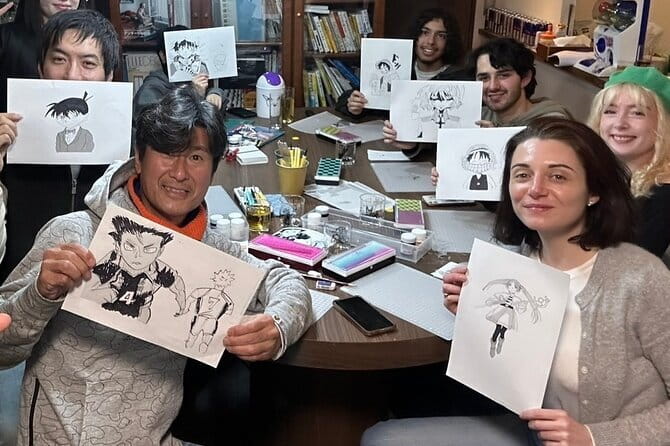
- Small group of max 6 for more direct instructor attention
- Traditional manga steps: sketch, ink, shading, and depth
- Manga history + famous references to guide what you draw
- Pick any character or create your own original concept
- Take home a finished artwork as your trip souvenir
Why This Tokyo Manga Workshop Works So Well
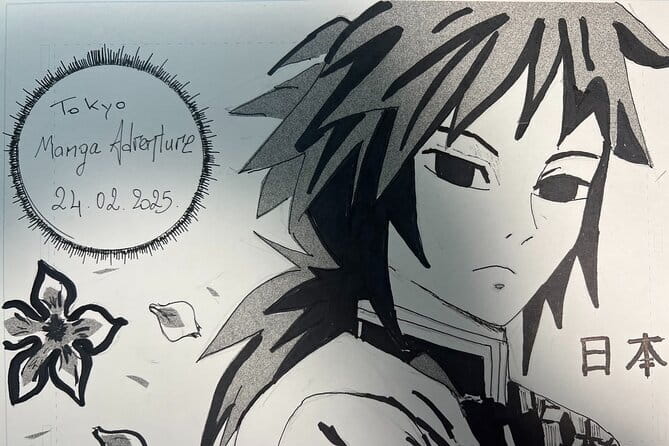
A lot of Tokyo experiences look great, but they can stay on the surface. This one gives you a tangible result: your own manga artwork in one sitting. That is the big advantage. You leave with paper in your hands, not just photos on your phone.
It is also smart that the teaching connects art-making with context. You start with a look at manga history and famous artists and works, then you turn that background into decisions about composition, expressions, and poses. That connection helps you understand why manga looks the way it does, instead of copying lines blindly.
And because you can choose any character or create something original, you get to steer the session. If you already have favorites, you can draw what you love. If you do not, you can still build something personal.
More of Akihabara, ranked by our reviewers
- Official Street Go-Kart Tour – Akihabara
★ 5.0 · 1,578 reviews - Tokyo Go Kart: Asakusa, Skytree, and Akihabara **IDP MUST**
★ 5.0 · 988 reviews - Akihabara Anime & Game Adventure Walking Tour (Group or Private)
★ 5.0 · 404 reviews - Tokyo: Gameboy Mod Workshop at Akihabara
★ 5.0 · 253 reviews
Getting Started in Hiroo (Shibuya) at the Lawson Meeting Point
The class meets at Lawson 1-chōme-16-3 Hiroo, Shibuya, Tokyo. It is near public transportation, so you should be able to plug it into a normal sightseeing day without too much hassle.
The workshop includes drinks and snacks, which sounds small until you realize what it does for the vibe. Art sessions can feel oddly intense if you are hungry or thirsty, and here you get a more relaxed rhythm from the start.
You’ll also receive a mobile ticket, so you will want your phone charged and handy. That keeps arrival smoother, especially if your day includes other bookings.
The Manga History + Tool Tutorial You Get Before You Draw
Before you start drawing, you get an overview of manga and its history. The goal is not to turn the workshop into a lecture. It is to give you a usable lens for what comes next—how artists think, why certain styles became popular, and what viewers expect from manga panels.
At the same time, your instructor walks you through the tools you’ll use. This matters even if you have drawn before, because manga tools and techniques follow their own logic. Knowing how to hold your tools and how to approach lines can save you frustration later.
The payoff is confidence. Instead of freezing at the blank page, you get a clear starting point—and you learn the basic mechanics in a way that supports beginners.
Picking Your Character, Pose, and Expression
Once the tools are set, you get to the fun part: planning your idea. You can choose a character from something you already like, or you can go fully original. Either way, you work with your instructor to develop story concepts and a drawing plan.
You will focus on the basics that make manga feel like manga:
- composition (how your character fits on the page)
- expressions (how a face communicates mood)
- poses (how body language sells the action)
This is where the small group size shines. When you are working near others but not competing with them, you can get quick feedback without waiting forever. If you are stuck, your instructor can guide you toward a workable version fast, instead of letting you wander for 45 minutes.
For me, that is the hidden value: you get to make decisions, not just follow instructions.
Pencil Sketching: Building a Strong Foundation
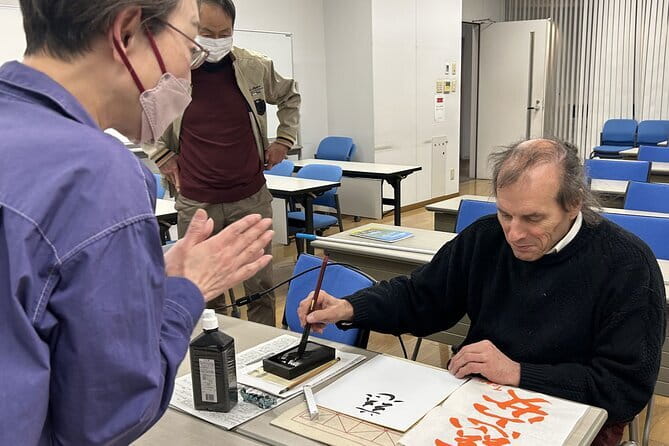
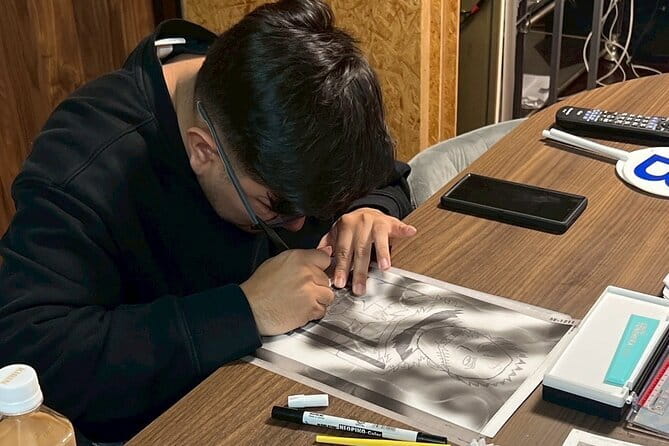
The workshop follows traditional steps. First comes pencil sketching, where you map out your character and panel layout. This stage is all about structure—getting proportions, placement, and the overall pose right before you commit.
If you are nervous about drawing, pencil sketching is the friendliest part of the process. It is the stage where mistakes are easiest to correct. And since you receive guidance step by step, you are not left to guess how to fix things.
This part also helps you understand manga’s workflow. Many people think of manga as finished ink art. In reality, it starts as construction. Learning that flow makes the final result feel more achievable.
Readers also shortlisted these Tokyo bookings:
- Sushi Making Tokyo Roll and Authentic Japanese Sushi Class★ 5.0 · 3,971 reviews
- Tokyo: Roll and Authentic Sushi Making Class in Asakusa★ 4.9 · 1,957 reviews
- Tokyo Shinjuku Chopsticks Making Class★ 5.0 · 1,763 reviews
- Tokyo: Sushi Making Class in a Happi Coat near a Famous Spot★ 4.9 · 1,377 reviews
- Chopstick Making Workshop in Ginza★ 4.8 · 1,366 reviews
Inking: Getting That Clean Manga Line Look
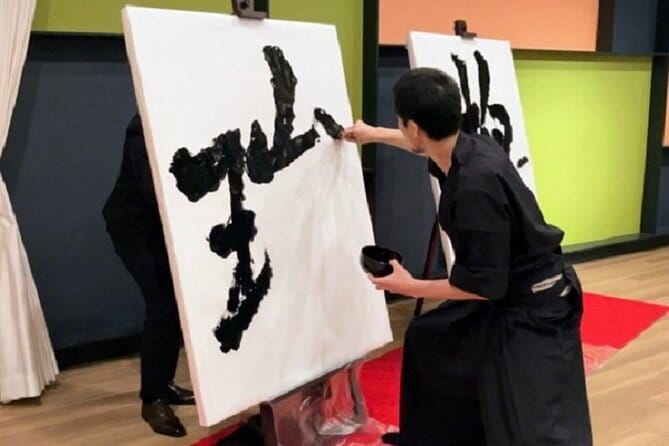
After the sketch comes inking. This is where your drawing starts looking like actual manga panels instead of practice lines.
Inking is also where beginners often need the most help, because the technique is unforgiving if you rush. The instructor stays by you and shows you how to use the tools to produce clean lines.
You also get the chance to ask questions as you go. That is a big deal in a short workshop. You do not need to wait until the end. You get corrections while your brain is still on the same step.
The result is clarity. Your page stops looking like outlines and starts looking like the kind of work you’d see in published manga.
Shading and Depth: Making Your Character Feel Real
Next comes shading and depth. This is not just decoration. It is how manga creates volume and mood with limited space.
You learn the traditional process step by step, and you add shading in a way that supports the face, hair, and clothing shapes you already built. When it works, your character looks dimensional instead of flat.
This part can be surprisingly satisfying. Even if you are not an artist, adding shading gives you a visible “wow” moment. Your drawing shifts from draft to finished.
And since the pro artist is right there, you can adjust if something looks off—without scrapping everything and starting over.
Snacks, Drinks, and the Pace of a Relaxed 3-Hour Class
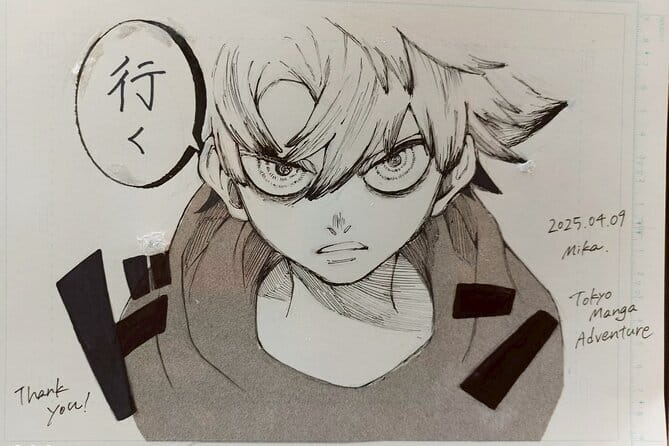
The workshop lasts about 3 hours. That length is ideal for beginners because it gives enough time to progress through all the major steps without turning the session into a day-long commitment.
You also get drinks and snacks, which helps you stay focused from sketch to finish. It keeps the energy steady, especially when you’re doing repetitive tasks like refining lines.
The overall pace feels like a guided craft session, not a high-pressure test. The small group format also keeps it social in a good way—people nearby, but you still get attention.
Taking Home Your Finished Manga Artwork
When you finish, you take your completed artwork home as a souvenir. That part is simple but meaningful.
A photo of your trip disappears fast. A drawn page can live on your desk, in a scrapbook, or inside a frame when you want a reminder that you did something creative in Japan.
You can also treat the final piece as a conversation starter. Even if your drawing is not perfect, it is yours, made with step-by-step instruction and real tools.
If you want a souvenir that feels personal, this is one of the best options in the Tokyo “make it yourself” category.
Price and Value: Is $100 Fair for What You Get?
At $100 per person, the price can look straightforward—until you list what’s included.
You get:
- all drawing tools and materials
- drinks and snacks
- professional pro-artist instruction through the main manga creation steps
- small group attention (max 6 travelers)
- a finished take-home artwork
For $100, you’re paying for time with an instructor and access to materials, not just a passive activity. The small group format matters too. If you were in a huge class, you’d likely spend more time waiting than learning.
So yes, it feels like solid value if you want hands-on instruction and a tangible result. It is especially worth it if you are traveling with limited time and still want something interactive.
Who This Workshop Is Best For (and Who Might Skip It)
This is a great fit if you:
- love manga and want a practical way to connect with the culture
- have never drawn seriously but want clear, supportive guidance
- want a creative souvenir you can actually take home
- like small-group classes with direct instructor help
You might consider skipping it if you only want to browse art or take photos. This is not a gallery tour. It is a making-focused workshop where your time is meant for drawing, not observation.
If you do not speak Japanese, it is still manageable because the session includes tools, instruction, and hands-on guidance. Most people can participate.
Should You Book This Tokyo Manga Drawing Experience?
Book it if you want a memorable Tokyo activity that ends with a finished artwork. The combination of pro-level step-by-step instruction, traditional manga steps, and a take-home souvenir is exactly what makes this kind of workshop worth your time.
You should also book it if you enjoy learning through doing. The manga history and tools tutorial are there to support your drawing choices, not to overwhelm you.
If your schedule is tight, pick a time that gives you breathing room before and after. Once you’re in the class, you’ll move from pencil sketch to inking to shading without needing to bring anything yourself.
FAQ
How long is the manga drawing workshop?
The workshop runs for about 3 hours.
Do I need any drawing experience?
No. The experience is designed so you can join without prior experience. Tools and instructions are provided.
What is included in the price?
Drawing tools and materials are included, and the workshop also includes drinks and snacks.
Where does the class meet?
You start at Lawson 1-chōme-16-3 Hiroo, Shibuya, Tokyo 150-0012, Japan. The activity ends back at the meeting point.
How large is the class?
The maximum group size is 6 travelers.
What is the cancellation window?
You can cancel for a full refund up to 24 hours before the experience’s start time (local time).
More Workshops in Tokyo
- Sushi Making Tokyo Roll and Authentic Japanese Sushi Class
★ 5.0 · 3,971 reviews - Tokyo: Roll and Authentic Sushi Making Class in Asakusa
★ 4.9 · 1,957 reviews - Tokyo Shinjuku Chopsticks Making Class
★ 5.0 · 1,763 reviews - Tokyo: Sushi Making Class in a Happi Coat near a Famous Spot
★ 4.9 · 1,377 reviews - Chopstick Making Workshop in Ginza
★ 4.8 · 1,366 reviews
More Tour Reviews in Tokyo
- Mt Fuji and Hakone 1-Day Bus Tour Return by Bullet Train
★ 5.0 · 26,383 reviews - 1-Day Tokyo Bus Tour
★ 5.0 · 14,250 reviews - Tokyo: teamLab Planets TOKYO Digital Art Museum Entry Ticket
★ 4.6 · 9,779 reviews - Mt Fuji & Hakone Cruise, Drum Show Bullet Train 1 Day from Tokyo
★ 4.0 · 7,413 reviews - Tokyo: Shinjuku Food Tour (13 Dishes at 4 Local Eateries)
★ 5.0 · 6,603 reviews
More of Akihabara, Reviewed
- Official Street Go-Kart Tour – Akihabara
★ 5.0 · 1,578 reviews - Tokyo Go Kart: Asakusa, Skytree, and Akihabara **IDP MUST**
★ 5.0 · 988 reviews - Akihabara Anime & Game Adventure Walking Tour (Group or Private)
★ 5.0 · 404 reviews - Tokyo: Gameboy Mod Workshop at Akihabara
★ 5.0 · 253 reviews - Akihabara: Private Anime and Pop Culture Tour
★ 4.8 · 152 reviews
Latest Tokyo reviews off our desk






Akihabara Anime Tours, compared.
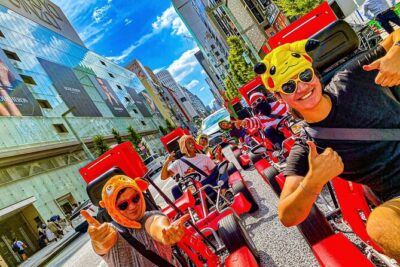 ★ 5.0Official Street Go-Kart Tour – AkihabaraFrom $611,578 reviews
 ★ 5.0Tokyo Go Kart: Asakusa, Skytree, and Akihabara **IDP MUST**From $99988 reviews
 ★ 5.0Akihabara Anime & Game Adventure Walking Tour (Group or Private)From $90404 reviews
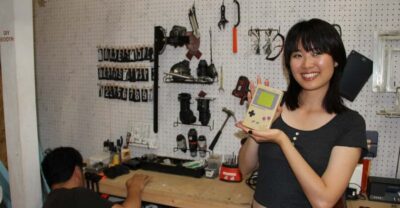 ★ 5.0Gameboy Mod Workshop at AkihabaraFrom $360253 reviews
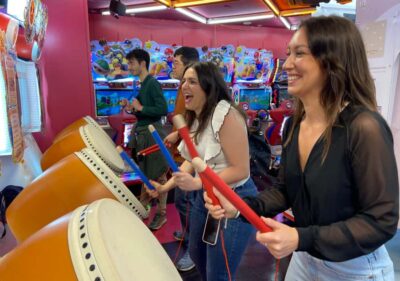 ★ 4.8Akihabara: Private Anime and Pop Culture TourFrom $95152 reviews
 ★ 5.0Akihabara Tailor-made Private Tour for Anime FansFrom $132142 reviews
 ★ 5.0Original Street Kart Experience from AkihabaraFrom $51111 reviews
 ★ 5.0Ramen Making from Scratch +Akihabara Tour –Tokyo Cooking ClassFrom $123107 reviews
Browse the lists this tour appears in