
Reviewed · ASAKUSA & SENSOJI TOURS
Tokyo: Tsukiji Fish Market Visit and Asakusa Food Tour
Tokyo food starts early.
This tour strings together Tsukiji market tastings and Asakusa temple sights fast, with an English-speaking guide who keeps the day moving in a smart, crowd-friendly way. I like how you sample a real mix of Japanese flavors (including tuna sashimi and a sushi lunch) instead of just seeing stalls. One thing to consider: you’ll be on your feet in busy areas and you start at 8:30AM sharp, so late risers will feel it.
I also appreciated how the guide, Kyoko-san, helped make the day feel useful, not just scenic—she knows vendors, steers you to good choices, and guides you through the parts of Tsukiji and Asakusa that you’d probably miss on your own. The main drawback is that you won’t visit the inner Tsukiji market, so if your dream is to see the most restricted-feeling trading areas, this isn’t that tour.
In This Review
- Key things I’d circle before you go
- Why this Tsukiji and Asakusa combo works in 5.5 hours
- Getting started at Tsukiji Hongan-ji (and getting your bearings fast)
- Tsukiji Market walk: what you learn while you taste
- Sushi lunch and the tasting flow you’ll actually enjoy
- Eating as you walk: the small details that matter
- Tsukiji to Asakusa: the ride that saves you time
- Nakamise Street and Senso-ji: classic Tokyo, guided the right way
- The Asakusa sweets break and why it’s more than dessert
- Drinks, age limits, and making allergies manageable
- Price and value: is $151 for 5.5 hours fair?
- Who this tour suits best (and who should pick something else)
- Should you book this Tsukiji and Asakusa food tour?
- FAQ
- Where does the tour start?
- Where does the tour end?
- Do I get hotel pickup?
- Will I visit the Tsukiji inner market?
- What food is included?
- Is sake included, and are there age rules?
- How long is the tour?
- What language is the guide?
- Is transportation between Tsukiji and Asakusa included?
Key things I’d circle before you go
- Tsukiji food without the inner-market visit, so you can still taste a lot and keep momentum
- A true sushi lunch in the Tsukiji area, not just a quick bite
- Senso-ji Temple plus Nakamise Shopping Street in a tight, efficient route
- A planned sweets break in Asakusa, including matcha-style options like matcha parfait
- Small group (up to 10) for easier pacing and less guessing about what to order
- Kyoko-san’s vendor know-how, which makes souvenirs and food choices easier
Why this Tsukiji and Asakusa combo works in 5.5 hours
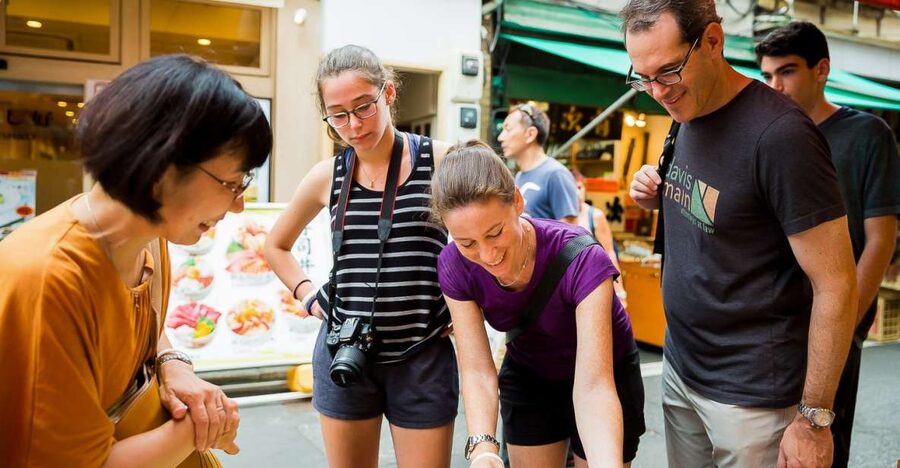
Tokyo has a talent for making your feet tired before your brain is ready. This tour avoids that by pairing two areas that people often treat separately—Tsukiji and Asakusa—and handling the “how do I not waste time” part for you. In 5.5 hours, you get a structured walk, guided context, and multiple food stops, so you spend less time asking strangers what’s good and more time eating.
The other reason it works: it’s a small group limited to 10, which matters in Tokyo’s most crowded pedestrian zones. With a bigger tour, you tend to get separated from the guide or lose time regrouping. Here, you’re close enough to follow along and still have moments to look at stalls and shop windows.
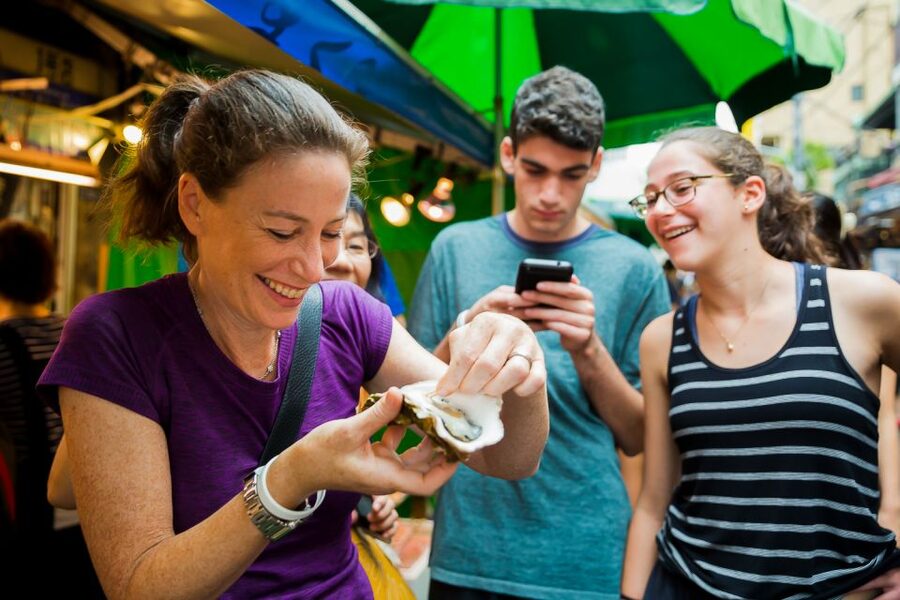
And yes, it’s food-forward. You’re not doing one tasting and calling it a day. You’ll sample several items, including Japanese omelet, fried fish cake, fresh tuna sashimi, sake, and sushi at a local sushi restaurant—plus Japanese sweets at the Asakusa café stop. That’s the kind of “starter kit” that helps you understand what you’re actually eating.
More temple mornings in old Asakusa
- Tokyo: Japanese Dance Cabaret Theater Asakusa-Kaguwa Ticket
★ 4.8 · 2,270 reviews - Tokyo: Meiji Shrine, Asakusa, Skytree Bus Tour and Cruise
★ 4.7 · 1,986 reviews - Tokyo: Roll and Authentic Sushi Making Class in Asakusa
★ 4.9 · 1,957 reviews - Tokyo: Asakusa Walking Tour with Sensoji Temple Visit
★ 4.8 · 1,583 reviews
Getting started at Tsukiji Hongan-ji (and getting your bearings fast)
The day begins at the main gate of Tsukiji Hongan-ji Temple. This is a smart move. Before you hit the densest part of the area, you get a quick guided orientation that helps you understand what you’re about to see—fish culture, market history, and how Tsukiji became what it is.
You also get an easy first win: starting with a calm religious landmark gives you a visual reset. After that, you’re straight into Tsukiji’s energy with a plan, not just vibes. You don’t need to be an expert to enjoy this; the guide explains the story as you go.
Expect this segment to be short—about 15 minutes—so treat it like the warm-up, not the main event. Then the clock starts ticking and the food smells take over.
Tsukiji Market walk: what you learn while you taste
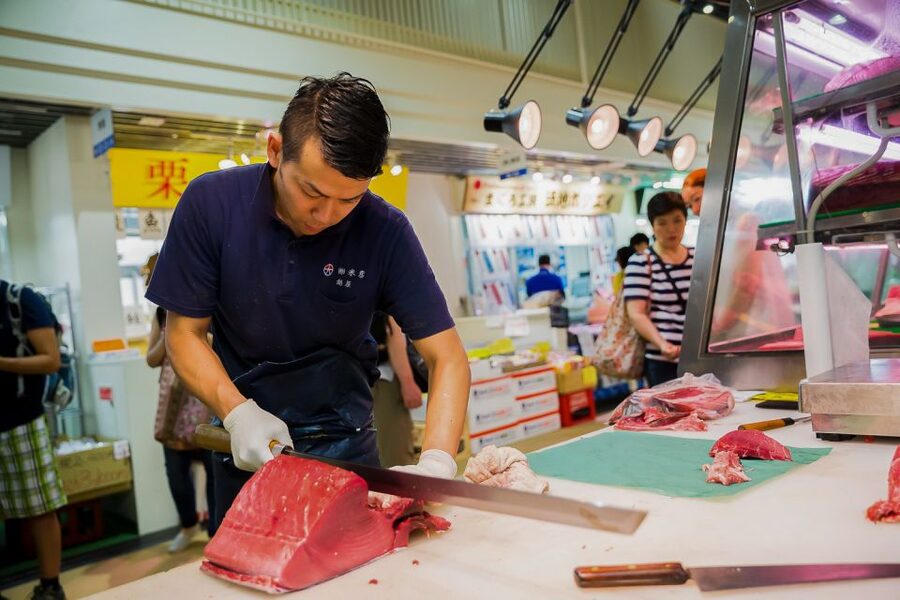
Once you’re inside the market area, you’ll do a guided tour of about 2 hours through the shops and stalls. This is the core Tsukiji portion. You’ll get context for what you’re seeing—why certain vendors specialize, how ingredients move through the market, and what professional chefs look for.
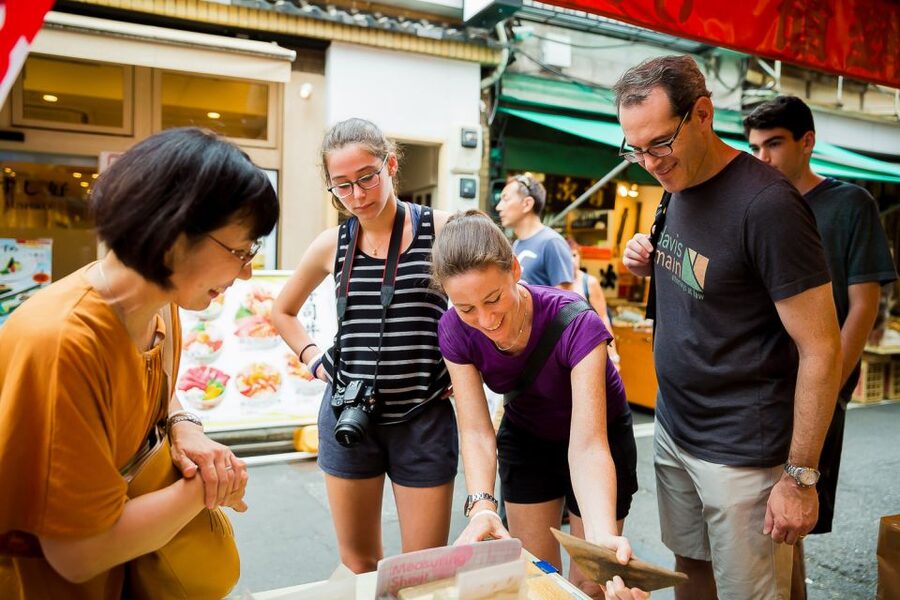
Here’s what I’d highlight for practical value: your guide doesn’t just narrate. Kyoko-san (and the team behind her) also helps you navigate the maze of counters, lines, and quick transactions. In places like Tsukiji, food quality isn’t hard to find. The hard part is knowing which stall is the right choice for your tastes and your time.
Also, this tour keeps expectations clear: you will not visit the Tsukiji inner market. You still get plenty of market flavor and food sampling, but you’re not going for the most restricted inner trading areas. If that’s essential to your Tokyo bucket list, double-check your priorities before booking.
Sushi lunch and the tasting flow you’ll actually enjoy
The best part of Tsukiji for most people is the food moment when it finally becomes real. This tour delivers that with an exquisite sushi lunch as a highlight. You’re guided to a local sushi restaurant, and you’ll enjoy sushi as part of the day’s planned tastings—not as a last-minute scramble.
Along the way, you’ll also do food tasting for about 1 hour. That’s where the tour earns its keep. Instead of “one sample and you’re done,” you’re trying a range that shows how different Japanese flavors work together—seafood, savory snacks, and warming items.
Based on what’s included, you should expect tastings like:
- Fresh tuna sashimi (simple, high-signal taste)
- Japanese omelet (tamago-style comfort food)
- Fried fish cake (a classic street-snack texture)
- Sake (included, with age rules—more on that below)
If you’re the type who likes to understand food by tasting it, this flow is efficient. If you hate surprises or are extremely picky, it can still work—but you’ll want to communicate preferences and allergies in advance so the guide can plan alternatives.
Eating as you walk: the small details that matter
Tsukiji is the kind of place where food is part of the atmosphere. This tour leans into that by letting you sample street foods while you stroll. That changes the vibe from a standard “walk past shops” tour to something more hands-on.
A few practical tips if you want the tastings to feel fun, not frantic:
- Arrive ready to eat. With an early start and multiple stops, hunger waits for nobody.
- Pace your bites. You’ll be sampling several items, so take smaller turns if something is rich.
- Keep water nearby. The day moves fast and Tokyo afternoons can get warm.
The biggest value of tasting as you go is that you get immediate context. You taste something, then you see the ingredient sources, the vendor setup, and the market logic. It’s a fast education with your stomach as the classroom.
And since the group is limited to 10, it’s easier for the guide to manage the line-ups without losing you. That’s exactly the kind of behind-the-scenes help you want in crowded places.
More market breakfasts our reviewers scored
- Tokyo Tsukiji Fish Market Food and Culture Walking Tour★ 5.0 · 3,184 reviews
- Tokyo: Tsukiji Fish Market Food and Walking tour★ 5.0 · 1,724 reviews
- Tokyo: Tsukiji Fish Market Guided Walking Tour★ 4.9 · 1,397 reviews
- Tokyo Sushi Making Class in Tsukiji with Professional Chef★ 5.0 · 1,177 reviews
- Tsukiji Fish Market Guided Tour and Sushi Making with Pro Chef★ 5.0 · 775 reviews
Tsukiji to Asakusa: the ride that saves you time
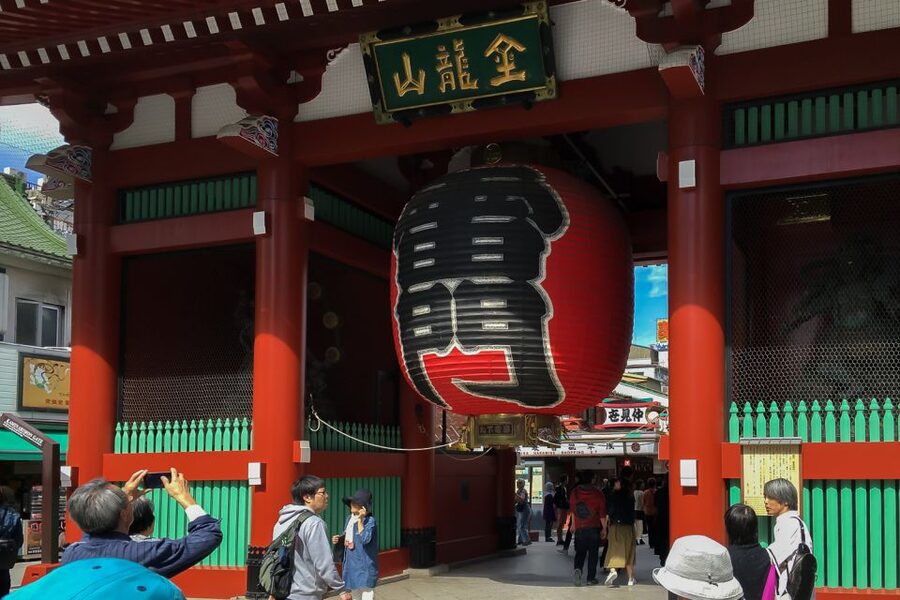
After Tsukiji, the tour includes transportation from Tsukiji to Asakusa. You’ll take a short public transport segment (about 15 minutes), which matters because Tokyo transfers can eat a lot of time when you’re figuring out trains, exits, and walking distances.
Instead of you hunting down directions, the guide handles the logistics. That gives you a buffer for what you’ll do next: shopping streets, temples, and more walking.
This is also where the small-group size helps again. You’re not stuck behind a slow-moving crowd, and you’re not sprinting to catch up to a far-away group leader.
Nakamise Street and Senso-ji: classic Tokyo, guided the right way
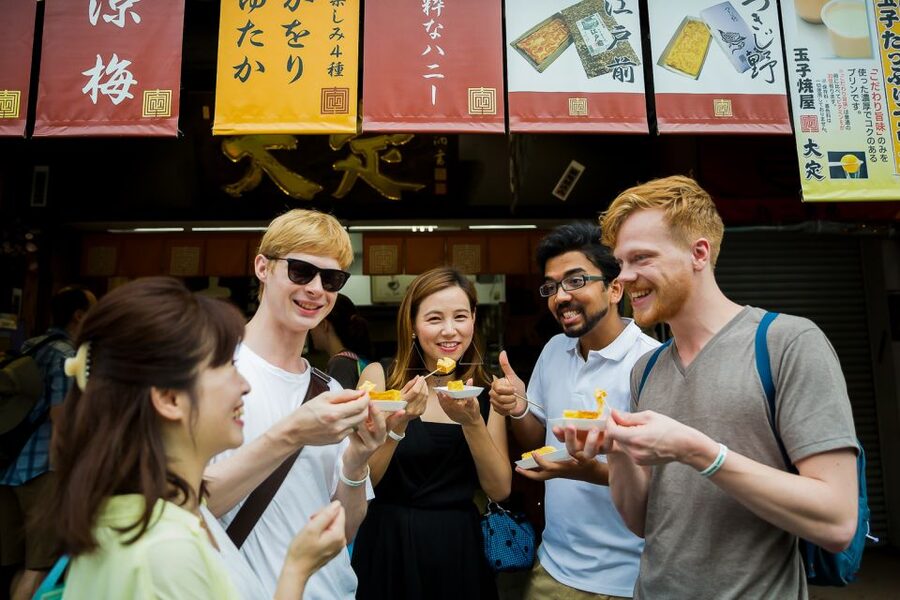
In Asakusa, you’ll start with a short stop at the Asakusa Culture Tourist Information Center (about 10 minutes). Think of this as the “good to know” orientation piece—where you can get your bearings and confirm what’s worth your attention on foot.
Then you head to Nakamise Shopping Street (about 15 minutes). This is the famous pedestrian lane leading toward Senso-ji. Even if you’ve seen pictures, there’s a real sensory punch here: the smells from snack stalls, the visual noise of souvenirs, and the feeling that the area is built for browsing.
After Nakamise, you walk a bit on foot (about 10 minutes) and then reach Senso-ji Temple, where you’ll get about 25 minutes of guided time. This temple is Tokyo’s oldest Buddhist temple, and the guide’s context helps you notice details you’d probably miss if you were just taking photos.
Finally, you’ll spend about 75 minutes exploring Asakusa with the guide’s direction. That’s long enough to soak in the old-meets-new atmosphere, but not so long that it turns into free-for-all wandering.
The Asakusa sweets break and why it’s more than dessert
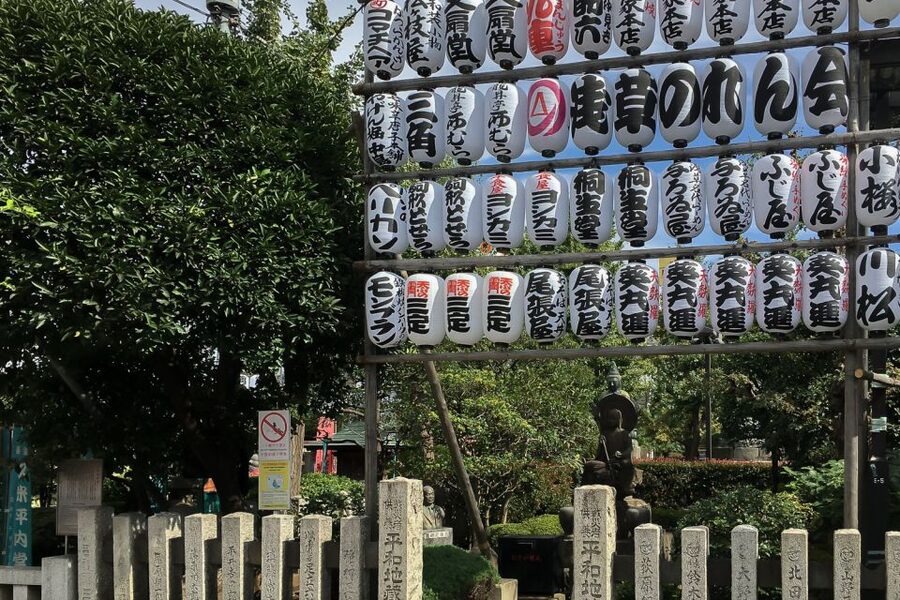
One of the tour’s best pacing tricks is the planned café stop before you go deeper into Senso-ji and the surrounding area. You’ll relax and enjoy traditional Japanese sweets, with matcha-style options such as matcha green tea parfait.
Why this matters: in a day like this, your energy isn’t just about calories. It’s about taking the edge off. You’ll have walked through Tsukiji’s dense crowds and food smells, so this break helps you reset your senses—and it gives you a change of texture from savory street snacks to something creamy and slow.
This is also a smart place for families or anyone who wants a moment to sit down and regroup. Even though it’s a food tour, you’re not only eating; you’re also taking a breather while your guide keeps everything on schedule.
Drinks, age limits, and making allergies manageable
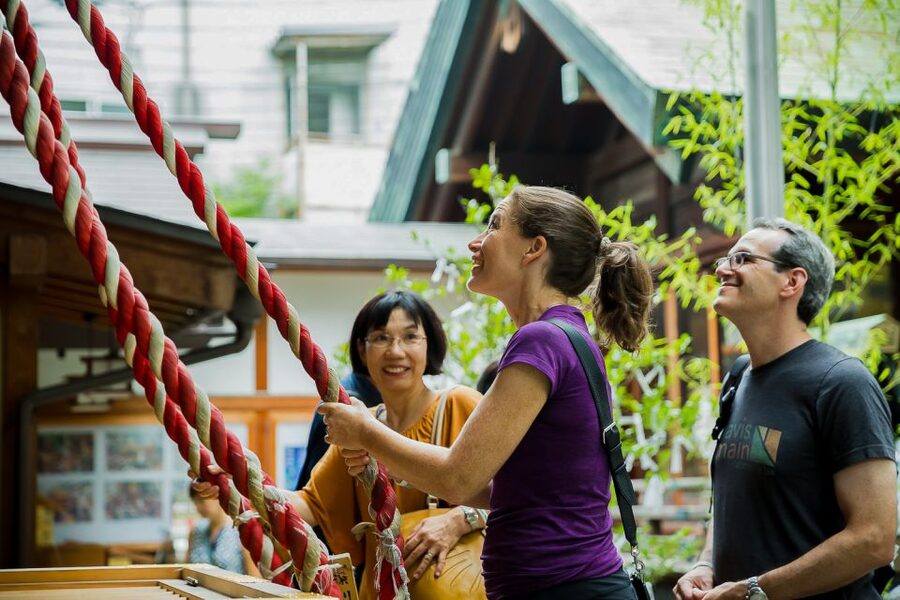
Alcohol is included as sake, but Japan has a minimum drinking age rule of 20. If anyone in your group is under that age, the tour provides alternatives.
If you have allergies or food preferences, this is the one day you really should plan ahead. The tour explicitly asks you to notify the guide in advance. That’s not just a courtesy—tastings involve multiple stops and tight timing, so it’s best to communicate early rather than trying to handle it on the fly.
Practical advice: tell the provider clearly what you can’t have (and how strict you are). If something is borderline—like fish sauce vs. soy sauce—describe your comfort level so they can guide you toward the closest option.
Price and value: is $151 for 5.5 hours fair?
At $151 per person for about 5.5 hours, you’re paying for more than entry into a market area. You’re buying four things that are hard to replicate on your own in the same time window:
- An English-speaking guide who can explain what you’re seeing and what to prioritize.
- A structured food plan with multiple included tastings (not just random purchases).
- Transportation between Tsukiji and Asakusa, including a short public transport segment.
- Small-group pacing (max 10), which makes crowded walking feel less chaotic.
Could you do Tsukiji and Asakusa alone for less? Sure, if you’re confident navigating markets, choosing food safely, and scheduling the day without losing time. But if you want a smoother plan where the order of stops makes sense—this price can feel reasonable.
What you’re not paying for: hotel pickup isn’t included. If you’re traveling from a location that’s tough to reach early, you’ll want to factor that into your total cost and timing.
Who this tour suits best (and who should pick something else)
This works especially well for you if:
- You want a food-focused introduction to Tsukiji and Asakusa.
- You’d rather follow a guide than spend hours figuring out where to eat.
- You enjoy context with your meals—how the market functions, why things taste the way they do.
- You prefer a small group over big buses.
You might choose a different option if:
- Your top priority is seeing the Tsukiji inner market specifically.
- You strongly dislike walking in crowded areas.
- You want lots of free time. This is efficient and guided, not slow and loose.
If you’re a first-timer to Tokyo, this is a solid “two-neighborhood day” because it hits food culture and historic sights without requiring deep planning.
Should you book this Tsukiji and Asakusa food tour?
If your ideal Tokyo day includes sushi and street snacks, plus Senso-ji and Nakamise without the stress of planning every meal, I’d say yes. The biggest strength is how the day is built: you get a real market experience with tastings, then you shift into temple-and-street sightseeing with a rest stop for sweets.
Book it if you’ll appreciate a guided plan and want help making good food choices quickly. Skip it if you’re chasing the Tsukiji inner market specifically, or if you need lots of downtime.
One more practical note: you can cancel for a full refund up to 2 days in advance, which gives you a bit of breathing room if your schedule is still flexible.
FAQ
Where does the tour start?
It starts at the main gate of Tsukiji Honganji Temple.
Where does the tour end?
The tour ends at 2 Chome-18-13 Kaminarimon, Taitō-ku, Tōkyō-to 111-0034, Japan.
Do I get hotel pickup?
No. Hotel pickup is not included.
Will I visit the Tsukiji inner market?
No. You will not visit the Tsukiji inner market on this tour.
What food is included?
The tour includes Japanese omelet, fried fish cake, fresh tuna sashimi, sake, sushi at a local sushi restaurant, and Japanese sweets.
Is sake included, and are there age rules?
Yes, sake is included, and Japan’s minimum drinking age is 20. There will be alternative drinks for people under 20.
How long is the tour?
The duration is about 5.5 hours.
What language is the guide?
The tour includes an English-speaking live guide.
Is transportation between Tsukiji and Asakusa included?
Yes. Transportation from Tsukiji to Asakusa is included, with a short public transport segment during the day.
More Tour Reviews in Tokyo
- Mt Fuji and Hakone 1-Day Bus Tour Return by Bullet Train
★ 5.0 · 26,383 reviews - 1-Day Tokyo Bus Tour
★ 5.0 · 14,250 reviews - Tokyo: teamLab Planets TOKYO Digital Art Museum Entry Ticket
★ 4.6 · 9,779 reviews - Mt Fuji & Hakone Cruise, Drum Show Bullet Train 1 Day from Tokyo
★ 4.0 · 7,413 reviews - Tokyo: Shinjuku Food Tour (13 Dishes at 4 Local Eateries)
★ 5.0 · 6,603 reviews
More Tsukiji Market Breakfasts
- Tokyo Tsukiji Fish Market Food and Culture Walking Tour
★ 5.0 · 3,184 reviews - Tokyo: Tsukiji Fish Market Food and Walking tour
★ 5.0 · 1,724 reviews - Tokyo: Tsukiji Fish Market Guided Walking Tour
★ 4.9 · 1,397 reviews - Tokyo Sushi Making Class in Tsukiji with Professional Chef
★ 5.0 · 1,177 reviews - Tsukiji Fish Market Guided Tour and Sushi Making with Pro Chef
★ 5.0 · 775 reviews
More Mornings in Old Asakusa
- Tokyo: Japanese Dance Cabaret Theater Asakusa-Kaguwa Ticket
★ 4.8 · 2,270 reviews - Tokyo: Meiji Shrine, Asakusa, Skytree Bus Tour and Cruise
★ 4.7 · 1,986 reviews - Tokyo: Roll and Authentic Sushi Making Class in Asakusa
★ 4.9 · 1,957 reviews - Tokyo: Asakusa Walking Tour with Sensoji Temple Visit
★ 4.8 · 1,583 reviews - Tokyo Asakusa Rickshaw Tour
★ 5.0 · 1,375 reviews
Latest Tokyo reviews off our desk






Asakusa & Sensoji Tours, compared.
 ★ 4.8Japanese Dance Cabaret Theater Asakusa-Kaguwa TicketFrom $492,270 reviews
 ★ 4.7Meiji Shrine, Asakusa, Skytree Bus Tour and CruiseFrom $1221,986 reviews
 ★ 4.9Roll and Authentic Sushi Making Class in AsakusaFrom $581,957 reviews
 ★ 4.8Asakusa Walking Tour with Sensoji Temple VisitFrom $221,583 reviews
 ★ 5.0Tokyo Asakusa Rickshaw TourFrom $421,375 reviews
 ★ 4.5Tokyo Panoramic 1 Day: Meiji Shrine, Asakusa, Odaiba and SKYTREE®From $851,222 reviews
 ★ 5.0Tokyo Go Kart: Asakusa, Skytree, and Akihabara **IDP MUST**From $99988 reviews
 ★ 4.7Asakusa, Skytree & Akhihabara Go-Kart City ExperienceFrom $96761 reviews
Browse the lists this tour appears in