
Reviewed · COOKING CLASSES
Tokyo Wagyu Culinary Tour Cooking Culture and Tasting
Wagyu skills in just two hours. This Tokyo class is built around real cut knowledge and real cooking practice, so you learn how Wagyu behaves on the pan with heat control that you can repeat at home, not just trivia. You also start with a seasonal Japanese-style welcome drink, then move from a Wagyu lesson into butchery and hands-on cooking.
What I like most is how practical it stays. I love the way you sort out sirloin vs tenderloin and what each cut is best for, and I love that Mike steers the experience toward usable technique—seasoning and timing—while you cook and taste multiple preparations.
One consideration: at $920, it’s a splurge, and you only have about two hours. You’ll leave with strong basics, but not a full masterclass in every Wagyu nuance, especially if you’re not excited to cook with your hands.
In This Review
- Key things to know before you go
- Wagyu in Tokyo: why this is more than a meat lesson
- Getting to Oshiage and settling into a group of six
- The seasonal welcome drink and the Wagyu basics that make the class click
- Cut discovery: how the class compares sirloin and tenderloin
- Butchery to stove: turning lessons into heat control
- Cooking yourself: chef help, multiple cuts, and what to watch for
- Taste test time: comparing your dishes with beverage pairings
- Tokyo food-culture pointers you can use on your next meal
- Price and value: what $920 buys (and what it doesn’t)
- Who should book this Wagyu cooking class
- FAQ
- Will I need a print ticket?
- How long is the Tokyo Wagyu Culinary Tour Cooking Culture and Tasting?
- Where does the experience start?
- How big is the group?
- What happens at the start of the class?
- Are dietary restrictions accommodated?
- What is the cancellation policy?
- Should you book Tokyo Wagyu Cooking Culture and Tasting?
Key things to know before you go
- Small group size (max 6) keeps the pace calm and the coaching direct.
- Seasonal welcome drink kicks things off in true Tokyo style, before the meat talk starts.
- Wagyu grading and cut choices help you understand what you’re paying for.
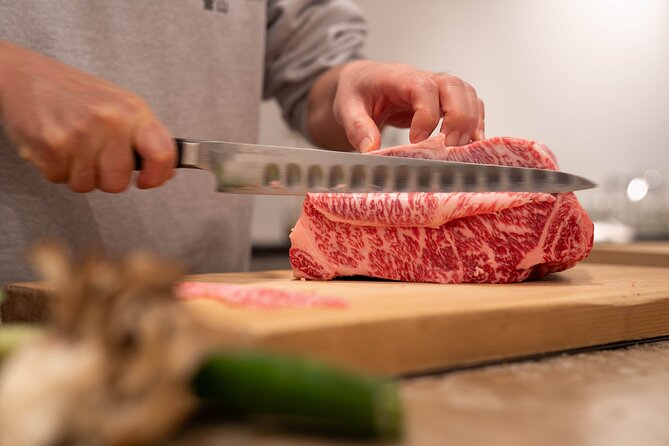
- Butchery demonstration shows how the cuts you’ll cook are prepped for the pan.
- Hands-on cooking + chef help means you practice timing, not just watch.
- Tasting paired with beverages lets you compare cuts right away with guidance.
Wagyu in Tokyo: why this is more than a meat lesson
This experience works because it treats Wagyu like a craft, not a commodity. You don’t just taste rich beef; you learn why different cuts behave differently, how they’re prepared, and how the cook’s job is mostly about restraint—heat, timing, and seasoning done with intention.
The best part is that it’s structured like a workflow you can copy. You start by learning the foundations (what makes Wagyu special and how it’s graded), then you move into cuts and butchery, and only then do you cook. That order matters. When you understand why a slice has been cut a certain way, you stop guessing later when you’re standing at home in your own kitchen.
Also, it’s short—about two hours—so the whole class stays focused. You’ll cover several Wagyu cuts and you’ll taste what you cook, which is a lot to fit into one session. If you want a hands-on Tokyo food experience that still respects your time, this hits the sweet spot.
Readers also shortlisted these Tokyo bookings:
- Tokyo: Shinjuku Food Tour (13 Dishes at 4 Local Eateries)
★ 5.0 · 6,603 reviews - Tokyo Tsukiji Fish Market Food and Culture Walking Tour
★ 5.0 · 3,184 reviews - Tokyo: Shinjuku Food Tour (15 Dishes and 4 Eateries)
★ 4.9 · 2,033 reviews - Best of Shinjuku: Izakaya Food Tour (4 Stops, 14+ Tastings)
★ 5.0 · 1,863 reviews
Getting to Oshiage and settling into a group of six
You’ll meet at 3-chōme-25-17 Oshiage, Sumida City, Tokyo 131-0045, Japan and the experience ends back at the meeting point. The “back where we started” setup is great in a city where you can easily lose time hopping around.
This is also capped at six travelers. That small number changes everything. You’re less likely to feel like you’re standing around waiting for someone to explain something. Instead, you can ask real questions while you’re cooking—especially about doneness, temperature control, and how seasoning should change based on cut.
You’ll get a mobile ticket, and you should receive confirmation at the time of booking. If you’re planning your day around this class, build in a little buffer. You’ll be switching modes—drink to lesson to butchery to cooking—and rushing tends to kill the enjoyment.
The seasonal welcome drink and the Wagyu basics that make the class click
The class starts with a welcome drink inspired by the flavors of the season in Japan. I like this kind of opener because it puts you in the mindset of ingredients and seasonality. Before you touch the stove, you get the sense that this is Japanese food culture, not just a Western-style steak class with fancy beef.
Then comes the Wagyu introduction. You’ll learn:
- what Wagyu is and where it comes from,
- what makes it special,
- and how it’s graded.
That grading piece is surprisingly important for your value at home. Without understanding grading, you can end up paying for branding instead of characteristics. With the basic framework from the class, you’ll be better at interpreting what you’re buying later—whether it’s at a specialty shop or when you’re comparing cuts.
Cut discovery: how the class compares sirloin and tenderloin
After the overview, you’ll see different Wagyu cuts—such as sirloin and tenderloin—and learn what sets them apart. The class doesn’t treat the cuts as interchangeable. It’s focused on use: which cut tends to suit which cooking approach, and why.
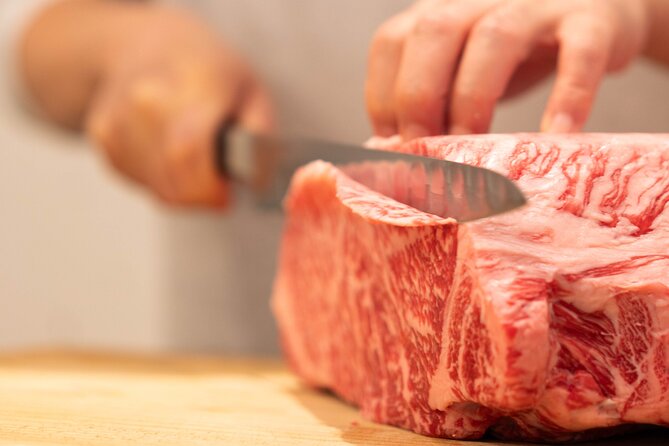
You’ll also get a butchery demonstration to show how the cuts are prepared for cooking. This matters more than it sounds. When you watch how the beef is handled and sectioned, you start to understand that the cooking result depends on more than fat percentage. It also depends on how the meat has been cut and what that does to heat distribution.
The payoff: when you cook, you’re not just following steps. You’re making decisions with context—like how aggressively you should manage heat, and what to watch for in the texture as it cooks.
A small drawback here: if you already know the cut basics, you might move through the early explanation faster than you’d like. But even if you’re an experienced home cook, the grading and the cut-to-cooking connection are usually still worth your time.
Butchery to stove: turning lessons into heat control
Once you move into cooking, the class gets practical quickly. You’ll learn proper ways to cook Wagyu, with emphasis on:
- temperature control, and
- timing.
Wagyu is not like a “cook it however, it’s still tasty” cut. The fat-rich nature can fool you. If heat is too high or timing is off, the result can go sideways fast—either overly cooked or cooked unevenly. This is where the class’s structure pays off: you’ve already learned what you’re cooking, so the technique isn’t abstract.
Mike’s guidance (and the way the session is designed) is about helping you avoid guesswork. Expect instruction that translates to your home kitchen, like how to think about doneness and how to stay consistent while you cook multiple cuts.
If you enjoy hands-on cooking, you’ll feel a nice momentum here. If you’re nervous in the kitchen, don’t worry too much—this class is set up for you to practice with help, not to be thrown into a solo cooking challenge.
Readers also shortlisted these Tokyo bookings:
- Ramen & Gyoza Cooking Class in Tokyo with Local Supermarket Visit★ 5.0 · 823 reviews
- Tokyo: Easy Ramen Cooking Experience in Kabukicho, Shinjuku★ 4.6 · 321 reviews
- Ramen and Sushi Cooking Class with Sake Pairing Set in Tokyo★ 5.0 · 291 reviews
- Tokyo: Wagyu and 7 Japanese Dishes Cooking Class★ 4.9 · 273 reviews
- Tokyo Washoku 4-hour Cooking Class: From Market to Table★ 5.0 · 253 reviews
Cooking yourself: chef help, multiple cuts, and what to watch for
This is where the experience becomes yours. You’ll get to cook Wagyu yourself, with chefs’ help. The class setup encourages you to compare results—especially because you’ll be working with different cuts and then tasting what you made.
From what’s described, you’ll likely handle more than one preparation method or cut. The point isn’t repetition for its own sake. It’s comparison. Wagyu can taste similar when everything is cooked to a generic “medium-ish,” but it changes when you treat each cut with the right timing and heat.
Here’s what I’d watch for as you cook, so you leave with something you can repeat:
- Pay attention to how quickly the beef responds to heat.
- Notice how the smell changes as fat renders (and avoid chasing “more is better”).
- Keep seasoning deliberate and consistent, because your seasoning choices affect how you judge doneness and texture later.
When the class is done cooking, you’ll move straight to tasting. That flow is smart. It reduces the chance that you remember the theory but forget what it tasted like.
Taste test time: comparing your dishes with beverage pairings
After cooking, you’ll taste your dishes. They’re paired with beverages that complement Wagyu’s flavor. I like this approach because it teaches you something practical: pairing isn’t just about romance. It’s about balancing fat richness and making the next bite feel as good as the first.
Because you’re tasting cuts you cooked, your memory anchors to effort. You’ll connect what you did—heat control, timing, cut choice—with what you experienced on the plate. That’s the kind of learning you actually carry home.
The class also wraps by talking about Wagyu’s role in Japanese culture. This part matters because Wagyu isn’t only a food fad. It’s tied to how Japanese kitchens treat ingredients: respect, careful technique, and a focus on subtlety rather than loud flavors.
Tokyo food-culture pointers you can use on your next meal
Even though this is a cooking-focused tour, the best Tokyo food experiences give you more than recipes. You leave with a framework for ordering, shopping, and cooking.
Here are practical takeaways you can expect to use:
- How to think about cut choice instead of just buying the most famous steak.
- How to manage heat so the rich fat behaves the way you want.
- How to adjust timing so you hit the texture you’re aiming for.
- A better sense of how Japanese culinary culture values ingredient handling and precision.
And because the class is led by a local guide, you often get extra Tokyo guidance that goes beyond the stovetop. In at least one experience, the guide Mike was singled out for food and activity recommendations. Even if your own priorities differ, it’s smart to ask for a short list of where to eat nearby after class, so you don’t waste your best hunger on a tourist-style dinner.
Price and value: what $920 buys (and what it doesn’t)
Let’s talk value plainly. At $920 for about two hours, this is not an economy move. But in a market where high-end beef and guided culinary instruction can get expensive fast, the question is: are you paying only for meat?
You’re paying for several things at once:
- expert instruction on Wagyu cuts and grading,
- a butchery demonstration,
- hands-on cooking with help,
- tasting of what you cook,
- and beverage pairings,
- plus the benefit of a very small group.
That small group part is a big value driver. With only six people, you’re more likely to get direct feedback while you cook, which is hard to replicate on your own later.
What it doesn’t buy you is time. You won’t leave with years of restaurant training. It’s a concentrated workshop. If you’re the type who wants to return repeatedly to the same craft, this might be a starting point. If you just want a quick steak meal, you’ll probably feel this is pricier than it needs to be.
My best-fit advice: if you care about technique and you want to eat something you understand, it can feel worth it. If you’re only after the taste and don’t want hands-on work, look for a standard tasting instead.
Who should book this Wagyu cooking class
This is a strong match for:
- food lovers who like learning by doing,
- home cooks who want better steak results (especially managing doneness and timing),
- people curious about how Tokyo food culture approaches ingredients,
- and anyone who enjoys small-group classes with a local guide.
It’s less ideal if:
- you dislike cooking or feel anxious around stoves,
- you’re traveling on a strict budget,
- or you want a long, slow, full-day sightseeing itinerary.
Also, if you have dietary restrictions, let them know. The class notes that they can accommodate. That’s a key detail because it turns the experience from “maybe works” into “planable.”
FAQ
Will I need a print ticket?
No. You’ll use a mobile ticket.
How long is the Tokyo Wagyu Culinary Tour Cooking Culture and Tasting?
It runs for about 2 hours.
Where does the experience start?
It starts at 3-chōme-25-17 Oshiage, Sumida City, Tokyo 131-0045, Japan.
How big is the group?
The maximum group size is 6 travelers.
What happens at the start of the class?
You’re greeted with a welcome drink inspired by seasonal Japanese flavors.
Are dietary restrictions accommodated?
Yes. Let them know when booking, and they’ll accommodate.
What is the cancellation policy?
Free cancellation is available up to 24 hours in advance for a full refund. If you cancel within 24 hours, there’s no refund.
Should you book Tokyo Wagyu Cooking Culture and Tasting?
Book it if you want more than steak flavor—you want the logic behind the cuts and the technique to cook Wagyu with better heat control and timing at home. The small-group size, the butchery-to-stove teaching flow, and the chance to cook and taste what you make are what justify the splurge.
Skip it if you’re mainly looking for a cheap meal or you don’t want hands-on cooking. This class is built for participation, not passive eating.
If you fall in the middle—curious, hungry, and willing to learn—this is exactly the kind of Tokyo experience that gives you something lasting: a method, not just a memory.
More Food & Drink in Tokyo
- Tokyo: Shinjuku Food Tour (13 Dishes at 4 Local Eateries)
★ 5.0 · 6,603 reviews - Tokyo Tsukiji Fish Market Food and Culture Walking Tour
★ 5.0 · 3,184 reviews - Tokyo: Shinjuku Food Tour (15 Dishes and 4 Eateries)
★ 4.9 · 2,033 reviews - Best of Shinjuku: Izakaya Food Tour (4 Stops, 14+ Tastings)
★ 5.0 · 1,863 reviews - Tokyo: Tsukiji Fish Market Food and Walking tour
★ 5.0 · 1,724 reviews
More Tours in Tokyo
- Mt Fuji and Hakone 1-Day Bus Tour Return by Bullet Train
★ 5.0 · 26,383 reviews - 1-Day Tokyo Bus Tour
★ 5.0 · 14,250 reviews - Tokyo: Shinjuku Food Tour (13 Dishes at 4 Local Eateries)
★ 5.0 · 6,603 reviews - Tokyo Mt Fuji 5th St & Hakone Cruise Bus Tour w/Bullet Train
★ 4.4 · 5,024 reviews - Flagship 2-Hours Official Street Go-Kart Tour – Tokyo Bay Shop
★ 5.0 · 4,974 reviews
More Tour Reviews in Tokyo
- Mt Fuji and Hakone 1-Day Bus Tour Return by Bullet Train
★ 5.0 · 26,383 reviews - 1-Day Tokyo Bus Tour
★ 5.0 · 14,250 reviews - Tokyo: teamLab Planets TOKYO Digital Art Museum Entry Ticket
★ 4.6 · 9,779 reviews - Mt Fuji & Hakone Cruise, Drum Show Bullet Train 1 Day from Tokyo
★ 4.0 · 7,413 reviews - Tokyo: Shinjuku Food Tour (13 Dishes at 4 Local Eateries)
★ 5.0 · 6,603 reviews
Latest Tokyo reviews off our desk




Cooking Classes, compared.
 ★ 5.0Ramen & Gyoza Cooking Class in Tokyo with Local Supermarket VisitFrom $122823 reviews
 ★ 4.6Easy Ramen Cooking Experience in Kabukicho, ShinjukuFrom $29321 reviews
 ★ 5.0Ramen and Sushi Cooking Class with Sake Pairing Set in TokyoFrom $79291 reviews
 ★ 4.9Wagyu and 7 Japanese Dishes Cooking ClassFrom $67273 reviews
 ★ 5.0Tokyo Washoku 4-hour Cooking Class: From Market to TableFrom $79253 reviews
 ★ 5.0Small-Group Wagyu Beef and 7 Japanese Dishes Tokyo Cooking ClassFrom $72190 reviews
 ★ 5.0Private Home Cooking in Yanaka – Local Flavors in a Warm SettingFrom $122173 reviews
 ★ 5.0Tokyo Sushi Making Experience & Japanese Cooking ClassFrom $59150 reviews
Browse the lists this tour appears in