
Reviewed · ASAKUSA & SENSOJI TOURS
Tsukiji and Asakusa Food and Drink Cultural Walking Tour (Half day)
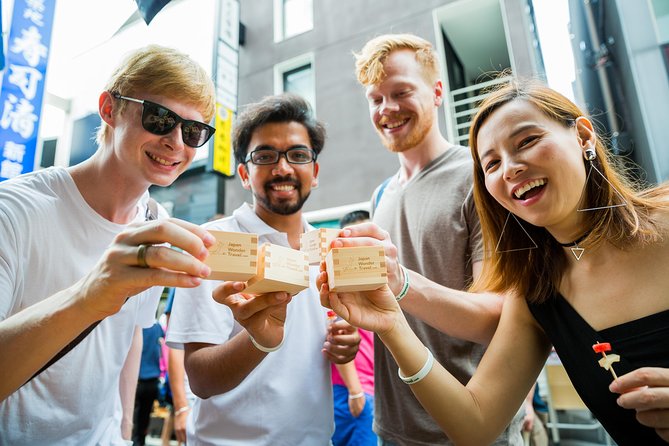
Tokyo eats better with a guide. This half-day walk pairs Tsukiji’s outer-market food scene with Asakusa temple-and-street atmosphere, so you get real flavors instead of guessing what’s good. I really like the insider route through the outer market (including market culture like dried bonito and fresh tuna) and the hands-on tasting set—think fried fish cakes and sake—so it truly feels like lunch. One possible drawback: with market conditions changing day to day, the exact shops and menu items can shift, so be ready to be flexible if you have strict food preferences.
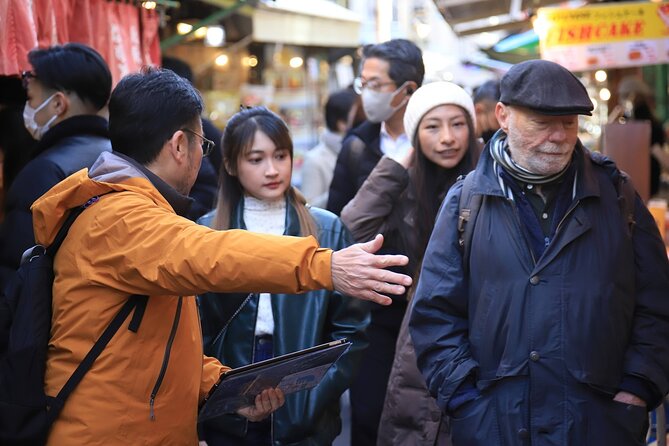
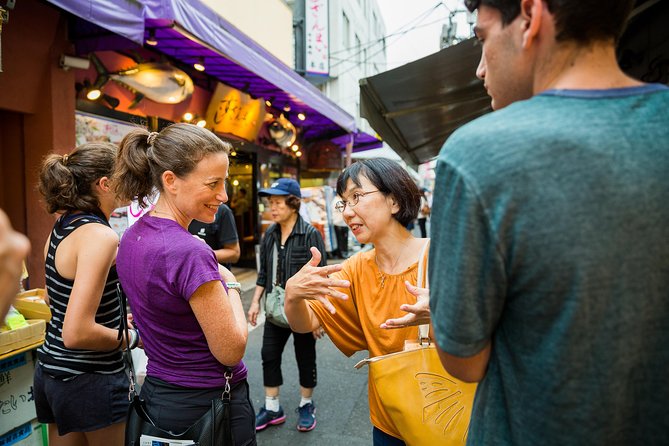
I also appreciate the pace: it’s active but not a full day, and there are structured breaks where you can sit, eat, and reset. The small group matters here. With a maximum of 20 people, you’re not stuck far back from the action while the guide explains what you’re tasting and where it fits in Japanese food culture.
In This Review
- Key things I’d bookmark before you go
- Tsukiji and Asakusa in one half day: the smart Tokyo combo
- Starting at Tsukiji Hongwan-ji: setting the scene at 8:15 a.m.
- The outer Tsukiji jogai market: where the tastings teach you something
- Sake rules you should know up front
- Exploring the fish market shops: 400 stops in one hour
- Tsukiji temple break to Asakusa transfer: shifting from fish to tradition
- Nakamise and Senso-ji: the classic sightseeing that fits the food theme
- Asakusa sweets at the cafe: your payoff after market eating
- Price and value for $164: what you’re really paying for
- Who should book this tour (and who should skip it)
- Small practical tips to make the food taste better
- Should you book Tsukiji and Asakusa? My quick call
- FAQ
- How long is the Tsukiji and Asakusa food and drink walking tour?
- What time does the tour start, and where do you meet?
- Where does the tour end?
- How many people are in the group?
- What food and drinks are included?
- Is there an age limit for alcohol?
- What should I do if I need to cancel?
Key things I’d bookmark before you go
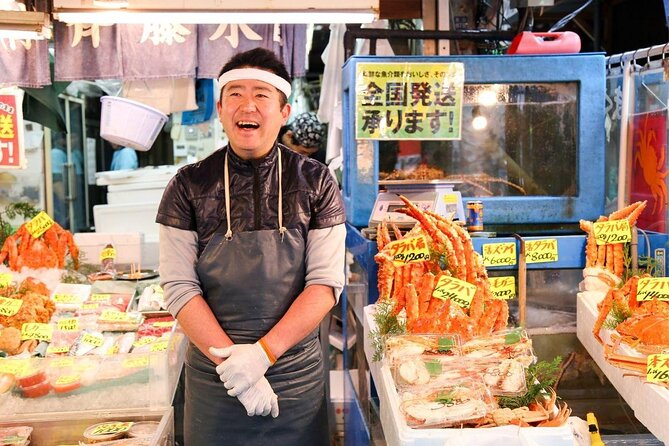
- Outer Tsukiji access, early: You start at Tsukiji Hongwan-ji and move through the market with a plan.
- A tasting menu that adds up to lunch: You sample enough to cover a proper meal’s worth of bites.
- Sake plus tea tastings: Not just snacks—there’s a drinks education angle too.
- Asakusa sweets after the fish: Nakamise Street and Senso-ji area keep the day balanced, not all seafood.
- Menu changes are real: Items depend on availability and season, so go with the flow.
- Small group size (max 20): Easier listening, less wandering, and more time to ask questions.
Tsukiji and Asakusa in one half day: the smart Tokyo combo
Tokyo has food everywhere, but this tour makes the city simpler. You get two different kinds of flavor culture in about five and a half hours: Tsukiji for ingredient-first street eating, then Asakusa for classic temple-town sweets.
Tsukiji is about seeing (and tasting) how people buy and use seafood. The outer area is the place where you’ll find those ready-to-eat bites—plus ingredients that chefs track down for serious cooking. Asakusa shifts gears. You’re walking famous streets near Kaminarimon and Senso-ji, then finishing with Japanese sweets at a cafe so your stomach gets a change of pace after market foods.
The value here is the structure. Without a guide, it’s easy to snack randomly. With this, you’re walking a sequence that connects food to place, and you’re tasting multiple items rather than pinning your day on one lucky stall.
More temple mornings in old Asakusa
- Tokyo: Japanese Dance Cabaret Theater Asakusa-Kaguwa Ticket
★ 4.8 · 2,270 reviews - Tokyo: Meiji Shrine, Asakusa, Skytree Bus Tour and Cruise
★ 4.7 · 1,986 reviews - Tokyo: Roll and Authentic Sushi Making Class in Asakusa
★ 4.9 · 1,957 reviews - Tokyo: Asakusa Walking Tour with Sensoji Temple Visit
★ 4.8 · 1,583 reviews
Starting at Tsukiji Hongwan-ji: setting the scene at 8:15 a.m.
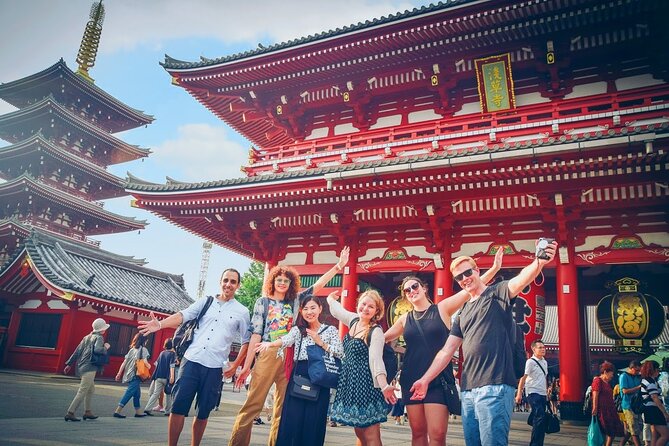
You meet at Tsukiji Hongan-ji Temple at 8:15 a.m. The timing is a big part of the experience. It gets you into the Tsukiji area when energy is high and before you’ve been stuck in Tokyo-level morning lines for too long.
The stop itself is short—around 15 minutes—but it works as a cultural landing pad. You’re not just wandering into a market chaos cloud. You begin at a temple tied to the Tsukiji area and then transition straight into market life.
Practical tip: wear shoes you trust. You’ll be on your feet for much of the walk, and market areas usually mean uneven surfaces and constant foot traffic. If you’re the type who likes to stop to take photos every 30 seconds, this tour still works—you just need to keep moving so you don’t fall behind.
The outer Tsukiji jogai market: where the tastings teach you something
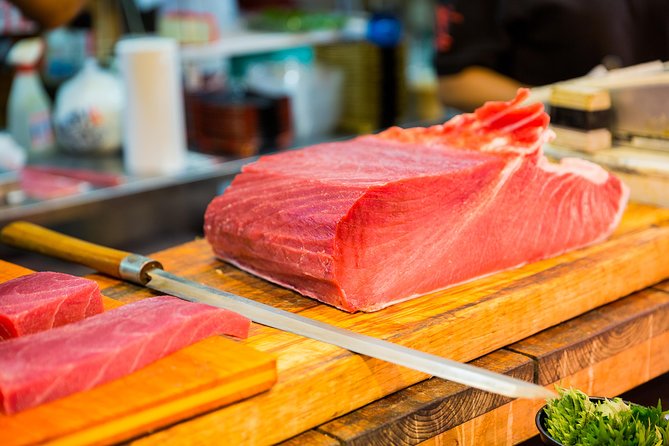
This is the heart of the tour—about two hours focused on the outer market. Even locals see Tsukiji as a special place to buy top-quality seafood and ingredients, and chefs are frequent buyers too. That chef connection is part of why these foods matter: you’re not just tasting snacks; you’re tasting the raw materials Japanese cooking depends on.
The menu set is built from classic market foods, and the exact items can vary with what’s available. Expect a mix like:
- Japanese-style omelette
- dried bonito
- Japanese tea
- fresh tuna (when available)
- fried fish cakes
- sake
- sushi
Two things I like about this tasting approach:
- You get a range, from savory hot bites to drinks and tea.
- You learn what you’re eating, not just where it came from.
Also, keep in mind the tasting day can surprise you. One person’s “must-try” item might be swapped out because a shop has different supply or seasonal stock. That can be a plus if you like food adventures. If you’re extremely picky, you’ll want to think carefully before booking.
Sake rules you should know up front
The tour has a minimum drinking age of 20. If you’re under 20, the operator prepares another drink for you. So you don’t feel stuck ordering water while everyone else does tastings.
Exploring the fish market shops: 400 stops in one hour
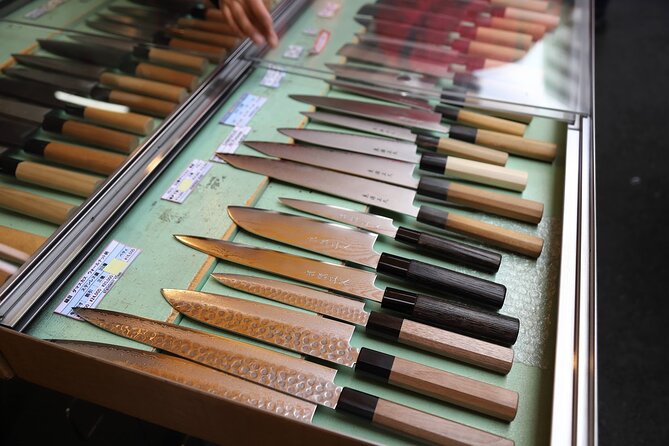
After the main tasting block, you move into the broader Tsukiji fish market area and explore a massive number of shops—around 400—over about an hour. This part is less about sitting down and more about getting your bearings.
What makes it useful isn’t that you’ll see everything (you won’t). It’s that you’ll learn how Tsukiji is laid out and how people move through it. You start to understand why certain stalls, ingredients, and food types dominate the market vibe.
There’s also a good chance you’ll come away with practical questions you can ask on your own afterward—like how to spot quality, what types of ingredients to look for, and what to avoid if you don’t eat certain seafood styles.
A note on pace: this section can feel like a fast walk through dense places. If you want a slower photo safari, tell yourself now you’ll do some photos from your comfortable “walking speed,” not from a stop-every-5-feet mentality.
More market breakfasts our reviewers scored
- Tokyo Tsukiji Fish Market Food and Culture Walking Tour★ 5.0 · 3,184 reviews
- Tokyo: Tsukiji Fish Market Food and Walking tour★ 5.0 · 1,724 reviews
- Tokyo: Tsukiji Fish Market Guided Walking Tour★ 4.9 · 1,397 reviews
- Tokyo Sushi Making Class in Tsukiji with Professional Chef★ 5.0 · 1,177 reviews
- Tsukiji Fish Market Guided Tour and Sushi Making with Pro Chef★ 5.0 · 775 reviews
Tsukiji temple break to Asakusa transfer: shifting from fish to tradition
Between Tsukiji and Asakusa, you’re basically changing themes. The day moves from the food-ingredient intensity of the market to the temple-town feel of eastern Tokyo.
You’ll stop at the Asakusa Culture Tourist Information Center for about 10 minutes. This isn’t just a rest marker. It’s a helpful place to get your bearings for the classic Asakusa route afterward. Even if you already know the landmarks, it helps to align your mental map before you hit the shopping street.
Then you continue to the Nakamise Shopping Street near Kaminarimon. This oldest-style street is short—about 15 minutes in the flow—but it’s where you’ll get that “I’m in the old Tokyo corridor” feeling quickly.
Nakamise and Senso-ji: the classic sightseeing that fits the food theme
You’ll pass by the biggest temple, Senso-ji, for about 30 minutes. The tour keeps it efficient: enough time to see the scale, catch key views, and feel the historic center of gravity.
What makes these temple stops useful on a food tour is that they contextualize the sweets and snack culture. Asakusa isn’t just sightseeing; it’s where people come for food you can carry, share, and nibble while walking.
And that’s exactly what the route sets you up for.
Asakusa sweets at the cafe: your payoff after market eating
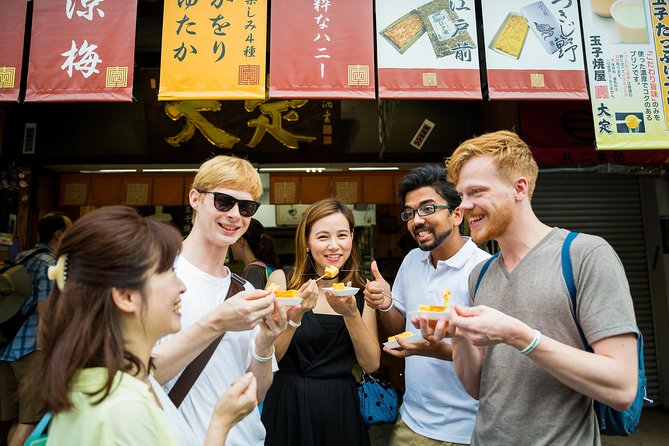
The final stretch takes you deeper into Asakusa (traditional town atmosphere) and includes Japanese sweets at a cafe. This part runs about 1 hour 20 minutes and ends around the Asakusa Information Center so you can continue onward easily.
This is where the tour balances itself. Market foods can be heavy—especially with fried bites and alcohol. The sweets stop gives you a different texture and flavor profile, and it’s a good time to slow down a notch.
From a practical standpoint, the cafe stop also helps you manage the day. You’re not constantly standing and holding plates. You can eat calmly, check your map, and decide what you still want to explore after the tour.
If you enjoy browsing shops a bit along Nakamise, you’ll likely like having that short, allowed window to pick up a treat or two for later.
Price and value for $164: what you’re really paying for
At $164 per person for about 5.5 hours, this isn’t a budget snack crawl. You’re paying for three main things:
- Guided access and pacing in two high-interest areas
- A structured tasting set that’s more than a couple of samples
- Cultural explanation that connects the foods to how Japanese people eat and buy ingredients
If you tried to replicate it on your own, you’d have to spend time figuring out which stalls to trust, where to go next, and how to fit seafood tastings and Asakusa sweets into one smooth route. This tour removes that guesswork.
Also, the group size cap (max 20) is part of the value. You’re less likely to feel like a number in a long line of people.
Where value can drop for some people: if the menu swaps happen in a way that doesn’t match your personal favorites. Since the tour notes that items are subject to availability and season, your “ideal food lineup” isn’t guaranteed like a printed menu at a restaurant.
Who should book this tour (and who should skip it)
This is a great fit if:
- you want a guided path through outer Tsukiji without stress
- you like tasting multiple food types in one sitting
- you want a day that mixes food with quick, real landmark context (temple town plus market culture)
- you like small group energy and the chance to ask questions while eating
It might be less ideal if:
- you have extremely strict dietary rules and need one specific item every stop
- you dislike walking and standing for long stretches
- you want fully customizable food choices at your own speed
One more note from real-world experience in Japan: guides matter. Different tour leaders can change the vibe. I’ve seen names like Naoko, Meiko, Hiro, Tak, Yoko, Asaka, Sayo, and Yuriko tied to this kind of outing, and the common thread is enthusiasm for food-and-culture. Still, if you’re booking primarily for food nerd detail, choose the day you’ll be in a mindset to learn and try.
Small practical tips to make the food taste better
- Come hungry, but not empty. The tastings are meant to add up to lunch, so plan accordingly with breakfast.
- Shoes win. Walking shoes are recommended for a reason—market areas plus Asakusa streets add up.
- Expect a few standing moments. Even with short sitting breaks, market flow is fast.
- Be flexible with what you eat. The tour says menu items can change depending on availability and season, so you’ll enjoy it more if you treat the list as a guide, not a contract.
- If you drink sake, pace it. You’re sampling, not just ordering one drink, and you’ll still be walking through Asakusa right after.
Should you book Tsukiji and Asakusa? My quick call
If you want the best of Tokyo food culture in one half day, I’d book it—especially if you’ll be in the city a short time and don’t want to waste hours hunting for the right stalls.
I’d hesitate only if you’re the kind of eater who needs the exact same menu every day, or if you’re uncomfortable with active walking in crowded market corridors. Also, while the tasting plan includes classic items like fried fish cakes, sushi, sake, and tea, the day’s availability can steer what you actually get.
In short: book this tour if you like structured tastings and want a smoother path through Tsukiji and Asakusa than you’d get solo.
FAQ
How long is the Tsukiji and Asakusa food and drink walking tour?
It runs about 5 hours 30 minutes.
What time does the tour start, and where do you meet?
You meet at 8:15 a.m. in front of Tsukiji Hongan-ji Temple, at 3-chōme-15-1 Tsukiji, Chuo City, Tokyo 104-8435.
Where does the tour end?
It ends around the Asakusa Information Center area, at 2-chōme-18-9 Kaminarimon, Taito City, Tokyo 111-0034.
How many people are in the group?
The maximum group size is 20 travelers.
What food and drinks are included?
You sample multiple Japanese market foods and drinks such as Japanese-style omelette, dried bonito, Japanese tea, fresh tuna (when available), fried fish cakes, sake, and sushi. Items can change based on availability and season.
Is there an age limit for alcohol?
Yes. The minimum drinking age is 20, and if you’re under 20 the operator prepares another drink.
What should I do if I need to cancel?
You can cancel for a full refund if you cancel at least 24 hours before the experience’s start time. If you cancel less than 24 hours before, the amount paid isn’t refunded.
More Tour Reviews in Tokyo
- Mt Fuji and Hakone 1-Day Bus Tour Return by Bullet Train
★ 5.0 · 26,383 reviews - 1-Day Tokyo Bus Tour
★ 5.0 · 14,250 reviews - Tokyo: teamLab Planets TOKYO Digital Art Museum Entry Ticket
★ 4.6 · 9,779 reviews - Mt Fuji & Hakone Cruise, Drum Show Bullet Train 1 Day from Tokyo
★ 4.0 · 7,413 reviews - Tokyo: Shinjuku Food Tour (13 Dishes at 4 Local Eateries)
★ 5.0 · 6,603 reviews
More Tsukiji Market Breakfasts
- Tokyo Tsukiji Fish Market Food and Culture Walking Tour
★ 5.0 · 3,184 reviews - Tokyo: Tsukiji Fish Market Food and Walking tour
★ 5.0 · 1,724 reviews - Tokyo: Tsukiji Fish Market Guided Walking Tour
★ 4.9 · 1,397 reviews - Tokyo Sushi Making Class in Tsukiji with Professional Chef
★ 5.0 · 1,177 reviews - Tsukiji Fish Market Guided Tour and Sushi Making with Pro Chef
★ 5.0 · 775 reviews
More Mornings in Old Asakusa
- Tokyo: Japanese Dance Cabaret Theater Asakusa-Kaguwa Ticket
★ 4.8 · 2,270 reviews - Tokyo: Meiji Shrine, Asakusa, Skytree Bus Tour and Cruise
★ 4.7 · 1,986 reviews - Tokyo: Roll and Authentic Sushi Making Class in Asakusa
★ 4.9 · 1,957 reviews - Tokyo: Asakusa Walking Tour with Sensoji Temple Visit
★ 4.8 · 1,583 reviews - Tokyo Asakusa Rickshaw Tour
★ 5.0 · 1,375 reviews
Latest Tokyo reviews off our desk

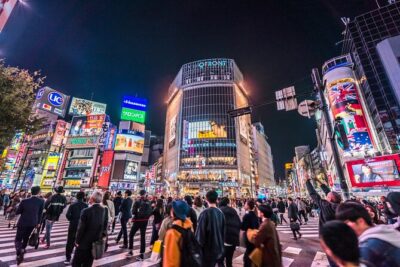
Asakusa & Sensoji Tours, compared.
 ★ 4.8Japanese Dance Cabaret Theater Asakusa-Kaguwa TicketFrom $492,270 reviews
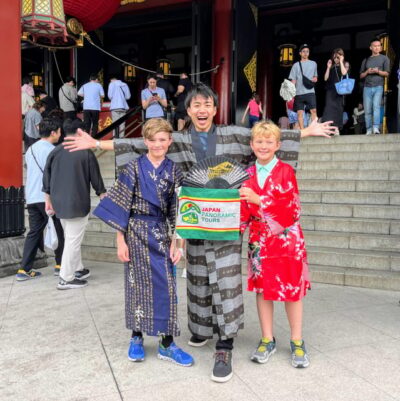 ★ 4.7Meiji Shrine, Asakusa, Skytree Bus Tour and CruiseFrom $1221,986 reviews
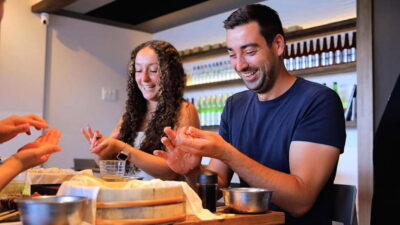 ★ 4.9Roll and Authentic Sushi Making Class in AsakusaFrom $581,957 reviews
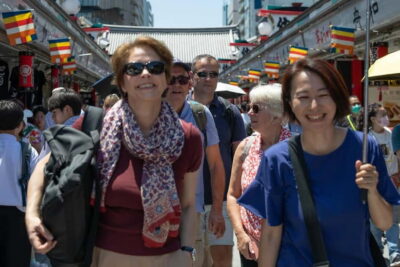 ★ 4.8Asakusa Walking Tour with Sensoji Temple VisitFrom $221,583 reviews
 ★ 5.0Tokyo Asakusa Rickshaw TourFrom $421,375 reviews
 ★ 4.5Tokyo Panoramic 1 Day: Meiji Shrine, Asakusa, Odaiba and SKYTREE®From $851,222 reviews
 ★ 5.0Tokyo Go Kart: Asakusa, Skytree, and Akihabara **IDP MUST**From $99988 reviews
 ★ 4.7Asakusa, Skytree & Akhihabara Go-Kart City ExperienceFrom $96761 reviews
Browse the lists this tour appears in