
Reviewed · KIMONO & PHOTO SESSIONS
Turn Antique Kimono into Take-Home Interior Art
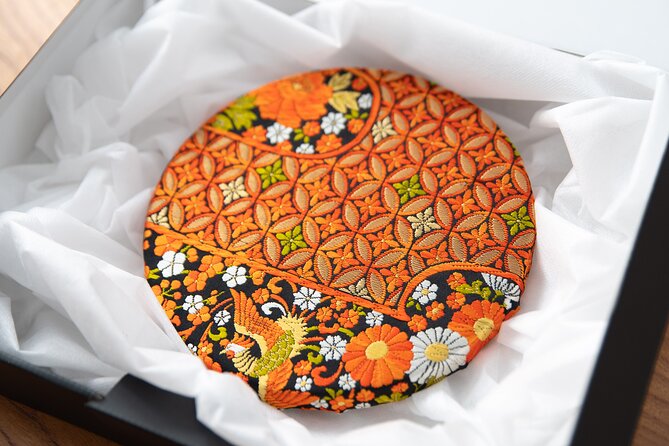
A beautiful textile only gets one chance to be made meaningful. In this Tokyo workshop, you pick an antique kimono and turn it into a take-home interior artwork. I love the way the class is hands-on and personal, not a quick demo—plus you get to choose from 200+ antique kimono options. One consideration: since this is a crafting session, you’ll want to be comfortable sitting and focusing for about 90 minutes (and you’re responsible for getting there).
This takes place in an art gallery on Meguro Interior Street, at Atelier + Gallery QUADROJapan in Shimomeguro. The vibe is intimate and welcoming, and the guidance you get from Lena-san is patient and design-focused, with explanations that connect the patterns to Japanese seasonal symbolism. The practical win is that your finished piece is included, so you leave with something you can actually display.
Logistics are straightforward: you get a mobile ticket, the max group size is 5, and it runs about 1 hour 30 minutes. The main drawback is that transportation isn’t included, so plan your route ahead since you’re going to a specific address in Tokyo. (Good news: it’s near public transportation, and service animals are allowed.)
In This Review
- Key highlights you should know before you go
- Turning Antique Kimono Into Interior Art in Tokyo’s Meguro
- Inside the 90-Minute Flow: How Your Piece Comes Together
- Choosing Patterns Like a Designer (Not Just Like a Shopper)
- What the Traditional Techniques Lesson Adds (And What It Doesn’t)
- Your Studio Session: Attaching Fabric With Guidance
- What You Take Home: A Meaningful Interior Panel (Not a Temporary Craft)
- Price and Value: Is $97.73 a Good Deal?
- Who This Workshop Suits Best (And Who Might Skip It)
- The Practical Stuff: Timing, Location, and Getting There
- Should You Book This Kimono-to-Interior-Art Workshop?
- FAQ
- Where is the workshop meeting point?
- How long does the experience last?
- How much does it cost?
- What will I make, and can I take it home?
- What do I choose during the workshop?
- Is transportation included?
- How many people are in the group?
- Are service animals allowed?
- What if I need to cancel?
Key highlights you should know before you go
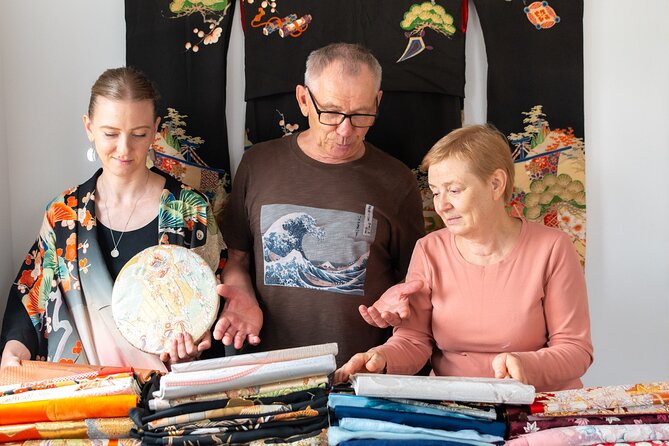
- Pick your kimono from 200+ antique choices and choose colors/patterns that speak to you.
- Learn the pattern and season meanings so your artwork has context, not just looks.
- Work at your own pace with step-by-step help while Lena-san guides design decisions.
- Traditional techniques, explained simply (dyeing/weaving/hand-painting are discussed).
- Small group size (max 5) makes it feel more like a studio session than a factory tour.
- Take-home finished interior art is included, with no extra materials shopping.
Turning Antique Kimono Into Interior Art in Tokyo’s Meguro
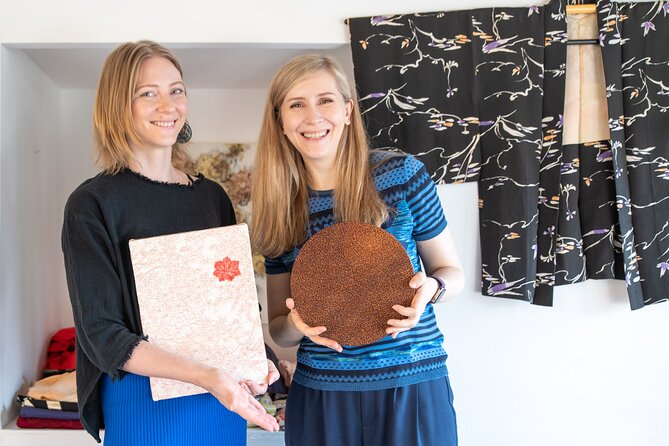
If you’re the type who likes souvenirs you’ll actually use, this workshop is a strong fit. Instead of buying something mass-produced, you’re transforming fabric that already has age and character into something that fits your space now.
The setting helps. The workshop happens in an art gallery on Meguro Interior Street, so it feels like you’re stepping into a creative neighborhood, not doing a generic activity. And because the group is capped at five, you’re not rushing through choices while strangers crowd your view of the textiles.
The core idea is built around ichigo ichie—the Japanese concept of treasuring an encounter as if it won’t happen again. Here, that translates into picking the kimono that catches your eye and then treating it like a one-of-one collaboration between you and the fabric. You’re not just selecting a pretty pattern; you’re making a personal decision that becomes part of the finished piece.
I also like that the class is positioned as sustainable and creative. You’re working with kimono you no longer wear, and you’re giving the fabric a second life as interior art. It’s the kind of souvenir that doesn’t feel like clutter because it’s designed to be displayed.
More kimono shoots, compared
- Tokyo: Kimono Dressing, Walking, and Photography Session
★ 4.9 · 427 reviews - Let’s make kimono !(Kimono is a gift for you
★ 5.0 · 252 reviews - Tokyo: Matcha and Kimono Experience
★ 4.7 · 219 reviews - Tokyo: Asakusa Kimono Dressing and Matcha Experience
★ 4.9 · 173 reviews
Inside the 90-Minute Flow: How Your Piece Comes Together
This is an approximately 1 hour 30 minutes session, so the pacing is tight but not frantic. The goal is that you finish your original work and take it home the same day.
Here’s the order of what happens, based on how the experience is described:
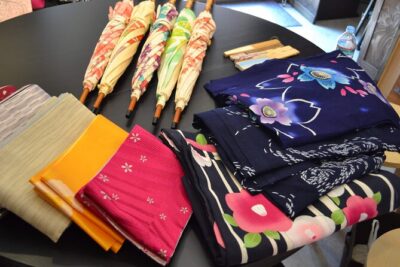
First, you select your favorite colors and patterns from a collection of more than 200 antique kimonos. This is usually the emotional part of the workshop. You’ll likely spend the most time here, because antique kimono patterns can feel subtle and layered—like you’re picking from multiple versions of the same theme, each with its own tone.
Next, you’ll get guidance on the historical background and the symbolic meaning tied to your chosen pattern. The workshop doesn’t treat pattern explanation as a lecture. It’s meant to add value to your choice so the final panel becomes more than decorative fabric.
After that, the class moves into traditional technique talk—dyeing, weaving, and hand-painting techniques are introduced. Even if you’ve never studied textiles, this part is useful. It helps you understand why antique kimono fabric can look the way it does, and why certain details feel meaningful.
Then comes the make-it-yourself part. Using traditional Japanese backing techniques, you attach the selected fabric to the panel. You get tips at each step. The hands-on emphasis matters because you’re creating an artwork you can genuinely claim as yours, not just something you watched someone else assemble.
Finally, your finished product is included, and the activity ends back at the meeting point. In other words: you’re not waiting around for a later pickup or shipment.
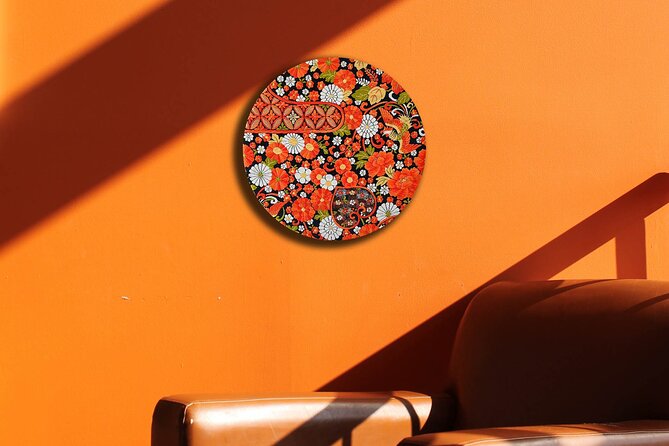
One extra detail I appreciate from the studio feedback: you typically choose a pattern first, then decide on a frame style—rectangle or round canvas. That gives you a quick, tangible way to personalize the final look without needing special artistic training.
Choosing Patterns Like a Designer (Not Just Like a Shopper)
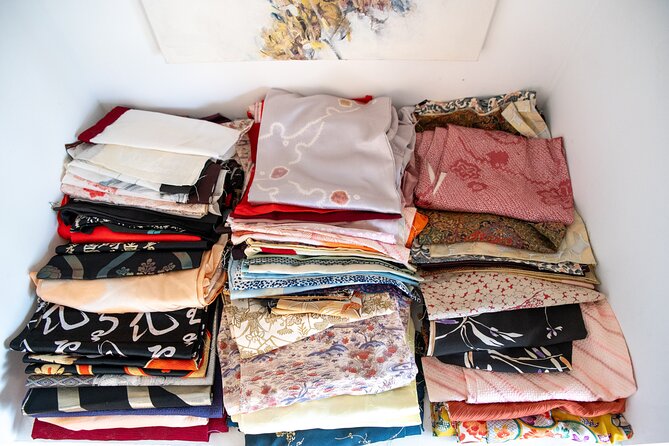
In most souvenir shops, you pick what looks good quickly. In this workshop, you’re encouraged to choose with intention. That starts with selecting colors and patterns from the antique collection, but it continues with the meaning behind the design.
The symbolic meaning part is where this workshop becomes more satisfying. The experience includes background on the patterns you pick and also explains season symbolism in Japan. That’s especially relevant because many Japanese motifs connect to the time of year—what people value, what they hope for, and what they notice in nature.
You don’t need to be a “Japan expert” to enjoy this. It’s enough to walk away understanding what your motif is commonly associated with, and why it might resonate with you personally. If you love details in art, this is the section you’ll remember when you hang the panel at home.
Another thing I like: you don’t just get “your pattern, good luck.” Lena-san’s guidance is described as patient and friendly, with thoughtful design advice. That matters because turning fabric into a finished interior piece requires decisions—how the fabric sits on the panel, how the composition looks, and how to make it feel balanced.
What the Traditional Techniques Lesson Adds (And What It Doesn’t)
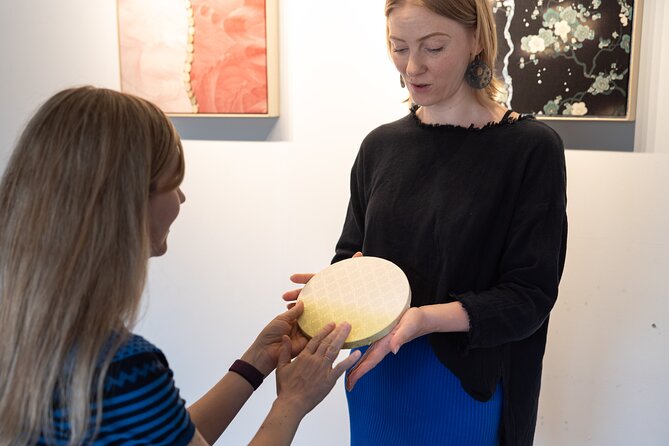
The workshop includes introductions to traditional kimono techniques such as dyeing, weaving, and hand-painting. That could sound academic, but in this kind of class, it usually works better as context.
Here’s how it helps you as a participant:
- You start to see textures and craftsmanship instead of just pattern images.
- You understand why antique fabric can have depth—shifts in color, variations in print/paint, and how threads or dye effects show up under different light.
- When you attach fabric to a panel, your choices make more sense. You’re not only copying a layout; you’re working with a material that has its own behavior.
At the same time, you should expect this to stay practical. There’s no indication you’ll spend your session doing advanced textile engineering. The point is to connect the history and meaning to what you’re actively making in front of you.
Your Studio Session: Attaching Fabric With Guidance
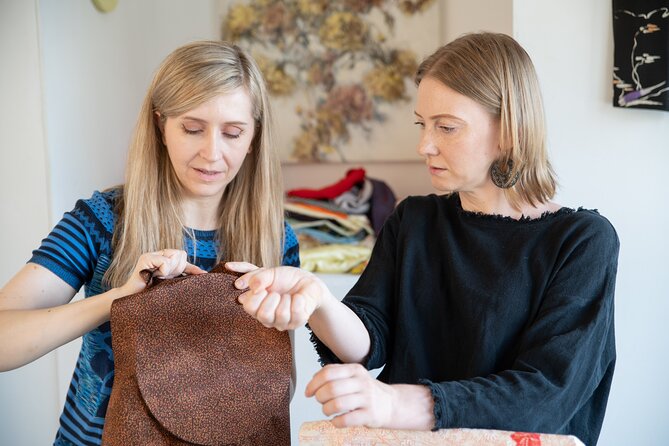
This is the heart of the workshop. You’ll use the selected fabric and attach it to the panel using traditional Japanese backing techniques. You get tips for each step, so you’re not left guessing.
Even though you’re making something, the class doesn’t frame it as “be an artist.” It’s more like guided craftsmanship. That’s a good approach for most people, including if you’ve never worked with fabric or panels before.
The studio approach also matters because you get time to make decisions. Pattern selection is one decision, but framing style matters too. Choosing rectangle or round canvas changes how the eye travels across the artwork, and it affects how the finished piece reads from a distance.
The guidance Lena-san provides is described as patient and design-supportive. That kind of attention is a big part of why many people remember this as more than just a craft class. It becomes a personal experience with coaching—especially when you want the final result to look intentional.
- Tokyo: Shinjuku Food Tour (13 Dishes at 4 Local Eateries)★ 5.0 · 6,603 reviews
- Tokyo Mt Fuji 5th St & Hakone Cruise Bus Tour w/Bullet Train★ 4.4 · 5,024 reviews
- Flagship 2-Hours Official Street Go-Kart Tour – Tokyo Bay Shop★ 5.0 · 4,974 reviews
- From Tokyo: Mount Fuji Full-Day Sightseeing Trip★ 4.5 · 4,970 reviews
- Tokyo: Hop-On Hop-Off Sightseeing Bus Ticket★ 3.9 · 4,207 reviews
What You Take Home: A Meaningful Interior Panel (Not a Temporary Craft)
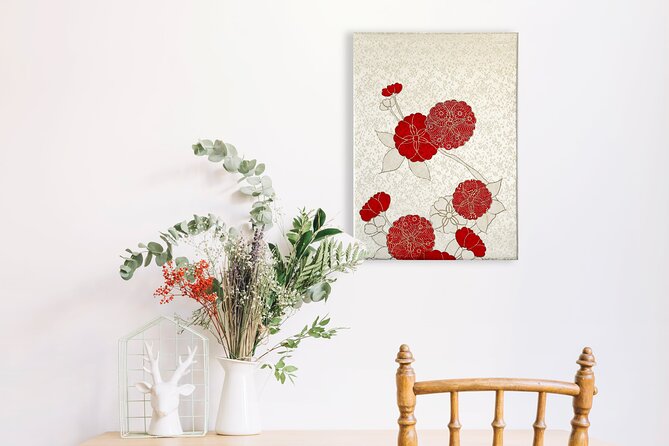
The finished product is included, and it’s designed for long-term display at home or in an office. Since you’re using antique kimono fabric, the piece has a distinct look compared to typical craft projects made from new prints.
Think about how you’ll live with it. A panel like this works well as a focal point:
- near a desk or bookshelf
- in an entryway wall cluster
- in a living room where you want a quiet conversation starter
Because it’s made from antique material, it also tends to carry “story energy.” Even without learning every detail, you can look at it and remember your selection moment and the meaning your guide explained.
I also like that this isn’t a tiny keepsake. It’s meant to be used as interior decoration. So if you’re trying to avoid dragging home another bag of magnets, this is a smarter souvenir.
Price and Value: Is $97.73 a Good Deal?
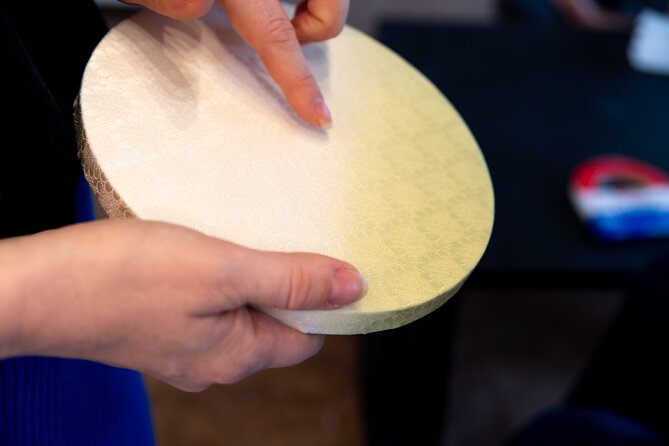
At $97.73 per person, the price feels reasonable for what you’re getting—assuming you value a finished, display-ready art piece and the coaching component.
Here’s why the value makes sense:
- Tools and materials are included (including the kimono fabric and the panel system).
- The finished product is included, meaning you’re paying for the full experience plus the artwork you take home.
- The group is small (max 5), which usually means more direct attention during the making steps.
- Duration is about 1 hour 30 minutes, so you’re not buying a half-day commitment.
The main “cost” beyond the ticket is time. If your schedule is tight, you’ll want to treat this like an appointment, not an easy drop-in.
One other practical point: on average, this is booked about 17 days in advance. That suggests it’s not always easy to grab last-minute. If your trip dates are fixed, booking earlier can save stress.
Transportation isn’t included. So your effective cost depends on how you get to Meguro. But since it’s near public transportation, that part usually isn’t painful.
Who This Workshop Suits Best (And Who Might Skip It)
This experience fits best if you want:
- a take-home artwork made from authentic antique fabric
- a workshop with small-group attention
- explanations of pattern meaning and seasonal symbolism
- a souvenir that feels personal enough to display
It’s also great if you like the idea behind ichigo ichie. You can treat the workshop like a deliberate “choose what speaks to me” moment, and then turn that choice into something you’ll see often.
Who might consider skipping? If you’re looking for a high-energy sightseeing tour with lots of location hopping, this won’t match that style. This is a studio experience. You’re making art. If you hate sitting still for crafting steps, then it might feel like more work than fun.
If you’re traveling as a couple or solo, the small group model is a win. You’ll still get the studio atmosphere without it turning into a private class (which can matter for cost and social comfort).
The Practical Stuff: Timing, Location, and Getting There
Meeting point is Atelier + Gallery QUADROJapan, 153-0064 Tokyo, Meguro City, Shimomeguro, 6-chōme 16-13 1F. The activity ends back at the meeting point.
The workshop venue is on Meguro Interior Street, which is an area popular with people interested in interior design. That’s a nice plus if you want to build a mini neighborhood plan around your session.
The tour uses a mobile ticket, and confirmation is received at booking. Service animals are allowed, and most travelers can participate.
If you’re planning your day, give yourself a little buffer. Tokyo can be fast, but finding the exact address in a specific building takes a bit of attention. Starting from a confirmed meeting point helps you get your bearings fast.
Should You Book This Kimono-to-Interior-Art Workshop?
I’d book it if you want a souvenir with real staying power. This isn’t “buy a thing.” It’s “make a piece” with guidance, plus the meaning behind the motif. The combination of choosing from a large antique selection, learning what your pattern represents, and crafting the panel with Lena-san’s support is what makes it memorable.
I’d think twice if you dislike hands-on workshops or you’re only in Tokyo for quick, big-hit sightseeing. This is best when you’re ready to slow down for a studio session and focus on one meaningful choice.
If you’re deciding between options, this one is a strong match for people who care about design, texture, and symbolism—and who want something they’ll actually hang.
FAQ
Where is the workshop meeting point?
It starts at Atelier + Gallery QUADROJapan, 153-0064 Tokyo, Meguro City, Shimomeguro, 6-chōme 16-13 1F.
How long does the experience last?
It takes about 1 hour 30 minutes (approx.).
How much does it cost?
The price is $97.73 per person.
What will I make, and can I take it home?
You’ll transform an antique kimono fabric into a take-home interior artwork. Tools, materials, and the finished product are included.
What do I choose during the workshop?
You choose your favorite colors and patterns from more than 200 antique kimonos, and you’ll also select a frame style such as rectangle or round canvas.
Is transportation included?
No. Transportation to and from the workshop venue is not included.
How many people are in the group?
The maximum group size is 5 travelers.
Are service animals allowed?
Yes, service animals are allowed.
What if I need to cancel?
You can cancel for a full refund up to 24 hours before the experience starts. If you cancel less than 24 hours before, the amount paid is not refunded.
More Tour Reviews in Tokyo
- Mt Fuji and Hakone 1-Day Bus Tour Return by Bullet Train
★ 5.0 · 26,383 reviews - 1-Day Tokyo Bus Tour
★ 5.0 · 14,250 reviews - Tokyo: teamLab Planets TOKYO Digital Art Museum Entry Ticket
★ 4.6 · 9,779 reviews - Mt Fuji & Hakone Cruise, Drum Show Bullet Train 1 Day from Tokyo
★ 4.0 · 7,413 reviews - Tokyo: Shinjuku Food Tour (13 Dishes at 4 Local Eateries)
★ 5.0 · 6,603 reviews
More Kimono Photo Shoots
- Tokyo: Kimono Dressing, Walking, and Photography Session
★ 4.9 · 427 reviews - Let’s make kimono !(Kimono is a gift for you
★ 5.0 · 252 reviews - Tokyo: Matcha and Kimono Experience
★ 4.7 · 219 reviews - Tokyo: Asakusa Kimono Dressing and Matcha Experience
★ 4.9 · 173 reviews - Asakusa: Kimono Tea Ceremony with Matcha and Sweet
★ 4.9 · 153 reviews
Latest Tokyo reviews off our desk






Kimono & Photo Sessions, compared.
 ★ 4.9Kimono Dressing, Walking, and Photography SessionFrom $67427 reviews
 ★ 5.0Let’s make kimono !(Kimono is a gift for youFrom $43252 reviews
 ★ 4.7Matcha and Kimono ExperienceFrom $57219 reviews
 ★ 4.9Asakusa Kimono Dressing and Matcha ExperienceFrom $56173 reviews
 ★ 4.9Asakusa: Kimono Tea Ceremony with Matcha and SweetFrom $66153 reviews
 ★ 5.0Matcha Kimono Tea Ceremony in TokyoFrom $59104 reviews
 ★ 4.7Tokyo Asakusa: Traditional Kimono Rental Experience at WargoFrom $3387 reviews
 ★ 5.0Authentic Kimono Culture Experience Dress, Walk, and CaptureFrom $7157 reviews
Browse the lists this tour appears in