
Reviewed · SUSHI MAKING CLASSES
【Private】Premium Fish filletting sushi making course
Fish filleting first. Then nigiri. That order matters.
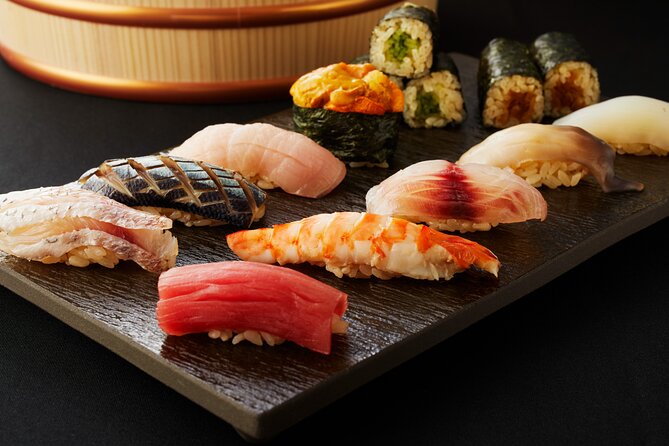
This private premium class is built around the Edomae idea that the real magic starts long before rice hits your hands. You begin by working with whole fish—yes, actually filleting it—then you move through the professional steps that make sushi toppings taste clean, precise, and balanced. A sushi master with experience at a Michelin-starred restaurant runs the session, and fully bilingual staff guide you so you can focus on learning instead of translating everything in your head.
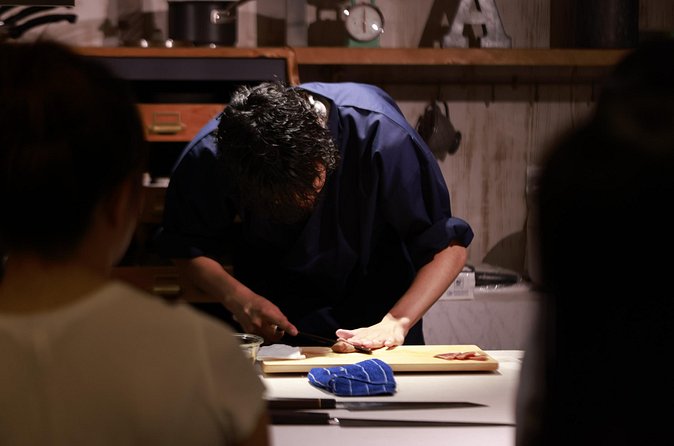
Two things I really like: first, the knife work demonstration at the start. The movements are smooth, exact, and it feels more like watching craft than following a recipe. Second, the ingredients are treated like restaurant work—fresh fish, well-seasoned rice, and food that’s prepped with care for the short time you have. One consideration: this is priced as a premium private class, so it’s not the cheapest way to learn sushi in Tokyo, and you’ll want to make the most of the full 3 hours.
In This Review
- Key Things to Know Before You Book
- Fish-First Edomae: Why This Class Feels Different
- The 3-Hour Private Flow at A-PULSE AZABU STUDIO
- Filleting Whole Fish: The Skill You’ll Actually Remember
- Curing, Marinating, and Aging: Where Flavor Gets Built
- Cutting Sushi Neta: Precision in Every Slice
- Shaping Nigiri with Three Different Preparations
- Rice, Knife Handling, and Customization Options
- Ingredients: Fresh Fish, Seasoned Rice, and Restaurant-Level Treatment
- Price and Value: What $260.61 Buys You
- Who This Class Is For (and Who Might Skip It)
- Practical Tips Before You Go
- Should You Book This Private Filleting Sushi Course in Tokyo?
- FAQ
- How long is the private sushi-making course?
- What time does the class start?
- Where is the meeting point in Tokyo?
- Is this a private class or a shared group?
- Do you get meals during the experience?
- Are alcoholic drinks included?
- Can the class be customized for rice preparation or specific skills?
- What is the cancellation policy?
Key Things to Know Before You Book
- Fish-first Edomae training: you start with filleting, not just assembling nigiri.
- One-on-one pace: private setting means you can ask questions and get corrections right away.
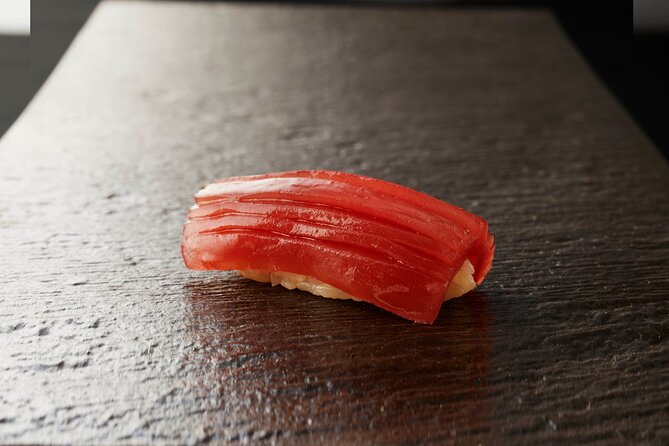
- Three nigiri preparations: you practice multiple styles, so you don’t just make one kind of piece.
- Flavor starts with prep: you’ll learn classic methods like curing and aging, not only cutting.
- Bilingual support: guidance is fully bilingual, which helps beginners feel relaxed.
- You photograph and eat what you make: the session ends with savoring your own sushi.
Fish-First Edomae: Why This Class Feels Different
Most sushi classes teach you the end result: shape rice, lay on topping, move on. This one flips the script. You begin with filleting whole fish using traditional knife technique. That single choice changes everything you taste afterward.
When you learn how the fish is cut and prepared, you start noticing flavors you’d normally miss. Edomae sushi is about refinement—how each piece of fish is treated so its texture stays right, and so the balance with the rice works instead of fighting. By the time you shape nigiri, you’re no longer guessing. You’re understanding.
The other big difference is the teaching structure. You get a professional demonstration first, focusing on smoothness and precision. Then you practice with guided steps. That’s why this feels inspiring even for people who’ve never held a knife for sushi before.
More sushi counters to book, ranked
- Tokyo: Roll and Authentic Sushi Making Class in Asakusa
★ 4.9 · 1,957 reviews - Make Sushi and Create Unforgettable Memories in Tokyo
★ 5.0 · 1,413 reviews - Tokyo: Sushi Making Class in a Happi Coat near a Famous Spot
★ 4.9 · 1,377 reviews - Tokyo Sushi Making Class in Tsukiji with Professional Chef
★ 5.0 · 1,177 reviews
The 3-Hour Private Flow at A-PULSE AZABU STUDIO
Your session runs about 3 hours, starting at 12:00 pm, and it takes place at A-PULSE AZABU STUDIO in Nishiazabu (Minato City). The activity ends back at the meeting point.
Because it’s private, it’s not a fast conveyor belt where you each make a few pieces and hope for the best. The pacing is designed around skill-building: watch the technique, then repeat it carefully. If something feels awkward—rice shaping, knife angle, even how hard to press—you can get correction in real time.
Here’s how the timing typically clicks together:
- A demo and orientation that shows what good looks like
- Hands-on filleting and fish preparation
- Cutting sushi topping (neta) into precise slices
- Forming nigiri using multiple preparations
- Photographing and eating your own pieces
Also, you’ll be guided by fully bilingual staff under private settings. That matters more than it sounds. When you’re learning fine motor skills, being able to ask questions in clear language keeps you from picking up small mistakes that are hard to fix later.
Filleting Whole Fish: The Skill You’ll Actually Remember
This is the heart of the experience. You’ll learn to fillet using traditional knife techniques, working with whole fish rather than pre-cut portions.
Why this is worth your time:
- You see how the cut line affects thickness and texture.
- You learn why precision matters for nigiri shape and bite.
- You understand why sushi topping isn’t just sliced—it’s prepared.
The start-of-class knife demonstration is a real highlight. Watching the instructor’s movements—smooth, measured, and accurate—sets the standard for everything that follows. Even if you’re not planning to become a sushi chef, it gives you a new respect for how controlled the process is.
Curing, Marinating, and Aging: Where Flavor Gets Built
After filleting, you move into classic fish prep steps. You’ll work through methods like marinating, curing, and aging—the kinds of processes that transform the fish beyond freshness.
This part can feel technical, but it’s also the most practical for home cooks and food lovers. You get the logic of seasoning and timing. You begin to understand that sushi taste comes from treatment of the ingredient, not only from what goes on top.
The class also frames these steps as part of the bigger picture: attention to ingredients connects to sustainability and respect for what you consume. You’re not just learning a technique—you’re getting a mindset.
Cutting Sushi Neta: Precision in Every Slice
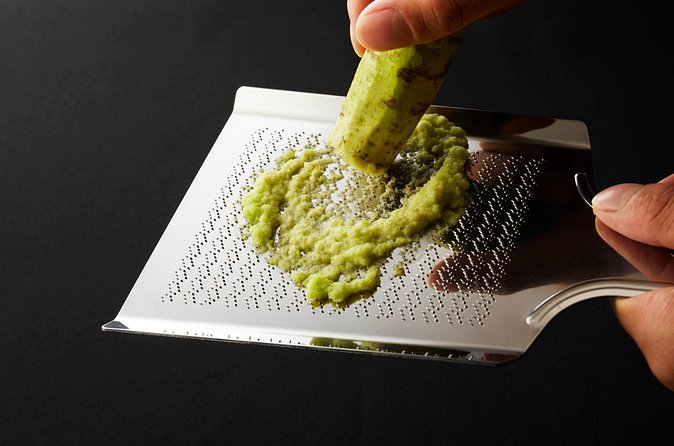
Next comes cutting sushi neta, the topping slices you’ll use for nigiri. This is where the “knife as a tool of accuracy” lesson lands.
The goal isn’t speed. It’s consistent thickness and clean cuts so the fish holds its shape when combined with vinegared rice. Even small differences can change how a piece sits on rice and how it bites.
In a normal cooking class, knives get treated like a general tool. Here, the knife is part of the flavor system. That’s why the class starts with demonstrations: you need to learn what precision looks like before you try to copy it.
Readers also shortlisted these Tokyo bookings:
- Tokyo 6hr Private Tour with Government-Licensed Guide★ 5.0 · 3,902 reviews
- Private Tour to Mt. Fuji and Hakone (Fully Licenced Operator)★ 5.0 · 1,910 reviews
- Tokyo Customized Private Tour (Must See Places in 1 Day)★ 5.0 · 1,499 reviews
- Mount Fuji Full-Day Private Tour from Tokyo (Customizable)★ 4.9 · 1,470 reviews
- Tokyo: Private City Highlights Tour with Local Guide★ 4.8 · 1,433 reviews
Shaping Nigiri with Three Different Preparations
Then you get to the part most people imagine: making nigiri by hand. You’ll shape nigiri using three different preparations, guided step by step.
For first-time learners, this is usually the moment that flips intimidation into confidence. Rice handling alone can feel tricky—temperature, seasoning, texture, and pressure all matter. You’re also learning how nigiri should look: not sloppy or thick, not overly thin, but balanced.
One of the best parts of this kind of practice is the feedback loop. You shape, you correct, you reshape. When you finally eat the pieces you made, you taste your progress right away. And yes, you’ll photograph and savor your handcrafted sushi as part of the experience.
Rice, Knife Handling, and Customization Options
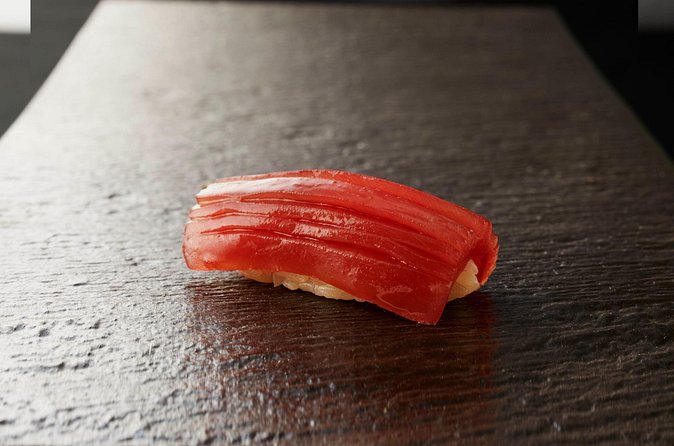
The course can be customized depending on what you want to focus on. If you’d like rice included more heavily, the class can include rice preparation. If you’re more interested in fish technique, the session can be adapted to focus on the skills you care most.
In practice, beginners often appreciate the way the session is structured. You typically start with basics like rice preparation and knife handling, then you gradually move into shaping different kinds of sushi. That makes it feel less like you’re thrown into “chef mode” and more like you’re learning a craft in a sensible order.
If you’re the kind of person who learns by doing (not watching), you’ll likely enjoy that the time is hands-on. If you’re more analytical, you’ll enjoy how the instructor connects technique to the quality of the final bite.
Ingredients: Fresh Fish, Seasoned Rice, and Restaurant-Level Treatment
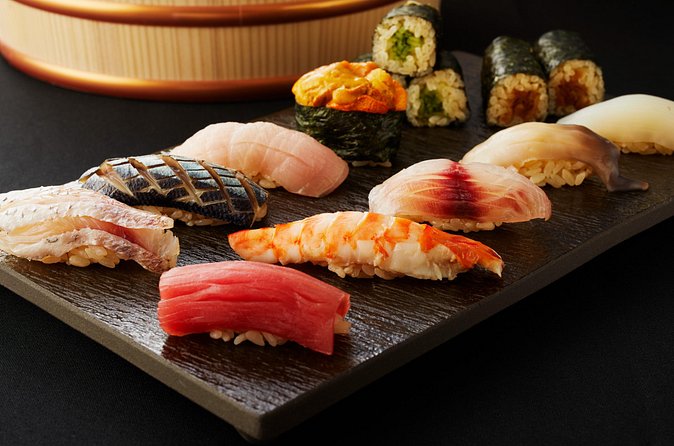
This is a premium class, and it shows in the ingredient care. The fish is described as directly sourced from ports or from Toyosu, and the chef conditions the fish properly for the experience.
You’ll also work with:
- Fresh fish
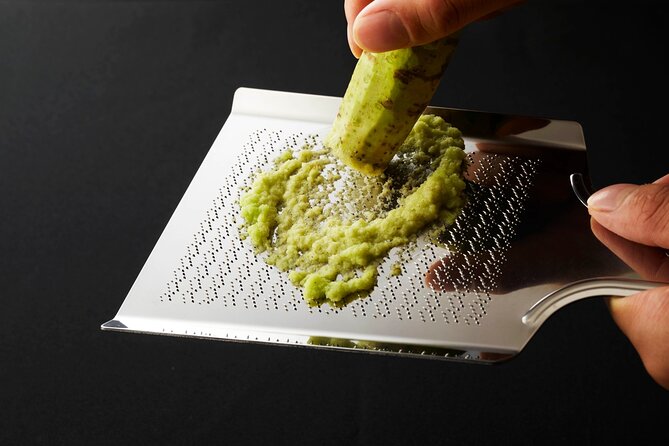
- Rice perfectly seasoned
- Vegetables described as crisp and colorful
Even if you don’t know what seasoning targets, you can taste the difference. Properly conditioned fish behaves better in cutting and in the final bite. Properly seasoned rice holds together and tastes balanced with the topping.
One practical takeaway: this class helps you learn how sushi should taste when the ingredient quality is right. That’s valuable if you’ve eaten good sushi in Japan but wondered why it tastes different from what you can get elsewhere.
Price and Value: What $260.61 Buys You
At $260.61 per person, you’re paying for more than ingredients and a few nigiri pieces. You’re paying for:
- A private session (so your time isn’t shared across strangers)
- A sushi master’s craft focused on your learning
- Bilingual guidance that reduces friction
- Whole-fish filleting, not just assembly
- Multiple nigiri preparations in one sitting
Is it expensive? Yes, compared with basic cooking classes. But if your goal is to learn sushi technique at the level of Edomae fish preparation, this price starts to feel more reasonable. You’re compressing real training (filleting, curing/aging, cutting neta, shaping nigiri) into a single afternoon with expert correction.
Also, you’ll likely appreciate the meal being included. Alcohol isn’t included—additional drinks are optional with extra charge—but having food included turns the class into a full experience, not just a snack after work.
Who This Class Is For (and Who Might Skip It)
This course is a great fit if:
- You want true fish prep learning, not just nigiri assembly.
- You enjoy watching top-level technique close up (the opening knife work demo matters).
- You’re a beginner and want a class that feels friendly and structured.
- You like sushi culture and want the “why” behind the steps, not only the “how.”
You might think twice if:
- You’re trying to keep costs down. Private + premium ingredient handling costs money.
- You mainly want a quick, low-effort cooking activity. This is hands-on craft training and expects your attention.
Practical Tips Before You Go
A few things that will help you get the most out of the time:
- Arrive on time for the 12:00 pm start. The class moves through skills in a tight sequence.
- Wear comfortable clothes. You’ll be working with food prep and careful handling.
- Ask questions early. The bilingual staff guidance is there for a reason, and quick clarification improves your results.
- Take photos at the end. Photographing and savoring your handmade sushi is part of the flow, so don’t stress about capturing everything from the beginning.
Also, you’ll have a mobile ticket, and the meeting point is near public transportation. So you’re not signing up for a “hard-to-reach” experience in the middle of nowhere.
Should You Book This Private Filleting Sushi Course in Tokyo?
If you want sushi that tastes like care—care in the fish, care in the cut, care in the rice—this class is a strong choice. The biggest reason to book is the fish-first approach plus private, bilingual guidance. You leave with more than a meal; you leave with a sense of how sushi is actually built.
Book it if you’re excited by technique and you like learning by doing. Skip it if you only want a casual taste of sushi making and would rather spend your money on other Tokyo food experiences.
FAQ
How long is the private sushi-making course?
The workshop runs for about 3 hours.
What time does the class start?
It starts at 12:00 pm.
Where is the meeting point in Tokyo?
The meeting point is A-PULSE AZABU STUDIO (エーパルス), 3-chōme-8-18 Nishiazabu, Minato City, Tokyo 106-0031, Japan.
Is this a private class or a shared group?
It’s a private tour/activity, so only your group will participate.
Do you get meals during the experience?
Yes. Meals are included.
Are alcoholic drinks included?
Alcoholic beverages are not included. Additional drinks are optional with extra charge.
Can the class be customized for rice preparation or specific skills?
Yes. The course can be customized to include rice preparation or focus on specific skills that interest you most.
What is the cancellation policy?
You can cancel for a full refund if you cancel up to 24 hours in advance. If you cancel less than 24 hours before the start time, the amount paid is not refunded.
More Private in Tokyo
- Tokyo 6hr Private Tour with Government-Licensed Guide
★ 5.0 · 3,902 reviews - Private Tour to Mt. Fuji and Hakone (Fully Licenced Operator)
★ 5.0 · 1,910 reviews - Tokyo Customized Private Tour (Must See Places in 1 Day)
★ 5.0 · 1,499 reviews - Mount Fuji Full-Day Private Tour from Tokyo (Customizable)
★ 4.9 · 1,470 reviews - Tokyo: Private City Highlights Tour with Local Guide
★ 4.8 · 1,433 reviews
More Tour Reviews in Tokyo
- Mt Fuji and Hakone 1-Day Bus Tour Return by Bullet Train
★ 5.0 · 26,383 reviews - 1-Day Tokyo Bus Tour
★ 5.0 · 14,250 reviews - Tokyo: teamLab Planets TOKYO Digital Art Museum Entry Ticket
★ 4.6 · 9,779 reviews - Mt Fuji & Hakone Cruise, Drum Show Bullet Train 1 Day from Tokyo
★ 4.0 · 7,413 reviews - Tokyo: Shinjuku Food Tour (13 Dishes at 4 Local Eateries)
★ 5.0 · 6,603 reviews
More Sushi Counters to Book
- Sushi Making Tokyo Roll and Authentic Japanese Sushi Class
★ 5.0 · 3,971 reviews - Tokyo: Roll and Authentic Sushi Making Class in Asakusa
★ 4.9 · 1,957 reviews - Make Sushi and Create Unforgettable Memories in Tokyo
★ 5.0 · 1,413 reviews - Tokyo: Sushi Making Class in a Happi Coat near a Famous Spot
★ 4.9 · 1,377 reviews - Tokyo Sushi Making Class in Tsukiji with Professional Chef
★ 5.0 · 1,177 reviews
Latest Tokyo reviews off our desk






Sushi Making Classes, compared.
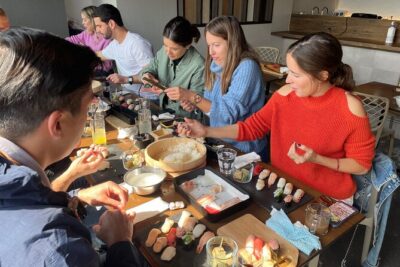 ★ 5.0Sushi Making Tokyo Roll and Authentic Japanese Sushi ClassFrom $593,971 reviews
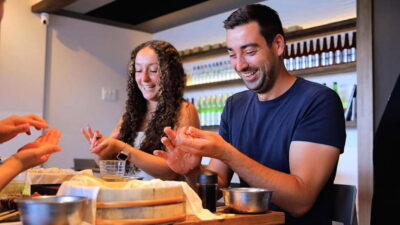 ★ 4.9Roll and Authentic Sushi Making Class in AsakusaFrom $581,957 reviews
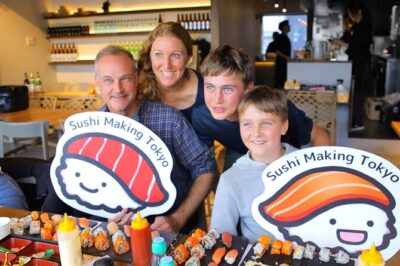 ★ 5.0Make Sushi and Create Unforgettable Memories in TokyoFrom $791,413 reviews
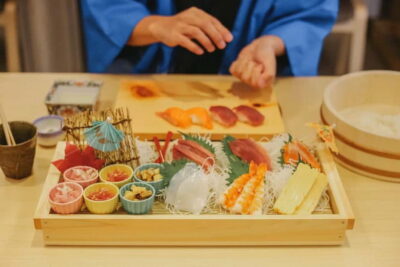 ★ 4.9Sushi Making Class in a Happi Coat near a Famous SpotFrom $421,377 reviews
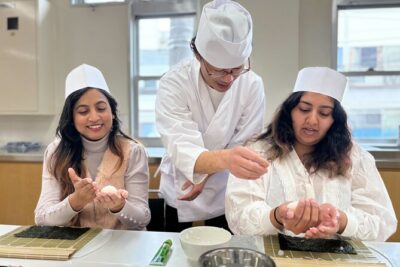 ★ 5.0Tokyo Sushi Making Class in Tsukiji with Professional ChefFrom $491,177 reviews
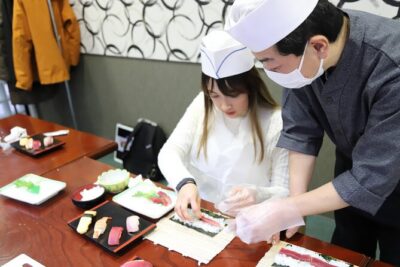 ★ 5.0Tsukiji Fish Market Guided Tour and Sushi Making with Pro ChefFrom $104775 reviews
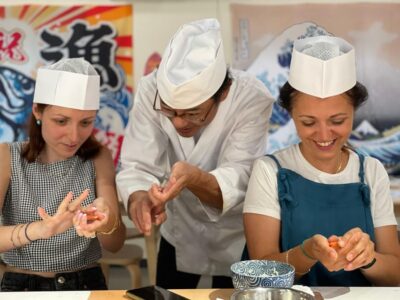 ★ 4.9Tsukiji Fish Market Sushi Making Class with Pro ChefFrom $63506 reviews
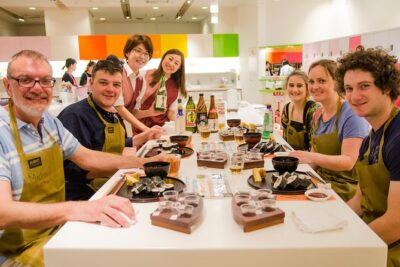 ★ 5.0Tokyo Tsukiji Fish Market Tour and Sushi Making LessonFrom $99390 reviews
Browse the lists this tour appears in