
Reviewed · TSUKIJI MARKET FOOD TOURS
Tokyo Tsukiji Fish Market Tour and Sushi Making Lesson
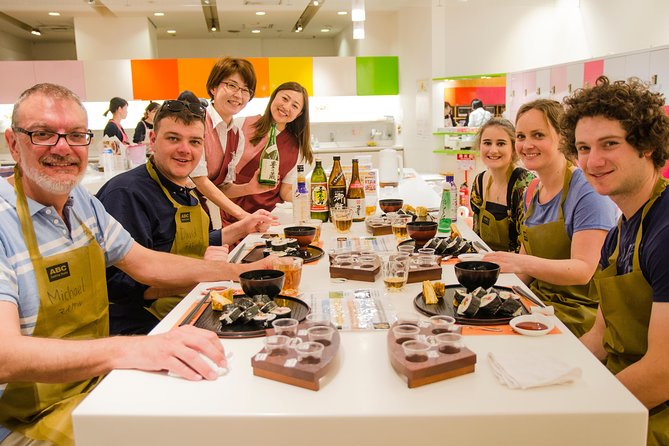
Tsukiji feels like a food movie. You get the best kind of structure: a short, guided look at the market, then a hands-on cooking class where you make and eat classic Japanese dishes. I especially like the small group size (max 6) and the fact that you’ll get an English-speaking guide to translate the chaos into something you can actually use while you travel and shop.
The best part for me is the combo. You don’t just watch sushi get made—you learn the steps, including a sushi roll and tamagoyaki (Japanese rolled omelet), then you sit down and eat what you make. One possible drawback to consider is that the lesson is still a class, so if you’re expecting a huge, deep lecture on every ingredient and tradition, you may find it more practical than academic.
In This Review
- Key highlights worth your time
- Tsukiji Outer Market plus cooking class: how the day really works
- Starting at Tsukiji Hongan-ji Temple (quick but memorable)
- Tsukiji Outer Fish Market walk: where samples turn into a real food education
- The transition to ABC Cooking Studio: why the bus ride is part of the value
- Inside the class: making sushi roll and tamagoyaki (washoku style)
- The lunch payoff: you eat your work, with drink options
- Who this suits best (and who might want a different format)
- Price and value: what $99.49 buys you in real terms
- Timing tips so you enjoy the class more
- Should you book this Tsukiji + sushi making combo?
- FAQ
- Is this tour about Tsukiji’s inner market or the outer market?
- How long does the experience take?
- What do I cook during the sushi making lesson?
- Is an English-speaking guide included?
- Where do I meet and what time does it end?
- Is tuna auction watching included?
- Who can join, and is there a minimum age?
Key highlights worth your time
- Tsukiji Outer Market sampling with a guide who can point out what’s actually worth trying
- Two washoku recipes typically including sushi roll and tamagoyaki, plus side dishes
- Max 6 people means you’re not lost in a big crowd
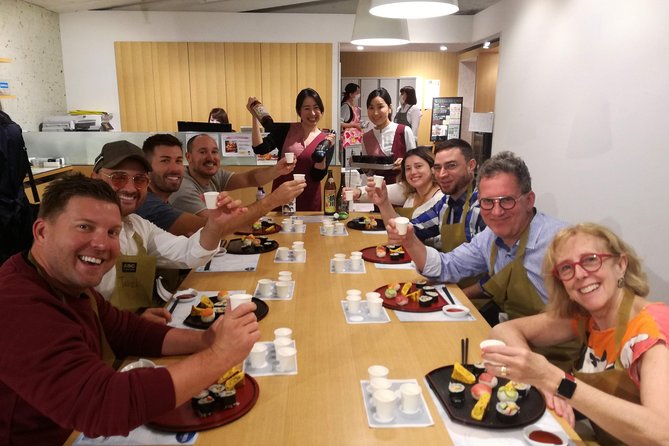
- Lunch included, served with wine, plum sake, or soft drinks
- ABC Cooking Travel at ABC Cooking Studio, a large school network with many studios across Japan
- Apron and transportation are included, so you can focus on learning, not logistics
Tsukiji Outer Market plus cooking class: how the day really works
This is a tight, value-focused format. You start near the famous Tsukiji Hongan-ji Temple, then spend your morning in the Tsukiji Outer Fish Market area—where the sensory overload is real, but guided structure helps you make sense of what you’re seeing. From there, you transfer to a modern cooking studio setting for your hands-on lesson.
The whole experience runs about 3 hours, and you’ll likely spend around 70 minutes at the outer shopping market. That’s enough time to taste, ask questions, and pick up a few food ideas you can bring home—without turning your day into a full-on half-marathon.
Most people do best if they show up ready to eat. You’ll sample food at the market and then you’ll have a full lunch at the studio. If you arrive stuffed, you’ll miss the whole point.
More market breakfasts our reviewers scored
- Tokyo Tsukiji Fish Market Food and Culture Walking Tour
★ 5.0 · 3,184 reviews - Tokyo: Tsukiji Fish Market Food and Walking tour
★ 5.0 · 1,724 reviews - Tokyo: Tsukiji Fish Market Guided Walking Tour
★ 4.9 · 1,397 reviews - Tokyo Sushi Making Class in Tsukiji with Professional Chef
★ 5.0 · 1,177 reviews
Starting at Tsukiji Hongan-ji Temple (quick but memorable)
Your meeting point is Tsukiji Hongan-ji Temple (3-chōme-15-1 Tsukiji, Chuo City, Tokyo). The route begins with a short stop there, about 5 minutes, and the admission is free.
Why this tiny stop matters: it’s a calm reset before the market noise. The temple’s architecture mixes South Asian/Indian-style cues on the outside with a very different feel inside, so it helps you switch gears from city streets to the food world around Tsukiji.
If you hate rushing, don’t. This first stop is short by design, so you’ll still have plenty of time for the market and class.
Tsukiji Outer Fish Market walk: where samples turn into a real food education
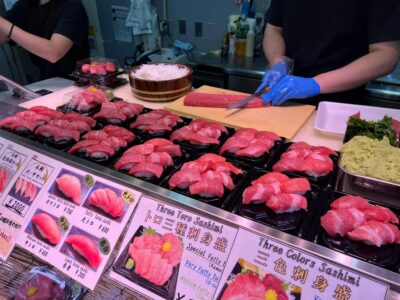
The market portion is the heart of the morning. You’ll walk the Tsukiji Outer Fish Market area with your guide, typically for about 1 hour in the market segment. Expect giant tuna, sea urchin, octopus, and all kinds of seafood and dried ingredients lined up for sale.
What I like here is the way it’s coached. With someone like Miho, Akiko, or Lucy leading (different guides run different departures), you’re not just staring at stalls. You’re getting directions on what to try, what to skip, and how different vendors fit into Japanese food culture.
You also get the benefit of not being overwhelmed by Tokyo crowds and vendor talk. In multiple experiences, the guides stood out for being friendly, patient, and good at answering questions in clear English, which matters when a lot of what you see is visual but the meaning is in the details.
Practical advice: wear comfortable shoes and expect tight spaces. This is not a stroll in a museum. Also note that the tour has a strict no-stroller and no-luggage policy, so plan for a light day.
The transition to ABC Cooking Studio: why the bus ride is part of the value
After you’ve had your seafood fill (or at least a serious start), you head to the cooking studio via transportation between Tsukiji Market and the studio. The cooking portion is about 1 hour 30 minutes.
This matters because the cooking school environment changes the pace. You get a clean, organized kitchen setup where you can focus on technique—something you simply can’t do inside the market aisles.
Some people also mention that the kitchen location isn’t right next to Tsukiji, so you will spend time moving. That’s normal here; the tradeoff is that you get a proper studio and a structured class.
Inside the class: making sushi roll and tamagoyaki (washoku style)
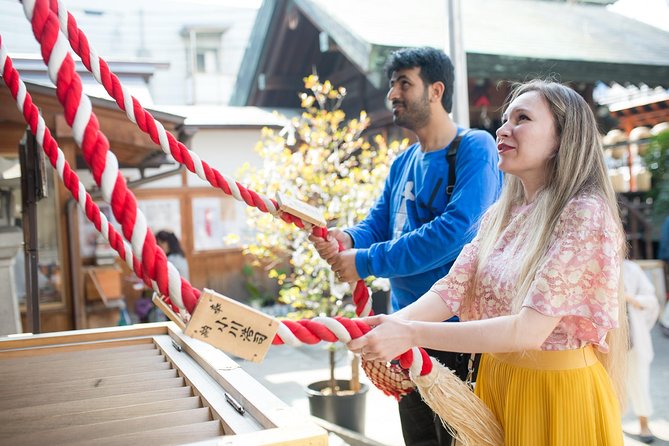
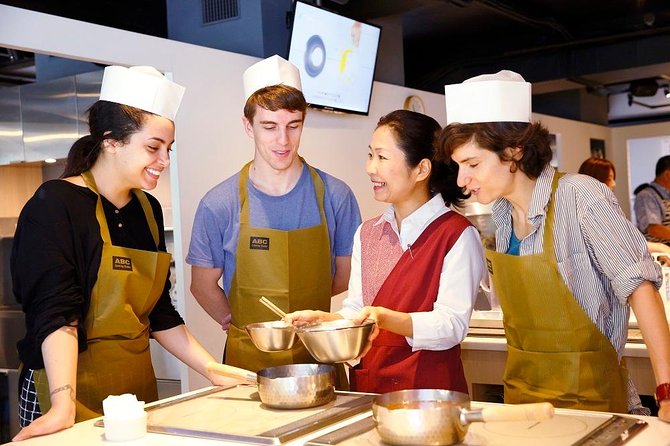
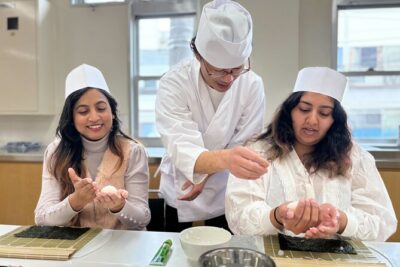
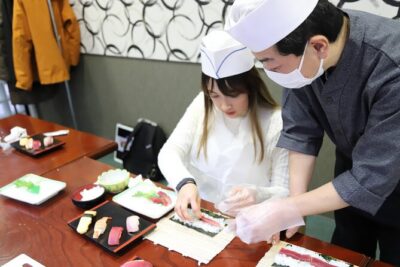
At ABC Cooking Studio, you’ll learn to prepare two washoku recipes, Japanese home-style cuisine built around traditional methods. The class typically includes a sushi roll and tamagoyaki (Japanese rolled omelet), along with side dishes.
You’ll work with an experienced cooking teacher and usually do a mix of prep steps and assembly. In the standout classes, instructors were patient with beginners and helped people keep their hands steady—especially during sushi and tamagoyaki work, where technique shows up fast.
Here’s what you can realistically expect to take home:
- You’ll get a step-by-step process for at least one rolled sushi style
- You’ll practice tamagoyaki so you understand the sequence and timing
- You’ll learn how side dishes fit beside rice and seafood flavors
In a couple of classes, instructors like Miwako, Masayo, Hiromi, and Miwa were praised for clear guidance and keeping the class fun without losing control of the kitchen.
One thing to keep in mind: this isn’t a culinary documentary. It’s a class designed for you to succeed and eat. If you’re looking for lots of deep background on every tradition or ingredient, you might want to add a little independent reading or ask extra questions during the market walk.
Also, remember a key note: ingredients may differ from what’s shown in the ad depending on season and availability. The core techniques stay similar, but you might not get the exact same ingredient mix every day.
More sushi counters to book, ranked
- Sushi Making Tokyo Roll and Authentic Japanese Sushi Class★ 5.0 · 3,971 reviews
- Tokyo: Roll and Authentic Sushi Making Class in Asakusa★ 4.9 · 1,957 reviews
- Make Sushi and Create Unforgettable Memories in Tokyo★ 5.0 · 1,413 reviews
- Tokyo: Sushi Making Class in a Happi Coat near a Famous Spot★ 4.9 · 1,377 reviews
- Tokyo: Tsukiji Fish Market Sushi Making Class with Pro Chef★ 4.9 · 506 reviews
The lunch payoff: you eat your work, with drink options
Finishing is where this tour becomes more than a lesson. You sit down and eat what you made. The meal is paired with your choice of wine, plum sake, or soft drinks, which is a nice bonus in a category of tours that often skimp on the actual meal.
This is also one of the strongest reasons the price feels fair. You’re paying for:
- guide support in the market
- transportation to a real cooking studio
- hands-on instruction
- and a complete lunch that uses what you cooked
If you’ve done tours where the class portion is short and the meal is tiny, this is the opposite.
Who this suits best (and who might want a different format)
This works especially well if you:
- love food markets but want help navigating what to try
- want hands-on cooking without studying Japanese first
- like group learning when the group is kept small
- travel as a couple, family, or mixed group with teens
The experience has a minimum age of 9 and a minimum height of 4.2 ft (130 cm), which makes it plausible for older kids who can handle a classroom-kitchen rhythm.
If you’re a hardcore home cook who wants advanced knife work, complex sushi types, or a long multi-hour deep lecture, you may feel constrained by time. And if you’re extremely sensitive to English clarity, it’s worth knowing that while the guide is English-speaking, your experience of how much the cooking instructor talks can vary by class.
Price and value: what $99.49 buys you in real terms
At $99.49 per person, you’re not just paying for a sushi lesson. You’re paying for the market-to-studio pairing, which is the difference between seeing Tsukiji and understanding it.
You get:
- English-speaking guidance for the market component
- market access with samples
- transportation to the cooking studio
- apron, drinking water, and a structured kitchen session
- lunch that includes your creations plus a drink option
For many visitors, the value is strongest if it’s your first time doing anything like this in Tokyo. You’ll leave with technique you can repeat at home and with food ideas you can recognize on future visits.
If you already know sushi making and you mainly want a pure ingredient shopping experience, you may find you could DIY some market exploration cheaper. But if you want the full package—market context plus actual cooking—the price makes sense.
Timing tips so you enjoy the class more
A few small choices can make your experience smoother:
- Come hungry enough for market tasting and lunch.
- Dress for weather. The tour requires good weather, and if conditions are poor, it may be rescheduled or refunded.
- Bring a simple plan for luggage. You can’t bring strollers or luggage.
- Be ready to work with your hands. This isn’t just watching—it’s doing.
One more practical note: photos taken during the activity may be published on the operator’s website or social media, so if that matters to you, it’s worth keeping in mind.
Should you book this Tsukiji + sushi making combo?
Book it if you want the fastest way to connect Tokyo’s food culture with something you can actually practice later. The small group cap, English guide, and the way you cook and eat rather than just snack make this a strong value move.
Skip it or rethink it if you’re seeking a long, highly detailed food lecture or a very advanced cooking curriculum. The class is designed for results, not for hours of theory.
FAQ
Is this tour about Tsukiji’s inner market or the outer market?
It focuses on the Tsukiji Outer Fish Market, plus a quick start at Tsukiji Hongan-ji Temple and then a cooking lesson at ABC Cooking Studio.
How long does the experience take?
The duration is about 3 hours total.
What do I cook during the sushi making lesson?
You typically learn to prepare two washoku recipes, usually including a sushi roll and tamagoyaki, plus side dishes.
Is an English-speaking guide included?
Yes. The tour includes an English-speaking guide for the market portion.
Where do I meet and what time does it end?
You meet at Tsukiji Hongan-ji Temple in Tsukiji. The activity ends in a different location, with details provided by the operator.
Is tuna auction watching included?
No. Tuna auction watching is not included.
Who can join, and is there a minimum age?
The minimum age is 9 years old, and there is a minimum height requirement of 4.2 ft (130 cm).
More Tour Reviews in Tokyo
- Mt Fuji and Hakone 1-Day Bus Tour Return by Bullet Train
★ 5.0 · 26,383 reviews - 1-Day Tokyo Bus Tour
★ 5.0 · 14,250 reviews - Tokyo: teamLab Planets TOKYO Digital Art Museum Entry Ticket
★ 4.6 · 9,779 reviews - Mt Fuji & Hakone Cruise, Drum Show Bullet Train 1 Day from Tokyo
★ 4.0 · 7,413 reviews - Tokyo: Shinjuku Food Tour (13 Dishes at 4 Local Eateries)
★ 5.0 · 6,603 reviews
More Sushi Counters to Book
- Sushi Making Tokyo Roll and Authentic Japanese Sushi Class
★ 5.0 · 3,971 reviews - Tokyo: Roll and Authentic Sushi Making Class in Asakusa
★ 4.9 · 1,957 reviews - Make Sushi and Create Unforgettable Memories in Tokyo
★ 5.0 · 1,413 reviews - Tokyo: Sushi Making Class in a Happi Coat near a Famous Spot
★ 4.9 · 1,377 reviews - Tokyo Sushi Making Class in Tsukiji with Professional Chef
★ 5.0 · 1,177 reviews
More Tsukiji Market Breakfasts
- Tokyo Tsukiji Fish Market Food and Culture Walking Tour
★ 5.0 · 3,184 reviews - Tokyo: Tsukiji Fish Market Food and Walking tour
★ 5.0 · 1,724 reviews - Tokyo: Tsukiji Fish Market Guided Walking Tour
★ 4.9 · 1,397 reviews - Tokyo Sushi Making Class in Tsukiji with Professional Chef
★ 5.0 · 1,177 reviews - Tsukiji Fish Market Guided Tour and Sushi Making with Pro Chef
★ 5.0 · 775 reviews
Latest Tokyo reviews off our desk




Tsukiji Market Food Tours, compared.
 ★ 5.0Tokyo Tsukiji Fish Market Food and Culture Walking TourFrom $993,184 reviews
 ★ 5.0Tsukiji Fish Market Food and Walking tourFrom $301,724 reviews
 ★ 4.9Tsukiji Fish Market Guided Walking TourFrom $221,397 reviews
 ★ 5.0Tokyo Sushi Making Class in Tsukiji with Professional ChefFrom $491,177 reviews
 ★ 5.0Tsukiji Fish Market Guided Tour and Sushi Making with Pro ChefFrom $104775 reviews
★ 4.7Tsukiji Fish Market Food and Culture Walking TourFrom $96757 reviews
★ 5.0Tsukiji Fish Market Guided Tour and Sushi Making with Pro ChefFrom $104775 reviews
★ 4.7Tsukiji Fish Market Food and Culture Walking TourFrom $96757 reviews
 ★ 5.0Tsukiji Fish Market: Street Food & Culture Walking TourFrom $33669 reviews
 ★ 5.0Tsukiji Fish Market Small-Group Food Walking TourFrom $87621 reviews
Browse the lists this tour appears in