
Reviewed · ASAKUSA & SENSOJI TOURS
Asakusa: 2-hour history exploration
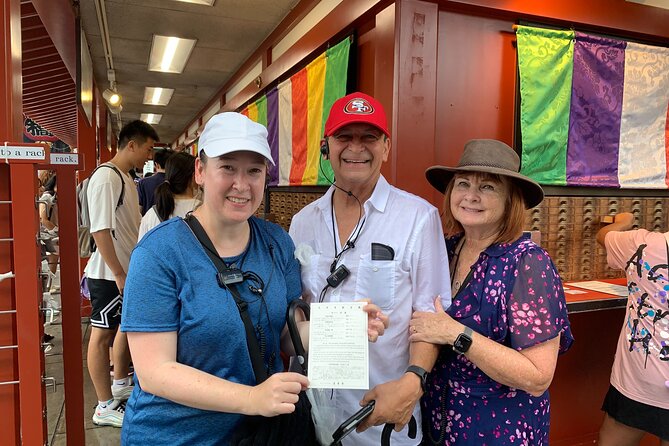
Asakusa makes sense with a guide. You get an easy 2-hour walk that turns famous sights like Senso-ji and Asakusa Shrine into a clear story, and headsets keep the English guide audible in crowded lanes. The only downside is the schedule is tight, so if you want long free time in shops or extra rambling history, you may feel rushed.
One more thing I like: the guides you may meet (names that come up in feedback include Choco, Yasu, and Amy) are praised for clear English and friendly answers, even when people ask random questions mid-walk.
In This Review
- Key things to know before you go
- Why this 2-hour Asakusa history walk is such a smart use of time
- Sumida River start: Skytree views and the Asahi golden flame
- The Asakusa Culture Tourist Information Center: a rooftop preview from the 8th floor
- Gate to gate: Kaminarimon and Hozomon made readable
- Nakamise Shopping Street: where the guide helps you choose and snack
- Inside Senso-ji before the main hall: omikuji, incense ritual, and purification water
- Asakusa Shrine: why Buddhism and Shinto share the same grounds
- Price and pace: is $64.55 worth it for this route?
- Where to meet, where it ends, and how to prepare
- Should you book this Asakusa 2-hour history tour?
- FAQ
- How long is the Asakusa history tour?
- How much does the tour cost per person?
- What time does the tour start?
- What sights are included in the walking route?
- Is the tour in English, and do I get help hearing the guide?
- Where do I meet the guide, and where does the tour end?
- How big is the group?
- What’s included in the price?
Key things to know before you go
- Headsets for hearing the guide even when the streets get loud and busy
- A focused route built around Senso-ji, the gates, the shopping street, and Asakusa Shrine
- Free admission at the stops called out in the route, so your money goes to guiding and time
- Small-group feel with a maximum of 20 travelers
- Snack time in the plan, with the guide adjusting based on your preferences
Why this 2-hour Asakusa history walk is such a smart use of time
Asakusa can be one of those places where you feel surrounded by history… but you still might not know what you’re looking at. This tour solves that problem with a guide-led route that moves you from big-picture context to the small details people miss when they wander on their own.
You’re walking at a relaxed pace, but you’re also seeing a lot of “why this matters” moments: river origins, gate meanings, what to do at Senso-ji before the main hall, and why a Shinto shrine belongs in a Buddhist-temple complex. It’s designed for first-time visitors, and it’s also good if you’ve been in Tokyo for a bit but want one neighborhood that feels instantly more understandable.
Cost-wise, it’s $64.55 per person for about 2 hours, and you’re getting live English guiding plus headsets (for groups of 3 or more). For many people, that’s the difference between wandering for your own timeline versus getting a coherent story while you’re there.
More temple mornings in old Asakusa
- Tokyo: Japanese Dance Cabaret Theater Asakusa-Kaguwa Ticket
★ 4.8 · 2,270 reviews - Tokyo: Meiji Shrine, Asakusa, Skytree Bus Tour and Cruise
★ 4.7 · 1,986 reviews - Tokyo: Roll and Authentic Sushi Making Class in Asakusa
★ 4.9 · 1,957 reviews - Tokyo: Asakusa Walking Tour with Sensoji Temple Visit
★ 4.8 · 1,583 reviews
Sumida River start: Skytree views and the Asahi golden flame
The tour kicks off near Burger King Asakusa Azumabashi at 9:30 am, and it starts with the Sumida River area—because that’s where Asakusa’s story begins. You cross by Azumabashi Bridge and get landmark views that make the neighborhood feel connected to the rest of Tokyo.
Right there, you’ll see Tokyo Skytree and the Asahi Breweries headquarters with its well-known golden flame object. Even if you’re not a transit-and-landmarks person, this first stop helps you build orientation fast. You’re basically training your eyes before you start moving deeper into the temple area.
This is also where the “guided” value shows up early. The guide is setting the frame—what you’re going to see later, and why the river and nearby industry mattered in the first place. It’s a small start (about 15 minutes), but it can dramatically improve how the next stops feel.
The Asakusa Culture Tourist Information Center: a rooftop preview from the 8th floor
After the river, you stroll to the Asakusa Culture Tourist Information Center. This isn’t just a place to grab brochures—it’s a standout attraction on its own, including a striking 8-story building design that looks like stacked wooden structures at different angles.
The best practical payoff is the observation deck. From the 8th floor terrace, you get a preview of the landmarks ahead—Kaminarimon gate, Nakamise shopping street, Hozomon gate, Senso-ji Temple, and more. That kind of “before you walk it” view helps you recognize the route as you go, which makes the crowds easier to handle. You spend less time guessing where the next turn is and more time paying attention.
The visit is short (about 15 minutes) and admission-free, but I think it’s one of the smartest pieces of the itinerary because it gives your feet and your brain the same map.
Gate to gate: Kaminarimon and Hozomon made readable
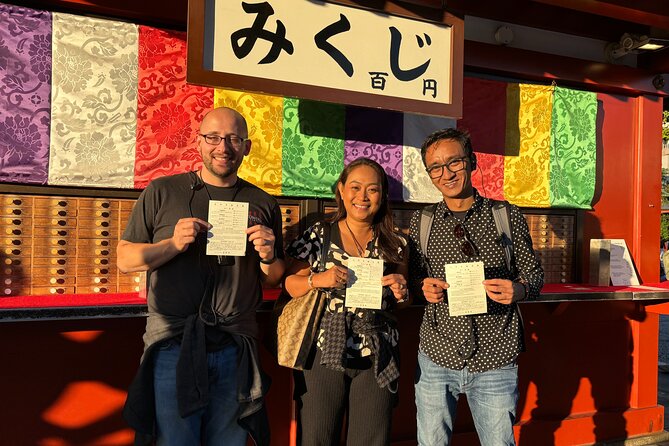
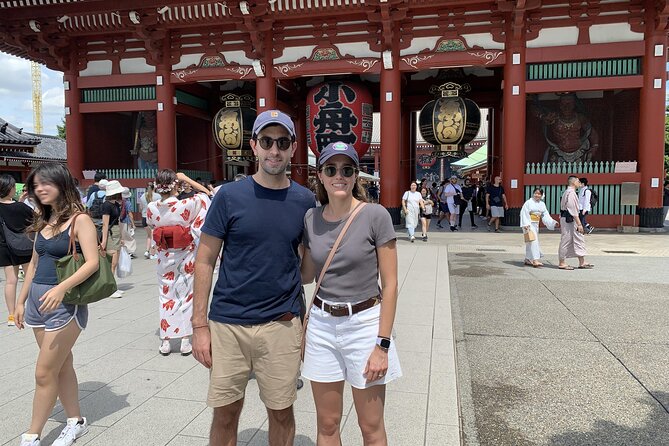
If you’ve ever looked at Kaminarimon in photos, you probably recognize the giant red lantern. Up close, it’s even more attention-grabbing. On this tour, the guide takes you to Kaminarimon (the Thunder Gate) and explains what’s around it and why it’s there, so it doesn’t feel like just a dramatic entrance for tourists.
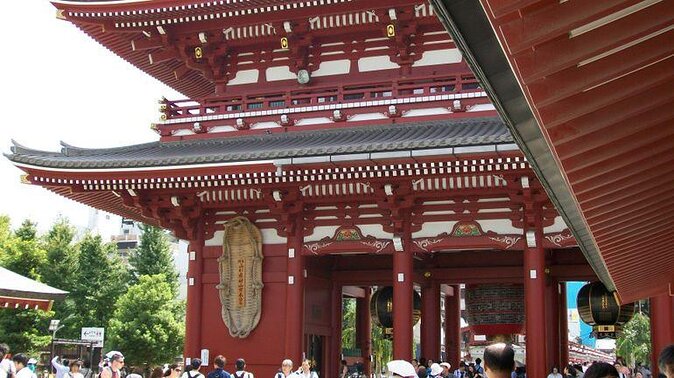
You then continue toward the temple grounds through the gate-to-gate rhythm. The next gateway stop is Hozomon, the Treasure-House Gate—this is the inner of the two major entrance gates that lead to Senso-ji. It’s a two-story structure, and the second story is associated with the temple’s treasures. On the first story, you’ll notice statues, three lanterns, and two large sandals kept in place as part of the display.
A good tour doesn’t just point out objects; it explains roles. Here, the gates become a way to understand the temple approach: the outer gateway signals arrival, the inner gateway signals deeper entry, and the guide helps you connect what you’re seeing to temple traditions.
Both gate stops are about 15 minutes each, and they’re admission-free as described in the route. That makes them easy to fit into a compact 2-hour plan.
Nakamise Shopping Street: where the guide helps you choose and snack
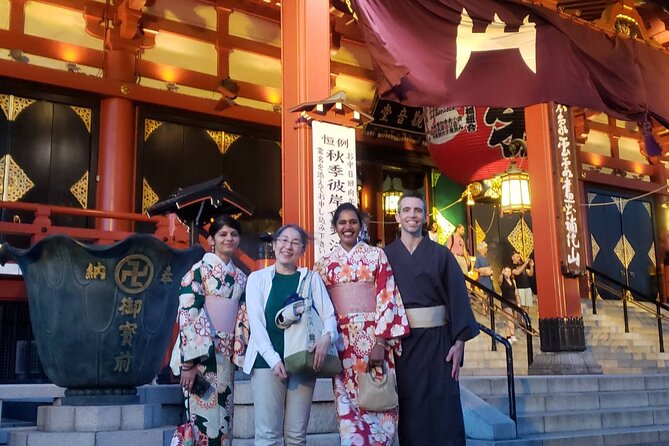
Nakamise Shopping Street is the main approach between Kaminarimon and Senso-ji. It’s about 250 meters long and packed with souvenir shops and food stalls, which is fun—but it’s also where people can get overwhelmed by choices.
This is where I like having a guide. The plan is built so the guide shows you where you might want to buy souvenirs, instead of leaving you to spin in circles. The tour also includes snack time: you can sample Japanese snacks en route, and the guide may buy traditional snacks in Asakusa based on your preferences.
One detail that makes this part more than just shopping: you can spot history tablets along the side of the street showing how Asakusa started and developed around Senso-ji Temple. You get to feel the neighborhood’s story while you’re moving through it.
Nakamise is longer in experience than the time suggests (about 30 minutes). If you hate crowds, go slowly, keep your eyes up for the tablets and shopfront details, and remember that the snack and souvenir choices are optional even if the street is not.
Readers also shortlisted these Tokyo bookings:
- Tokyo: Imperial Palace and Shogun Historical Walking Tour★ 5.0 · 2,251 reviews
- Tokyo: Imperial Palace Japanese History Walking Tour★ 4.9 · 987 reviews
- Yanaka Walking Tour: Historic and Traditional District of Tokyo★ 5.0 · 530 reviews
- Tokyo: Shinjuku Historical Walking Tour & Secret Backstreets★ 5.0 · 530 reviews
- Mt. Fuji Heritage Tour: Traditional Villages, Lakes & Shrine★ 4.5 · 509 reviews
Inside Senso-ji before the main hall: omikuji, incense ritual, and purification water
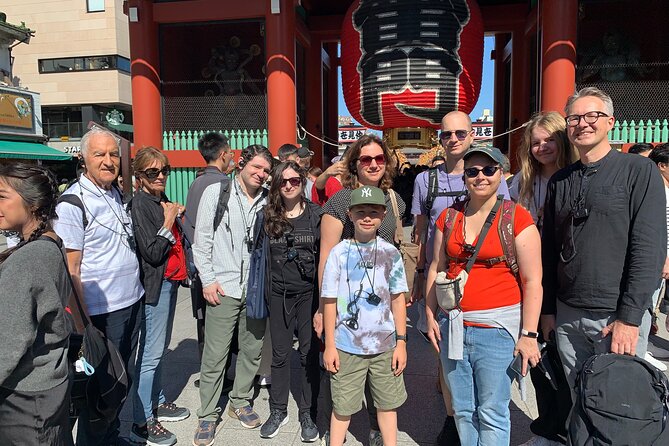
Senso-ji is the center of Asakusa, and this tour gets you there with context. Before you even reach the main hall, you’ll notice key features and you’ll learn a short set of meaningful things to do—so you can participate without feeling lost.
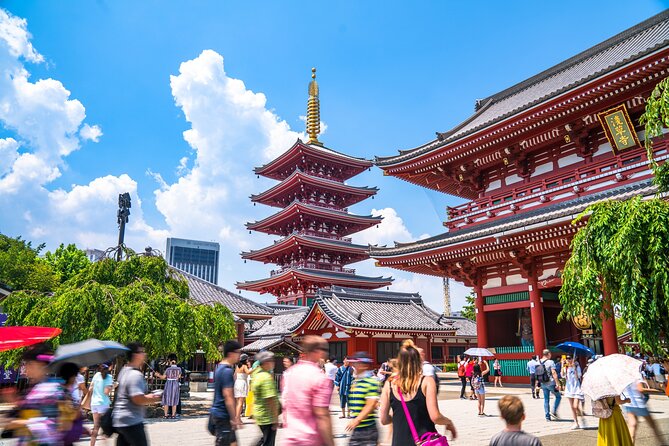
One highlight in the temple approach is the Five-storied Pagoda. It’s about 53 meters high and is described as the second highest pagoda in Japan. The top holds Buddha’s ashes given by the Sri Lankan government, which adds a global dimension to a very local religious landmark.
Then comes the “do this first” moment. Before entering the main hall area, the guide explains three classic experiences:
- Drawing an omikuji paper fortune to predict your future
- The bronze incense burner ritual—many people bathe their hands and faces in the smoke to ward off illnesses before praying
- Using a water purification fountain to cleanse yourself before going further
These are short rituals, but they change how you experience the space. Instead of watching from the sidelines, you understand what people are doing and why.
This stop is timed at about 15 minutes. That can sound short for a major temple, but the strategy here is focused: you’re not trying to do a full temple tour; you’re learning enough to understand what you’re looking at so you can enjoy the rest on your own after.
Asakusa Shrine: why Buddhism and Shinto share the same grounds
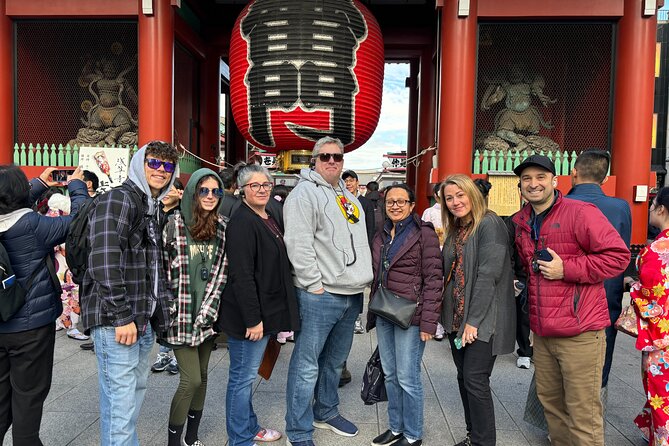
Right after Senso-ji, the route moves to Asakusa Shrine. This is a great counterpoint because it shows how Japan’s religious life can overlap in everyday spaces.
The guide explains why it’s unusual that a Buddhist temple and a Shinto shrine coexist on the same premises and share both origins and worshippers. In plain terms, Asakusa Shrine is not treated like just another shrine—it’s a place where those mixed traditions feel practical and lived-in.
This stop is also about 15 minutes. In that time, you get a clearer picture of how the neighborhood works as a whole: temple grounds, shrine grounds, and the surrounding commercial streets all feeding into each other.
Price and pace: is $64.55 worth it for this route?
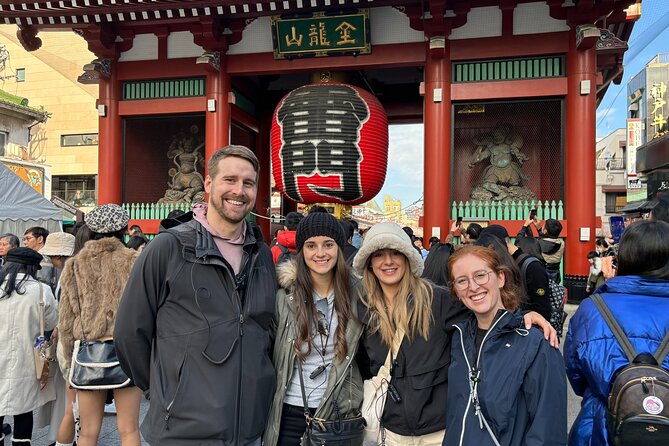
For $64.55 per person, you’re paying for guided storytelling, live English interpretation, and the headset system that helps you hear the guide clearly in busy areas. You’re also getting a 2-hour structure that includes multiple landmark stops and free admission at the key sights listed.
If you’re the type who likes to plan and read about temples ahead of time, you could do this area on your own. But if you want your first visit to feel grounded in context—why the gates look the way they do, what rituals mean, why this shrine is where it is—this format saves you effort. You’ll get a coherent route without having to build it yourself.
One more value point: the group size is capped at 20 travelers. That’s small enough for questions and listening, but big enough that you’ll still feel the neighborhood energy around you.
Pace is the tradeoff. The tour is compact, with about 15 minutes at many stops and one 30-minute shopping street block. If your dream day is slow and shop-heavy, you’ll want to pair this with extra unstructured time afterward.
Where to meet, where it ends, and how to prepare
You’ll start at Burger King Asakusa Azumabashi Cross Bil Royal Palace, 2-chōme-20-6 Kaminarimon, Taito City, Tokyo (near the meeting point on Google Maps). The tour begins at 9:30 am, and it ends at Saryō Ichimatsu, 1-chōme-15-1 Kaminarimon, Taito City, Tokyo—right where a restaurant is tied to a geisha activity.
That ending location is useful because it leaves you in the right neighborhood for what comes next, whether you want more snacks, shopping, or just to keep walking. The route also doesn’t include hotel pickup, so you’ll want to arrive on your own and be on time.
Practical prep that matters for this specific tour:
- Wear comfortable walking shoes; you’re moving through several temple approach areas.
- Bring small bills or a card for snacks and souvenirs, since the shopping street is part of the experience.
- If your group is 3 or more, confirm you’ll use the headsets so you can actually follow the guide in busy moments.
Should you book this Asakusa 2-hour history tour?
I’d book it if you’re visiting Asakusa for the first time and want the neighborhood to click quickly. The strongest reasons are the guided clarity around Senso-ji, the explanation of the gates and rituals, and the practical headset setup that keeps the experience comfortable even in crowded streets.
I’d think twice if you’re allergic to structure or you mainly came for long shopping time. This tour is built to teach you what to notice in a short window, not to give you hours to wander without guidance. You can still shop after, but you’ll likely appreciate the guide first and then loosen up.
Bottom line: if you want Asakusa’s famous sights to feel like more than photo stops, this is a solid buy for a 2-hour introduction.
FAQ
How long is the Asakusa history tour?
It’s about 2 hours.
How much does the tour cost per person?
The price is $64.55 per person.
What time does the tour start?
The start time is 9:30 am.
What sights are included in the walking route?
The route includes stops at the Sumida River area, Asakusa Culture Tourist Information Center, Kaminarimon, Nakamise Shopping Street, Hozomon, Senso-ji Temple, and Asakusa Shrine.
Is the tour in English, and do I get help hearing the guide?
Yes. It’s a live guided tour in English, and headsets are provided for groups of 3 or more.
Where do I meet the guide, and where does the tour end?
Meet at Burger King Asakusa Azumabashi Cross Bil Royal Palace at the provided address. The tour ends at Saryō Ichimatsu at the provided address.
How big is the group?
The maximum group size is 20 travelers.
What’s included in the price?
Included items are live guiding in English by a local certified expert guide, headsets (for applicable group sizes), and the 1400-year history tour in and around the Senso-ji area. Admission tickets listed for stops are free.
More Historical Tours in Tokyo
- Tokyo: Imperial Palace and Shogun Historical Walking Tour
★ 5.0 · 2,251 reviews - Tokyo: Imperial Palace Japanese History Walking Tour
★ 4.9 · 987 reviews - Yanaka Walking Tour: Historic and Traditional District of Tokyo
★ 5.0 · 530 reviews - Tokyo: Shinjuku Historical Walking Tour & Secret Backstreets
★ 5.0 · 530 reviews - Mt. Fuji Heritage Tour: Traditional Villages, Lakes & Shrine
★ 4.5 · 509 reviews
More Tour Reviews in Tokyo
- Mt Fuji and Hakone 1-Day Bus Tour Return by Bullet Train
★ 5.0 · 26,383 reviews - 1-Day Tokyo Bus Tour
★ 5.0 · 14,250 reviews - Tokyo: teamLab Planets TOKYO Digital Art Museum Entry Ticket
★ 4.6 · 9,779 reviews - Mt Fuji & Hakone Cruise, Drum Show Bullet Train 1 Day from Tokyo
★ 4.0 · 7,413 reviews - Tokyo: Shinjuku Food Tour (13 Dishes at 4 Local Eateries)
★ 5.0 · 6,603 reviews
More Mornings in Old Asakusa
- Tokyo: Japanese Dance Cabaret Theater Asakusa-Kaguwa Ticket
★ 4.8 · 2,270 reviews - Tokyo: Meiji Shrine, Asakusa, Skytree Bus Tour and Cruise
★ 4.7 · 1,986 reviews - Tokyo: Roll and Authentic Sushi Making Class in Asakusa
★ 4.9 · 1,957 reviews - Tokyo: Asakusa Walking Tour with Sensoji Temple Visit
★ 4.8 · 1,583 reviews - Tokyo Asakusa Rickshaw Tour
★ 5.0 · 1,375 reviews
Latest Tokyo reviews off our desk






Asakusa & Sensoji Tours, compared.
 ★ 4.8Japanese Dance Cabaret Theater Asakusa-Kaguwa TicketFrom $492,270 reviews
 ★ 4.7Meiji Shrine, Asakusa, Skytree Bus Tour and CruiseFrom $1221,986 reviews
 ★ 4.9Roll and Authentic Sushi Making Class in AsakusaFrom $581,957 reviews
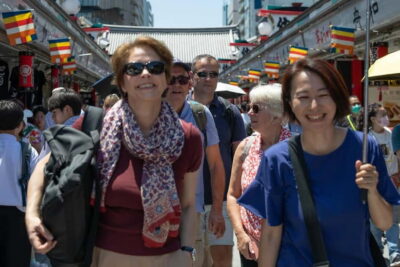 ★ 4.8Asakusa Walking Tour with Sensoji Temple VisitFrom $221,583 reviews
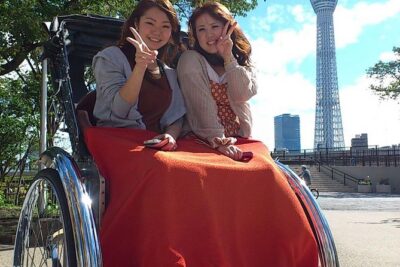 ★ 5.0Tokyo Asakusa Rickshaw TourFrom $421,375 reviews
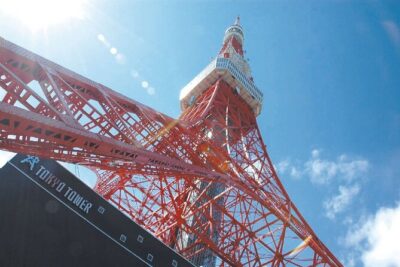 ★ 4.5Tokyo Panoramic 1 Day: Meiji Shrine, Asakusa, Odaiba and SKYTREE®From $851,222 reviews
 ★ 5.0Tokyo Go Kart: Asakusa, Skytree, and Akihabara **IDP MUST**From $99988 reviews
 ★ 4.7Asakusa, Skytree & Akhihabara Go-Kart City ExperienceFrom $96761 reviews
Browse the lists this tour appears in