
Reviewed · ASAKUSA & SENSOJI TOURS
Asakusa’s Historic Treasures
Tokyo shrinks into stories when you walk Asakusa. This 4-hour afternoon blends historic sights with fun, hands-on stops like karaoke and monja, guided by Miley, who ties the area’s past to what you can still see today. I like the way the tour moves in a clear line through time, so you’re not just taking photos—you’re learning how the neighborhood changed and what survived.
I love Miley’s upbeat, specific explanations (especially around the temple-vs-shrine differences), and I also love that the fun parts are real activities, not filler: karaoke with a free drink bar and a monja-making experience with a drink included. One consideration: it’s an active, scheduled 2:00 pm outing, and it depends on good weather, so if you want a slow, quiet wander, this may feel busy.
In This Review
- Key highlights you’ll actually feel during the tour
- The 2:00 pm start: why timing matters in Asakusa
- Miley guiding the vibe: what makes this tour feel different
- Time-slip storytelling: what the walking route teaches you
- Temple vs shrine: spotting the differences without guessing
- Asakusa Yokocho: the festival-photo stop that feels like set design
- Karaoke tea time with a free drink bar
- Monja experience: the food stop that’s hands-on, not just tasting
- Ending near Ninja House: keep the evening going (or not)
- Price and value: is $164.72 “worth it”?
- Who should book this tour, and who might skip it
- Should you book Asakusa’s Historic Treasures?
- FAQ
- FAQ
- How long is the Asakusa tour?
- What time does the tour start, and where do I meet?
- Is a mobile ticket used?
- What’s included besides sightseeing?
- How big is the group?
- What happens if weather is poor?
Key highlights you’ll actually feel during the tour
- A small group (max 9) means you get time for questions and the pace stays friendly
- Chronological Asakusa storytelling helps you spot what’s new vs what’s old at a glance
- Temple-and-shrine differences are explained so the symbols make sense while you’re standing there
- Karaoke tea time + free drink bar gives you a fun break from sightseeing
- Monja hands-on class teaches you how to make a very Asakusa-style dish (including a drink)
The 2:00 pm start: why timing matters in Asakusa
This tour starts at 2:00 pm, and that detail changes the whole feel of Asakusa. You’ll have enough daylight for photos, but you’re also moving into that late afternoon energy where streets start to feel more lively. If you’re visiting other parts of Tokyo earlier in the day, this fits well as your “evening ramp-up” before dinner.
Your meeting point is Burger King Asakusa Azumabashi, at Cross Bil Royal Palace (Kaminarimon area), near public transportation. That’s a practical win: you’re not stuck navigating a hard-to-reach corner after a long day in the city. The tour ends on the Asakusa side near Ninja House, which is useful if you want to keep the momentum going afterward.
It also runs about 4 hours. That’s long enough to include multiple experiences (history, food, karaoke), but short enough that you won’t feel like you’ve lost a whole day.
More temple mornings in old Asakusa
- Tokyo: Japanese Dance Cabaret Theater Asakusa-Kaguwa Ticket
★ 4.8 · 2,270 reviews - Tokyo: Meiji Shrine, Asakusa, Skytree Bus Tour and Cruise
★ 4.7 · 1,986 reviews - Tokyo: Roll and Authentic Sushi Making Class in Asakusa
★ 4.9 · 1,957 reviews - Tokyo: Asakusa Walking Tour with Sensoji Temple Visit
★ 4.8 · 1,583 reviews
Miley guiding the vibe: what makes this tour feel different
Guides can make or break a “sightseeing-only” walk. Here, Miley is the key reason the tour feels personal and fun. She knows the area well, and the biggest strength is how she connects cultural details to what you’re looking at right now.
You’ll notice that the tour doesn’t treat temples and shrines like random photo stops. The explanations help you see the difference between the two while you’re standing in front of them, not five hours later on Google. That kind of clarity makes Asakusa easier to understand and less confusing for first-timers.
Miley also brings that specific local contrast: she has worked in both Akihabara and Asakusa, so you get a broader sense of Tokyo’s different “modes.” It’s not just history talk. It’s also the practical customs side—how to behave, what to pay attention to, and how to read the area.
And the group size stays small (up to 9), which matters more than people think. In a big crowd, fun moments like karaoke and food experiences can feel rushed. In a small group, you’ll likely feel like the day has room to breathe.
Time-slip storytelling: what the walking route teaches you
A big part of this tour is the idea of walking through time. You’ll follow Asakusa’s history in roughly chronological steps, framed as a time-slip journey. That’s not just a gimmick—it helps you understand why certain buildings and landmarks matter.
You’ll cover the “farther back” timeline first, then move toward how the area changed over time. The tour also points out how the neighborhood looks today compared to what it went through in the modern era—especially the period when many places were affected by war. When a guide tells you to look for what survived, you start noticing details you’d otherwise miss: materials, structures, and the overall feel of streets.
This is the kind of storytelling that makes your photos more meaningful. Instead of collecting images, you’ll remember why each stop is there. It’s easier to feel that you saw Asakusa as a living place—past meeting present—rather than just a checklist.
Temple vs shrine: spotting the differences without guessing
One of the best parts of the tour is how it focuses on temples and shrines as different things. In Japan, visitors often assume they’re just religious buildings with different names. The tour helps you understand the practical differences while you’re moving between sites.
You’ll also learn how buildings that survived major historical periods still shape what you see now. That’s a powerful way to connect symbolism to real streets. It’s one thing to read about Japanese architecture. It’s another thing to stand there and have someone explain what you’re looking at.
If you like learning through observation, this stop style is great. You’ll probably find that the area makes more sense the moment someone gives you a simple way to categorize what you see.
Asakusa Yokocho: the festival-photo stop that feels like set design
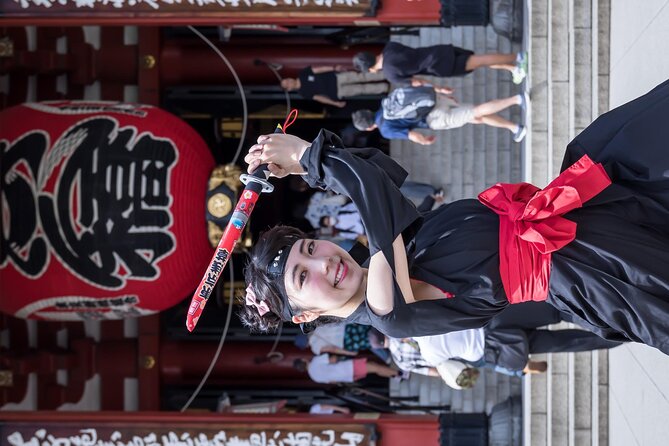
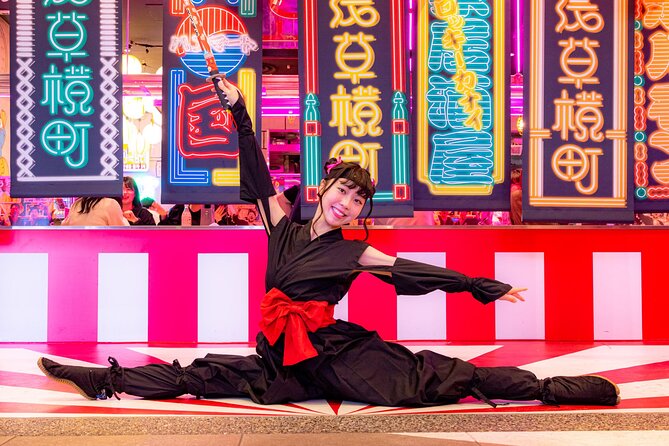
After the history portion, you’ll head to Asakusa Yokocho. This is a short stop—about 20 minutes—and it’s built for that photogenic, festival-like atmosphere.
The vibe here is playful. Think of it like stepping into a scene inspired by Japanese festivals, with streets designed to look festive rather than purely functional. You can use the time to grab photos, but I also recommend you pay attention to the textures: signage, lighting, and how the area is styled for that “old Tokyo feel” without needing a long museum lecture.
This is the kind of stop that works even if you’re tired from walking. The goal is energy and atmosphere, not deep study.
Readers also shortlisted these Tokyo bookings:
- Tokyo: Imperial Palace and Shogun Historical Walking Tour★ 5.0 · 2,251 reviews
- Tokyo: Imperial Palace Japanese History Walking Tour★ 4.9 · 987 reviews
- Yanaka Walking Tour: Historic and Traditional District of Tokyo★ 5.0 · 530 reviews
- Tokyo: Shinjuku Historical Walking Tour & Secret Backstreets★ 5.0 · 530 reviews
- Mt. Fuji Heritage Tour: Traditional Villages, Lakes & Shrine★ 4.5 · 509 reviews
Karaoke tea time with a free drink bar
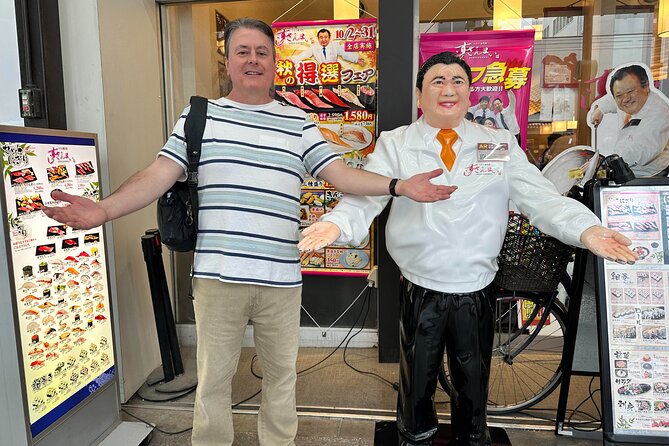
Then comes a surprisingly good reset: karaoke time. The tour frames karaoke as part of a tea-time experience, and you’ll get high-quality karaoke along with a free drink bar.
If you’re shy about singing, you can still enjoy it as a fun group moment. The bigger value here is that the tour keeps you moving through experiences that feel like actual Japanese daily-life fun, not just tourist entertainment. It also gives you a break from standing in lines outside and a breather from constant walking.
One practical tip: since there’s a drink bar involved, pace yourself. You’re doing more after karaoke, and the tour still moves to the food portion and the final area near Ninja House. You’ll enjoy the rest more if you don’t overdo it early.
Monja experience: the food stop that’s hands-on, not just tasting
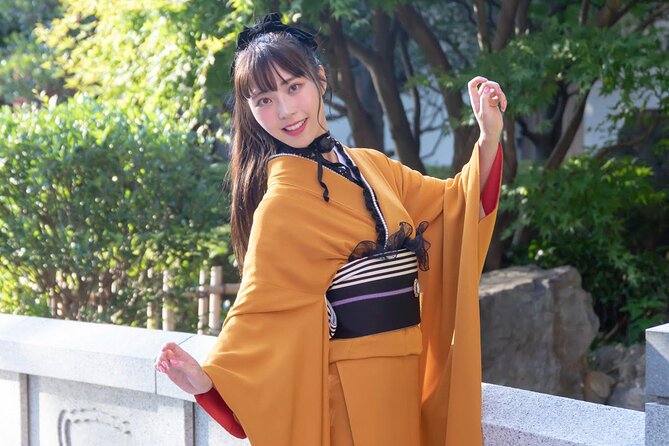
Next up is monja. This is a unique dish associated with Asakusa, and the tour leans hard into the idea that it looks unusual but tastes great. The guide teaches you how to make monja, so it’s not just eating—you’re participating.
The meal portion includes one drink with your food, which is a nice touch because it keeps things simple. Instead of you having to figure out what to order or whether something fits your tastes, you’re guided straight into a classic experience.
This is also where the tour earns its keep for the price. A lot of tours include one meal. Here, you get a lesson-like experience tied to local food culture, with ingredients and technique explained by the guide. That turns it into something you carry home—at least the basic know-how and the memory of the process.
The only “consideration” with monja is that it’s an interactive cooking experience. If you’re extremely concerned about mess or you prefer very formal, sit-down dining, this hands-on style might feel different. But if you want something lively and playful, it’s usually a highlight.
Ending near Ninja House: keep the evening going (or not)
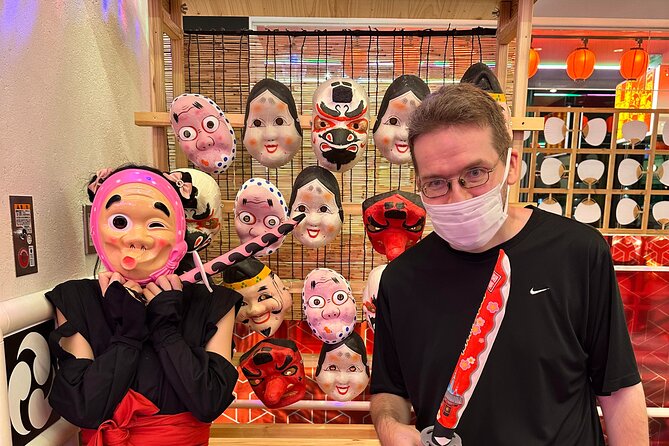
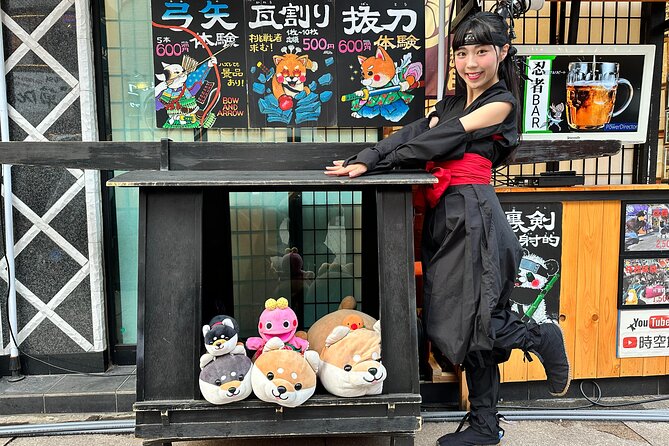
The tour ends in front of Ninja House, with an option to continue your adventure with a drink there under the guide’s suggestion. That means you can treat the tour like a full experience or use it as a jumping-off point for your own Tokyo evening.
Because the ending is in Asakusa, you can also stay nearby for more wandering after the scheduled time. Having a clear finish location helps, especially in a place where the streets can feel like a maze at night.
Price and value: is $164.72 “worth it”?
At $164.72 per person for about 4 hours, this is not the cheapest way to see Asakusa. So the question isn’t whether it’s affordable—it’s whether it’s fair value for what you get.
Here’s what you’re paying for:
- a small group size (up to 9), which supports a smoother experience
- a guide who explains temple/shrine differences and the historical timeline in a way you can actually use
- multiple included experiences beyond basic sightseeing: Asakusa Yokocho, karaoke (with a free drink bar), and a monja-making meal (with one drink)
- a mobile ticket format that simplifies entry to the included parts
If you were to do all of those independently—karaoke, a proper food experience with instruction, and guided historical stops—you’d likely spend time coordinating things and money separately. This tour compresses it into one afternoon with someone handling the flow.
That said, if you’re a strict budget traveler and you’re comfortable self-guiding Asakusa with maps and a phrasebook, you might prefer a DIY day. But if you want a guided day where fun activities are scheduled for you and included in the price, this feels like a solid deal.
Who should book this tour, and who might skip it
This experience fits best if you want:
- history with context, especially how temples and shrines differ
- a guided walk that follows a timeline instead of random stops
- interactive fun: karaoke and monja-making, not just tasting
- a smaller-group atmosphere that makes questions and participation easier
It might not be ideal if you want:
- only quiet sightseeing, no activities
- a strictly flexible schedule with no structured food or karaoke time
- a low-energy afternoon (because the day mixes walking with active experiences)
Also note the experience needs good weather. Tokyo can be unpredictable. If rain shows up, the tour can be rescheduled or refunded depending on how it’s handled.
Should you book Asakusa’s Historic Treasures?
I’d book it if your ideal Tokyo day looks like: learn something real, then switch gears to do something fun with your hands and voice. The best part is the balance—history isn’t stuck in a classroom, and the fun stops aren’t random. With Miley leading and a small group size, it tends to feel like a well-paced afternoon rather than a rushed itinerary.
Skip it if you want a completely freeform day with no karaoke, no monja lesson, and no structured experiences. For those travelers, DIY Asakusa can be just as satisfying—especially if you prefer to spend time where you choose.
FAQ
FAQ
How long is the Asakusa tour?
It runs for about 4 hours.
What time does the tour start, and where do I meet?
The start time is 2:00 pm. You meet at Burger King Asakusa Azumabashi (Cross Bil Royal Palace, 2-chōme-20-6 Kaminarimon, Taito City).
Is a mobile ticket used?
Yes. The tour uses a mobile ticket.
What’s included besides sightseeing?
You’ll do Asakusa Yokocho, a karaoke experience with a free drink bar, and a monja experience where the guide teaches you how to make it. The monja meal includes one drink.
How big is the group?
The tour has a maximum of 9 travelers.
What happens if weather is poor?
The experience requires good weather. If it’s canceled due to poor weather, you’ll be offered a different date or a full refund.
More Historical Tours in Tokyo
- Tokyo: Imperial Palace and Shogun Historical Walking Tour
★ 5.0 · 2,251 reviews - Tokyo: Imperial Palace Japanese History Walking Tour
★ 4.9 · 987 reviews - Yanaka Walking Tour: Historic and Traditional District of Tokyo
★ 5.0 · 530 reviews - Tokyo: Shinjuku Historical Walking Tour & Secret Backstreets
★ 5.0 · 530 reviews - Mt. Fuji Heritage Tour: Traditional Villages, Lakes & Shrine
★ 4.5 · 509 reviews
More Tour Reviews in Tokyo
- Mt Fuji and Hakone 1-Day Bus Tour Return by Bullet Train
★ 5.0 · 26,383 reviews - 1-Day Tokyo Bus Tour
★ 5.0 · 14,250 reviews - Tokyo: teamLab Planets TOKYO Digital Art Museum Entry Ticket
★ 4.6 · 9,779 reviews - Mt Fuji & Hakone Cruise, Drum Show Bullet Train 1 Day from Tokyo
★ 4.0 · 7,413 reviews - Tokyo: Shinjuku Food Tour (13 Dishes at 4 Local Eateries)
★ 5.0 · 6,603 reviews
More Mornings in Old Asakusa
- Tokyo: Japanese Dance Cabaret Theater Asakusa-Kaguwa Ticket
★ 4.8 · 2,270 reviews - Tokyo: Meiji Shrine, Asakusa, Skytree Bus Tour and Cruise
★ 4.7 · 1,986 reviews - Tokyo: Roll and Authentic Sushi Making Class in Asakusa
★ 4.9 · 1,957 reviews - Tokyo: Asakusa Walking Tour with Sensoji Temple Visit
★ 4.8 · 1,583 reviews - Tokyo Asakusa Rickshaw Tour
★ 5.0 · 1,375 reviews
Latest Tokyo reviews off our desk






Asakusa & Sensoji Tours, compared.
 ★ 4.8Japanese Dance Cabaret Theater Asakusa-Kaguwa TicketFrom $492,270 reviews
 ★ 4.7Meiji Shrine, Asakusa, Skytree Bus Tour and CruiseFrom $1221,986 reviews
 ★ 4.9Roll and Authentic Sushi Making Class in AsakusaFrom $581,957 reviews
 ★ 4.8Asakusa Walking Tour with Sensoji Temple VisitFrom $221,583 reviews
 ★ 5.0Tokyo Asakusa Rickshaw TourFrom $421,375 reviews
 ★ 4.5Tokyo Panoramic 1 Day: Meiji Shrine, Asakusa, Odaiba and SKYTREE®From $851,222 reviews
 ★ 5.0Tokyo Go Kart: Asakusa, Skytree, and Akihabara **IDP MUST**From $99988 reviews
 ★ 4.7Asakusa, Skytree & Akhihabara Go-Kart City ExperienceFrom $96761 reviews
Browse the lists this tour appears in