
Reviewed · CRAFT & ARTISAN WORKSHOPS
Bonsai Tour & Experience at the Most Sacred City for Bonsai in JP
Mini trees, big patience.
This Bonsai-cho tour near Tokyo turns bonsai from a pretty hobby into a craft you can actually touch. I love the small-group setup (max 10) with personal coaching, and I love how the day mixes a garden visit with practical pruning and shaping. One thing to consider: you’ll likely pay extra along the way for a required cafe order and, if you want it, the Bonsai Art Museum admission.
The heart of the experience is learning why Japanese bonsai looks the way it does, then practicing the same maintenance steps you see in the outdoor displays. You start with an organized walk through local gardens and nurseries where the guide explains design choices, not just facts.
You’ll meet at Toro Station at 10:00 am, and you’ll end back there about 2.5 hours later. The tour uses a mobile ticket, which keeps things simple once you’re on the ground.
In This Review
- Key things that make this tour worth your time
- Bonsai-cho, the place where bonsai lives outdoors
- Meeting at Toro Station and keeping the day easy
- The garden walk: how to read bonsai like a designer
- Hands-on pruning and shaping: where the skill clicks
- Why the small group (max 10) is a real advantage
- Cafe break rules and optional museum time
- What you’re really paying for: a $55.52 value check
- Who this tour is best for (and who might skip it)
- Tips to make the day smoother
- Should you book this Bonsai-cho bonsai tour with Jun?
- FAQ
- How long is the bonsai tour and experience?
- Where does the tour start and end?
- What time does the tour begin?
- What is the group size?
- What does the tour include in the price?
- Are meals included?
- Is the Bonsai Art Museum included?
- What age is the program for?
- What happens if I want to enter a shop without taking part in the class?
- What is the cancellation policy?
Key things that make this tour worth your time
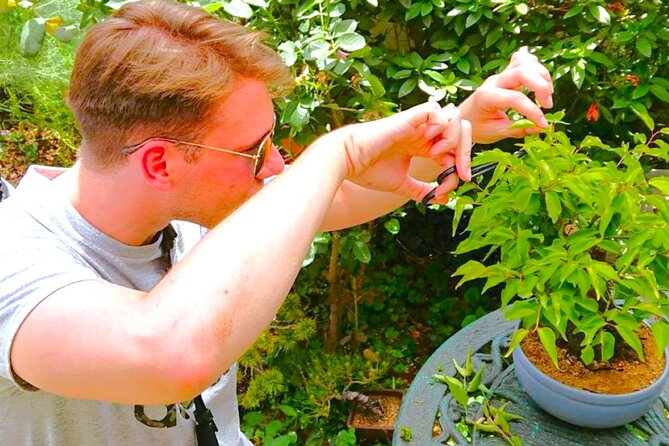
- Bonsai-cho history tied to the Great Kanto Earthquake, plus a dense cluster of classic bonsai gardens
- Small group (max 10), so Jun can actually correct your technique
- Two-part format: garden viewing first, then pruning and shaping hands-on
- Pruning/shaping basics with tools, including guidance that can cover things like wire adjustments
- Extra sights are optional, including the Bonsai Art Museum (not included)
Bonsai-cho, the place where bonsai lives outdoors
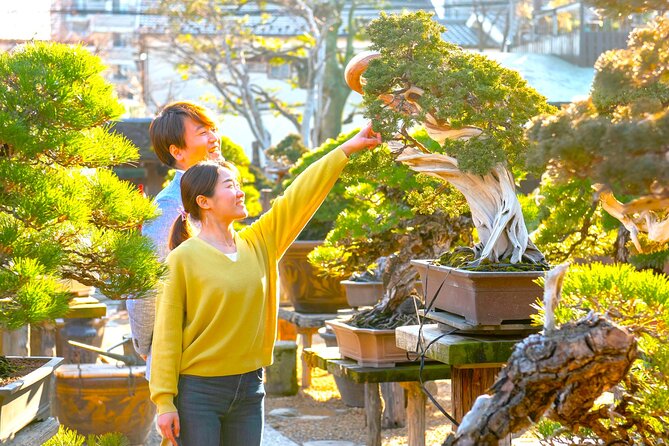
If you’ve only ever seen bonsai behind glass or in souvenir shops, Bonsai-cho is a reality check—in the best way. This area has been associated with bonsai for about 100 years, and it grew into a hub after the Great Kanto Earthquake, when local gardeners organized and rebuilt their community.
What I liked most is that you’re not bouncing between random stops. You’re in a region surrounded by greenery and built around long-established gardens—five, in fact—where you can compare styles side by side. It helps you start seeing bonsai as “miniature nature design” rather than just one cute tree in a pot.
Jun’s commentary made the difference between looking and understanding. You’re guided to notice the structure that creates age and movement: the way trunks thicken, the way branches step outward, and the choices that make a tree look balanced rather than overgrown.
More hands-on studios our readers booked
- Tokyo Shinjuku Chopsticks Making Class
★ 5.0 · 1,763 reviews - Chopstick Making Workshop in Ginza
★ 4.8 · 1,366 reviews - Kintsugi Experience: Art of Golden Joinery in Tokyo
★ 5.0 · 467 reviews - Tokyo Chopstick Making Workshop with Artisan
★ 5.0 · 466 reviews
Meeting at Toro Station and keeping the day easy
The tour starts at Toro Station 1 Chome in Kita Ward, Saitama, with pickup at the station area and a 10:00 am start. You’ll also return to the same meeting point at the end, which is the kind of clean ending day planners love.
This is a good format if you’re staying in Tokyo but don’t want to spend your morning figuring out complicated logistics. The meeting point is near public transportation, so you’re not locked into a private car or long transfers.
Also, since the group is capped at 10, you’re less likely to get lost in a crowd. That matters because part of the value here is asking questions and getting corrections while you’re looking at real trees and using real tools.
The garden walk: how to read bonsai like a designer
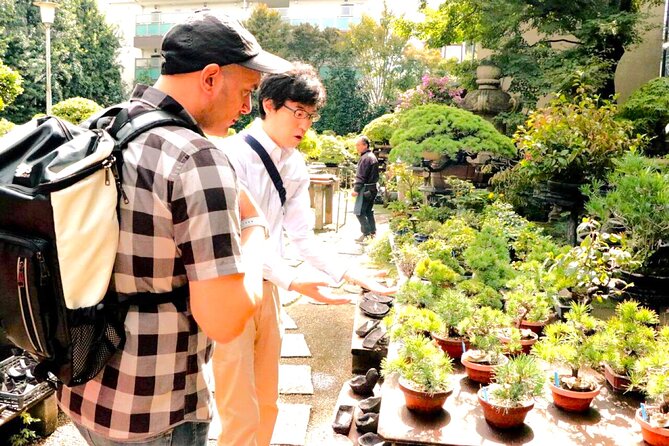
The first session is essentially your “viewing class,” held at an outdoor bonsai garden and connected nurseries. You’ll see a lot of top-quality trees, and the guide gives commentary as you go.
Here’s what you should pay attention to on your walk:
- Trunk line and taper: where the thickest part feels intentional
- Branch placement: not just where branches exist, but where they don’t
- Negative space: the gaps that make the tree feel airy
- Texture and age signals: how pruning choices create the impression of time
This is the part where beginners often think they’re just sightseeing. In practice, you’re collecting visual “rules” for later when you pick up tools. I found that seeing multiple trees in one area teaches faster than any single tree in isolation.
One bonus: Bonsai-cho’s setup means you can compare different approaches in a short time. That’s a smart way to learn, because bonsai styling isn’t one correct look. It’s an artistic interpretation shaped by horticulture.
Hands-on pruning and shaping: where the skill clicks
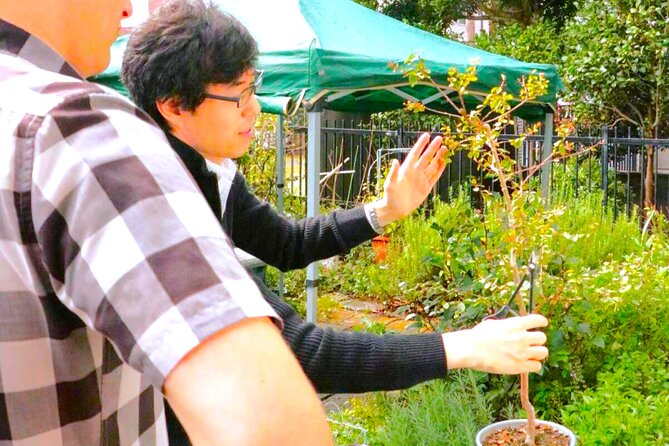
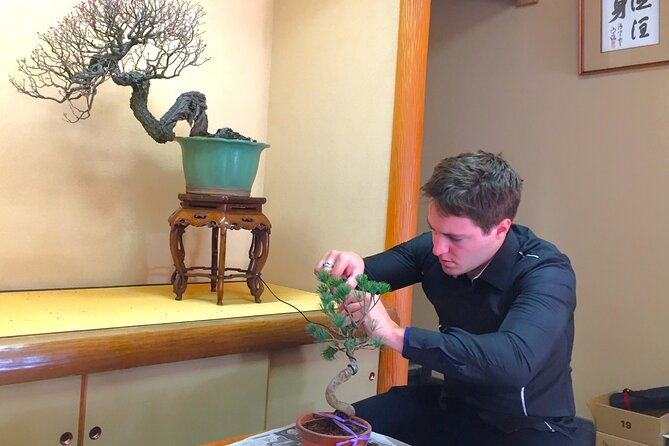
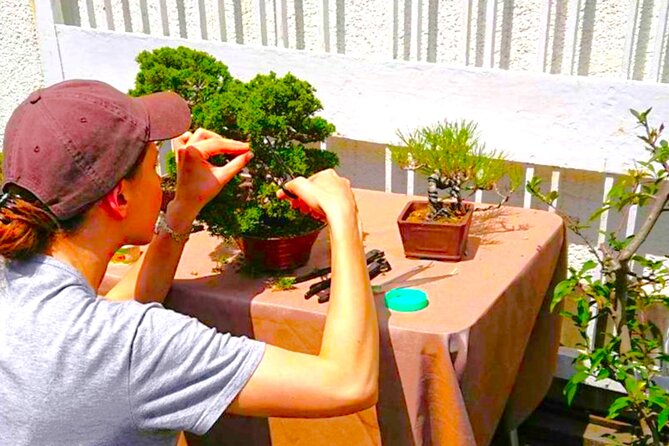
The second session is where you stop watching and start doing. You’ll get hands-on experience with key maintenance techniques for bonsai—especially pruning and shaping.
You’ll be working with bonsai tools, and the tool usage fee is included in the price. That matters because it removes one common worry: you don’t have to show up with equipment or figure out what to buy.
From what’s emphasized during the workshop, you’ll learn techniques that help keep a bonsai looking proportioned over time. In particular, Jun explains steps clearly enough that even first-timers can follow along and apply the idea to what they’re holding.
In one of my favorite moments, Jun’s instructions didn’t feel like generic “cut this” directions. He talked through reasoning—how pruning supports structure and how shaping affects the overall silhouette. That’s what makes it educational instead of just hands-on entertainment.
Depending on the group and session flow, you might also cover practical details like adjusting wiring or trimming approaches that influence how branches set. Even if you only catch parts of it, you’ll leave knowing there’s a method behind the art.
Why the small group (max 10) is a real advantage
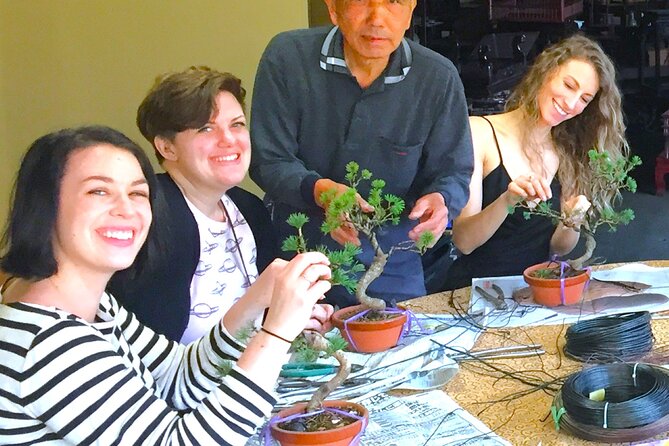
A max of 10 travelers changes the quality of your learning. When the group is small, Jun can look at what you’re doing, point to the tree structure you’re aiming for, and answer questions without rushing.
This is especially important in bonsai, because tiny choices add up. Where you cut, how you guide growth, and how you interpret balance are the difference between a tree that looks planned and one that looks like it grew that way by accident.
I also appreciate the way the tour sets you up to ask questions about bonsai and about Japan in general. Jun’s style is focused on explanation, not just demonstration. You’re not stuck watching someone else work while you wonder what to notice.
Readers also shortlisted these Tokyo bookings:
- Tokyo: Private City Highlights Tour with Local Guide★ 4.8 · 1,433 reviews
- Tokyo: Asakusa, Skytree & Akhihabara Go-Kart City Experience★ 4.7 · 761 reviews
- Tokyo: 3-Hour Bike or E-Bike City Highlights Tour★ 4.8 · 435 reviews
- Tokyo: Sumo Morning Practice Tour at Sumida City★ 4.8 · 308 reviews
- Private Haneda Airport (HND) to Central Tokyo City Transfer★ 4.5 · 260 reviews
Cafe break rules and optional museum time
The practical part of the day includes a cafe component after the hands-on session. The tour notes that bonsai work will be done in a cafe, and you need to order something there.
The cost isn’t fixed by the tour price. It’s a typical casual meal/coffee situation—think around 450 JPY (about $3) as a rough starting point, based on what the tour indicates.
If you want to add the Bonsai Art Museum, that’s not included. Admission is 310 yen (about $2), so you can decide on the spot whether the extra time is worth it for you.
One more fine-print consideration: if you want to enter a shop without participating in the class, there’s an additional fee that must be requested in advance. So this isn’t a “wander in and out freely” situation. If you want extra access, ask early and plan for the add-on cost.
What you’re really paying for: a $55.52 value check
At $55.52 per person, this tour isn’t a budget bargain, but it also isn’t priced like a private workshop. The included items are what justify the cost:
- Instructor time
- Bonsai tool usage fee
- Consumption tax
So you’re paying for guidance plus hands-on materials use, not just a sightseeing route.
Then factor in the likely extras: the cafe order and, optionally, the Bonsai Art Museum. A realistic “base day” might look like $55.52 plus the cafe purchase, with the museum as a possible add-on. Even with those extras, it’s still a reasonable spend for a small-group craft experience you can’t easily replicate on your own in Tokyo.
Also remember: because the tour returns you to the meeting point and runs about 2 hours 30 minutes, you get a compact day format. For many people, that time-box is part of the value.
Who this tour is best for (and who might skip it)
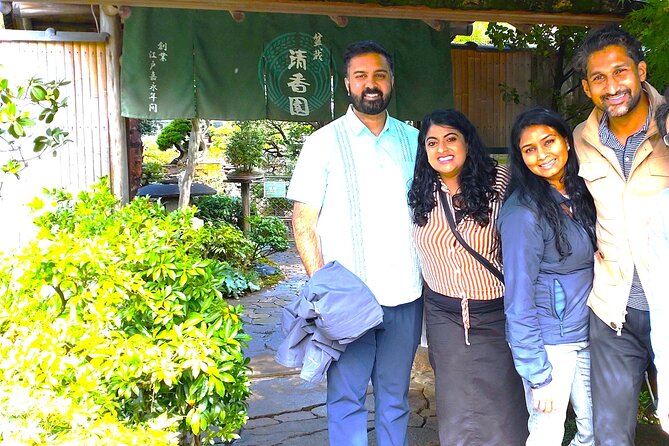
This is for you if you want bonsai that’s more than photos. You’ll enjoy it if you like hands-on activities, want a local guide to explain how bonsai styling works, and you don’t mind doing practical pruning and shaping steps.
It’s also a great choice if you’re traveling with someone who’s curious but not an expert. The small group format helps beginners keep up, and the explanation style makes it less intimidating.
Skip it if you’re not comfortable with the workshop format. The tour requires that participants are at least 13 years old, and under-18 participants must be accompanied by an adult. The experience also won’t run for people who are unwell or under the influence of alcohol, since the tour requires safe participation and no refunds in those cases.
If you’re looking for a purely passive garden tour with zero hands-on involvement, this likely won’t match your vibe. The whole point is that second session where you actively prune and shape.
Tips to make the day smoother
You’ll get the most out of the workshop if you show up mentally ready to learn a few key techniques. Don’t worry about being perfect. In bonsai, small mistakes are part of the process, and Jun’s guidance is there to help you understand what you’re trying to create.
I’d also plan your expectations around time. This tour is about 2.5 hours, so you’re not seeing every garden in Bonsai-cho. You’re seeing the right mix to understand styles and then apply basic maintenance principles.
Finally, treat the cafe requirement like a feature, not a chore. It’s part of the experience flow, and it gives you a chance to sit, ask questions, and reset before you finish.
Should you book this Bonsai-cho bonsai tour with Jun?
Book it if you want a true bonsai experience, not just a walk past pretty trees. The value comes from combining real garden viewing with a guided pruning and shaping workshop in a small group.
It’s also a smart Tokyo-area plan if you want cultural learning with practical output. You’ll leave with better instincts for what makes bonsai look intentional, and you’ll know at least a few maintenance techniques you can recognize in the future.
If you hate hands-on activities, or you’re hoping for a museum-centered day with no workshop involvement, you’ll probably feel constrained by the format. But for the right mindset, this is a compact, teachable, and very Japan-specific craft day.
FAQ
How long is the bonsai tour and experience?
The experience runs about 2 hours 30 minutes.
Where does the tour start and end?
It starts at Toro Station 1 Chome (Kita Ward, Saitama) and ends back at the same meeting point.
What time does the tour begin?
The start time is 10:00 am.
What is the group size?
This tour/activity has a maximum of 10 travelers.
What does the tour include in the price?
It includes the instructor, bonsai tool usage fee, and consumption tax.
Are meals included?
No. Bonsai work is done in a cafe, and you’ll need to order something there (the tour indicates about 450 JPY or more).
Is the Bonsai Art Museum included?
No. Admission for the Bonsai Art Museum is listed as 310 yen (about $2), and it is not included in the tour price.
What age is the program for?
Participants must be at least 13 years old. Those under 18 must be accompanied by an adult.
What happens if I want to enter a shop without taking part in the class?
You can do that, but you must pay an additional fee. The fee needs to be requested at the time of your request; those who haven’t paid will not be admitted to the venue.
What is the cancellation policy?
The experience is non-refundable and cannot be changed for any reason. If you cancel or request an amendment, the amount you paid will not be refunded.
More Tours in Tokyo
- Mt Fuji and Hakone 1-Day Bus Tour Return by Bullet Train
★ 5.0 · 26,383 reviews - 1-Day Tokyo Bus Tour
★ 5.0 · 14,250 reviews - Tokyo: Shinjuku Food Tour (13 Dishes at 4 Local Eateries)
★ 5.0 · 6,603 reviews - Tokyo Mt Fuji 5th St & Hakone Cruise Bus Tour w/Bullet Train
★ 4.4 · 5,024 reviews - Flagship 2-Hours Official Street Go-Kart Tour – Tokyo Bay Shop
★ 5.0 · 4,974 reviews
More Tour Reviews in Tokyo
- Mt Fuji and Hakone 1-Day Bus Tour Return by Bullet Train
★ 5.0 · 26,383 reviews - 1-Day Tokyo Bus Tour
★ 5.0 · 14,250 reviews - Tokyo: teamLab Planets TOKYO Digital Art Museum Entry Ticket
★ 4.6 · 9,779 reviews - Mt Fuji & Hakone Cruise, Drum Show Bullet Train 1 Day from Tokyo
★ 4.0 · 7,413 reviews - Tokyo: Shinjuku Food Tour (13 Dishes at 4 Local Eateries)
★ 5.0 · 6,603 reviews
More Artisan Workshops in Tokyo
- Tokyo Shinjuku Chopsticks Making Class
★ 5.0 · 1,763 reviews - Chopstick Making Workshop in Ginza
★ 4.8 · 1,366 reviews - Kintsugi Experience: Art of Golden Joinery in Tokyo
★ 5.0 · 467 reviews - Tokyo Chopstick Making Workshop with Artisan
★ 5.0 · 466 reviews - Tokyo: Shinjuku Chopstick Making Class
★ 4.9 · 440 reviews
Latest Tokyo reviews off our desk






Craft & Artisan Workshops, compared.
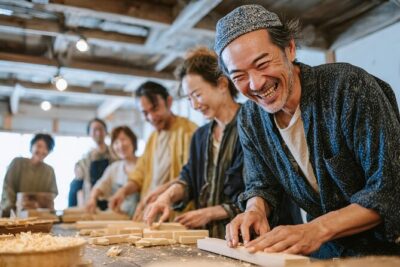 ★ 5.0Tokyo Shinjuku Chopsticks Making ClassFrom $201,763 reviews
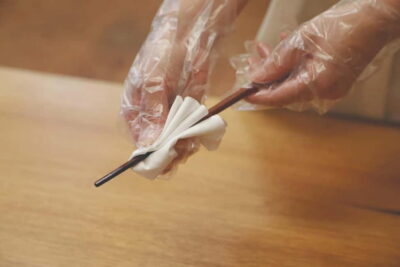 ★ 4.8Chopstick Making Workshop in GinzaFrom $251,366 reviews
 ★ 5.0Kintsugi Experience: Art of Golden Joinery in TokyoFrom $59467 reviews
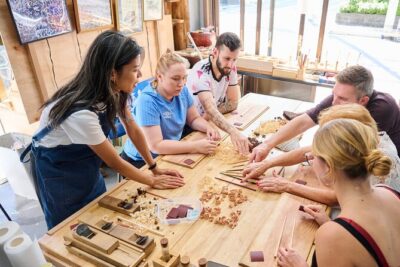 ★ 5.0Tokyo Chopstick Making Workshop with ArtisanFrom $26466 reviews
 ★ 5.0Authentic Pure Gold Kintsugi Workshop with Master Taku in TokyoFrom $142217 reviews
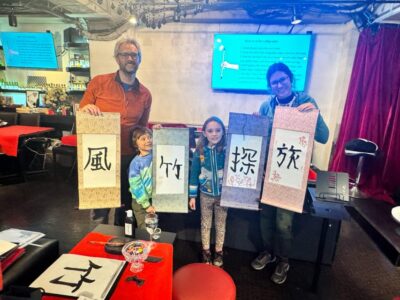 ★ 5.0Calligraphy on Kanji Fan & Scroll with DrinkFrom $53210 reviews
Browse the lists this tour appears in