

Reviewed · CRAFT & ARTISAN WORKSHOPS
Kintsugi Experience: Art of Golden Joinery in Tokyo
Golden repairs beat broken souvenirs. In this Tokyo Kintsugi workshop, you’ll learn the art of Kintsugi and the practical steps that turn cracks into gold seams. I love that the lesson covers the why behind the craft, not just the how, and I love the payoff: you leave with a repaired plate you can actually use as a souvenir.
One thing to know up front: you work with a ceramic plate the studio provides. If you’re hoping to bring your own broken mug or dish, this class won’t be set up for that. Also, kids under 6 can’t enter the atelier for safety reasons.
In This Review
- Key Kintsugi Takeaways Before You Go
- Getting There: Minami-Aoyama Studio Near Omotesando
- Price and Value: What $59.69 Actually Buys
- Your Small-Group Lesson: Samue, Studio Pace, and Real Guidance
- What You’ll Repair: Studio Plates Only (And Why That’s Good)
- Kintsugi Philosophy: The Part That Changes How You Look at Things
- How the Workshop Works: Lacquer Meets Gold
- Timing and Master Taku: When You Might Meet the Artisan
- Where the Workshop Fits in Your Tokyo Day
- Who Should Book This Kintsugi Experience
- Should You Book It? My Practical Recommendation
- FAQ
- Where is the Kintsugi workshop meeting point?
- How long does the lesson last?
- Can children under 6 participate?
- What item do I repair in the class?
- Is there a chance to meet Master Taku?
- Is this experience refundable if I cancel?
Key Kintsugi Takeaways Before You Go
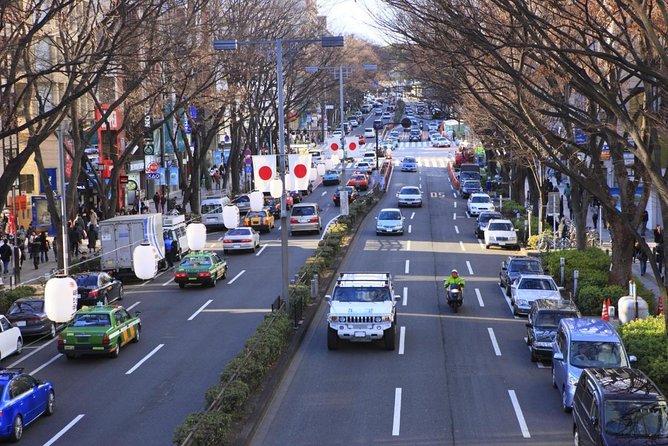
- A capped group (no more than 10 guests) means more direct help as you work.
- You repair with lacquer mixed with gold, so your final seam looks intentionally shimmering—not random.
- The lesson is philosophy-first: breakage and repair are treated as part of an object’s history.
- You wear a traditional samue during the class, which makes the craft feel ceremonial, not just instructional.
- Your souvenir is included: the repaired plate is yours to take home after the workshop.
- Master Taku may appear in the 11:00am class, adding a special Tokyo crafts touch.
Getting There: Minami-Aoyama Studio Near Omotesando
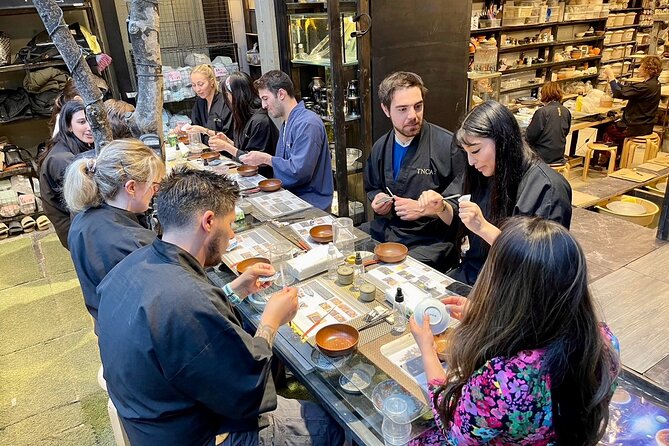
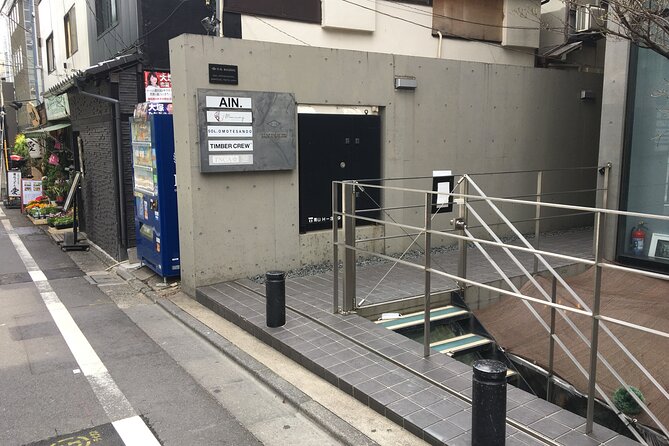
This workshop takes place in Tokyo’s Minami-Aoyama area, near Omotesando—a smart choice if you’re already planning to explore that side of Tokyo. The meeting point is at TNCA Minami-Aoyama Studio, 3-chōme-8-2 Minamiaoyama, Minato City, Tokyo 107-0062, Japan.
Plan to arrive with a little buffer. The studio is small and the lesson runs about an hour, so you don’t want to be scrambling at the last minute. The class setup is very focused—less wandering time, more hands-on time—so getting your bearings fast helps you enjoy the experience.
Also, skip the assumption that the studio is at a massive landmark you can spot from far away. In this neighborhood, things are often spread out and easy to miss if you rely on street corners alone. Use the address and a map route, then give yourself time to walk the final stretch.
More hands-on studios our readers booked
- Tokyo Shinjuku Chopsticks Making Class
★ 5.0 · 1,763 reviews - Chopstick Making Workshop in Ginza
★ 4.8 · 1,366 reviews - Kintsugi Experience: Art of Golden Joinery in Tokyo
★ 5.0 · 467 reviews - Tokyo Chopstick Making Workshop with Artisan
★ 5.0 · 466 reviews
Price and Value: What $59.69 Actually Buys
At $59.69 per person for about one hour, this isn’t an all-day experience. But it’s priced in a way that makes sense for what you get: a guided, studio-led craft session plus materials.
Here’s the value breakdown that matters:
- Included in the fee: the lesson itself, all necessary equipment, taxes and handling charges, and the ceramic plate you repair.
- Not included: hotel pickup/drop-off and food/drinks.
Because the studio provides the plate and tools, you’re not paying for an open-ended craft supply run. You’re paying for instruction plus the right materials to produce a finished Kintsugi outcome you can take home.
So if you want a short, memorable, hands-on Tokyo activity that doesn’t require special shopping or prior skill, this is a solid value. If you’re expecting a long guided tour through multiple neighborhoods, this one hour is the entire experience.
Your Small-Group Lesson: Samue, Studio Pace, and Real Guidance
You’ll meet your teacher and work in a group of no more than 10 guests. That cap matters. In workshops with bigger groups, one instructor can’t give much attention once hands-on starts. Here, the format supports slower teaching—questions don’t get lost, and you’re more likely to get help while your hands are still on the piece.
You’ll also put on a samue, a traditional Japanese work garment. It’s not just a photo prop. It helps create the right mood for focused, careful crafting, which is exactly what Kintsugi demands. The process is detailed, and working in a studio setting with the right “workwear” tone helps you stay calm and methodical.
The pacing is built around making the technique approachable. Even if you don’t consider yourself an art person, the lesson is structured so you can follow along and finish something coherent. You’re not trying to recreate centuries of master work from scratch—you’re learning the core method and experiencing what makes the approach meaningful.
What You’ll Repair: Studio Plates Only (And Why That’s Good)
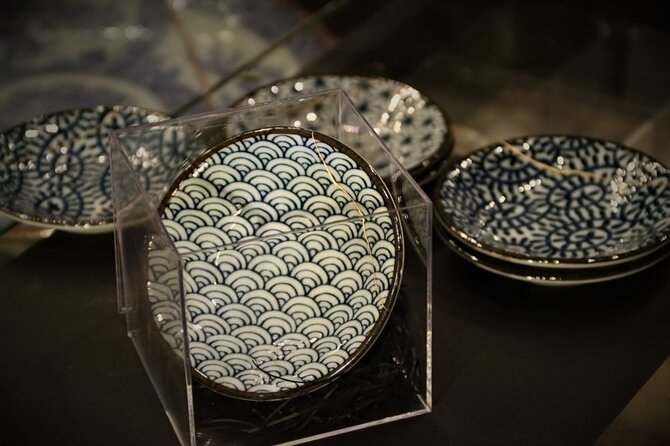
Here’s the key rule: personal items are not allowed. You’ll repair a plate supplied by the studio, and that same plate becomes your take-home souvenir.
This might sound limiting, but it’s also practical. Plates are predictable in shape and break pattern, which makes it easier for the teacher to guide everyone through the same learning experience. Your class time stays on technique and philosophy instead of getting stuck on variations the studio can’t support.
Expect a similar setup for each participant, so you can focus on doing the steps right:
- learning how the seam is built,
- understanding the sequence of the work,
- and finishing with a repaired look that feels intentional.
And you’ll leave with your repaired plate packaged for transport, so you can bring your gold-seam souvenir back without turning your suitcase into a ceramics disaster zone.
Kintsugi Philosophy: The Part That Changes How You Look at Things
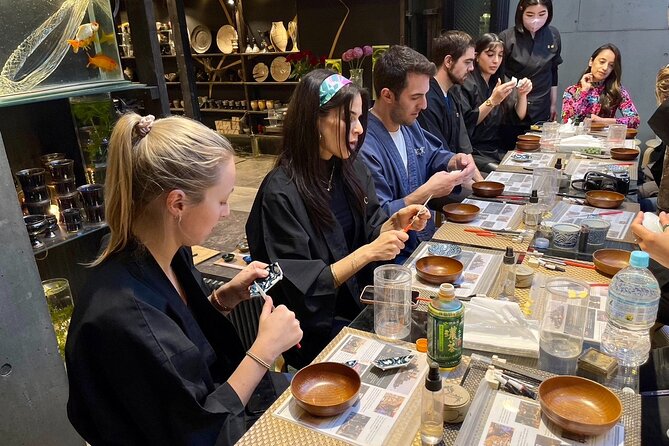
The technique is only half the story. The other half is cultural—and it’s the part that tends to stick with you after the workshop ends.
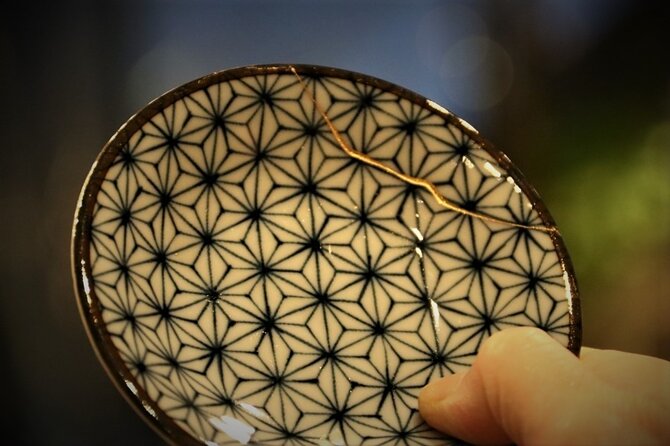
Kintsugi comes from a Japanese idea: breakage and repair belong to an object’s history. Instead of hiding damage or throwing something away, you treat the repaired line as information. A crack isn’t shame. It’s a record of life.
That mindset is what makes this craft more than a decorative hobby. You start thinking differently about everyday items:
- that “broken” thing you keep meaning to fix,
- the sentimental object you don’t want to replace,
- and the idea that wear and tear can be part of beauty.
As you work, you’ll be guided through the philosophy behind Kintsugi, plus insights into traditional Japanese crafts. The goal is to give you a new lens—so the souvenir isn’t only something you own. It’s something you understand.
- Tokyo: Shinjuku Food Tour (13 Dishes at 4 Local Eateries)★ 5.0 · 6,603 reviews
- Tokyo Mt Fuji 5th St & Hakone Cruise Bus Tour w/Bullet Train★ 4.4 · 5,024 reviews
- Flagship 2-Hours Official Street Go-Kart Tour – Tokyo Bay Shop★ 5.0 · 4,974 reviews
- From Tokyo: Mount Fuji Full-Day Sightseeing Trip★ 4.5 · 4,970 reviews
- Tokyo: Hop-On Hop-Off Sightseeing Bus Ticket★ 3.9 · 4,207 reviews
How the Workshop Works: Lacquer Meets Gold
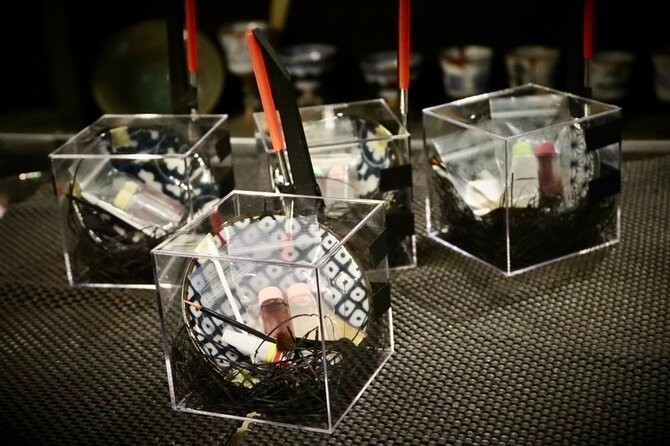
The hands-on portion centers on Kintsugi’s core materials: lacquer mixed with gold. That gold mixture is what gives the repair line its distinctive glow.
You’ll learn the process step by step during your one-hour session. You start with your plate and follow the teacher’s guidance to build the repair seam properly. The instructions are designed for newcomers, so you’re not expected to already know ceramic repair chemistry or fine finishing tricks.
A helpful part of the class format is that you’re not left guessing in silence. The teaching style is patient and clear, with support as you go. That’s especially important when you’re working with thin, precise application—one rushed move can ruin the look of the seam.
By the end, your piece should look like it was meant to be that way: not perfectly hidden, but thoughtfully repaired. That’s the whole point of Kintsugi’s aesthetic—imperfection, made beautiful on purpose.
Timing and Master Taku: When You Might Meet the Artisan
One of the special notes for this experience is about Master Taku. In the 11:00am class, there’s a chance to meet him. The artisan behind the craft is often present in the atelier work, which gives the whole session that extra layer of authenticity.
Even if you don’t speak at length with a master artisan, you’ll feel the difference in how the studio runs: calm, careful, and craft-led rather than gimmick-led. If you want the strongest chance of seeing him, choose the 11:00am slot.
Where the Workshop Fits in Your Tokyo Day
This is a short, focused craft stop, so you’ll want to build the rest of your day around it. Because it’s about an hour, you can pair it with nearby sightseeing without stress.
The Minami-Aoyama/Omotesando area is a good match because it’s easy to transition from browsing and walking into something quieter and more hands-on. Also, because the workshop doesn’t include food, you’ll probably want a plan before or after—either eat early, or schedule a meal soon after your lesson ends.
Think of it like this:
- Morning lesson = peaceful creative reset.
- Midday lesson = a break from Tokyo crowds and walking.
- Afternoon lesson = a fun creative stop that still leaves energy for evening plans.
Who Should Book This Kintsugi Experience
This workshop fits best if you want:
- a creative souvenir that’s not mass-produced,
- a class that explains the meaning behind the craft,
- and a calm, mindful hour of making.
It’s also a good fit if you’re not an artist. The format is accessible, and the class is designed for people who want a first taste of Kintsugi technique without needing prior experience.
Pair it with your travel style:
- If you like small-group activities with clear instruction, you’ll probably enjoy this.
- If you love cultural depth tied to hands-on making, this is a strong match.
- If you’re traveling with someone who enjoys crafts, it’s an easy “yes” activity.
Two practical fit notes:
- Kids under 6 can’t enter the atelier for safety reasons.
- You’ll be working on studio plates, not personal pottery.
Should You Book It? My Practical Recommendation
I think this is worth booking if you want a short Tokyo activity with real craft value and a meaningful souvenir. The big selling points are the philosophy + technique pairing and the fact that the workshop ends with a finished repaired object you can keep.
Book it if:
- you like hands-on learning,
- you want a take-home piece with a story,
- and you can commit to the workshop rules (studio-provided plates, not personal items).
Consider skipping or choosing another activity if:
- you specifically want to repair your own broken item,
- you need a long guided tour rather than a one-hour studio class,
- or you’re traveling with a child under 6.
If your schedule works, this is one of those “do it once and you’ll remember it” experiences—because gold-lacquer repair turns a simple hour into a new way of seeing objects.
FAQ
Where is the Kintsugi workshop meeting point?
You’ll meet at TNCA Minami-Aoyama Studio, 3-chōme-8-2 Minamiaoyama, Minato City, Tokyo 107-0062, Japan. The activity ends back at the meeting point.
How long does the lesson last?
The experience lasts about 1 hour (approx.).
Can children under 6 participate?
No. Under 6 years of age cannot enter the atelier due to safety reasons of the establishment.
What item do I repair in the class?
You’ll repair a ceramic plate provided by the studio. Personal items are not allowed, and the plate is included so you can take it home after the lesson.
Is there a chance to meet Master Taku?
There’s a chance to meet Master Taku in the 11:00am class.
Is this experience refundable if I cancel?
No. This experience is non-refundable and cannot be changed for any reason. If it’s canceled because a minimum number of travelers isn’t met, you’ll be offered a different date/experience or a full refund.
More Tour Reviews in Tokyo
- Mt Fuji and Hakone 1-Day Bus Tour Return by Bullet Train
★ 5.0 · 26,383 reviews - 1-Day Tokyo Bus Tour
★ 5.0 · 14,250 reviews - Tokyo: teamLab Planets TOKYO Digital Art Museum Entry Ticket
★ 4.6 · 9,779 reviews - Mt Fuji & Hakone Cruise, Drum Show Bullet Train 1 Day from Tokyo
★ 4.0 · 7,413 reviews - Tokyo: Shinjuku Food Tour (13 Dishes at 4 Local Eateries)
★ 5.0 · 6,603 reviews
More Artisan Workshops in Tokyo
- Tokyo Shinjuku Chopsticks Making Class
★ 5.0 · 1,763 reviews - Chopstick Making Workshop in Ginza
★ 4.8 · 1,366 reviews - Tokyo Chopstick Making Workshop with Artisan
★ 5.0 · 466 reviews - Tokyo: Shinjuku Chopstick Making Class
★ 4.9 · 440 reviews - Tokyo: Chopstick-Making Workshop
★ 4.9 · 348 reviews
Latest Tokyo reviews off our desk






Craft & Artisan Workshops, compared.
 ★ 5.0Tokyo Shinjuku Chopsticks Making ClassFrom $201,763 reviews
 ★ 4.8Chopstick Making Workshop in GinzaFrom $251,366 reviews
 ★ 5.0Tokyo Chopstick Making Workshop with ArtisanFrom $26466 reviews
 ★ 5.0Authentic Pure Gold Kintsugi Workshop with Master Taku in TokyoFrom $142217 reviews
 ★ 5.0Calligraphy on Kanji Fan & Scroll with DrinkFrom $53210 reviews
 ★ 5.0Let’s experience calligraphy in YANAKA, Taito-ku, TOKYO !!From $75127 reviews
Browse the lists this tour appears in