
Reviewed · SUSHI MAKING CLASSES
Hands On Wagyu Sushi Making Experience
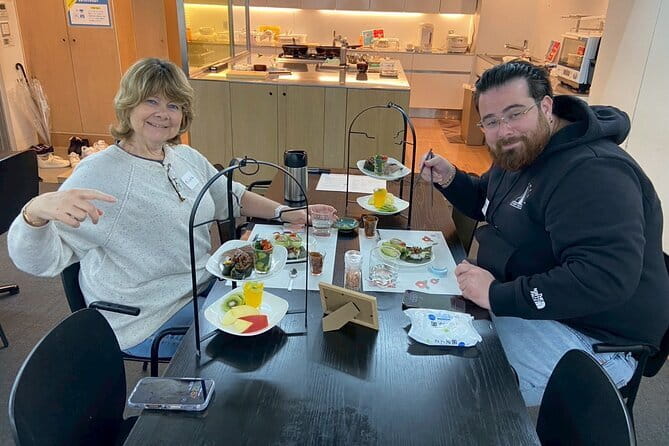
Wagyu sushi turns heads in Tokyo. I like that this class swaps the usual fish-first sushi lesson for premium Wagyu and gives you everything you need, so you can focus on learning instead of hunting ingredients. I also like the small group size (up to six), which makes it easier to get help while you form nigiri and roll maki. One consideration: there are no vegan or vegetarian options.
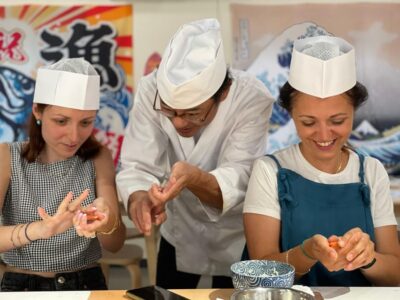
The instructors, including Hiroko and Saori, walk you through the sushi process step by step, and you’ll also work with shari (sushi rice). You’ll learn more than just cooking—this is also about presentation, so your finished pieces look good on the plate before you eat them.
You’ll have about 1 hour 30 minutes, starting at 12:00 pm, and it ends back at the meeting point. You’ll even get later-downloadable photos from the experience, plus lunch is included.
In This Review
- Key Highlights You Should Know
- Why This Tokyo Wagyu Sushi Class Works (Even If You Think You Know Sushi)
- Your 12:00 Lunch Session: How the 90 Minutes Typically Flow
- The Sushi Styles You’ll Make (And Why Each One Teaches a Different Skill)
- Nigiri: The Hand-Forming Core Skill
- Gunkan Maki: Building Something That Stays Put
- Temaki: The Fun, Flexible Cone
- Shari, Meat, and Plating: The Skills That Make This More Than a One-Time Meal
- Shari (Sushi Rice) Basics You Can Actually Use
- How to Cook the Wagyu Part
- Plating: Where the Class Turns Photogenic
- Your Instructors: English-Friendly Help in a Small Group Setting
- Price and Value: Is $104.51 a Good Deal?
- What’s Included (and What You’ll Need to Sort Yourself)
- Who This Tokyo Wagyu Sushi Class Is Perfect For
- A Few Things to Consider Before You Book
- Should You Book This Hands-On Wagyu Sushi Making Experience?
- FAQ
- How long is the Hands On Wagyu Sushi Making Experience?
- What time does the class start in Tokyo?
- How many people are in the class?
- What is the price per person?
- Is lunch included?
- What sushi styles will I learn to make?
- Are vegan or vegetarian options available?
- Will I get photographs from the experience?
- Can I cancel for free, and what if the weather is bad?
Key Highlights You Should Know
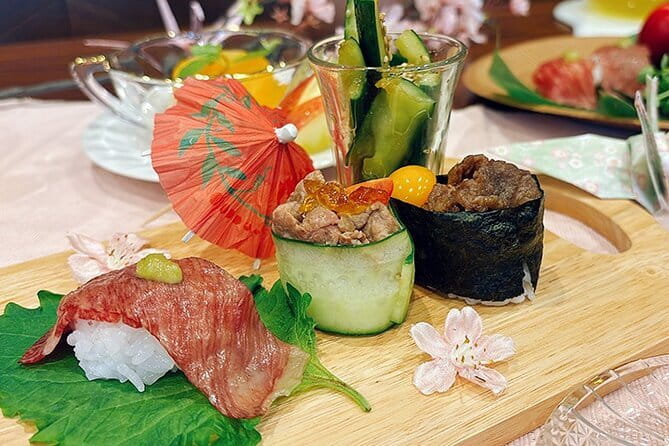
- Wagyu instead of fish: build sushi around premium beef flavors
- Small group of 6: more attention while you shape and plate
- Multiple sushi styles: nigiri, gunkan maki, and temaki are all on the menu
- Plating practice: you learn how to present, not just how to cook
- Lunch and photos included: eat what you make, then download images later
Why This Tokyo Wagyu Sushi Class Works (Even If You Think You Know Sushi)
Tokyo has plenty of sushi classes. This one gets you because it flips the script: you’re making sushi with Wagyu beef instead of the usual seafood focus. That’s not just a gimmick. Wagyu has a different texture and fat profile than typical fillings, and it changes how you think about pairing it with shari and the size/shape of each piece.
I also like that the class is built for people who want results. The setup is hassle-free: ingredients and equipment are provided, so you’re not spending your time translating labels or gathering tools you’ll never use again. You get a clear, guided workflow—cook, assemble, plate, eat—within a tight time window.
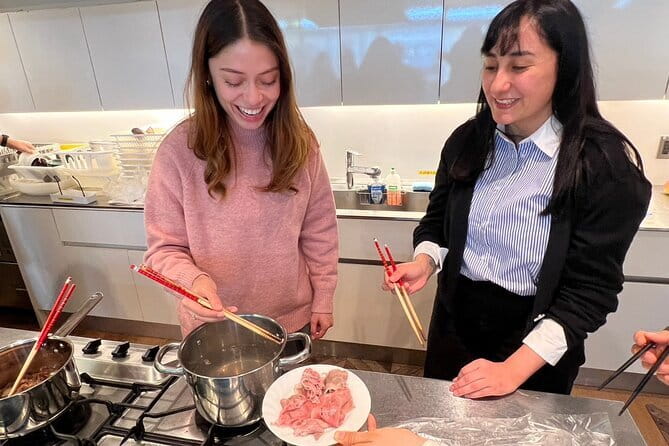
And the teaching approach matters. In the best moments of this kind of class, you’re not just copying moves. You’re getting corrected while your hands are still on the task. With a max of six people, you’re more likely to get that kind of real-time feedback.
More sushi counters to book, ranked
- Tokyo: Roll and Authentic Sushi Making Class in Asakusa
★ 4.9 · 1,957 reviews - Make Sushi and Create Unforgettable Memories in Tokyo
★ 5.0 · 1,413 reviews - Tokyo: Sushi Making Class in a Happi Coat near a Famous Spot
★ 4.9 · 1,377 reviews - Tokyo Sushi Making Class in Tsukiji with Professional Chef
★ 5.0 · 1,177 reviews
Your 12:00 Lunch Session: How the 90 Minutes Typically Flow
The experience starts at 12:00 pm and runs around 1 hour 30 minutes. It ends back at the meeting point, so you’re not dealing with a long transfer or another location hop.
In practical terms, here’s what the timing is built around:
- You’ll begin with a short introduction to the sushi-making process and what you’ll be making (several styles, not just one).
- You’ll work through the steps of preparing the components—especially shari (sushi rice) and the Wagyu element—then assemble the pieces.
- You’ll finish by plating what you made, taking a moment to make it look like something you’d be proud to serve.
- Then you eat your creations as lunch, so the class has a clear payoff instead of ending with only samples.
A nice bonus: you’ll receive later-downloadable photographs during the experience. That’s useful if you want a visual reminder of how your final pieces were supposed to look. It also helps if you’re the kind of person who forgets details the second the food hits the table.
The Sushi Styles You’ll Make (And Why Each One Teaches a Different Skill)
This class isn’t limited to one “easy” format. You’ll learn a set of sushi types that each demand a different technique and grip.
Nigiri: The Hand-Forming Core Skill
Nigiri is where you learn control. The goal is to get rice shaped correctly, then top it so it holds together without turning into a mess. Even if you’ve eaten nigiri before, the technique is different when you’re responsible for both texture and proportions.
In class, you’ll practice making nigiri with Wagyu, which means you’re learning how meat behaves when it’s paired with vinegar-seasoned rice and pressed into a compact bite.
Gunkan Maki: Building Something That Stays Put
Gunkan maki (often described as a “battleship” style) is where plating mechanics show up. The rice is shaped to form a base, and the topping is handled differently than nigiri. It’s a great choice for beginners who want instant structure—your form has to hold, or it doesn’t work.
If you want to level up your sushi game at home, mastering the logic of gunkan maki helps you understand how fillings and rice ratio affect stability.
- Tokyo: Shinjuku Food Tour (13 Dishes at 4 Local Eateries)★ 5.0 · 6,603 reviews
- Tokyo Mt Fuji 5th St & Hakone Cruise Bus Tour w/Bullet Train★ 4.4 · 5,024 reviews
- Flagship 2-Hours Official Street Go-Kart Tour – Tokyo Bay Shop★ 5.0 · 4,974 reviews
- From Tokyo: Mount Fuji Full-Day Sightseeing Trip★ 4.5 · 4,970 reviews
- Tokyo: Hop-On Hop-Off Sightseeing Bus Ticket★ 3.9 · 4,207 reviews
Temaki: The Fun, Flexible Cone
Temaki is hands-on in a different way. Instead of a neat rectangle or tidy top, you’re shaping a cone you can fill and eat immediately. Temaki is the style that rewards speed and confidence, but it still needs the right balance of rice and filling.
For a first-time Wagyu sushi cook, temaki is often the style you’ll enjoy most because it feels forgiving while still teaching how to pack and form.
Shari, Meat, and Plating: The Skills That Make This More Than a One-Time Meal
The biggest value in this class is not just that you eat lunch. It’s that you learn repeatable steps you can recreate later.
Shari (Sushi Rice) Basics You Can Actually Use
You’ll learn about shari—and that matters. Many people can follow a recipe, but sushi falls apart when the rice is wrong. Sushi rice is the anchor for everything: shape, bite, and how toppings stick.
Even if you don’t memorize every detail, learning the concept of proper sushi rice gives you a framework. That makes it easier when you try again on your own.
How to Cook the Wagyu Part
The class also teaches how to handle and cook the Wagyu component. This is key because Wagyu isn’t just a “better ingredient.” The texture and fat mean you have to treat it with care so it comes out tasty for sushi use.
You’ll get practice under guidance, which is the safest way to learn something that can easily go wrong at home.
Plating: Where the Class Turns Photogenic
A lot of cooking classes stop at tasting. This one emphasizes plating. That means you learn how to arrange your pieces so they look intentional, not random. You’re shaping each piece, and then you’re learning how to present it as a set.
It’s also practical: if you ever make sushi for friends, plating is the step that makes it feel like an event instead of leftovers on a cutting board.
Your Instructors: English-Friendly Help in a Small Group Setting
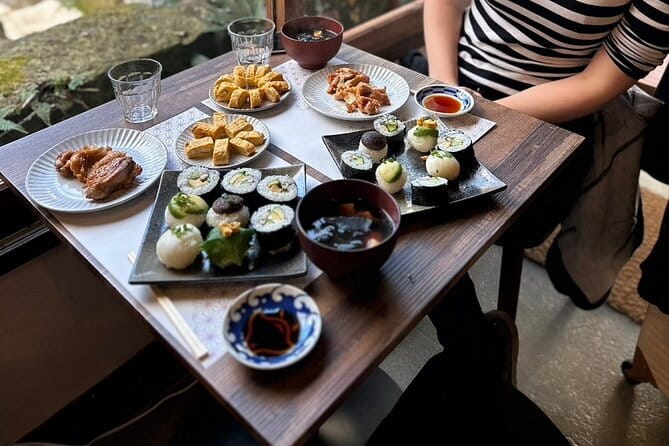
The staff approach stands out in the feedback patterns for this experience. In particular, Hiroko and Saori are named for teaching that feels patient and hands-on. You’re not left to figure it out alone, and you get help as you work.
That’s the real advantage of a class limited to six travelers. When you’re forming nigiri or building a maki structure, one small correction can make a big difference. In a larger group, you’d have to wait. Here, you’re more likely to keep moving with confidence.
Also, the class environment is set up for clarity—so if you’re not fluent in Japanese, you can still follow along. And when you can follow the instructions, you can actually learn the technique rather than just finishing the meal.
Price and Value: Is $104.51 a Good Deal?
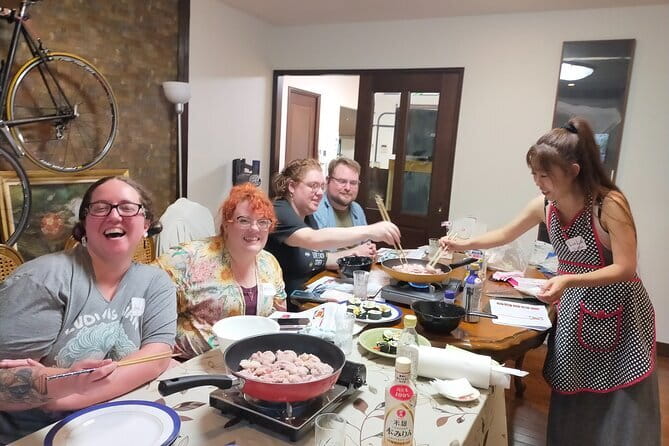
At $104.51 per person, this isn’t the cheapest Tokyo activity. But it does compete well for value because you’re paying for four things at once:
- a structured hands-on cooking lesson (not just a tasting)
- ingredients and equipment provided
- lunch included
- later-downloadable photos from the experience
In other words, you’re not buying a class and then separately buying lunch, materials, and a set of tools. If you’ve ever taken cooking classes where the ingredients are minimal or the instruction feels rushed, you know why that matters. Here, the learning time and meal payoff are tied together.
One more factor: demand. The experience is commonly booked about 36 days in advance, so planning ahead is smart if you’re traveling in a busy season.
What’s Included (and What You’ll Need to Sort Yourself)
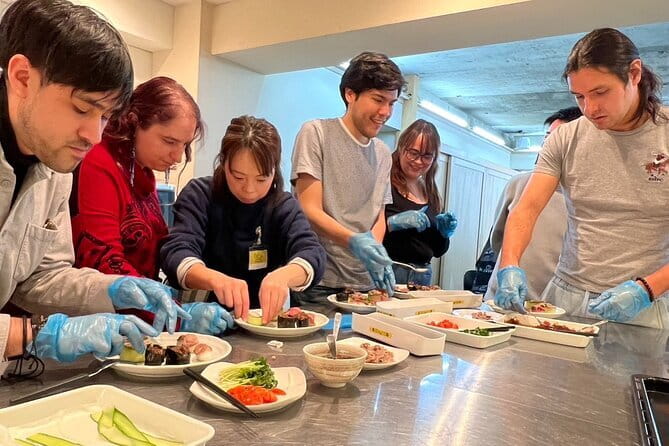
Included in the ticket:
- Lunch
- Cooking experience
- Later-downloadable photographs during the experience
Not included:
- Hotel pickup and drop-off
So you’ll need to get yourself to the meeting point. The good news is the meeting location is near public transportation, which makes it easier to fit into a Tokyo day. If you rely on taxis only, factor in that you may still walk a bit from the nearest transit stop.
Also, remember the dietary limitation: there are no vegan or vegetarian options. If you’re traveling with people who don’t eat meat, this may not be the best fit.
Who This Tokyo Wagyu Sushi Class Is Perfect For
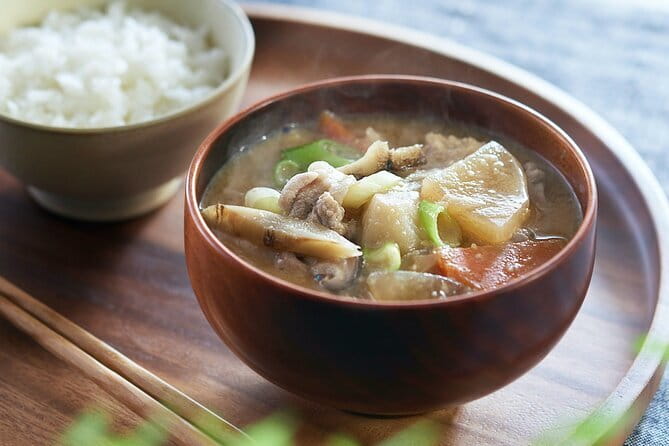
You’ll probably love this experience if:
- you like sushi but want a twist (Wagyu instead of seafood)
- you want hands-on instruction, not a passive demo
- you care about presentation and want to learn plating basics
- you’d rather pay for everything being handled—ingredients, equipment, and guidance—than DIY your learning
This class is also a solid choice for couples, small groups, and anyone who wants a single, focused activity with a clear finish: make it, plate it, eat it.
If you’re traveling solo, you’re fine as long as the booking meets the minimum group requirement. There’s also a minimum of 2 people per booking.
A Few Things to Consider Before You Book
The big practical limitation is dietary. Since vegan and vegetarian options aren’t available, make sure everyone in your group is on board.
Second, the time is short—about 1 hour 30 minutes. That’s long enough to learn and make multiple styles, but it’s not the kind of class where you’ll go deep into mastering one technique from start to finish.
Third, this is a meat-forward sushi class. If your personal sushi obsession is all about traditional fish toppings, you may find the Wagyu approach different from what you expect. Still, the skills (shari, forming, plating) are the transferable part.
Finally, the class requires good weather. If conditions aren’t right, you’ll be offered a different date or a full refund.
Should You Book This Hands-On Wagyu Sushi Making Experience?
I’d book it if you want a Tokyo activity that feels like a skill-building meal, not a ticket to watch other people cook. The best reason is simple: the class gives you Wagyu sushi craftsmanship plus plating practice in a small-group setting, and you eat what you make.
Skip it only if your group has dietary restrictions that can’t be accommodated (no vegan or vegetarian options) or if you strongly prefer traditional fish-only sushi and don’t want a meat-centered approach.
If you’re deciding between a basic sushi workshop and a more specialized one, this is the kind of class where the ingredient choice changes your whole understanding of sushi—from rice to bite size to how you assemble toppings. And that’s the kind of learning you’ll remember the next time you try cooking at home.
FAQ
How long is the Hands On Wagyu Sushi Making Experience?
It lasts about 1 hour 30 minutes.
What time does the class start in Tokyo?
The experience starts at 12:00 pm.
How many people are in the class?
The tour/activity has a maximum of 6 travelers.
What is the price per person?
The price is $104.51 per person.
Is lunch included?
Yes. Lunch is included with the cooking experience.
What sushi styles will I learn to make?
You’ll learn to create Wagyu sushi styles including nigiri, gunkan maki, and temaki.
Are vegan or vegetarian options available?
No. Vegan and vegetarian options are not available.
Will I get photographs from the experience?
Yes. There are later-downloadable photographs provided during the experience.
Can I cancel for free, and what if the weather is bad?
Cancellation is free, and you can cancel up to 24 hours in advance for a full refund. If the experience is canceled due to poor weather, you’ll be offered a different date or a full refund.
More Tour Reviews in Tokyo
- Mt Fuji and Hakone 1-Day Bus Tour Return by Bullet Train
★ 5.0 · 26,383 reviews - 1-Day Tokyo Bus Tour
★ 5.0 · 14,250 reviews - Tokyo: teamLab Planets TOKYO Digital Art Museum Entry Ticket
★ 4.6 · 9,779 reviews - Mt Fuji & Hakone Cruise, Drum Show Bullet Train 1 Day from Tokyo
★ 4.0 · 7,413 reviews - Tokyo: Shinjuku Food Tour (13 Dishes at 4 Local Eateries)
★ 5.0 · 6,603 reviews
More Sushi Counters to Book
- Sushi Making Tokyo Roll and Authentic Japanese Sushi Class
★ 5.0 · 3,971 reviews - Tokyo: Roll and Authentic Sushi Making Class in Asakusa
★ 4.9 · 1,957 reviews - Make Sushi and Create Unforgettable Memories in Tokyo
★ 5.0 · 1,413 reviews - Tokyo: Sushi Making Class in a Happi Coat near a Famous Spot
★ 4.9 · 1,377 reviews - Tokyo Sushi Making Class in Tsukiji with Professional Chef
★ 5.0 · 1,177 reviews
Latest Tokyo reviews off our desk




Sushi Making Classes, compared.
 ★ 5.0Sushi Making Tokyo Roll and Authentic Japanese Sushi ClassFrom $593,971 reviews
 ★ 4.9Roll and Authentic Sushi Making Class in AsakusaFrom $581,957 reviews
 ★ 5.0Make Sushi and Create Unforgettable Memories in TokyoFrom $791,413 reviews
 ★ 4.9Sushi Making Class in a Happi Coat near a Famous SpotFrom $421,377 reviews
 ★ 5.0Tokyo Sushi Making Class in Tsukiji with Professional ChefFrom $491,177 reviews
 ★ 5.0Tsukiji Fish Market Guided Tour and Sushi Making with Pro ChefFrom $104775 reviews
 ★ 4.9Tsukiji Fish Market Sushi Making Class with Pro ChefFrom $63506 reviews
 ★ 5.0Tokyo Tsukiji Fish Market Tour and Sushi Making LessonFrom $99390 reviews
Browse the lists this tour appears in